Cape Town Days 1 & 2 — Penguins, the Cape of Good Hope, and the Mountain That Touches the Clouds
After a week in the wild, we came to a city that proved nature doesn’t need a national park to take your breath away. It just needs Cape Town.
Arrival — A City of Contradictions
I was sick.
Let’s get that out of the way first. The viral that had worked its way through Addy — from the London flight, through Addis Ababa, through five days of Kruger — had finally settled into me with the smug satisfaction of a virus that knows it’s found a comfortable host. Blocked nose. Heavy head. That bone-deep weariness that makes you want to crawl under a duvet and not emerge until spring.But we were in Cape Town. And Cape Town doesn’t care about your virus.
We picked up the car at the airport and drove into the city in the thick of evening rush hour. The traffic was intense — dense, impatient, honking — and the drive was overwhelming in the way that only a new city can be when you’re tired and ill and trying to navigate unfamiliar roads with a six-year-old asking “are we there yet?” from the back seat.
But between the traffic lights and the lane changes, Cape Town began to reveal itself. And even through the fog of my fever, it was staggering. The contradictions hit you first. Sprawling informal settlements pressed up against gleaming high-rises. Poverty so visible it aches, separated by mere metres from wealth so polished it gleams. This is South Africa’s story written in concrete and tin — a country of extraordinary beauty built on foundations of extraordinary inequality. You can’t look away. You shouldn’t look away.
And then — rising above it all, indifferent to the human drama at its feet — the mountains. Those towering, impossible peaks that ring Cape Town like a crown. And beyond them, glimpses of the ocean — vast, blue, endless — catching the last of the evening light.In that moment, through the traffic and the tiredness and the tangle of emotions, I understood. This is why they say Cape Town is one of the most beautiful cities on Earth. Not because it’s perfect. Because it’s everything — raw, real, broken, breathtaking — all at once.
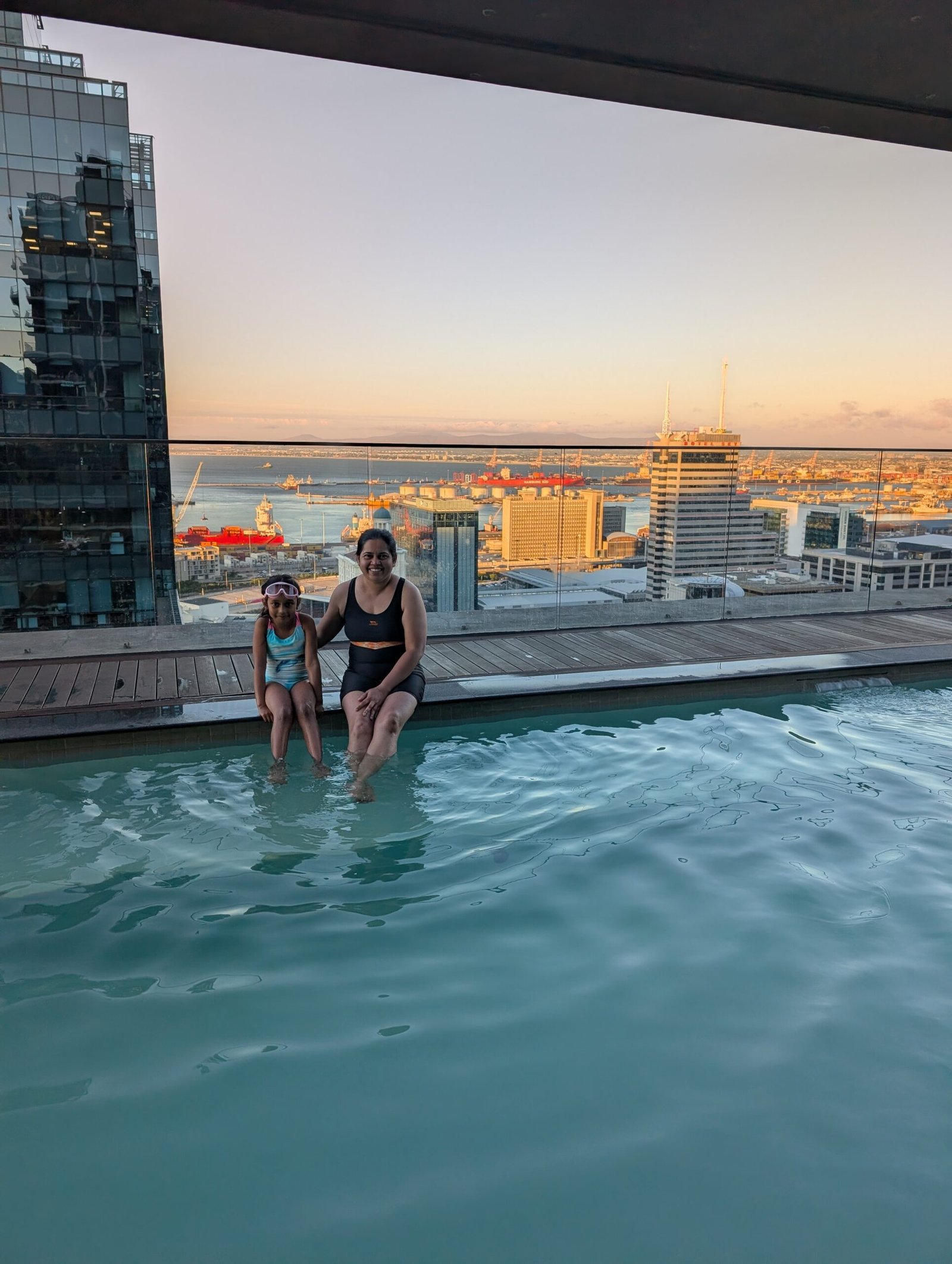
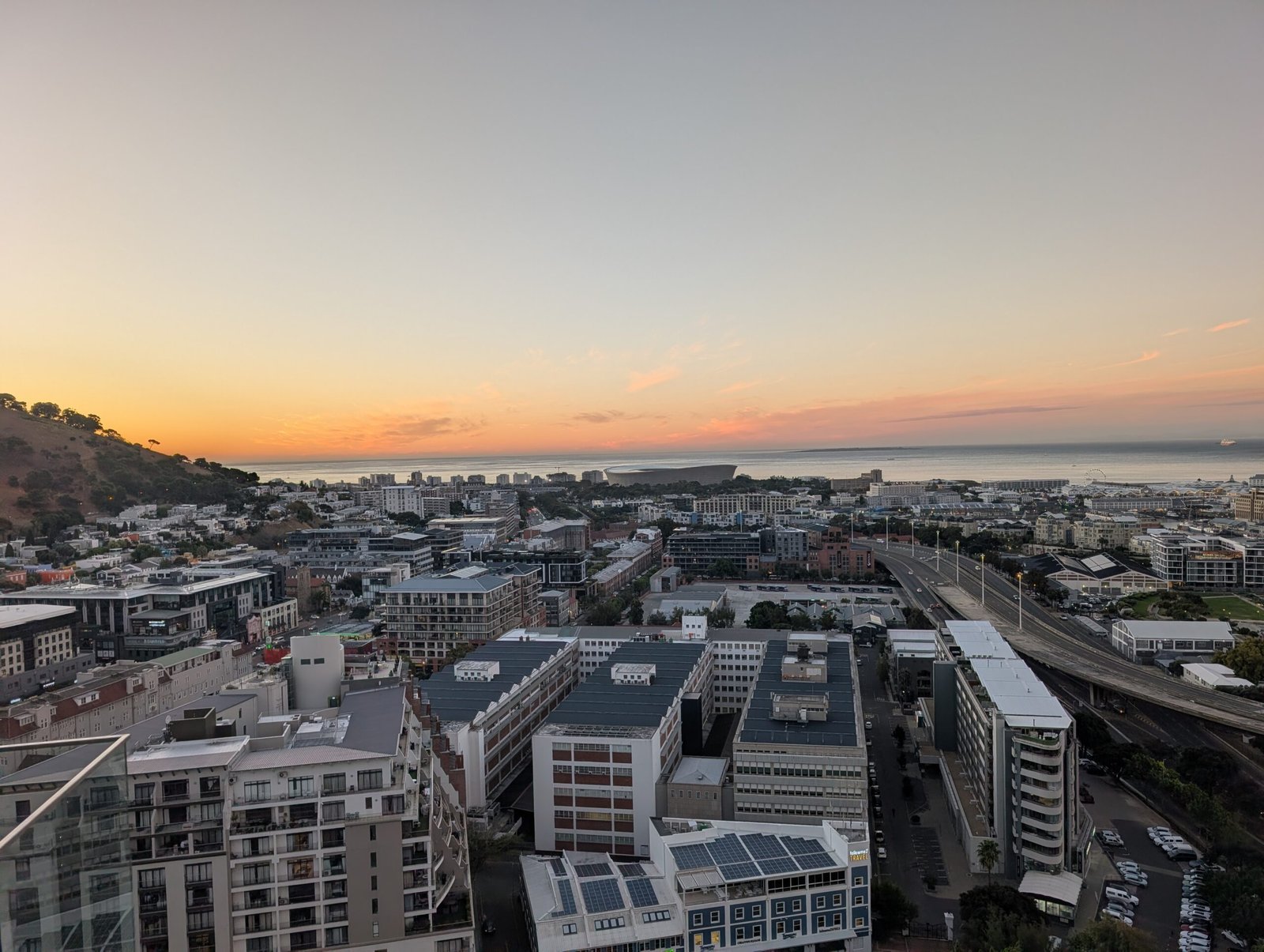
Our stay was at Bree Street — an apartment building in the heart of the city. Cape Town accommodation, we quickly discovered, takes security seriously. And I mean seriously.Fingerprint recognition. Facial scanning. Multi-layer access doors. Security personnel at every entrance. Coming from London, where a front door key feels sufficient, the level of protection was both reassuring and sobering. Cape Town’s reputation for crime is well-documented, and the city doesn’t pretend otherwise — it builds its defences into the architecture.Our apartment was on the 36th floor. And the view — oh, the view.
Cape Town spread out beneath us like a living map. The harbour lights. The grid of streets. The dark silhouettes of the mountains against the evening sky. And beyond it all, the silver shimmer of the ocean, stretching to the horizon and beyond.
We bought basic groceries from a nearby shop — bread, milk, fruit, the essentials of a family settling in. The advice we’d received from locals and fellow travellers was unanimous: don’t walk around in the evenings, especially with a child. I’m not one to be governed by fear, but I’m a father first, and caution costs nothing.
We ate simply. We rested. We looked out of our 36th-floor window at the city twinkling below and let the transition wash over us — from bush to metropolis, from wilderness to civilisation, from the roar of lions to the hum of traffic.
A different kind of Africa. Equally magnificent.
Morning — The Penguin Colony at Boulders Beach
I woke up still feeling rough — the virus clinging on with irritating persistence — so we took the morning slowly. No 4:30 alarm today. No racing for gates. Just a gentle breakfast, a strong coffee, and the luxury of leaving when we were ready.Our first destination: Boulders Beach. The famous African Penguin Colony.
The drive south from Cape Town towards Simon’s Town is beautiful in itself — the road hugging the coastline, the ocean crashing against rocks on one side, the mountains rising on the other. Every turn offers a postcard. Every vista makes you want to pull over and stare.
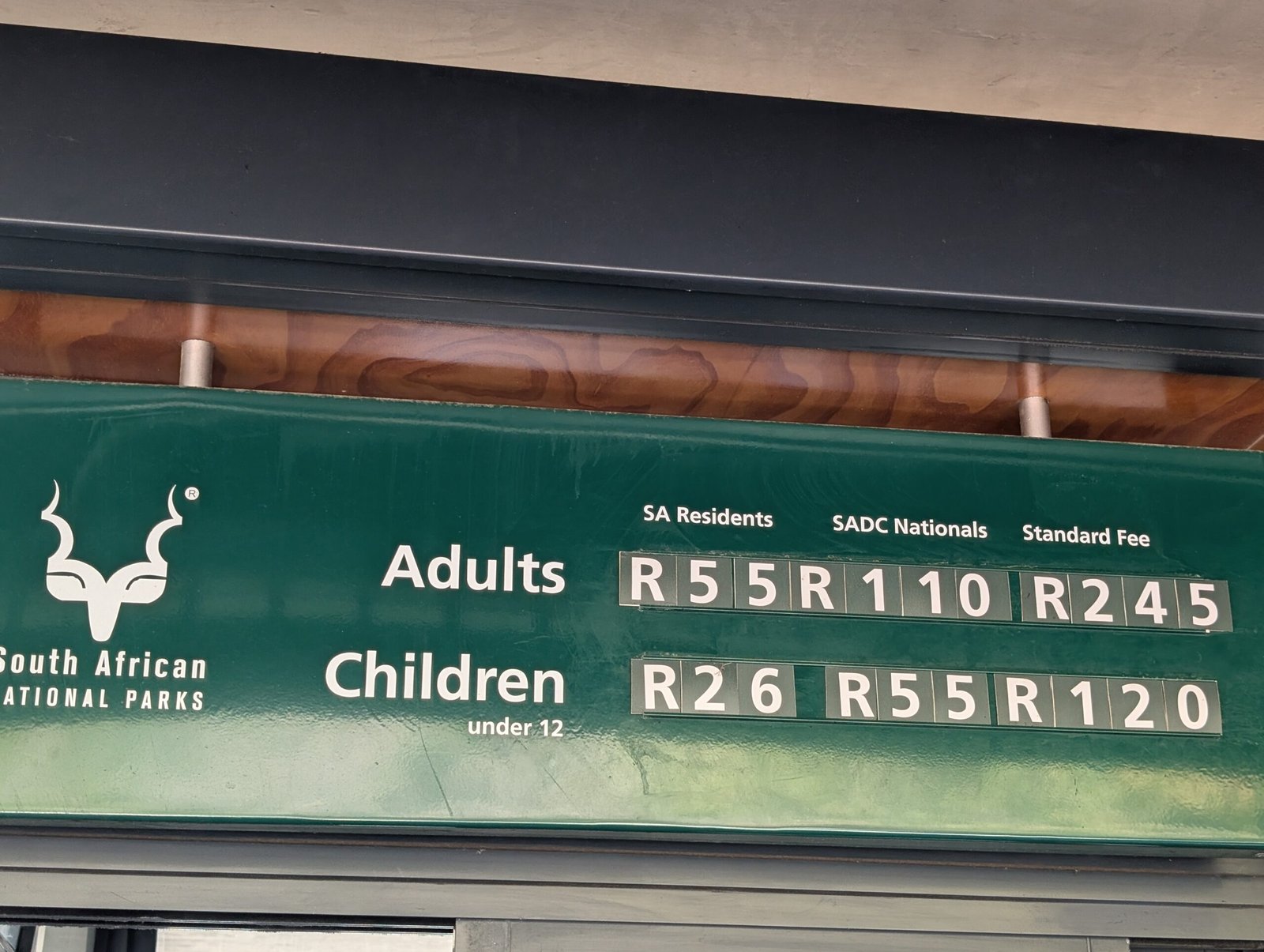
One thing to note for fellow travellers: the ticket prices in South Africa operate on a dual system — local rates and international rates. And the difference is… significant. We’re talking four to five times higher for international visitors. At some attractions, it’s ten times the local price. It stings, but it is what it is. Budget accordingly.
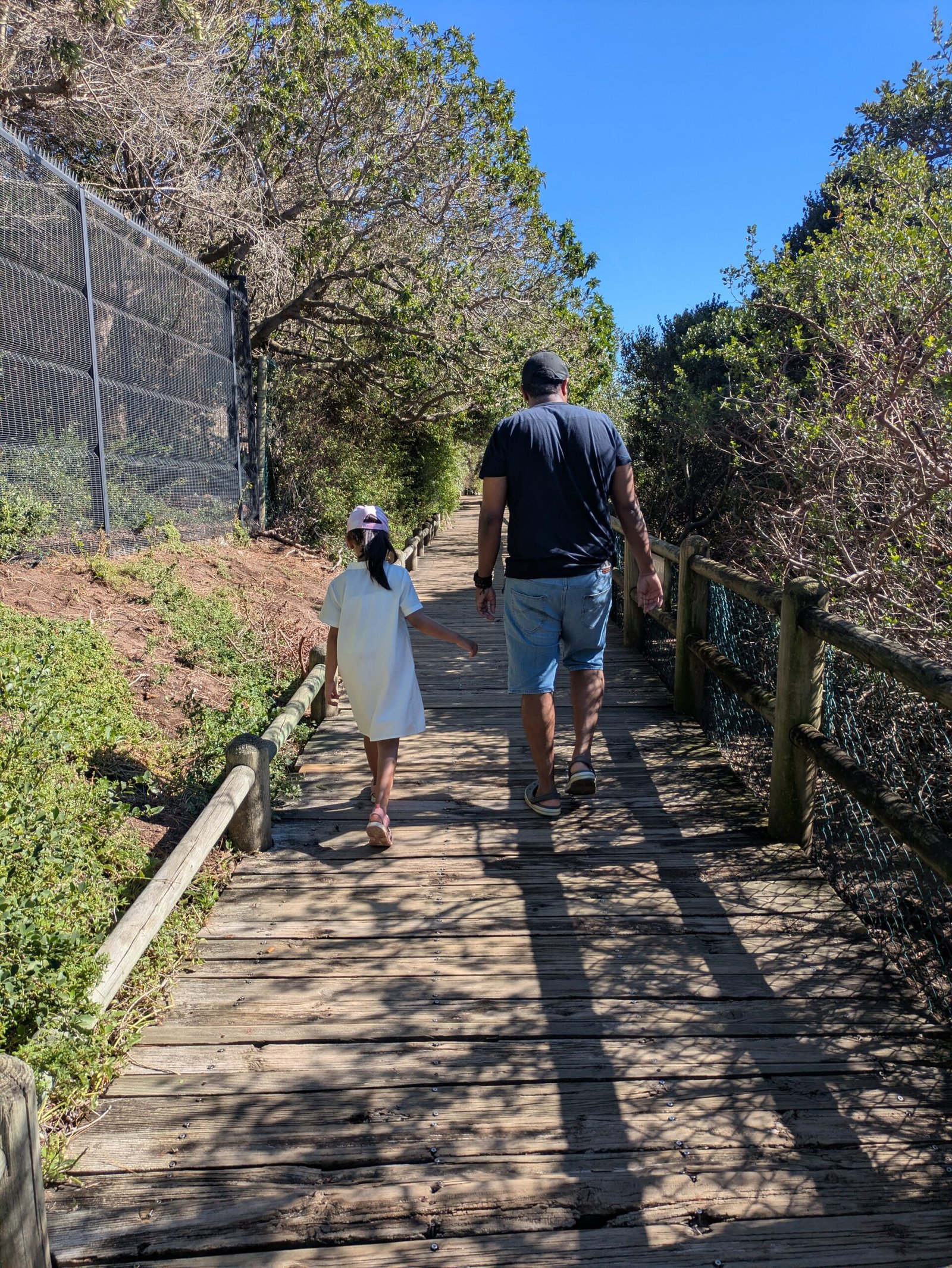
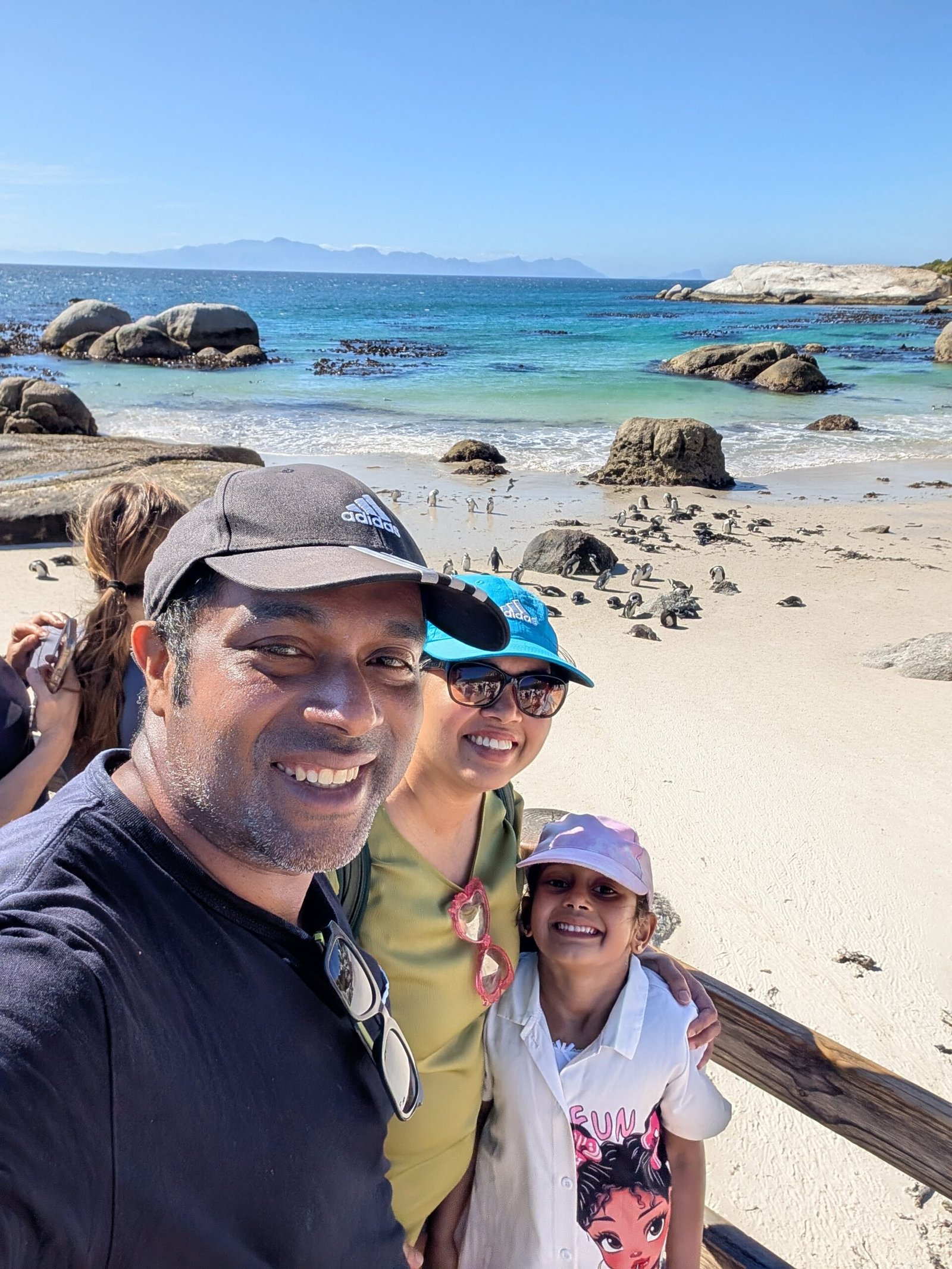
We arrived at Boulders Beach around mid-morning — later than the guides recommend, but early enough to avoid the worst crowds. And the moment we stepped onto the wooden boardwalk that winds down to the colony, every ounce of morning sluggishness evaporated.Penguins. Hundreds of them. Waddling across the white sand. Swimming in the turquoise shallows. Standing in pairs, preening each other with fussy, tender devotion. Nesting in the scrubby vegetation. Arguing over territory with the indignant energy of neighbours disputing a fence line.
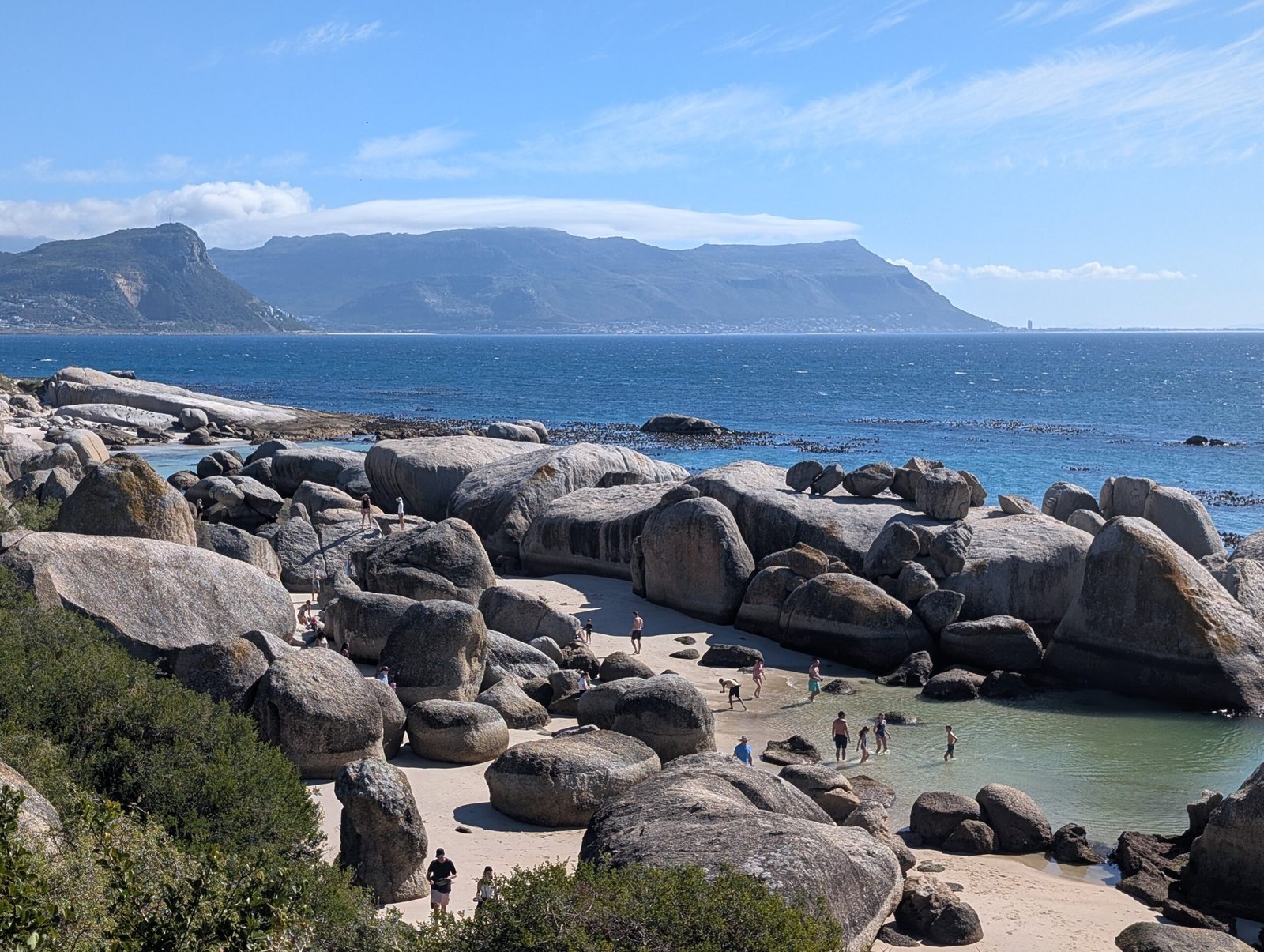
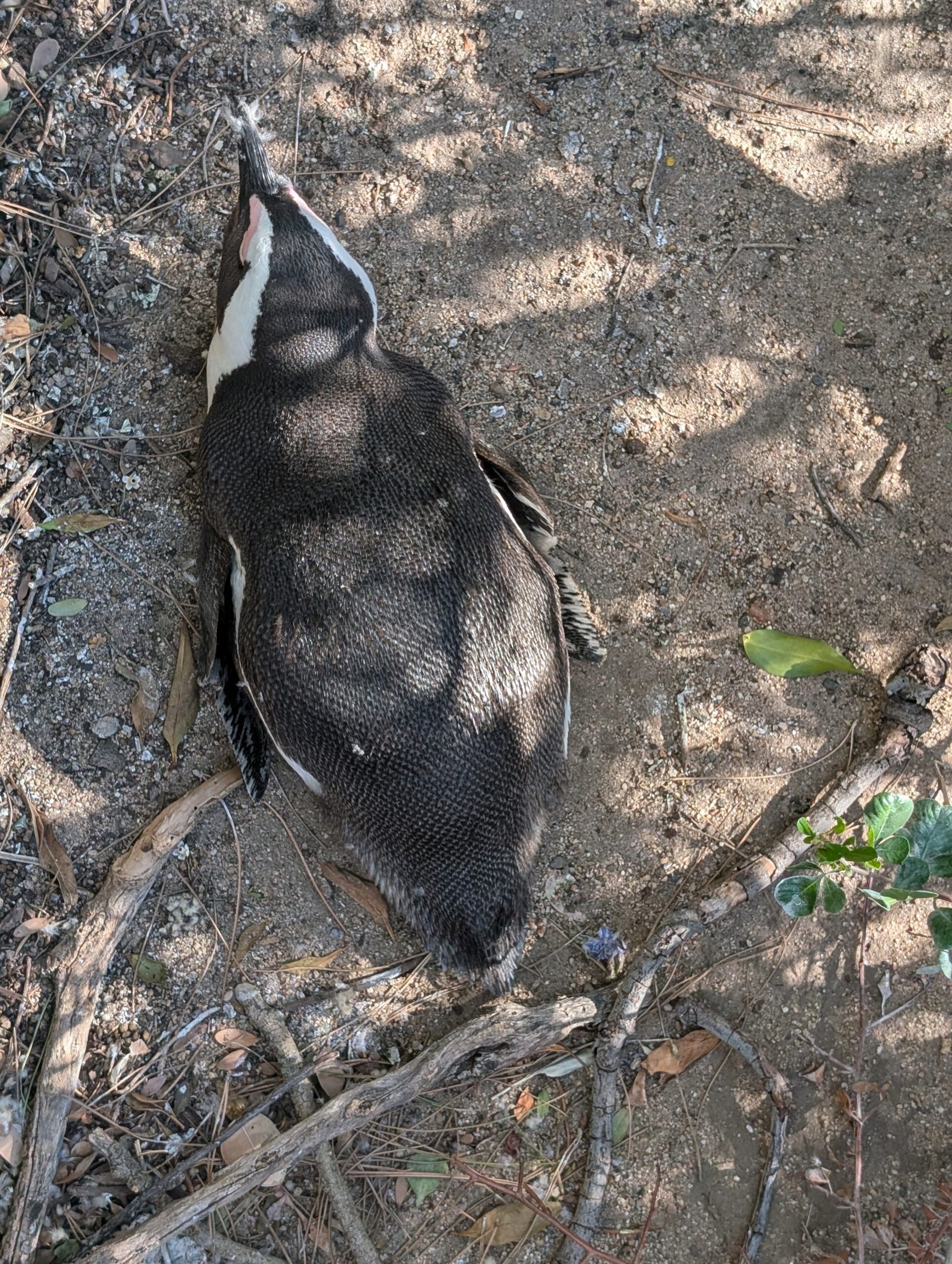
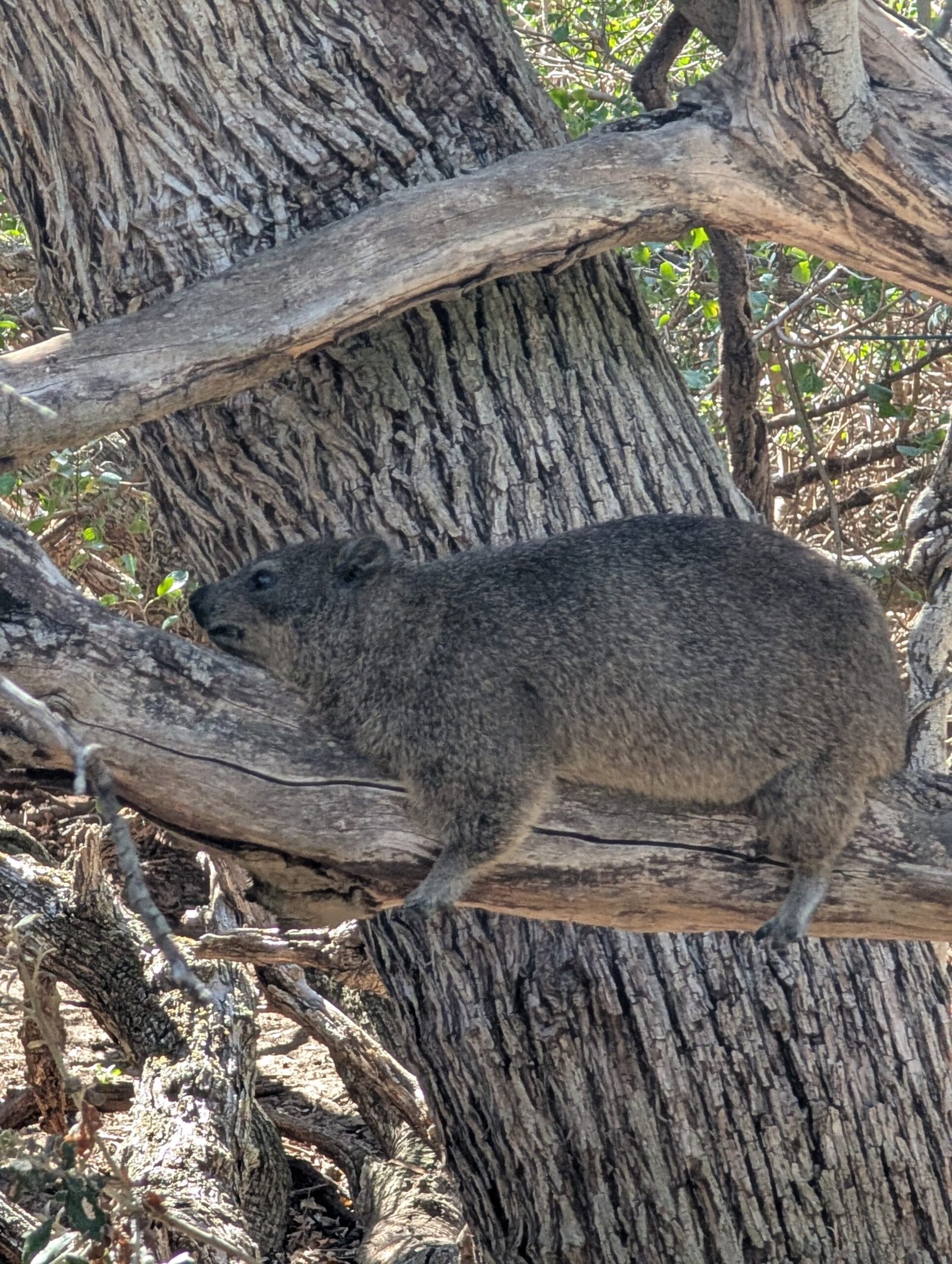
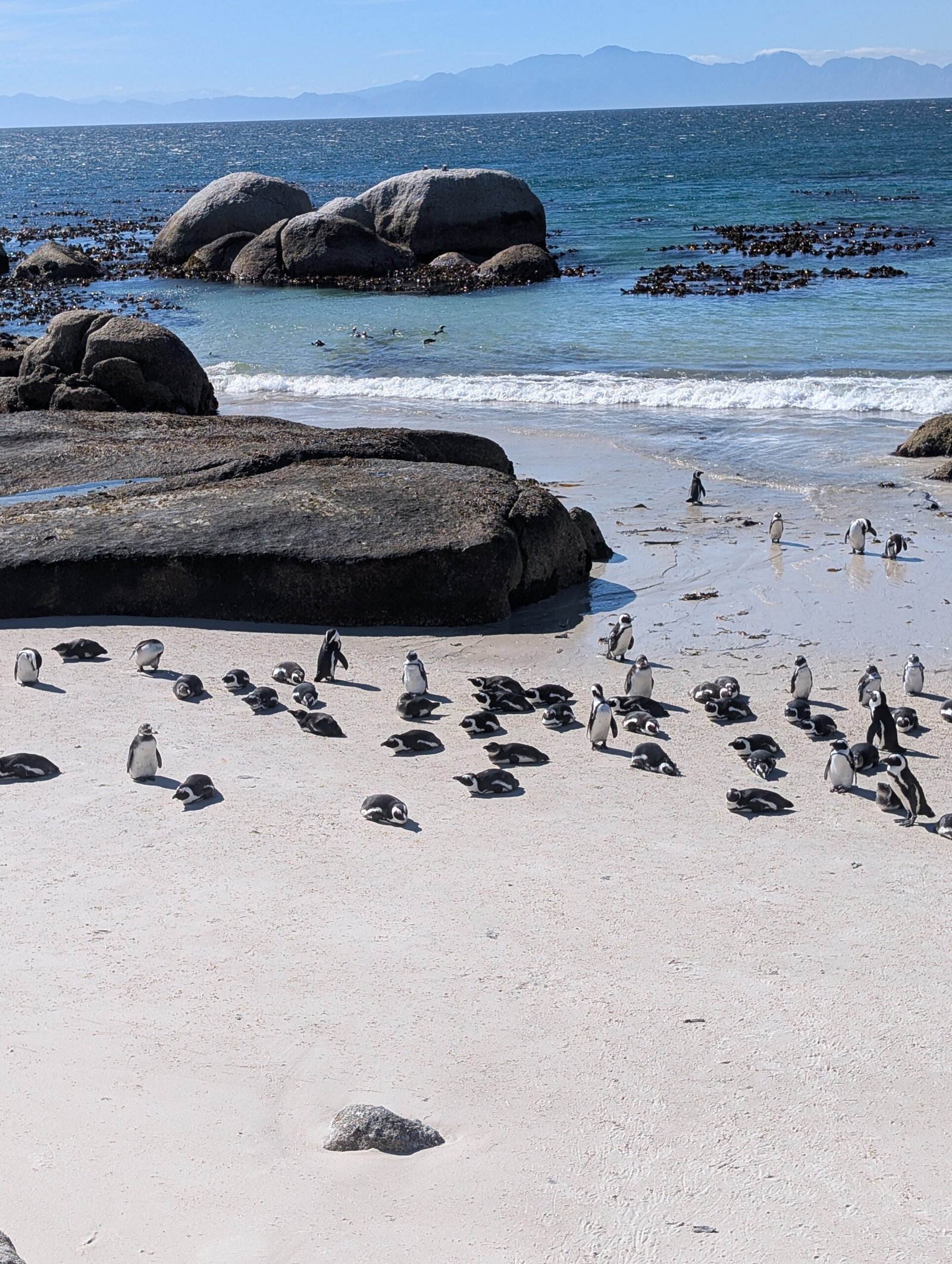
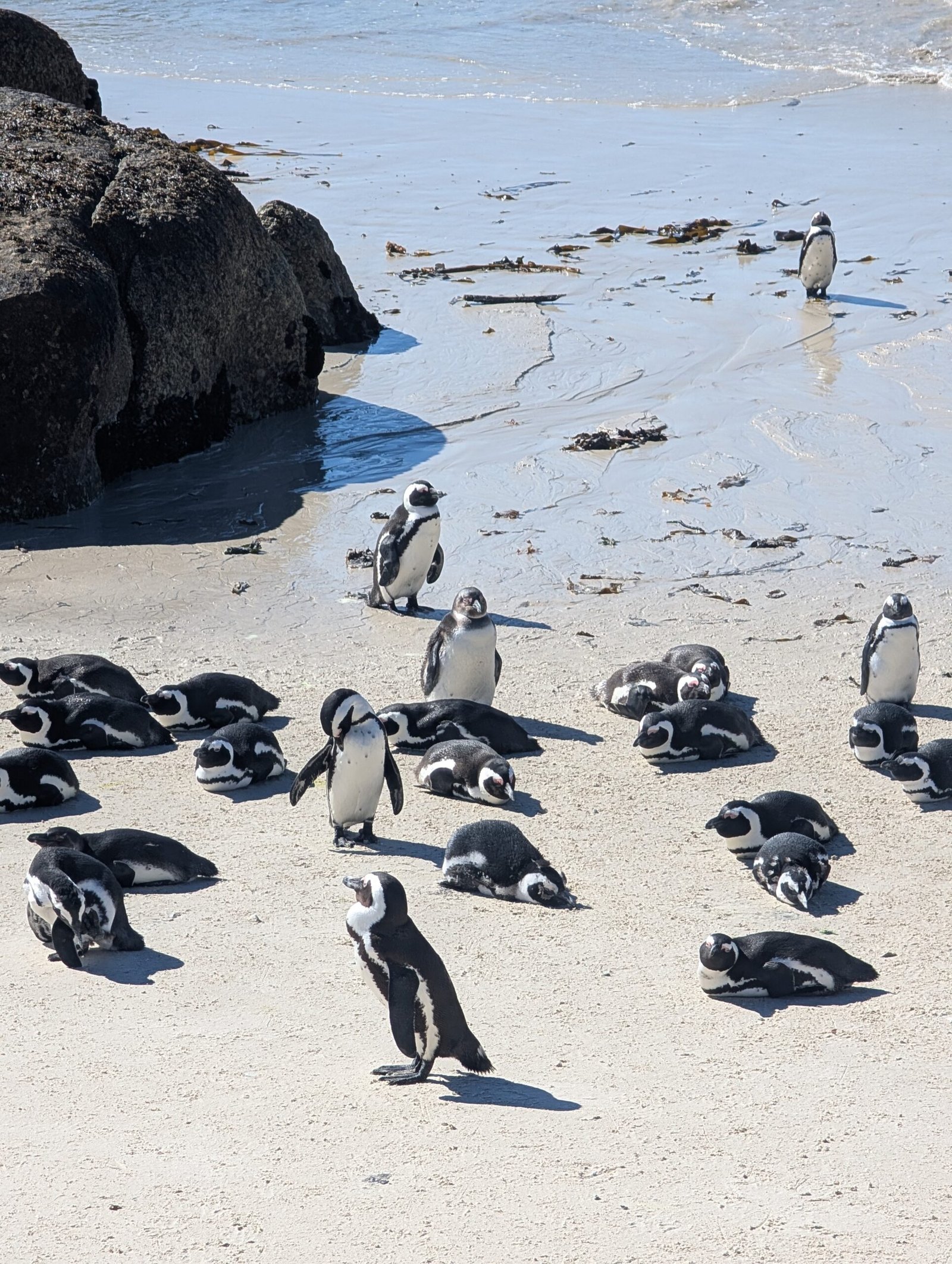
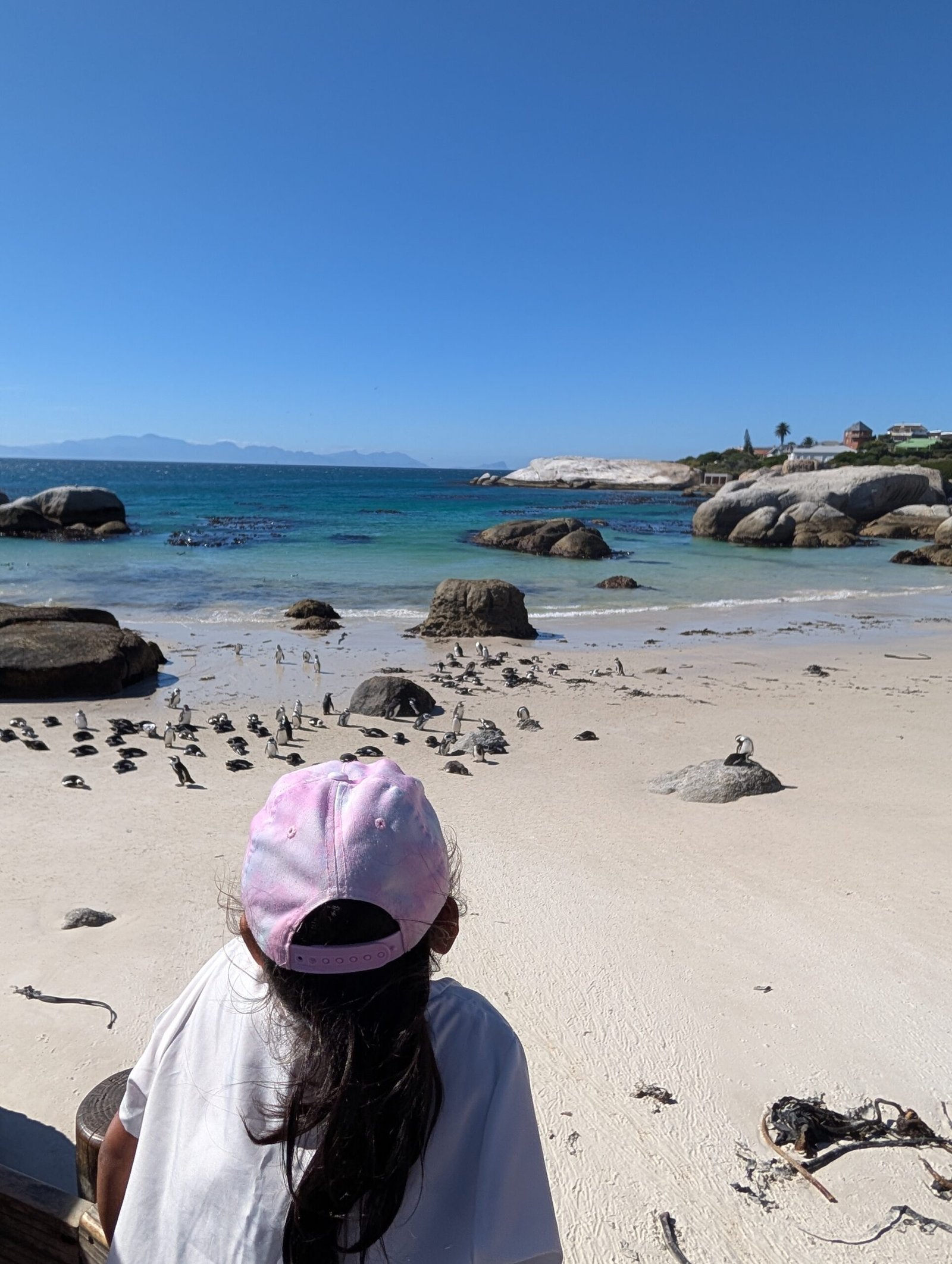
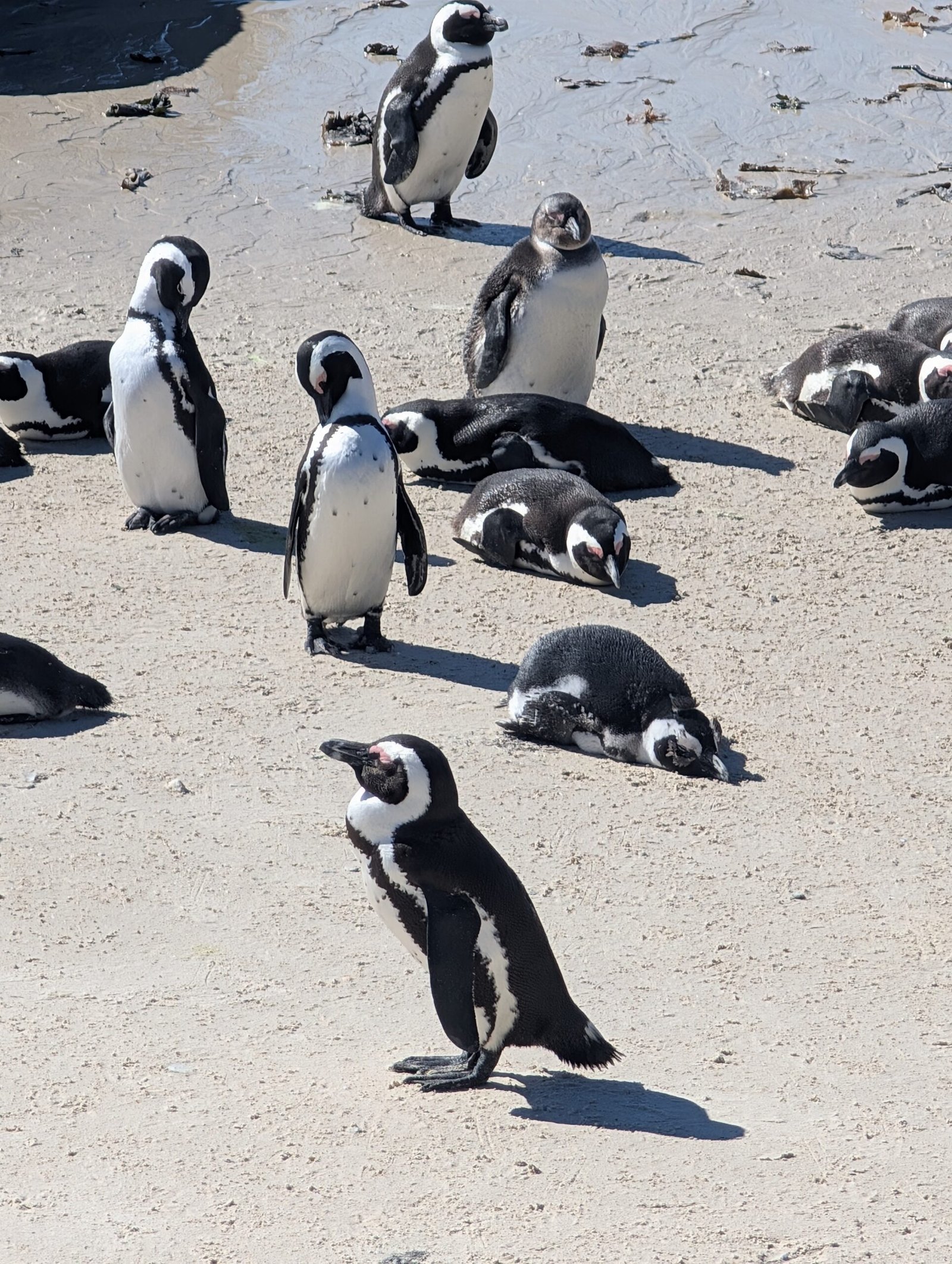
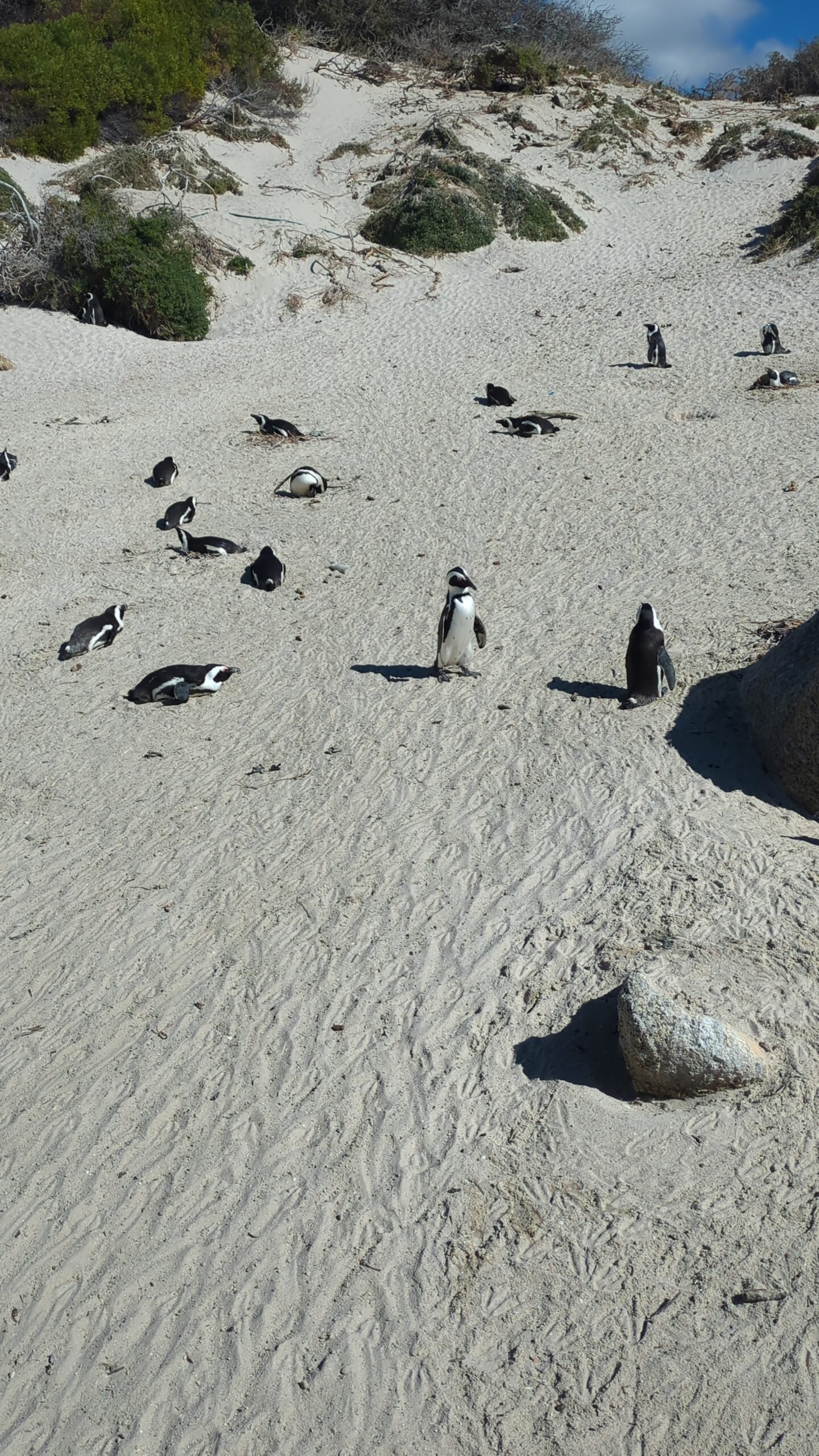
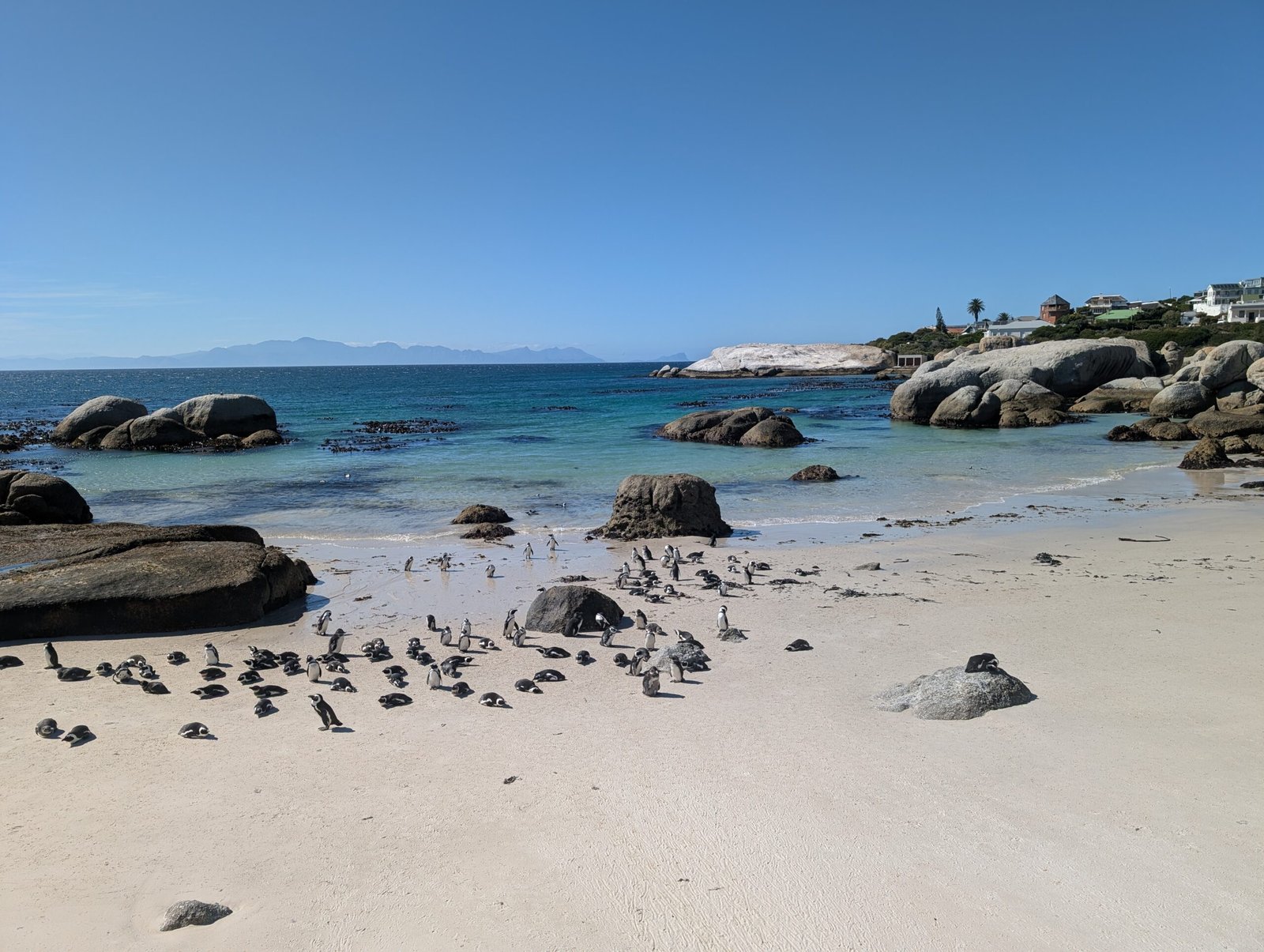
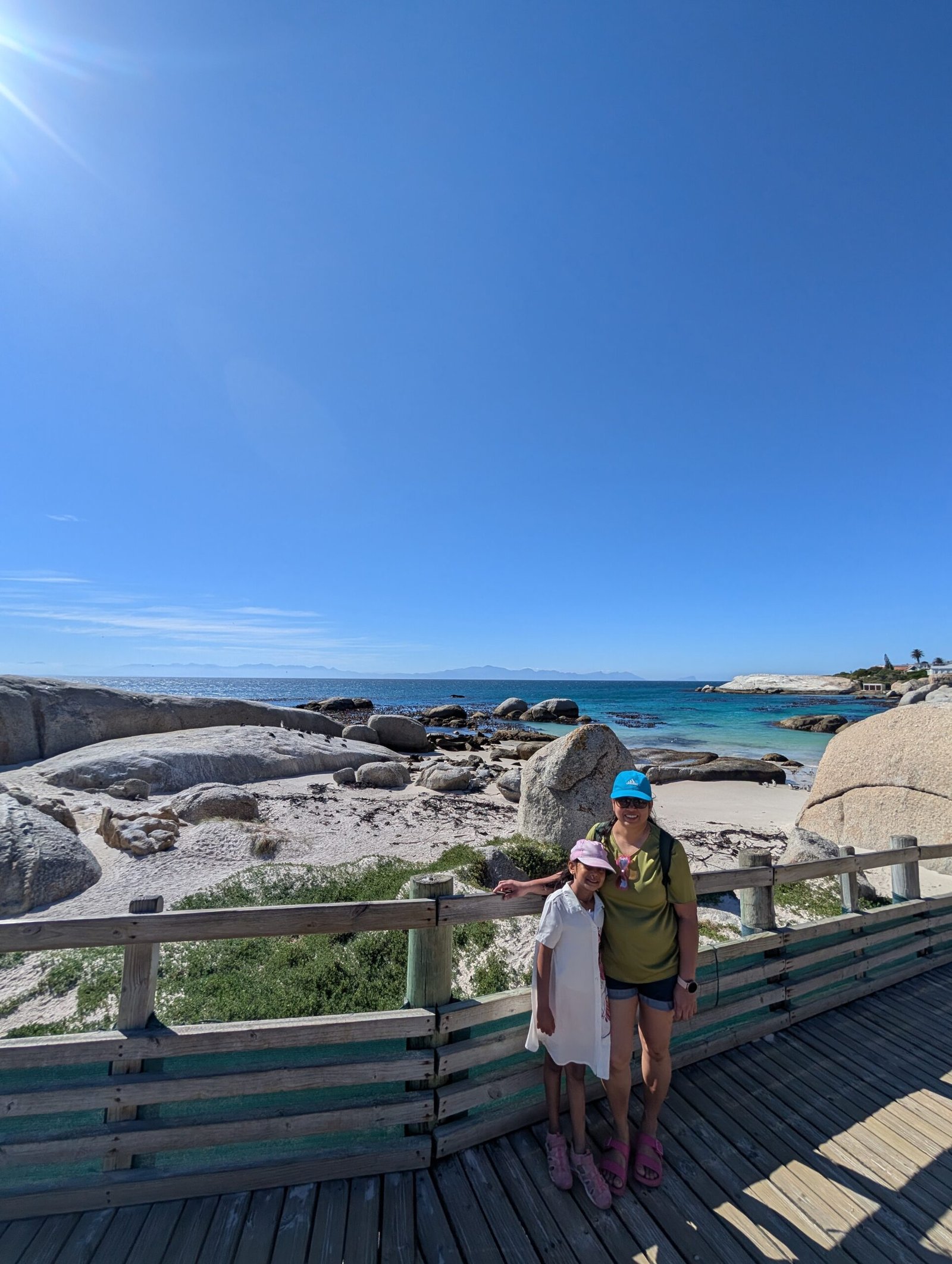
African Penguins are smaller than you’d expect — compact, tuxedo-clad, devastatingly cute — and they go about their business with a sense of self-importance that is both hilarious and endearing. They waddle past you as though you are an inconvenience in their day. They bray — a donkey-like call that earns them the nickname “jackass penguins” — and they swim with an elegance that completely contradicts their comedy on land.
The Cape of Good Hope — Standing at the Edge
From Boulders Beach, we drove into the Cape Point Nature Reserve — a vast, windswept expanse of fynbos and cliffs that occupies the very tip of the Cape Peninsula. The road winds through the reserve, and on instinct — always instinct — I chose to drive towards the Cape of Good Hope first, rather than Cape Point itself.
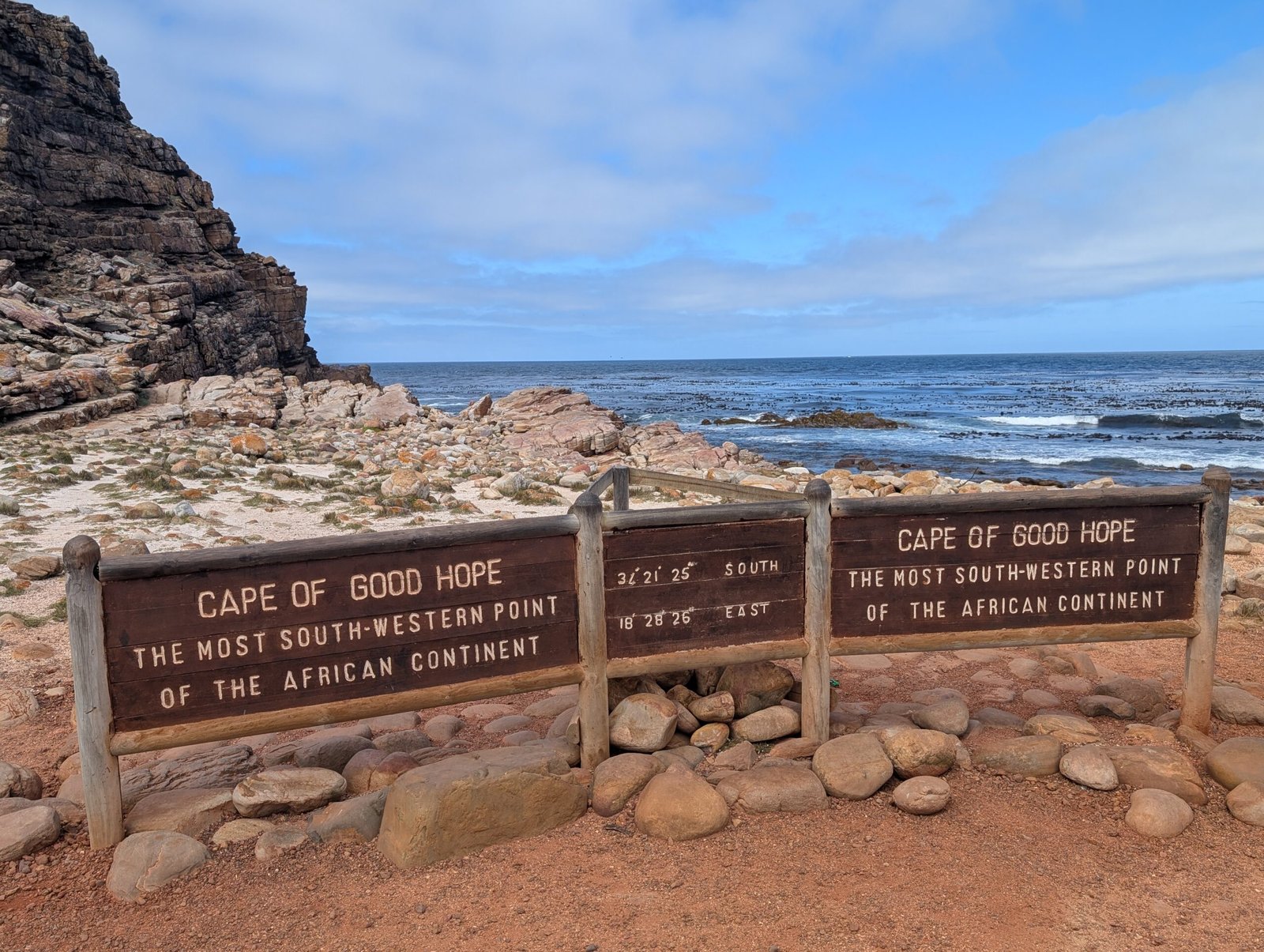
And there it was. The famous sign. The one you’ve seen in a thousand photographs:
CAPE OF GOOD HOPE — THE MOST SOUTH-WESTERN POINT OF THE AFRICAN CONTINENT
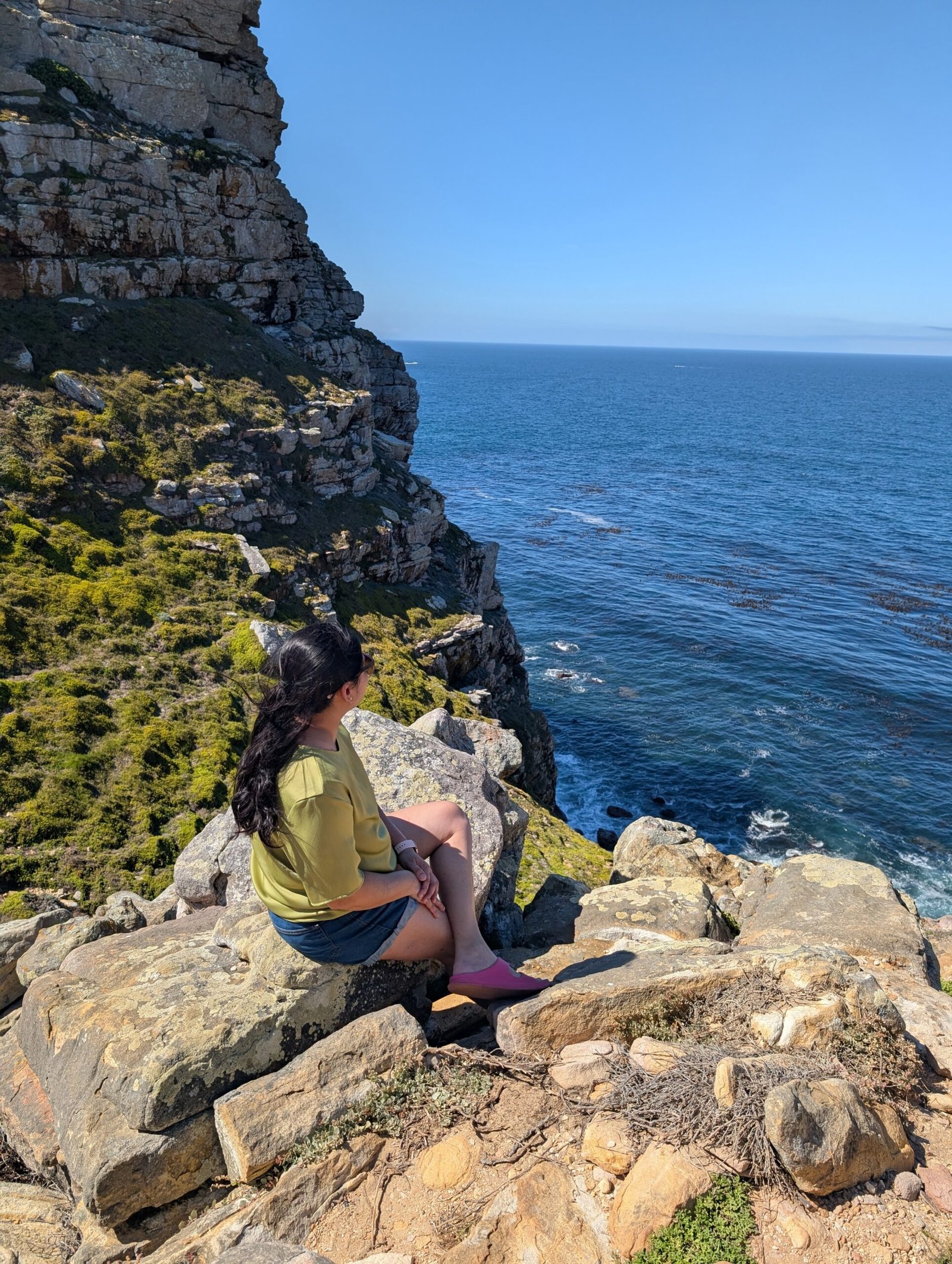
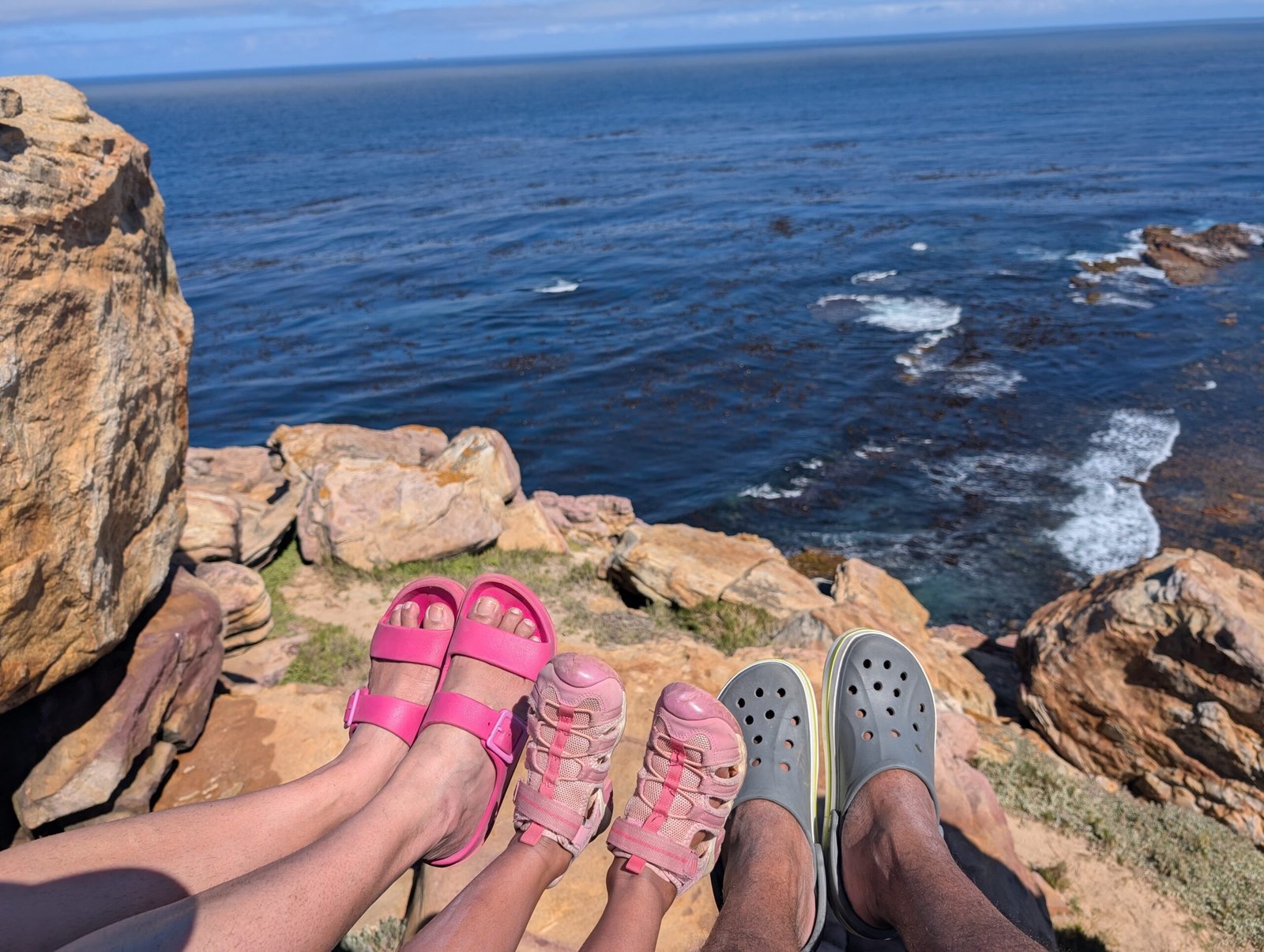
We stood there — the three of us, windswept and sun-kissed and utterly, ridiculously happy — and let the magnitude of the moment sink in.
The tip of Africa.
A year and a half ago, we’d stood at the bottom of the world — Ushuaia, Argentina — the southernmost city on Earth, where the land runs out and the Antarctic begins. And now here we were, at the southwestern tip of an entirely different continent, staring out at the collision of the Atlantic and the Indian Oceans.
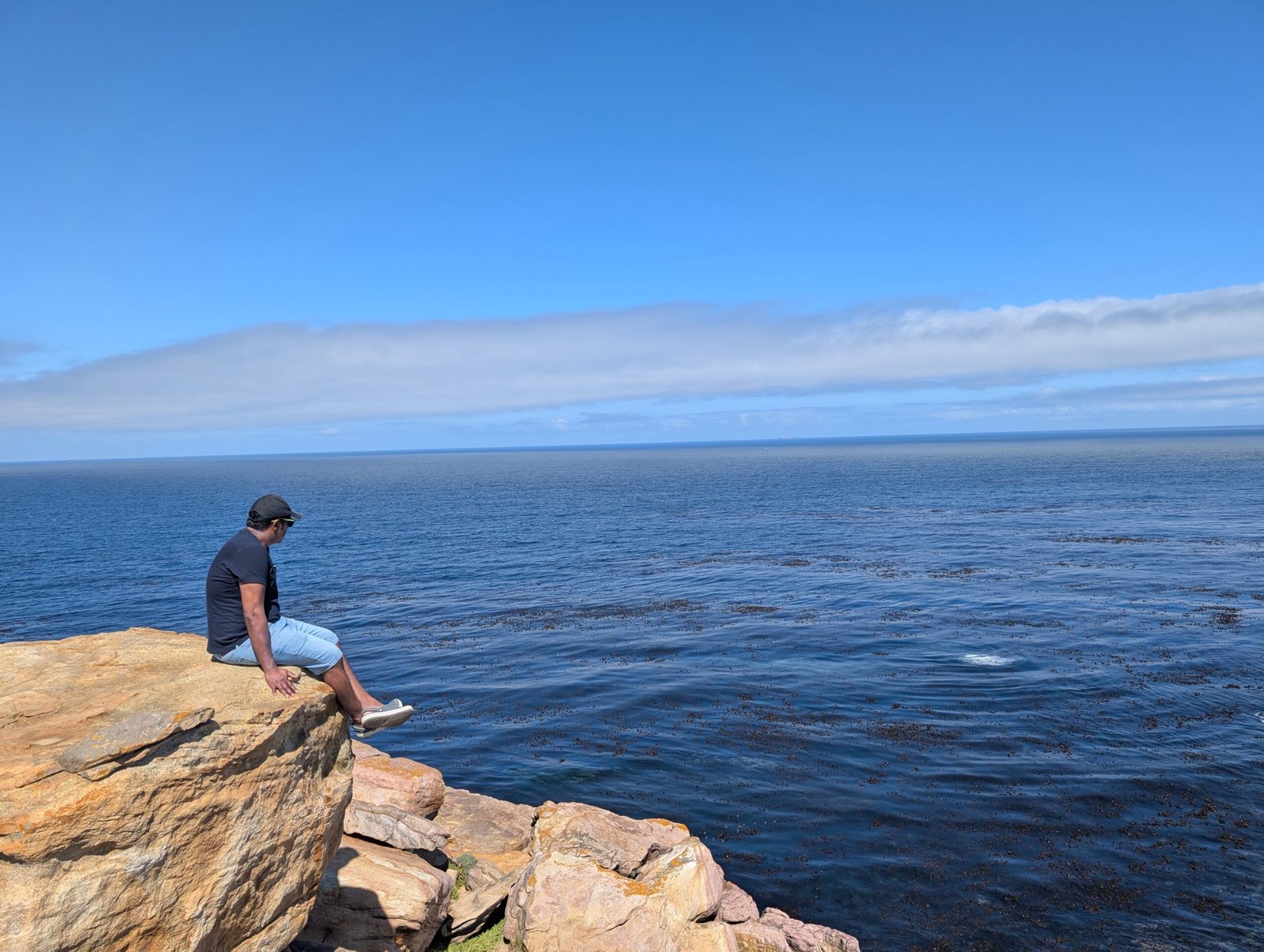
There’s something about standing at the edge of a landmass that rewires your sense of scale. Behind you: six thousand kilometres of Africa — the savannahs, the deserts, the jungles, the cities, the history, the heartbreak, the beauty. Before you: nothing but ocean, stretching to the horizon and beyond, all the way to Antarctica.You feel very small. And very alive.
Addy, predictably, was not interested in existential geography. She wanted to climb.Next to the sign, a rocky peak rises above the headland — a short but steep scramble that rewards you with panoramic views of the coast. She was up it like a mountain goat, scrambling over boulders with the fearless agility of a child who has spent a week in the African bush and now considers herself invincible.
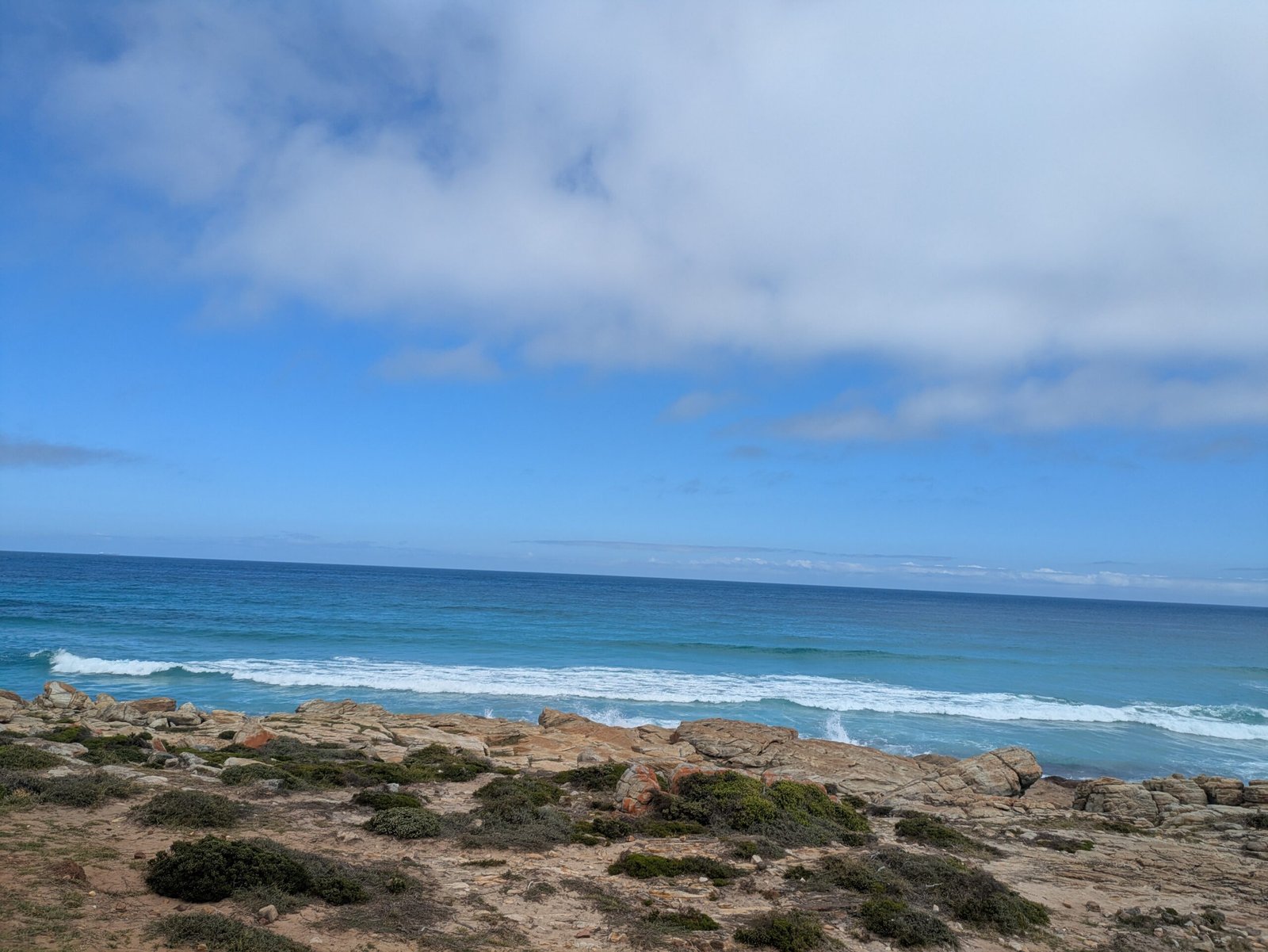
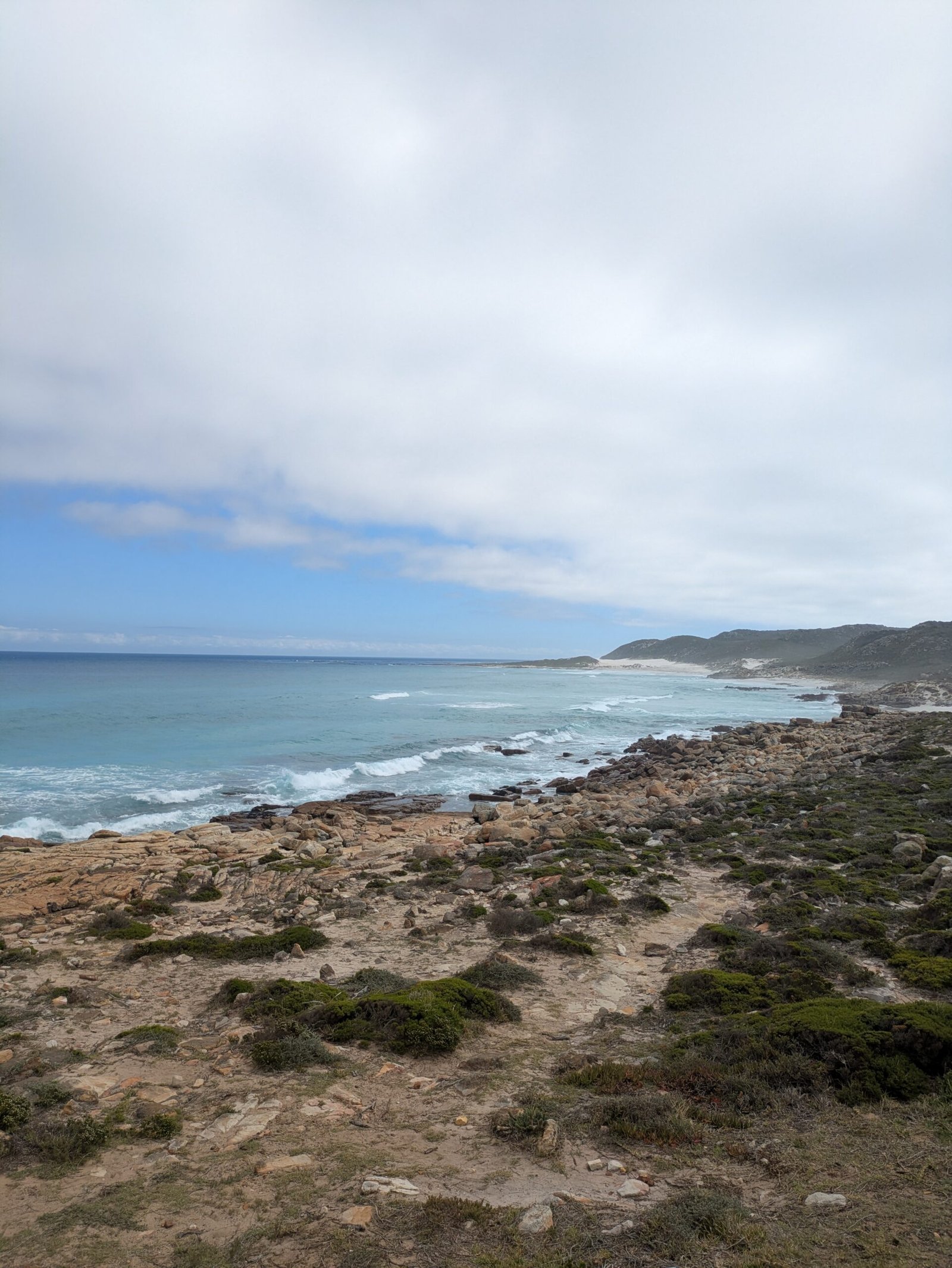
From the top, the view was staggering. Crystal-clear waters in impossible shades of blue and green. Waves crashing against ancient cliffs. Seals basking on distant rocks, dark shapes against the white spray. And behind us, the rugged spine of the peninsula stretching north towards Cape Town, mountains and ocean locked in an eternal embrace.
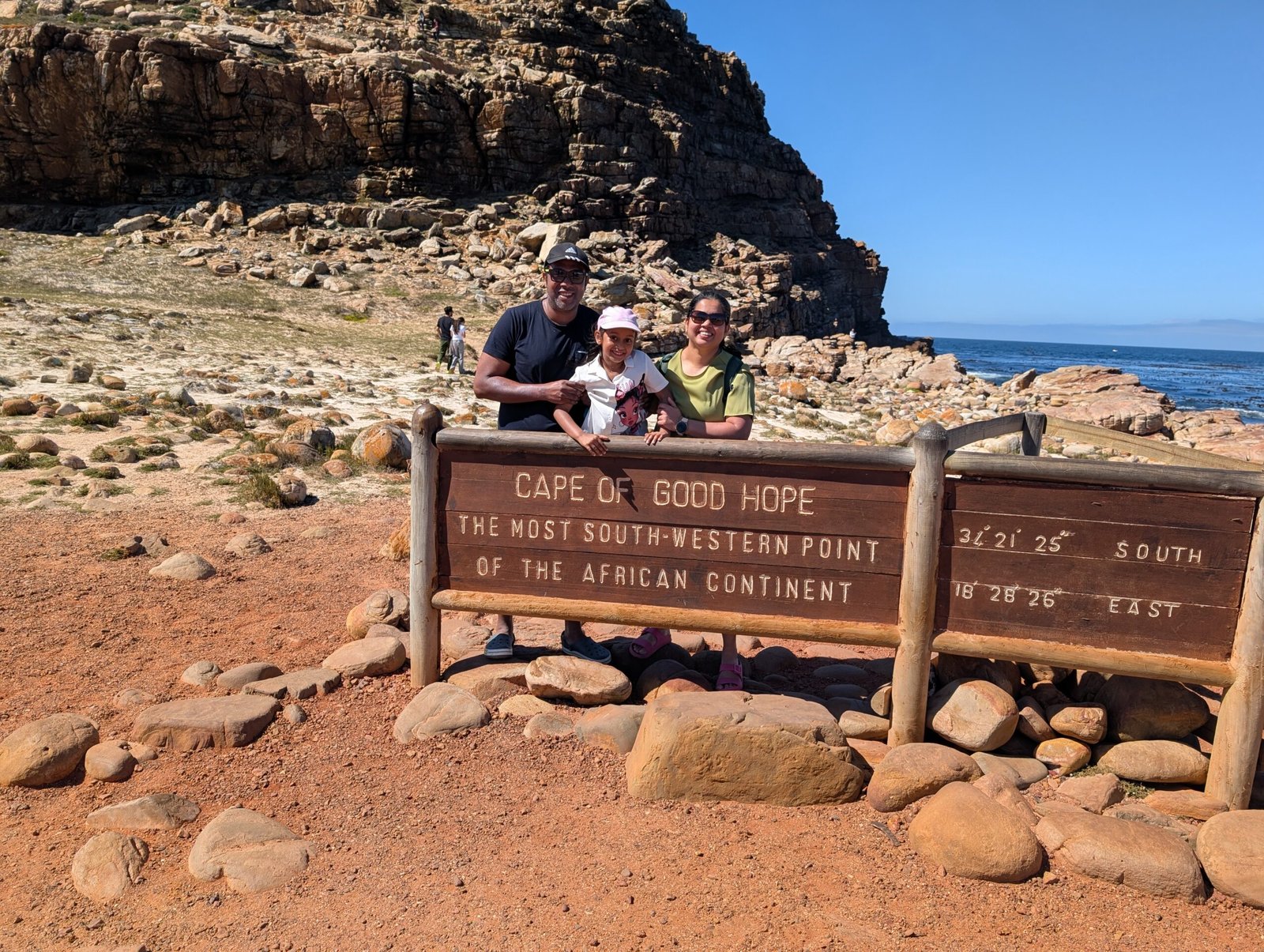
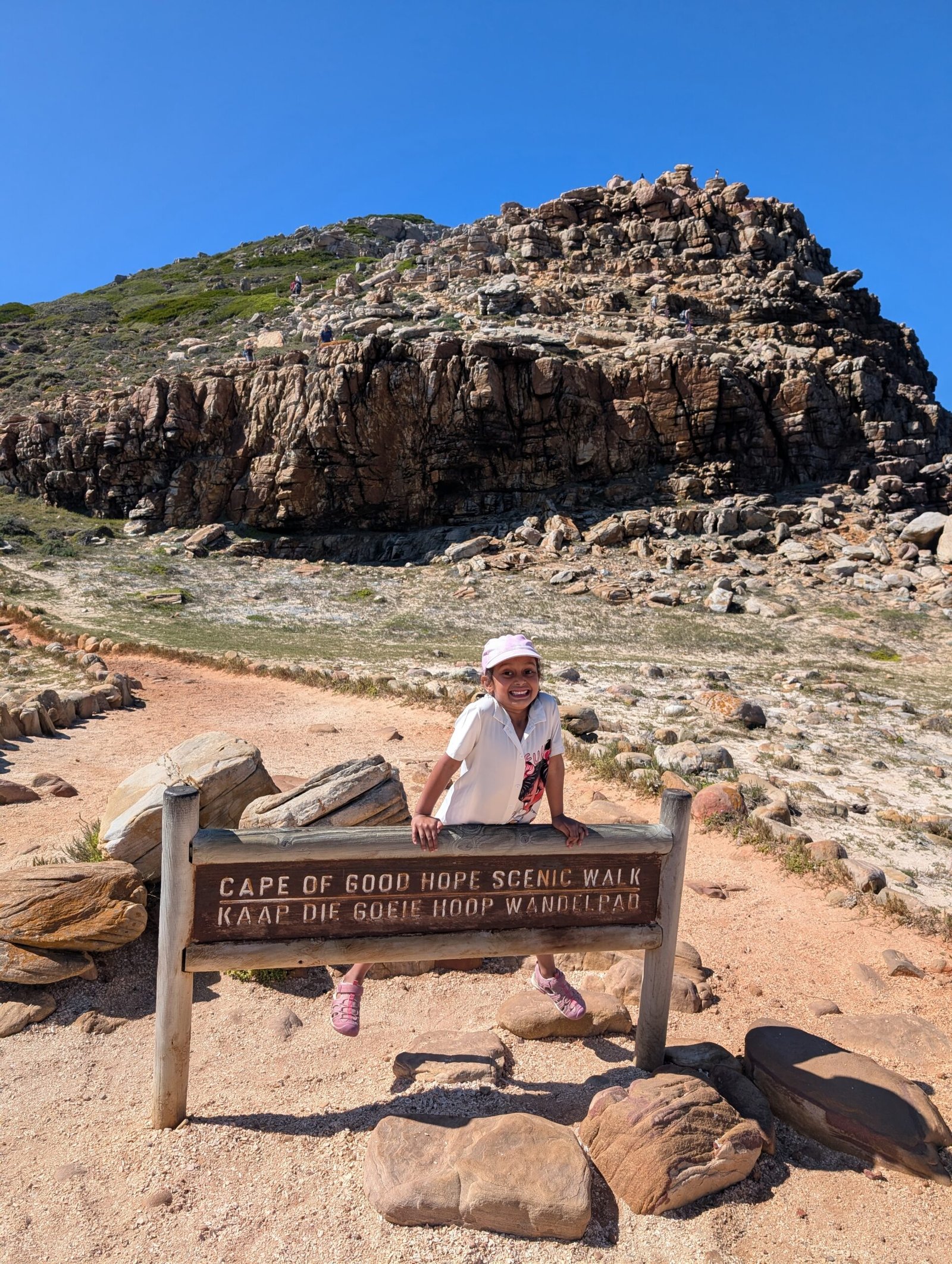
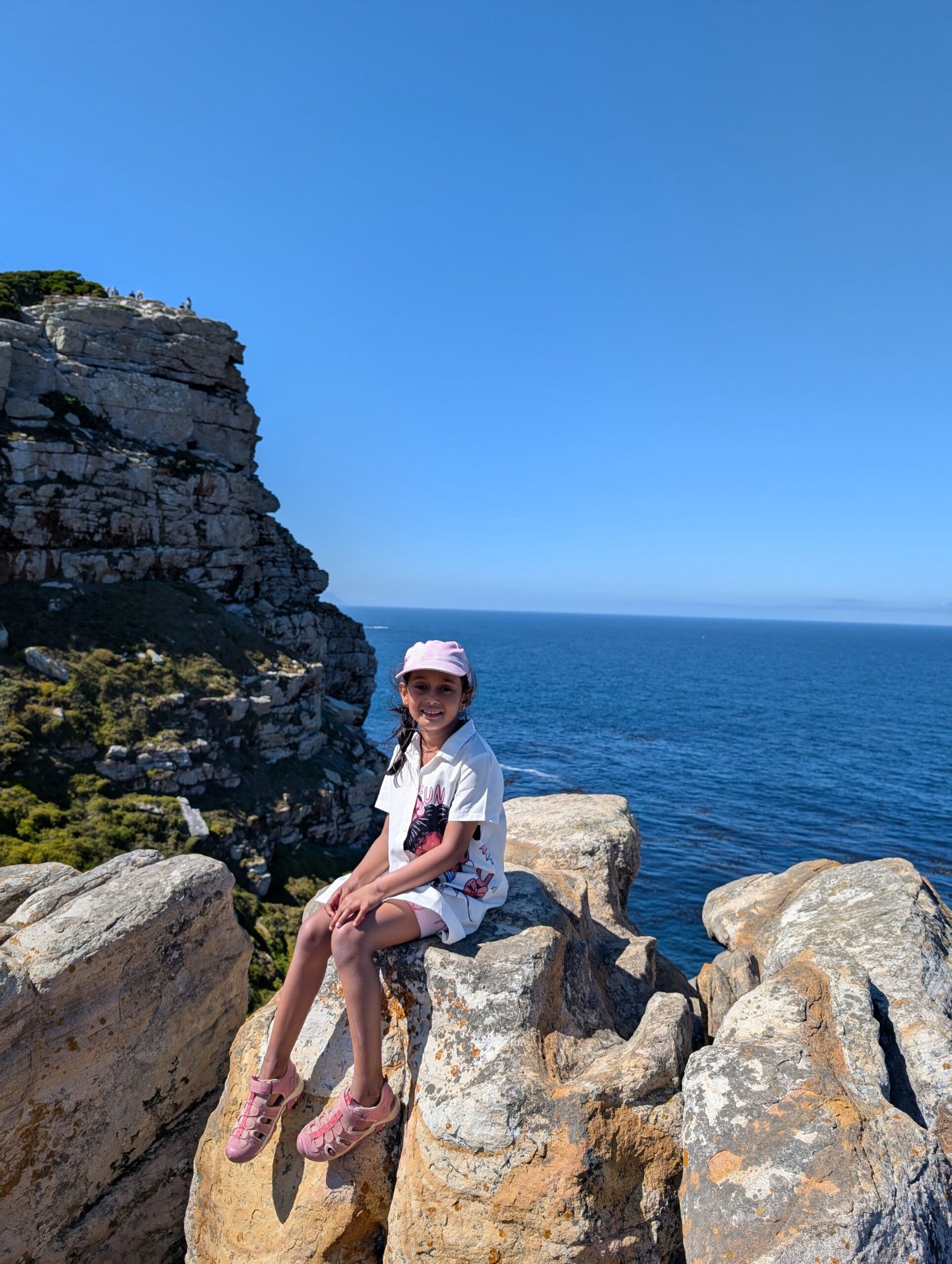
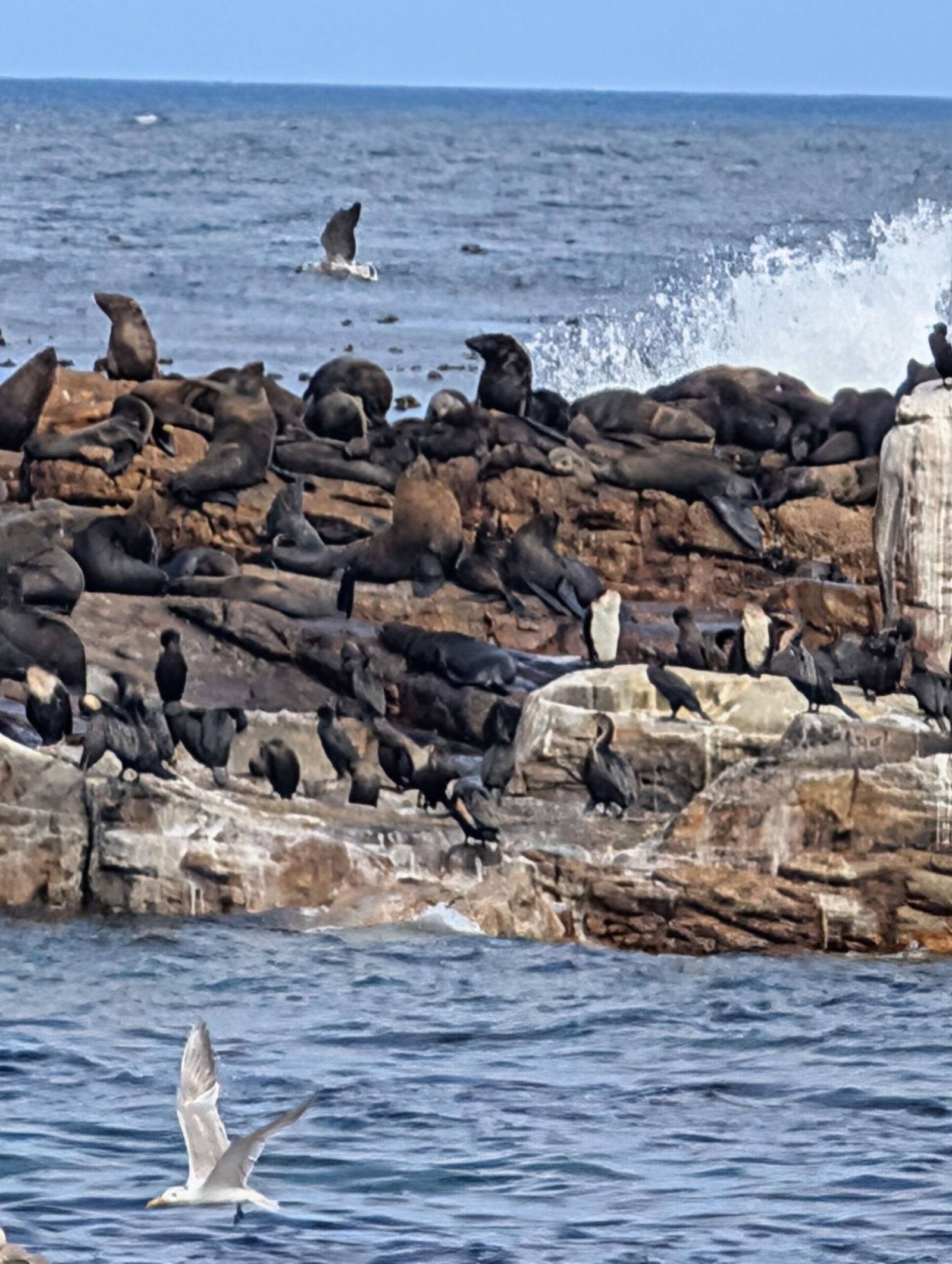
We took the photos. We took the memories. We took the deep breaths that a place like this demands.
Ostriches and a Bird We’d Been Missing
From the Cape of Good Hope, we made a small detour to a place I’d been quietly hoping to visit — the Cape Point Ostrich Farm.
Here’s the thing: in six days at Kruger National Park, we had seen leopards, lions, cheetahs, wild dogs, elephants, buffalo, giraffes, zebras, hippos, hyenas, genets, kudus, impala, secretary birds, and a black mamba. But we had not seen an ostrich. The biggest bird on the planet. The one creature you’d think would be impossible to miss.
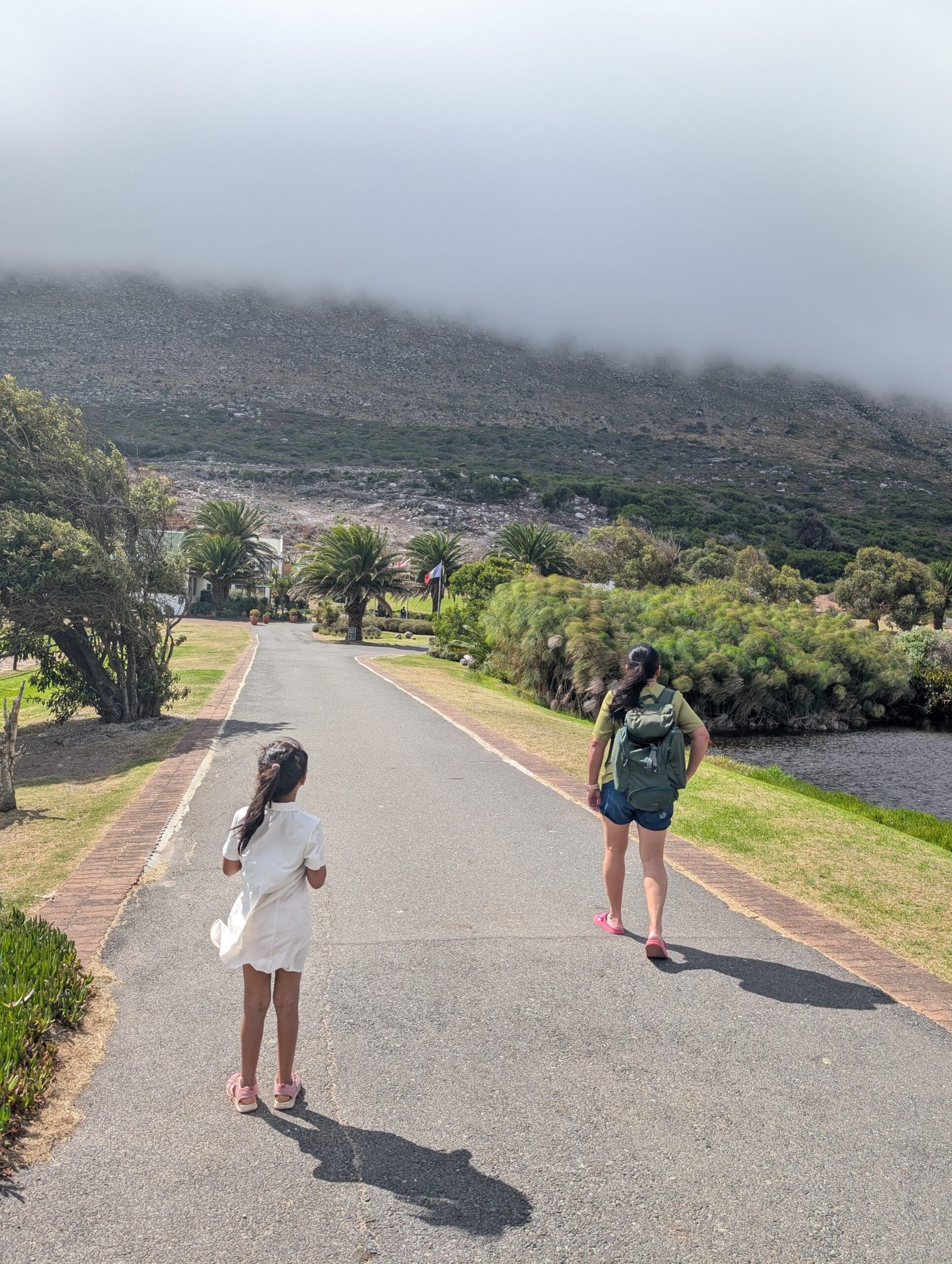
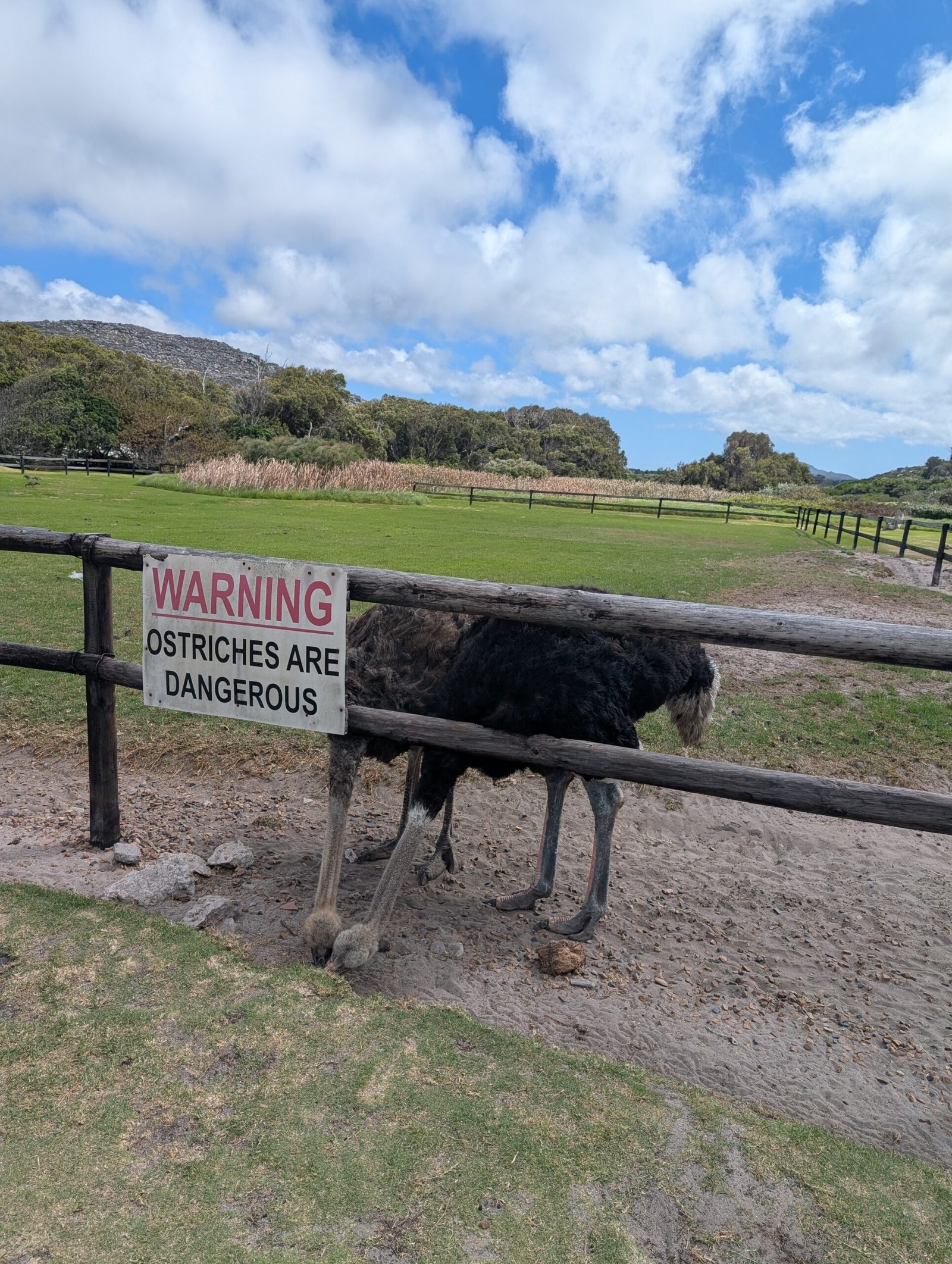
The ostrich farm was a charming, low-key affair — not a major tourist attraction, but a family-run operation where these magnificent, absurd birds roam freely. We didn’t take the tour — just walked around the grounds, which are free to explore.
Chapman’s Peak Drive — The Road That Defies Belief
The drive from Cape Point back towards Cape Town offers several routes, but there is only one correct choice: Chapman’s Peak Drive.
I don’t say this lightly: Chapman’s Peak is one of the most spectacular coastal roads on Earth. It clings to the mountainside above the Atlantic, carved into the cliff face, with the ocean hundreds of metres below and the peaks soaring above. Every curve reveals a new vista more dramatic than the last. Every pull-off point is a postcard. Every moment behind the wheel is equal parts exhilarating and terrifying.
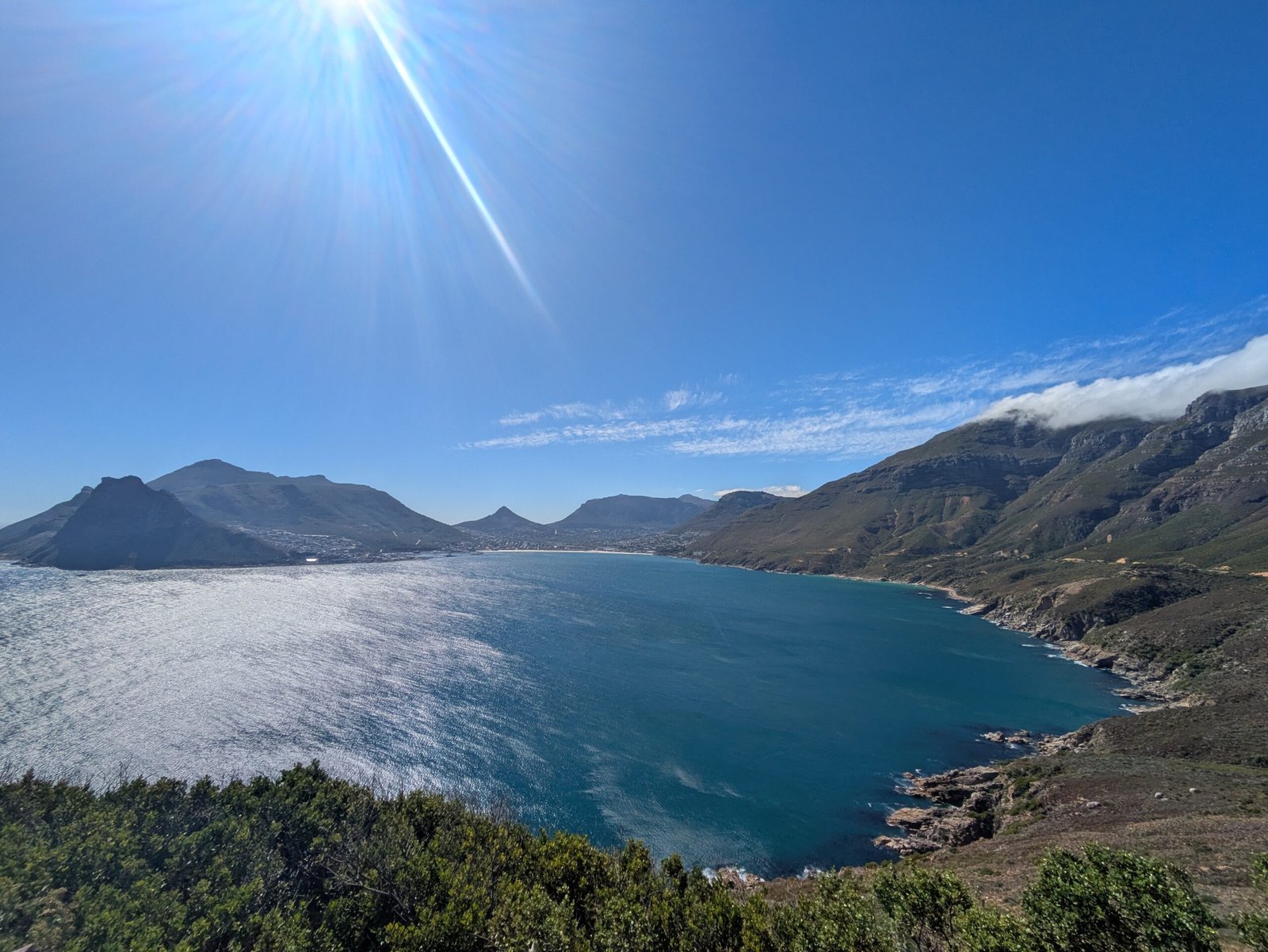
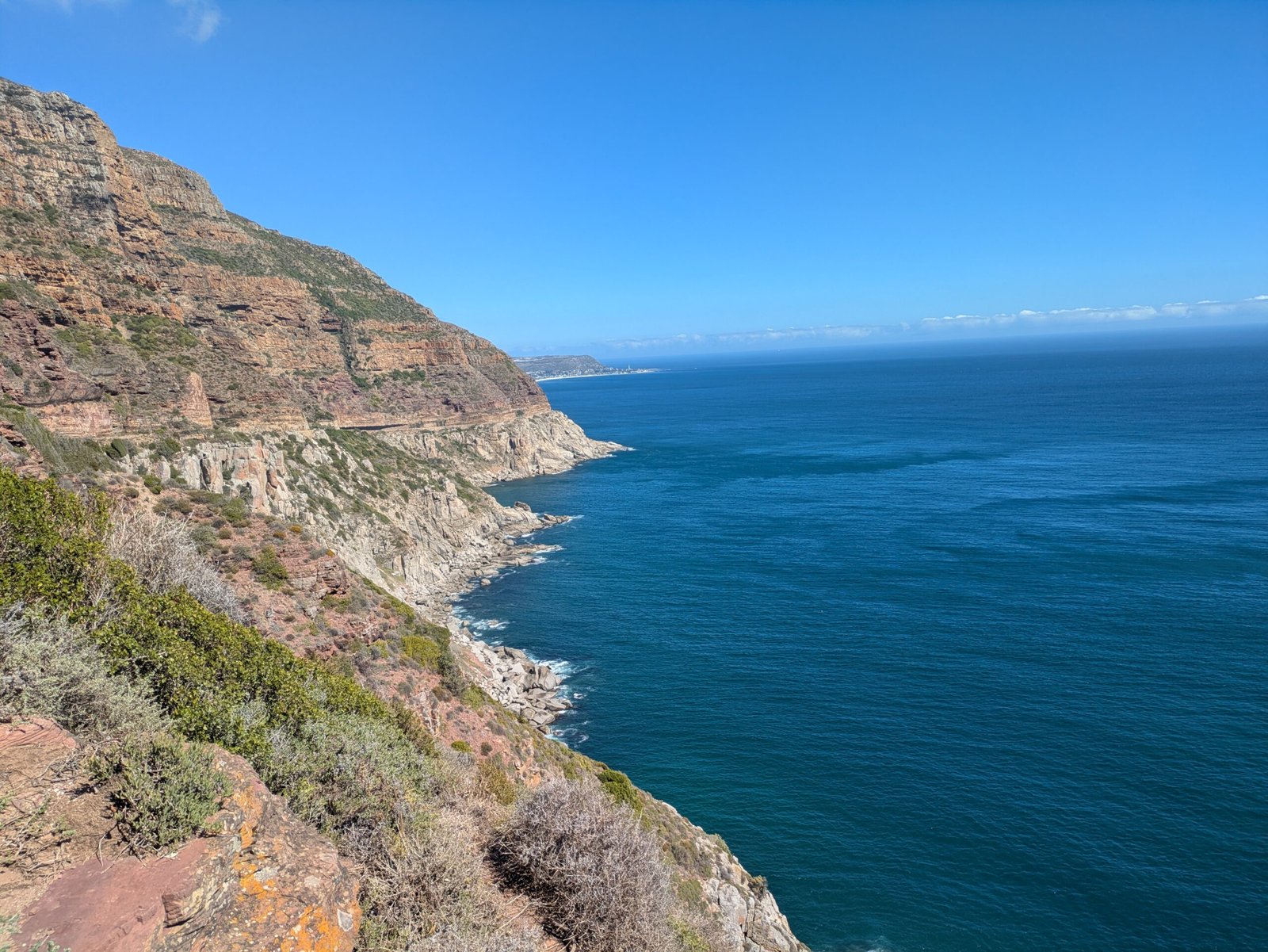
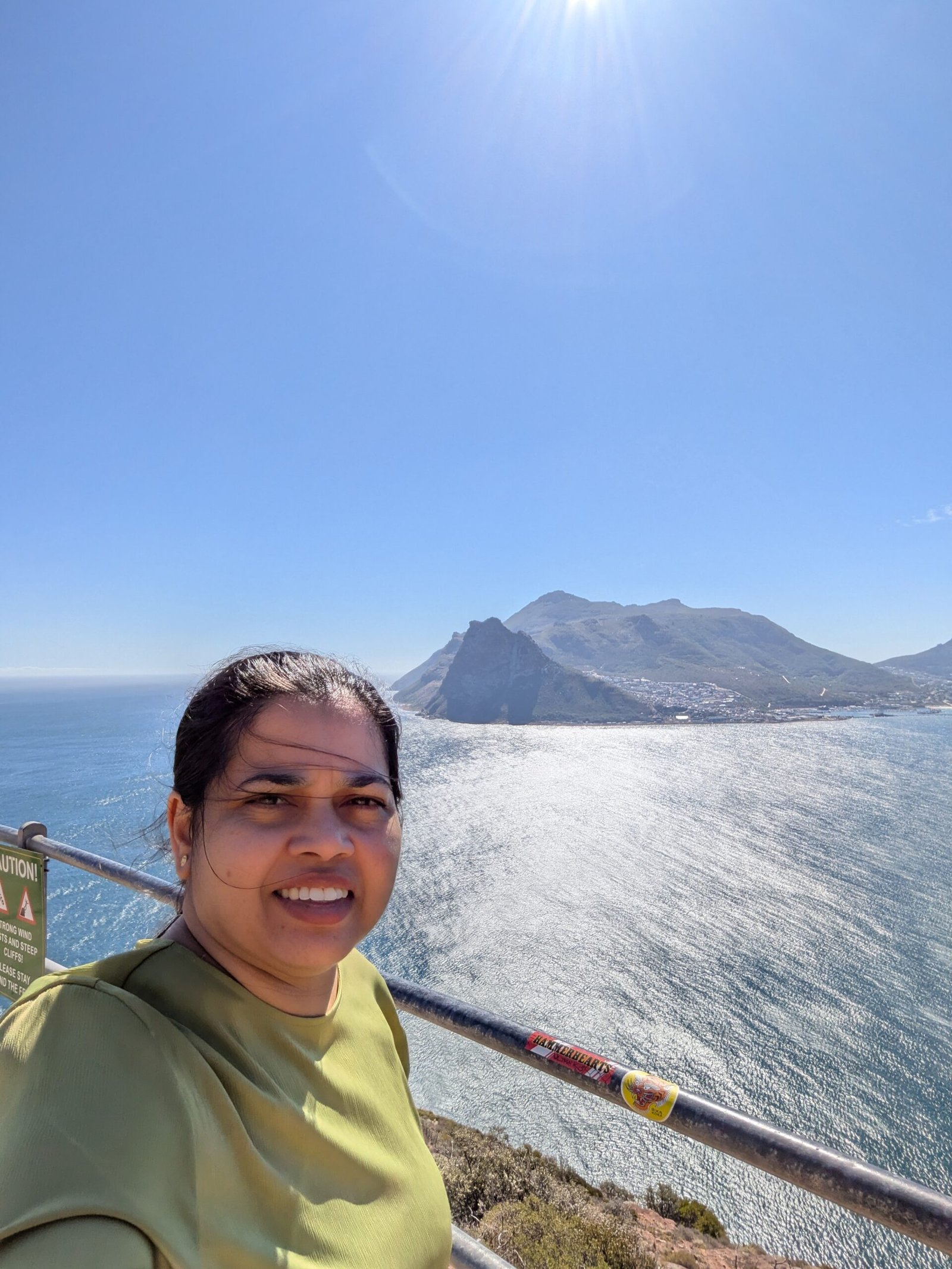
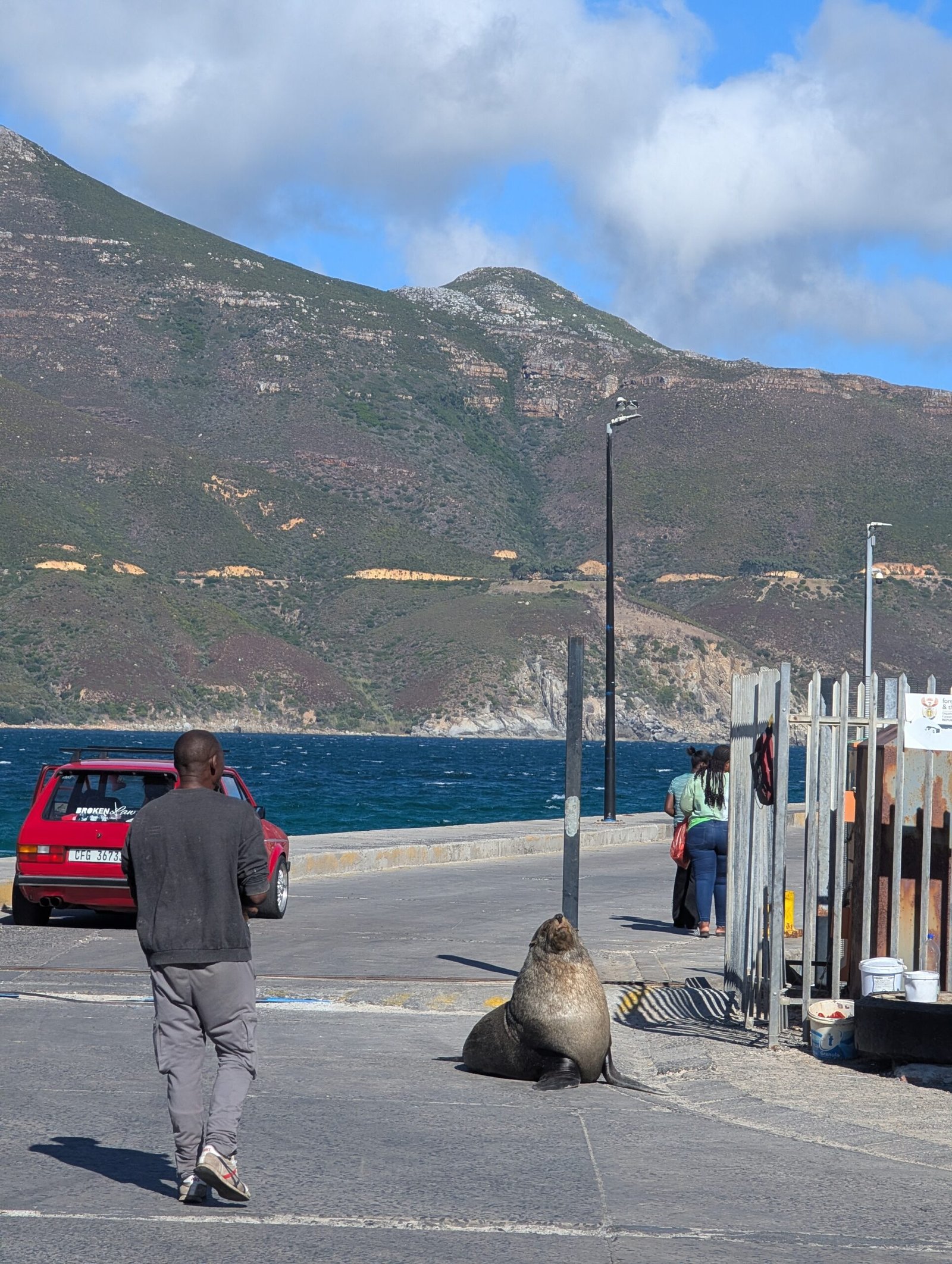
The road delivered us to Hout Bay — a picturesque harbour town nestled in a natural amphitheatre of mountains, with a working fishing harbour and a vibrant waterfront.
We found a restaurant overlooking the ocean — one of those places where the food is almost secondary to the setting, except that the food was actually wonderful too. A proper lunch. Overlooking the harbour. Addy dipping her toes in and squealing at the cold. The hot sun on our faces.
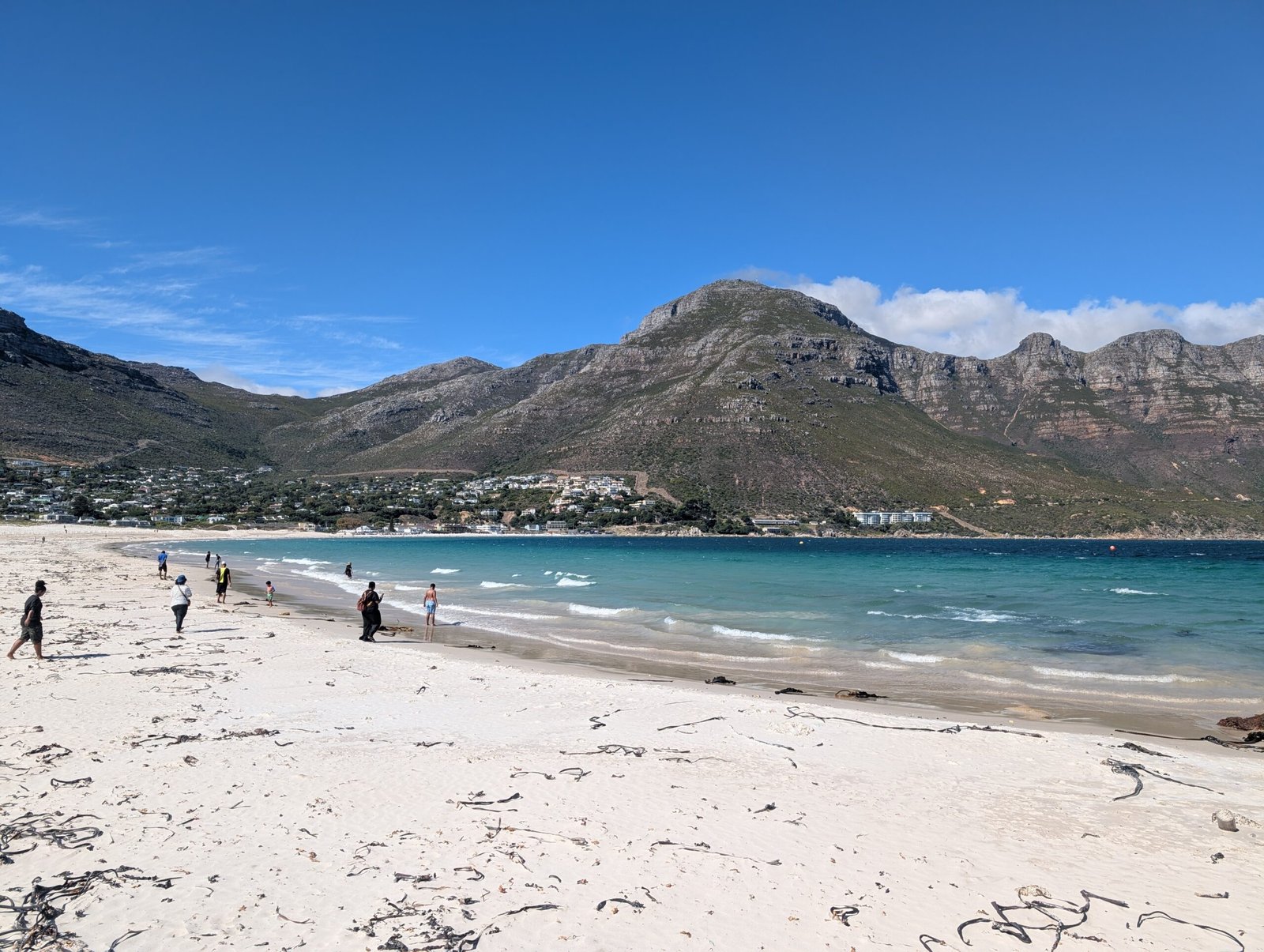
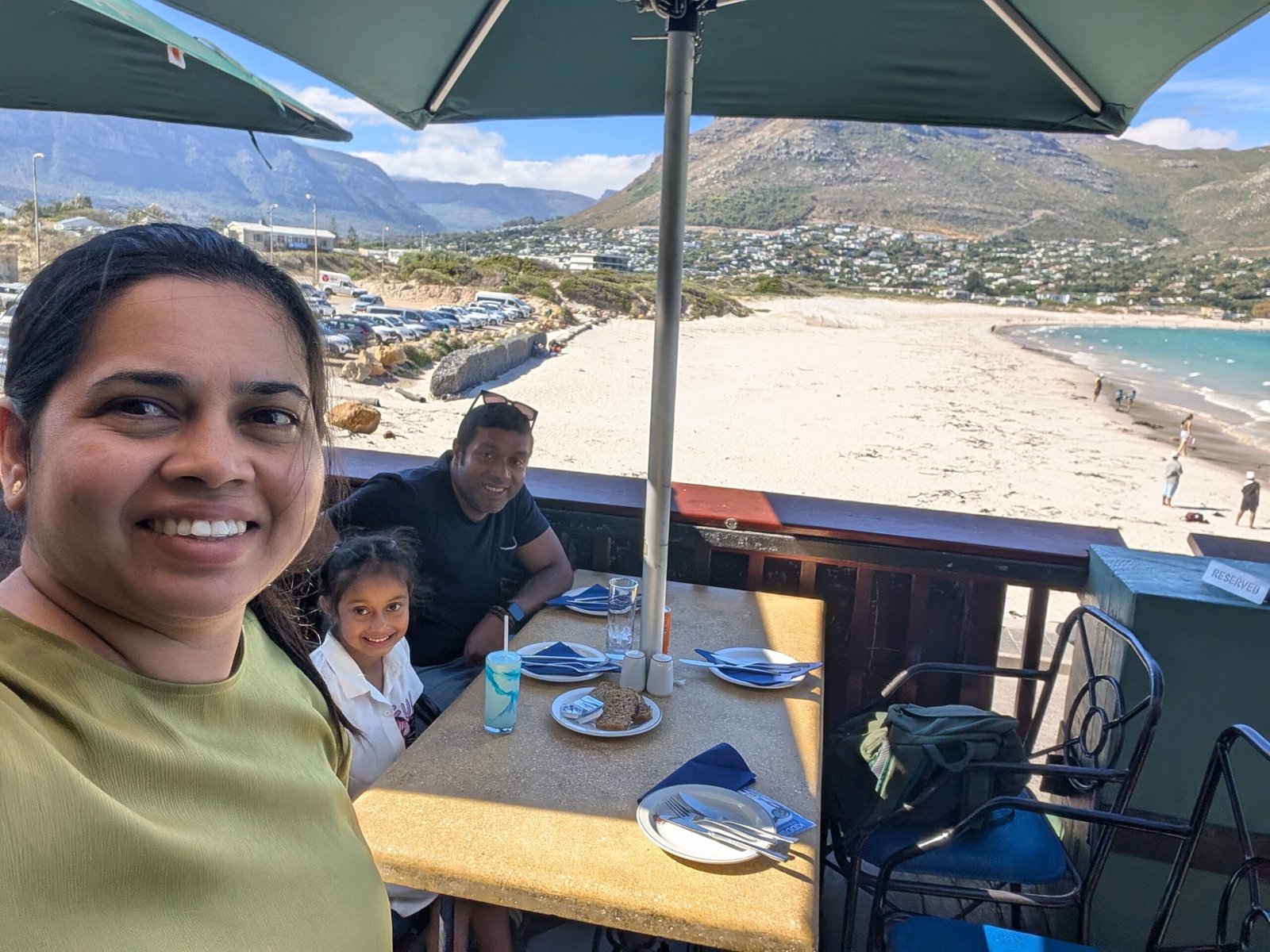
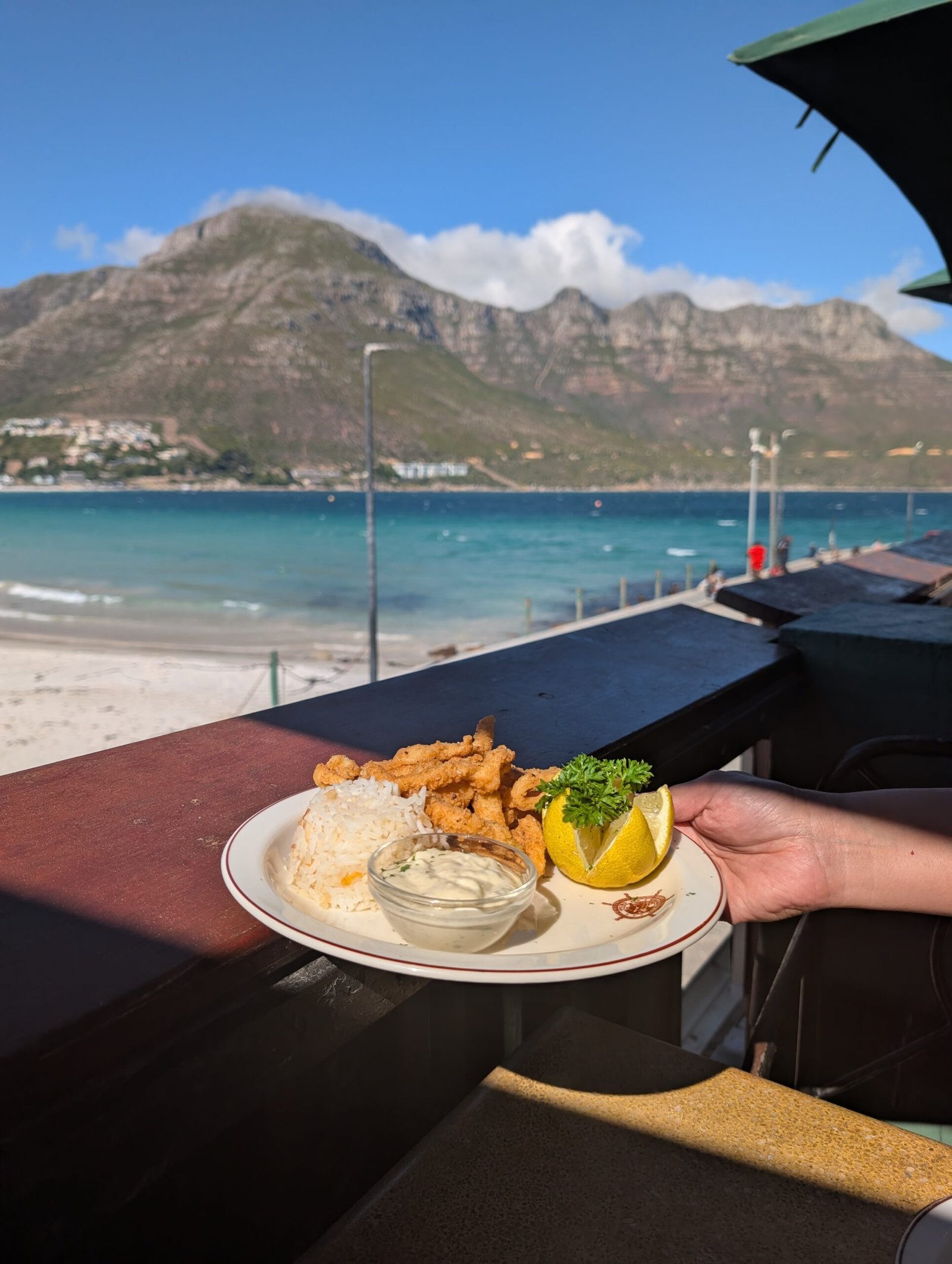
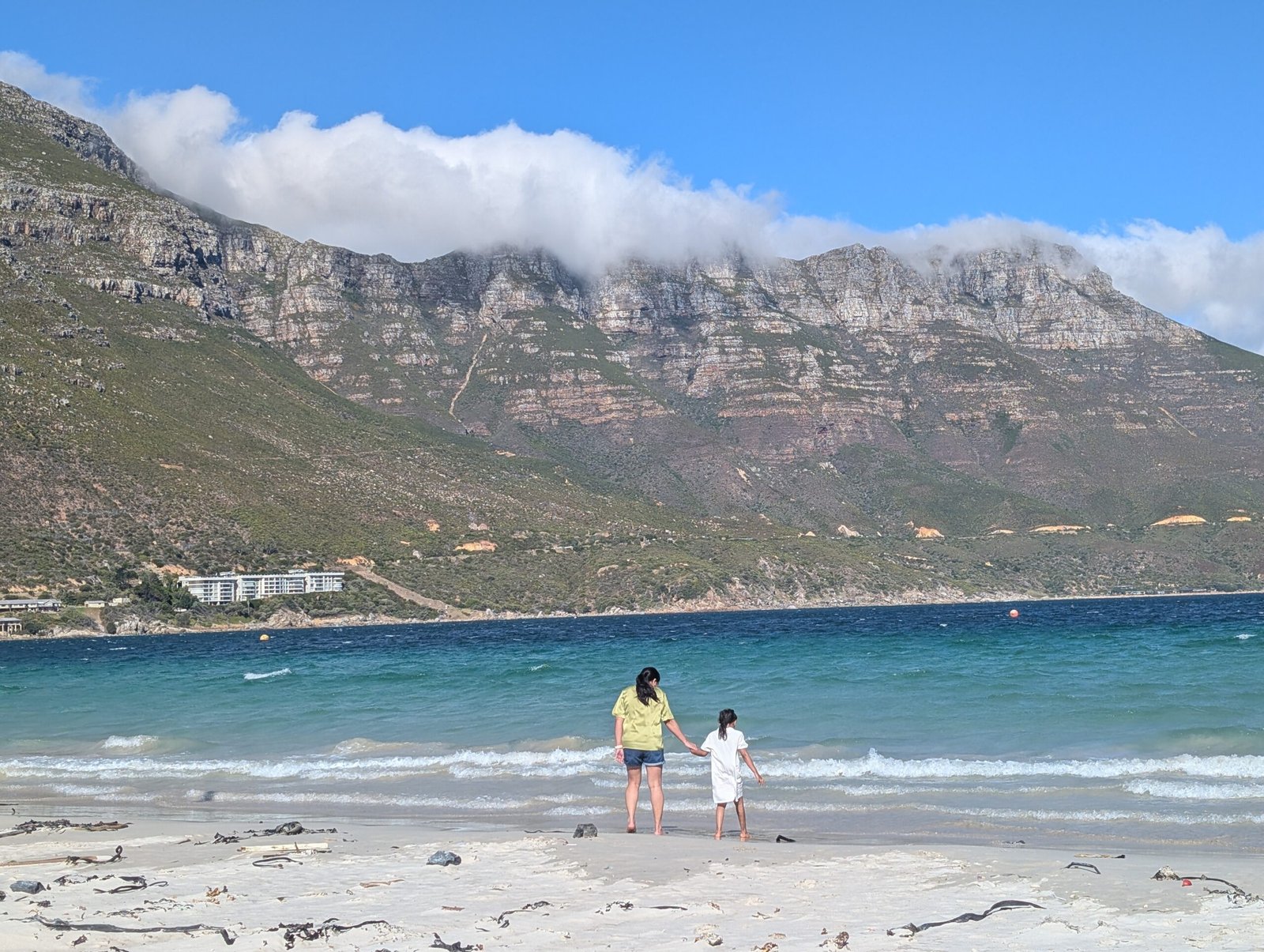
I was still under the weather — still sniffling, still aching — but sitting there, with a drink in my hand and the Atlantic sparkling before me, I felt something the virus couldn’t touch: deep, uncomplicated happiness.
Table Mountain — Where the Clouds Fall Like Water
The afternoon’s crown jewel: Table Mountain.
We parked at the designated lot and took the shuttle bus that ferries visitors up the winding road to the cable car station. The bus climbs steeply, and with every metre gained, Cape Town drops further away below you — the city shrinking, the ocean expanding, the scale of this mountain becoming almost incomprehensible.
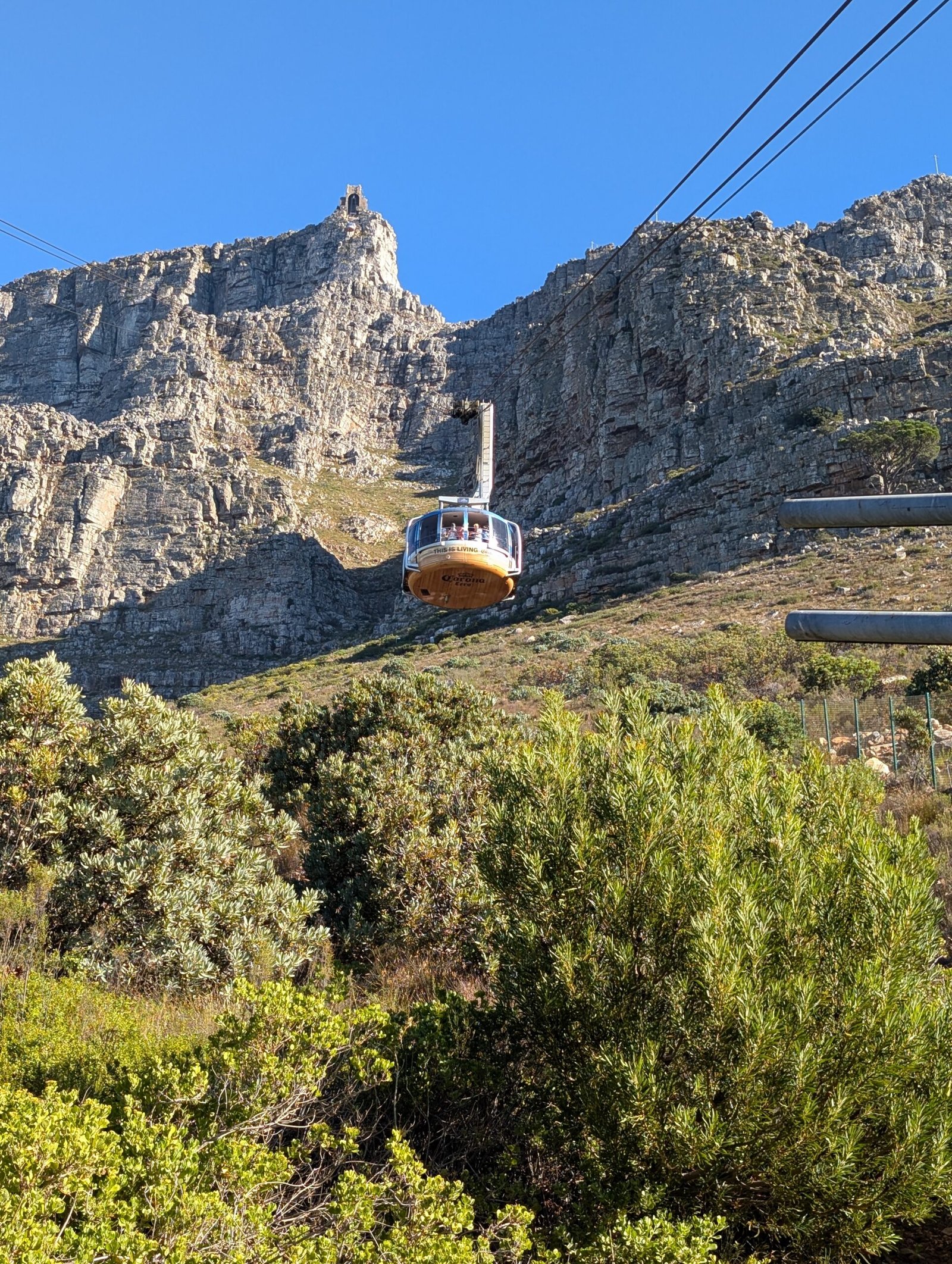
The cable car to the summit is an experience in itself — a rotating gondola that turns 360 degrees during the ascent, giving every passenger a complete panoramic view. Addy pressed her face against the glass as the city fell away beneath us, the harbour becoming a toy set, the cars becoming ants, the ocean becoming infinity. And then — the top.
Table Mountain’s summit is unlike any mountain peak I’ve ever stood on. It’s not a point — it’s a plateau. A vast, flat expanse of ancient rock, 1,085 metres above the city, with views that stretch in every direction to the edge of the world.
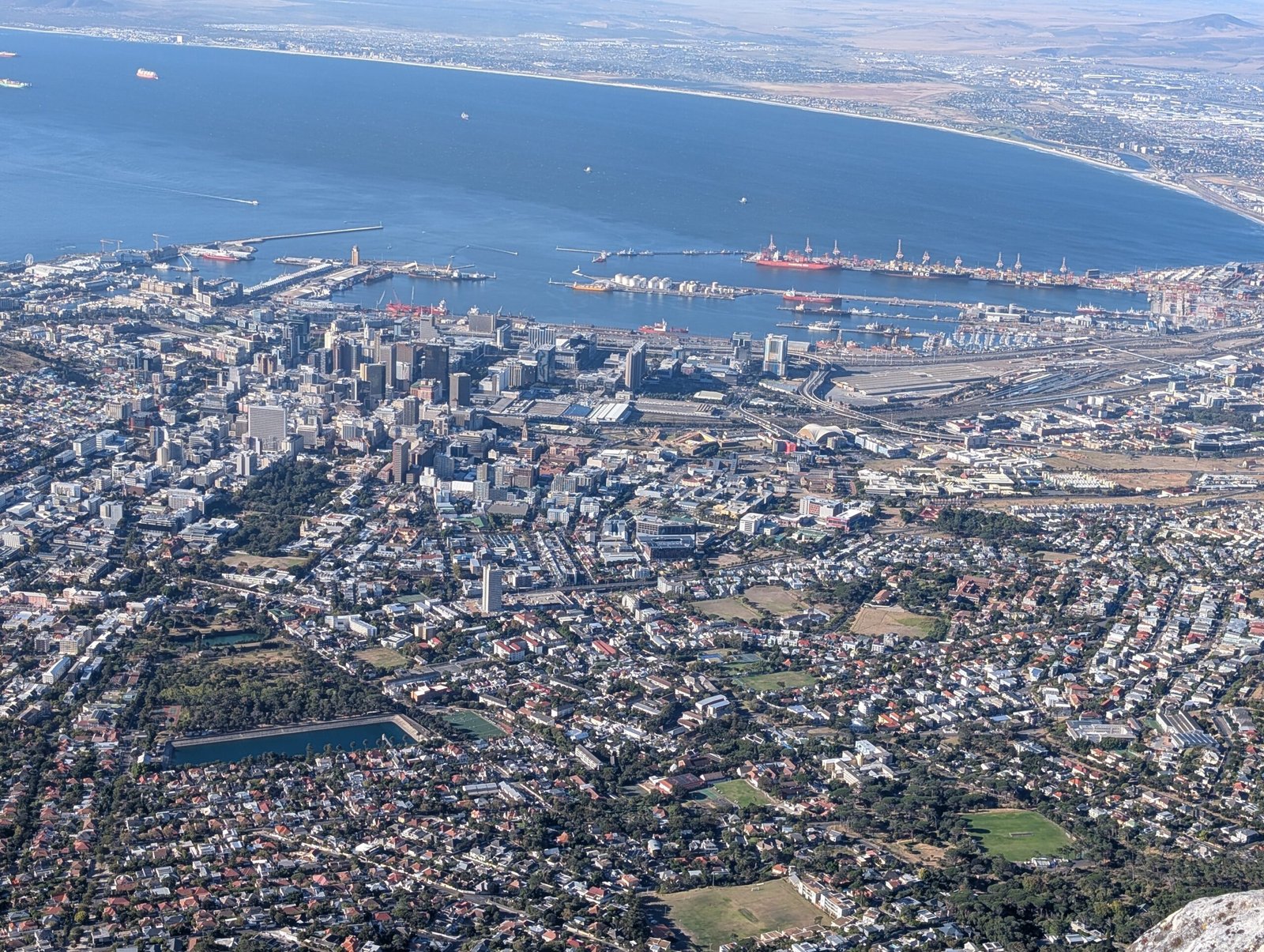
To the north: Cape Town, spread out like a model city, every street and building visible, the harbour curving around the waterfront. To the west: the Atlantic Ocean, deep blue and endless, the sun beginning its long descent towards the horizon. To the south: the spine of the peninsula, stretching towards the Cape of Good Hope, where we’d stood just hours before. To the east: the Cape Flats, stretching towards the Winelands and the distant mountains beyond.
But the most magical thing — the thing that photographs can never truly capture — was the clouds.Table Mountain creates its own weather. Moist air from the ocean hits the mountain and rises, cooling as it climbs, condensing into cloud at the summit. And when conditions are right, those clouds don’t just sit on the mountain — they pour over the edge like a slow-motion waterfall. A cascade of white mist, tumbling over the cliff face, dissolving into nothing as it falls.They call it the Tablecloth. And it is one of the most hauntingly beautiful natural phenomena I have ever witnessed.
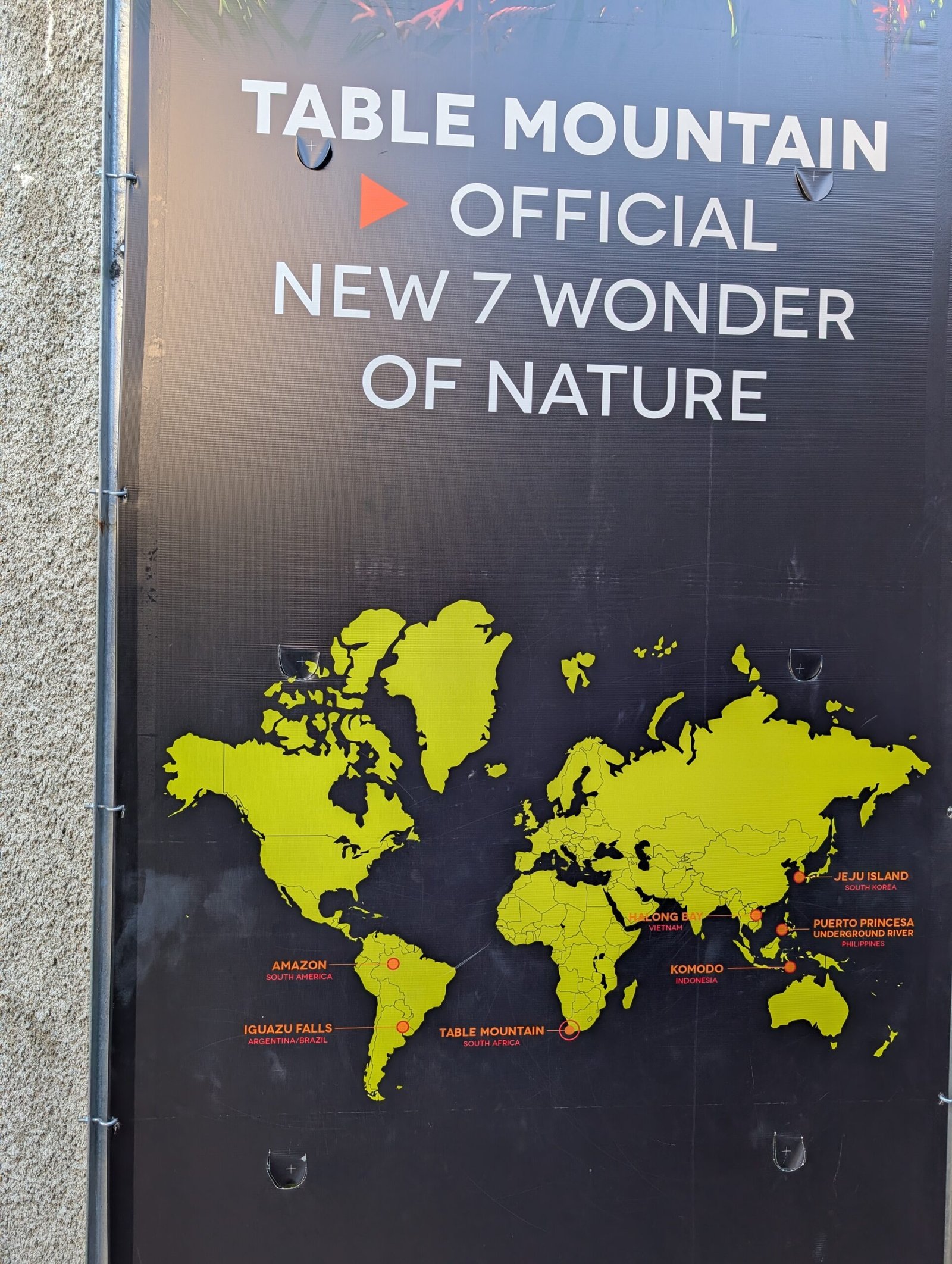
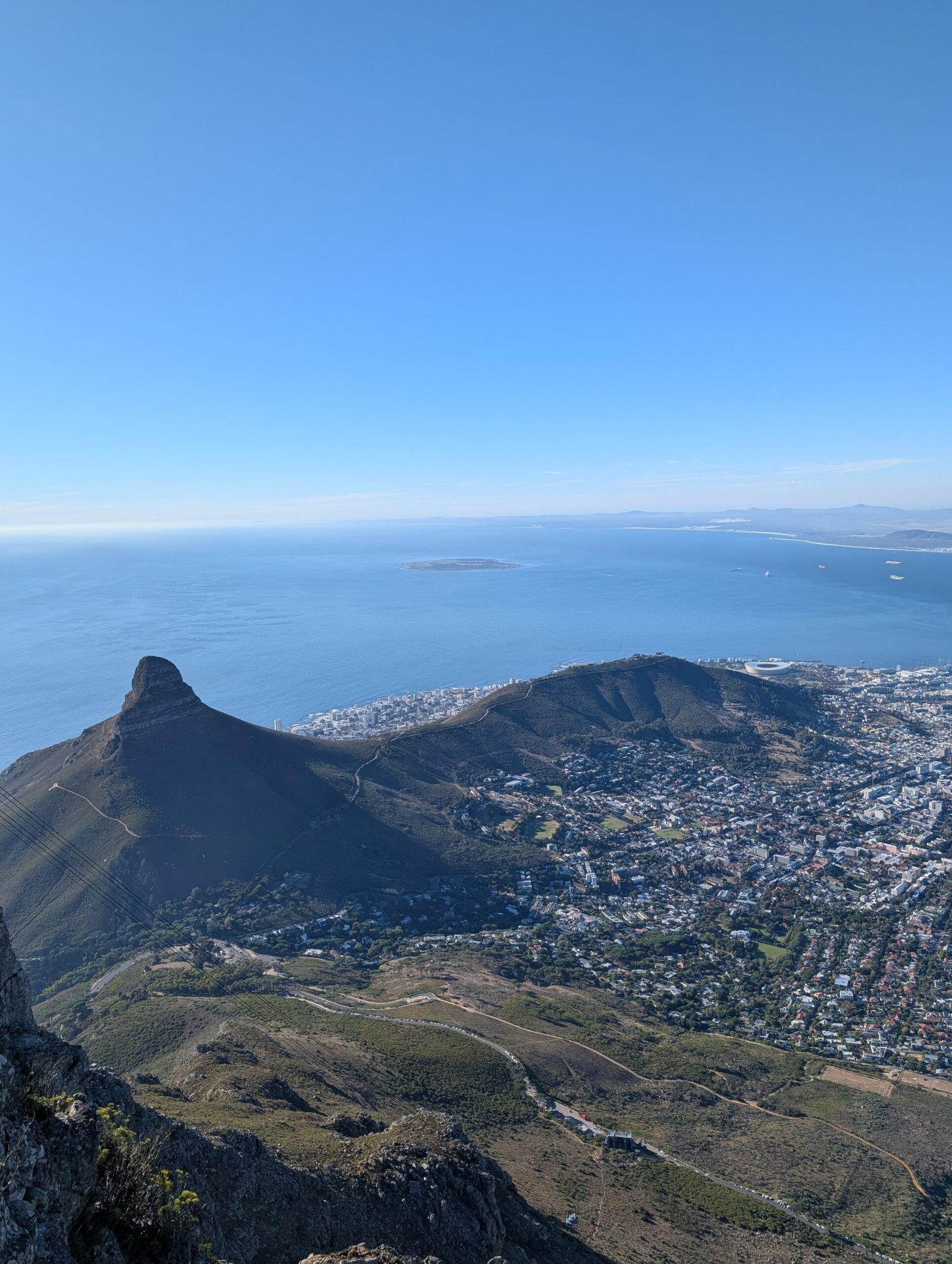
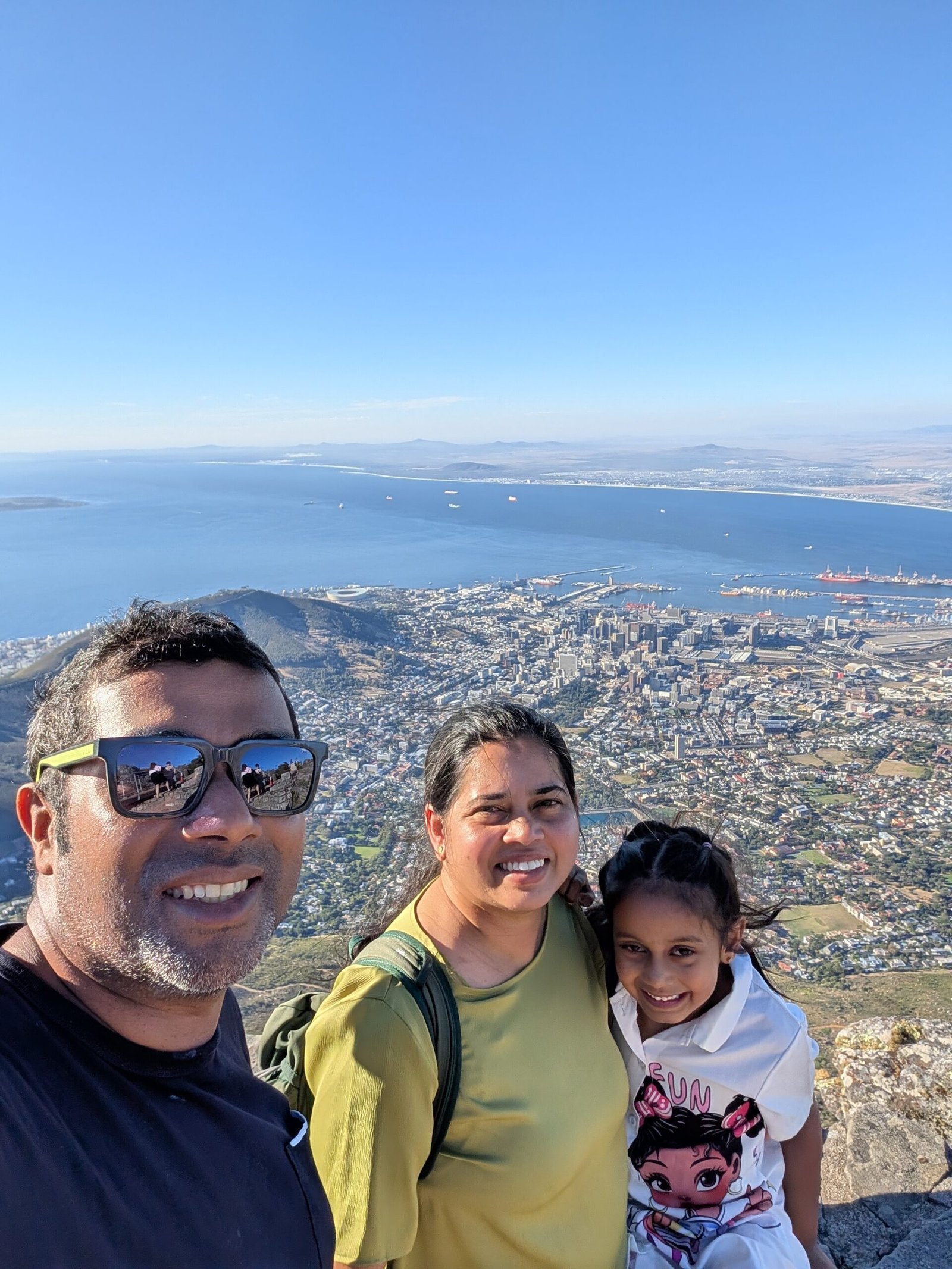
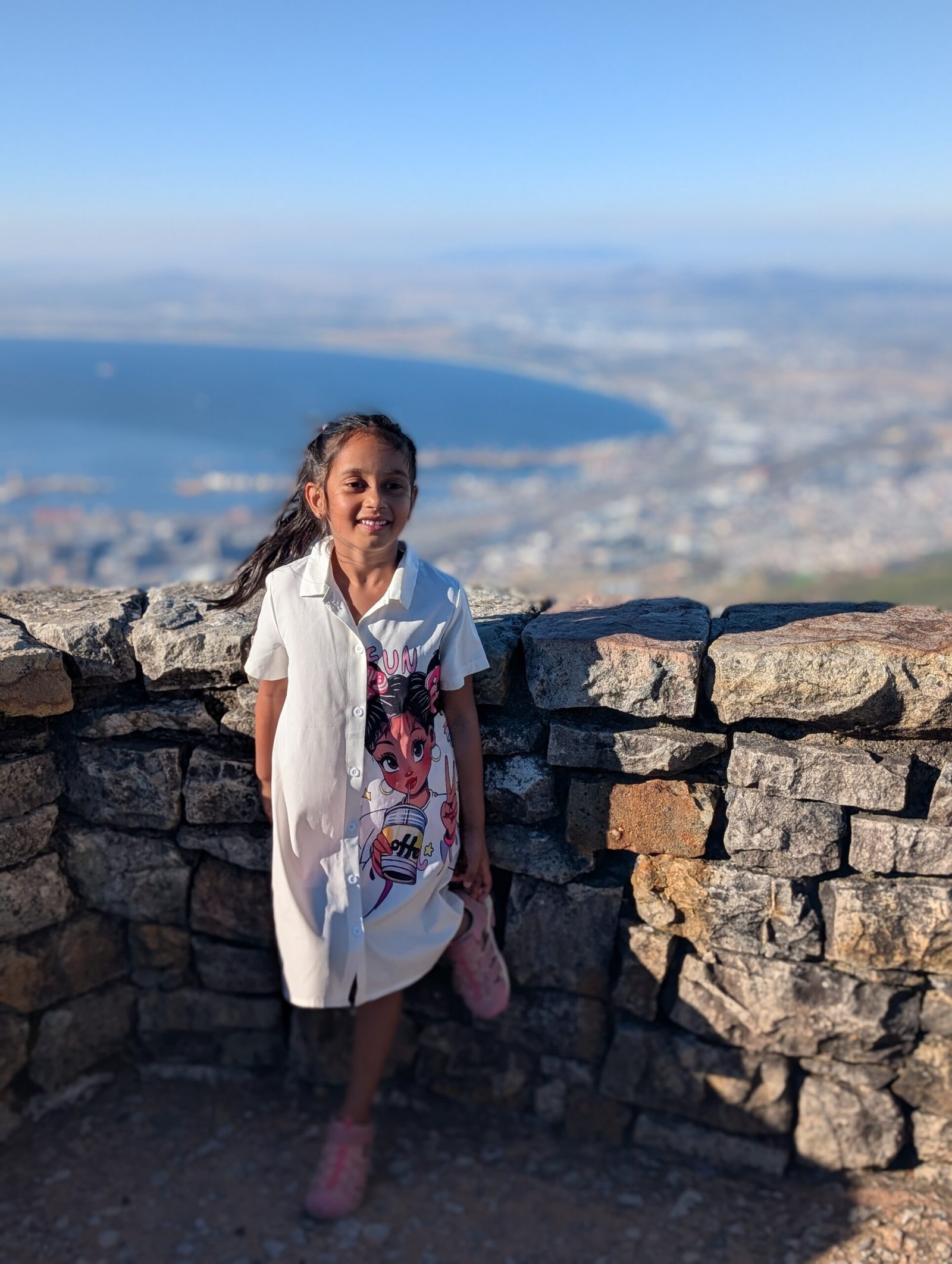
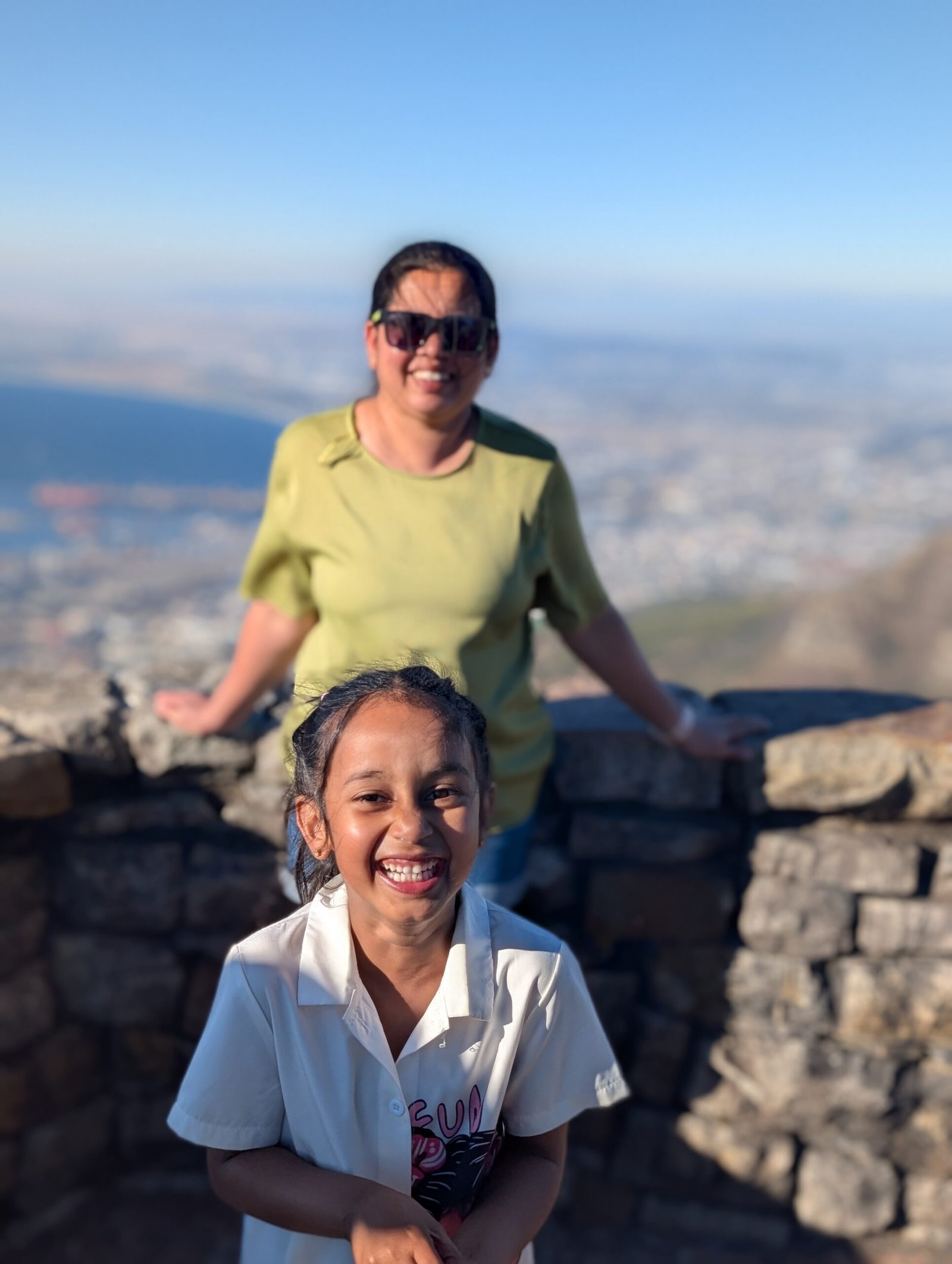
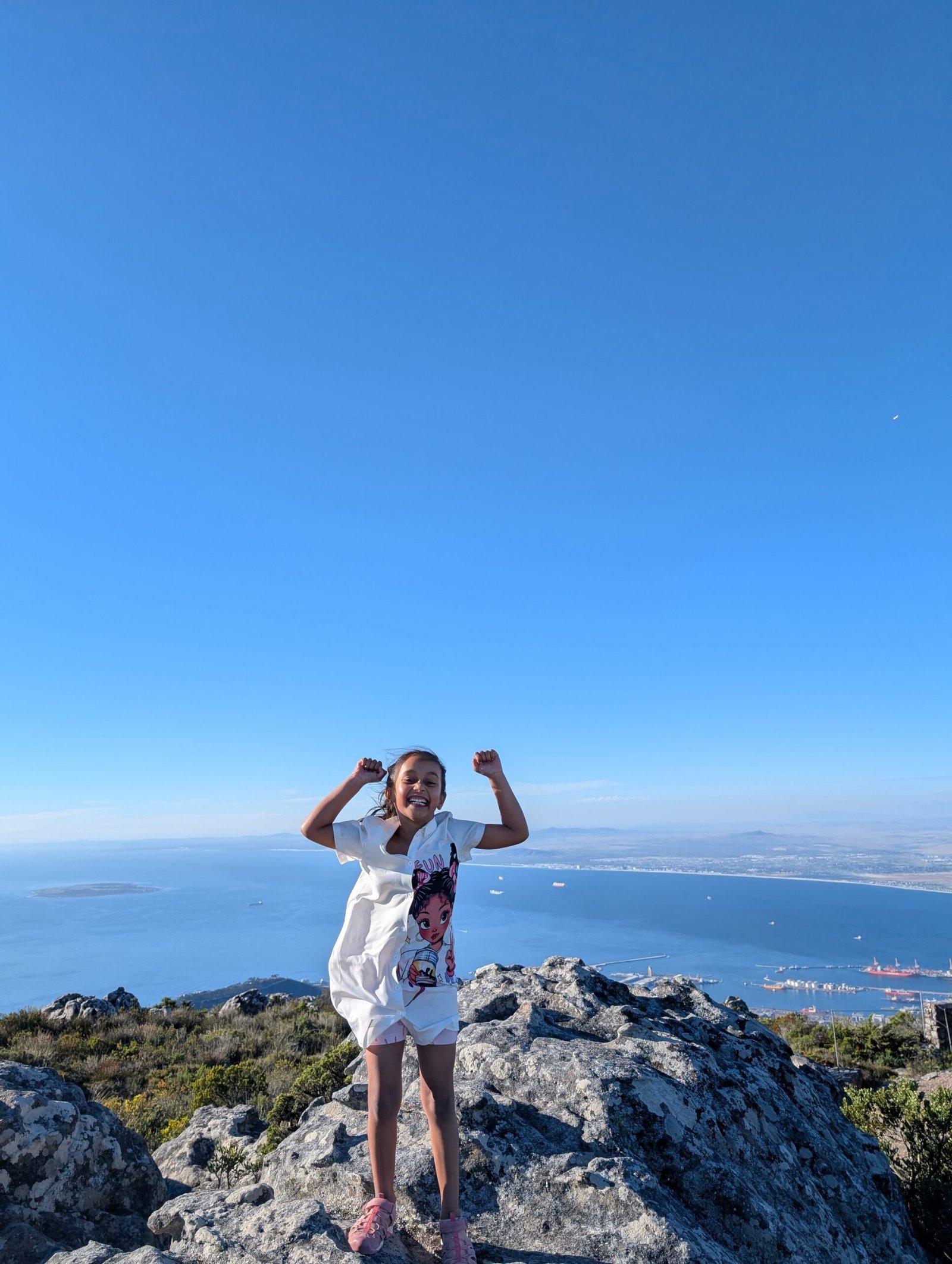
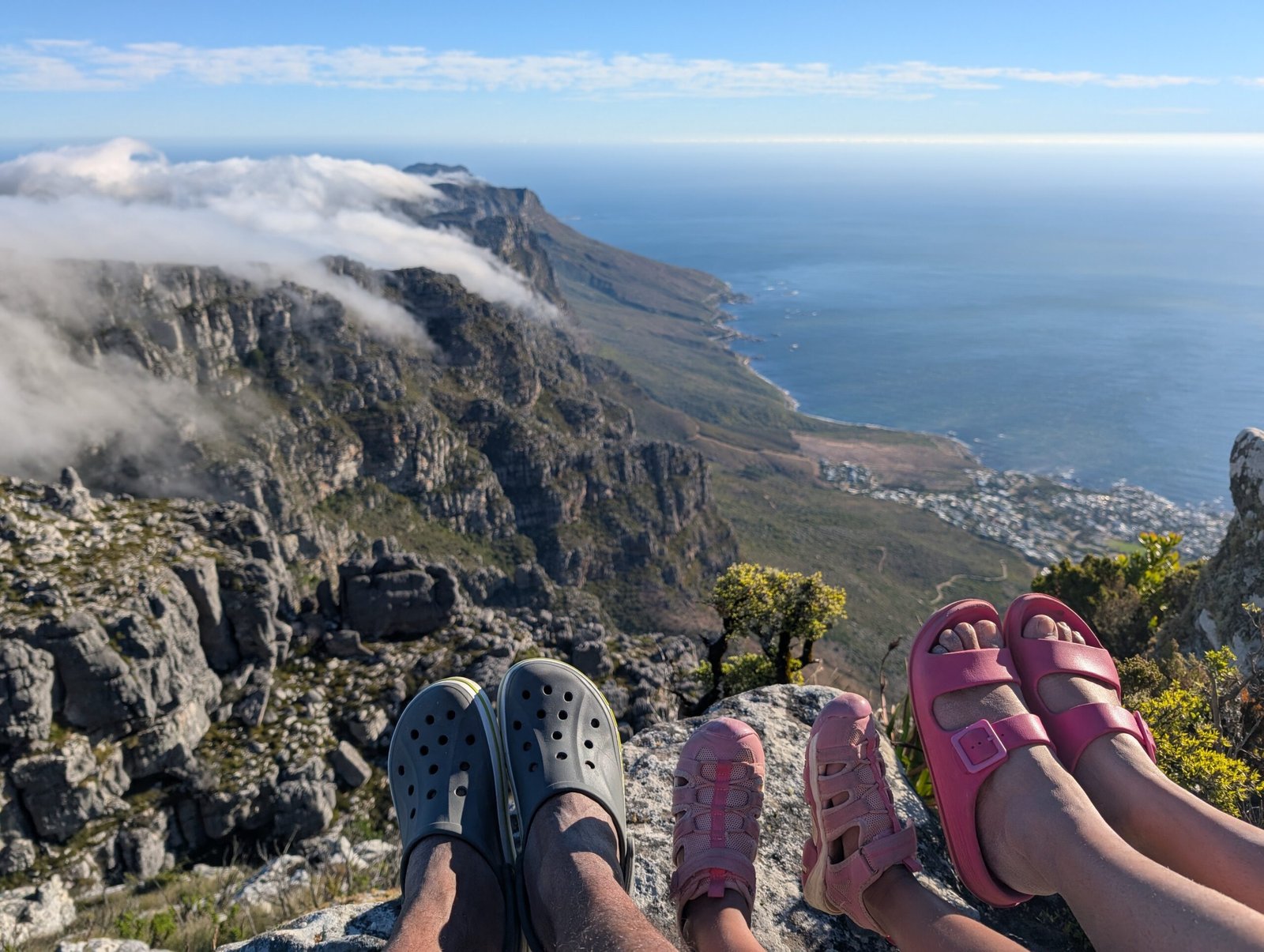
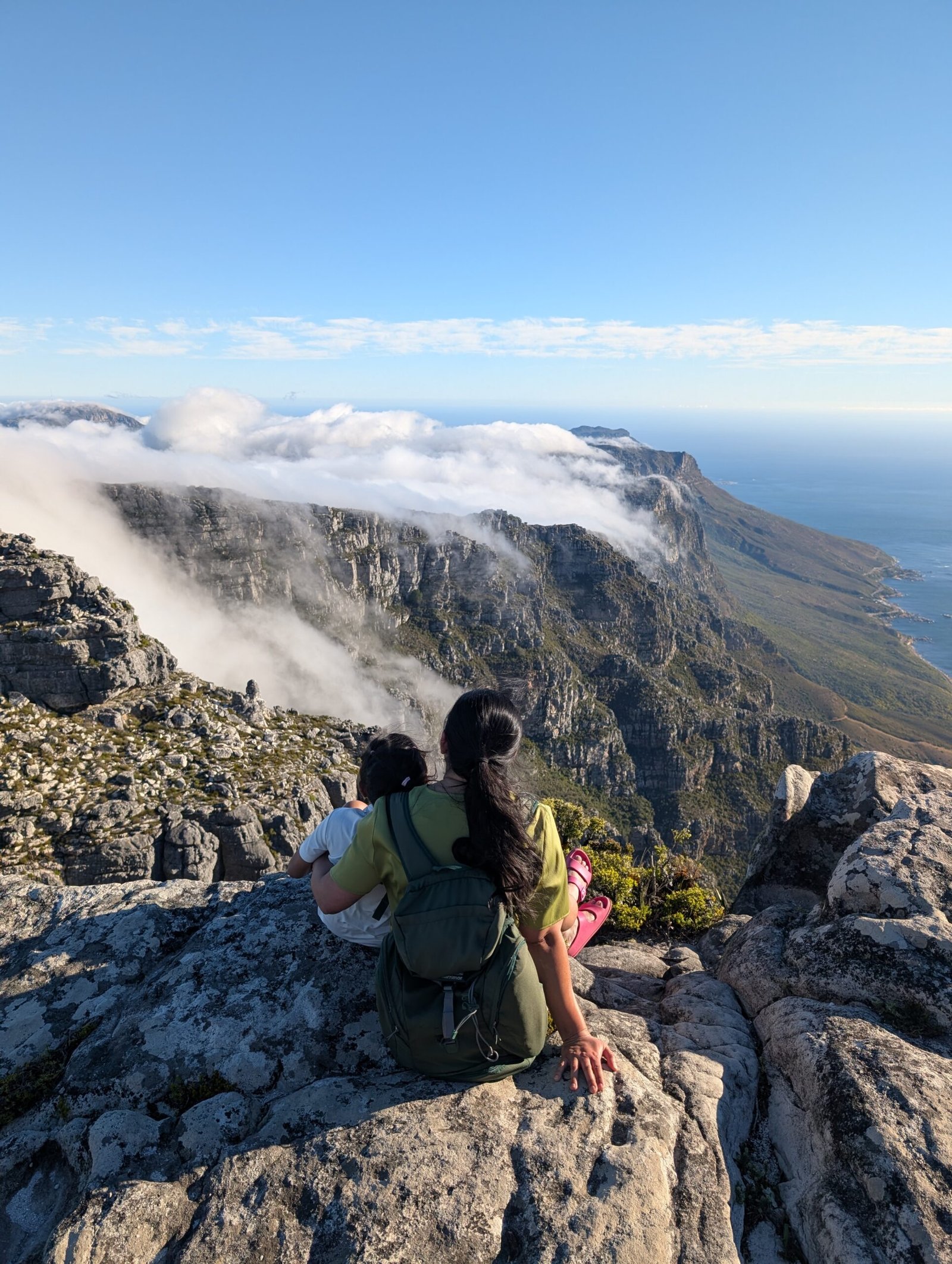
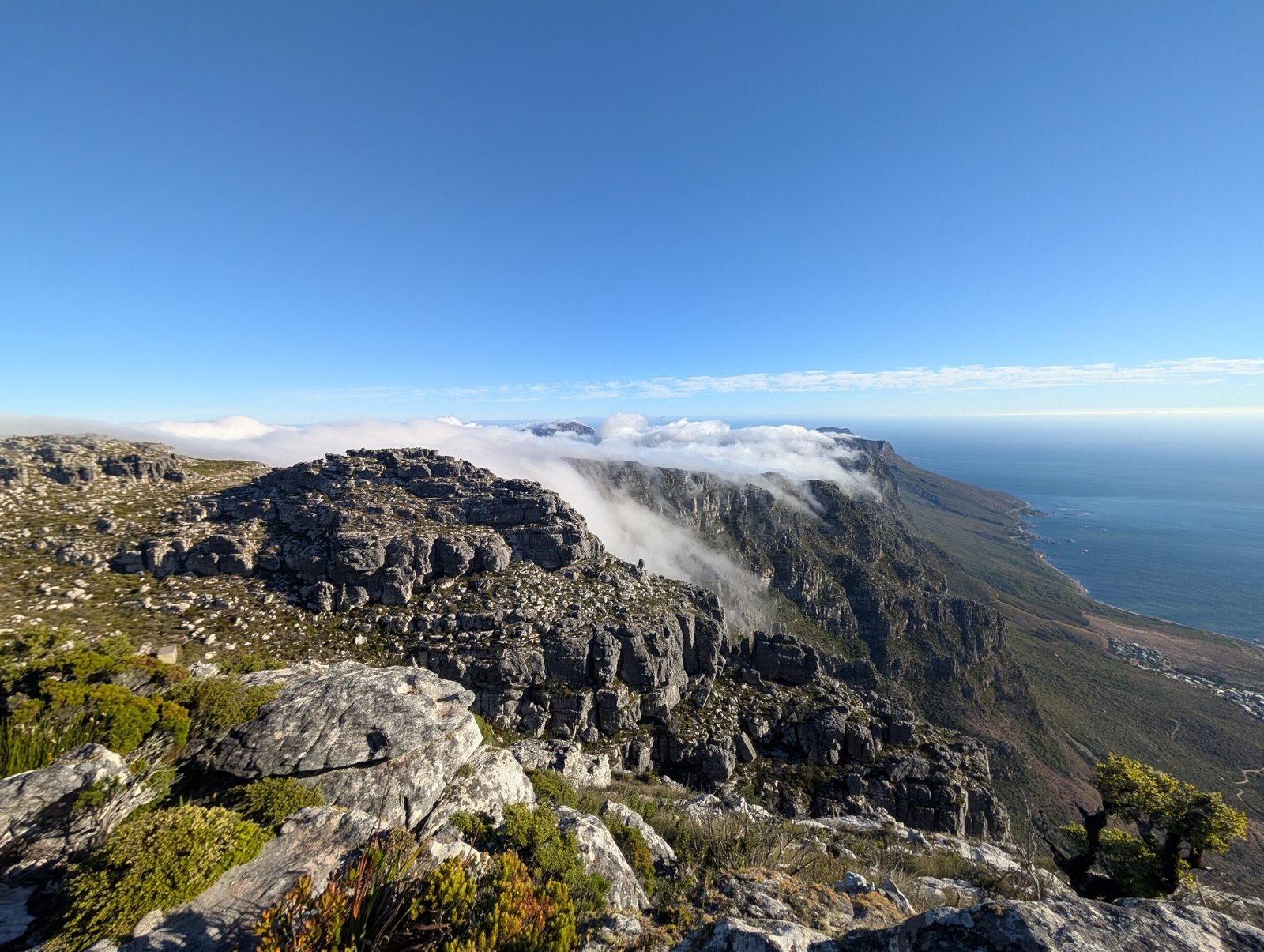
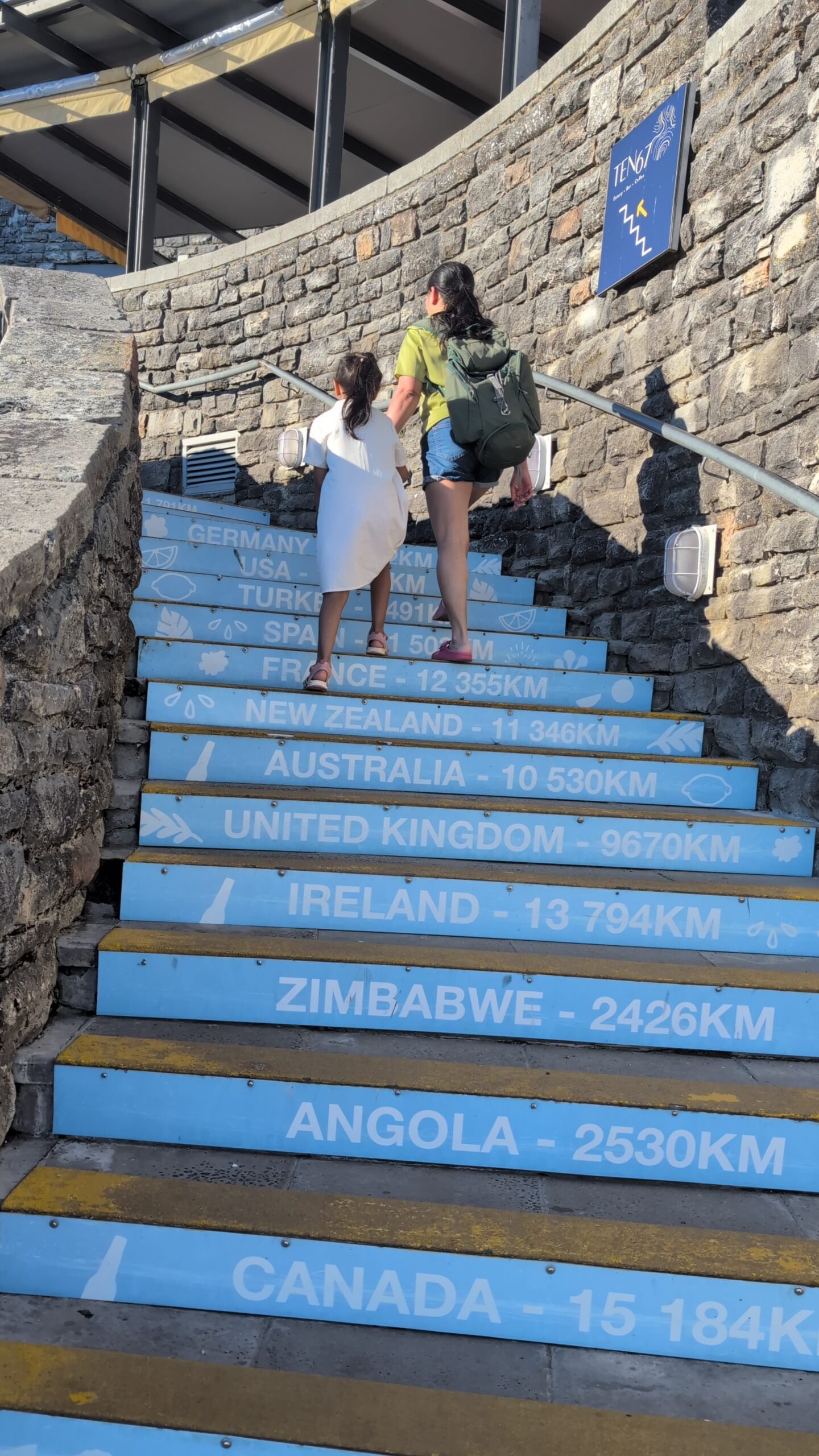
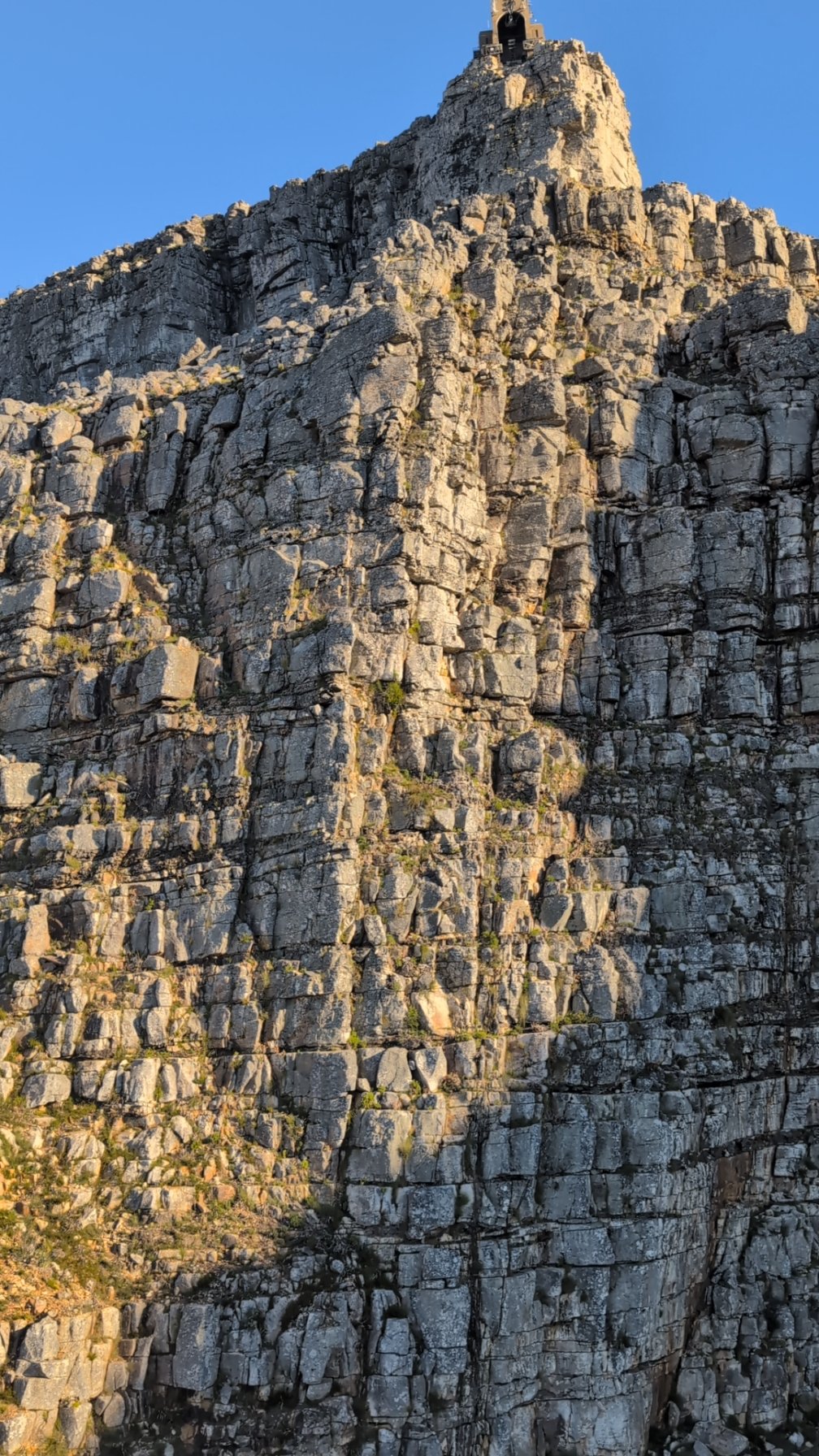
We sat on the rocks at the edge of the plateau — the three of us, legs dangling, the wind in our hair — and watched the clouds fall. Not rushing. Not checking the time. Not photographing every second. Just… being. Present. Together. At the top of a mountain that has watched over this land for six hundred million years.
We arrived back at our 36th-floor apartment as the last light faded. Cape Town glittered below us. The mountains stood dark and silent above. And somewhere out there, beyond the lights and the ocean, Kruger’s bush was settling into its own evening — the lions stirring, the leopards hunting, the wild dogs beginning their patrol. I still miss it.
Two South Africas. One trip. Both unforgettable.


This is Aldrin and my partner Amoli. We bring you "Earths Pilgrim" - a unique insight into our travel escapades while leaving life in a cubicle. If you are looking for some inspiration to break the shackles of a regular life, then you are the right place. Read more about us- Click here.