Cape Town Day 3 — Whales, Dolphins, Sharks, and a Little Girl Who Conquered the Sea
We’d spent a week chasing the Big Five on land. Now it was the ocean’s turn. And the sea, like the bush, doesn’t disappoint those who show up.
A Different Kind of Safari
When people speak of the Big Five, they mean the land — lion, leopard, elephant, buffalo, rhinoceros. The iconic quintet of the African bush. We’d ticked four of the five in Kruger (the rhino, that beautiful ghost, eluding us to the end).
But South Africa has a second Big Five. One that lives beneath the waves and breaks the surface only when it chooses. The Marine Big Five: whale, dolphin, shark, seal, and penguin.
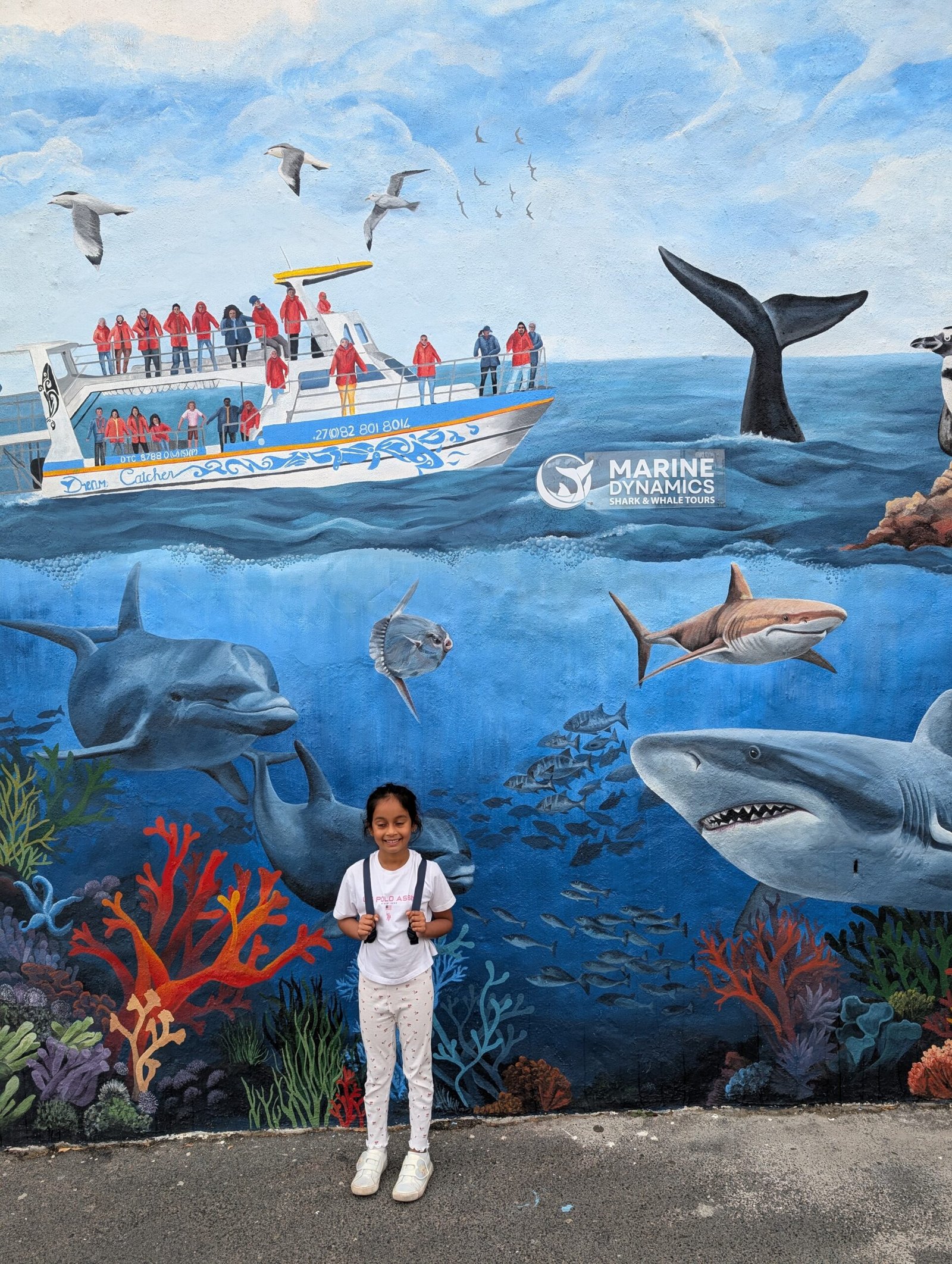
We’d booked a tour with Marine Dynamics — one of the most respected marine safari operators in the country — based out of Gansbaai, a small harbour town about two and a half hours east of Cape Town. Gansbaai sits at the edge of some of the richest marine waters in the Southern Hemisphere, where cold Atlantic currents meet warmer Indian Ocean flows, creating an underwater ecosystem so abundant it draws predators and prey from across the ocean.
This was going to be our ocean day. And we were determined to see all five.
The Drive to Gansbaai — Wipers, Drizzle, and the Open Road
We left Cape Town early, heading east through the city and out into the countryside. The drive was beautiful in that raw, unpolished way that South African roads so often are — the urban sprawl giving way to rolling farmland, the mountains shifting in the distance, the landscape opening up with every passing kilometre.
It was also, on this particular morning, a bit challenging. The sky was overcast, a light drizzle misting the windscreen, and — because travel loves to throw curveballs — the wiper on our rental car had decided to stop working. On the one day we actually needed it.
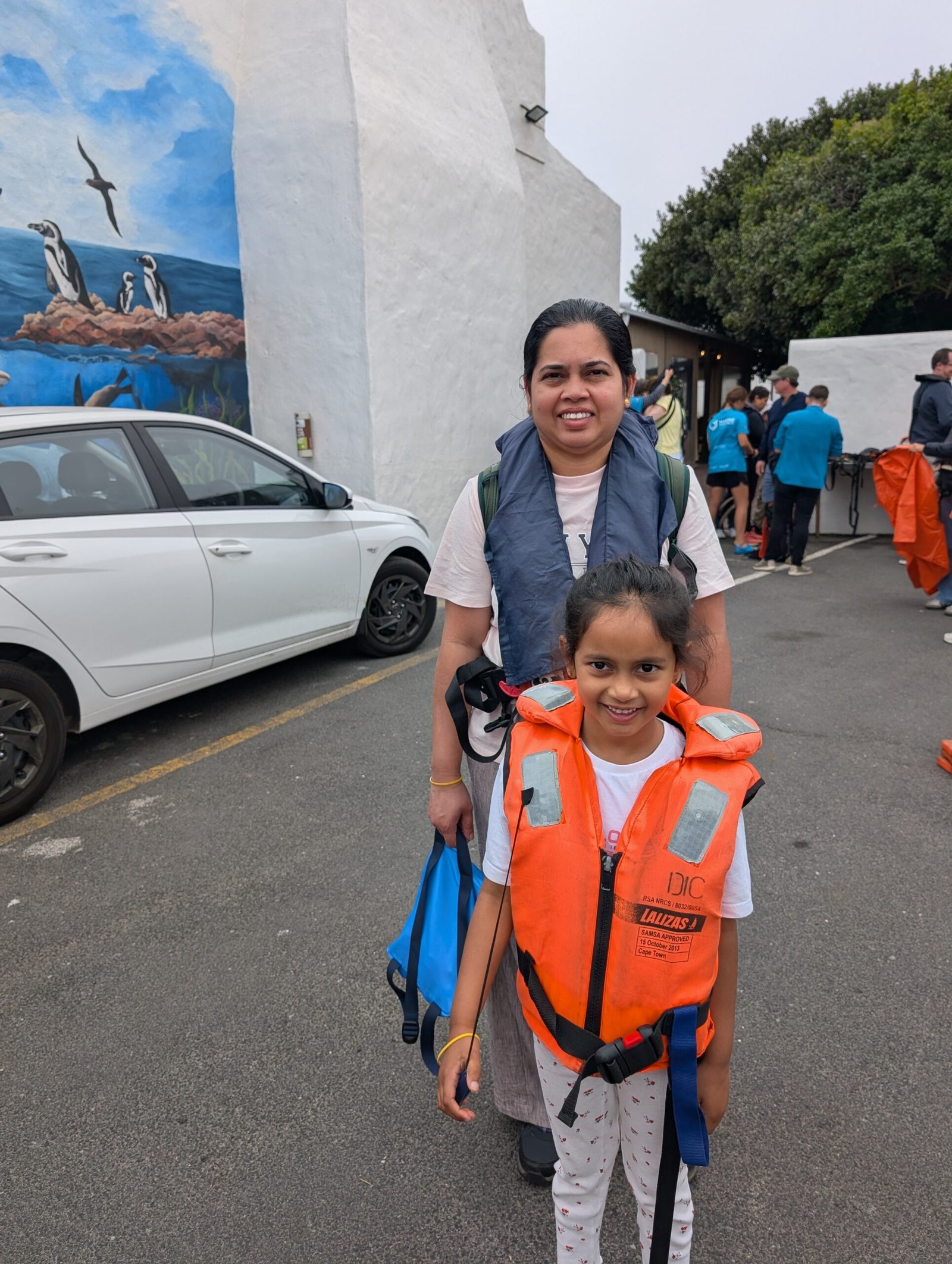
Two and a half hours later, we pulled into Gansbaai Harbour — a working fishing port with the salt-weathered charm of a place that earns its living from the sea. The Marine Dynamics office was welcoming and efficient. We had a quick snack, strapped on our safety jackets, and walked down to the boat.
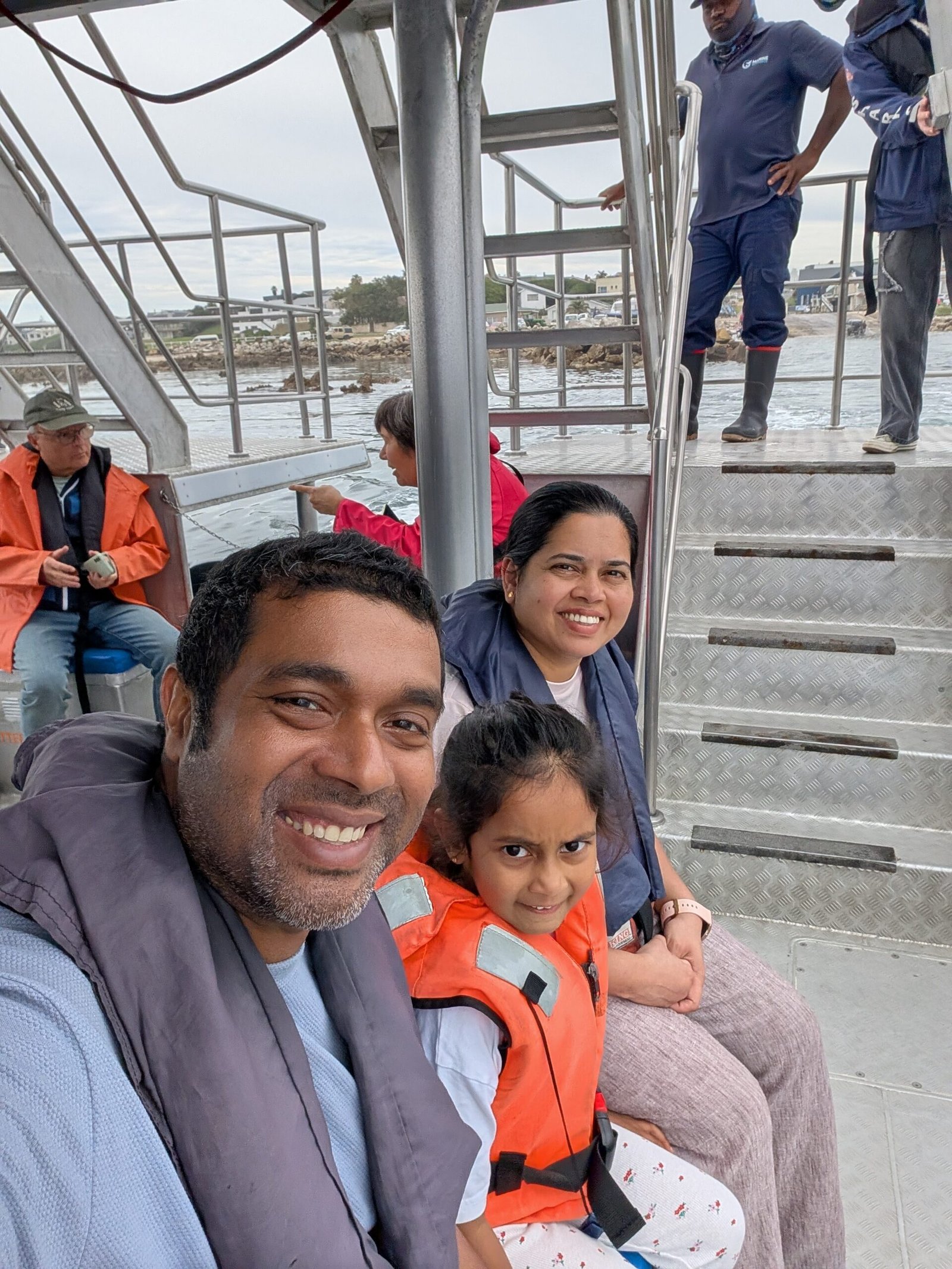
The ocean stretched before us — grey-green under the overcast sky, choppy, alive.Off we went.
Fifteen Minutes In — A Southern Right Whale
The captain had barely cleared the harbour when the shout went up.“WHALE! Ten o’clock! Southern Right!”
Fifteen minutes. That’s all it took. Fifteen minutes from the harbour, and there — breaking the surface with a slow, magnificent exhale — was a Southern Right Whale. The spray from its blowhole hung in the air like a brief, beautiful ghost before dissolving. And then the back — that enormous, dark, barnacle-crusted back — rolled through the surface, one vertebra at a time, like a mountain emerging from the sea.
We’d seen whales before. In Ushuaia, a year and a half ago, we’d been blessed with humpback whales — those acrobatic giants that breach and slap and perform for their audience with the enthusiasm of seasoned showmen. The Southern Right is different. It’s quieter. More dignified. It doesn’t breach for the cameras. It simply exists — vast, ancient, unhurried — and allows you to watch it exist.There is something about being on a small boat, on a grey ocean, watching a creature the size of a bus rise and sink and breathe that recalibrates your understanding of the word alive.
We spent a long time with the whale, the captain cutting the engine and letting us drift. The only sounds: the slap of waves against the hull, the distant cry of seabirds, and the deep, resonant exhalation of a creature that has been breathing these waters for forty million years.
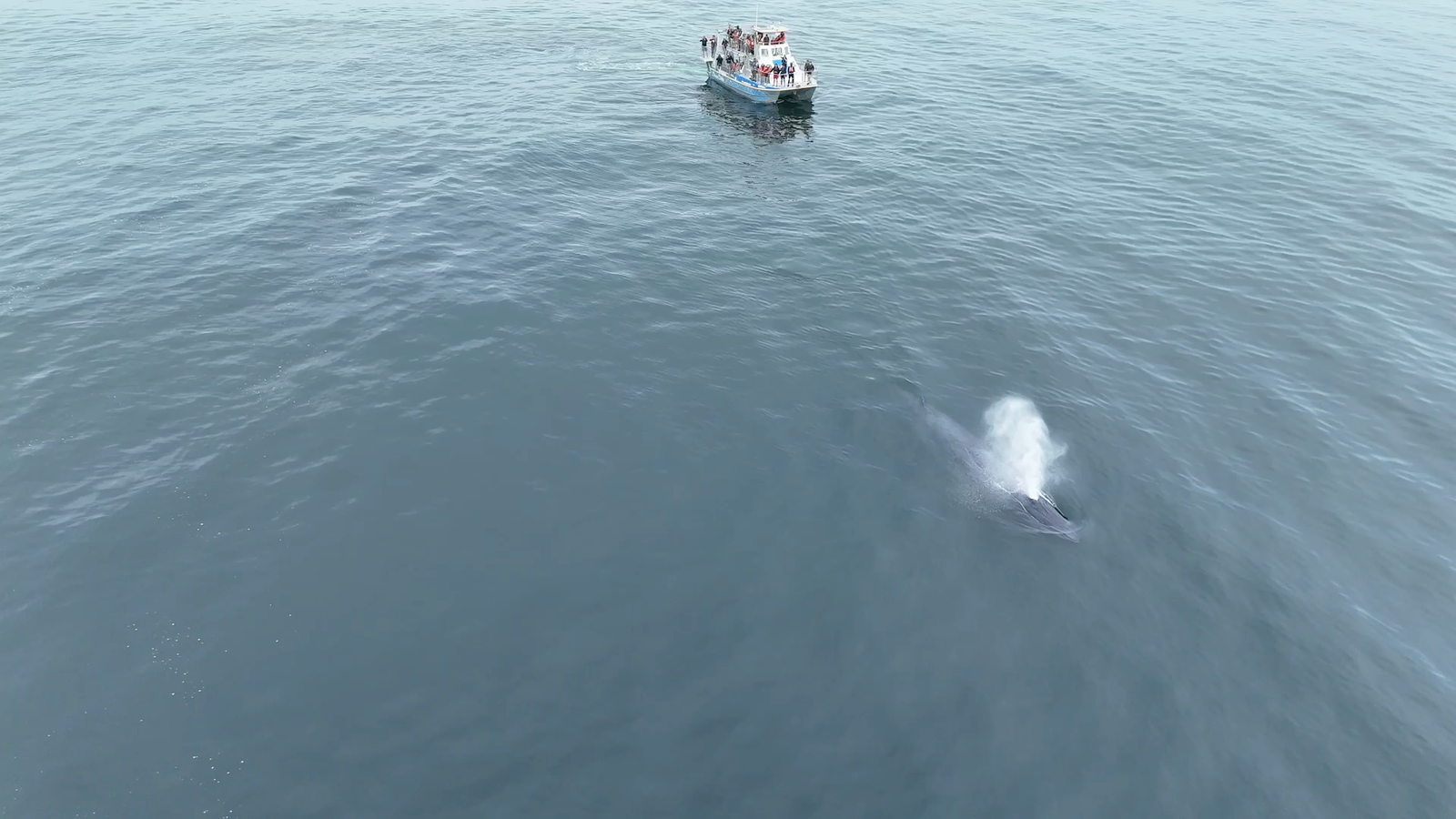
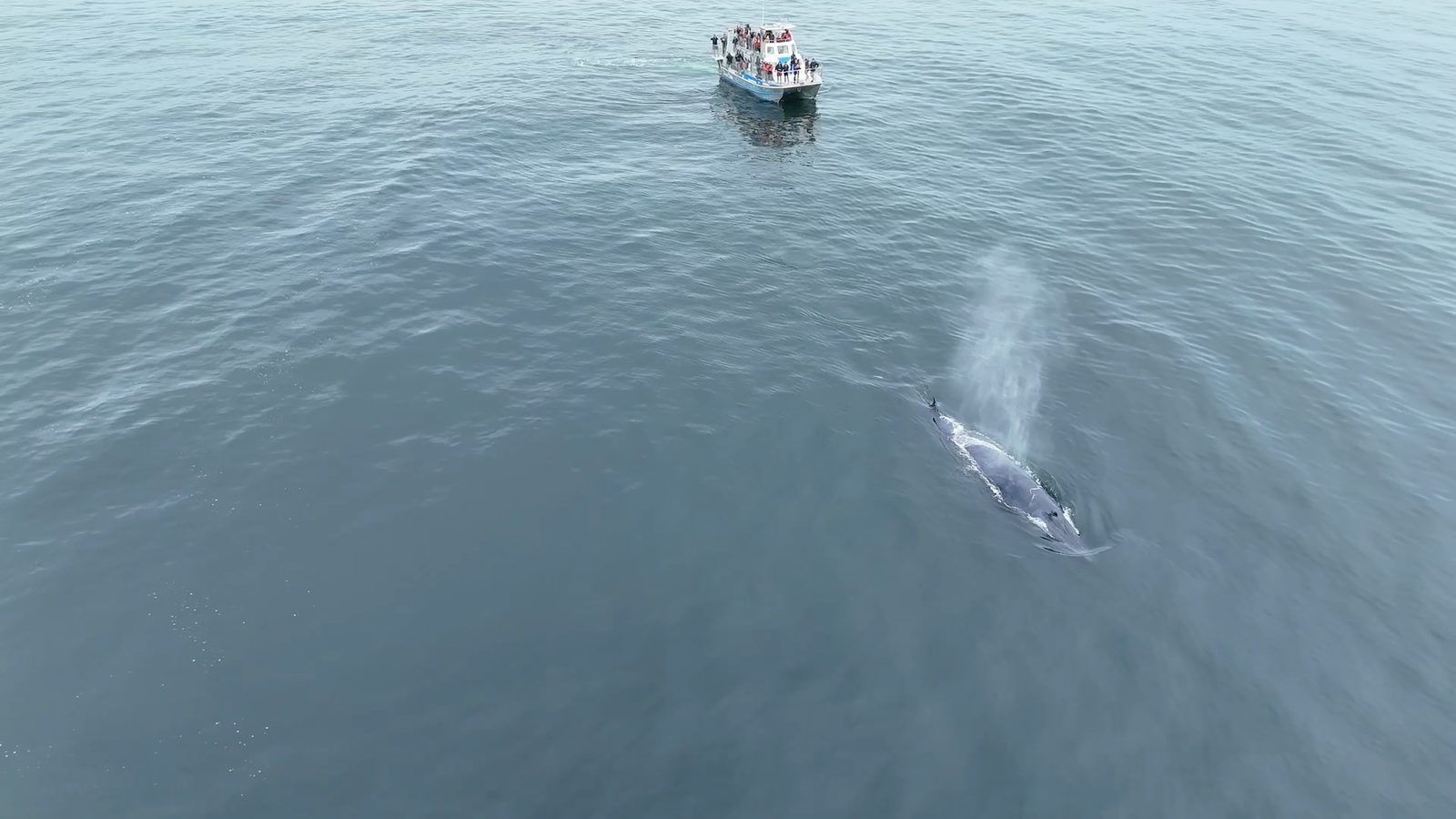
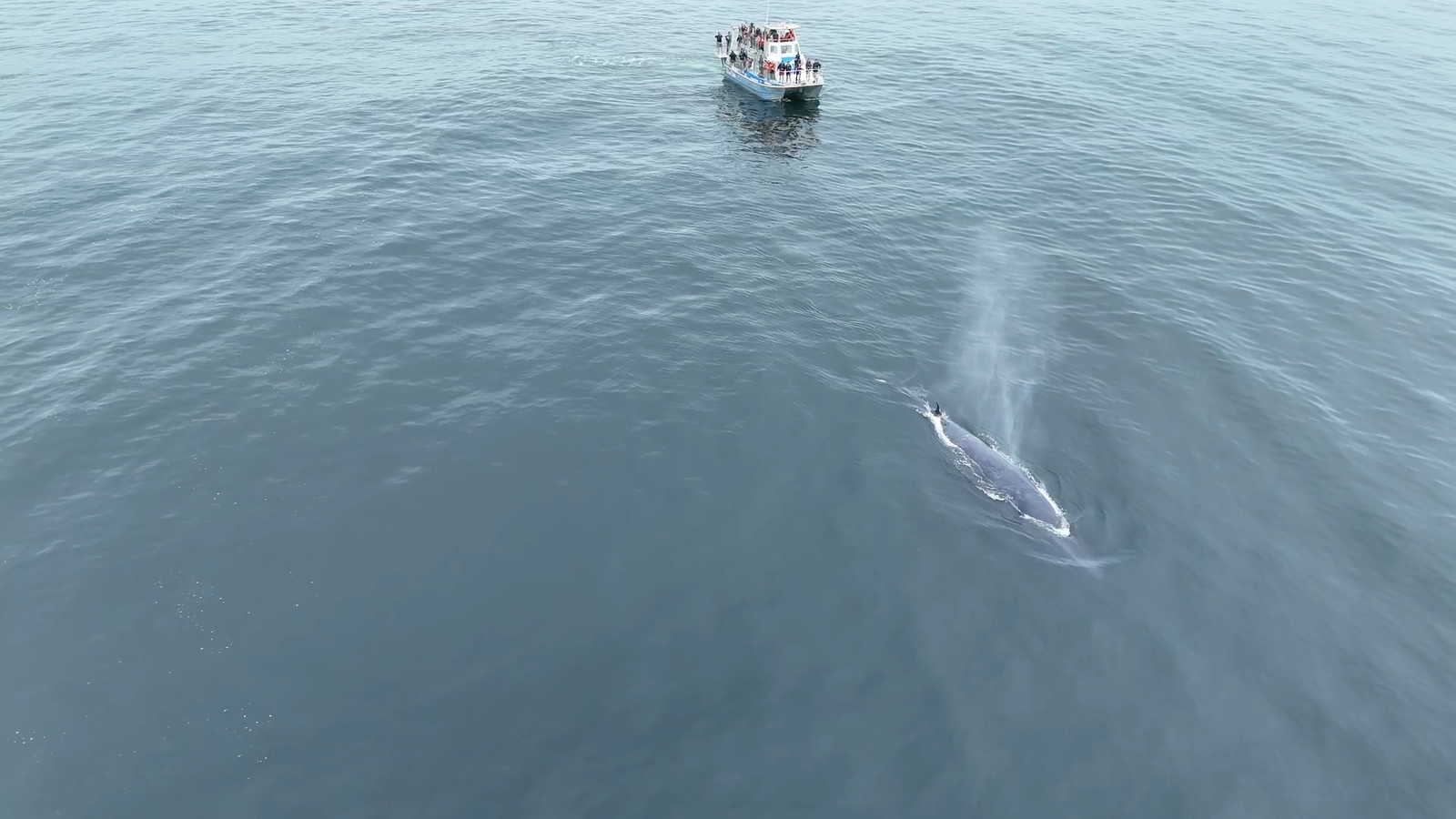
Addy watched with wide, quiet eyes. No shouting this time. Just watching. Some things are too big for words, even at six.
Marine Big Five: 1 of 5 ✅
Dolphins — The Entertainers
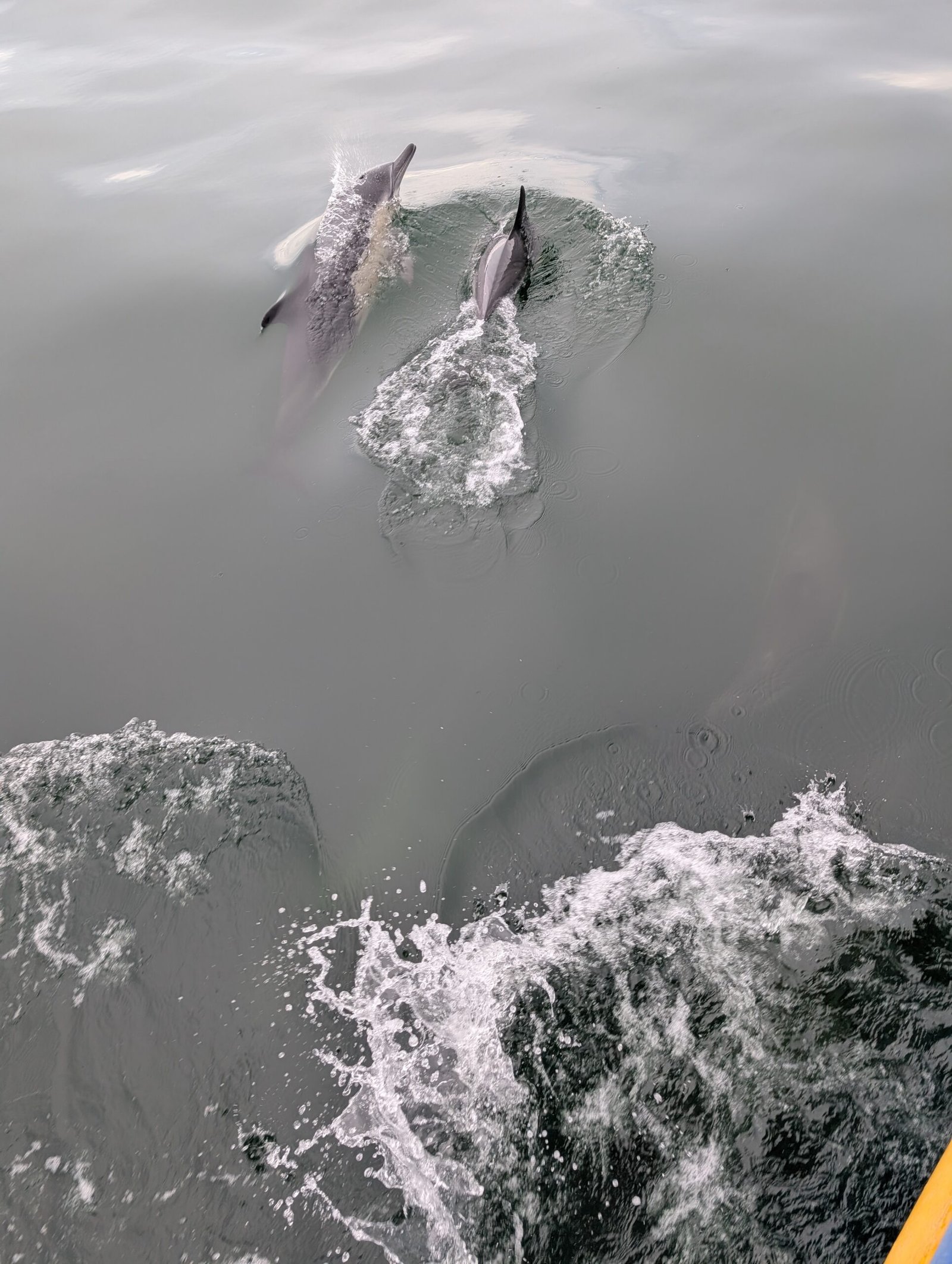
Further out, the ocean delivered its second act.Dolphins. A big pod of them, cutting through the waves with the effortless, joyful speed that makes dolphins the most beloved animals in the sea. They rode the bow wave of our boat, leaping and diving and crisscrossing beneath us with the playful energy of children let loose in a swimming pool.
If the whale was the philosopher of the ocean, the dolphins were the comedians. They came close — impossibly close — rolling onto their sides to look up at us with those intelligent, grinning faces. They raced each other. They spun. They launched themselves out of the water in arcs of pure, exuberant joy.
Addie came alive. The sea-sickness medicine we’d given her (a precaution, and a wise one — the ocean was choppy) had made her drowsy, but the dolphins cut through the fog like a shot of espresso.
The crew were wonderful — explaining their behaviour, their social structures, their hunting techniques. Educational and entertaining in equal measure. You could tell they loved these waters as much as the animals that lived in them.
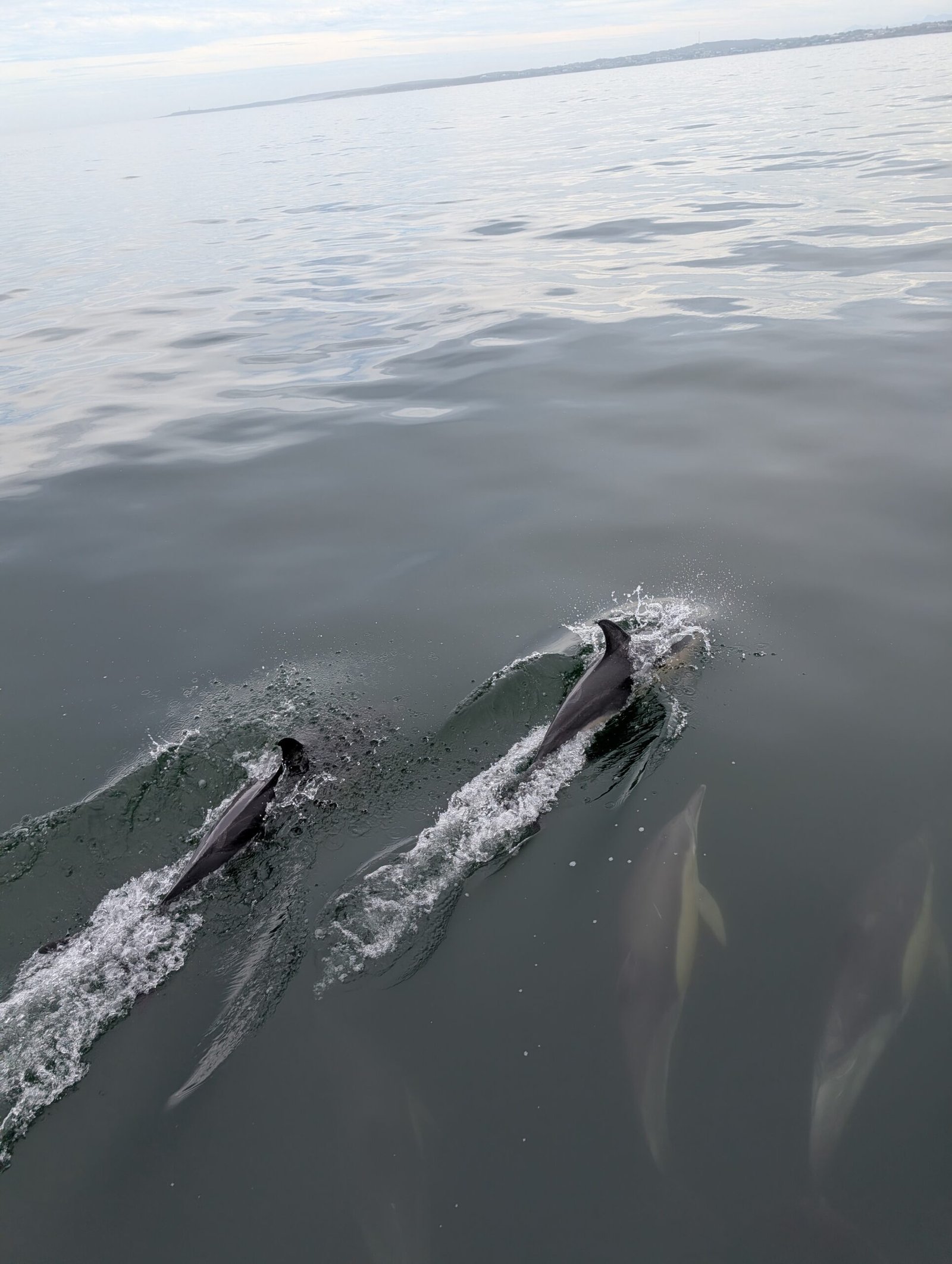
Marine Big Five: 2 of 5 ✅
Shark Alley — Bronze Beauties
The boat pushed further along the coast, towards the stretch of water known as Shark Alley — the narrow channel between the mainland and Dyer Island that is one of the most famous shark habitats on the planet. This was once the domain of the Great White, though their numbers here have declined dramatically in recent years.But the ocean adapts. And where the Great Whites have thinned, the Bronze Whaler Sharks have thrived.
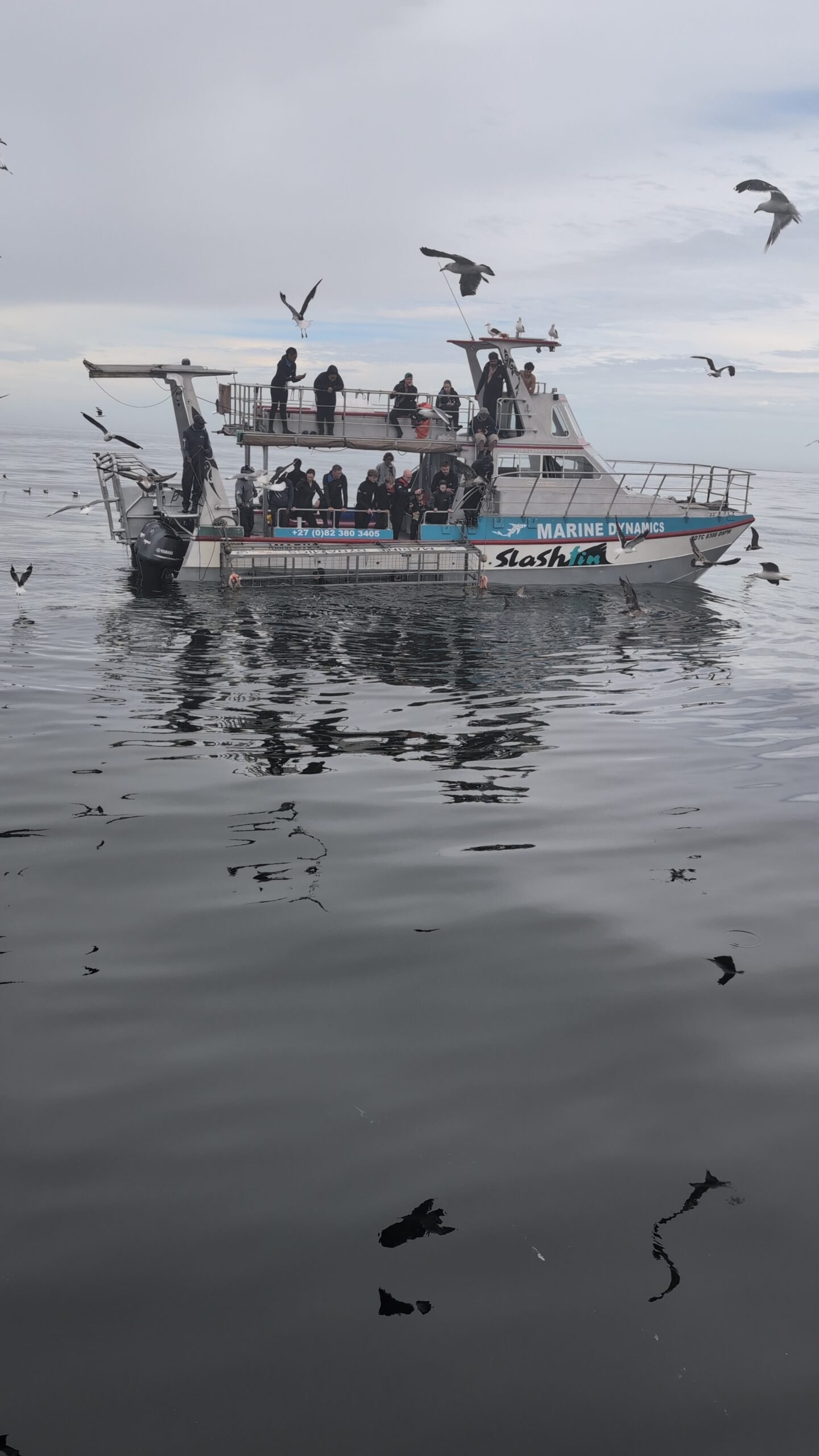
We came upon a shark cage diving boat — a specialised vessel where brave (or mad) tourists are lowered into the water in a steel cage while sharks circle around them. I’ll admit it: I wanted to do it. The primal thrill of being eye-to-eye with a shark, separated only by metal bars? My inner adventurer was screaming yes.My wife’s inner parent was screaming no. Next time, Cape Town. Next time.
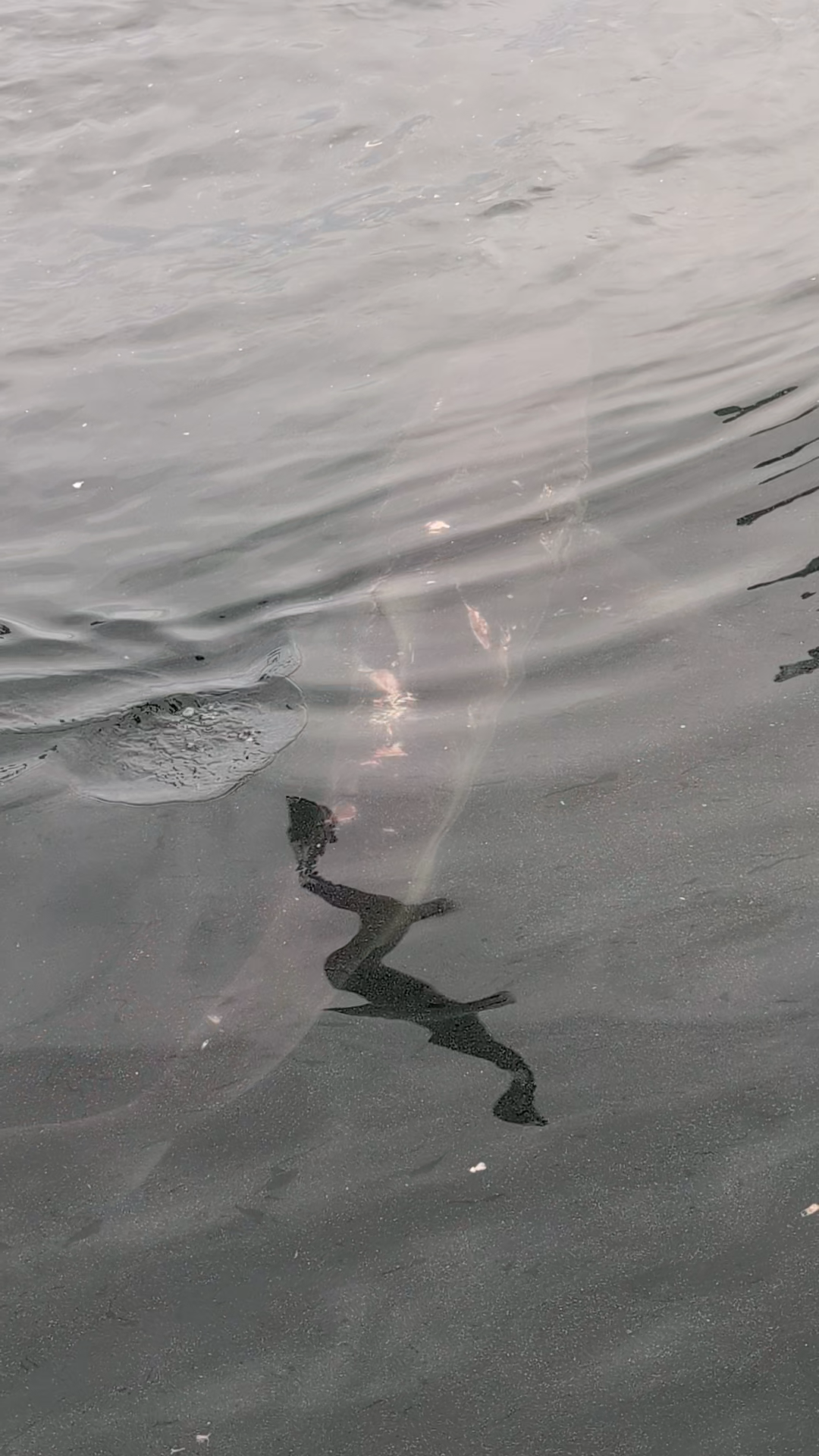
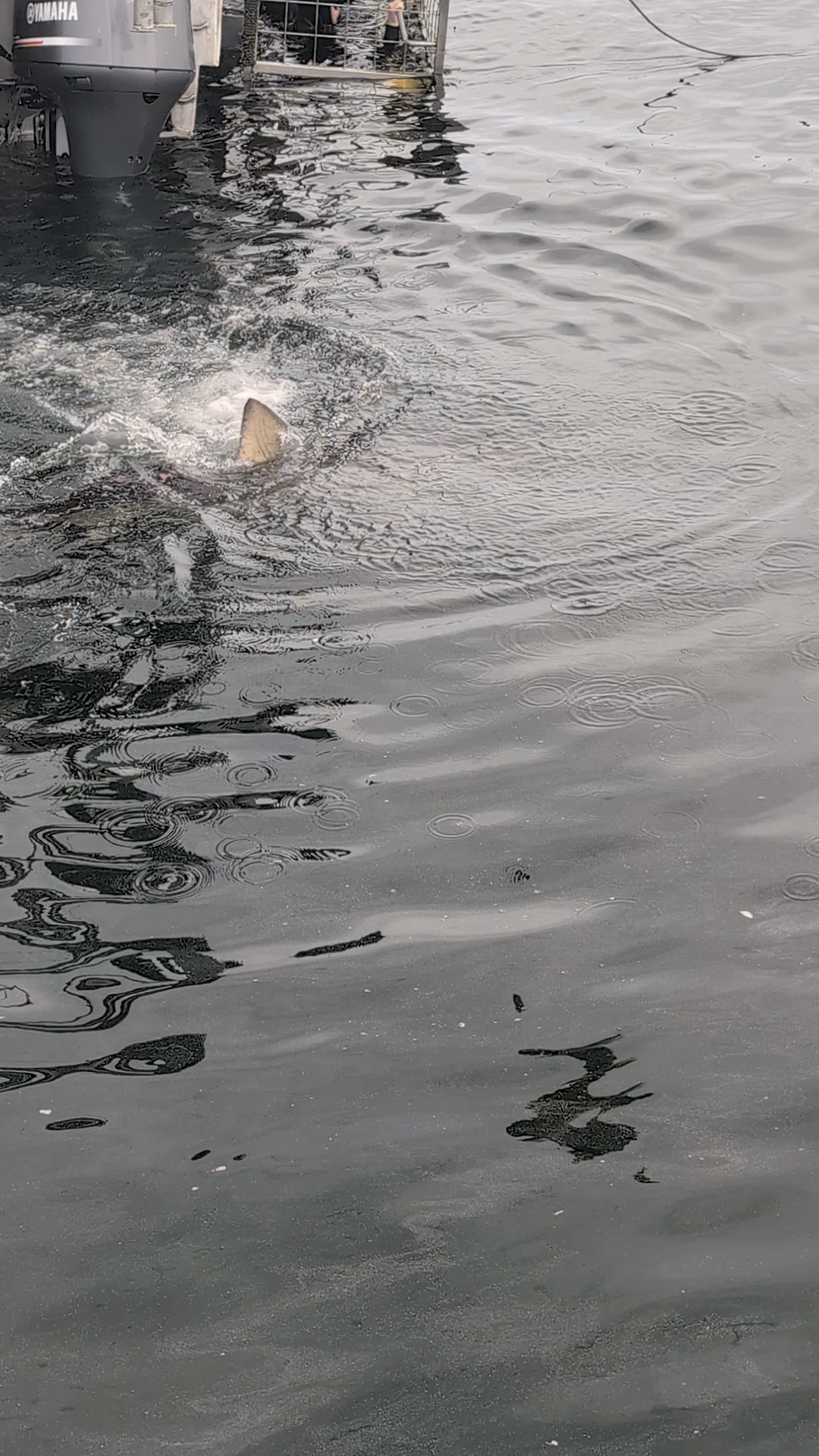
The cage diving crew were chumming the water — pouring fish oil and bait into the sea to attract the sharks — and it was working. Within minutes, we could see them. Dark, sleek shapes cutting through the murky water. Bronze Whalers — not as massive as a Great White, but still formidable, still predatory, still capable of making your breath catch when a dorsal fin breaks the surface ten metres from your boat.
We watched them circle. Watched them surge towards the bait with explosive acceleration. Watched the cage divers descend into the water and come back up wide-eyed and gasping.
Magnificent animals. Misunderstood, maligned, and absolutely essential to the health of every ocean they inhabit.
Marine Big Five: 3 of 5 ✅
Dyer Island — A Kingdom of Seals
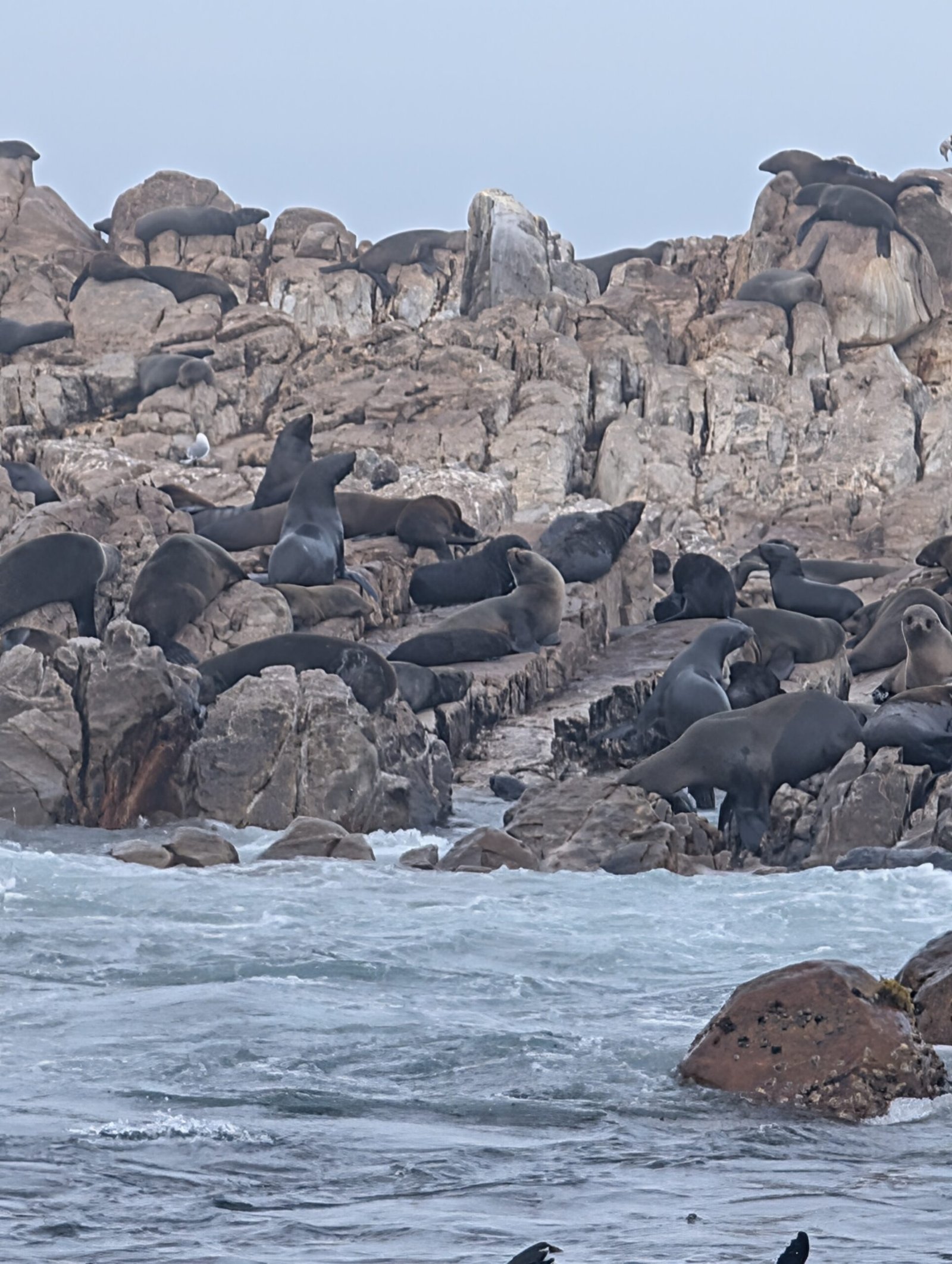
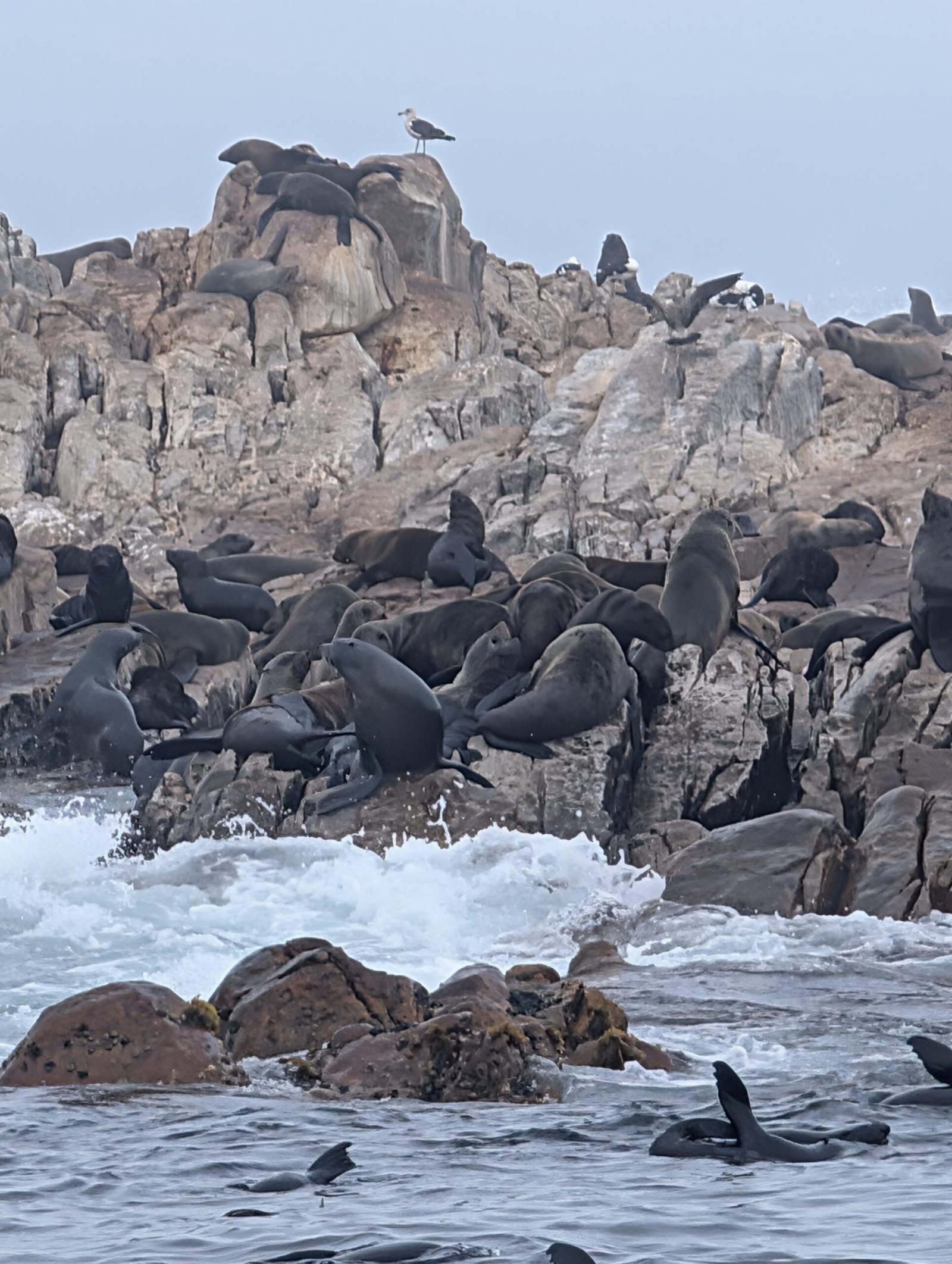
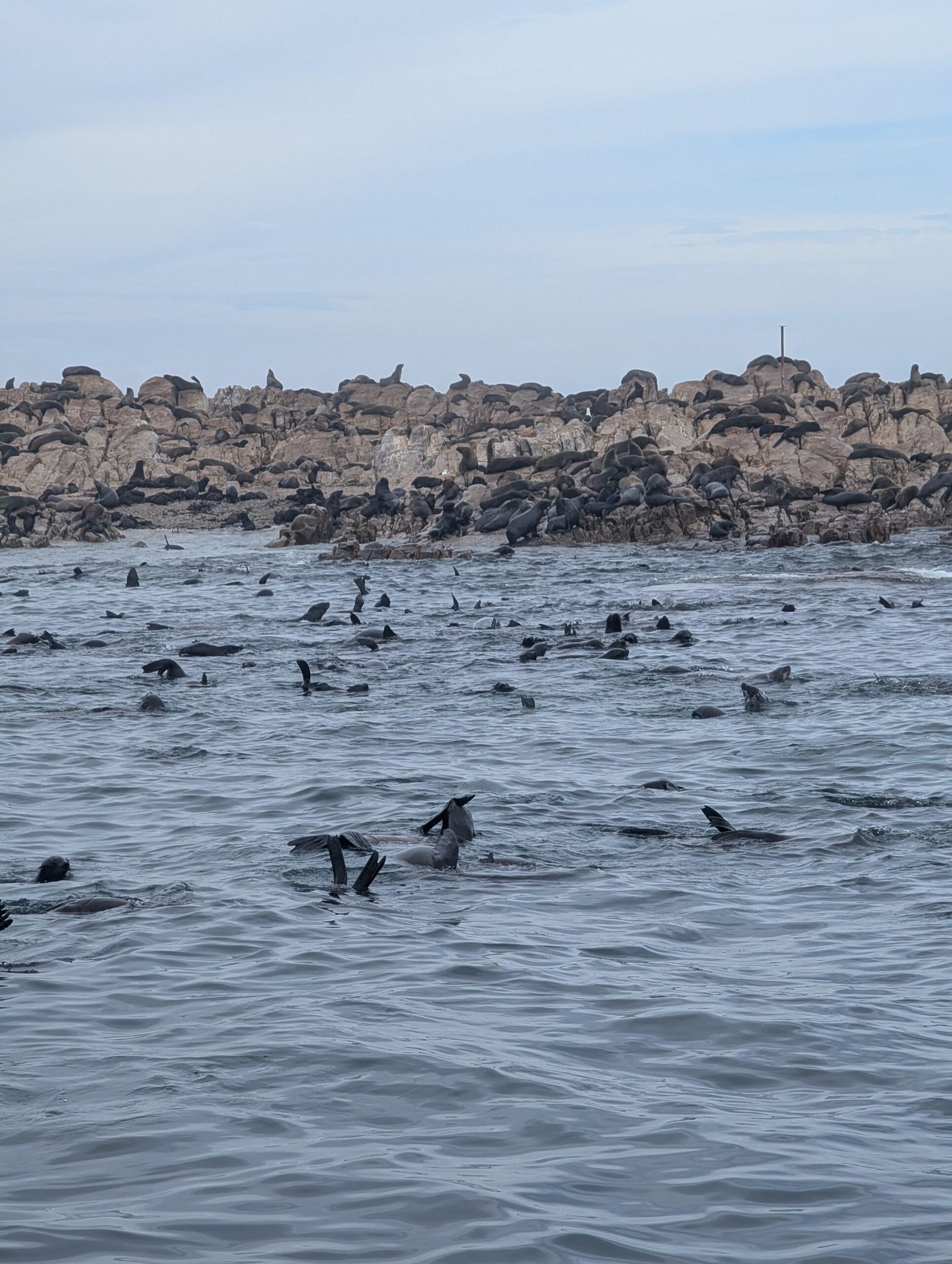
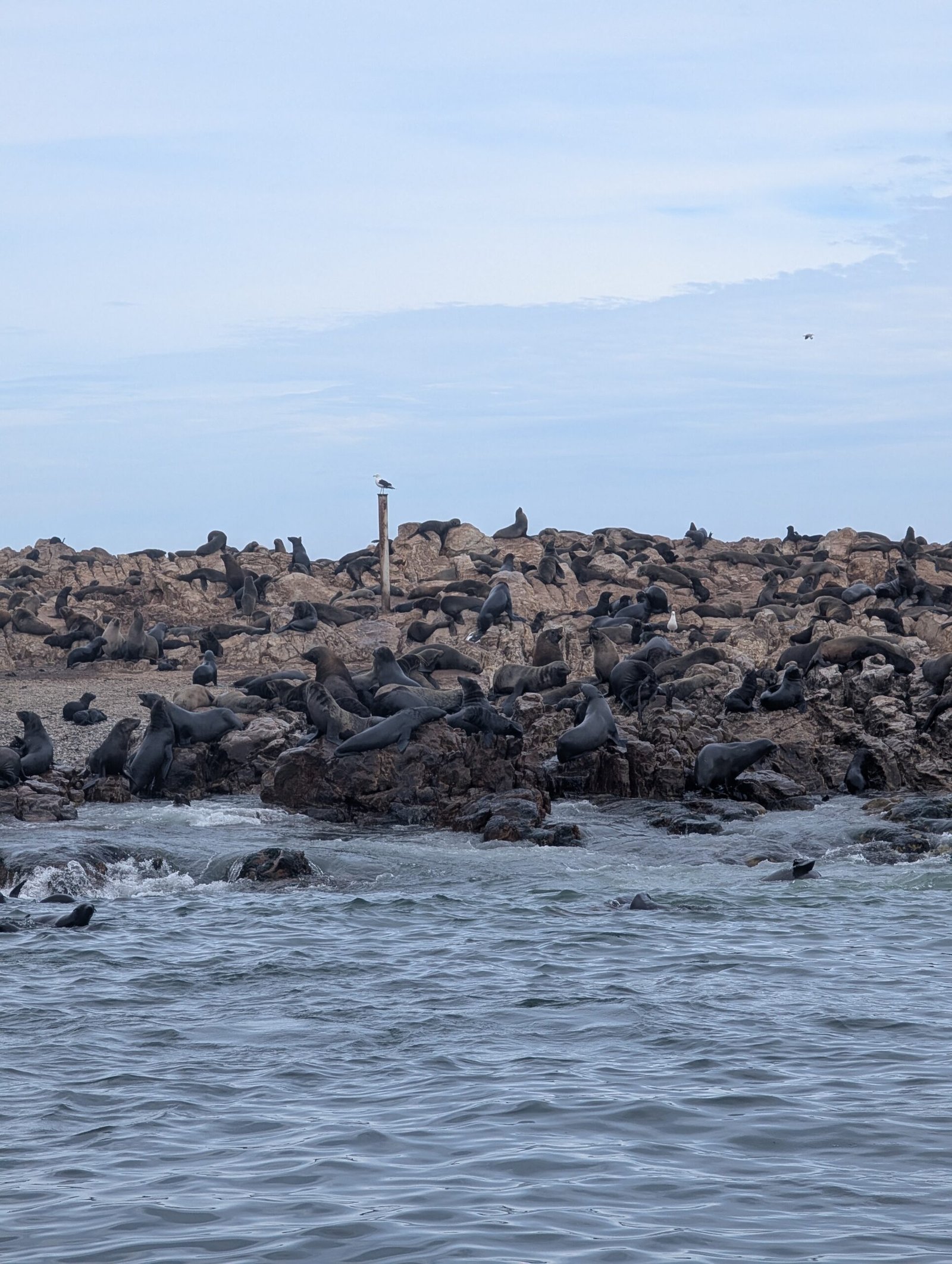
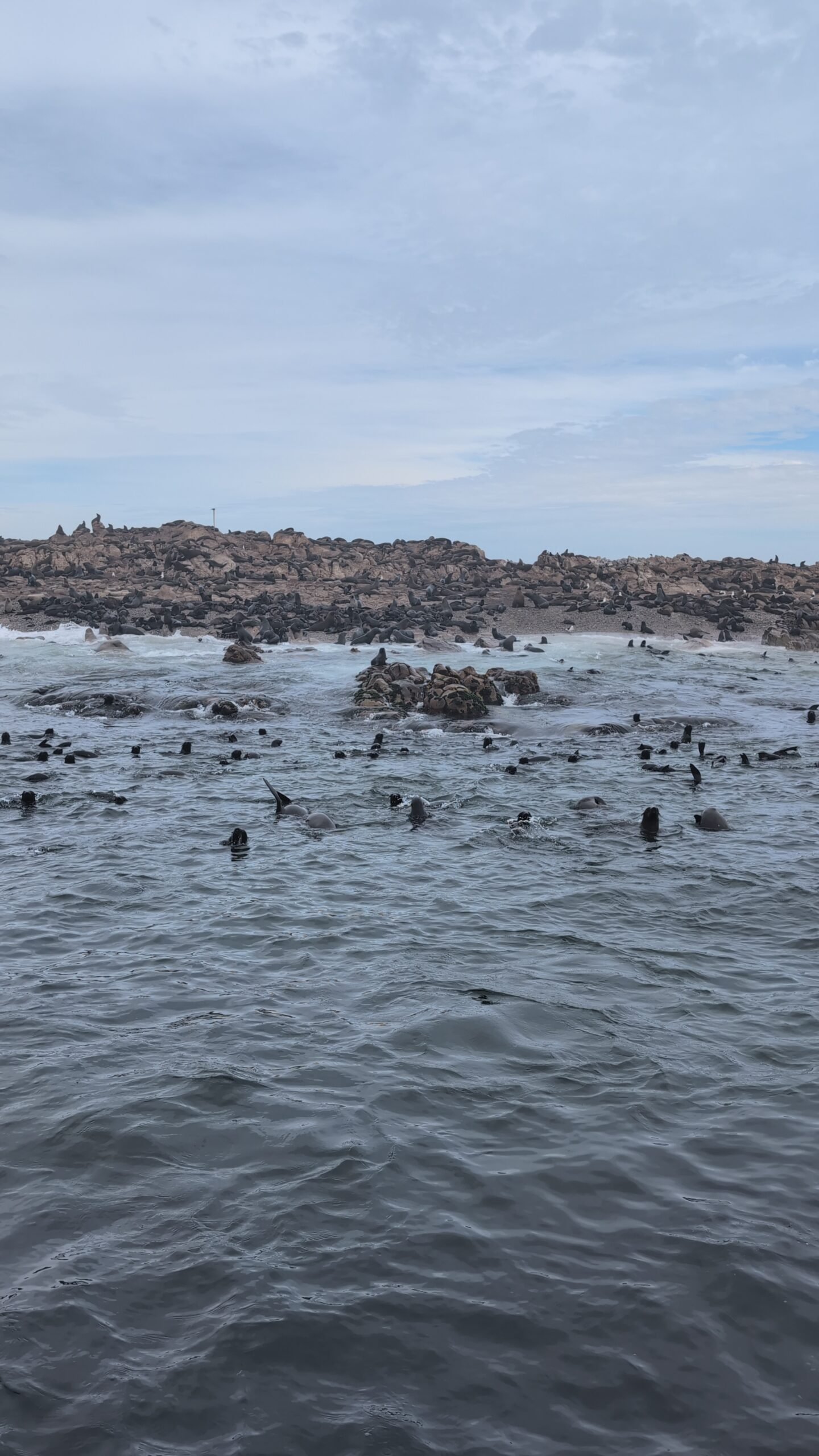
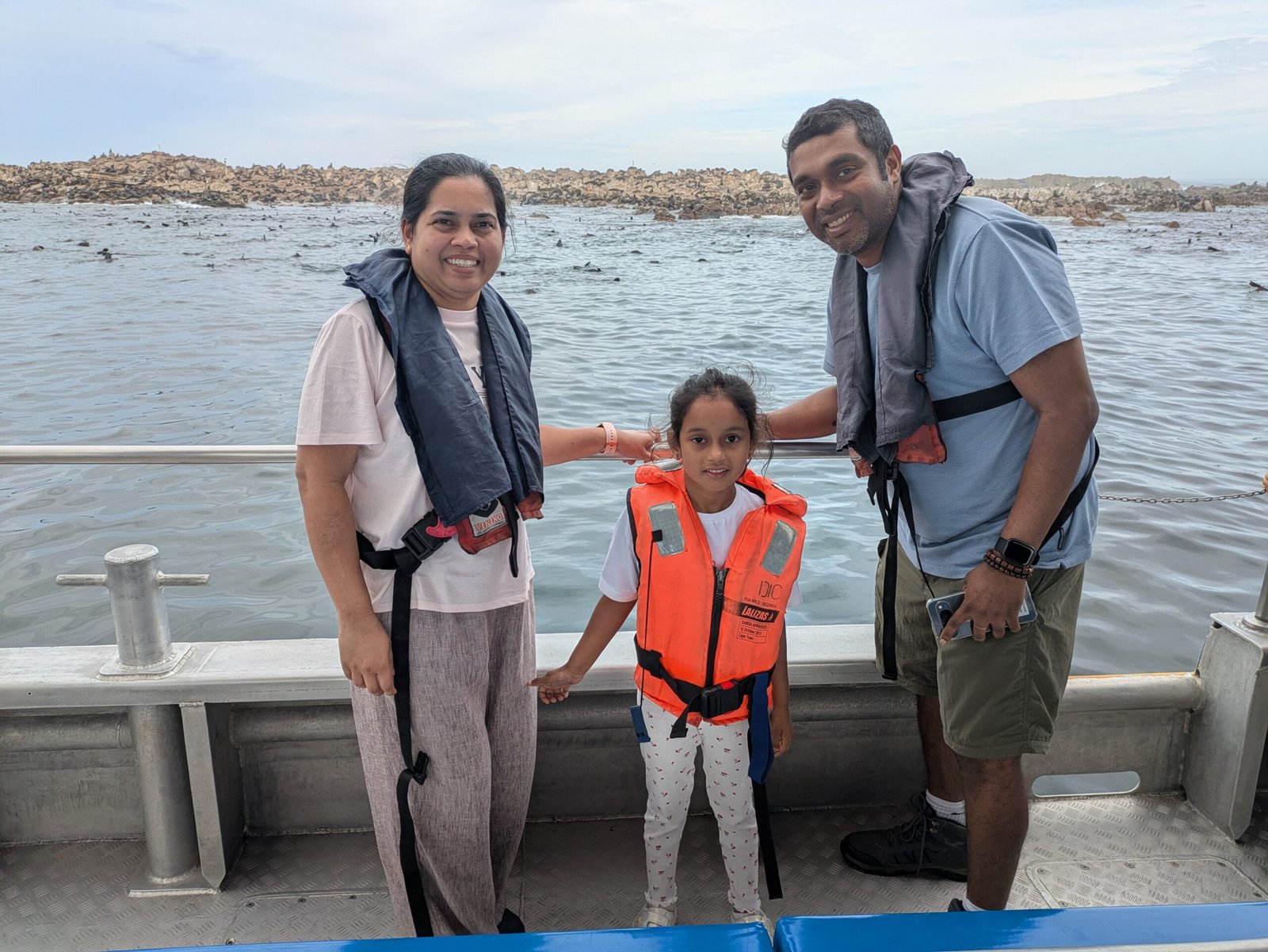
From Shark Alley, the boat curved towards Dyer Island — or more precisely, towards the smaller Geyser Rock just beside it, home to one of the largest Cape Fur Seal colonies in South Africa.The smell hit us before the sight did. Let’s be honest about that.But then — the sight. And the smell became irrelevant.
Thousands of seals. Tens of thousands. Covering every inch of rock, tumbling over each other, barking and bellowing and diving into the surf with reckless abandon. Pups played in the shallows. Bulls defended their patches with theatrical aggression. Females nursed their young on sun-warmed stone.The scale was staggering. This wasn’t a colony — it was a city. A loud, chaotic, teeming metropolis of flippered, whiskered, gloriously ungraceful creatures who have turned this tiny island into one of the great wildlife spectacles of the southern coast.
We circled the island slowly, the boat rocking in the swell, and watched the seals go about their extraordinary, ordinary lives. Some swam alongside the boat, rolling in the waves with the easy confidence of animals completely at home in their element.
Marine Big Five: 4 of 5 ✅
Penguins on the Island — The Full Set
And then — on a neighbouring stretch of rock, visible from the boat as we rounded the island — penguins. African Penguins, the same species we’d met at Boulders Beach, but here in their wild, offshore habitat, perched on the rocks above the surf line, going about their business far from boardwalks and tourists.
We’d already seen them up close at Boulders. But seeing them here — in the wild, on a windswept island, surrounded by the roaring ocean — felt like meeting an old friend in their real home. The boardwalk version was lovely. This was authentic.
Marine Big Five: 5 of 5 ✅
ALL FIVE. IN ONE TRIP.
The captain announced it over the speaker. The crew cheered. Addie — drowsy, wind-whipped, salt-sprayed — pumped her little fist in the air.
We’d done it.
The Return — Sunset on the Shore
We motored back to Gansbaai Harbour with the satisfied exhaustion of a crew that has completed its mission. Addie was fading — the sea-sickness medicine pulling her towards sleep, the ocean air heavy in her lungs — but the smile on her face was permanent.
We’d planned to return via Clarence Drive — another of the Cape’s legendary coastal roads, said to rival even Chapman’s Peak for dramatic beauty. But in the fading light, with tired eyes and a drowsy navigator, we missed the turn.By the time we realised, it was too far to double back. But we did treat ourselves to the spiciest burger we have ever eaten at Mc’Donalds – Absolute Fire!
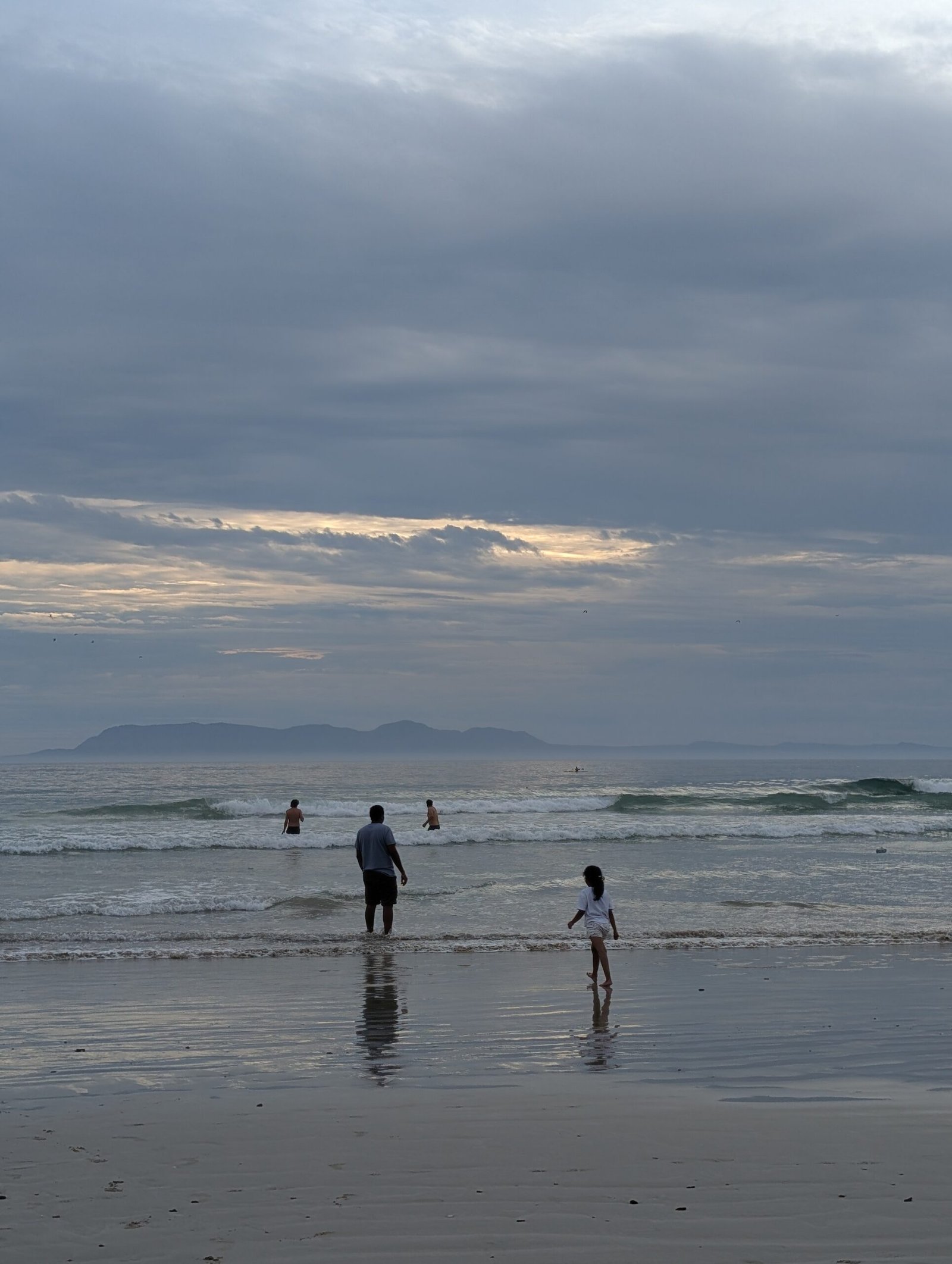
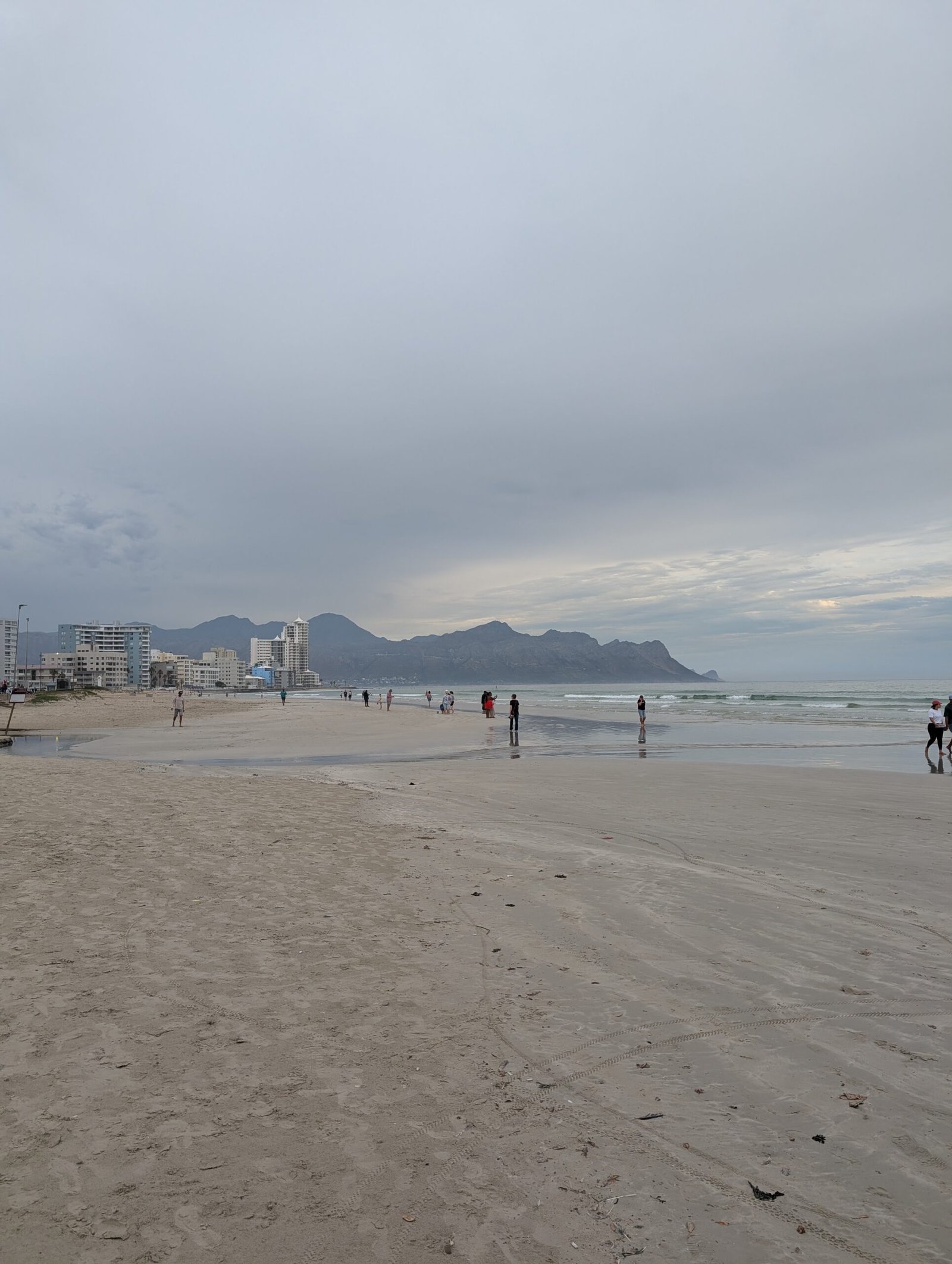
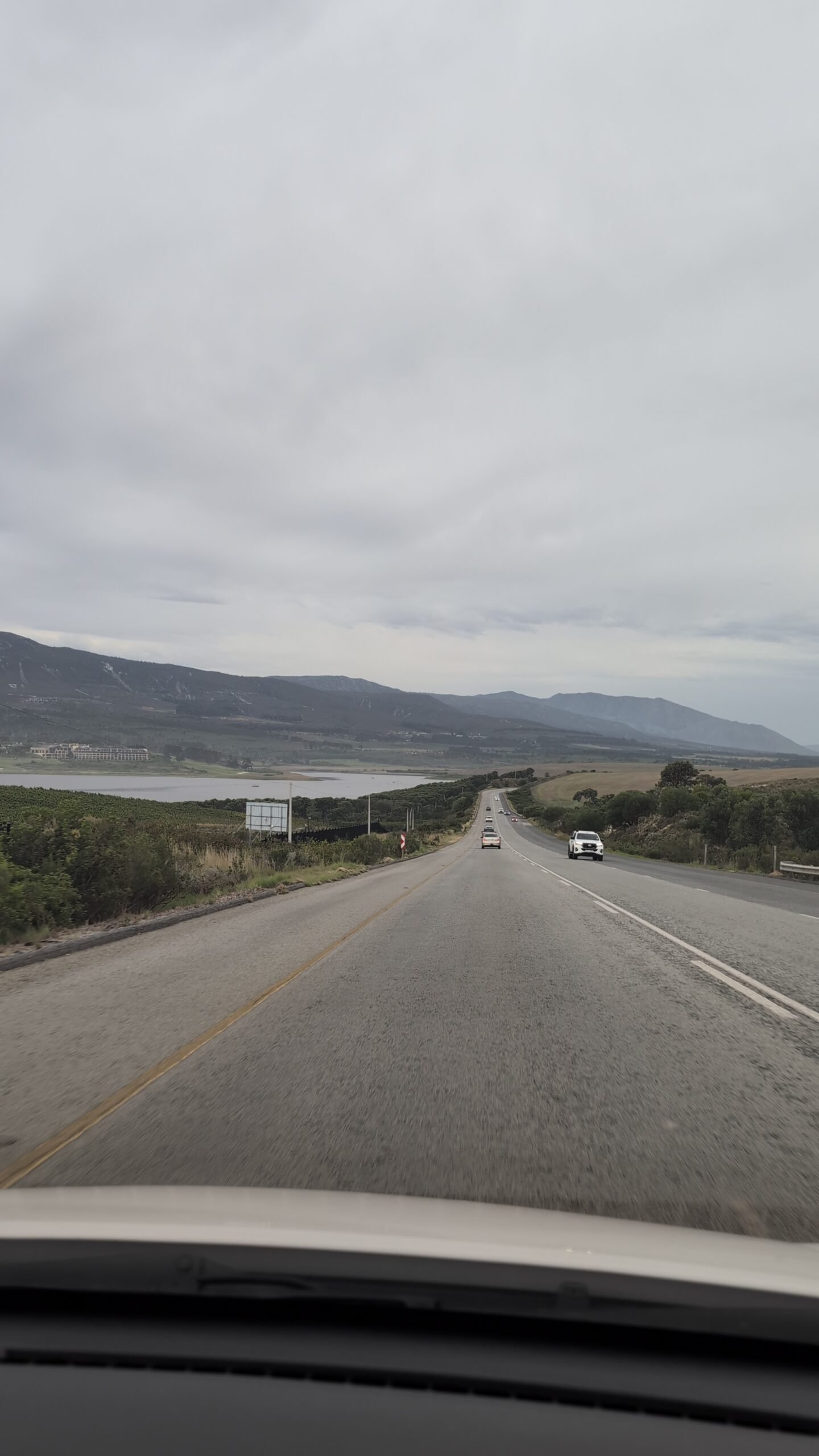
A year ago, this would have frustrated me. But Kruger had taught me something about missed turns and roads not taken. The bush gives you what you need, not what you want. And sometimes, the road you end up on is exactly where you’re supposed to be.We drove back the inland route. And it was perfectly fine.
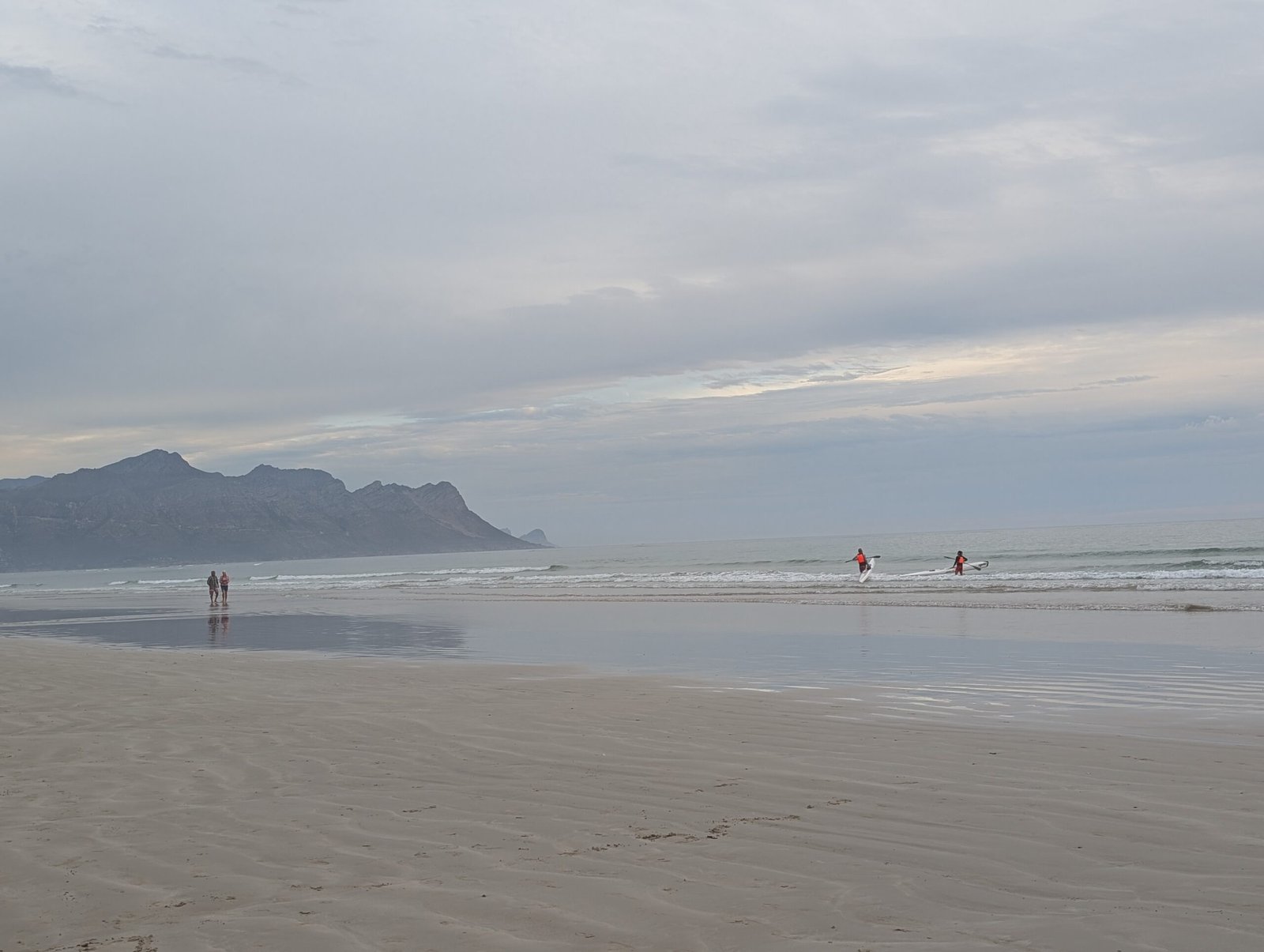
Before heading back to Cape Town, we stopped at a beach along the coast. The sun, which had been hiding all day behind the overcast sky, chose this moment — this precise, cinematic moment — to break through.
No words. No photographs. Just the three of us, and the ocean, and the end of a perfect day.


This is Aldrin and my partner Amoli. We bring you "Earths Pilgrim" - a unique insight into our travel escapades while leaving life in a cubicle. If you are looking for some inspiration to break the shackles of a regular life, then you are the right place. Read more about us- Click here.