- Wrong Side, Right Decision : First Walk in the Mullerthal, Luxembourg
- Geysers, Ice Caves, and an Orange Sky: Andernach Geyser, Birresborn ice caves and Meerfelder Maar
- Paris in a Day With a Kid: Why We Stayed in Chantilly
Written with damp shoes, a toll receipt in my pocket, and the smell of moss still in my memory.Earths Pilgrim
Some trips begin with a destination. This one began with a question.What if we just… drove?
Not flew. Not landed somewhere and queued at a rental desk. Just loaded our own car with our own things, pointed it east, and drove out of the UK and into Europe under our own steam.
It sounds simple. It wasn’t — not in my head, anyway. Because I’ve driven in Europe many times over the years, but always the same way: fly in, pick up a left-hand-drive hire car, and let the muscle memory sort itself out within an hour. The wheel is on the correct side for the continent. Everything lines up the way the road expects it to.
Taking your own right-hand-drive UK car across the Channel is a different proposition entirely. Suddenly you’re the one sitting on the kerb side of the lane. Overtaking means pulling out blind. Roundabouts run the wrong way. Toll booths and ticket machines are on the far side of the car, which means either an undignified stretch across the passenger seat or asking your wife to become a full-time toll operative.
I was, I’ll admit it, sceptical. Maybe even a little anxious.
And then there was the admin. Driving your own car into the EU comes with a shopping list, and it is not optional. EU-compatible kit — the warning triangle, the hi-vis vests, the first aid kit, the headlamp beam adaptors so your UK-angled lights don’t blind every oncoming driver in Belgium, the UK sticker, the breathalyser for France, the spare bulbs. Insurance green card checks. Breakdown cover that actually works on the continent. Clean air zone registrations for the cities we’d pass through.
I made lists. I checked them. I rechecked them. I packed the car with the thoroughness of a man who knows that the one thing he forgets will be the one thing a police officer asks for.
The Plan
This wasn’t meant to be an epic. It was Addie’s summer break, and we’d already done a few bigger trips this year — including a wild, extraordinary week in South Africa that I’m still not fully recovered from, emotionally or otherwise.
So this one was deliberately smaller. Gentler. A proper road trip rather than a conquest. Something carved out of a bigger Europe plan and scaled down to the shape of a family who just wanted to take a break and drive.
The route:
🇬🇧 UK → Hatfield to Dover, ferry across the Channel
🇫🇷 Calais → onto the continent
🇧🇪 Belgium → straight through, eating up motorway
🇩🇪 Germany → our base, in a tiny village called Bettingen
🇱🇺 Luxembourg → the real reason we came: the Mullerthal trails
🇫🇷 France → a slice of it on the way home
Four countries. One car. One six-year-old. One slightly nervous driver.
🤫 The Secret
Now — here’s the part I enjoyed most, and the part I’ve been itching to write.Addy had no idea.
Not a clue. Not a whisper. She didn’t know we were going to Europe at all.We packed everything in secret. The suitcases were loaded the night before, after she’d gone to bed — bags zipped, boot filled, kit stowed, everything ready to roll before she’d so much as stirred.
And the cover story we gave her was beautifully, deliberately small: we told her we were going to Dover.That’s it. A day out to Dover. The seaside, the cliffs, a drive down from Hatfield. Nothing more.
And she was delighted. Completely satisfied. She didn’t question it for a second, because when you’re six, a trip to Dover is a proper adventure in its own right. She was so excited about it that she woke up early on the morning of departure entirely of her own accord — which, for anyone with a six-year-old, is roughly as rare as a lunar eclipse.So off we went to Dover, with a car packed for ten days in four countries, and a little girl in the back seat who thought she was going to look at the sea.
Day 1 — Hatfield to Dover to Calais to Germany
The Reveal
We drove down to Dover, the familiar British motorway blur gradually giving way to the chalk and gulls of the Kent coast.And then, at the port — with the ferry terminal signs overhead and the ships visible in the harbour — we told her.
“Addie… we’re not just coming to Dover. We’re getting on that ferry. We’re crossing the Channel. We’re going to Europe.”
The face. I will keep that face for the rest of my life.Pure, uncomprehending astonishment, and then the slow, delicious dawning as it landed — the boat, the sea, another country, a whole holiday she hadn’t known existed thirty seconds earlier. She was amazed. Then she was ecstatic. Then she had approximately four hundred questions, all delivered at once and at volume.
She was so, so happy. And honestly? So were we. There is nothing in travel quite like watching a surprise land on a child.
There is something genuinely thrilling about driving your own car onto a ferry. Flying strips the journey out of travel — you’re sealed in a tube, and then you’re somewhere else. A ferry gives the journey back to you. You queue on the tarmac with hundreds of other cars. You roll up the ramp into the belly of the ship. You climb out, lock up, go up on deck, and stand in the wind watching the white cliffs shrink behind you.
And then — Calais. The ramp down. The sign. The lane.Drive on the right. I’d rehearsed this moment in my head a hundred times, and in the event it lasted about four seconds and then it was simply… happening. You follow the car in front. You keep your hands where they need to be. You say “right side, right side, right side” under your breath for the first few roundabouts like a slightly unhinged mantra.And honestly? Within half an hour, it was fine. Not effortless — the overtaking never stopped requiring full concentration, and my wife earned her stripes as navigator, toll-reacher and second pair of eyes — but fine. The fear turned out to be much bigger than the thing itself.
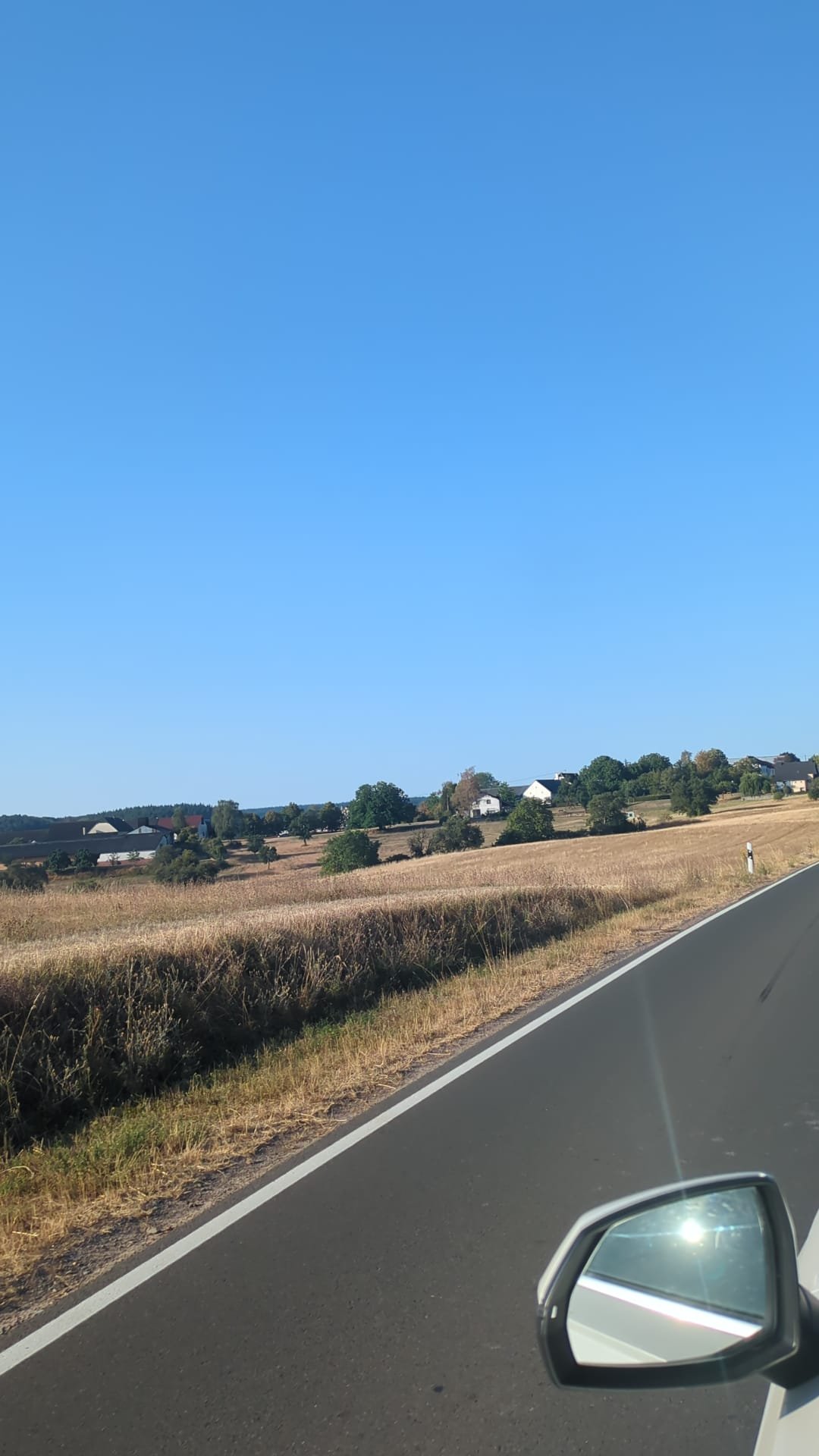
From Calais we pushed east, through Belgium, the kilometres rolling by on fast, efficient motorways. This was the long haul of the trip — the day you simply get through so that the rest of the days can be good ones.And then, finally, Germany. And then, finally, Bettingen.
Bettingen — Our Little Village on the Hill
If you were planning this trip on a map, you probably wouldn’t pick Bettingen. It’s tiny. A small German village, quiet in the way that only continental villages manage, tucked into hills and green and silence.Which is exactly why it was perfect.Our house looked out over the mountains — the kind of view that makes you stand at the window with a cup of coffee and forget what you were about to do. After a day that had begun in Essex with a child who thought she was going to Dover, standing there watching the light go down over German hills felt almost unreasonable.
And down the hill, a short walk away, there was a little store — and reader, that store became an institution. We went back again and again over the following days. We found all sorts of interesting plants in there that I spent a genuinely embarrassing amount of time admiring and then — in the grand tradition of travellers with a long drive home — did not buy.
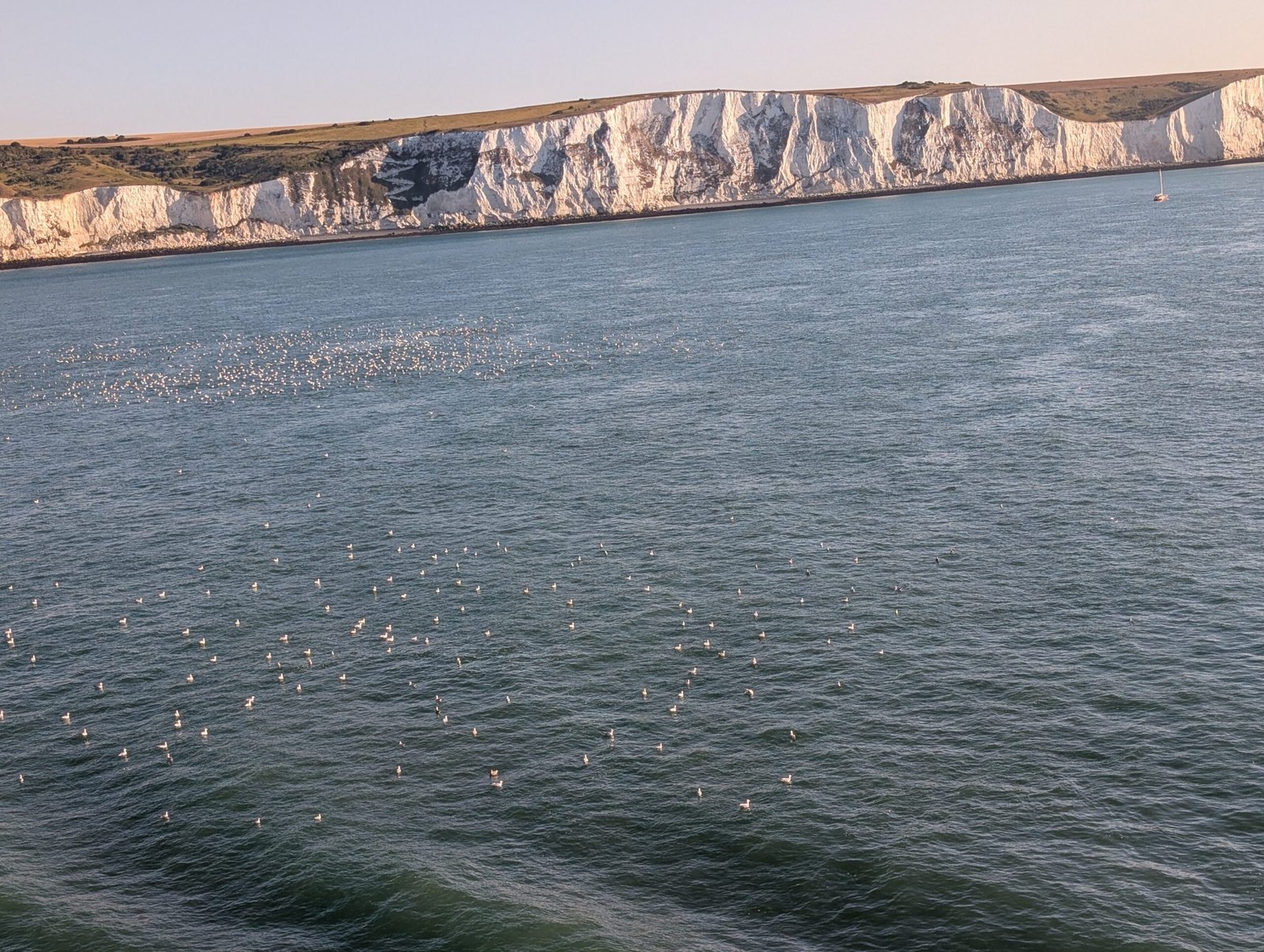
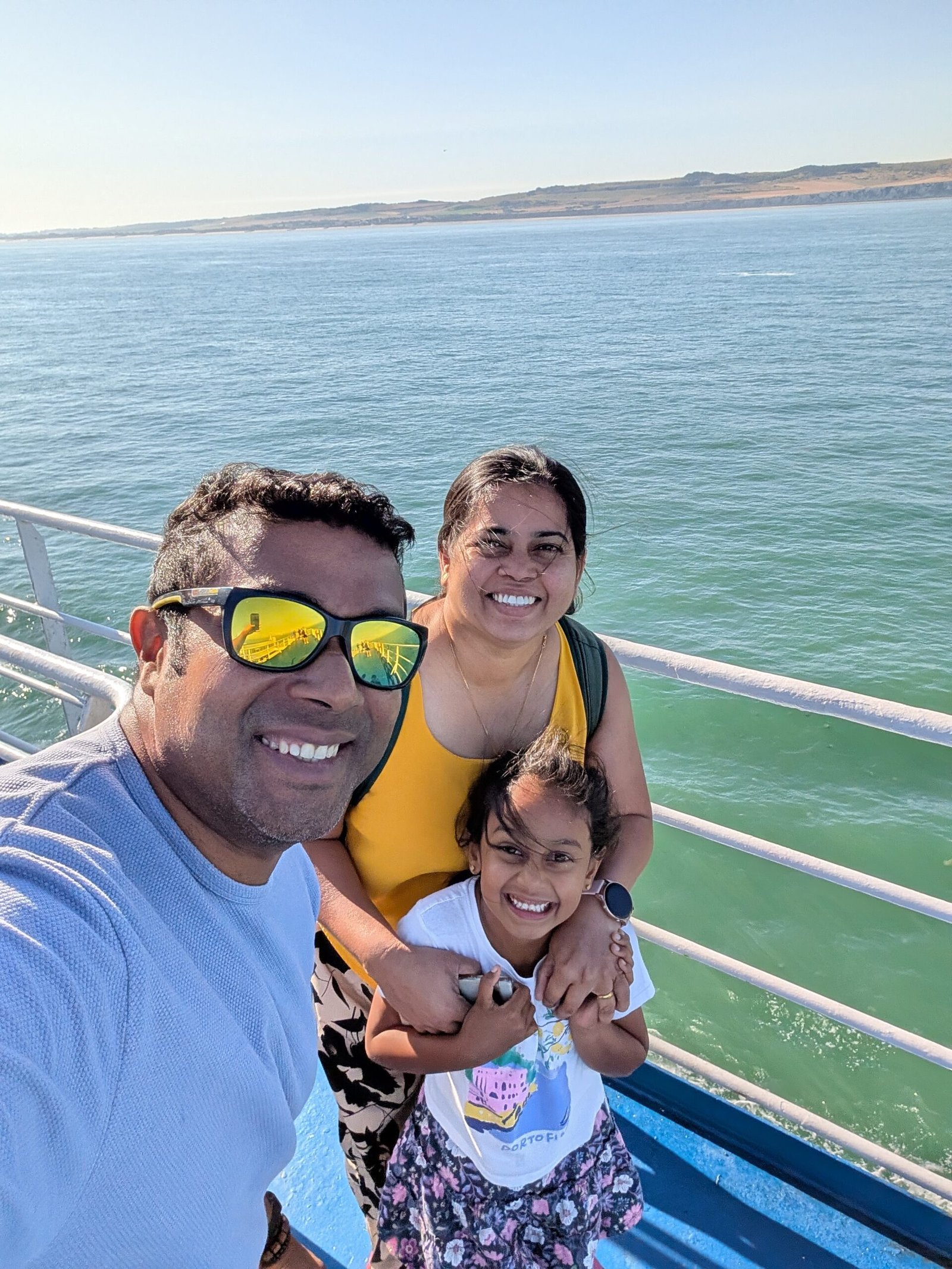
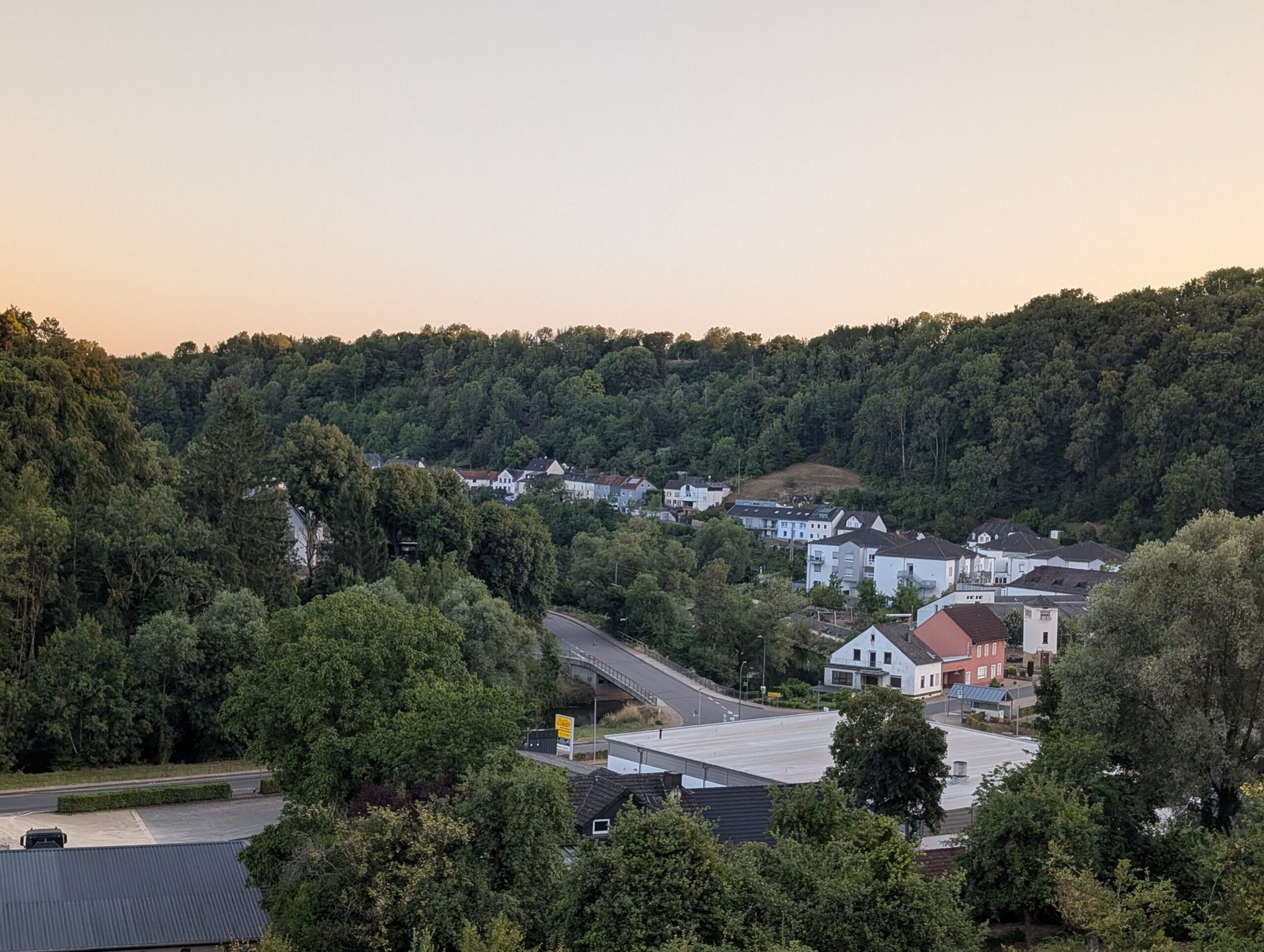
That was Day 1. Eaten up by driving, and entirely worth it.Tomorrow, the actual point of the trip: Luxembourg.
Day 2 — Into Luxembourg, and the Mullerthal
A Slow Start, Deliberately
We were exhausted. There’s no polite way around it. The previous day had been a proper haul — ferry, four countries, hours behind the wheel — and we’d eaten late and slept heavily.So we got up slowly, ate whatever we’d picked up the night before, took our time, and only then got in the car.
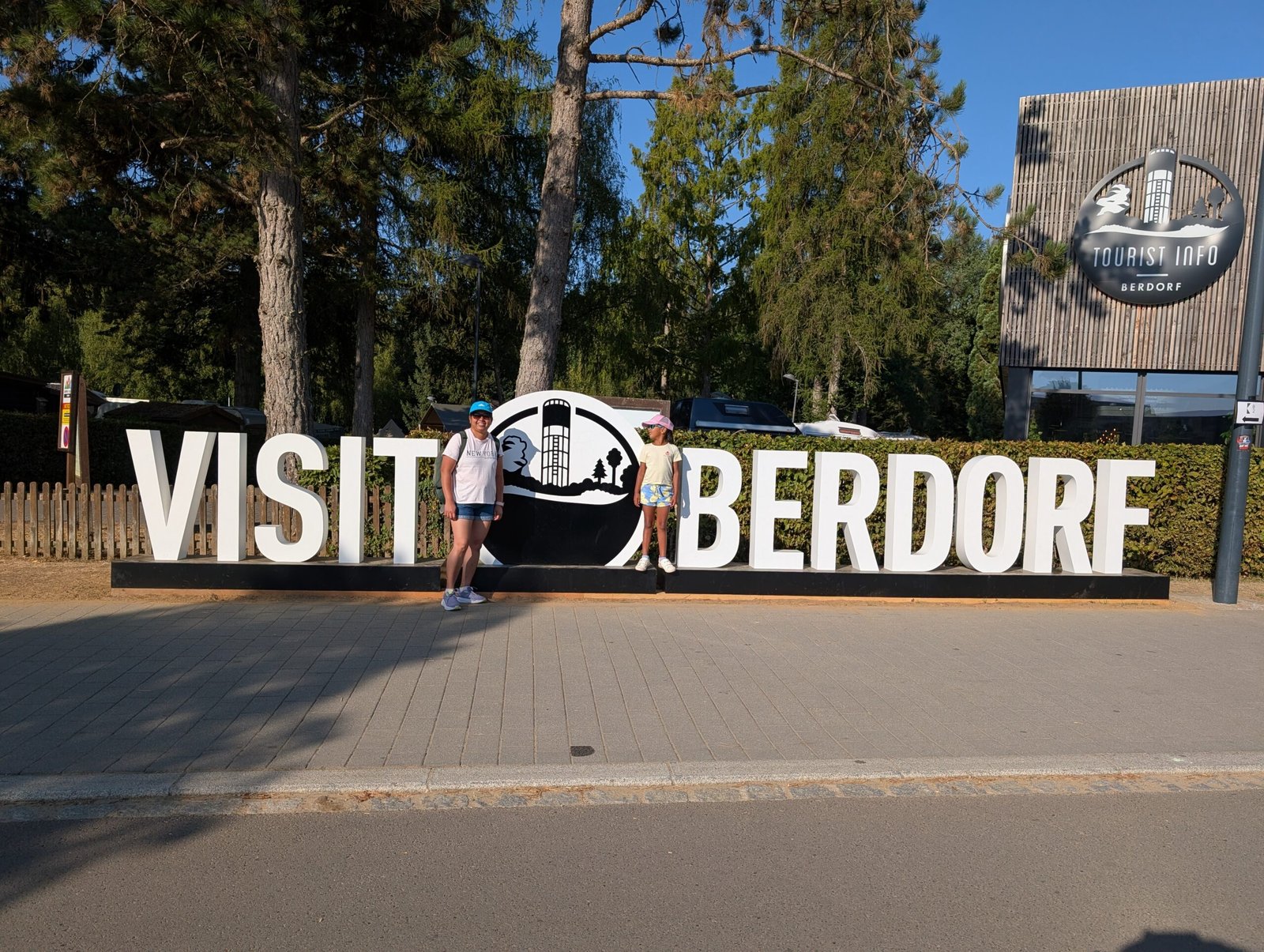
And then we drove over the border from Germany into Luxembourg — which is such a small, undramatic thing to do that it almost feels like a joke. There’s no fanfare. No border control. One moment you’re in Germany, the next you’re in a different country entirely, and the only real clue is that the signs and the fuel prices have changed.Luxembourg is tiny. You can cross it in an hour. But what it packs into that space is extraordinary.
Why the Mullerthal
Here’s the thing about our family: wherever we go, we walk. Hikes, trails, forest paths, coastal routes — it’s our default setting. South Africa was an exception because you physically cannot go walking among lions, which is probably for the best.
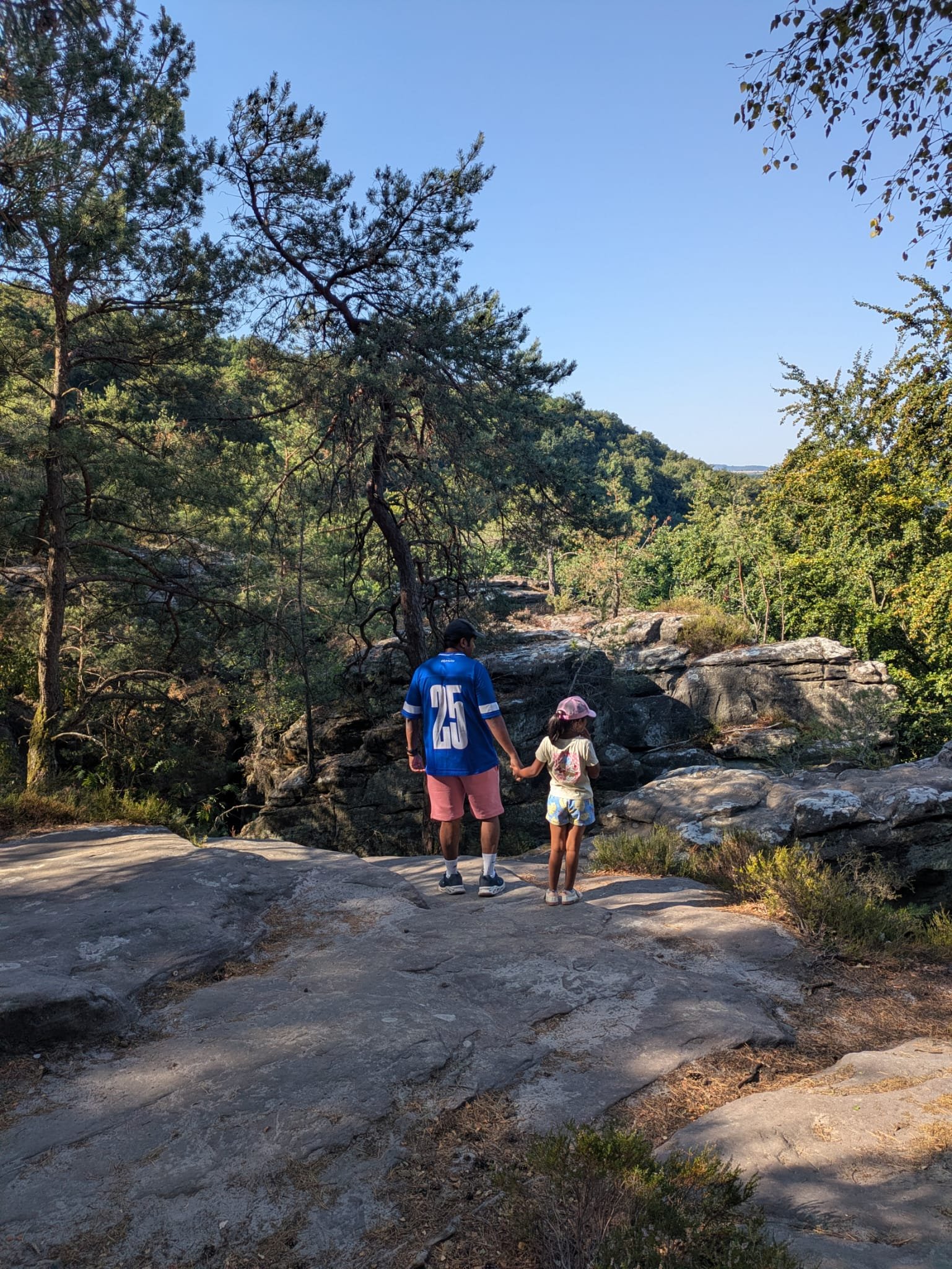
So when I’d been looking at this region, one name kept surfacing: the Mullerthal. Often called “Little Switzerland” — a landscape of sandstone gorges, mossy boulders, towering trees, and narrow passages carved through rock over millions of years. It looked, in photographs, like something out of a fantasy novel. That was the plan. That was the whole reason we’d pointed the car this way.
The Trail — B2, 4.2km of Pure Magic
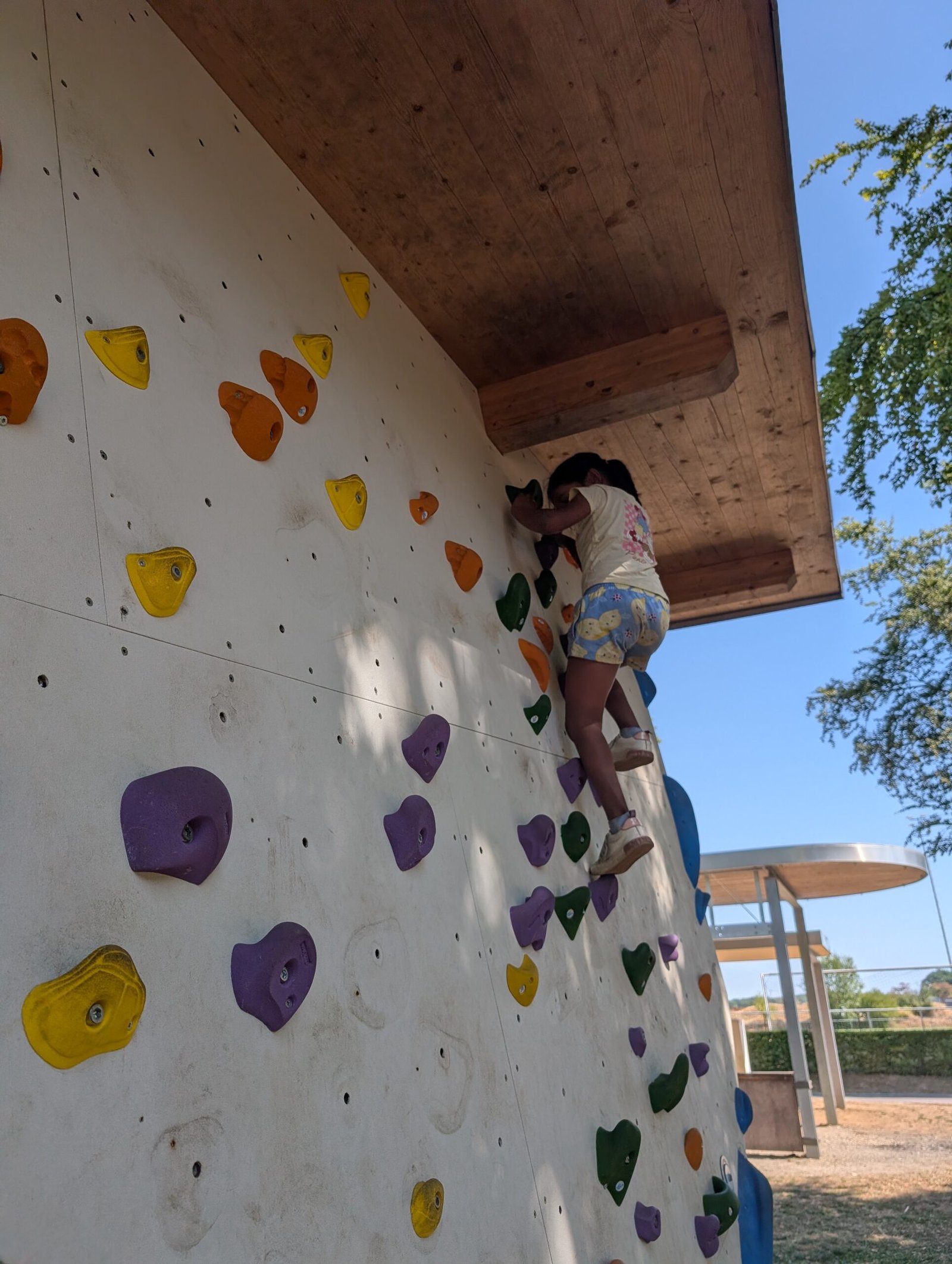
We drove to the visitor centre and parked up. Worth noting for anyone following in our tyre tracks: the parking is free, which these days is almost a spiritual experience in itself. There’s also a brilliant adventure playground right there — climbing structures, the whole lot — which bought us enormous goodwill from Addie before the walk had even started.The drive in is lovely in its own right, winding up and through wooded hills.
We didn’t attempt the full Mullerthal Trail — that’s a serious multi-day undertaking. Instead we picked a loop we’d found on AllTrails: the B2, around 4.2 kilometres.It was sensational.Let me set the scene properly, because the context matters. All of Europe was in the grip of a heatwave. Everywhere we’d driven had been baking — that heavy, oppressive continental heat that makes the air shimmer above the motorway.And then we walked down into the gorge.
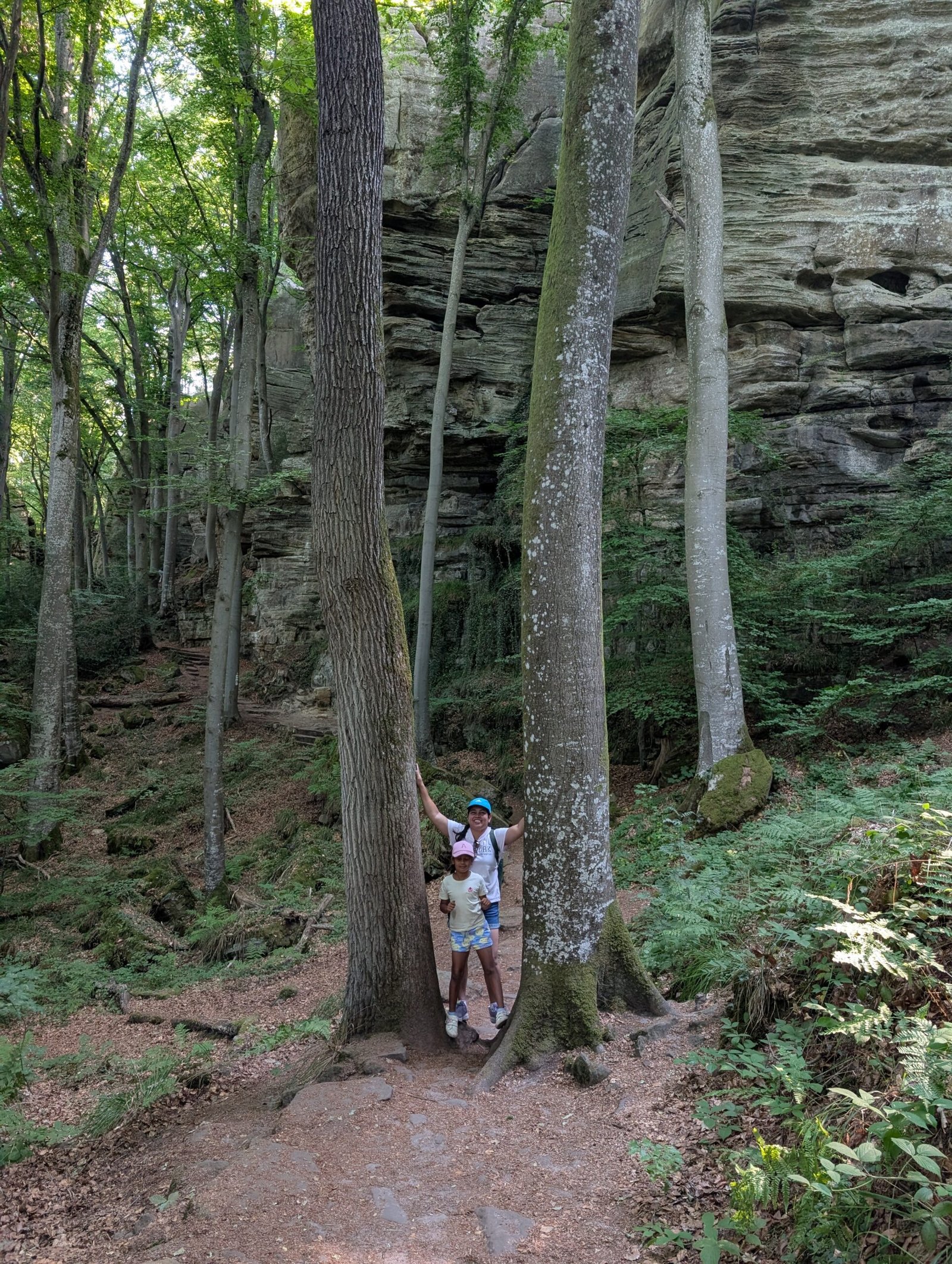
It was cold. Genuinely, deliciously cold. The temperature dropped the moment we descended between the rock walls, as if someone had opened a door into a different season. The sandstone holds the cool. The canopy blocks the sun. The air sits still and damp and green.It was one of the most startling microclimate shifts I’ve ever walked into.
And the place itself. God, the place.
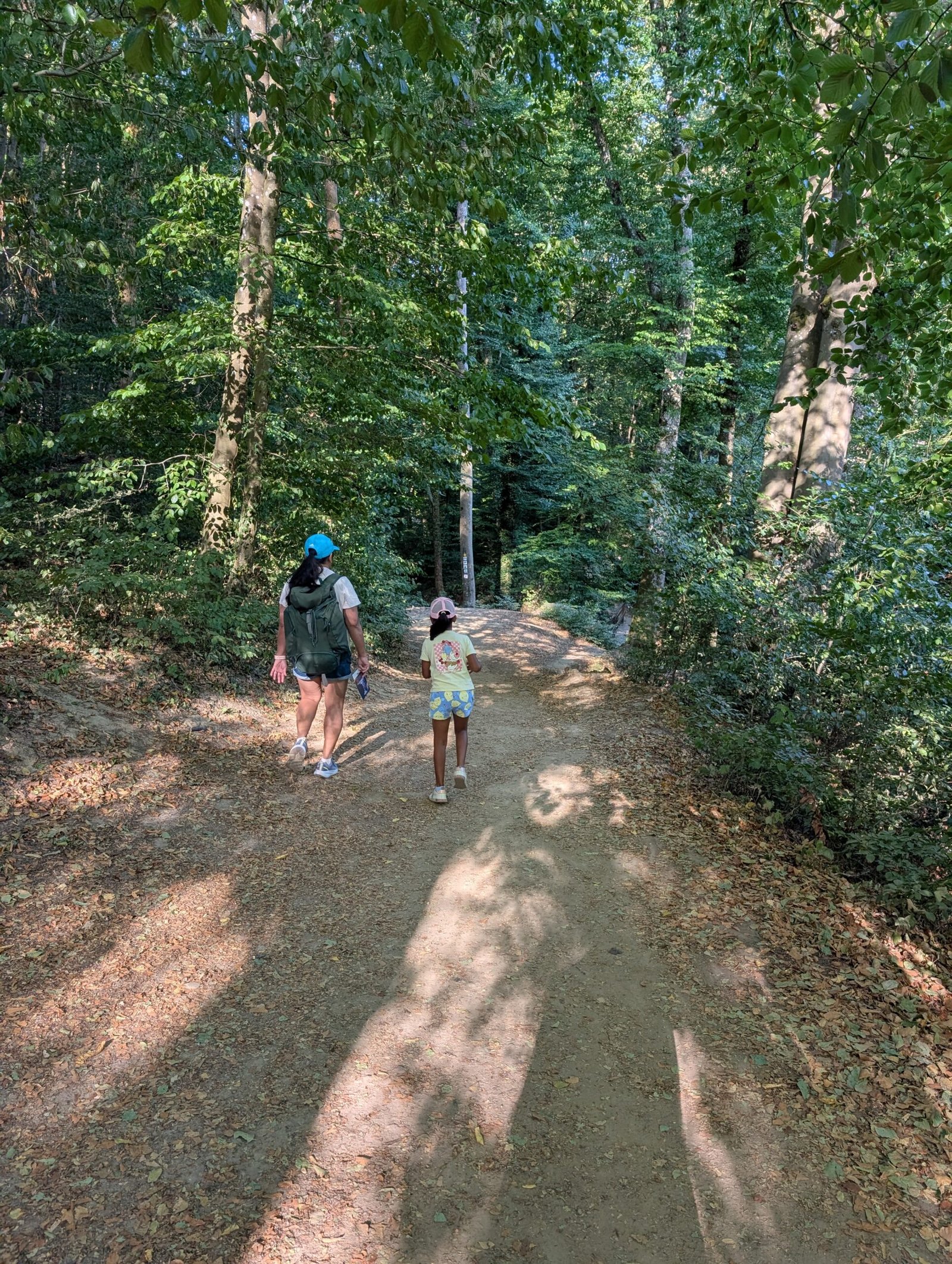
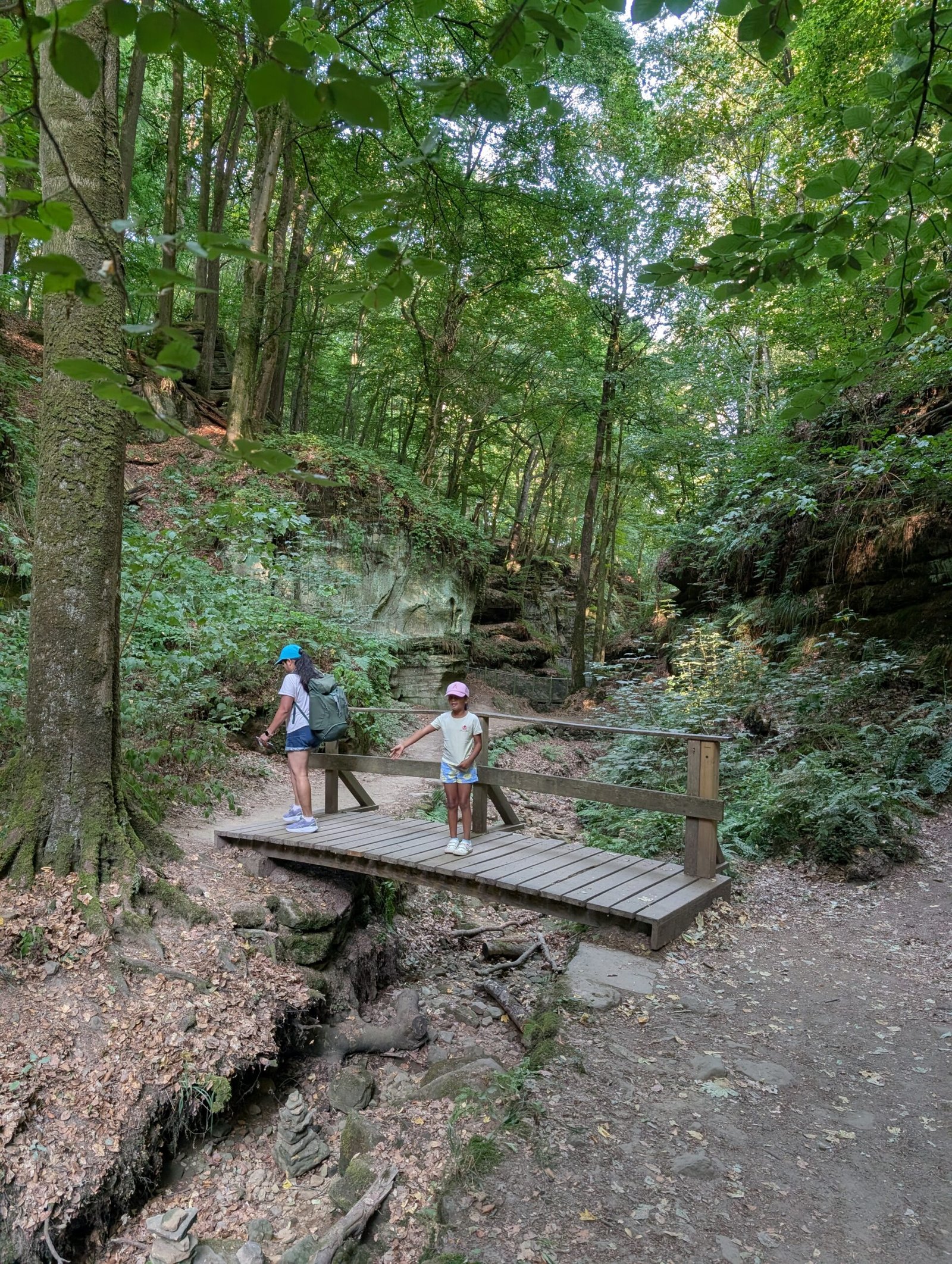
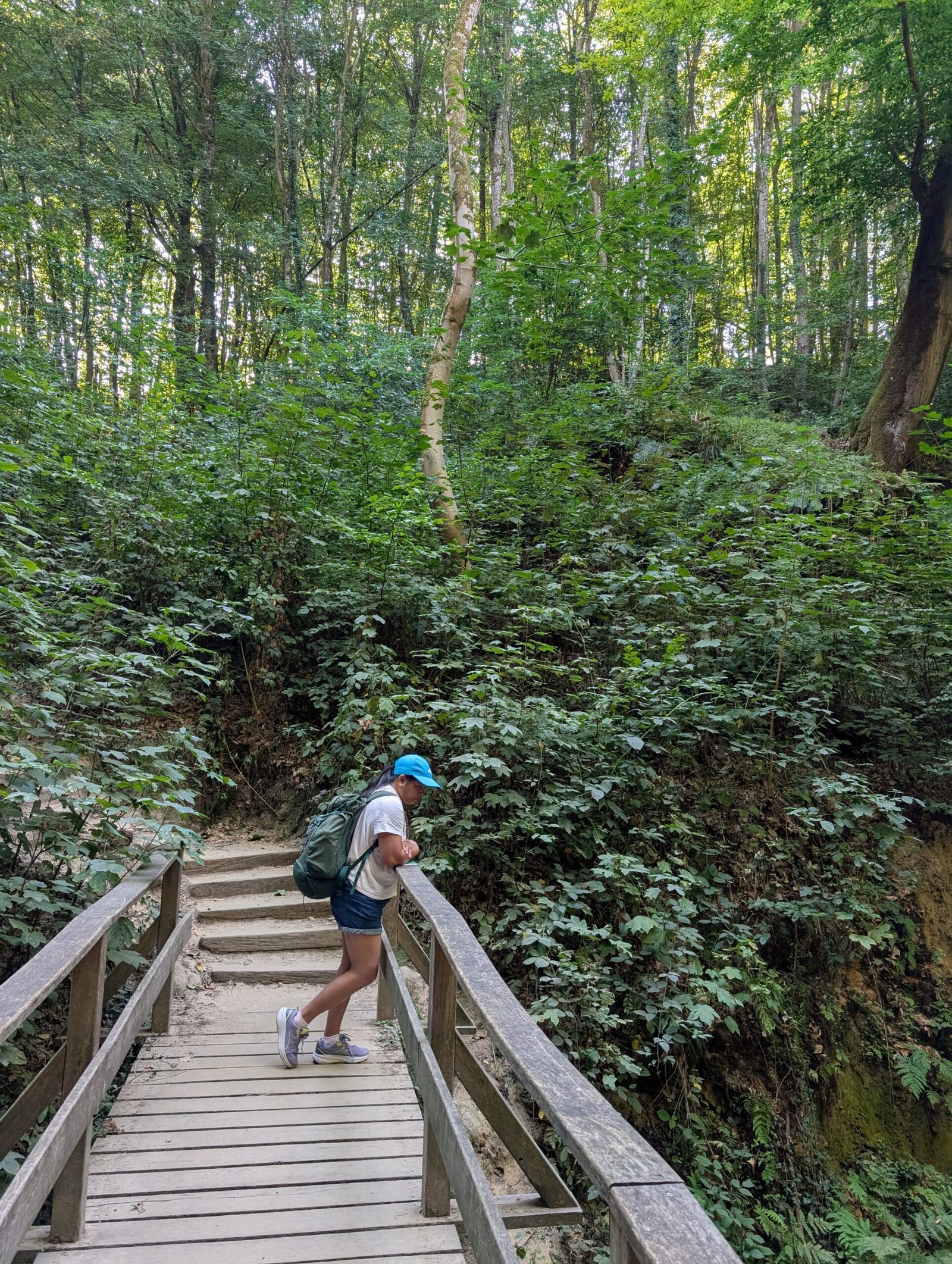
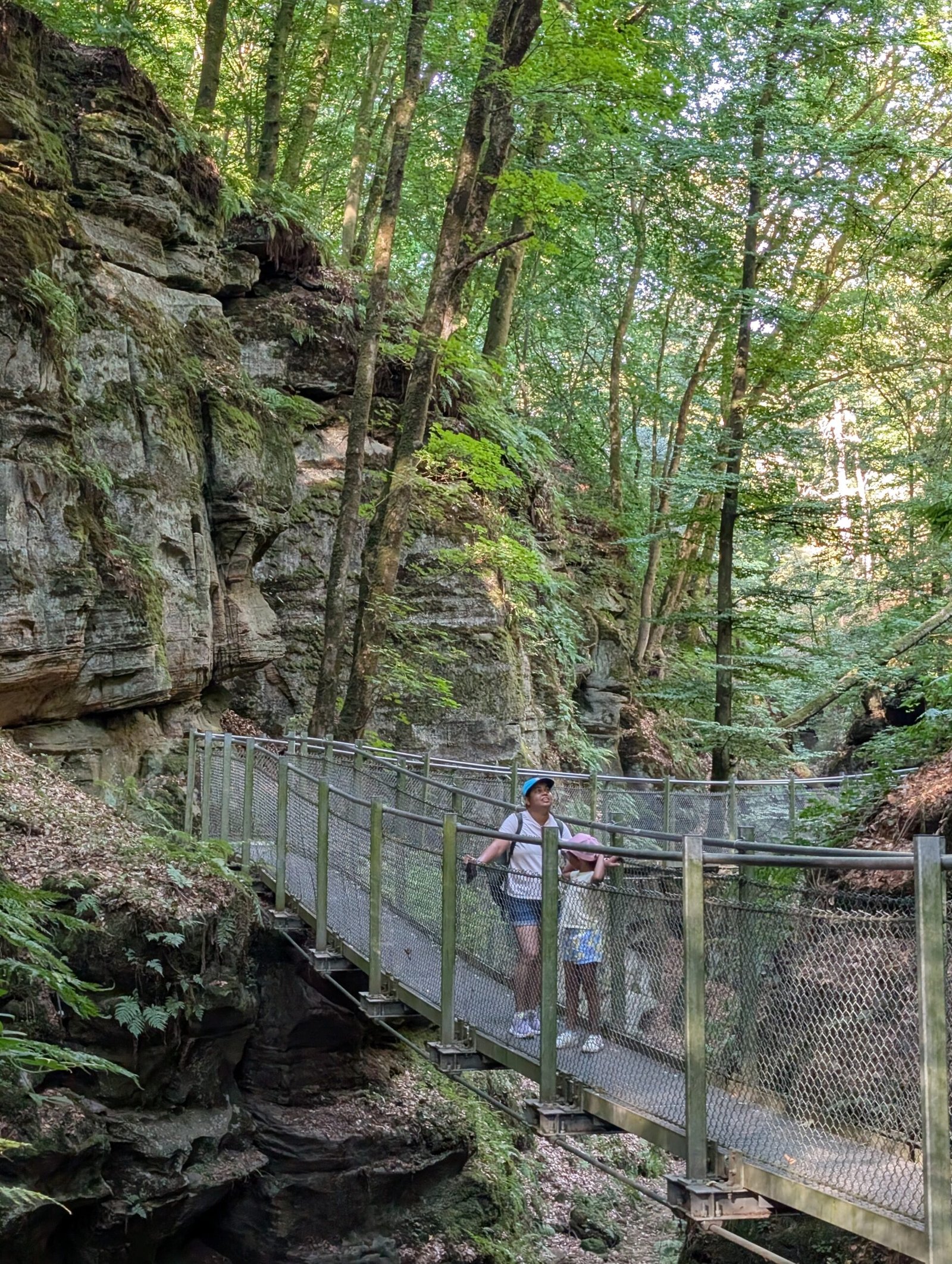
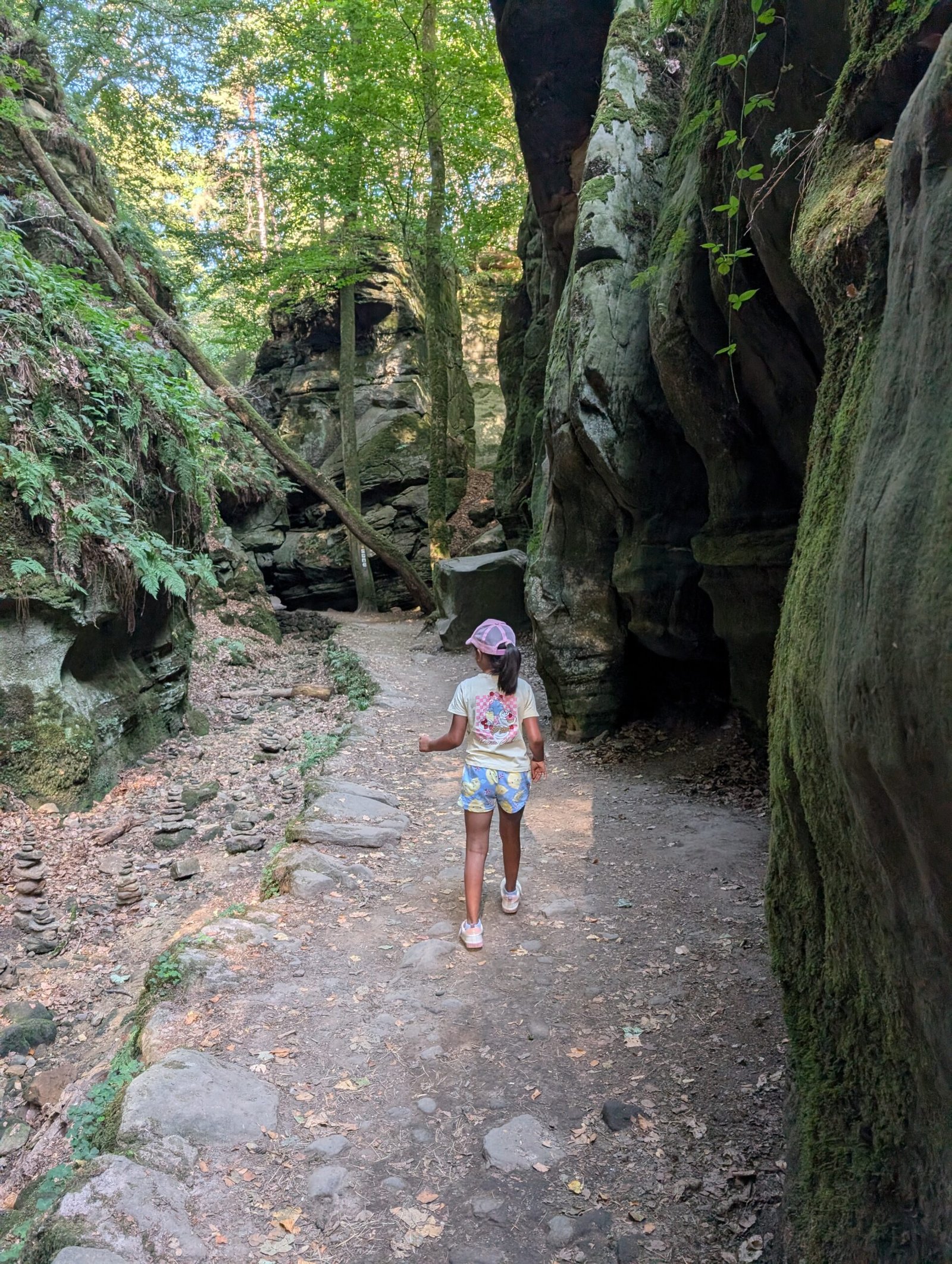
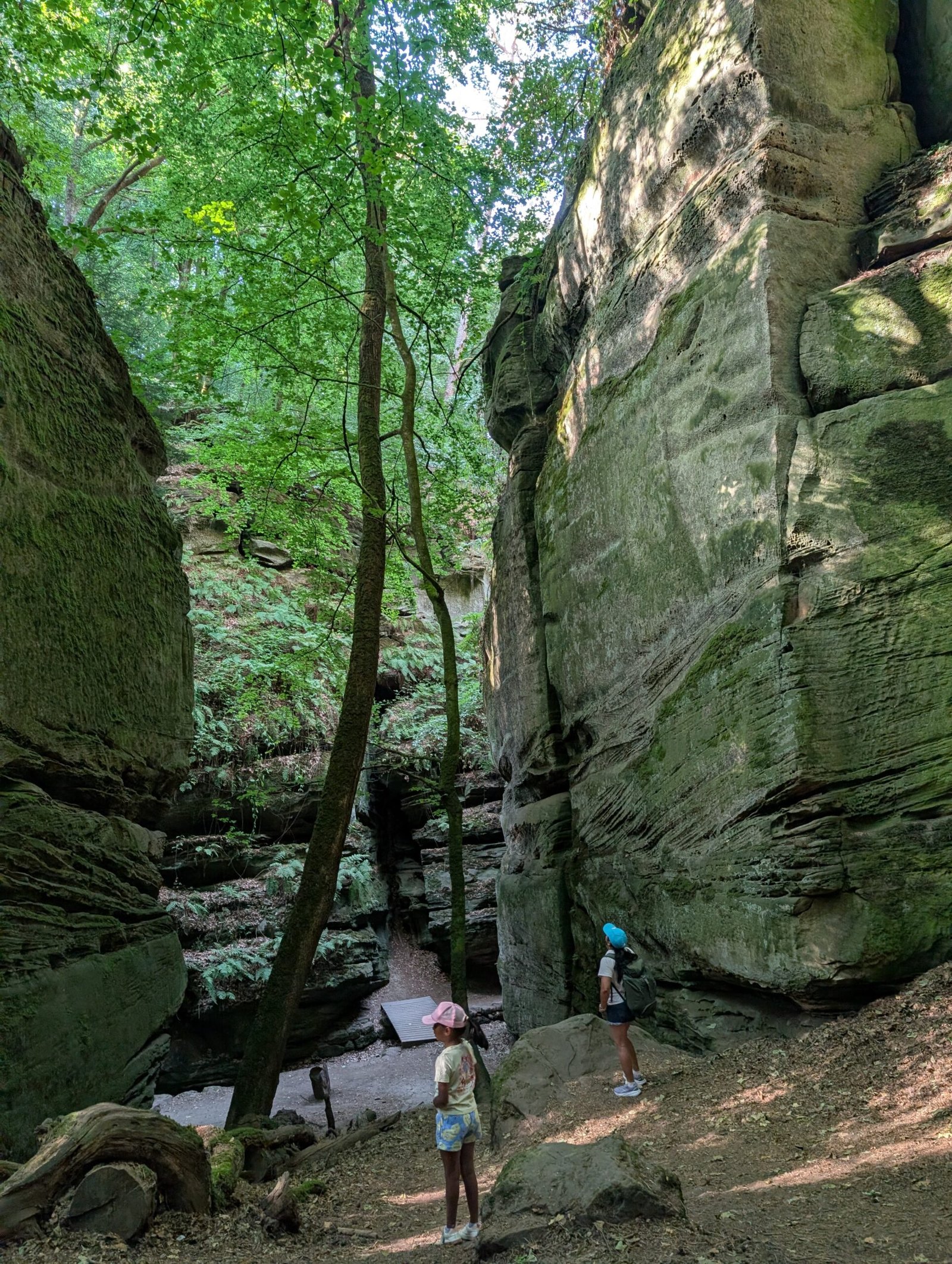
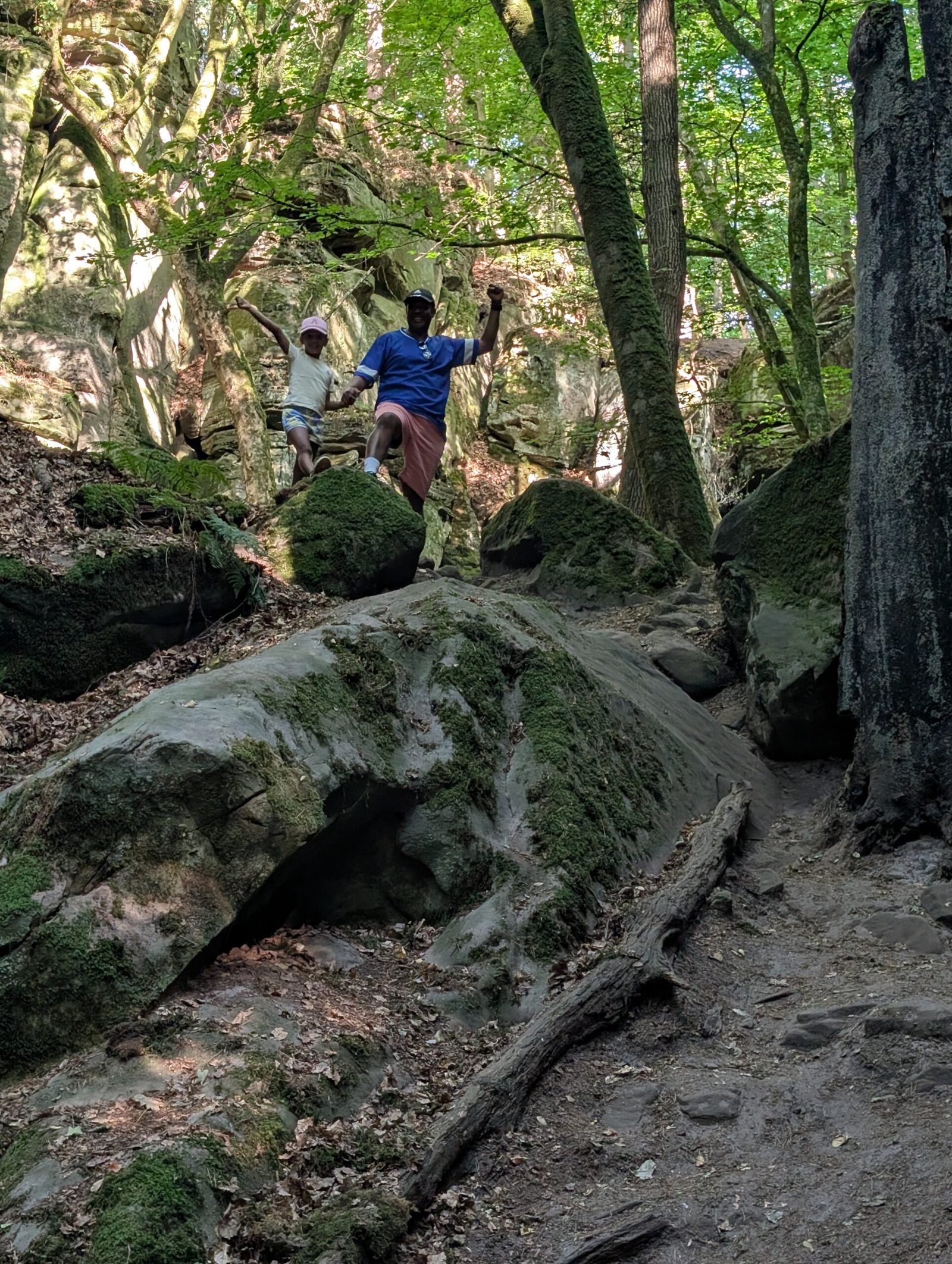
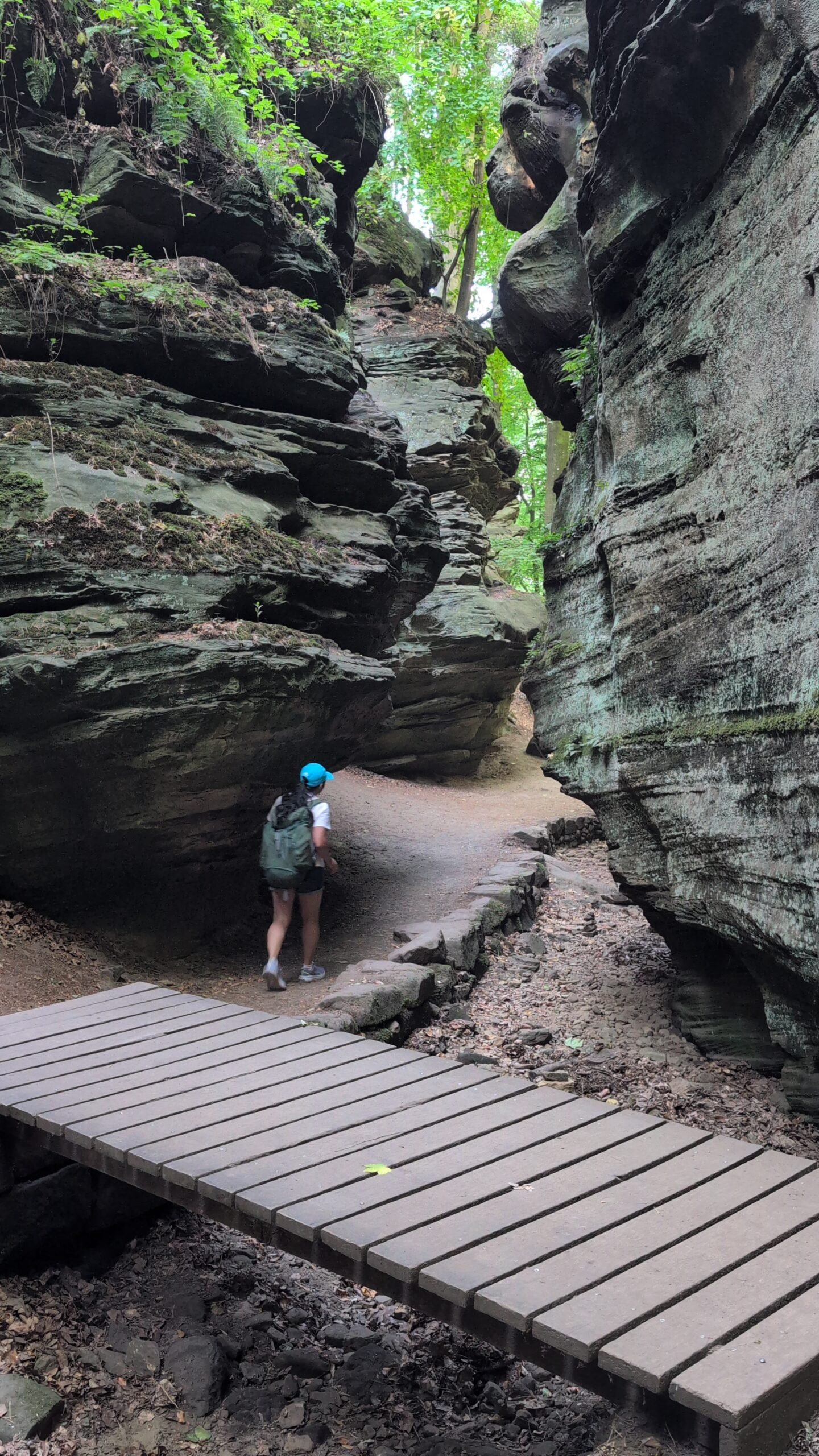
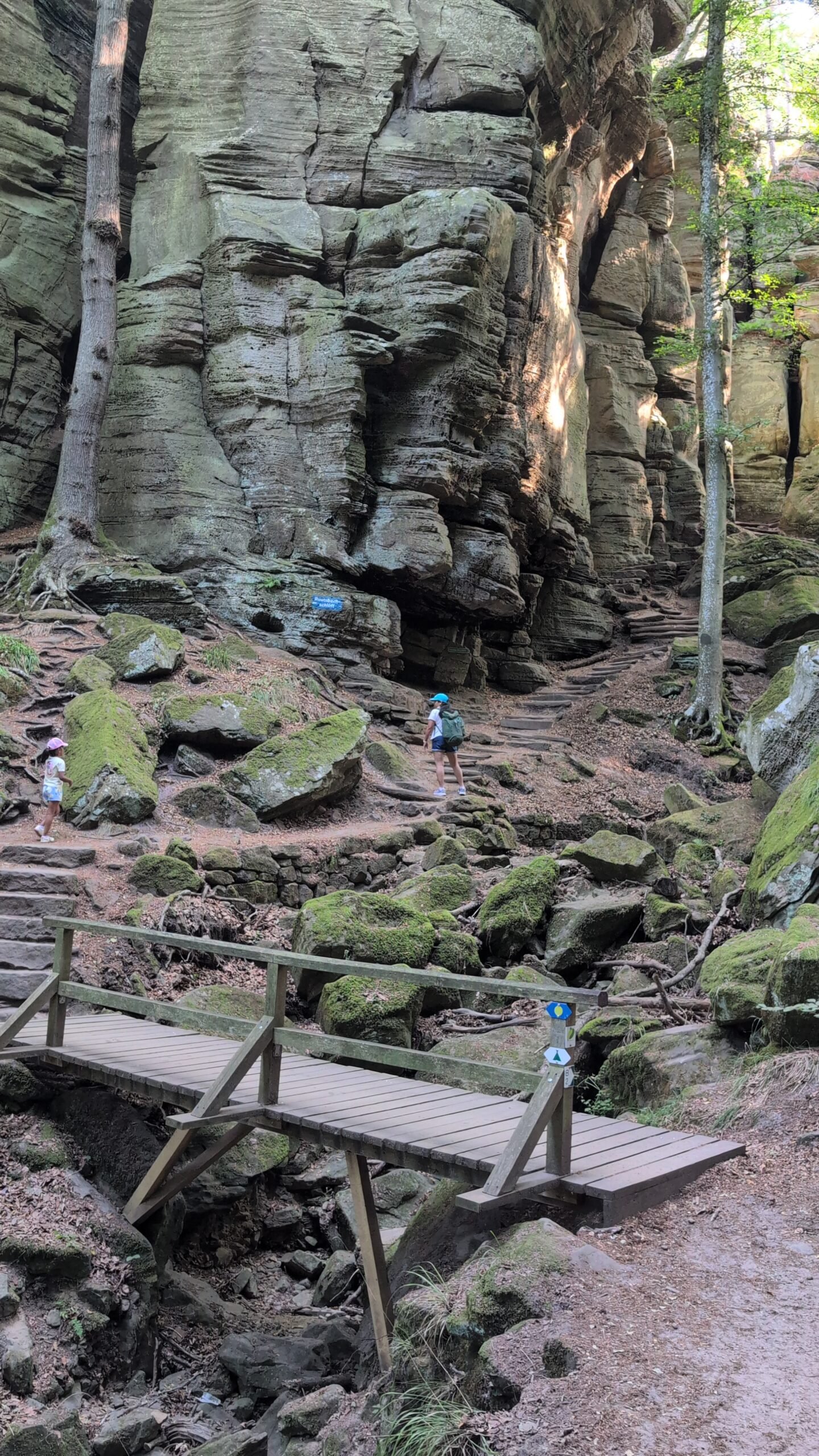
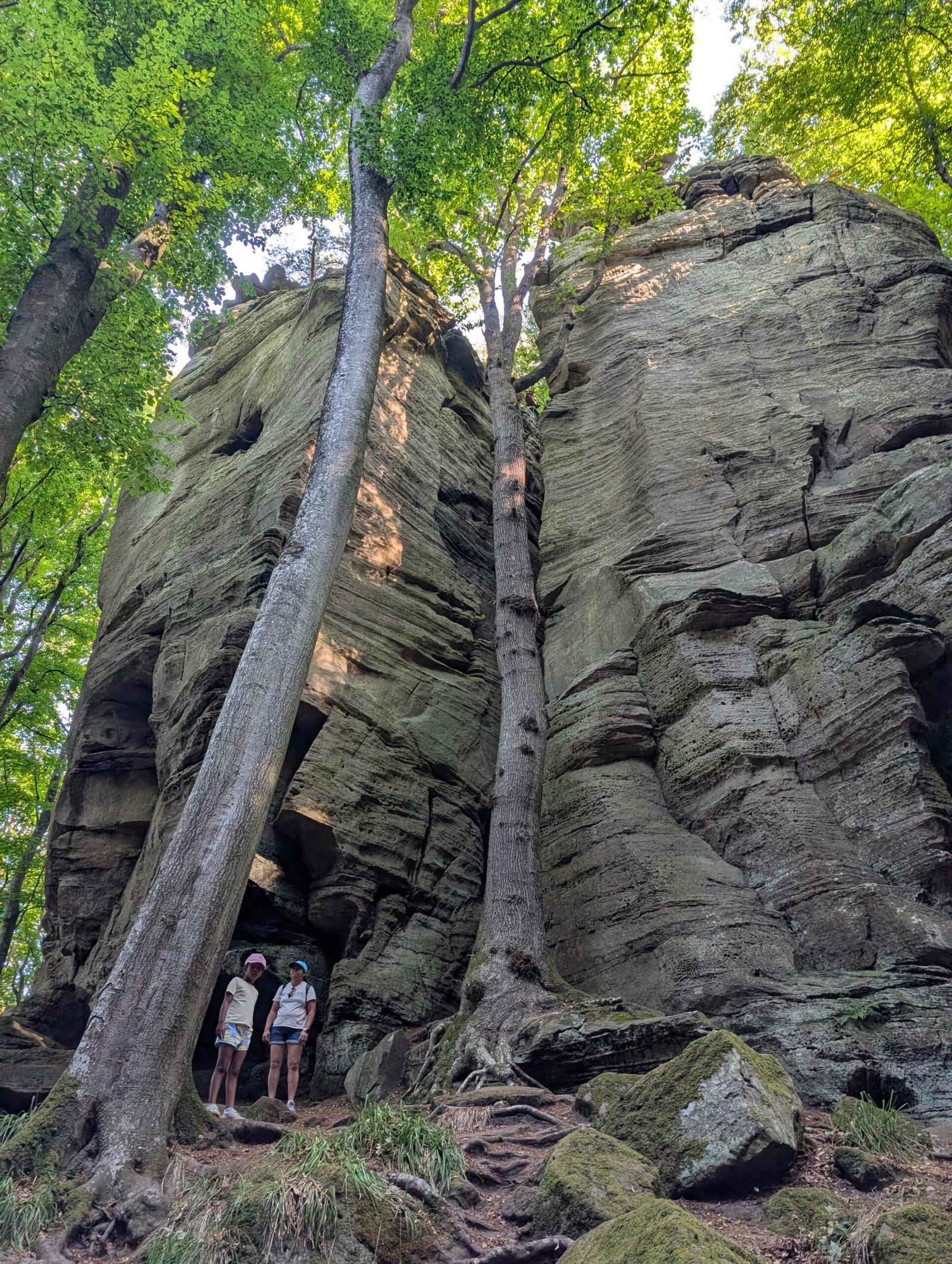
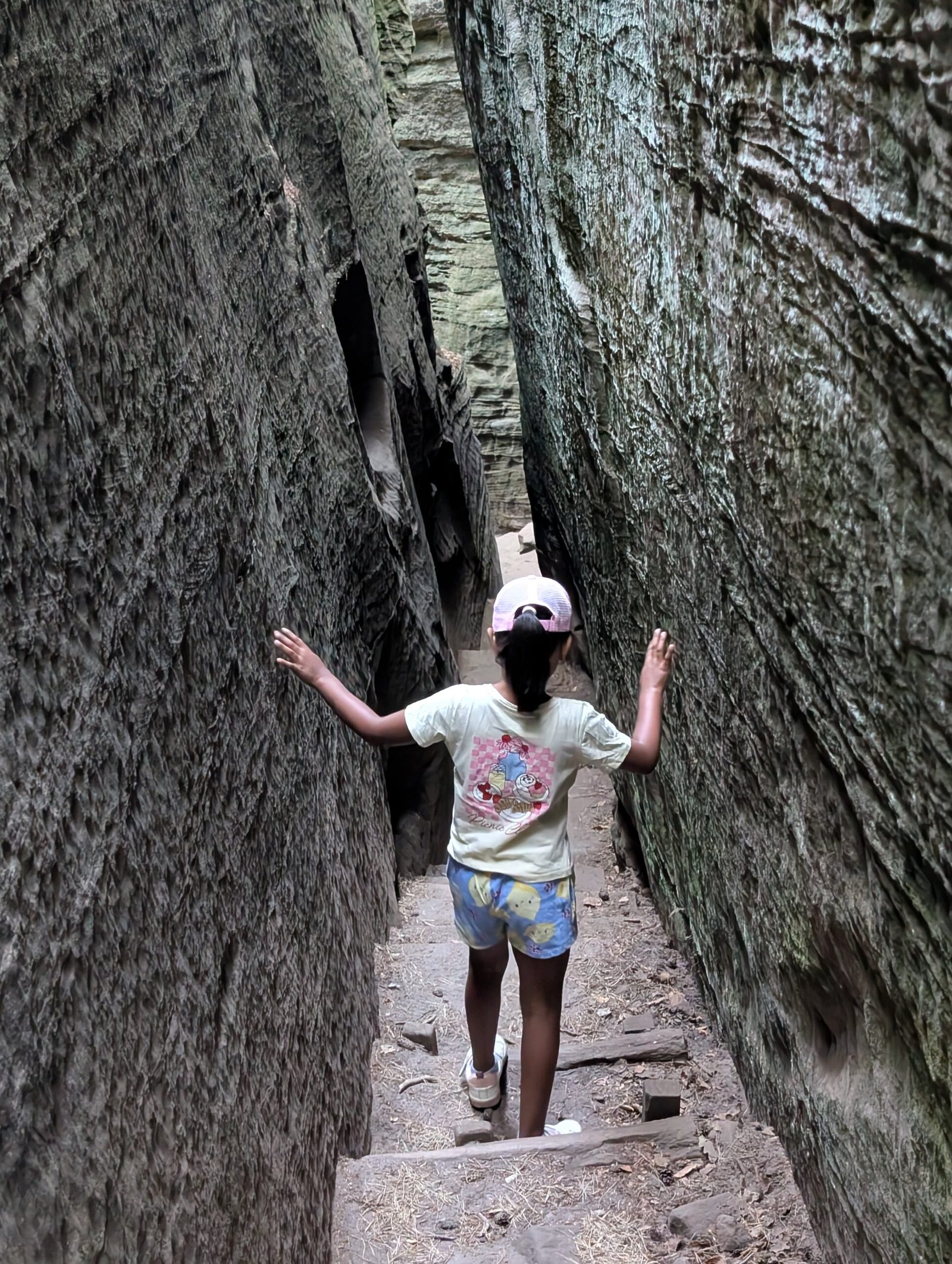
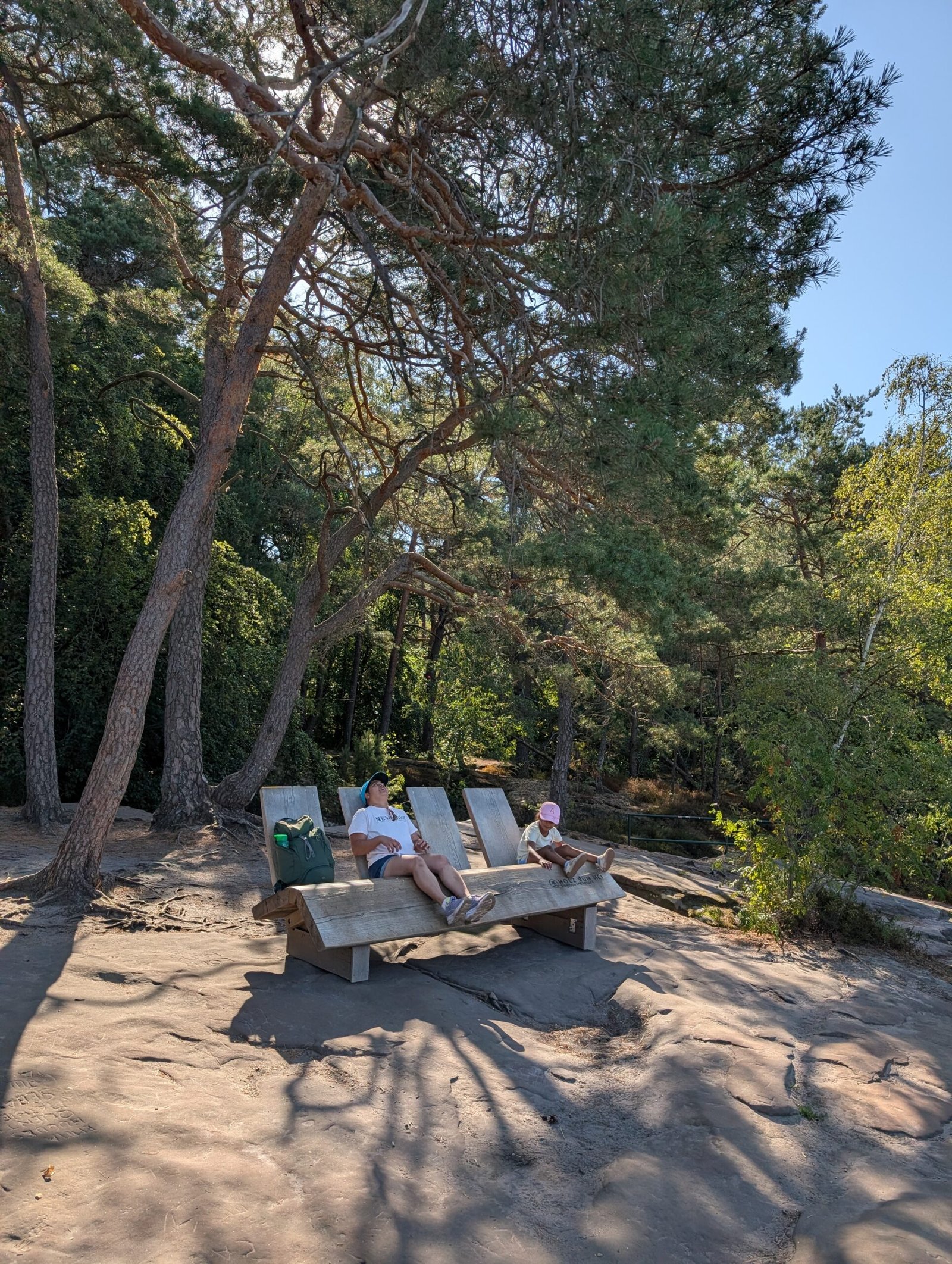
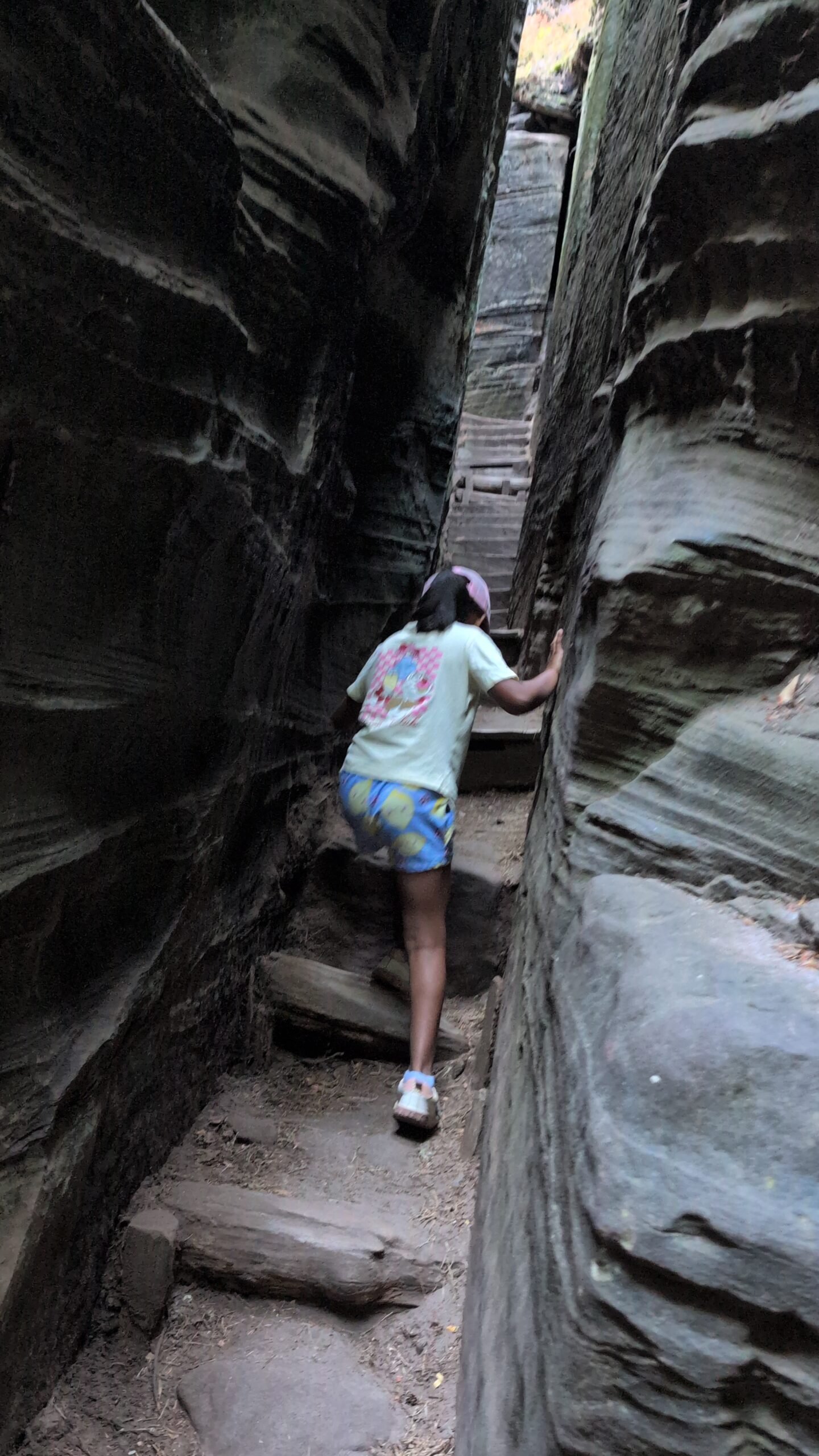
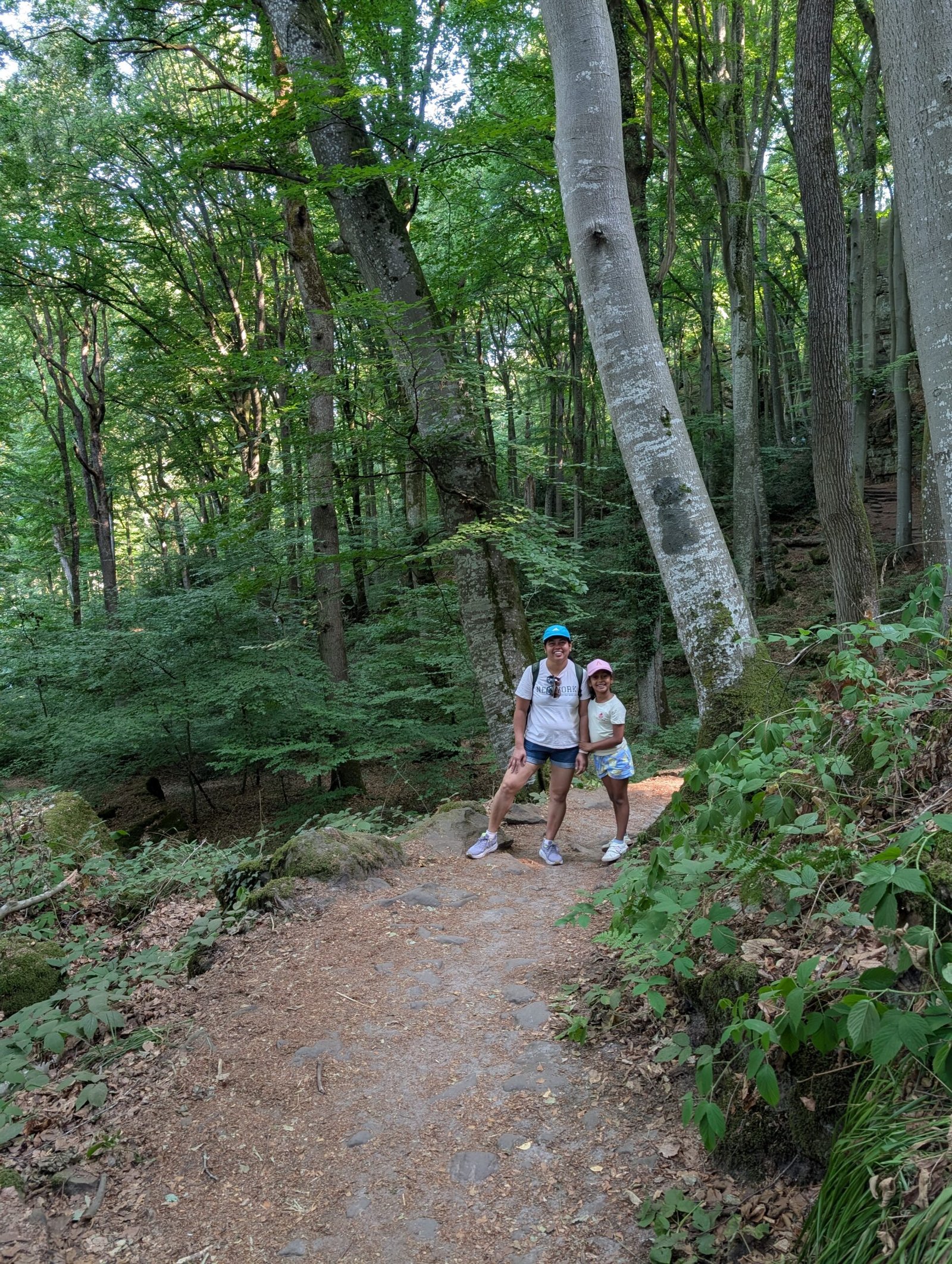
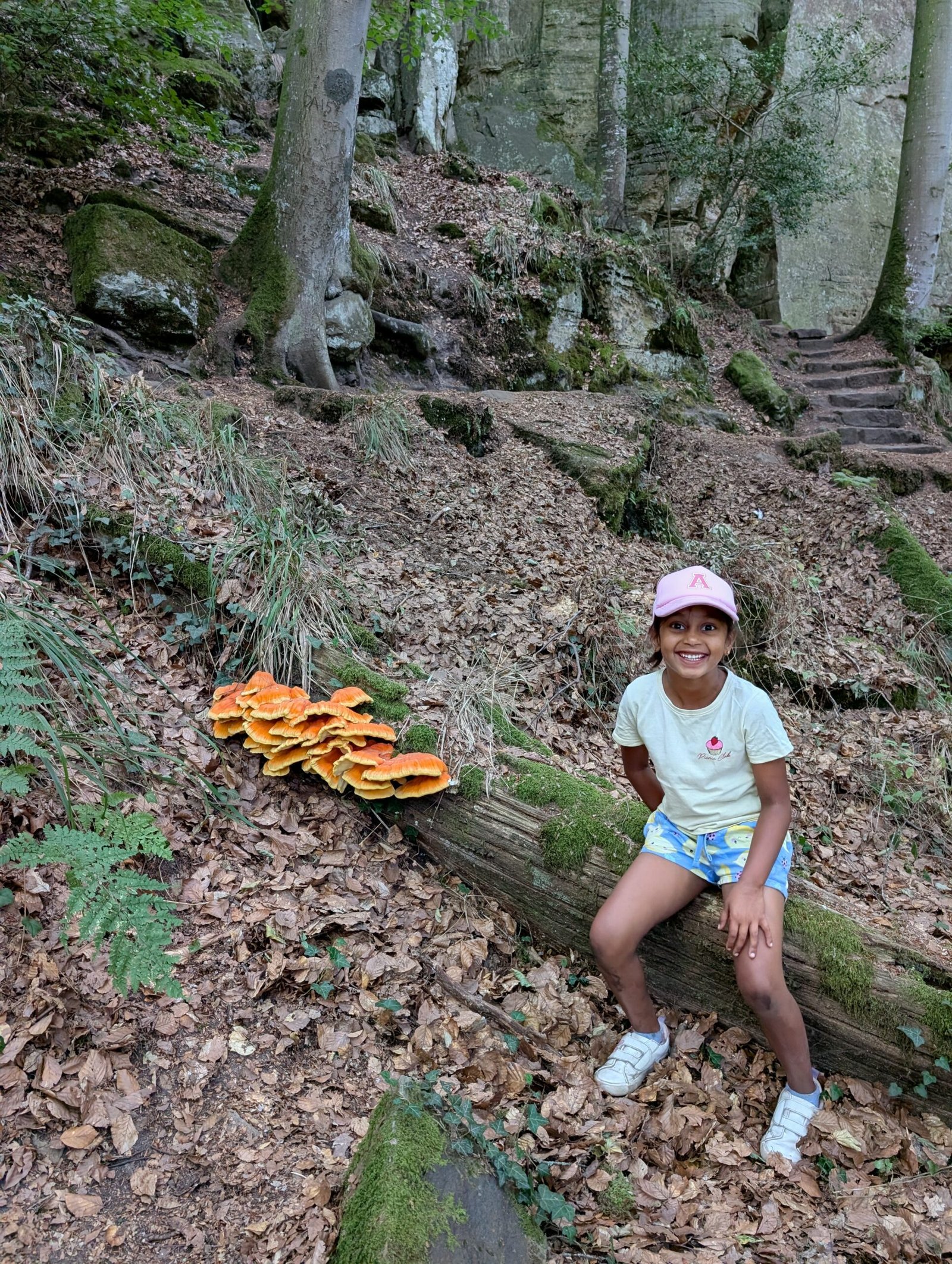
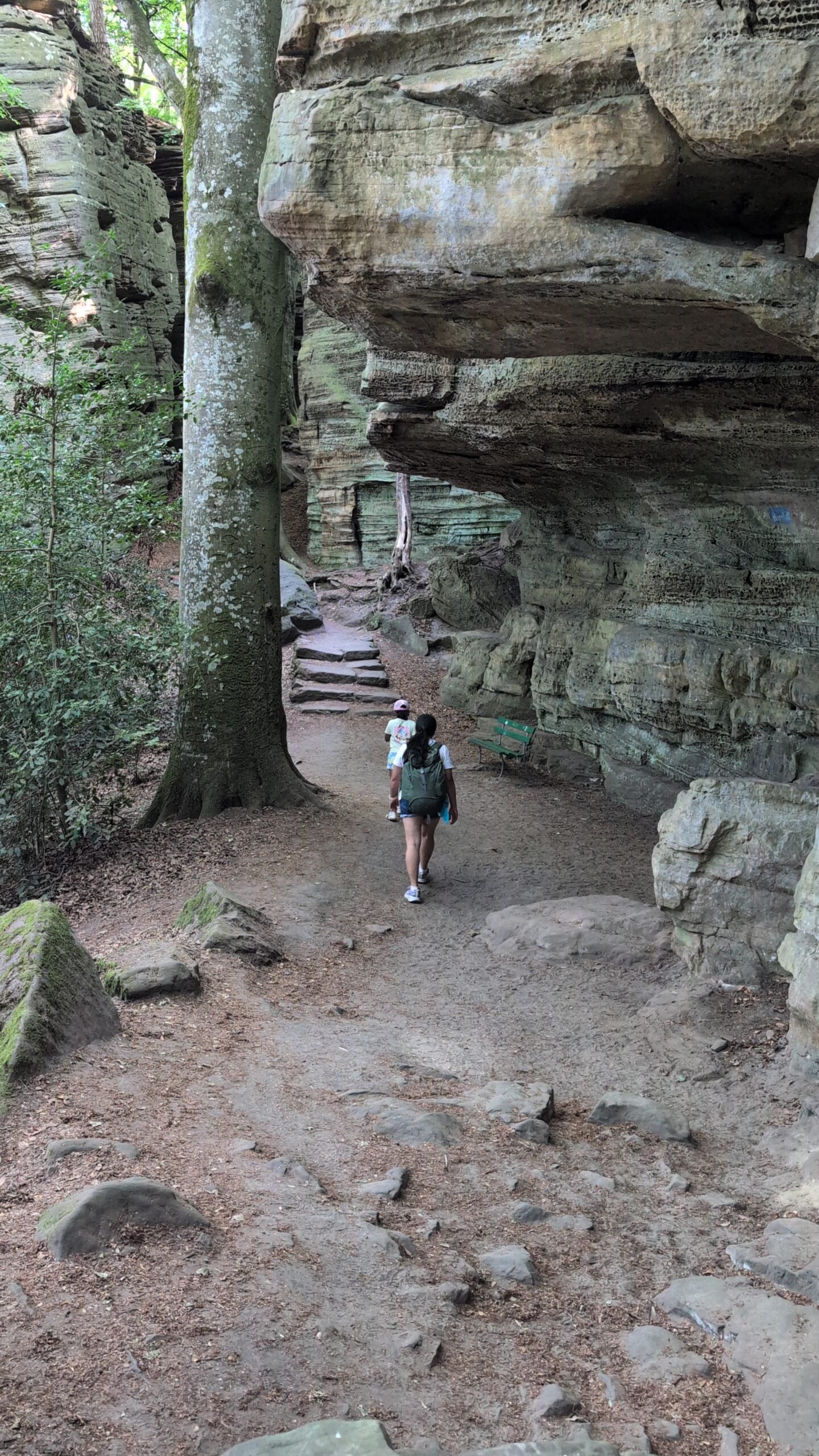
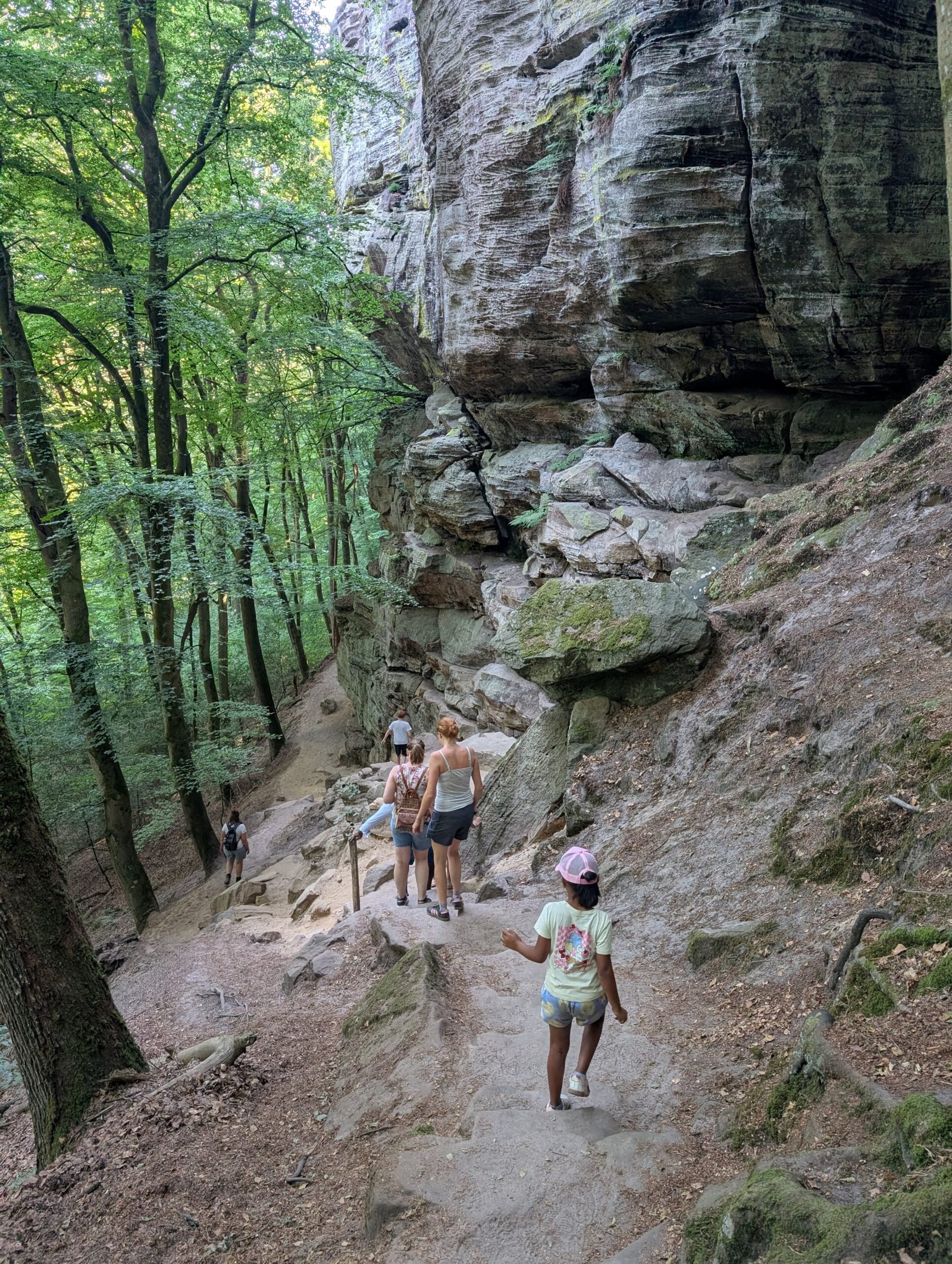
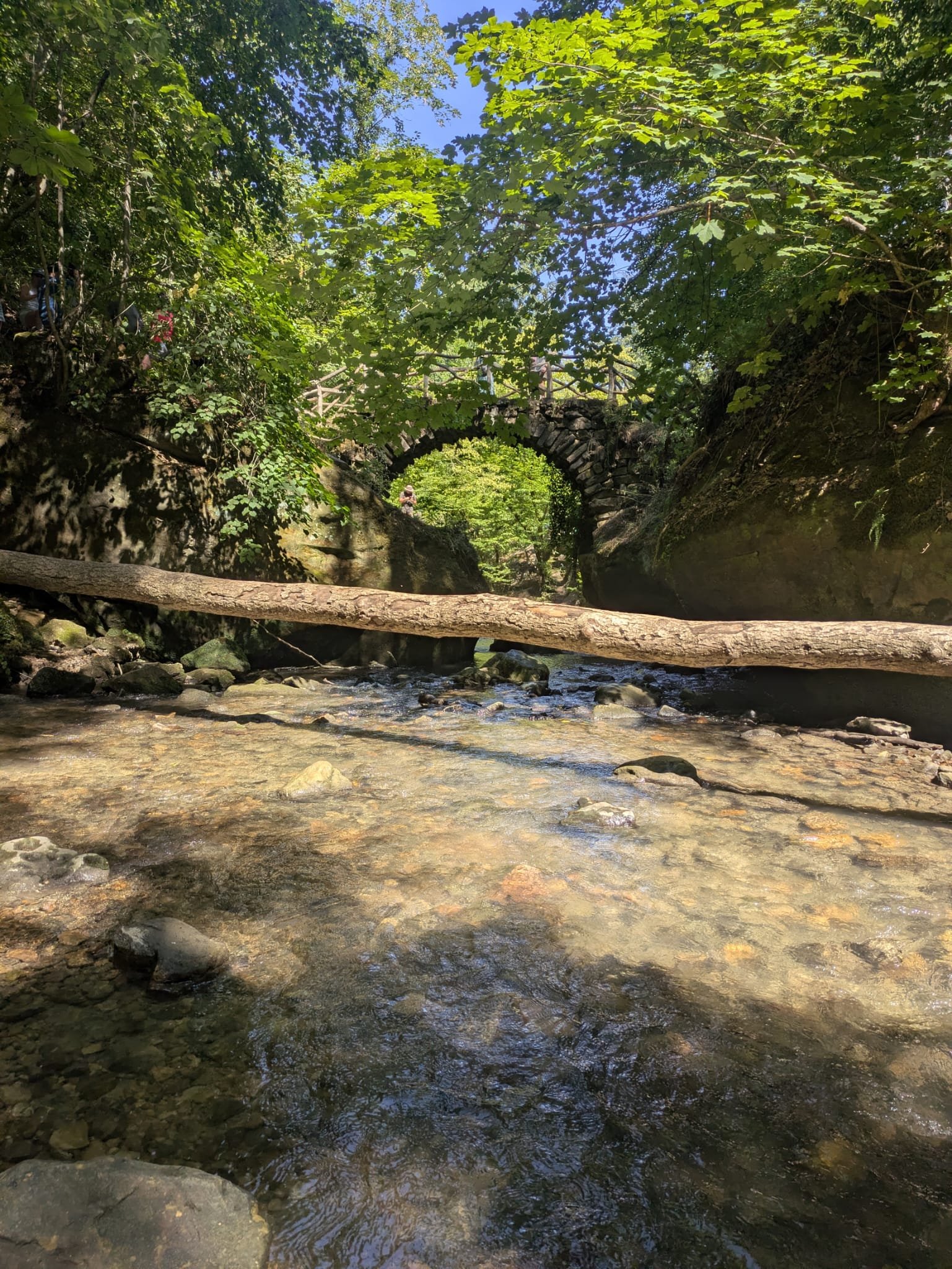
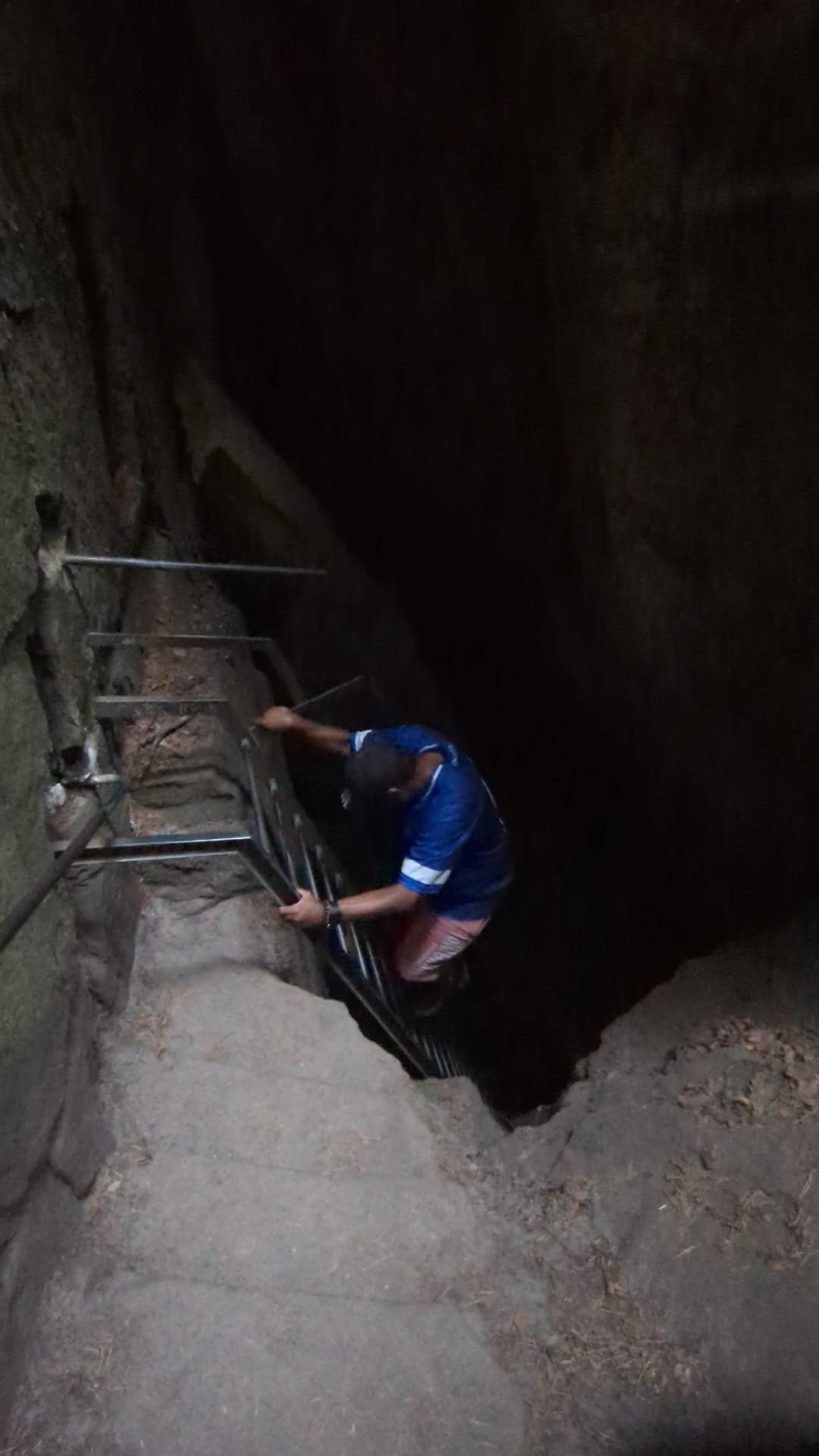
Towering trees — impossibly tall, straight trunks reaching up for whatever light they could find. High rock walls on either side, draped in moss so thick and vivid it looked artificial. Narrow passages where the gorge pinches in and you have to turn sideways. Boulders the size of houses scattered like something a giant abandoned mid-game. Shafts of light cutting down through the leaves and landing on the forest floor in bright, moving coins.
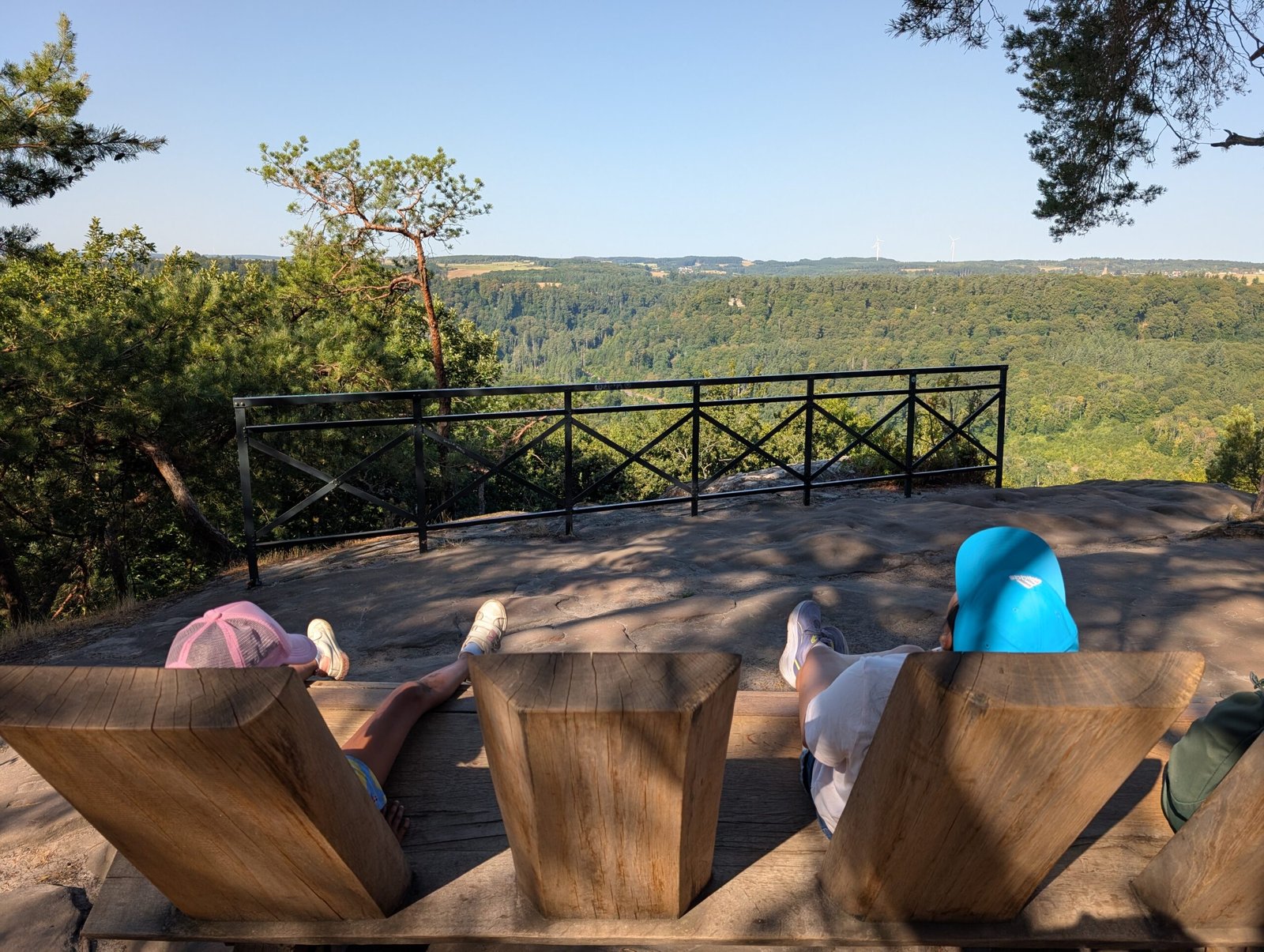
It didn’t feel like northern Europe at all. It felt tropical. Lush, wet, overgrown, primordial. If you’d told me we were in a rainforest, I’d have believed you.The trail threads past a whole series of named viewpoints and rock formations, and we stopped at every single one — the little lookouts where the gorge opens up and you can see across the treetops, the clefts and crevices, the overhangs. There was a particularly good viewpoint with seating, and we sat there for a while doing nothing at all.We also passed several groups of rock climbers working the sandstone faces — ropes, harnesses, chalk, intense concentration.
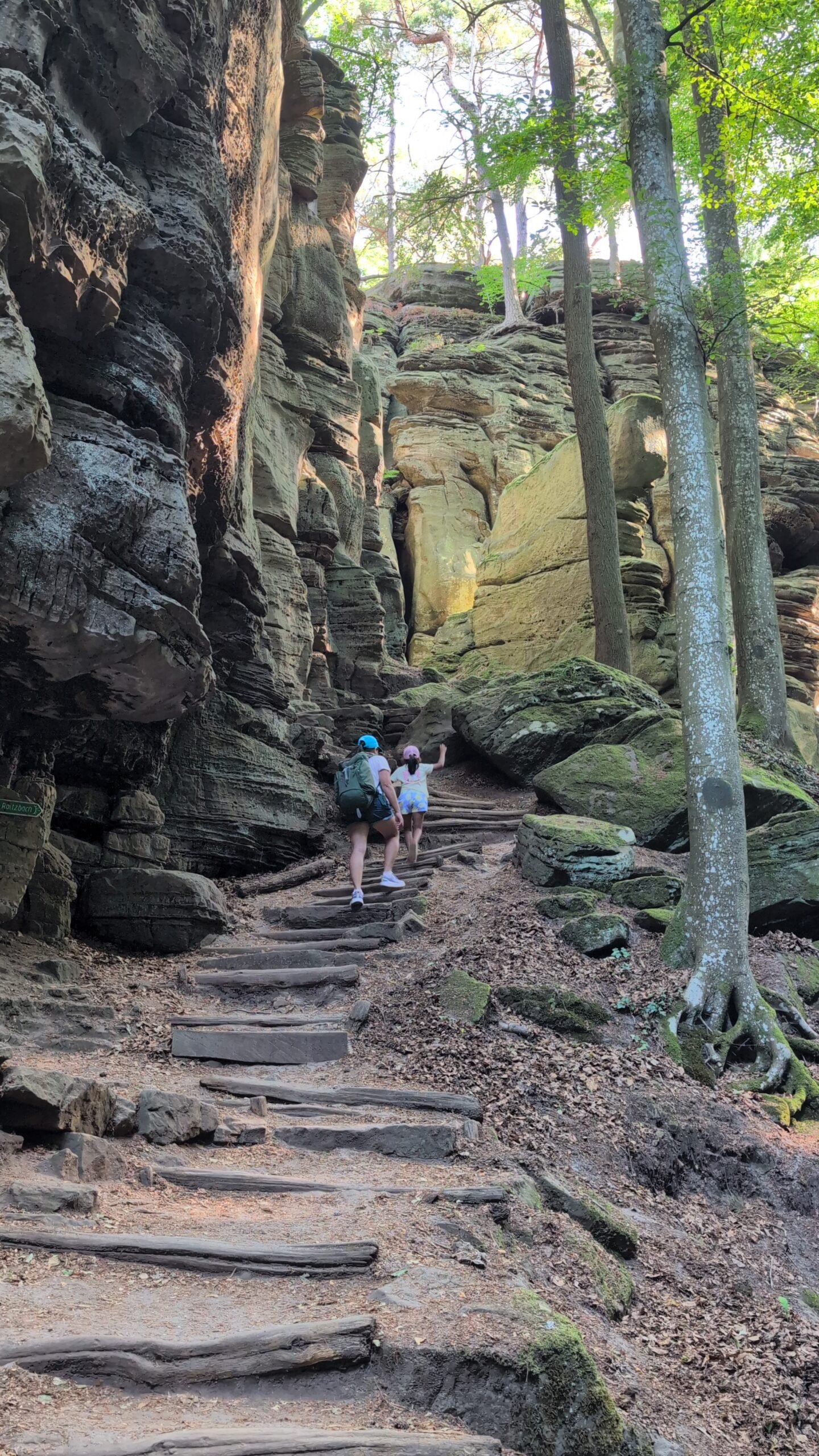
Addy was the star of this walk. Entirely in her element. Off exploring by herself, scrambling up onto rocks, running ahead on the path and then waiting at the corners for us to catch up, poking at moss, peering into crevices. There was no heatwave down there, no heat-grumpiness, no “how much further” — just a six-year-old given a fairytale forest and the freedom to roam it.She loved every single bit of it.
Schiessentümpel — The Waterfall That Stole the Day
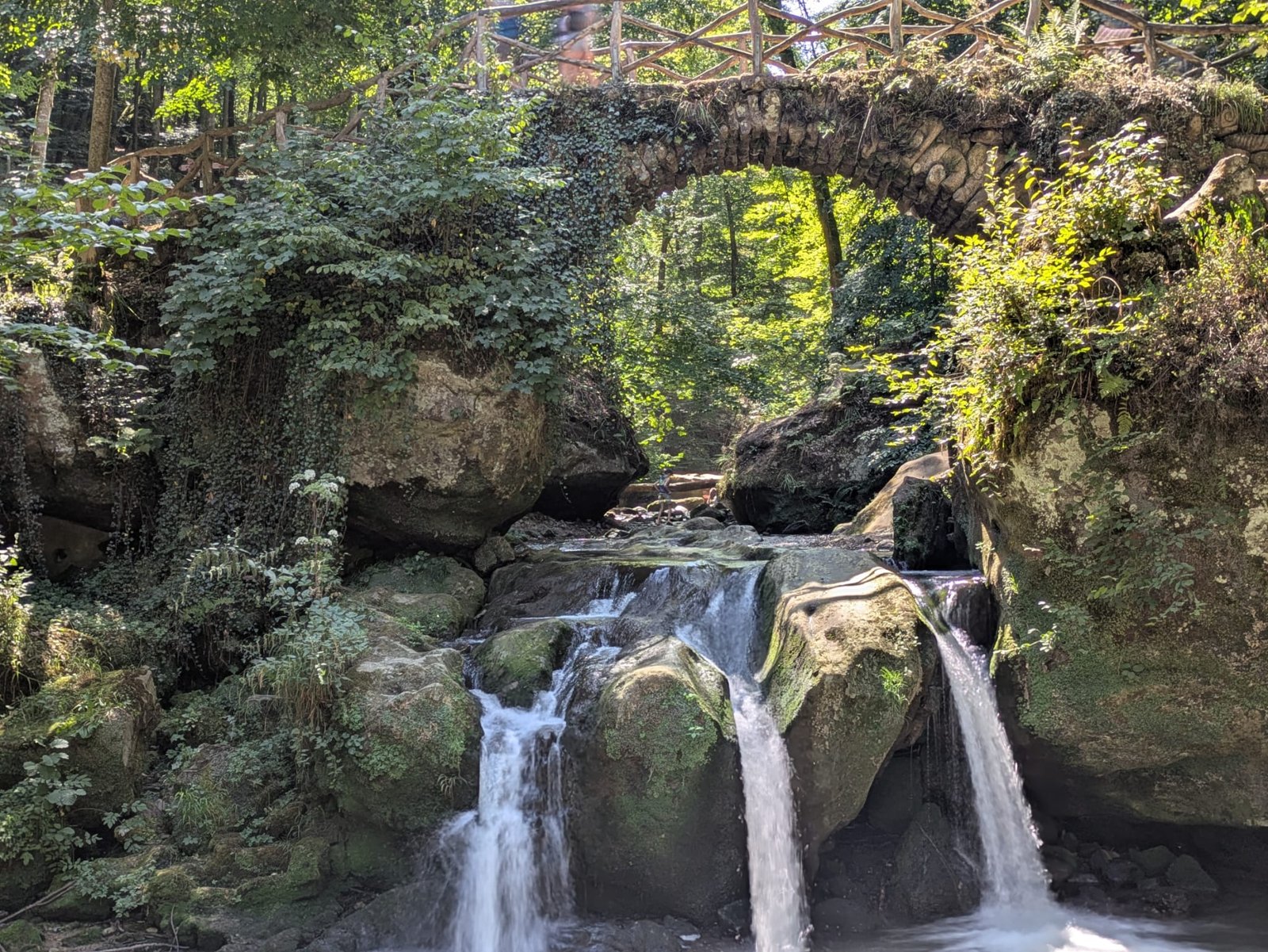
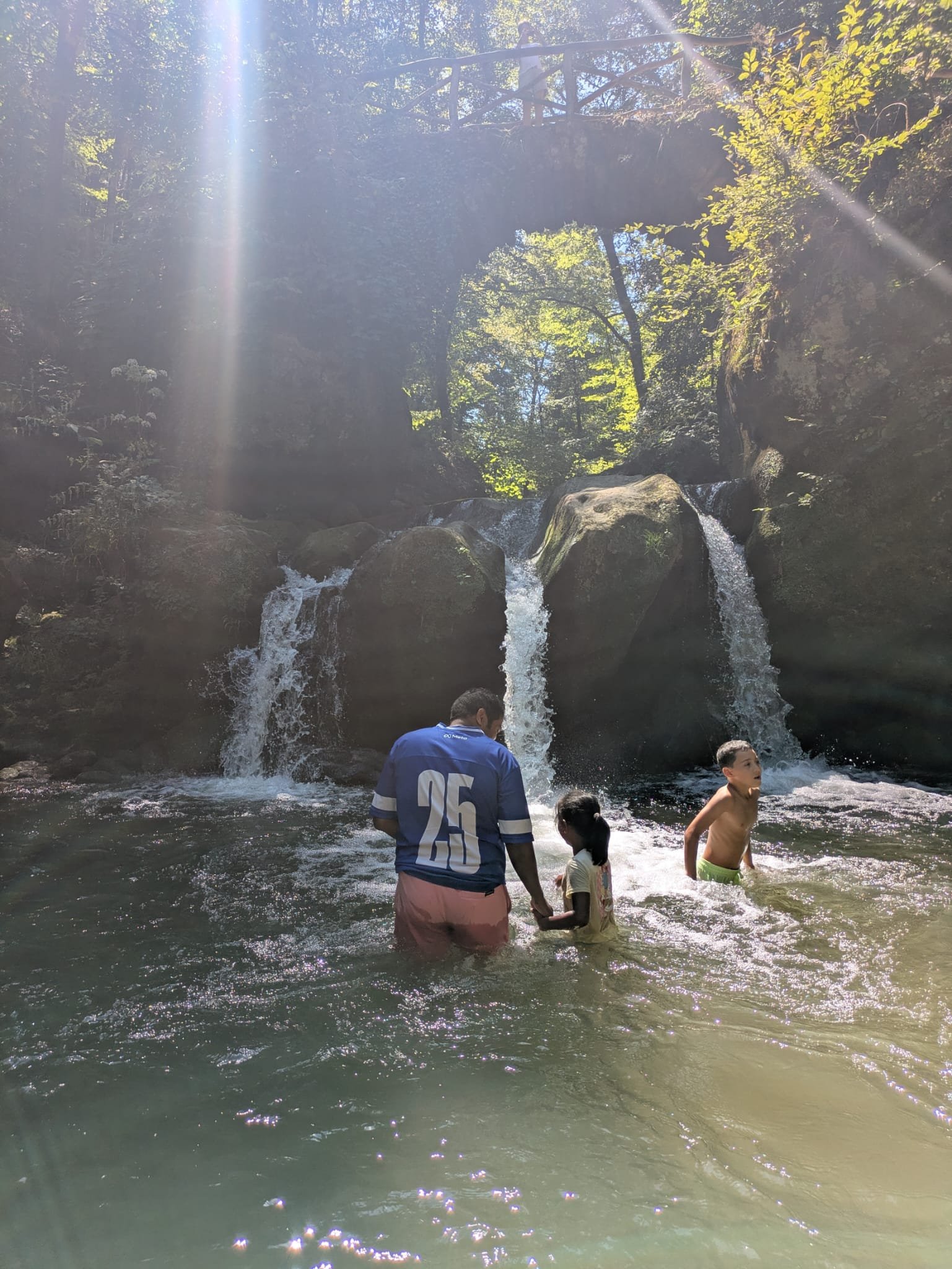
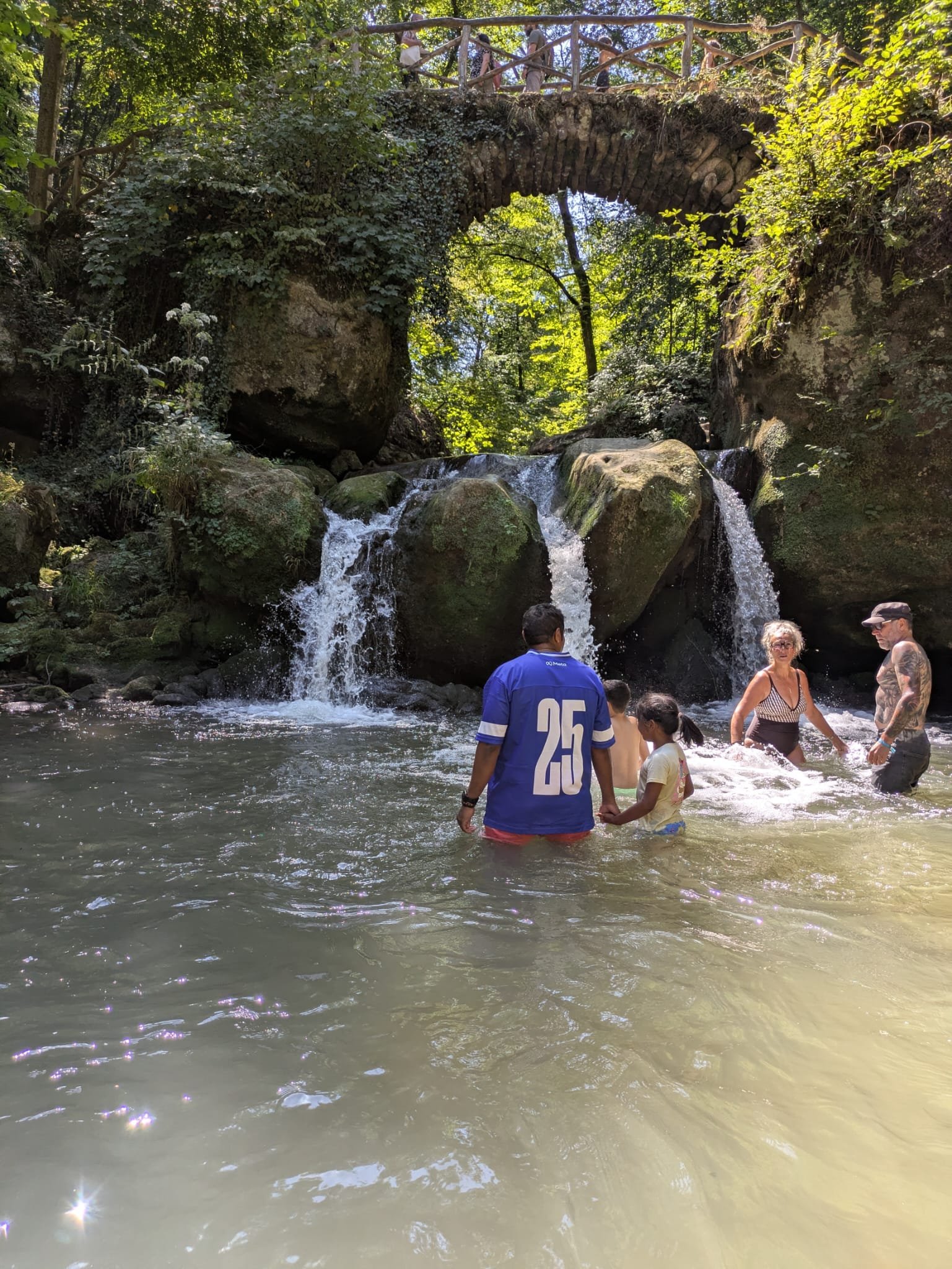
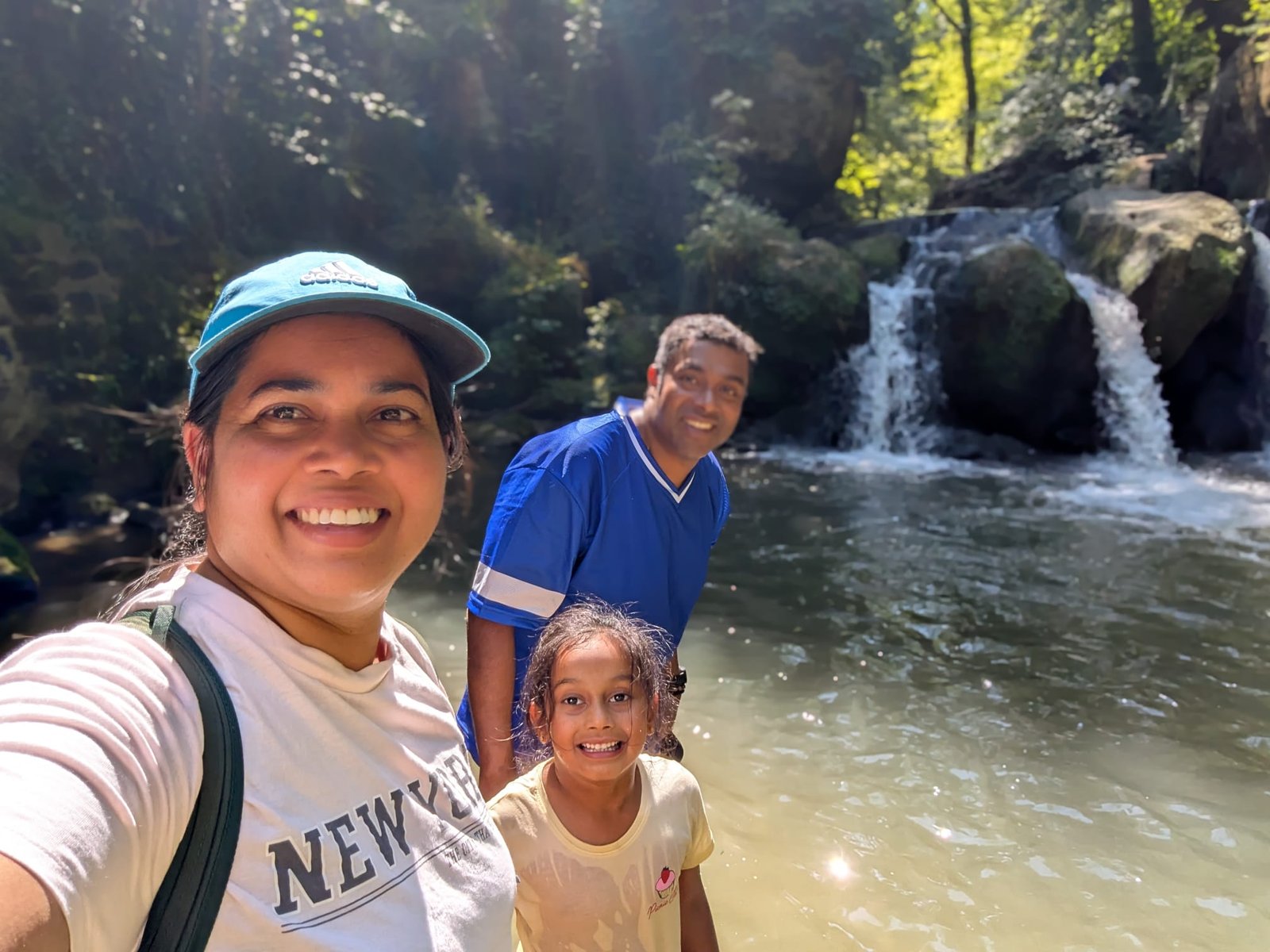
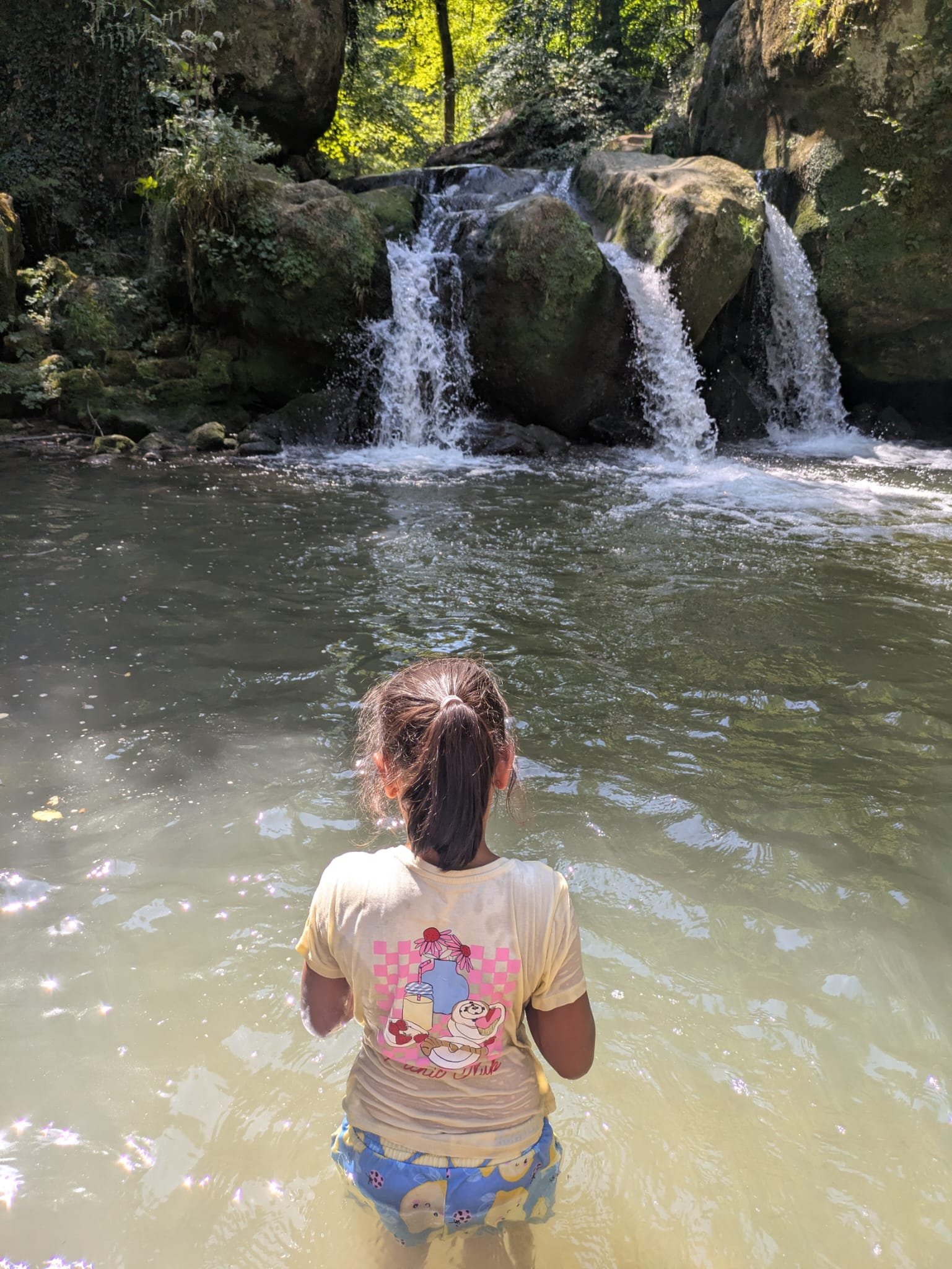
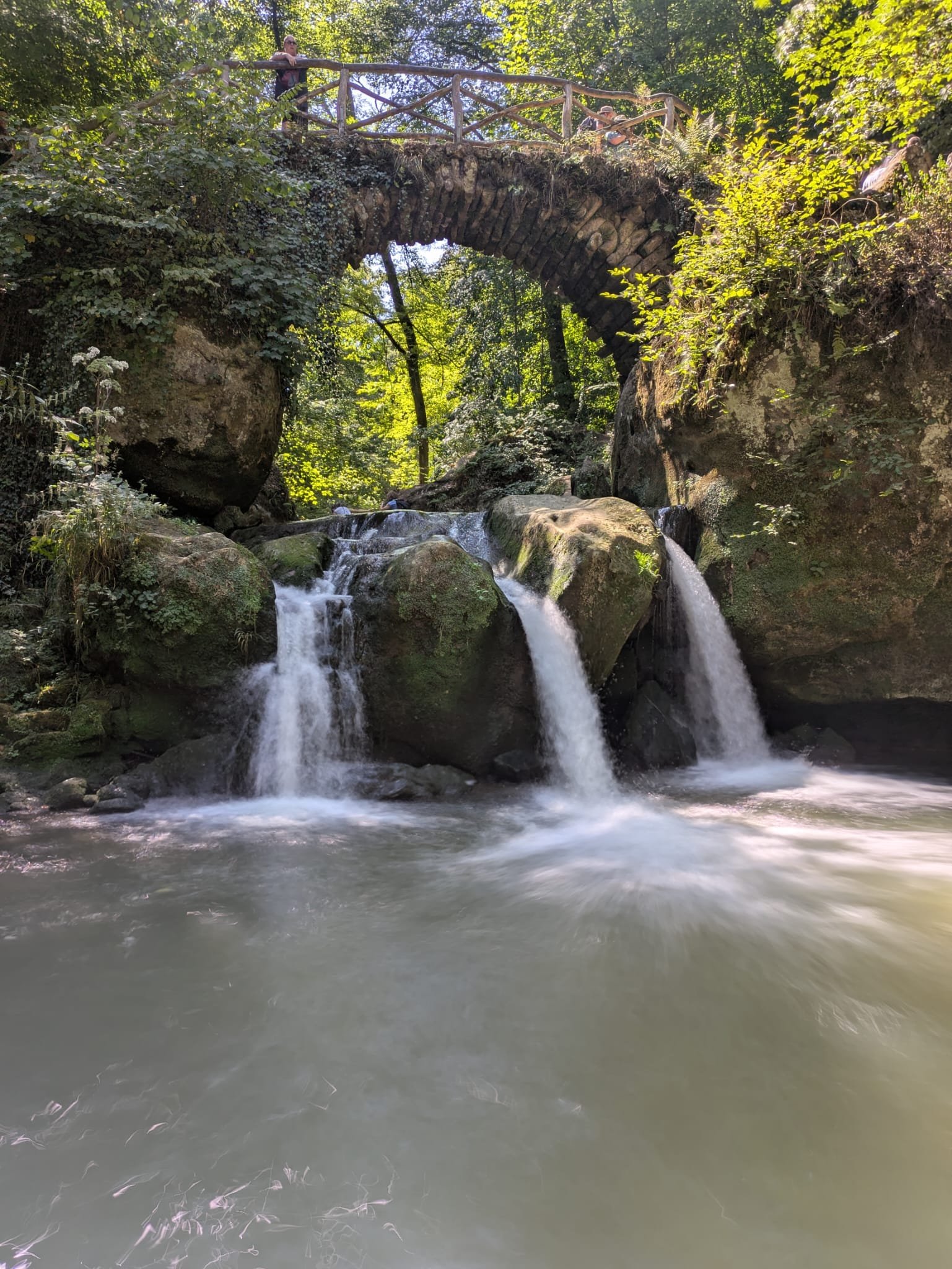
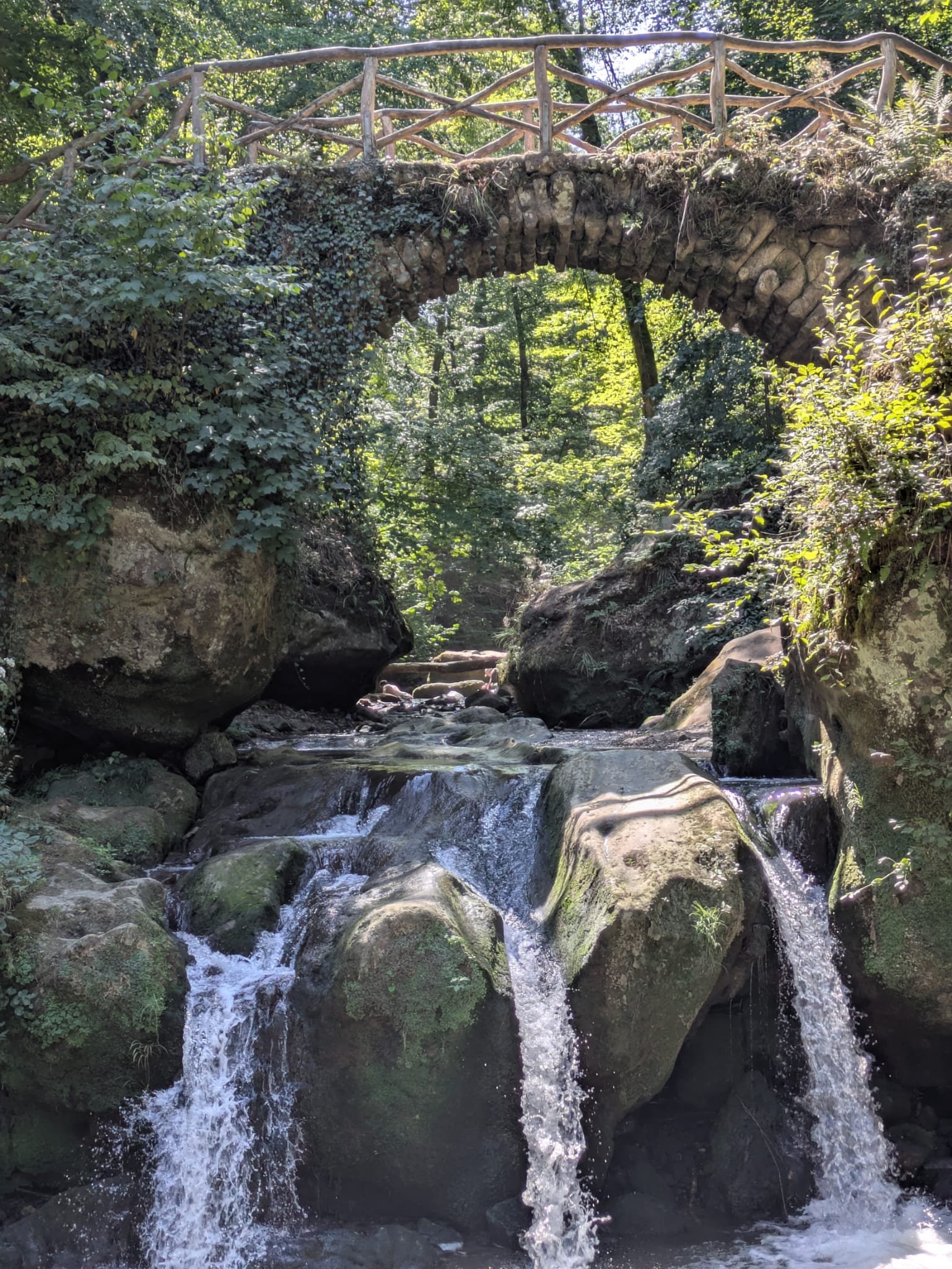
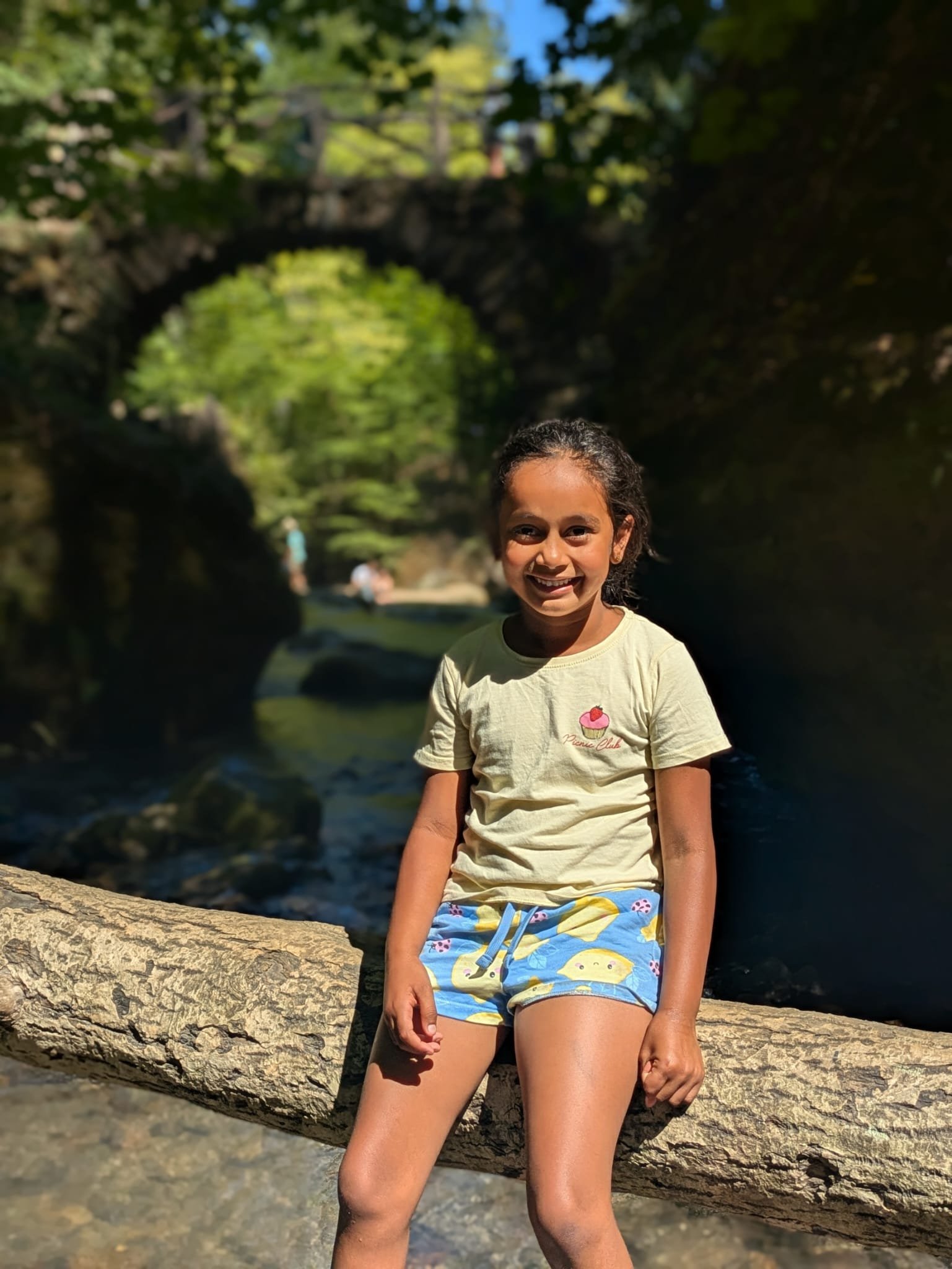
And then the trail delivered its showpiece: the Schiessentümpel waterfall. If you’ve seen one photograph of the Mullerthal, it was almost certainly this one. A small, triple-cascade waterfall tumbling over sandstone ledges, with a charming little stone footbridge arching over the top of it. It is absurdly photogenic. The kind of place that looks staged even when you’re standing in front of it.
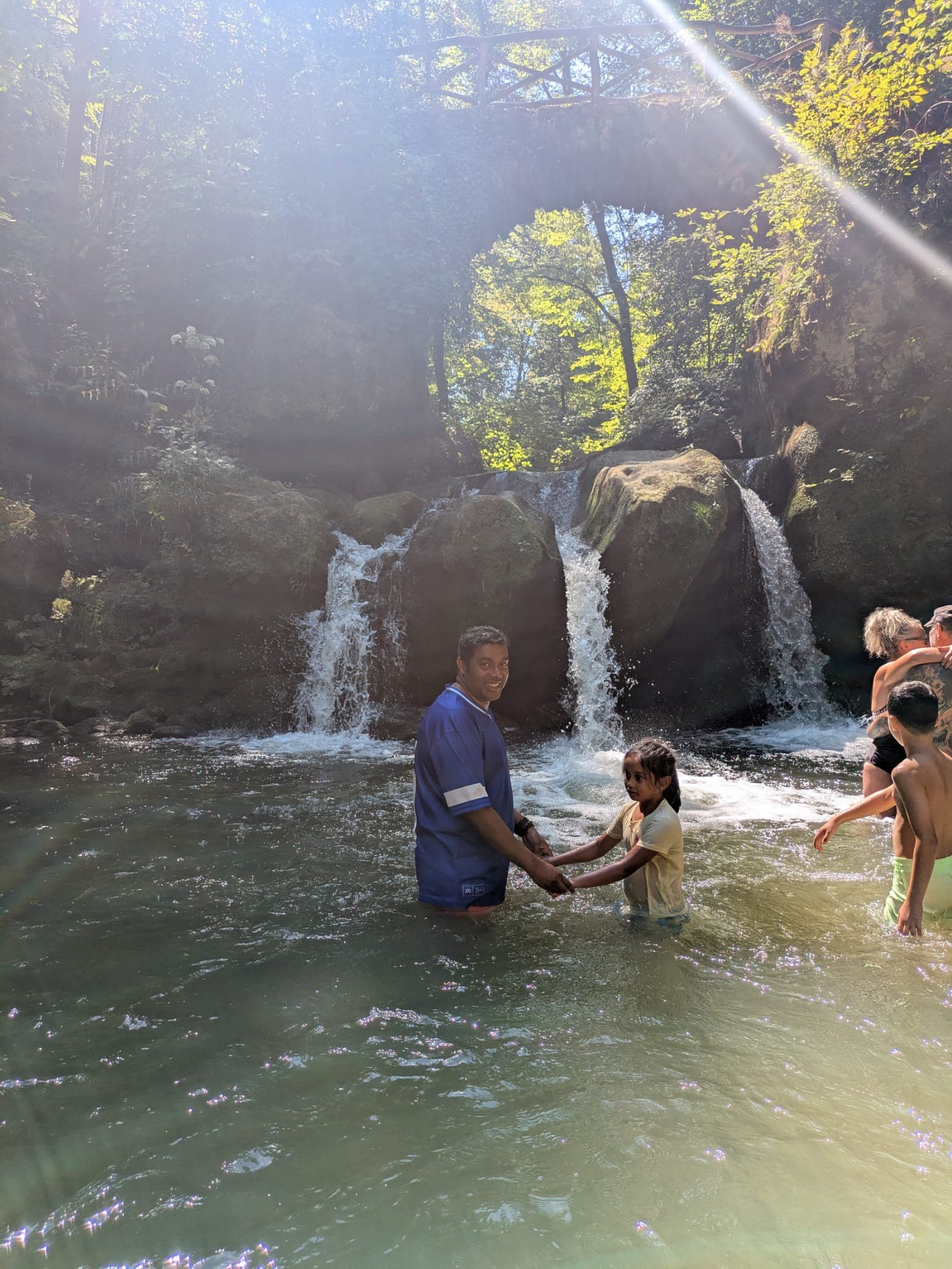
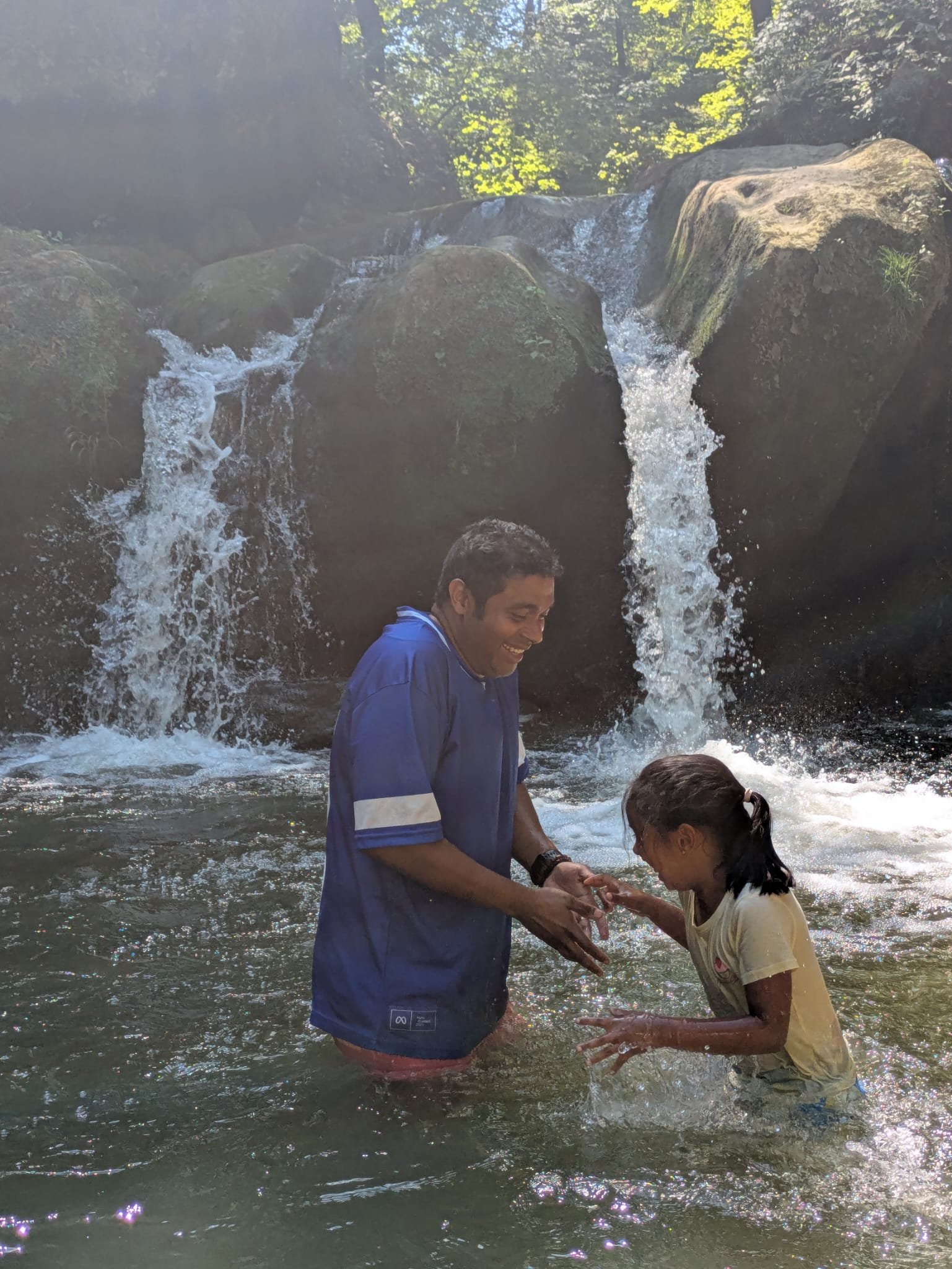
But here’s what the photographs don’t tell you: you can get in.And on a heatwave afternoon, after a few kilometres of walking, that cool water was nothing short of a gift.Addy was in before we’d fully negotiated the terms. Completely in. Fully drenched, sitting in the flow, shrieking at the cold and then refusing to come out. And I let her — because this is exactly the kind of thing I want her to have. Not a swimming pool with tiled edges and a lifeguard whistle. Wild water. Real water, moving over real rock, in a real forest.
We laid back and let the water run over us. We spent far longer there than we’d planned. There were a few other people around — enough that it felt alive, not enough that it felt crowded or spoiled.It was, without question, worth every step.
Vianden — A Castle, a Chairlift, and a Fairytale Village
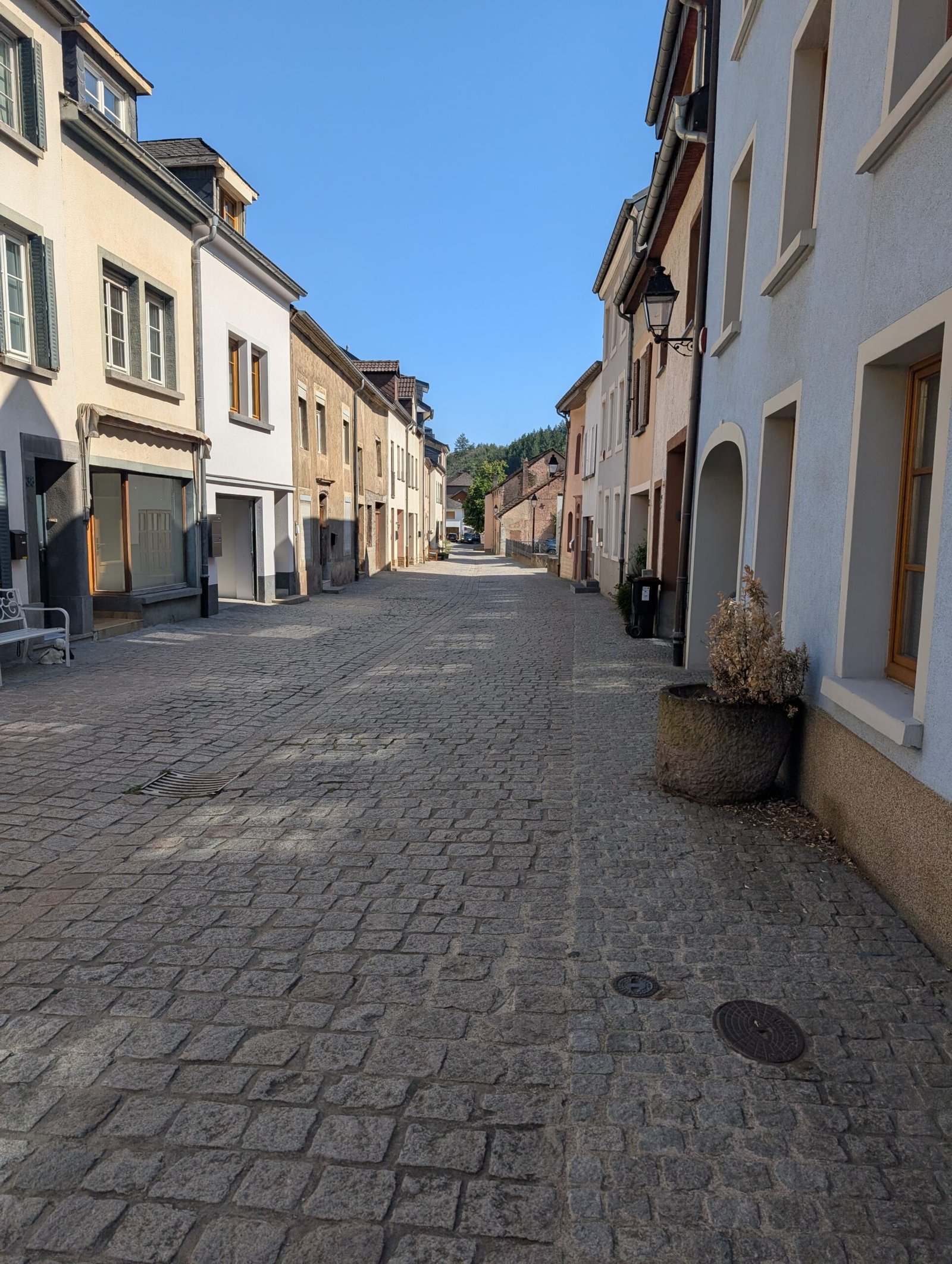
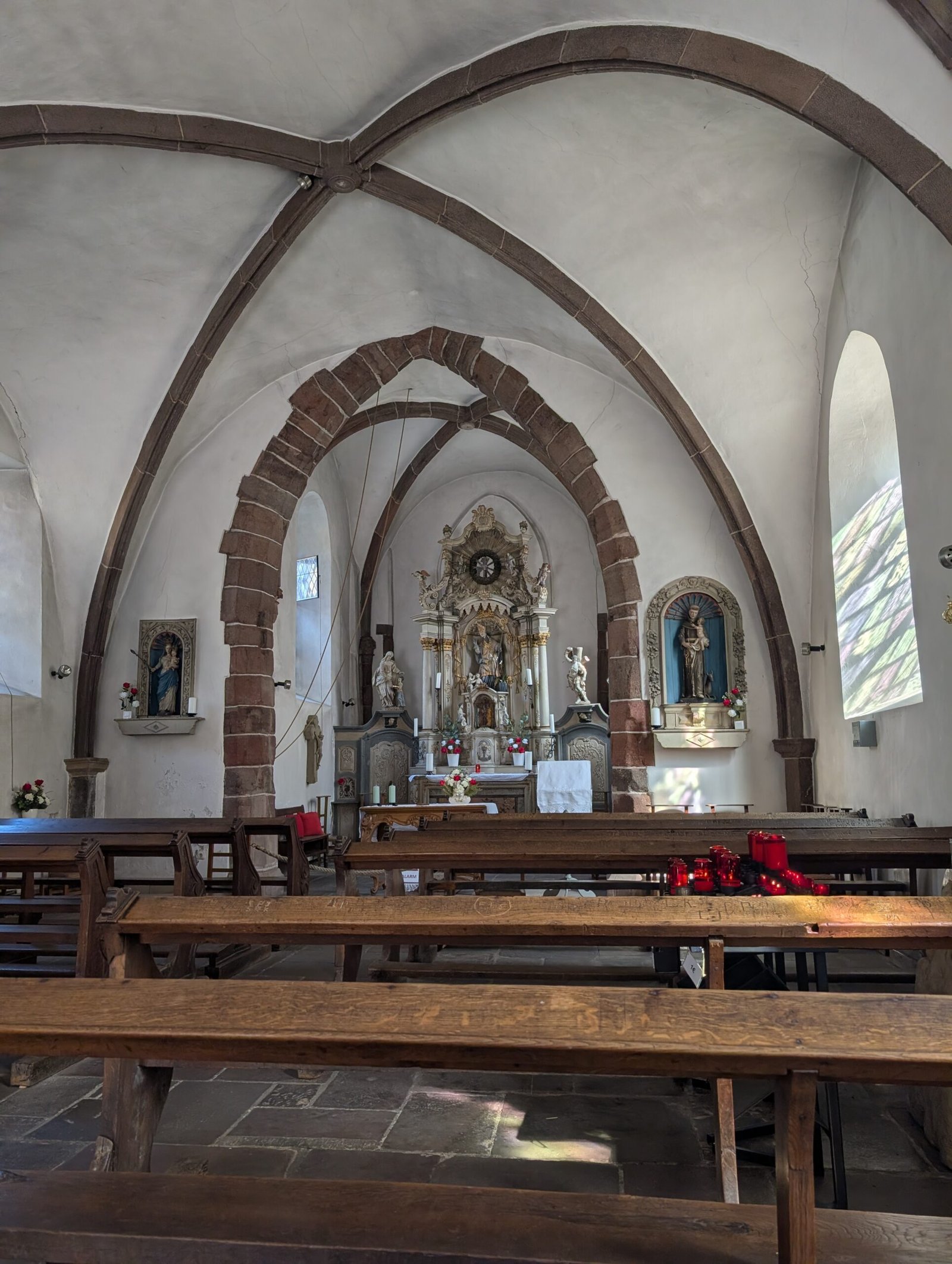
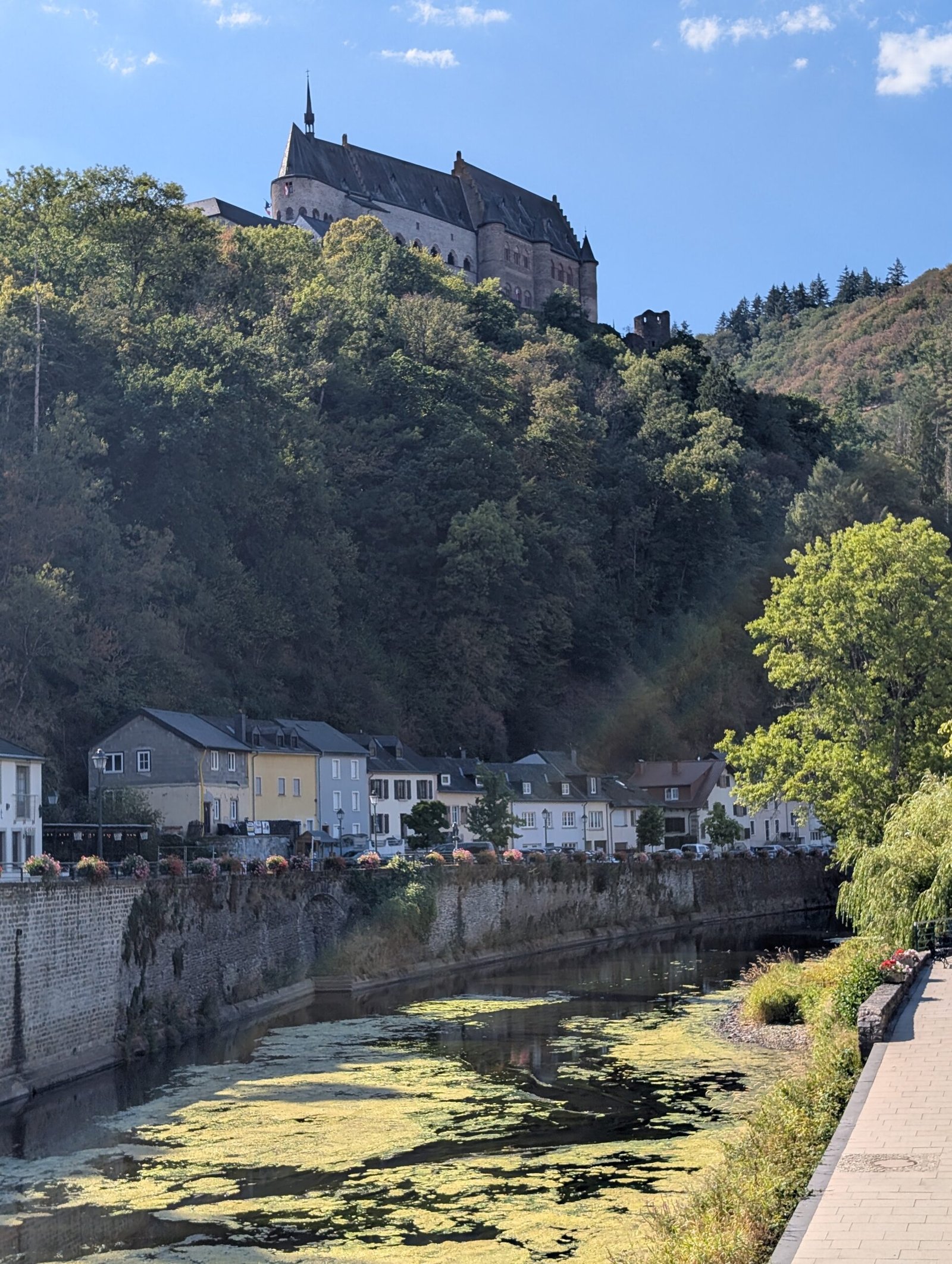
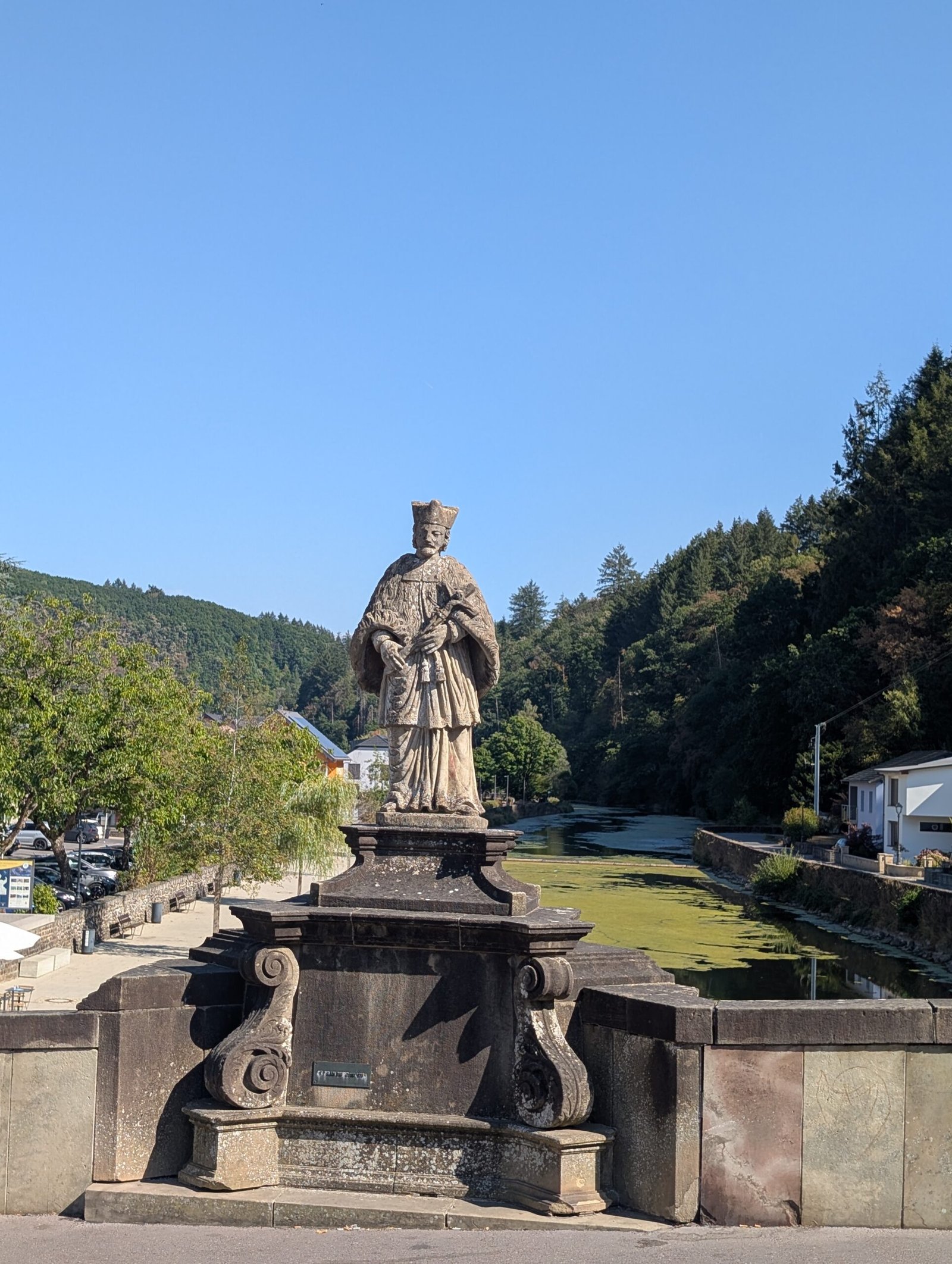
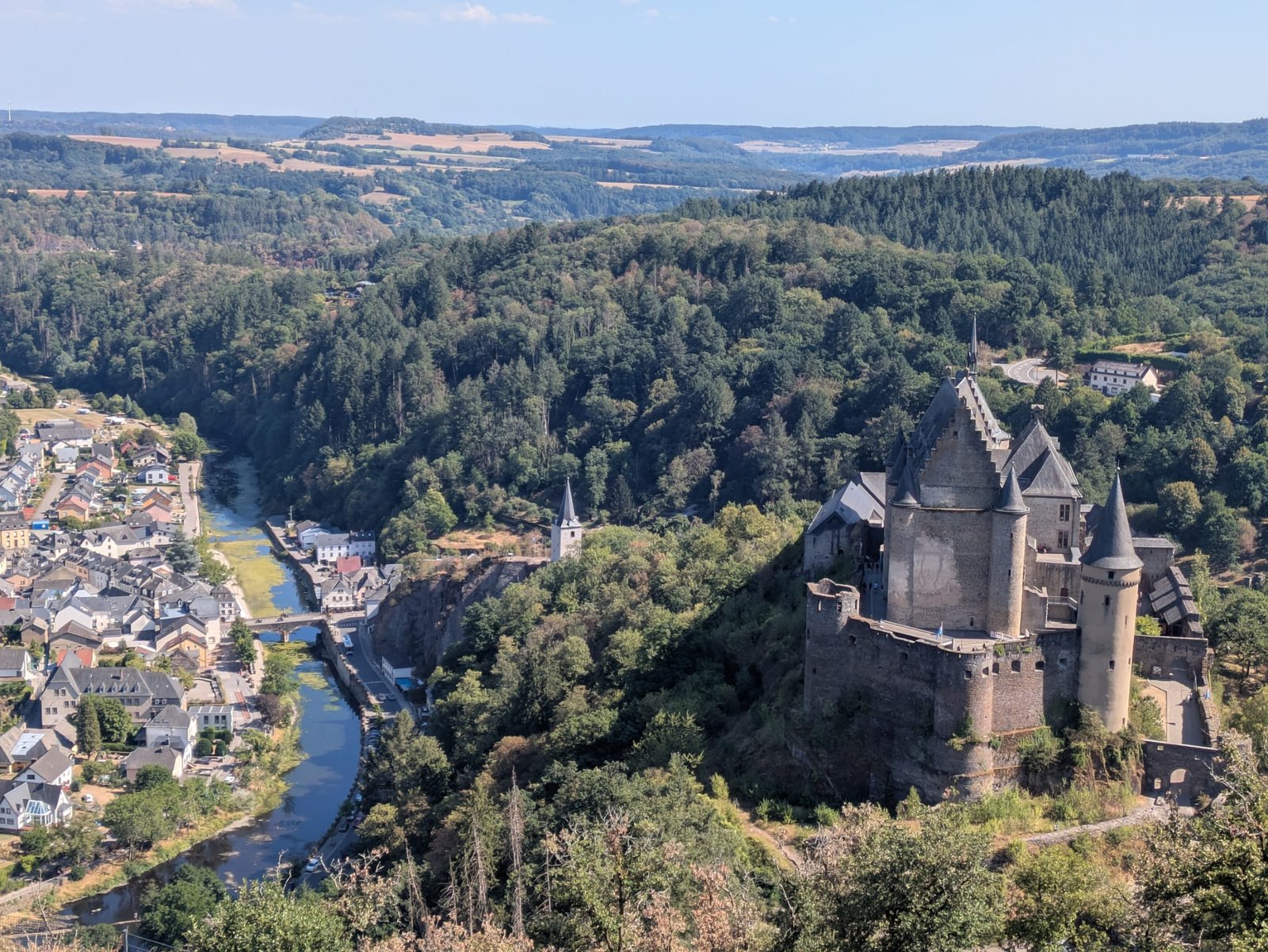
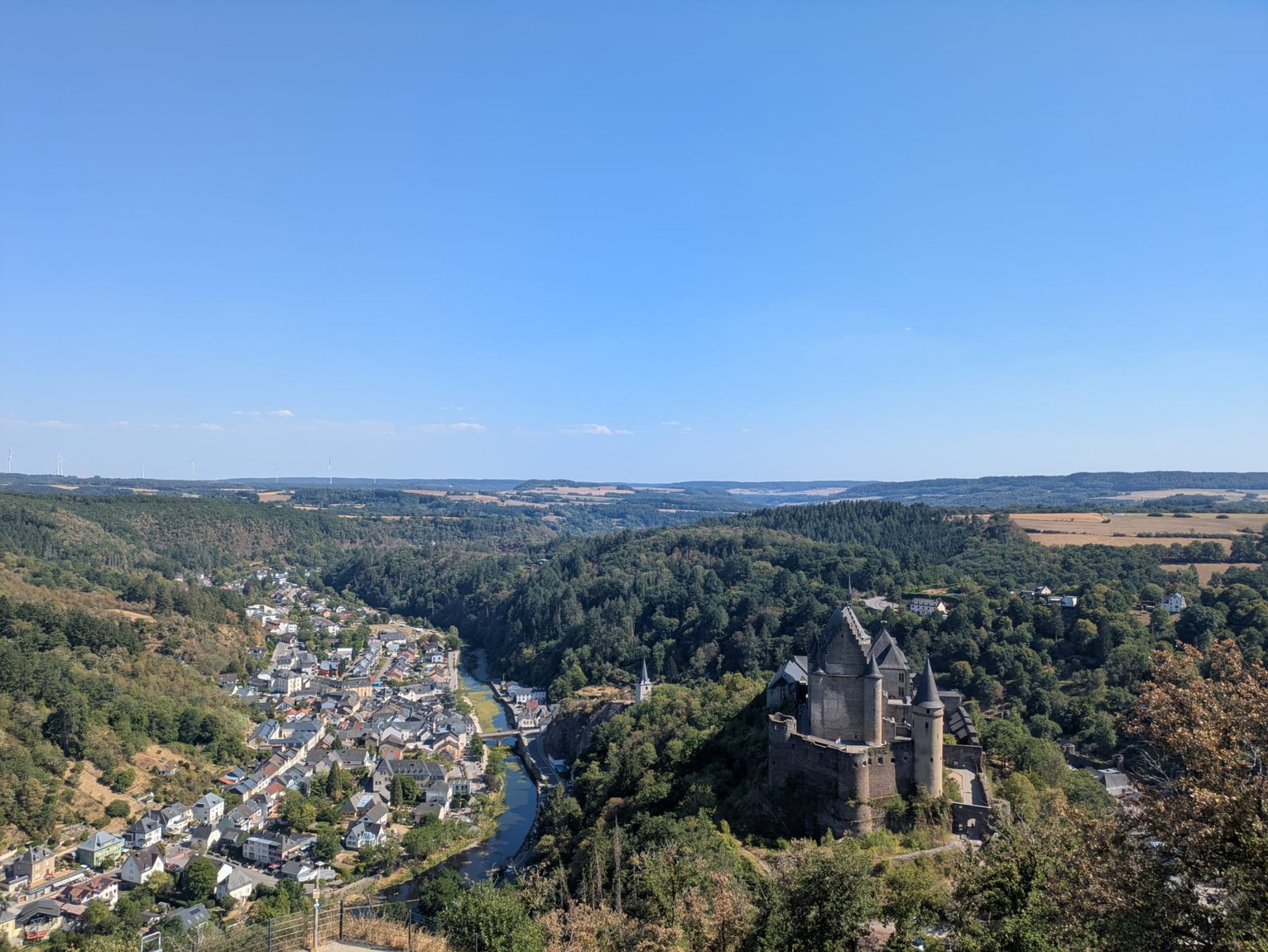
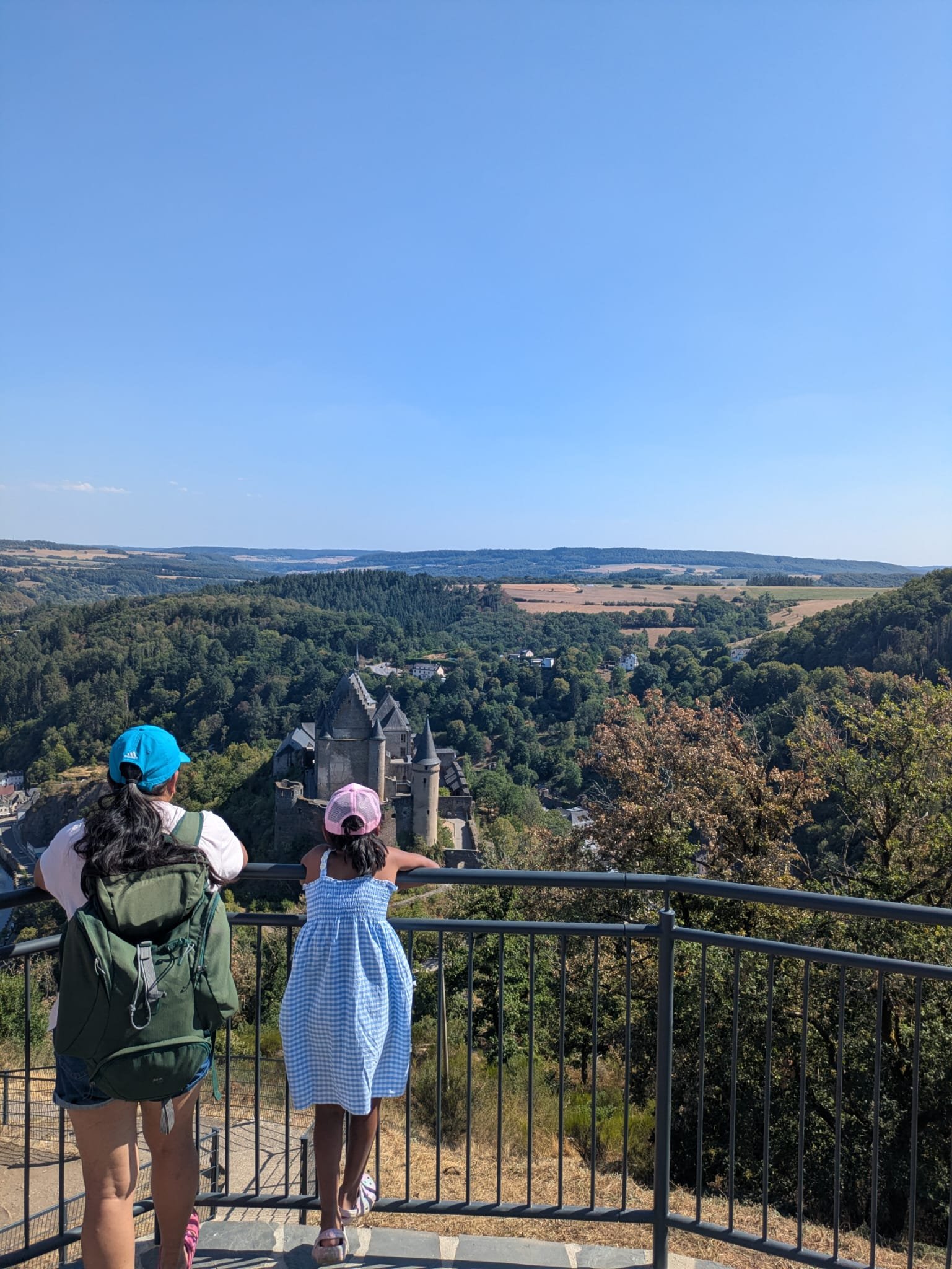
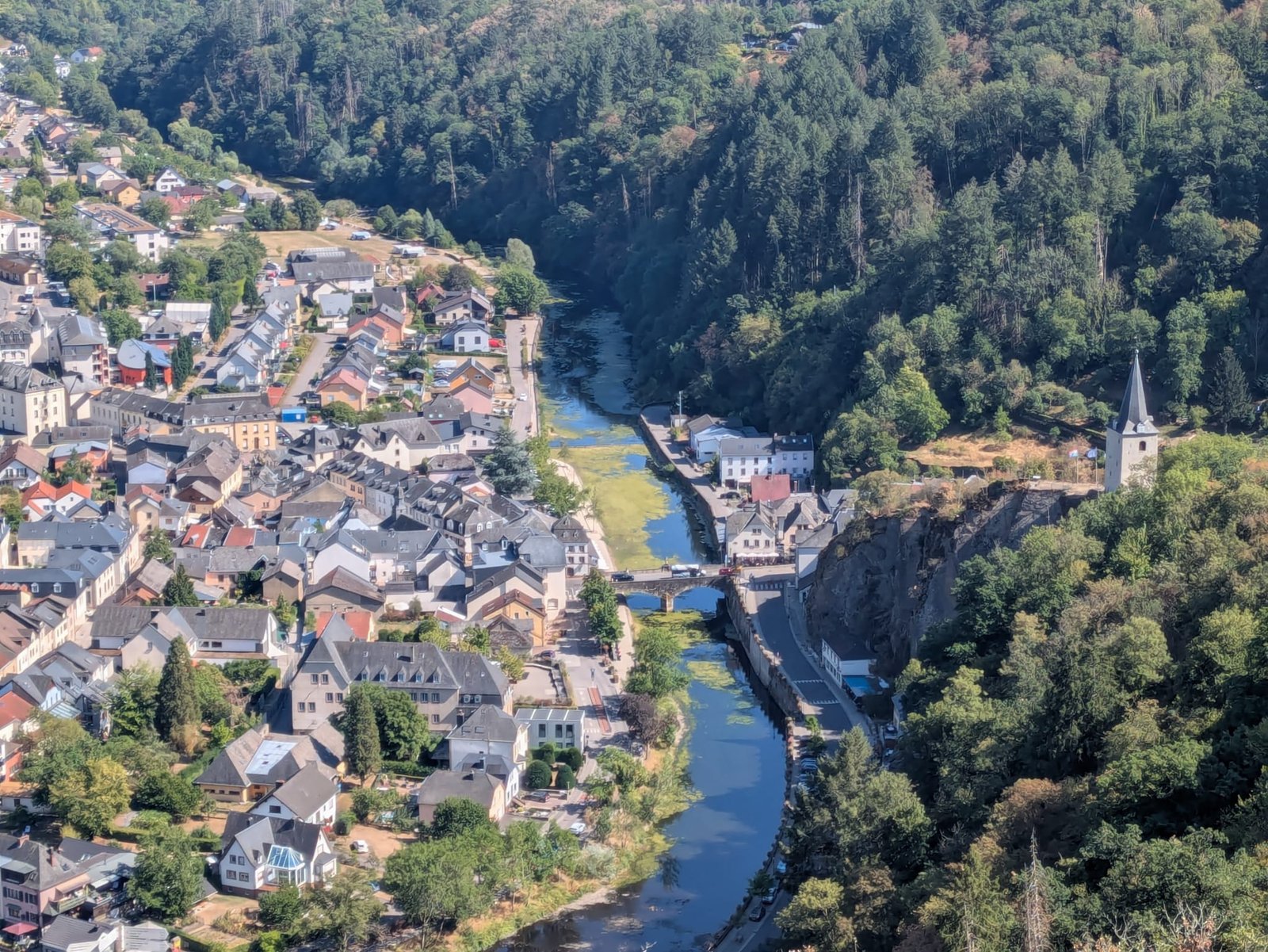
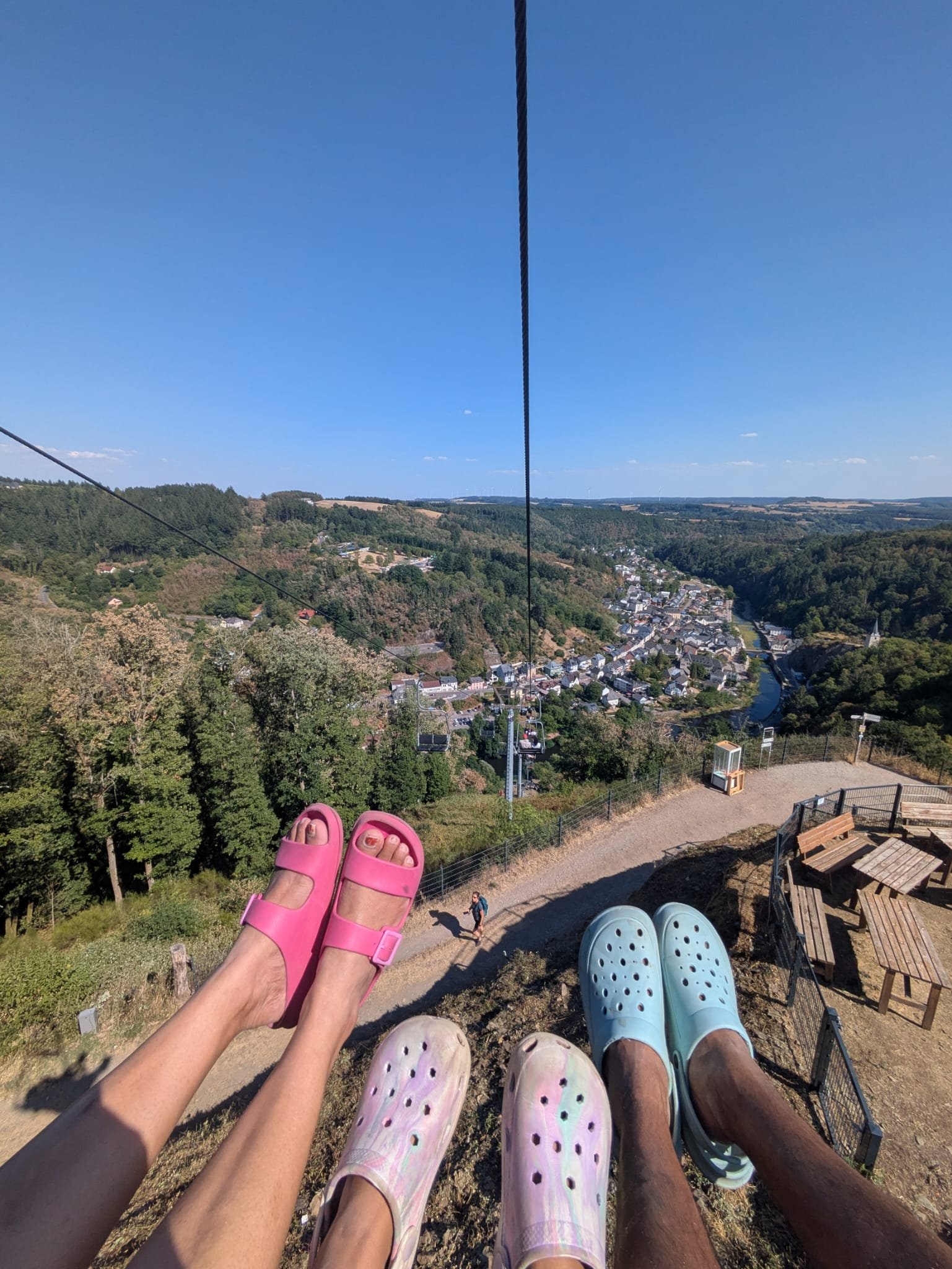
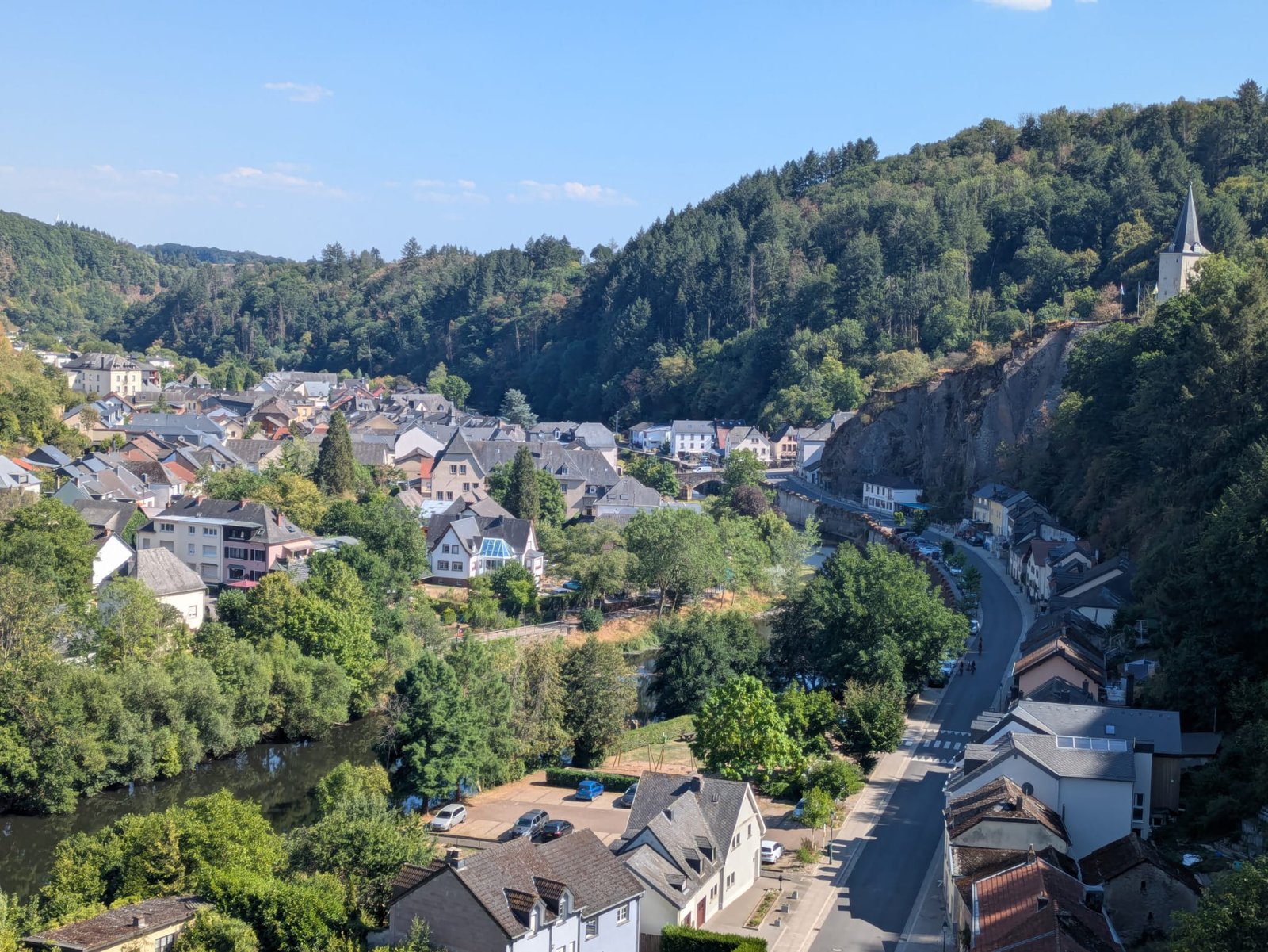
By mid-afternoon we were wet, cooled, and happy, so we drove on to Vianden.Vianden is one of those places that doesn’t seem like it should be real. A dramatic hilltop castle — all towers and battlements and romance — presiding over a small river village of slate roofs and winding streets, wrapped in wooded hills.We took the chairlift up above the village, which is absolutely the thing to do. As you rise above the rooftops, the whole scene assembles itself beneath you: the castle in profile on its ridge, the river threading through, the village tucked into the valley. It looks less like a town and more like an illustration from a storybook.
We got our bird’s-eye views, came back down, and walked the town itself — narrow streets, cafés, the river, that particular European village hum.And we performed the ritual. Every place we visit, we bring back a shot glass. It’s been our thing for years now — a shelf at home slowly filling up with a glass atlas of everywhere we’ve been. Luxembourg’s duly joined the collection.
By then we were wrecked. Properly, pleasantly, legs-aching wrecked. A big day, in the best way: a gorge, a waterfall, a castle, and a country ticked off.
We drove back over the border to Bettingen with wet clothes in the boot and a happy child in the back seat.
What Day One Taught Me
The thing I was most afraid of — driving my own right-hand-drive car on the right-hand side of the road — turned out to be a non-event. Thirty minutes of concentration, and then just… driving.
The thing I’d barely thought about — walking down into a cold green gorge in the middle of a European heatwave — turned out to be one of the most magical few hours our family has ever spent outdoors.
And the thing I’d planned most carefully — the secret — gave us a moment at Dover ferry port that I’d do the entire drive again for.
The car made it. The kit stayed in the boot, unused and reassuring. And somewhere in a Luxembourg forest, a six-year-old who thought she was going to Dover sat down in a waterfall and refused to get out.
I’d call that a successful start.
Next up: more of Germany — a geyser, an ice cave, and an orange sky…


This is Aldrin and my partner Amoli. We bring you "Earths Pilgrim" - a unique insight into our travel escapades while leaving life in a cubicle. If you are looking for some inspiration to break the shackles of a regular life, then you are the right place. Read more about us- Click here.