- Wrong Side, Right Decision : First Walk in the Mullerthal, Luxembourg
- Geysers, Ice Caves, and an Orange Sky: Andernach Geyser, Birresborn ice caves and Meerfelder Maar
- Paris in a Day With a Kid: Why We Stayed in Chantilly
Written with a cut on my head, lake water in my ears, and the smell of smoke still faintly in the air.Earths Pilgrim
This was the day Germany stopped being the place we were sleeping and became the place we were exploring. It gave us a geyser, a cave that drew blood, a volcanic lake, and a sky the colour of rust.
We woke up late. Properly late, and entirely unapologetically.Breakfast was slow. Coffee was slower. And then came the question that defines the best kind of road trip day — the one you can only ask when you have a car, a base, and absolutely no reservations booked:“So… where do we go today?”No itinerary. No tickets. No schedule. Just a map, a tank of fuel, and a region we barely knew.
We’d spent the previous day in Luxembourg, so today we decided to go the other way — deeper into Germany. And within about twenty minutes of searching, we found something that made me put my coffee down.A geyser. In Germany.Not a hot spring. Not a thermal pool. An actual, erupting geyser — and not just any geyser, but the world’s highest cold-water geyser, at Andernach, on the banks of the Rhine.
That settled it. We were going.
The Andernach Geyser — Nature’s Showpiece, Wrapped in Bureaucracy
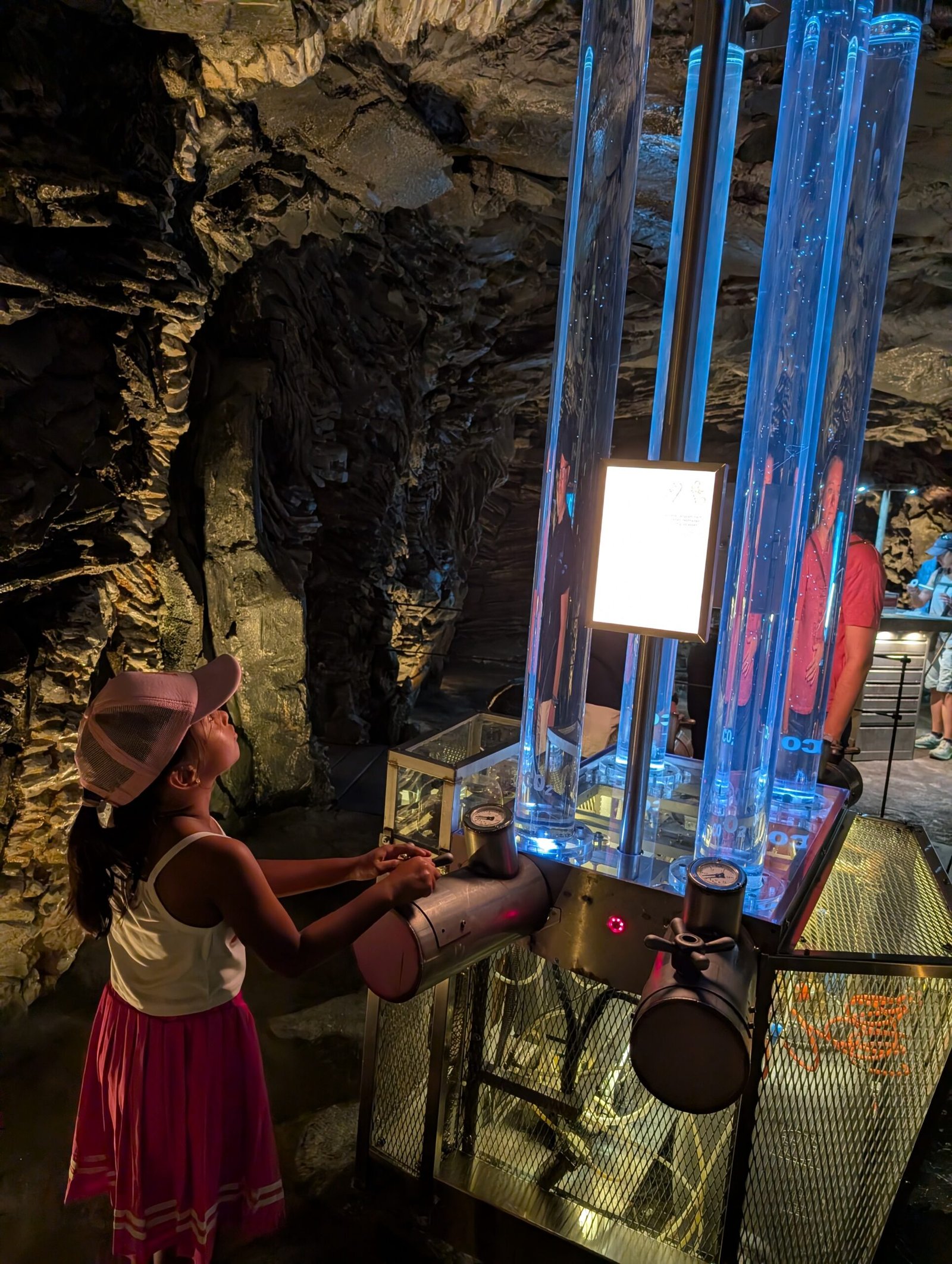
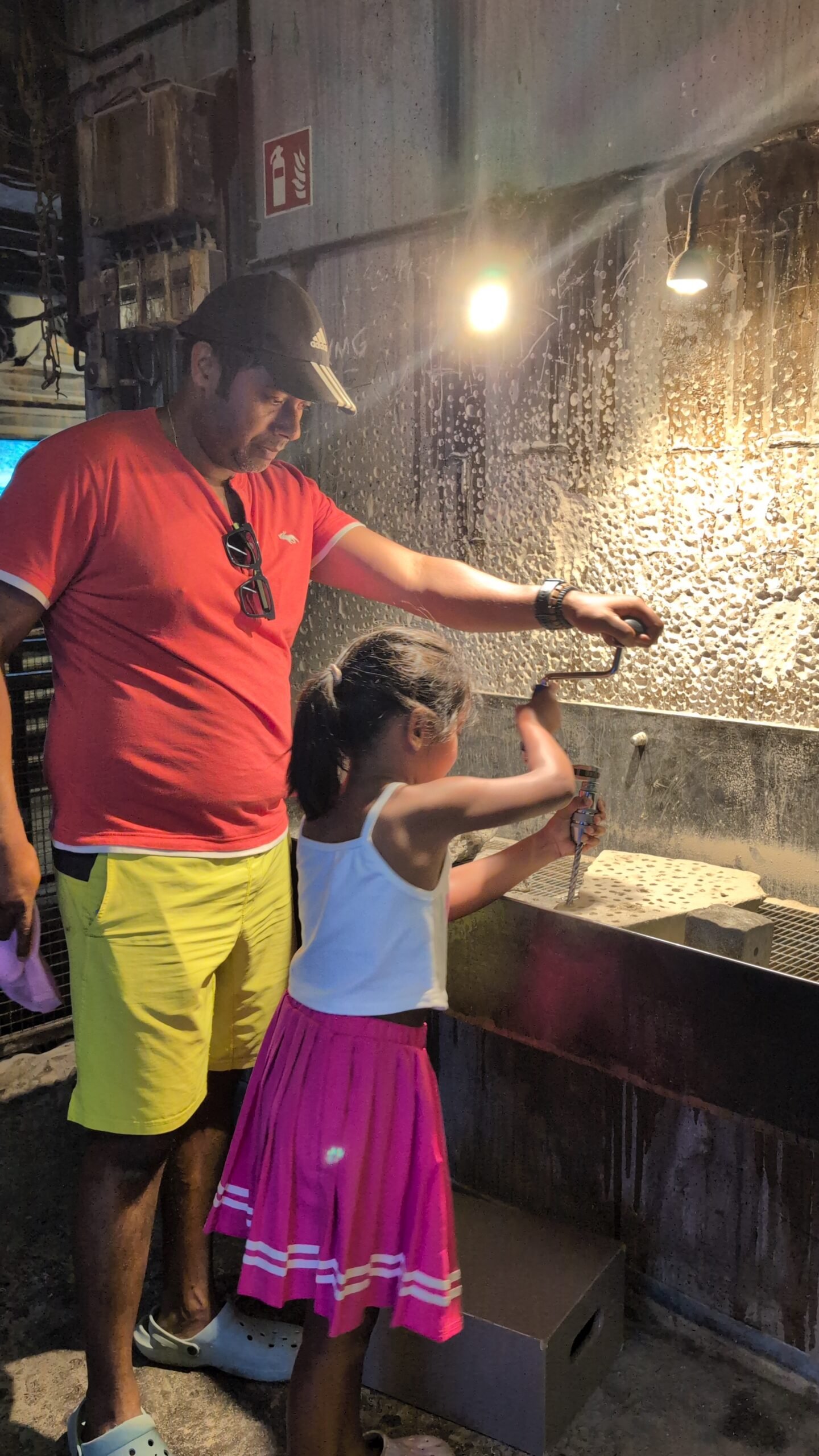
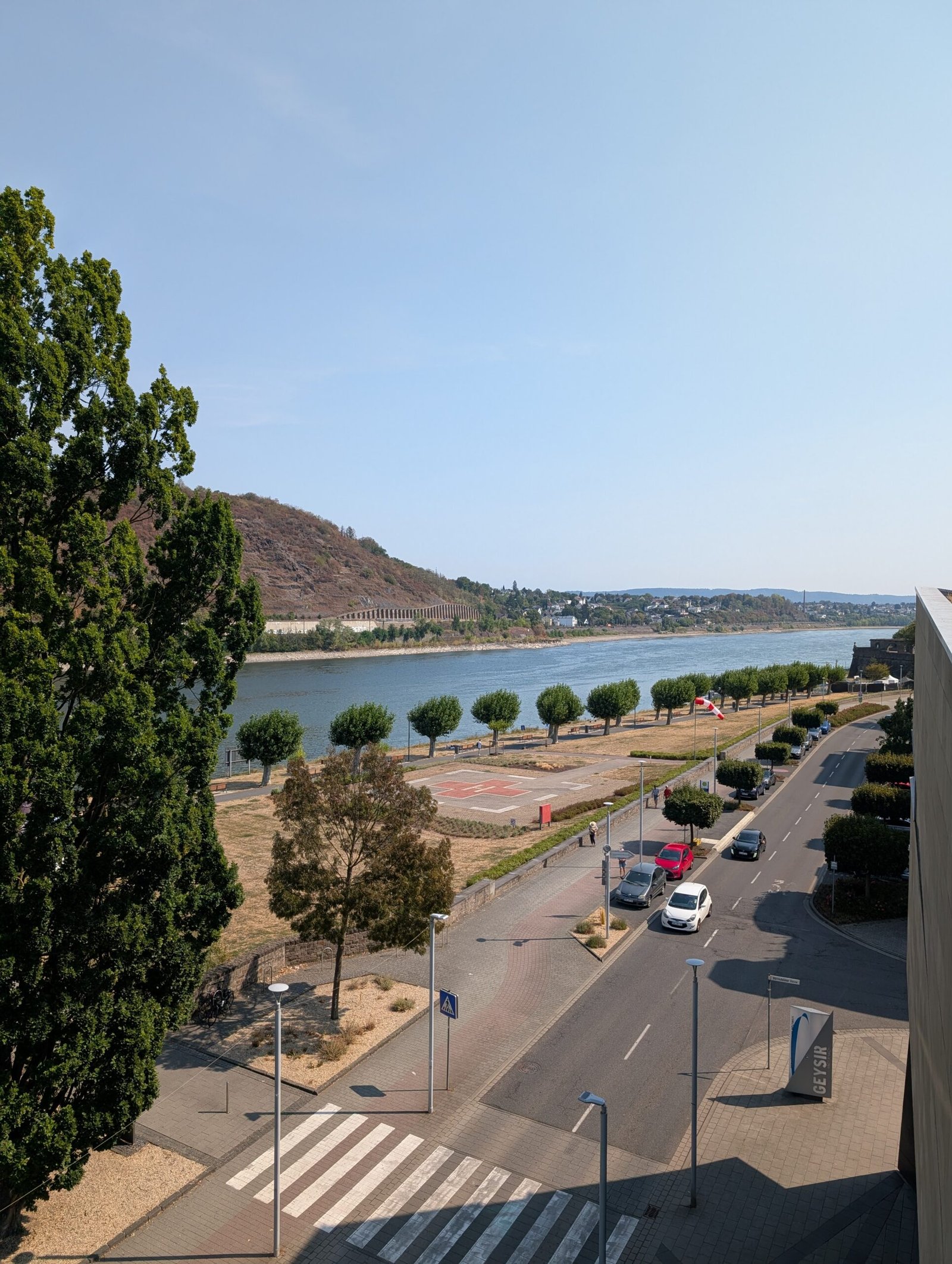
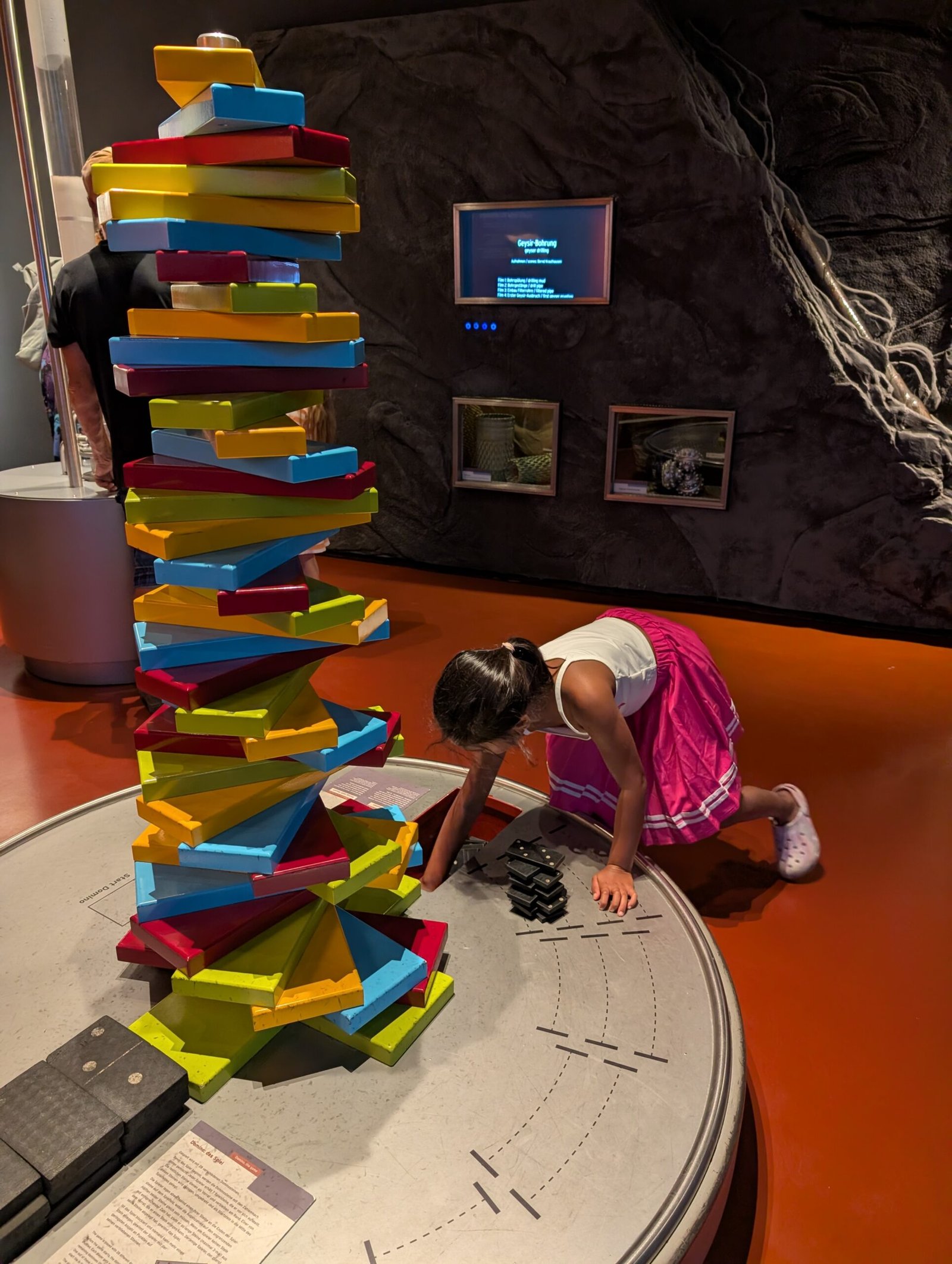
We drove to Andernach and found the visitor centre. Parking was not that straightforward.There was another problem: we’d missed the boat.Literally. To see the geyser, you take a boat along the Rhine to the peninsula where it erupts, and the sailings run to a fixed timetable tied to the eruption cycle. We’d arrived between departures, which meant a wait.So we did the museum.
I’ll be honest with you, because this blog has never been in the business of pretending: the museum was fine. Just fine. It’s informative enough, with the usual interactive displays about volcanism and the geology of the Eifel region, and if you’re a geology enthusiast you’ll get something out of it. But it isn’t the reason you come here, and it didn’t feel like one of the best museums we’ve visited. It was a way to pass the time, and that’s largely what it did.
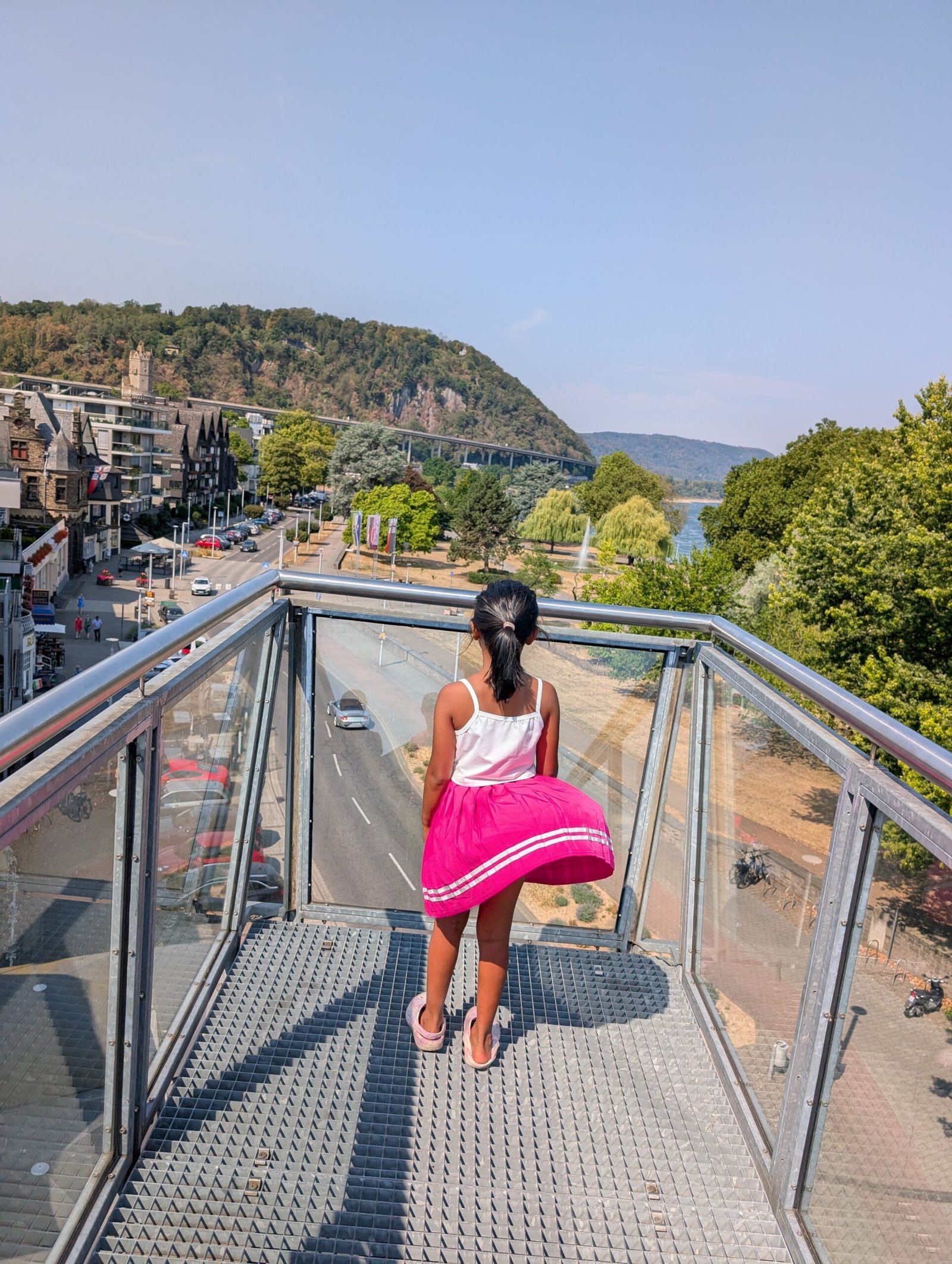
And then we waited. And waited.All told, we spent close to — if not more than — two hours at the centre before our boat was due. Two hours is a long time with a six-year-old, even a patient one, and it’s a long time when the thing you’ve come to see is sitting right there across a short stretch of water.
The Boat Ride (Let’s Talk About This)
Here’s where I’m going to be blunt, because I wish someone had told me.The boat ride is about ten minutes. Ten. And as far as I could tell, standing there looking at the geography, you could quite plausibly walk to the site. The distance is not the obstacle.My strong suspicion is that the boat isn’t a necessity — it’s a mechanism. Access is regulated so that everybody has to buy the boat trip, which neatly controls numbers, protects the site, and generates revenue all at once. I understand the logic. Conservation costs money, and crowds destroy delicate places.But the way it’s presented — as though the boat is the only physical means of reaching the geyser — felt, to me, a little bit of a sham. You wait two hours for a ten-minute crossing to a place you can see from the shore.If you go, go knowing that. Set your expectations accordingly, build the wait into your day, and don’t arrive hungry or tired.
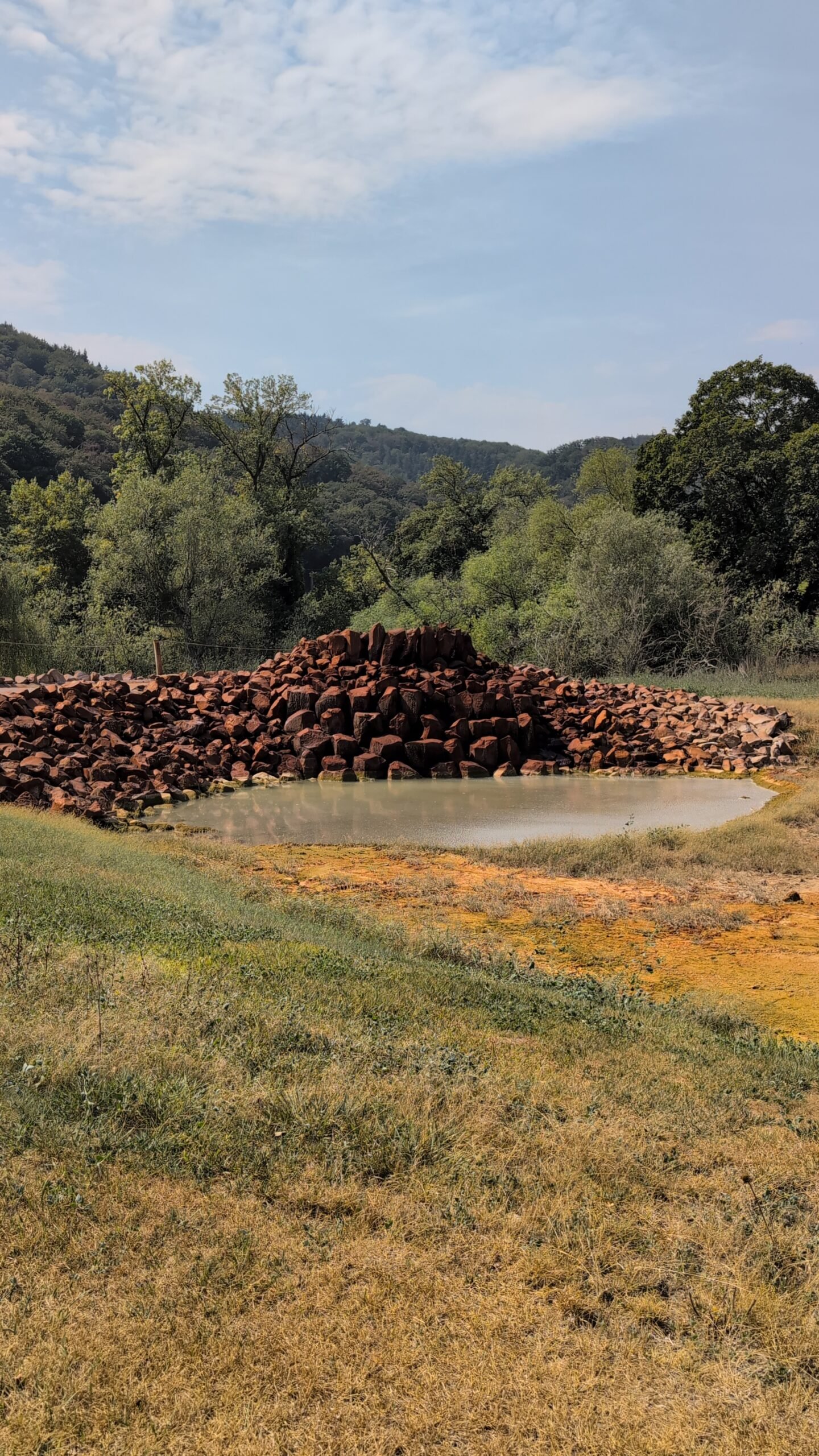
Now. Having grumbled thoroughly about the logistics, let me tell you about the geyser itself.It was genuinely brilliant.A cold-water geyser works on an entirely different principle to the thermal geysers most of us know. There’s no boiling water, no superheated steam. Instead, carbon dioxide accumulates in deep groundwater under pressure until the water becomes so saturated that it effectively fizzes — and then the whole column explodes upwards, like the world’s largest shaken bottle of sparkling water.
We’ve seen geysers before. Iceland gave us Strokkur and the geothermal fields, and those were extraordinary in their own right — the sulphur, the steam, the sudden violent burst.But this was nothing like it.
It climbs high — spectacularly high, a white column of water punching up into the sky well above the trees. And crucially, it lasts. Iceland’s geysers tend to be a sudden bang and then it’s over before your camera has focused. This one erupts and then keeps going, sustained, for a genuinely long stretch of time. Long enough to watch properly. Long enough to stop photographing it and just look at it.
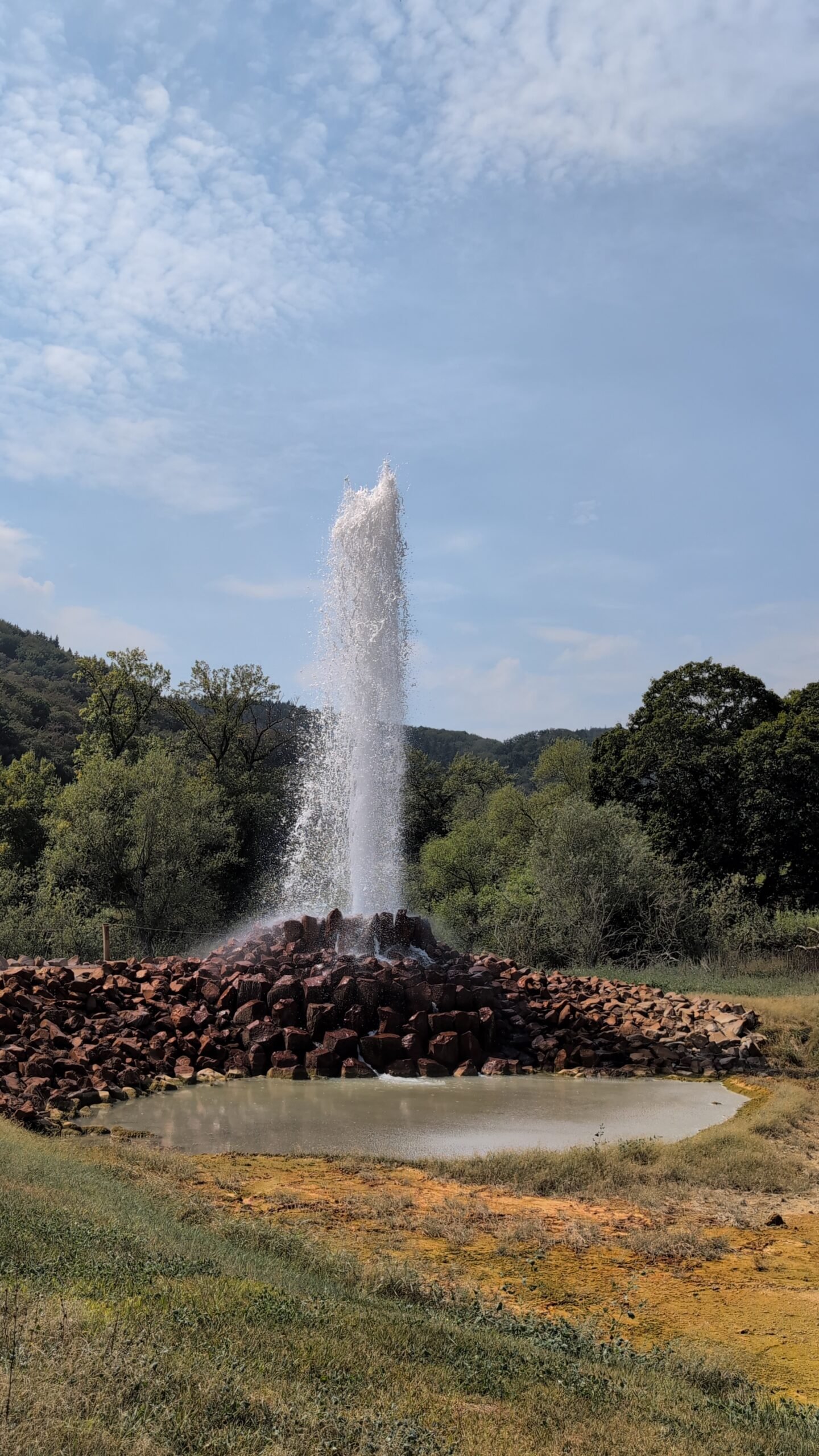
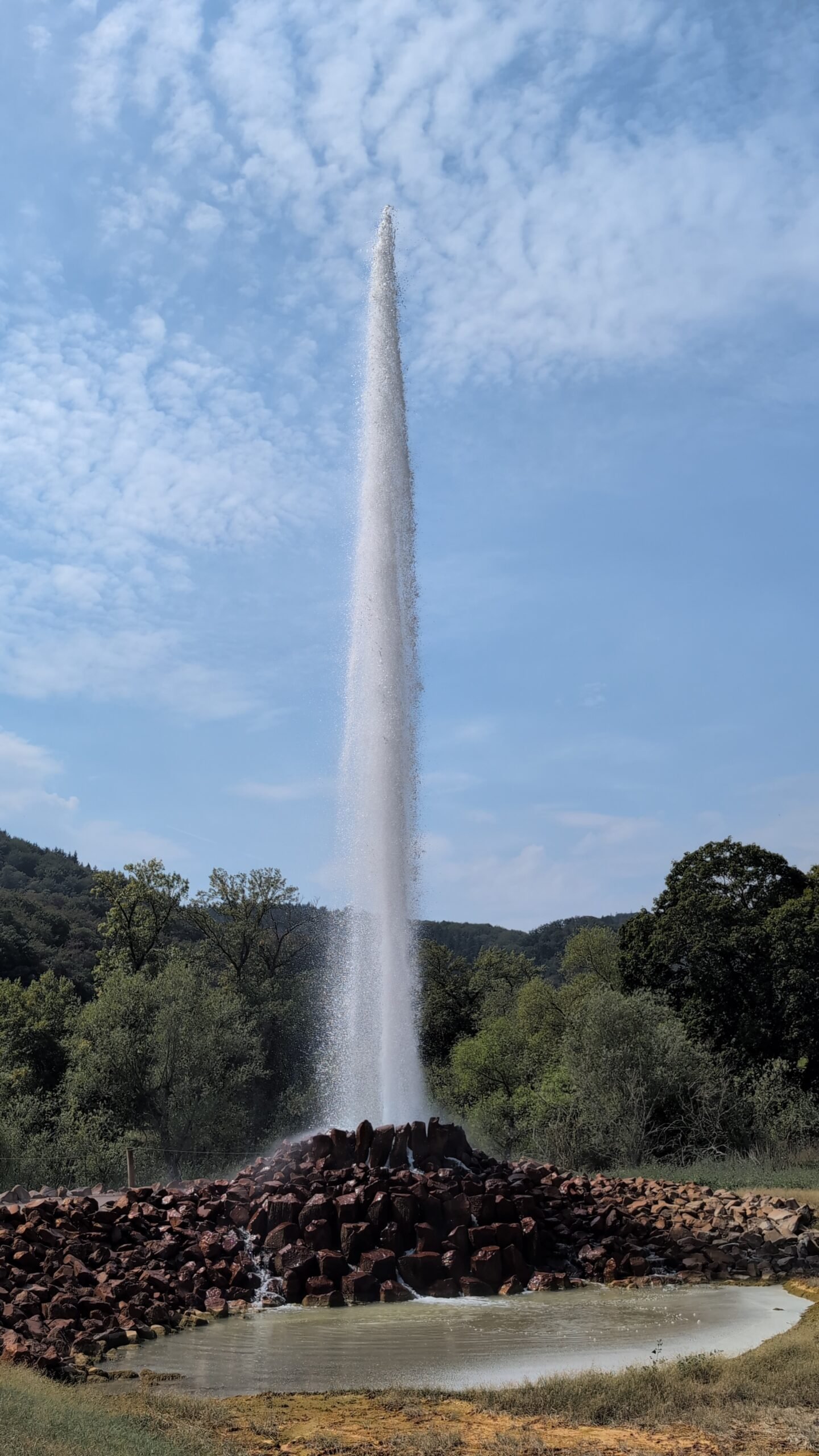
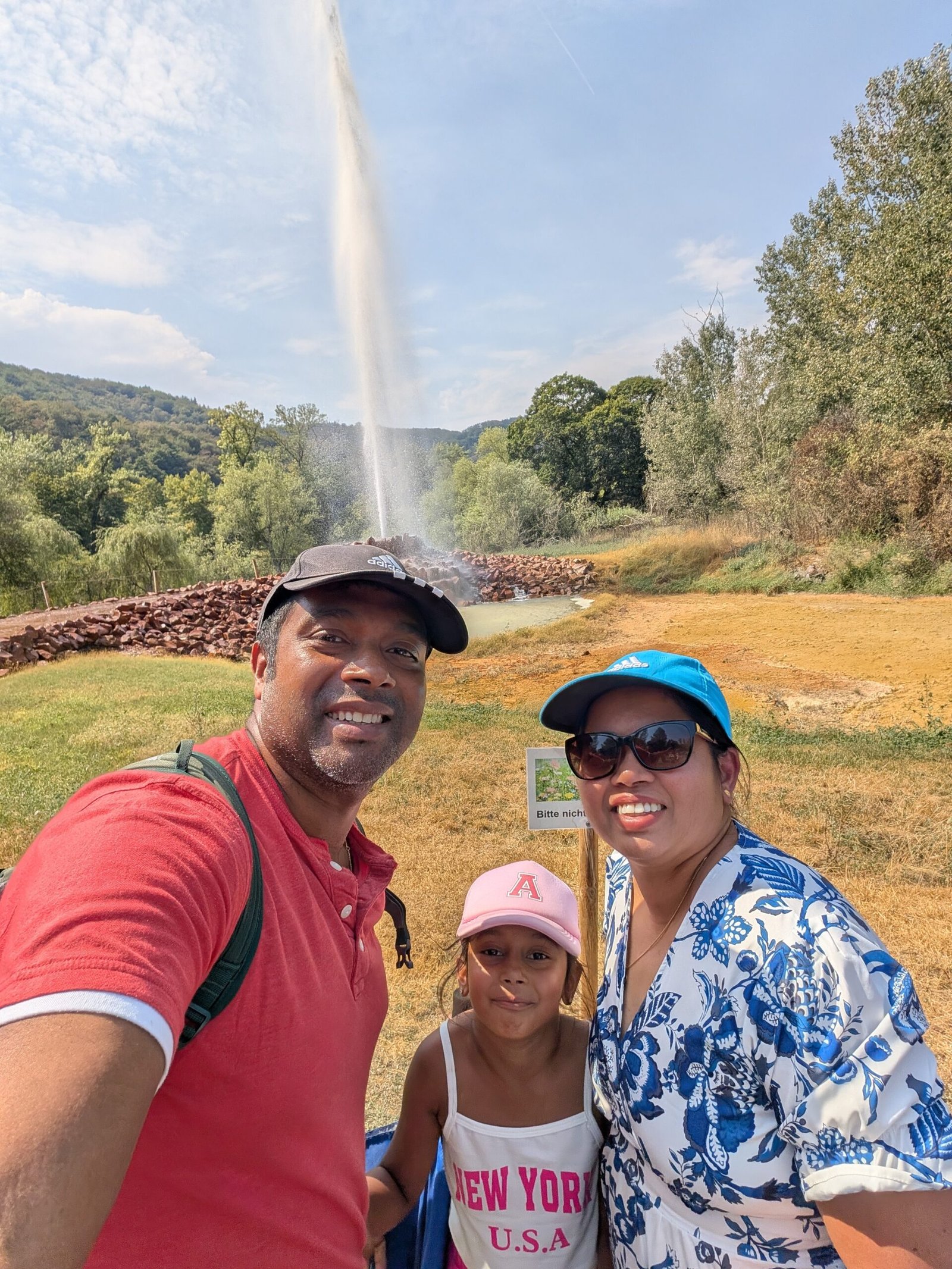
Addy stood there with her head tipped all the way back, mouth open, utterly rapt.Worth the boat nonsense? Yes. Worth setting aside more of your day than you expect? Also yes.
Birresborner Eishöhlen — Driving Under an Orange Sky
With the afternoon still ahead of us, we went looking for something completely different.We’ve visited a lot of caves over the years, in a lot of countries. And most of them, if we’re honest, are the same experience: handrails, concrete steps, coloured floodlights illuminating the stalactites, a guided commentary, a gift shop at the exit. They’re impressive. They’re also produced.What I wanted was natural caves. Raw ones. Caves where nobody has installed anything.
Which is how we found the Birresborner Eishöhlen — the Birresborn ice caves, in the volcanic Eifel region. Old lava-rock quarry caves that hold cold air so persistently that ice can survive in them deep into the year.
The Drive — Surreal and Unsettling
And the drive out there is the part of this day I will remember longest.Europe was burning. Forest fires were raging across the continent that summer, and Germany was no exception. We were nowhere near the fire front — the nearest blaze was well over a hundred kilometres away — and yet the effect on the sky was total.Everything had turned orange.Not golden-hour orange. Not sunset orange. A thick, flat, apocalyptic orange, as though somebody had dropped a filter over the entire world. The light came through it wrong. Colours didn’t behave properly. The sun was a dull, flat disc you could look straight at.
Village after village was deserted. Empty streets, shutters closed, nobody outside. Whether that was the air quality, the heat, or simply the time of day, I don’t know — but driving through silent orange-lit villages with nobody in sight was one of the eeriest hours I’ve spent behind a wheel.And then the alerts started arriving on our phones. Emergency notifications. Air quality and fire warnings, pushed to every handset in the region.
We were never in danger. Not remotely. But that drive taught me something about scale that no documentary ever has: a fire more than a hundred kilometres away was able to change the colour of the sky above our car and empty the streets of villages that had nothing to do with it.That’s the power of nature. Not threatening you directly — just quietly demonstrating how small the distances are that you thought were large.
Addie, from the back seat: “Papa, why is the sky orange?”That was a hard one to answer honestly.
The Caves — Completely Ours
We arrived to find… nobody.Not a single other vehicle. Our car was the only one there. No ticket booth, no attendant, no queue, no signage pointing you around a fixed route. Just a forest, a path, and the mouths of caves cut into the volcanic rock.After the managed, two-hours-and-a-boat experience of the morning, this was the exact opposite, and it was glorious.
We went exploring. There are three or four caves you can get into. Some run surprisingly deep. Others pinch out quickly and stop. And in several places you could clearly see that these are part of a much larger connected cave system — openings and passages that have been deliberately closed off to the public, which, given that we were entirely alone and unsupervised with a child, I was quietly grateful for.
Inside, it is pitch black. Properly, absolutely black, in a way that lit tourist caves never are. Thankfully we were carrying plenty of head torches — which is, by some distance, the single most important piece of advice I can give anyone going: bring your own light, and bring more than one.
We pushed in a decent way. The passages are narrow in places, the rock is hard volcanic stuff, and at one point I misjudged a low section and hit my head squarely on the ceiling. Hard. Hard enough to cut it. Hard enough to bleed.So — I shall simply say that I made a small donation of blood to the bats of Birresborn, and consider the matter a fair price of entry.
Addie loved it. Head torch on, leading the way, fearless, narrating her discoveries, demanding we go further in. She has had, in the last few months, a leopard beneath her car window and a pitch-dark cave to herself, and I genuinely don’t know which she’d rank higher.
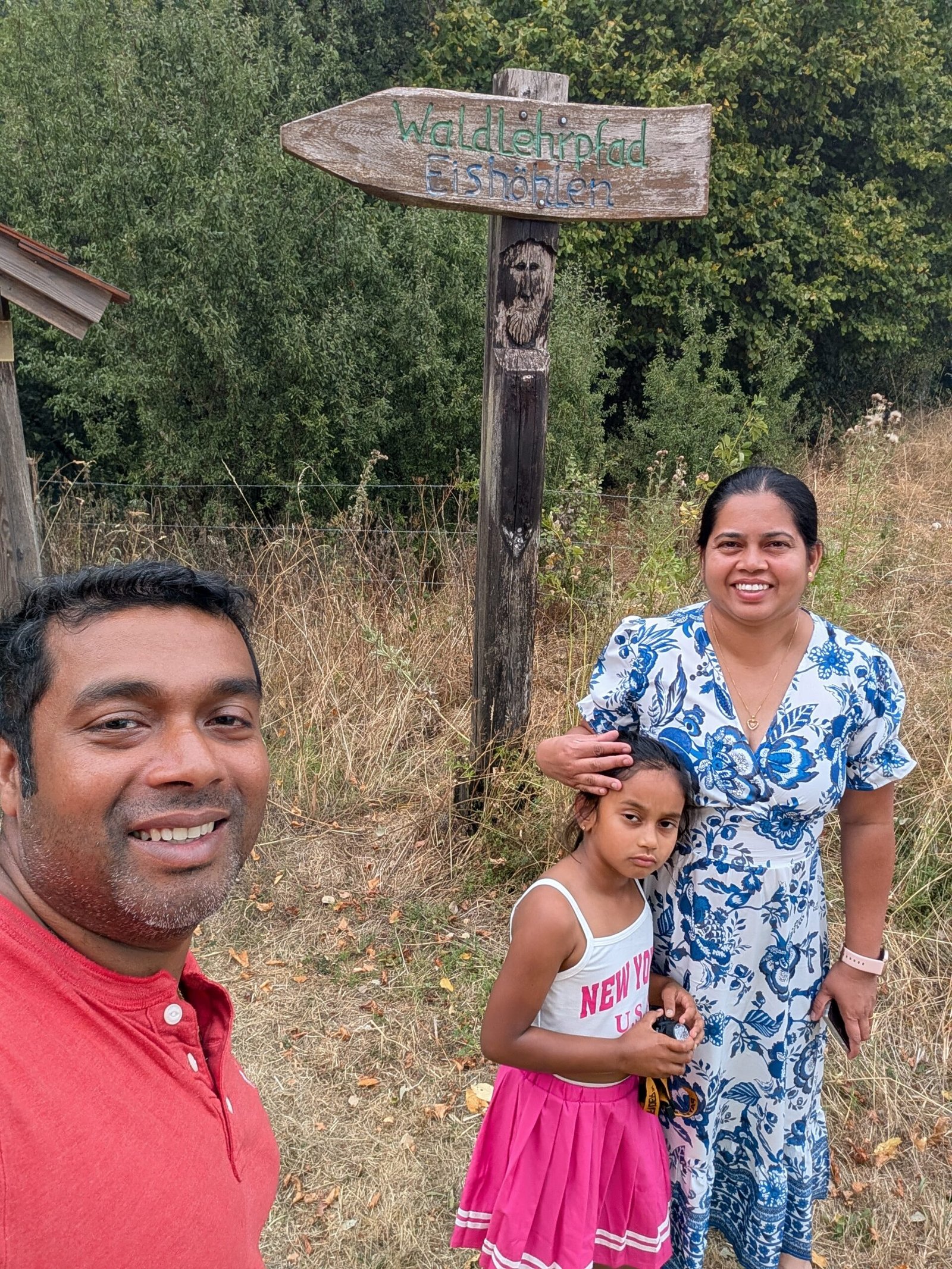
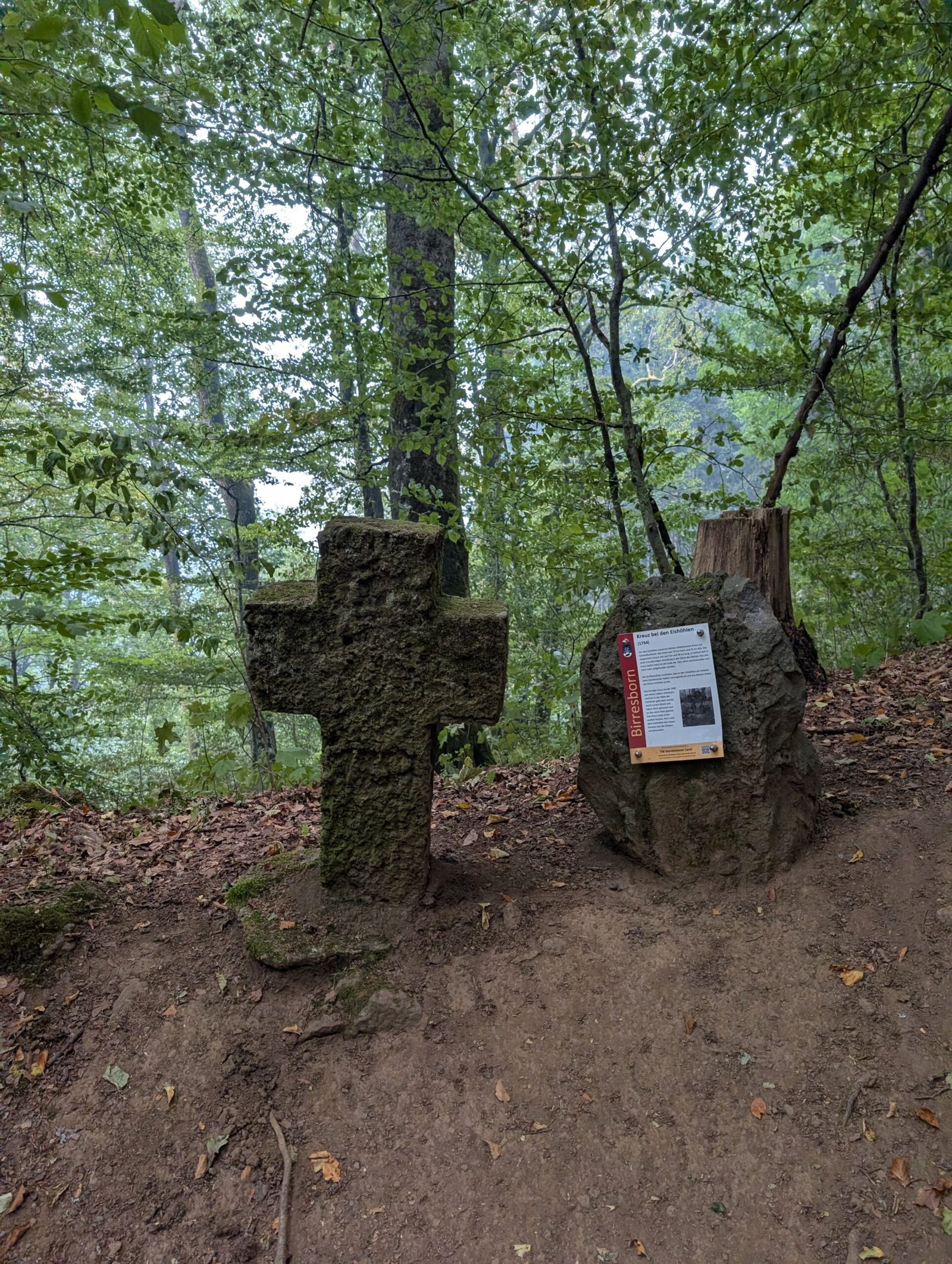
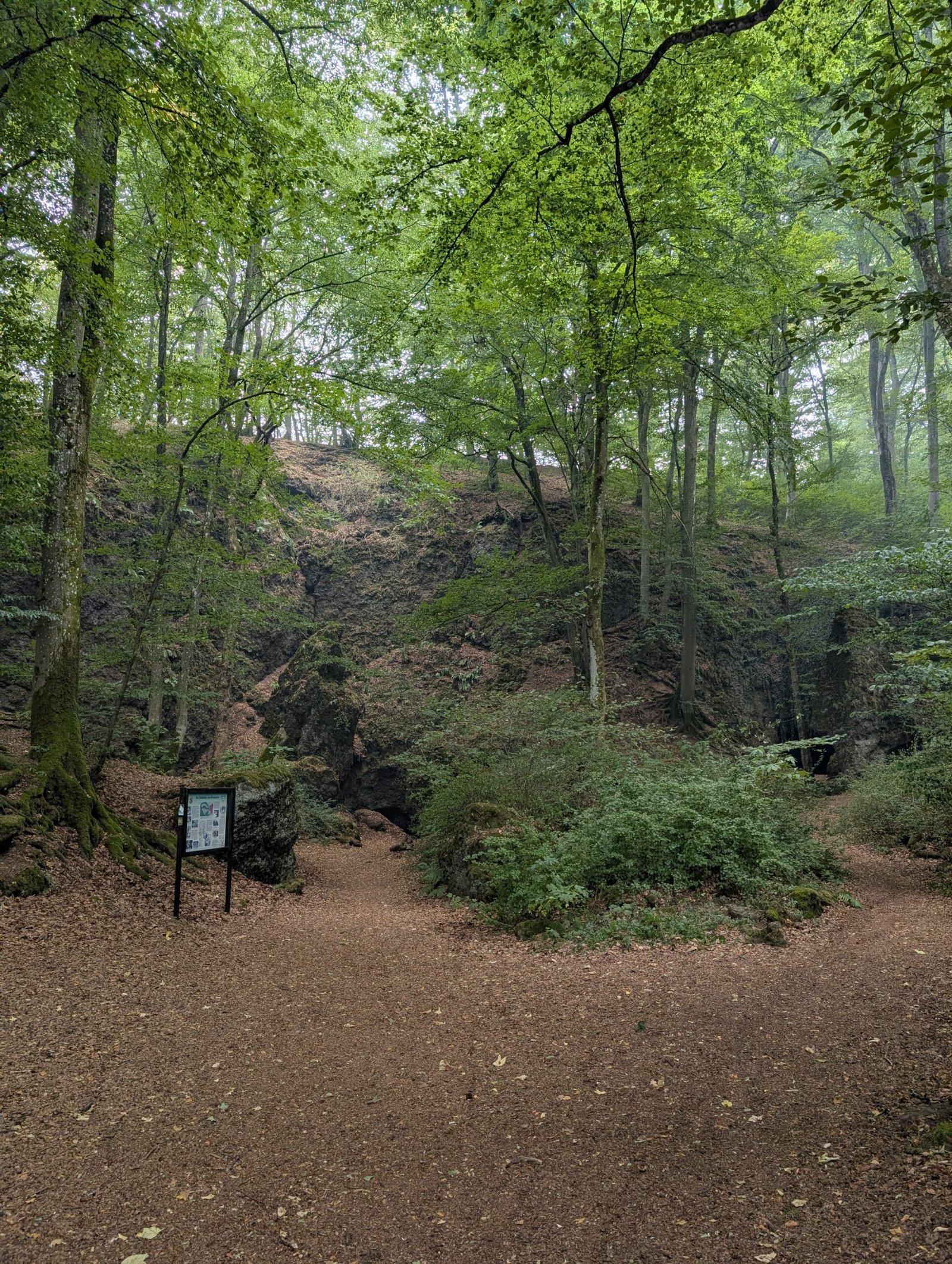
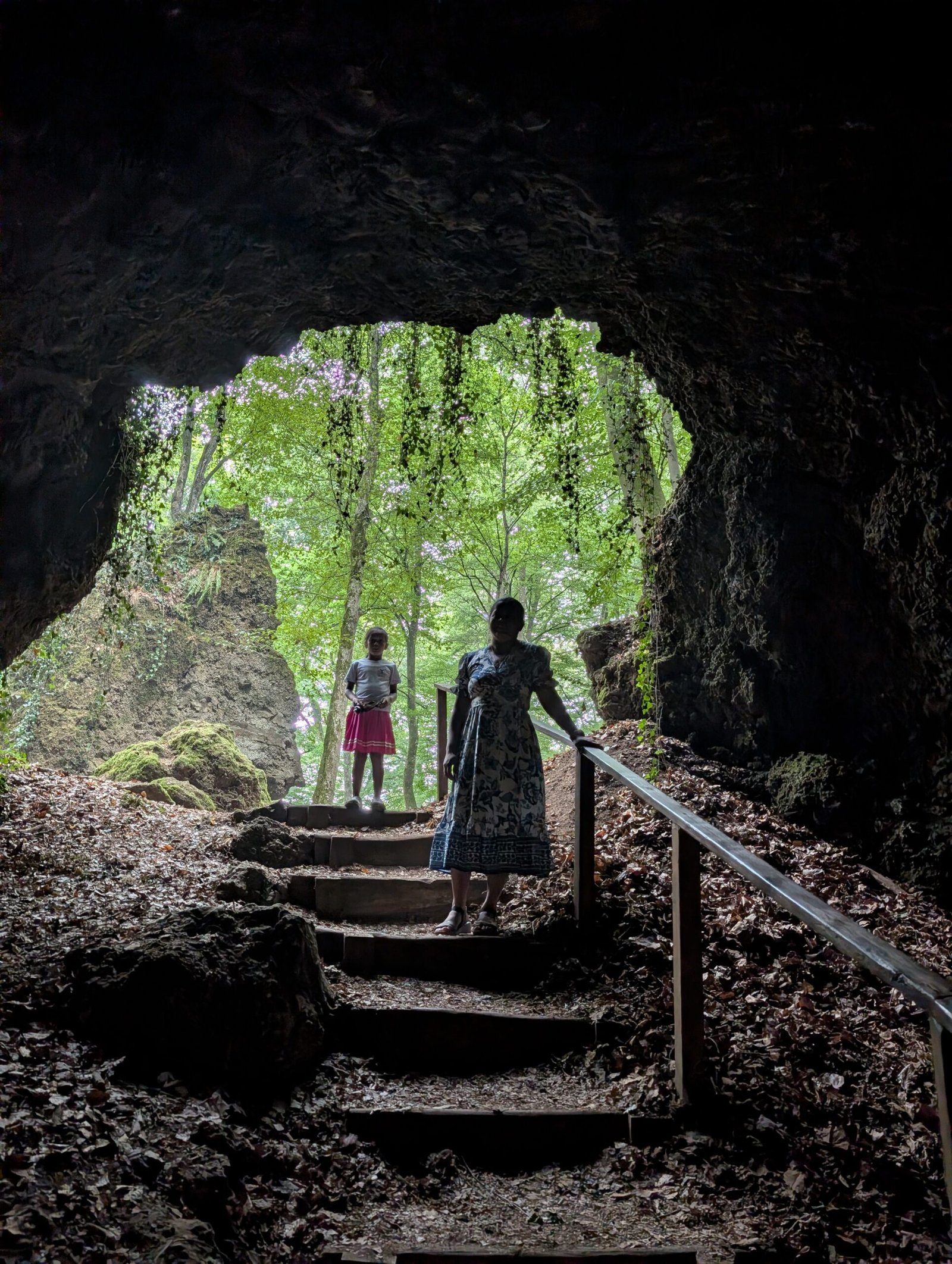
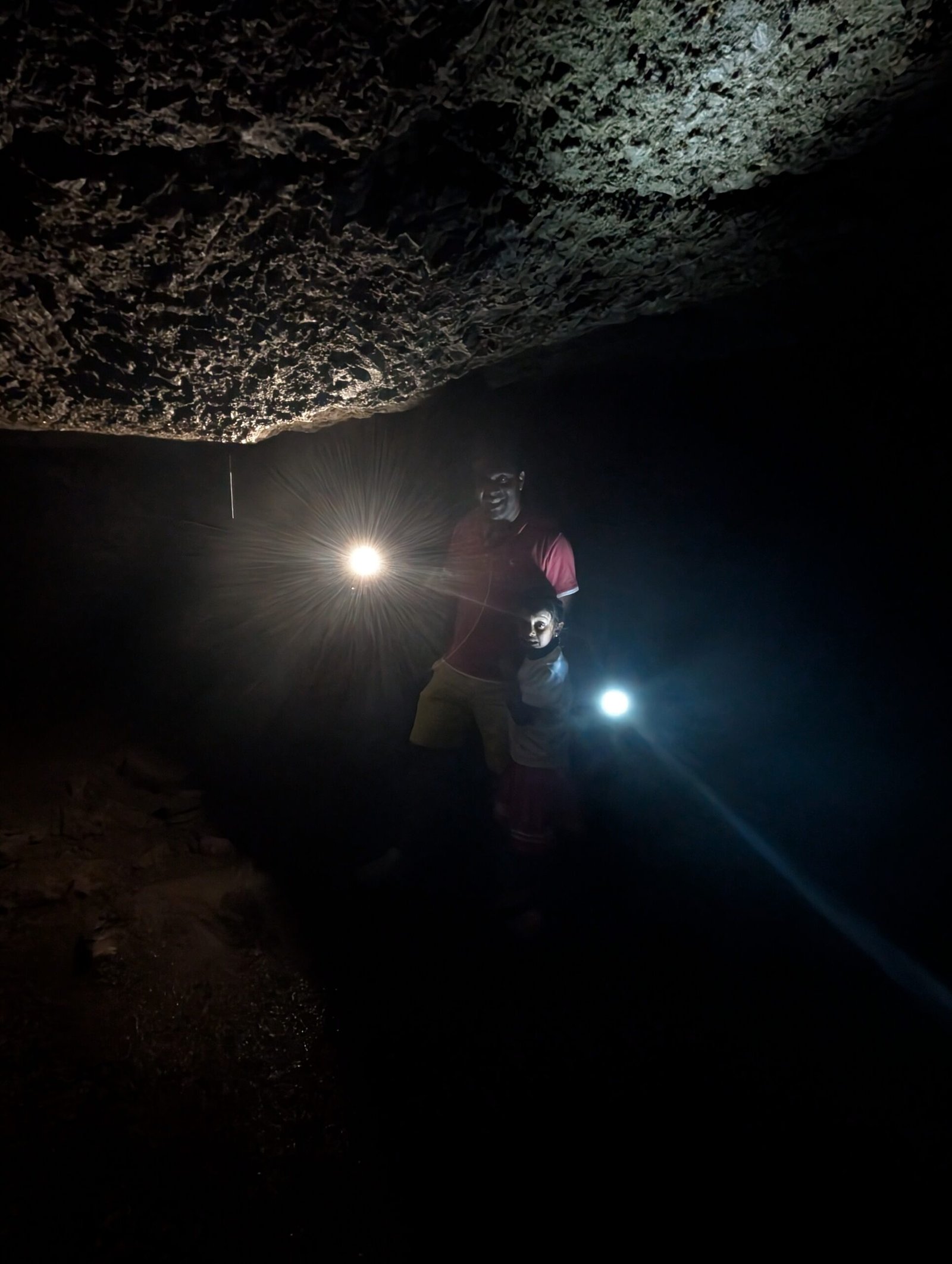
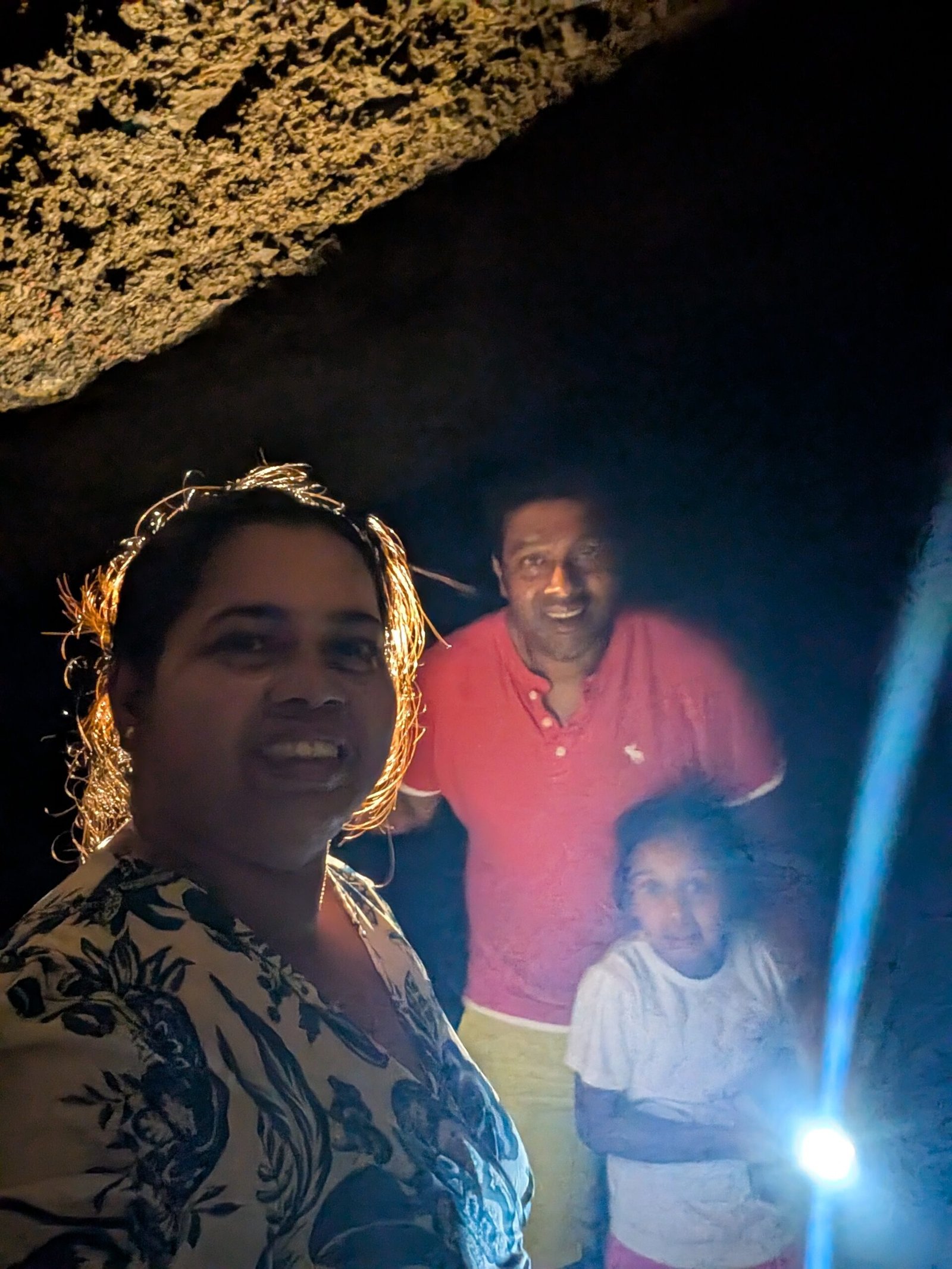
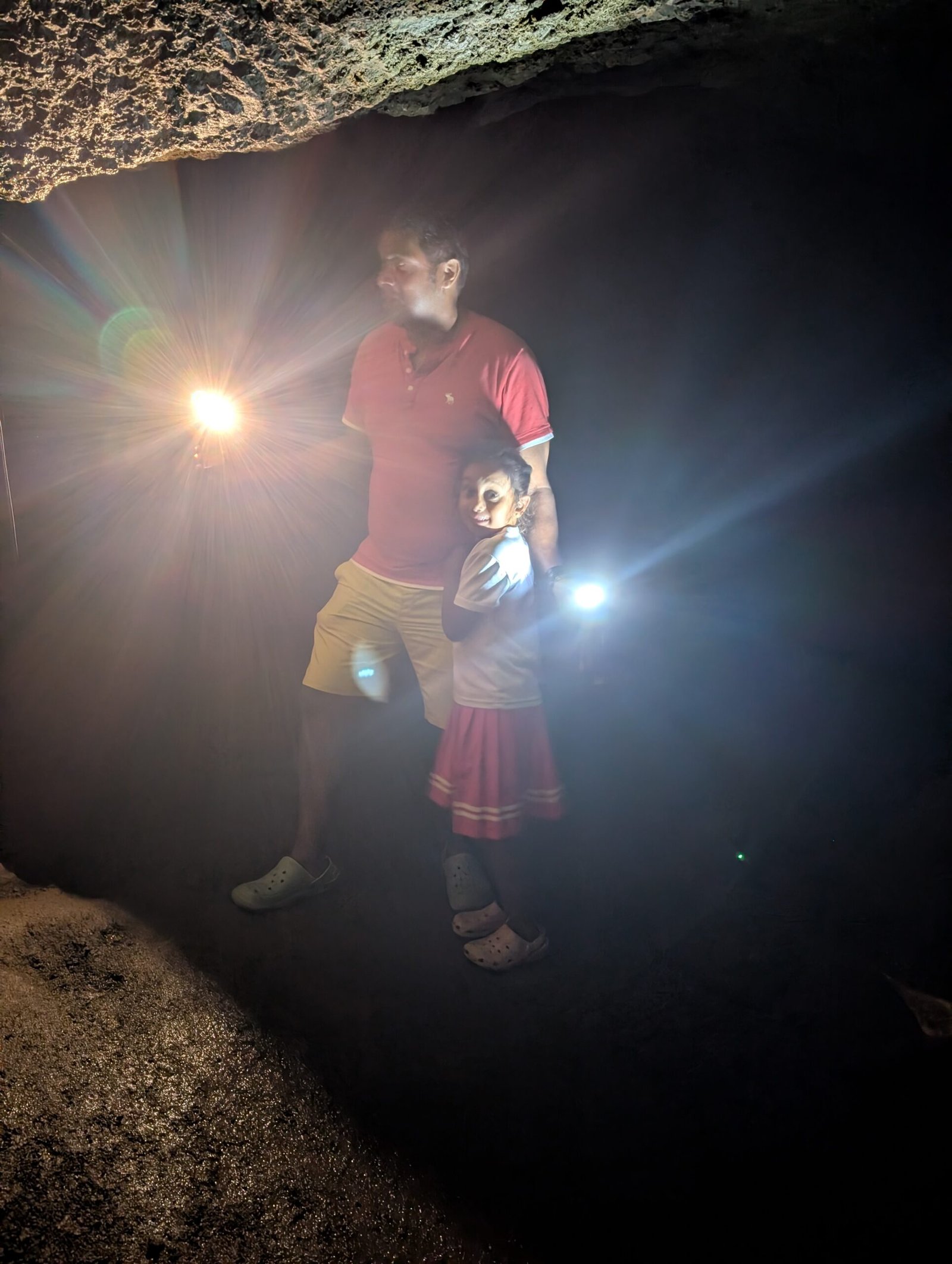
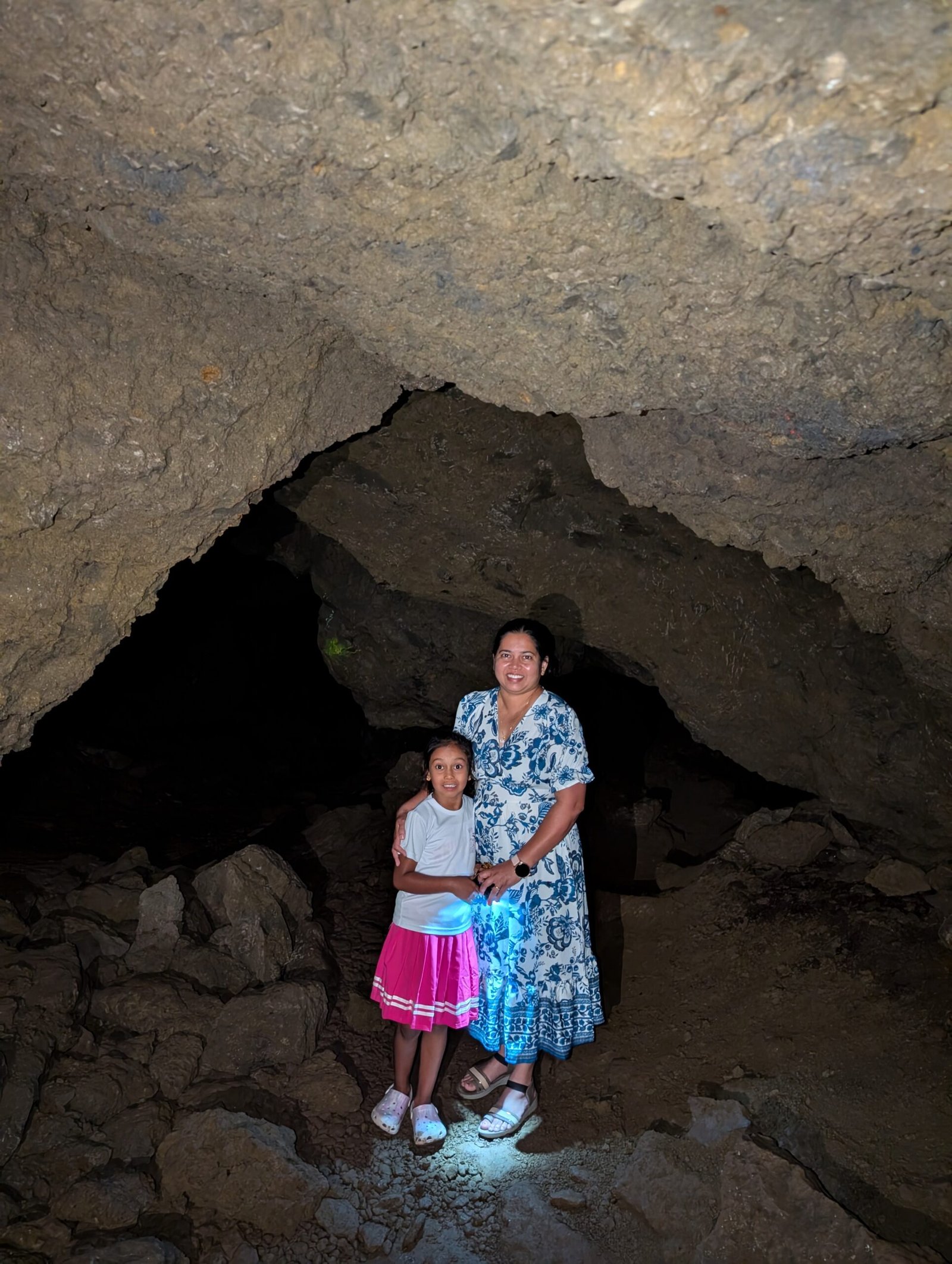
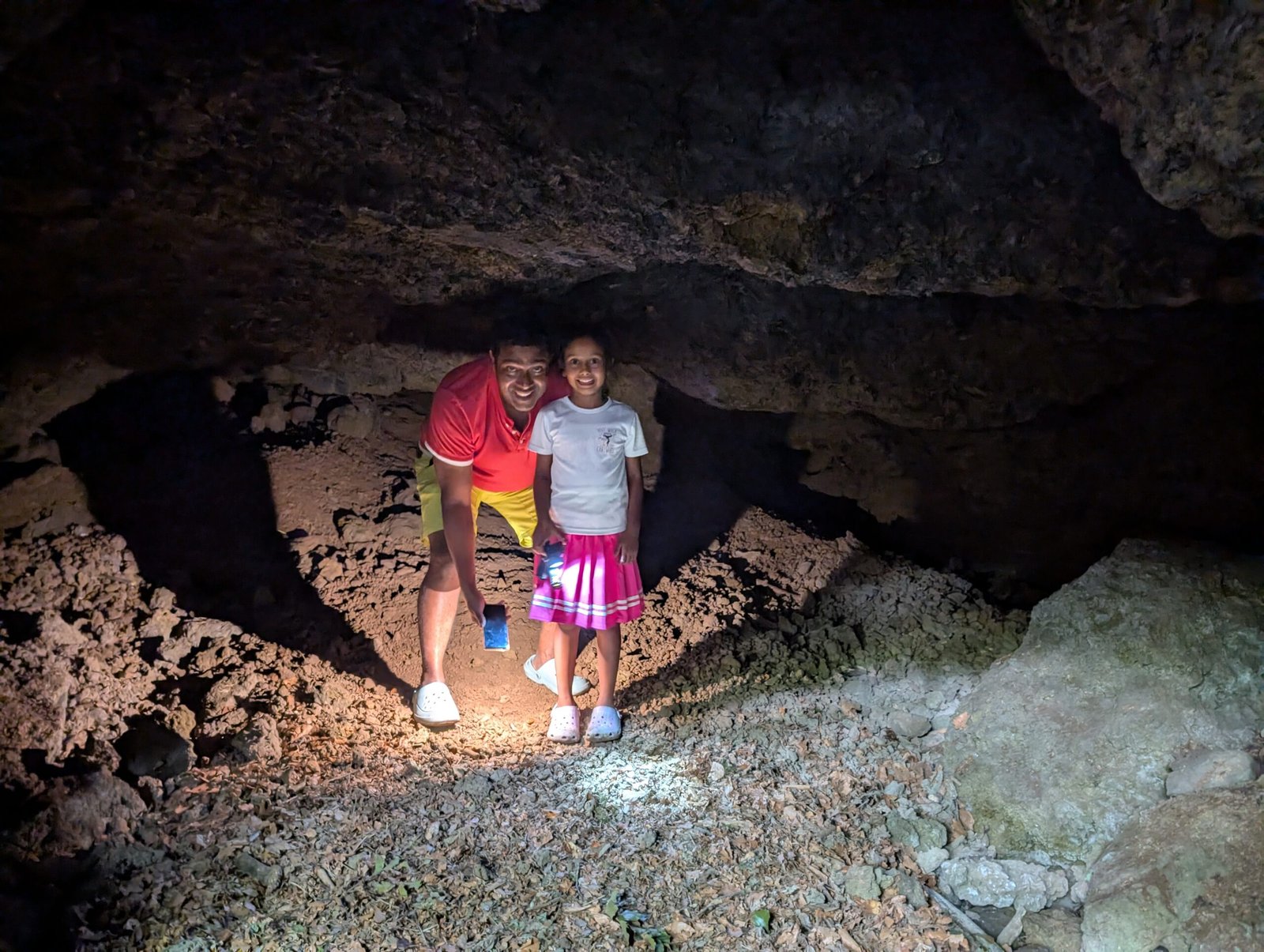
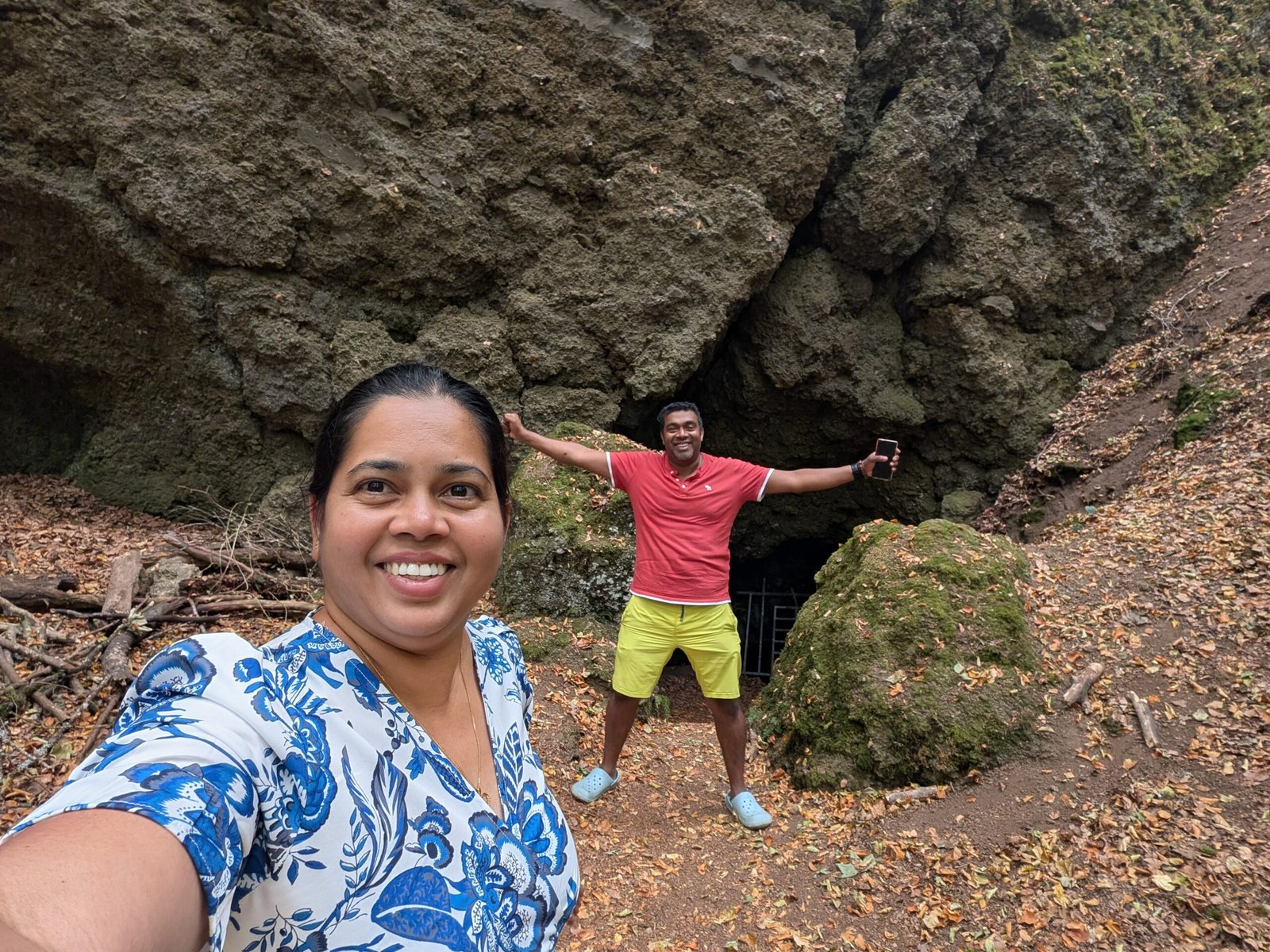
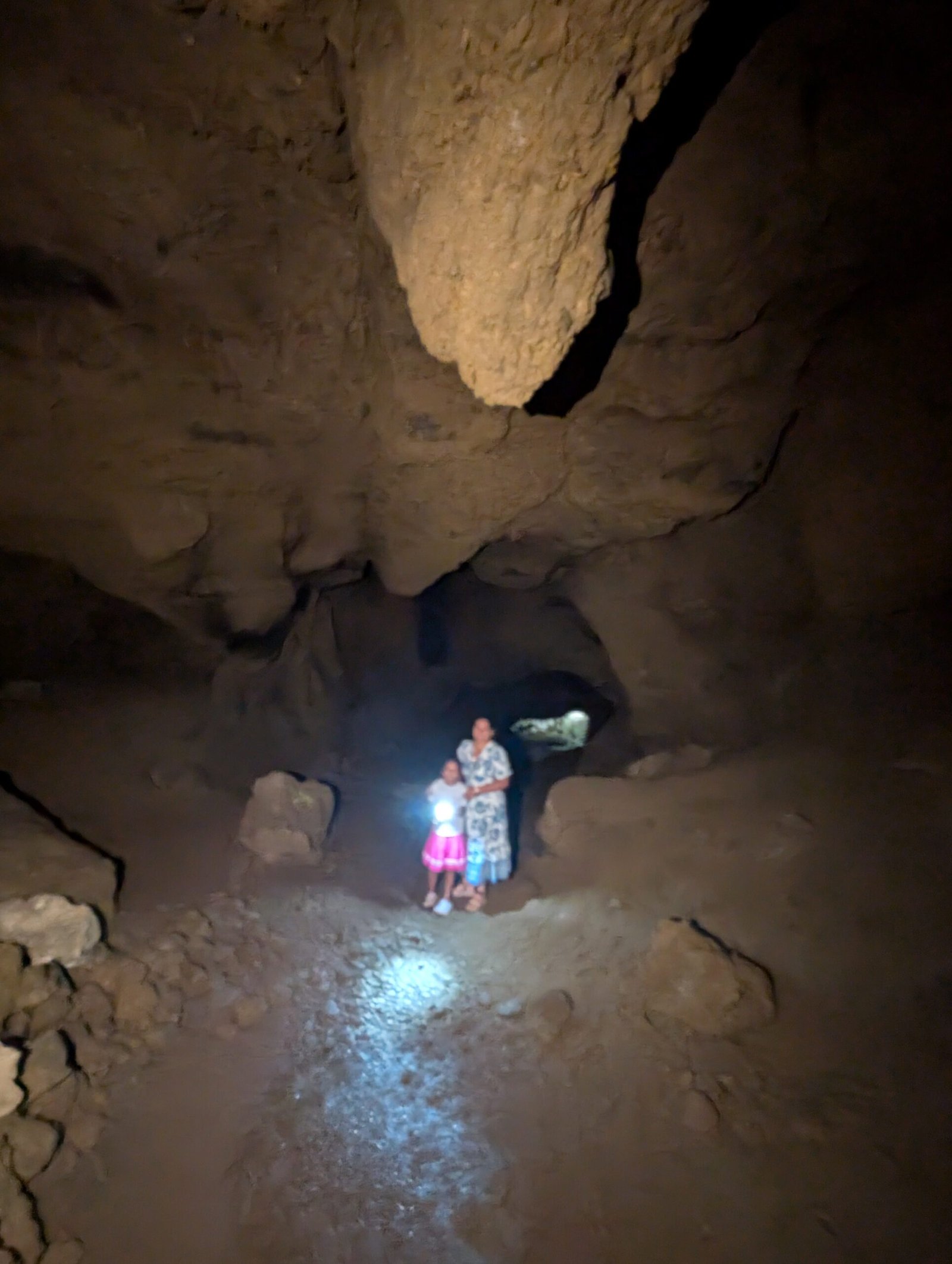
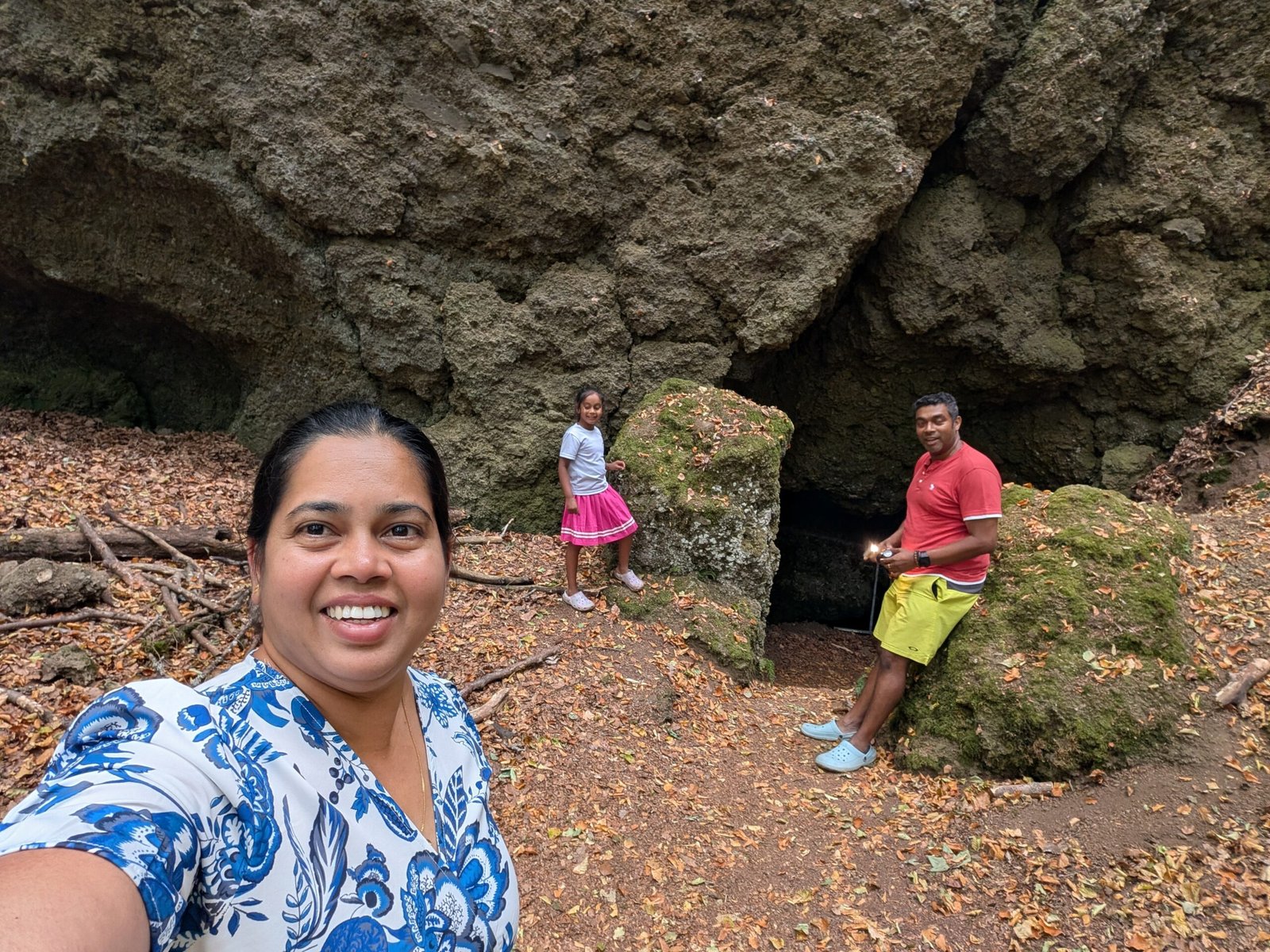
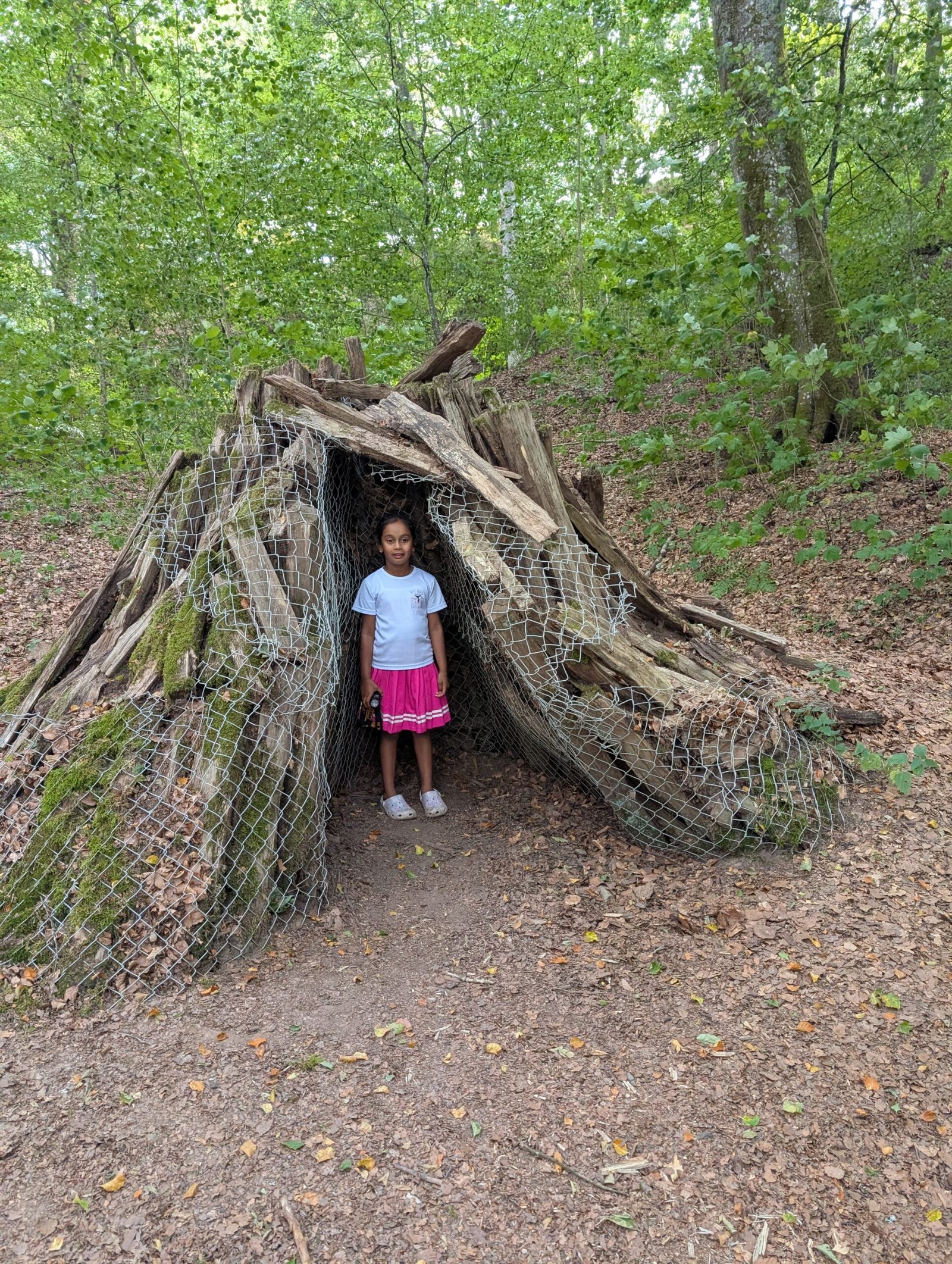
Wild caves, no lights, no crowds, no handrails. One of the best finds of the whole trip.
Meerfelder Maar — A Volcanic Crater and Our First Wild Swim
We came out of the caves blinking, dusty, and slightly bloodied, and figured that was the day done.And then we found one more thing.
The Eifel is volcanic country, and scattered across it are maars — circular crater lakes formed where groundwater met rising magma and the resulting steam explosion blew a hole in the landscape. Many of them are now serene, deep, tree-ringed lakes.And some of them you can swim in.
So we drove to Meerfelder Maar, and we got in.his was something of a milestone for me, because it was Addie’s first proper wild swim alongside me — not a pool, not a resort, but an actual natural body of water with a soft bottom and no tiled edges and no lane markers.The water was cold. Properly cold — which, in the middle of a European heatwave, is not a complaint but a blessing. That first shock, then the adjustment, then the extraordinary feeling of floating in a lake that exists because the earth exploded here thousands of years ago.
It was really fun. Not a profound, spiritual experience — just honest, uncomplicated, splashing-about fun, and sometimes that’s better.What struck me most, though, was the culture around it. There were a fair few people there, and they weren’t doing what British people do at a lake, which is look at it. They were using it. In the water, out of the water, lying on the grass in the evening sun, drying off, going back in, chatting, dozing. A completely relaxed, matter-of-fact relationship with open water as a normal part of an ordinary evening.Coming from the UK, where wild swimming is a slightly fringe pursuit involving neoprene and a sense of mission, that was genuinely lovely to witness. Water as everyday infrastructure, not as an event.
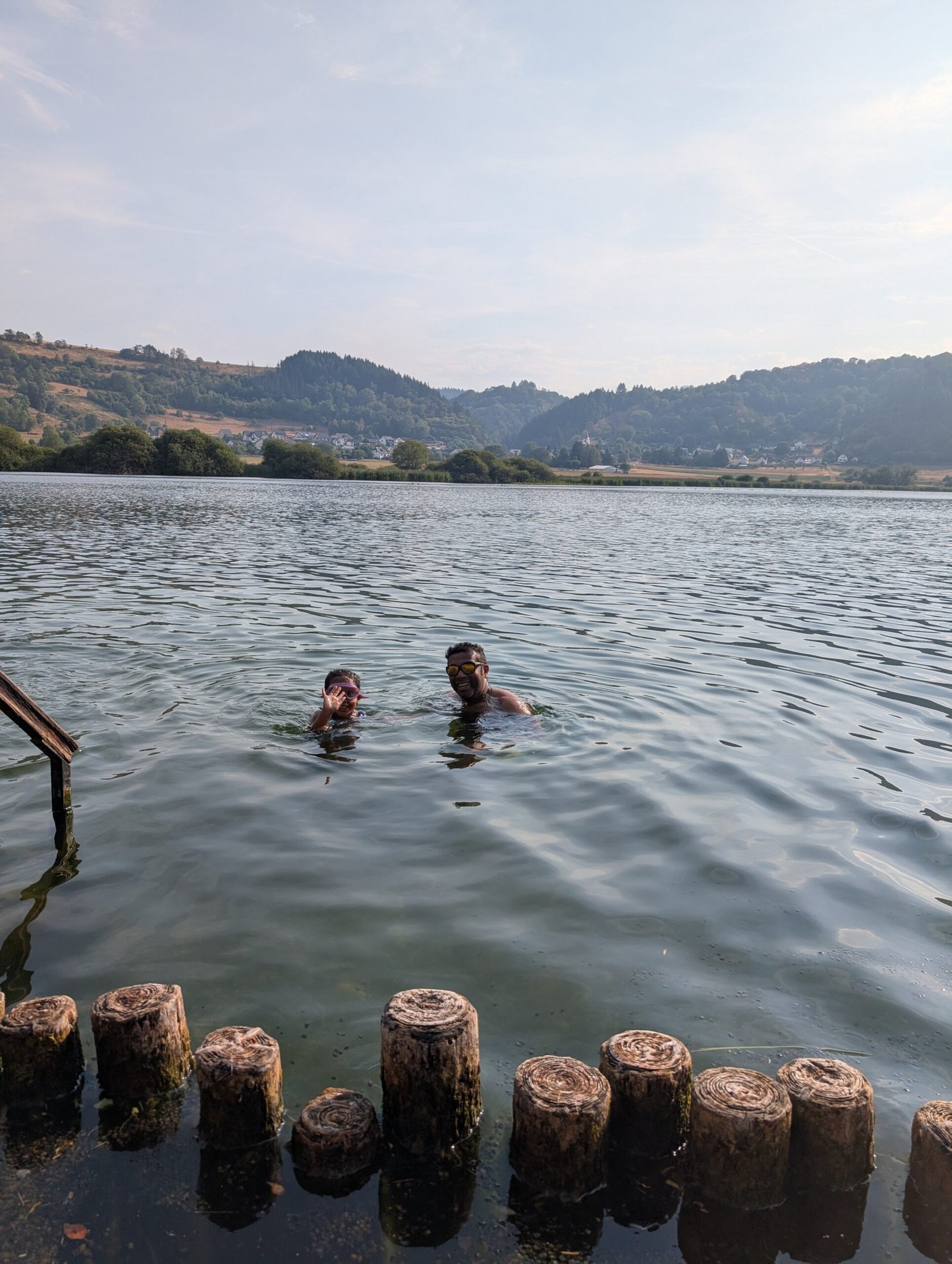
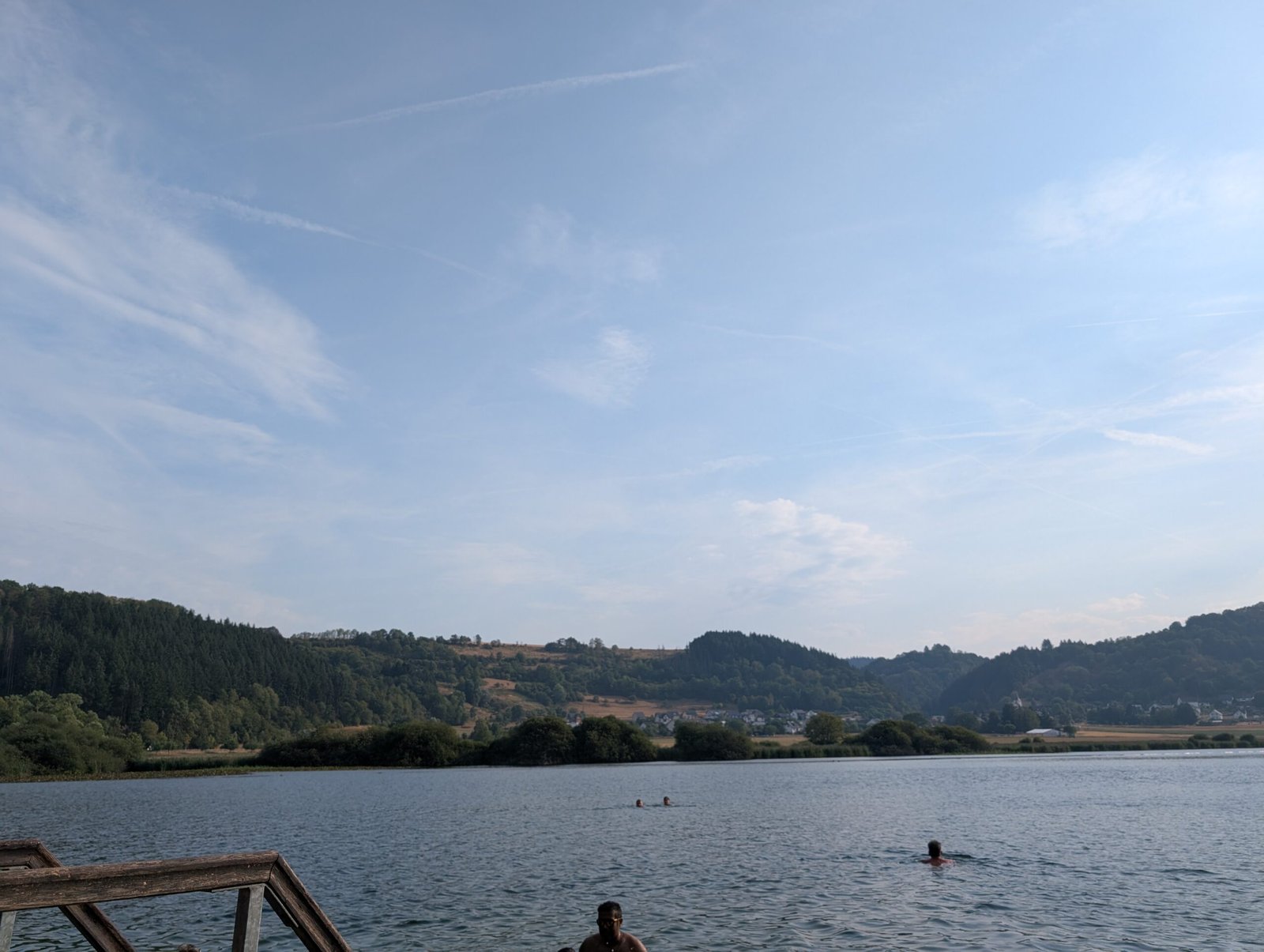
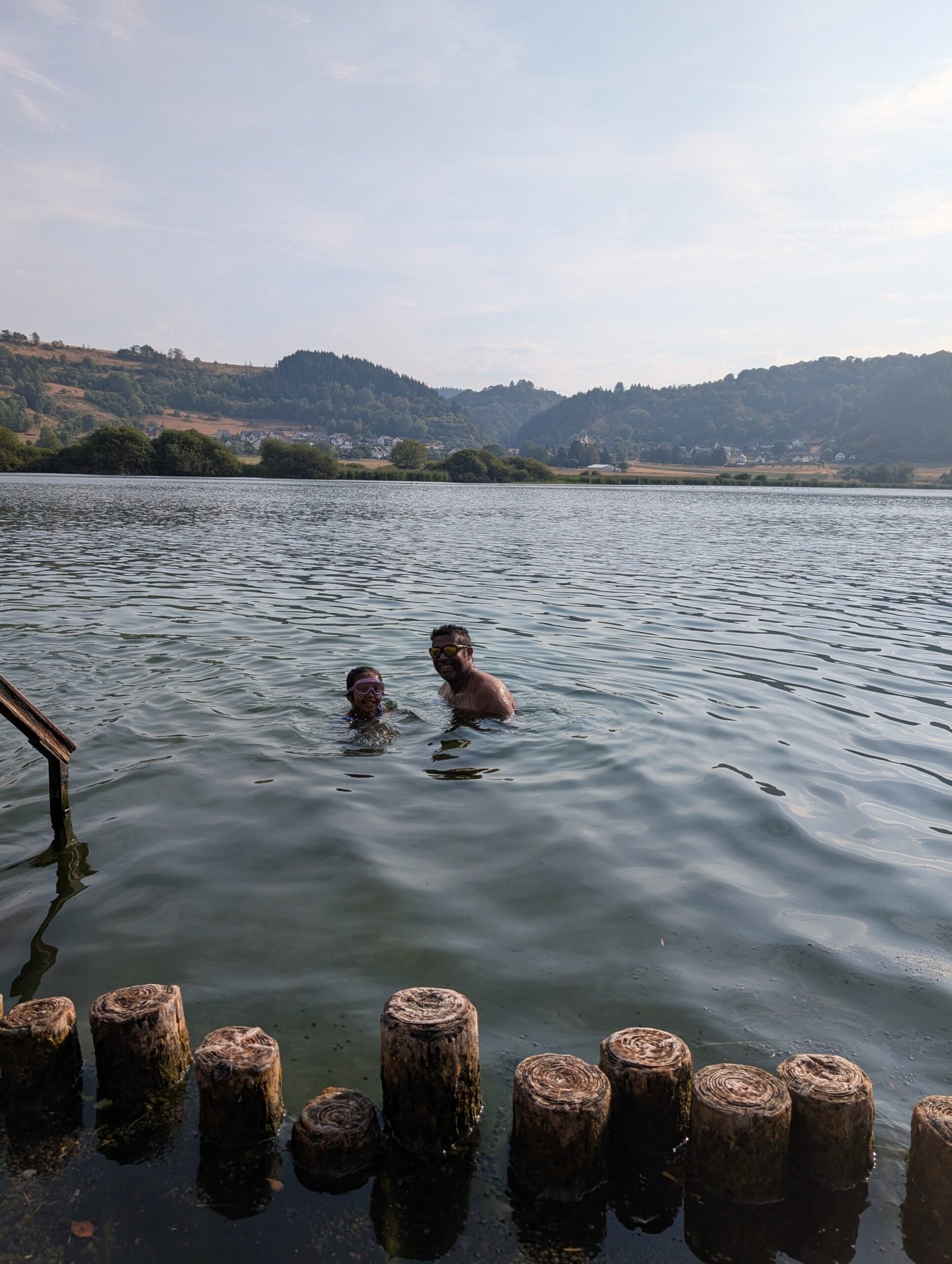
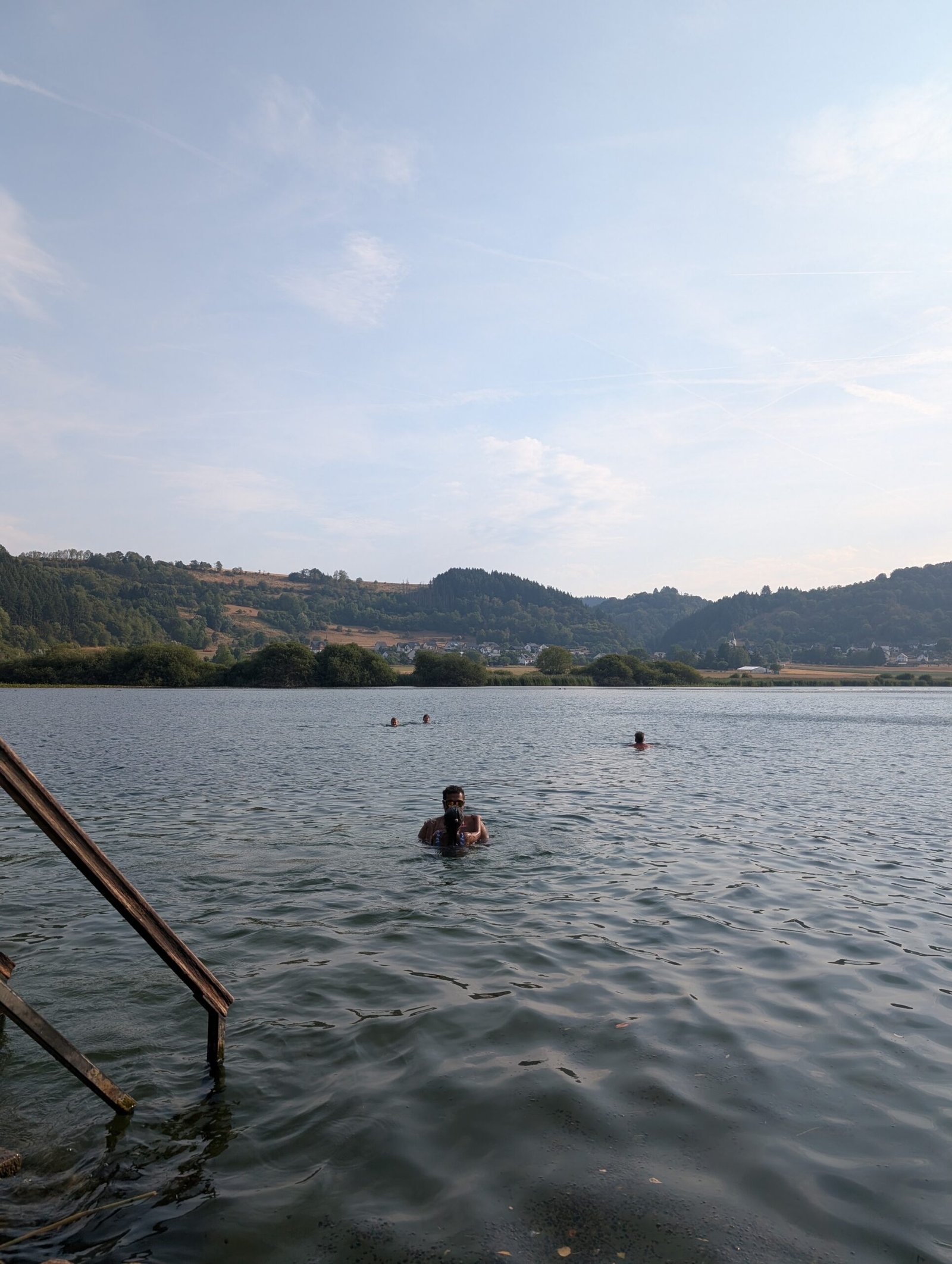
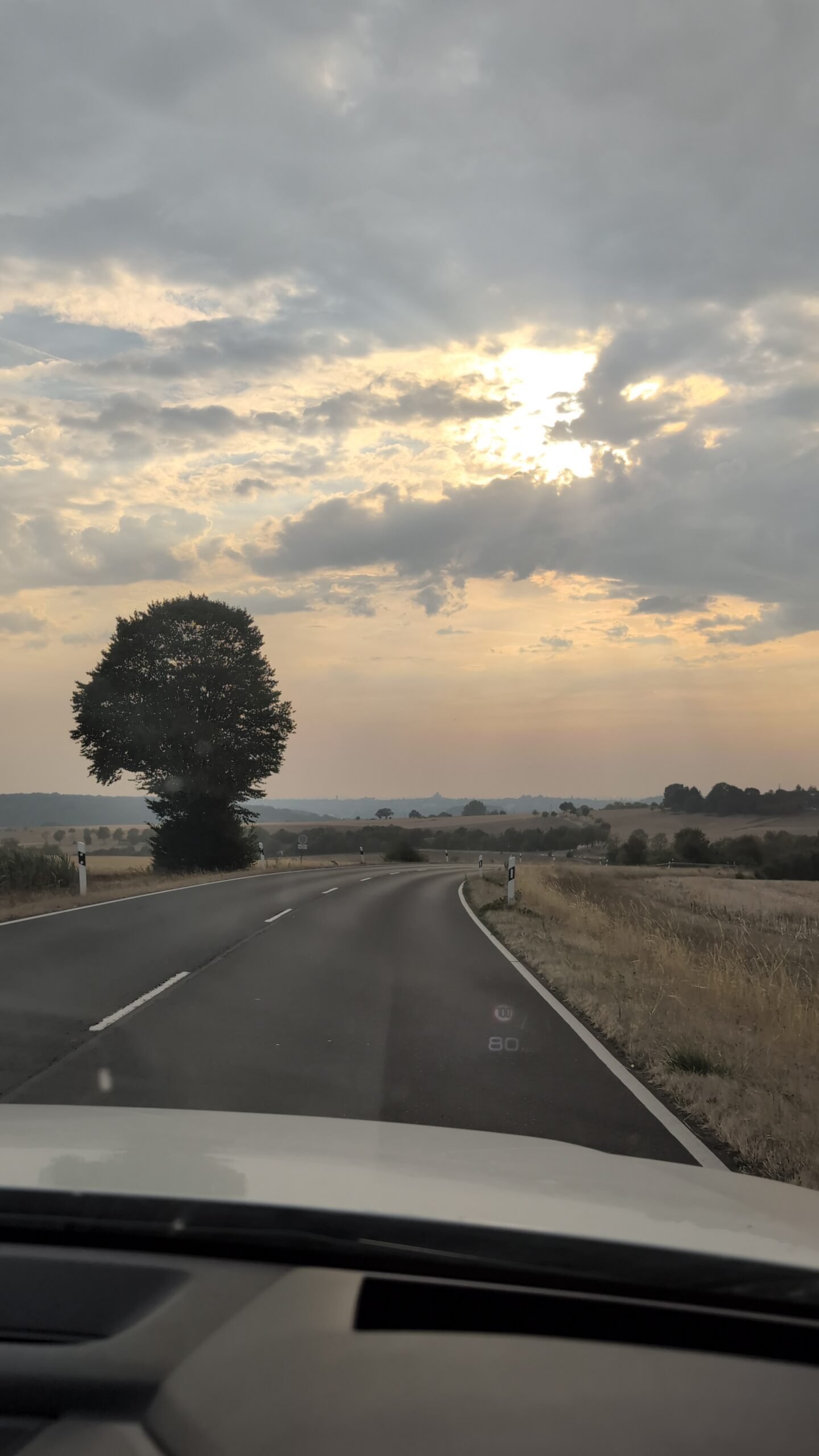
We swam, we dried in the sun, we sat, we did nothing. A different culture, experienced properly, without a tour guide.
Netto, Plants, and the End of Germany
On the way home we stopped at Netto again, because of course we did. By now it was practically a family tradition, and we picked up more supplies for the road.And yes — I came away with more plants. In my defence, they were extremely good plants – and by the time im writing this I have managed to kill half of them!
Back at Bettingen that evening, we sat with the mountain view for the last time. Clothes drying, a cut on my head, a child asleep early for once.
This had been our last day in Germany. The next morning we’d be packing properly, loading the boot, and pointing the car towards France.
What This Day Taught Me
Three things happened today that could not be more different: a heavily managed, ticketed, timetabled natural attraction; a completely unmanaged, deserted, pitch-black cave system; and a crater lake full of locals treating a volcanic explosion site as their local swimming pool.
The geyser cost us most of our day and gave us about fifteen genuinely spectacular minutes. The caves cost us nothing and gave us a memory — and a scar — we’ll keep forever. And the lake cost us nothing and taught us something about how other people live.
The best things we found today were the ones nobody was selling.
And overhead, through all of it, that orange sky — a quiet, constant reminder that we were guests here, in a landscape that was busy dealing with something far bigger than our holiday.
Next up: Germany to France — the final leg of the road trip…


This is Aldrin and my partner Amoli. We bring you "Earths Pilgrim" - a unique insight into our travel escapades while leaving life in a cubicle. If you are looking for some inspiration to break the shackles of a regular life, then you are the right place. Read more about us- Click here.