- The Long Road to the Wild: Arriving at Kruger National Park
- Kruger – Into the Wild: Skukuza to Satara
- Kruger – Cheetahs at Dawn, Grasslands at Dusk
- Kruger – The Ghost of the S100 and The Afternoon That Changed Everything
- Kruger: The Leopard Beneath Our Window
- Kruger : The Day We Almost Didn’t Go
- Kruger: The Last Hunt & the Long Goodbye
Everyone left. Every single car. They searched the bush, saw nothing, and drove away. We stayed. And the leopard was right there — right beneath our window — staring up at us.
Day 4 — Satara to Skukuza, and the Closest Encounter of Our Lives
A New Worry, A Familiar Courage
Day 4 began with a knot in my stomach that had nothing to do with safari.Addie had woken up with blisters. Small, angry red marks scattered across her skin – especially her feet. As parents, your mind races — insect bites? Allergic reaction? Something worse? Her eyes were puffy too, likely from the dust — the fine, red Kruger dust that gets into everything, including the sinuses of a six-year-old.We examined her carefully. Gave her medicines. Debated. Worried. Did what parents do — held the fear quietly between us while projecting calm confidence for the little one watching our faces for cues.
Addie herself was unfazed. She wanted to go. The bush was calling. And who were we to argue with a six-year-old who’d already stared down leopards and befriended cheetahs?Medicines administered. Fortuner loaded. Off we went.
The Overcast Morning — When the Bush Sleeps In
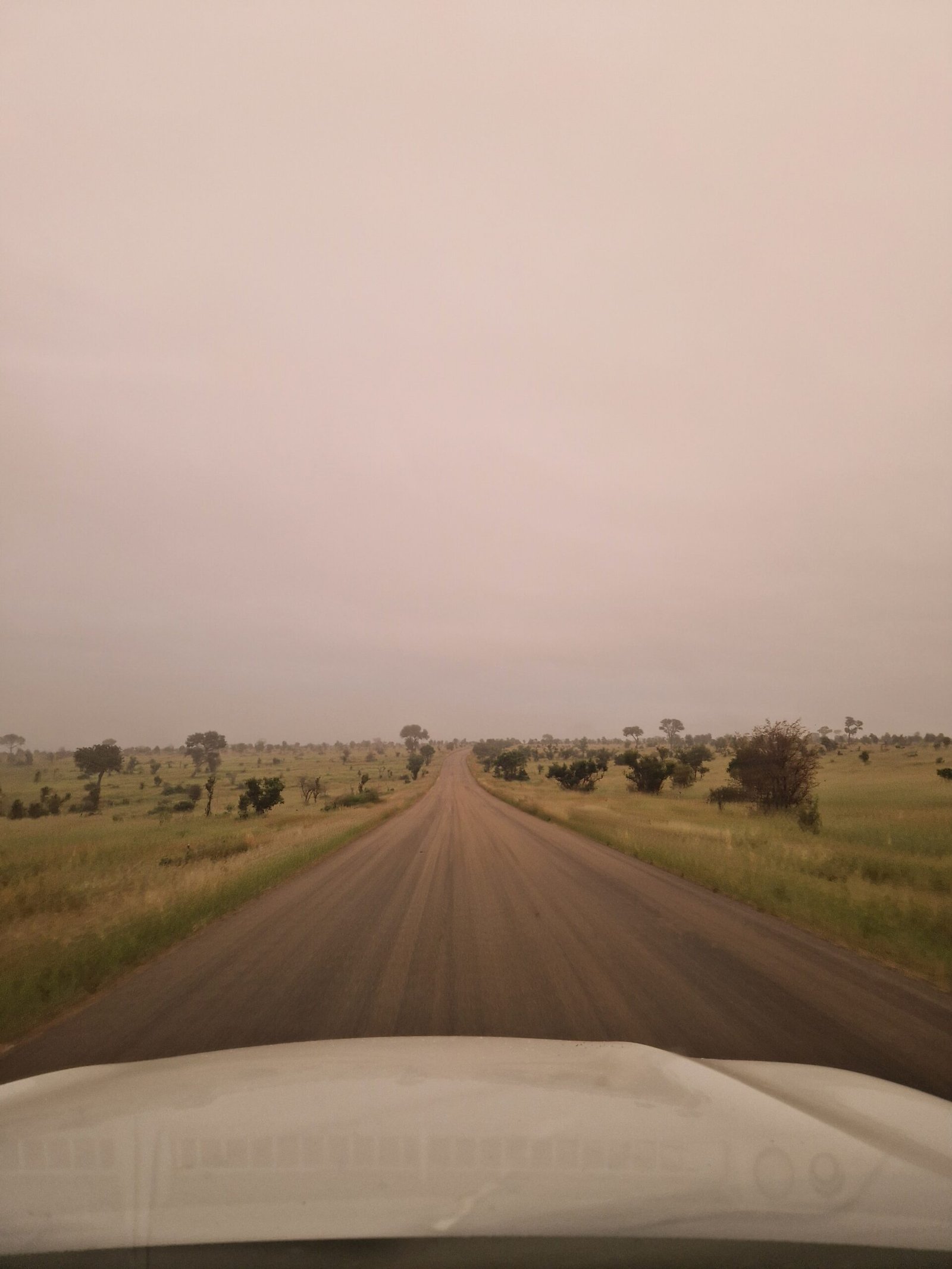
This was our last morning at Satara. Tomorrow, we’d be in Skukuza, and the landscape, the rhythm, the whole feel of the safari would shift. We wanted to make this drive count.The sky had other ideas.The morning was overcast — a low, grey ceiling pressing down on the bushveld, with an occasional drizzle misting the windscreen. The golden dawns we’d grown accustomed to were replaced by a flat, diffused light that made everything look muted and still.
We took the H7 — our faithful road, the one that had given us cheetahs at sunset just the day before — and drove towards the west, expecting the area’s reputation for lion sightings to deliver once more.It didn’t.The road was quiet. The bush was quiet. The overcast conditions seemed to have pressed a mute button on the entire park. We drove all the way out and back. Nothing.
We tried the S106 Loop — a gravel road that loops through promising terrain. More silence. More emptiness. The drizzle had stopped but the cloud cover remained, and the animals, it seemed, had collectively decided to sleep in.It was shaping up to be a slow morning. The kind that tests your resolve. The kind that makes you wonder whether yesterday’s miracles had used up all of Kruger’s generosity.
The Cheetah and the Signpost
Just as we approached the junction of the S36 — the bumpy gravel road we’d take south towards Skukuza — everything changed.A cluster of cars. The familiar signal.
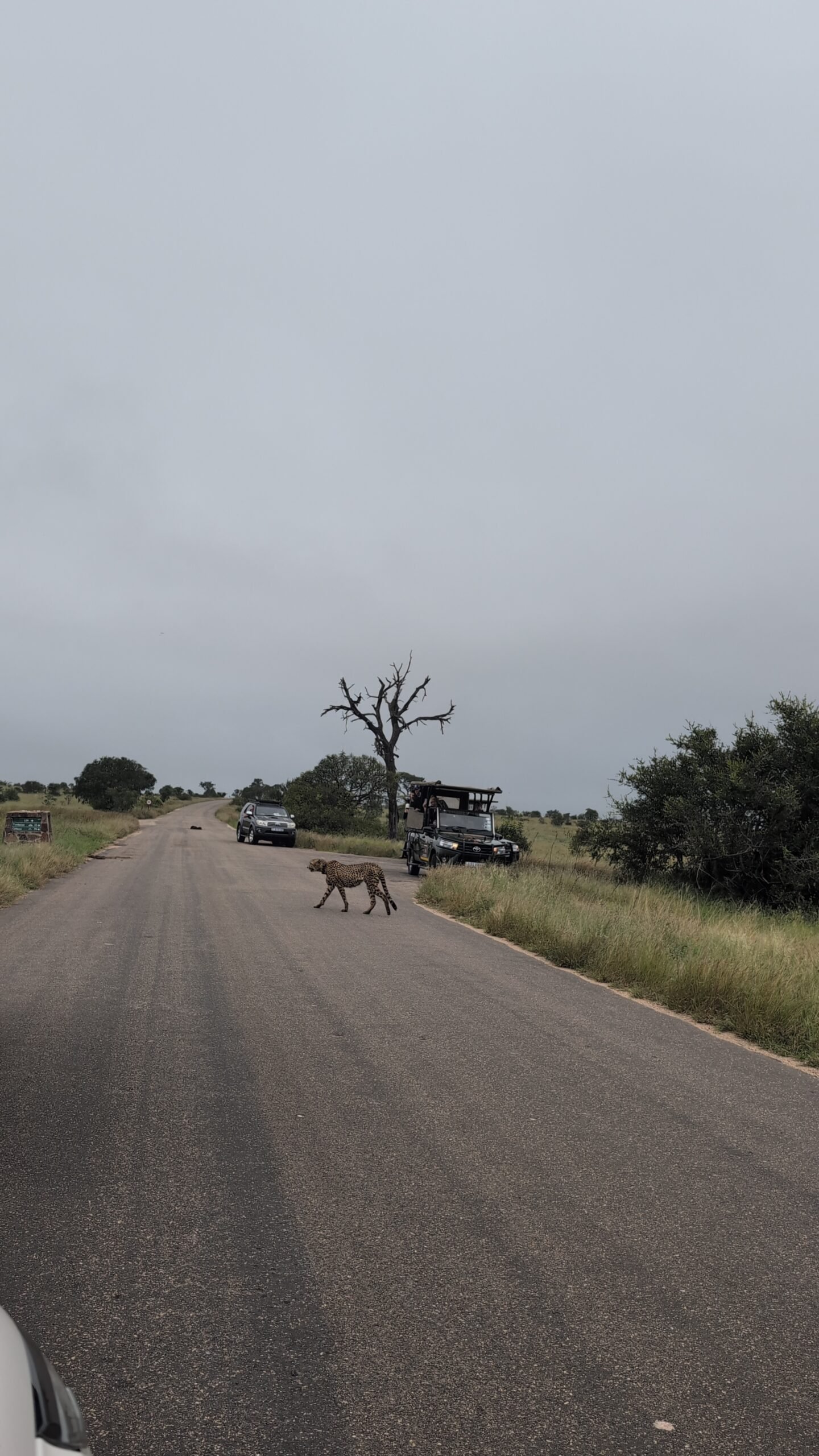
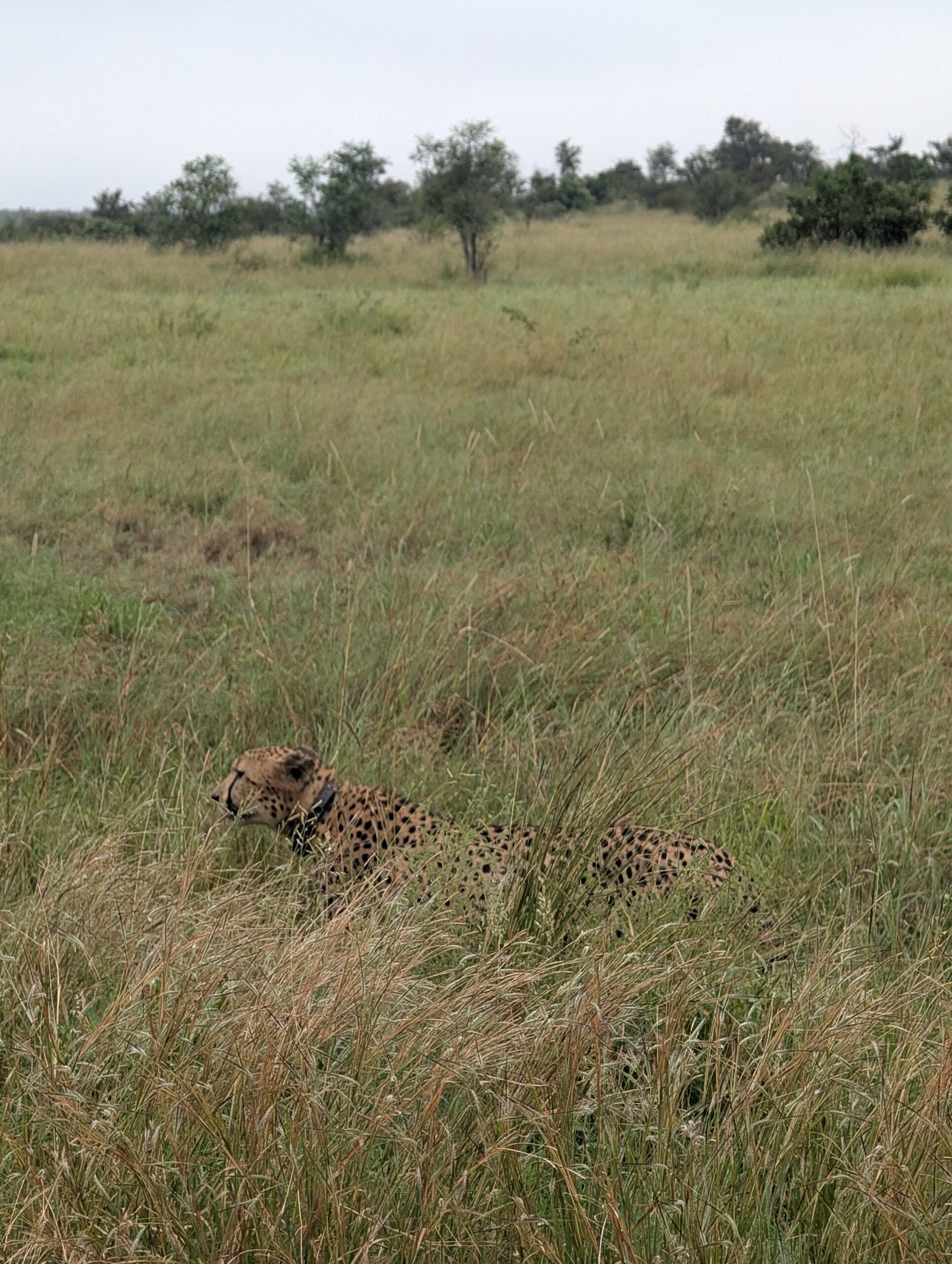
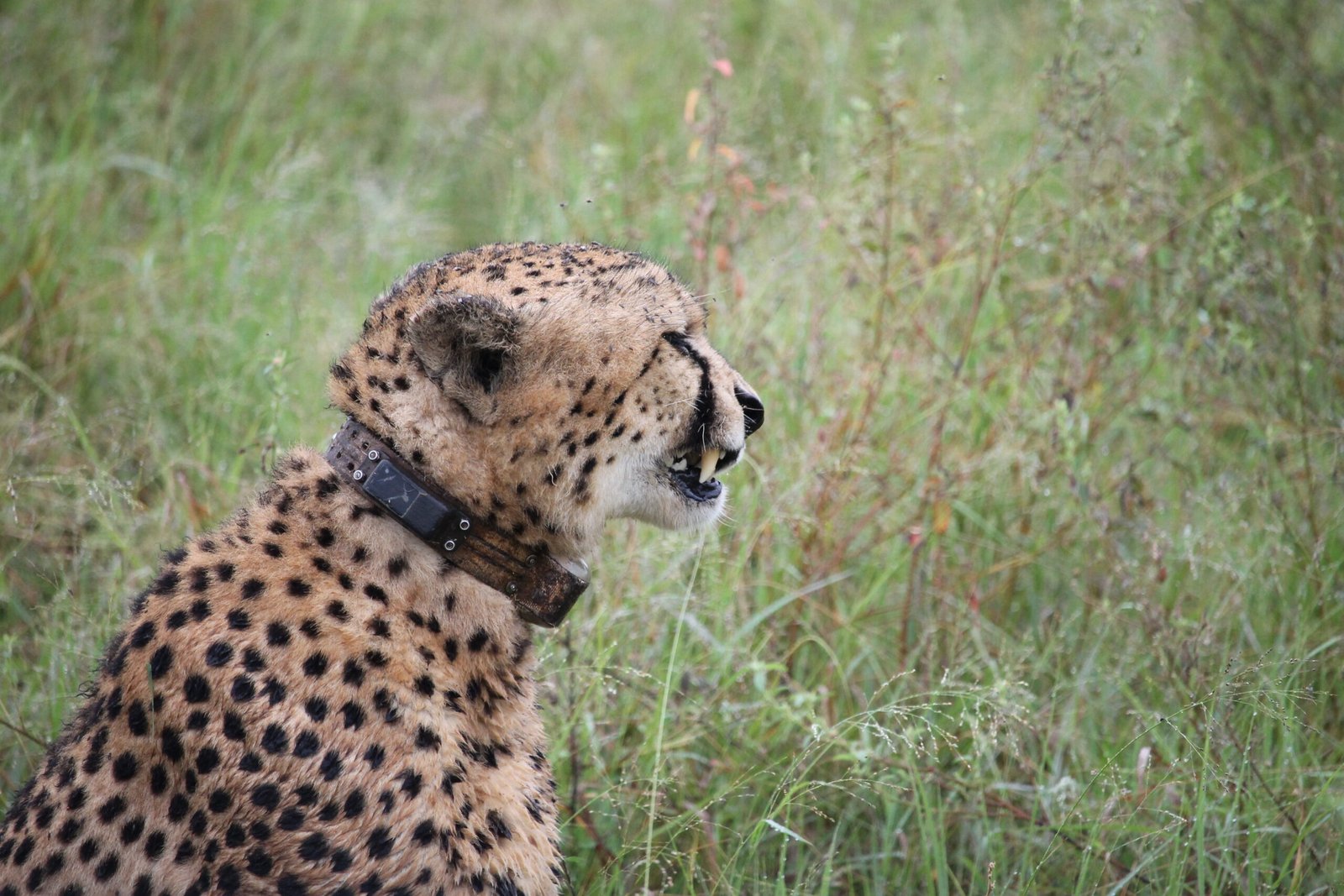
And there, right by the roadside, casually magnificent: a young cheetah.
By this point in our trip, I was beginning to think Kruger had signed a personal contract with us regarding cheetahs. Day 2: two cheetahs at a distance. Day 3: two cheetahs at sunset, walking past our car. And now Day 4: another one, close, very close.
The cheetah crossed from one side of the road to the other, passing just metres from our Fortunner, and settled into the grass on the verge. It lay down — not hiding, not fleeing, just… lounging. Playing in the grass with the relaxed ease of a cat that knows exactly how beautiful it is and doesn’t need your validation.
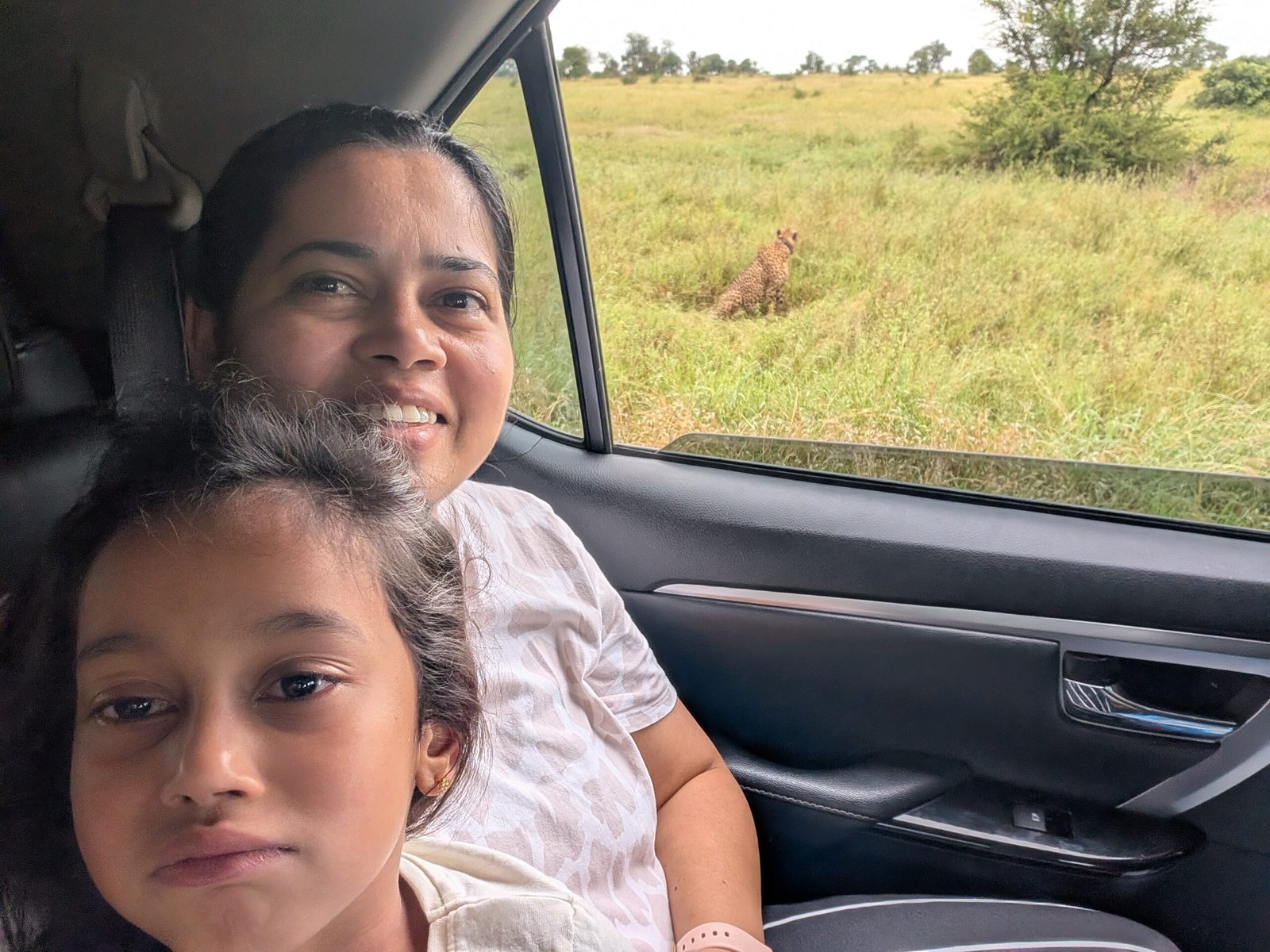
It was so close — so impossibly, generously close — that my wife and Addie managed to snap a selfie with the cheetah in the background. A selfie. With a wild cheetah. In Kruger National Park.If you’d told me this was possible before the trip, I’d have laughed.
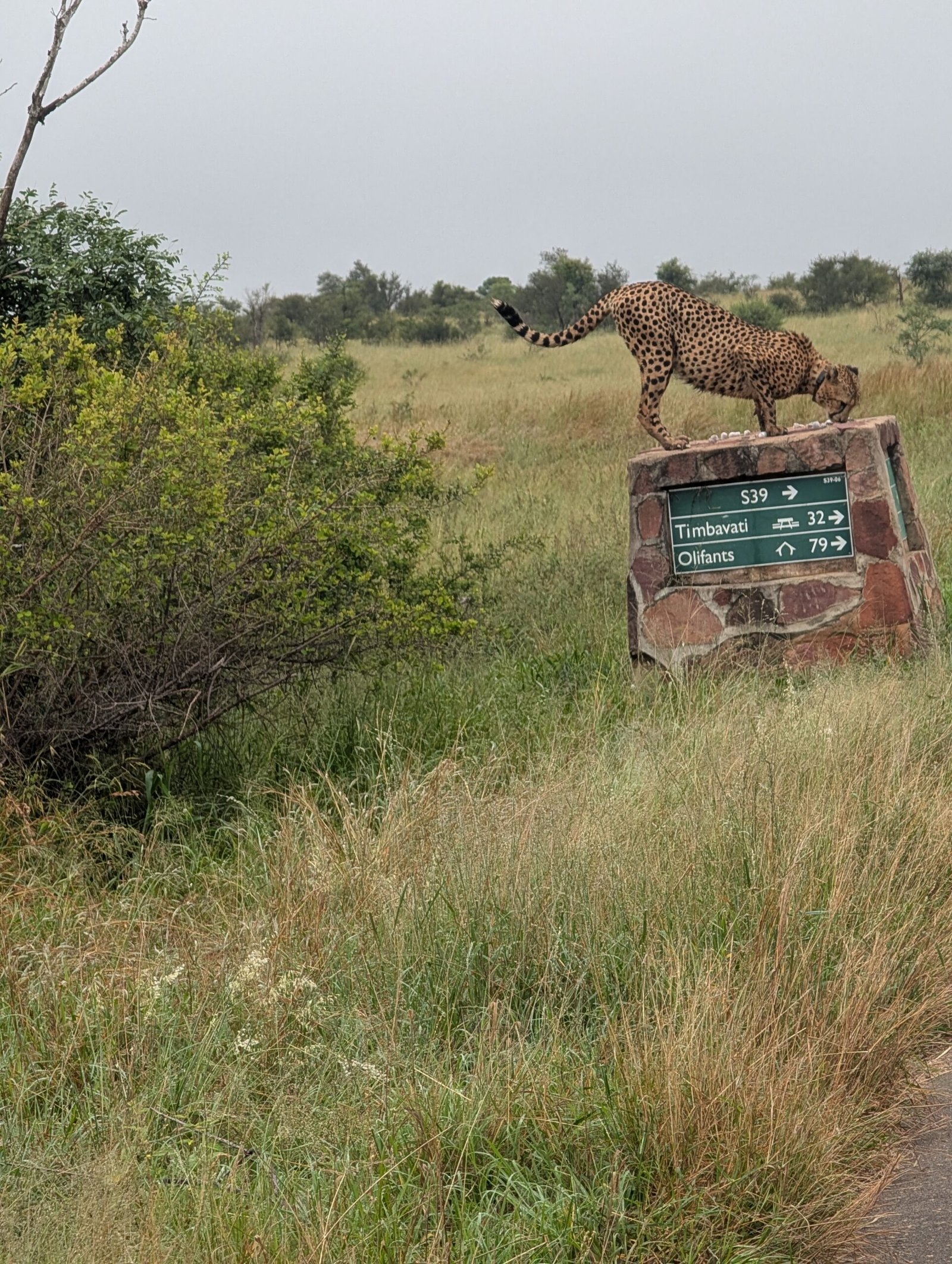
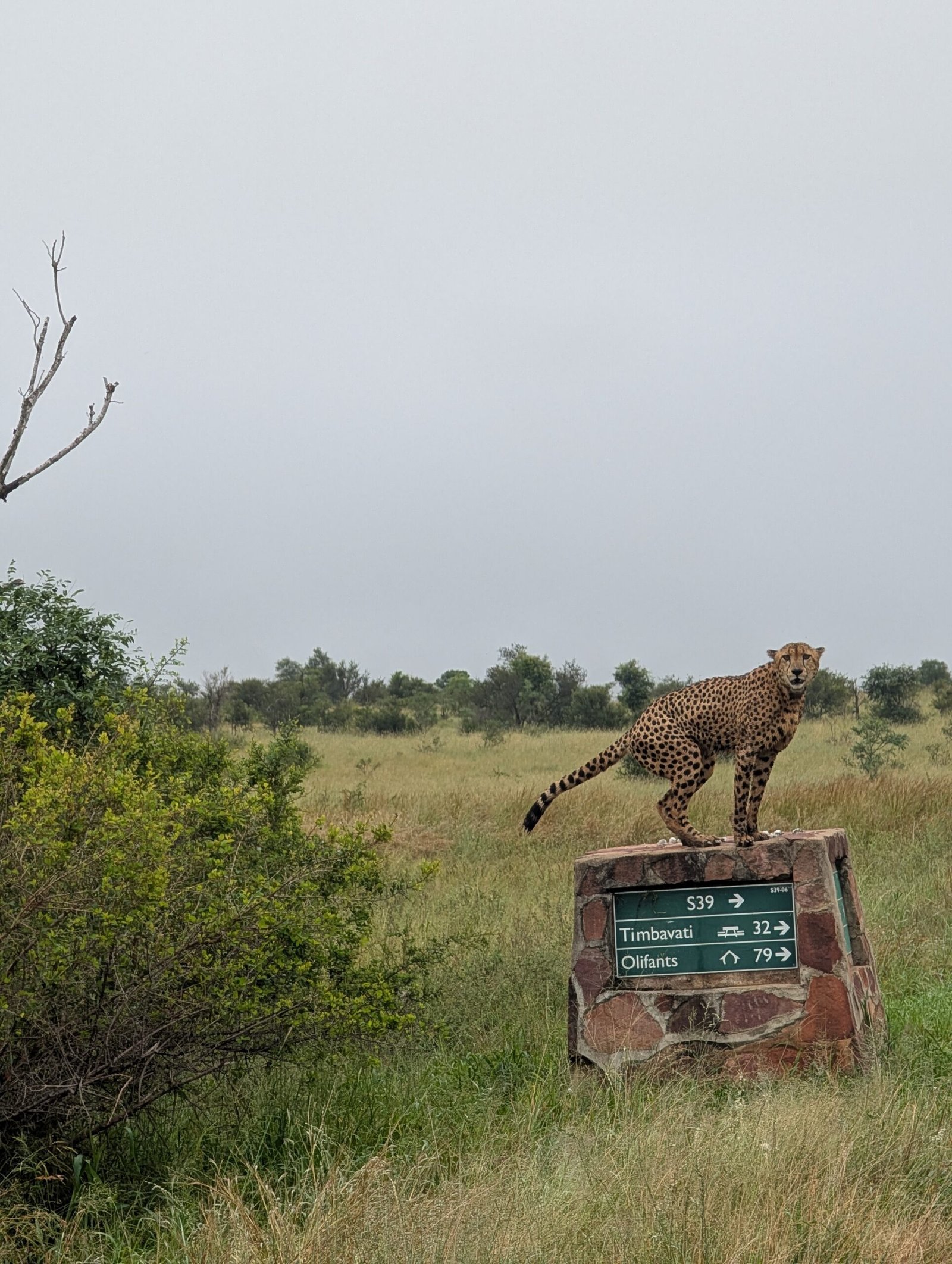
But the cheetah wasn’t done performing. There was a signpost nearby — one of those classic Kruger road markers — and the cheetah, in a moment of pure, instinctive theatre, climbed up onto it.You’ve seen those photographs. Every wildlife lover has. The iconic image of a cheetah perched atop a signpost, surveying the savannah from its makeshift throne, looking like something from a National Geographic cover. It’s one of those shots that photographers wait days, sometimes weeks, to capture.And here it was. Happening right in front of us.
The cheetah sat atop the post with regal composure, scanning the horizon — and then, in a moment of comedy that only nature can deliver with such perfect timing, it pooped. Right there. On the signpost. Marking its territory with the nonchalant efficiency of a creature that sees no contradiction between majesty and bodily functions.
Addie collapsed into fits of laughter. I was trying to photograph it while shaking with laughter myself.
This trip. This absolute, ridiculous, magical trip.
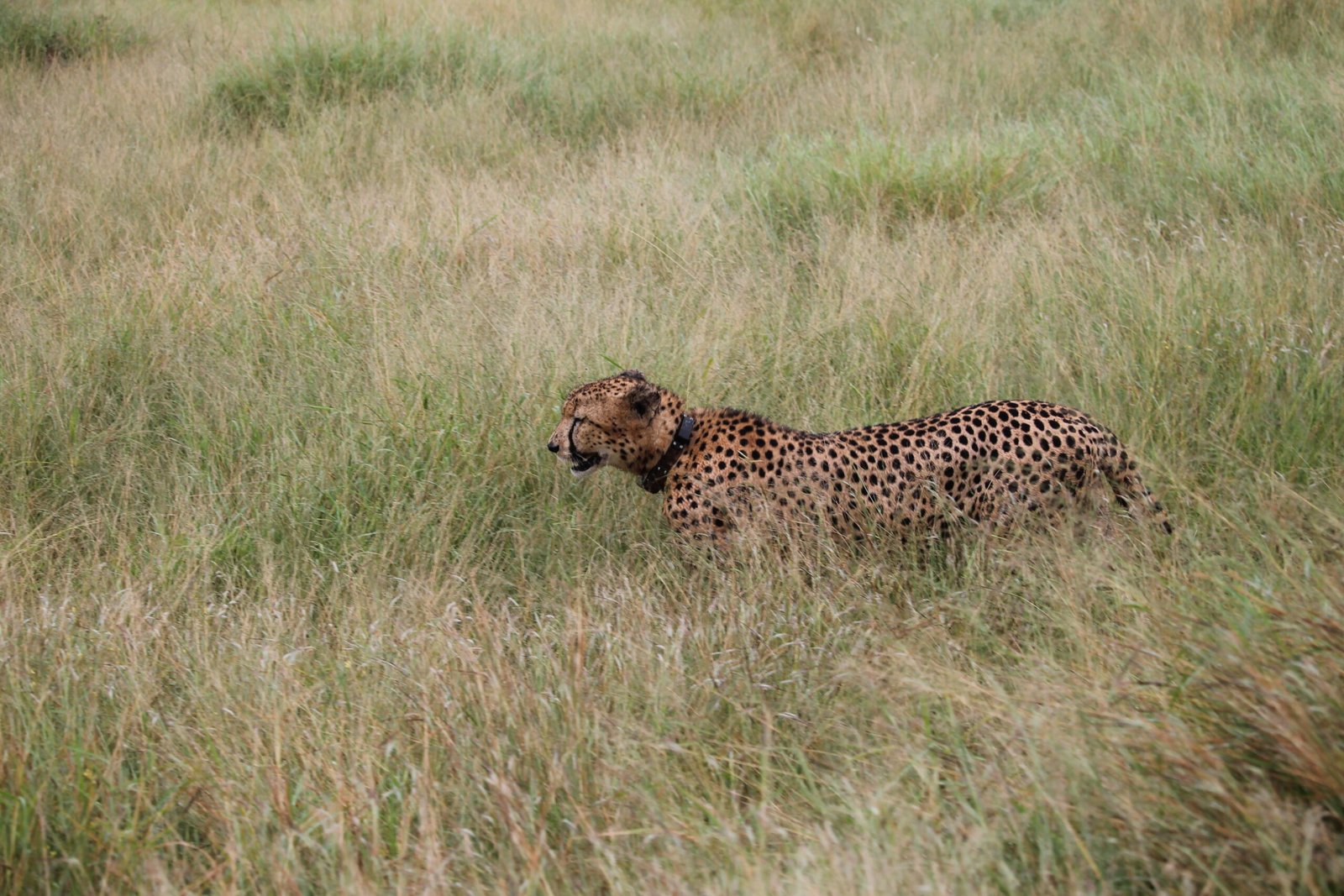
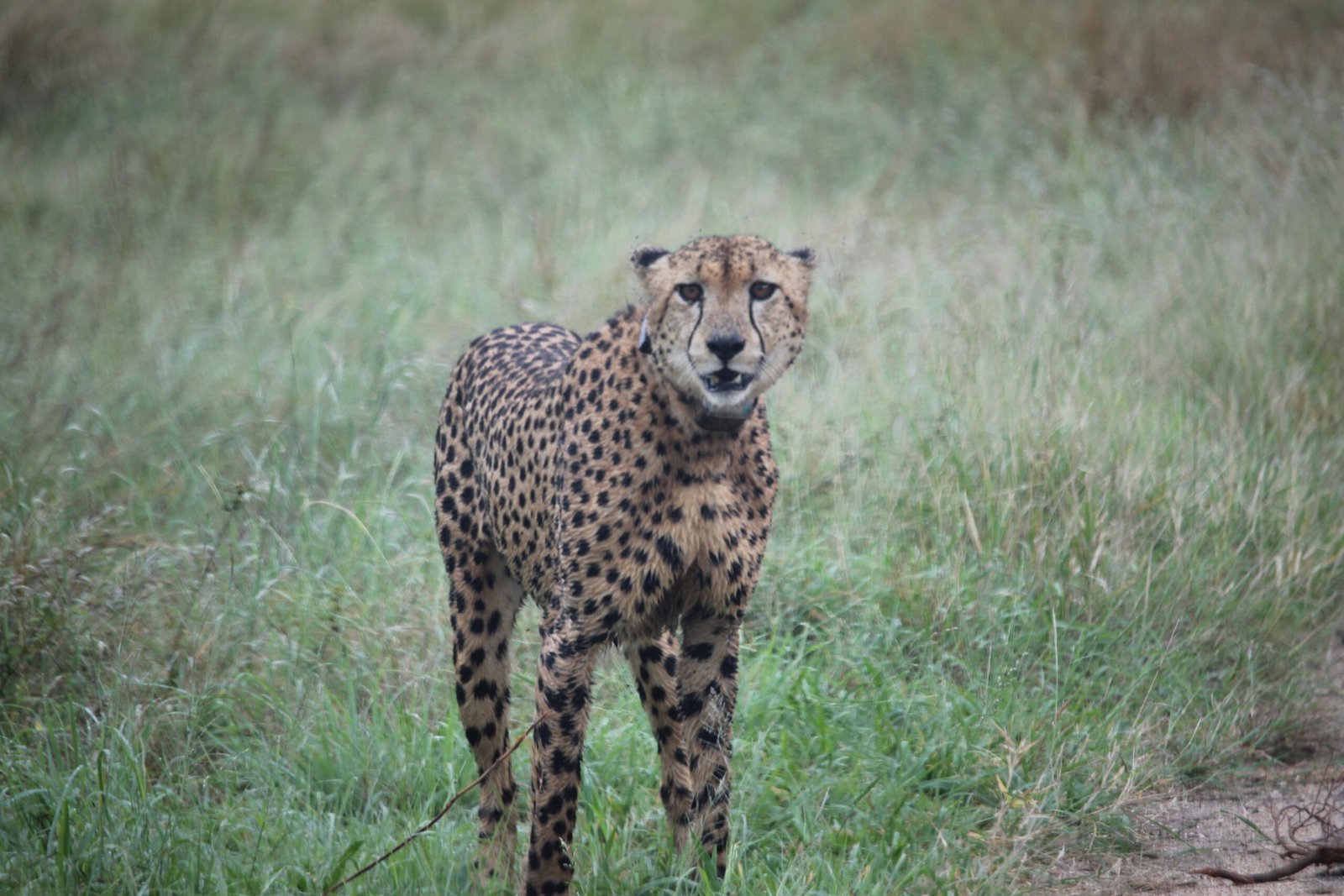
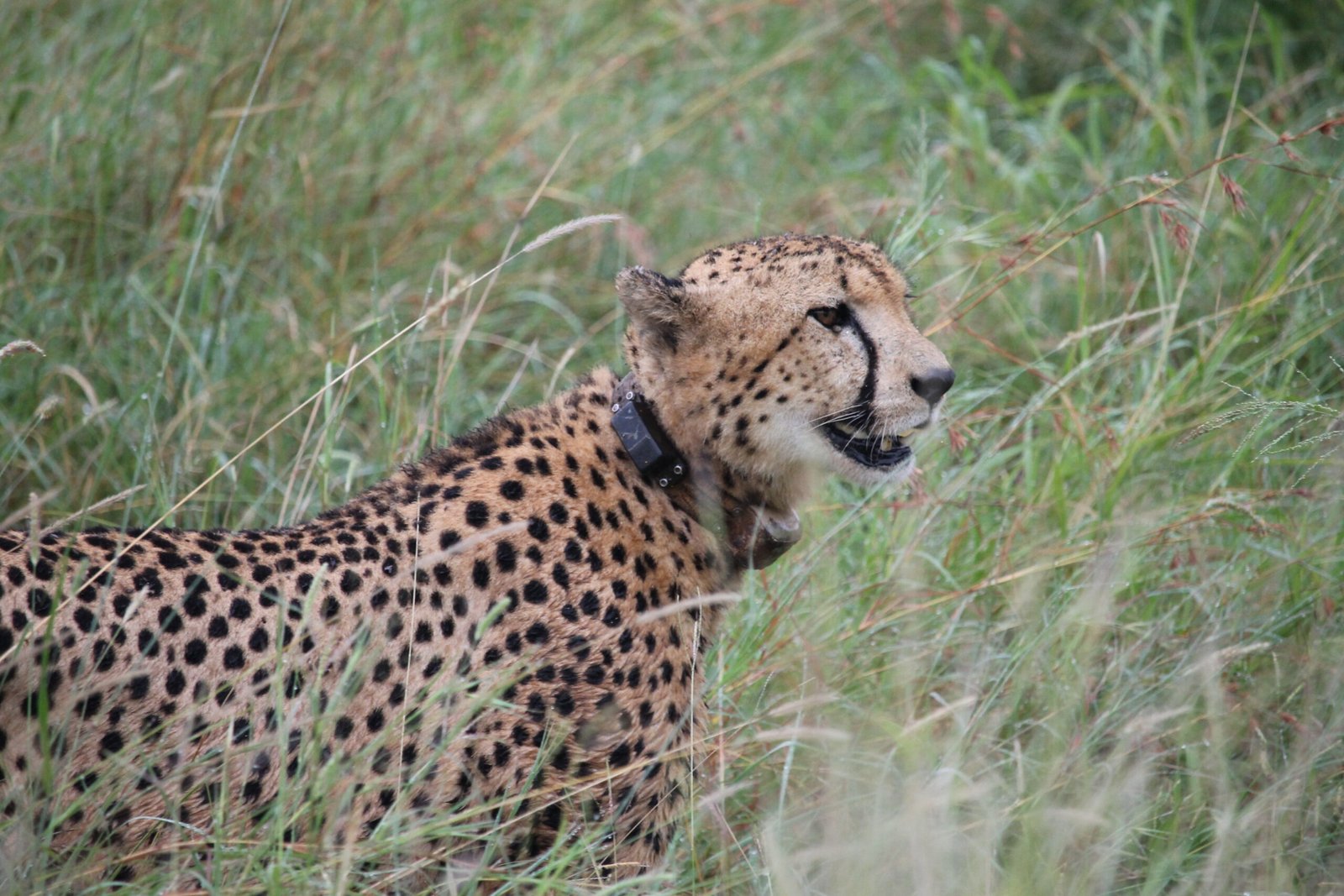
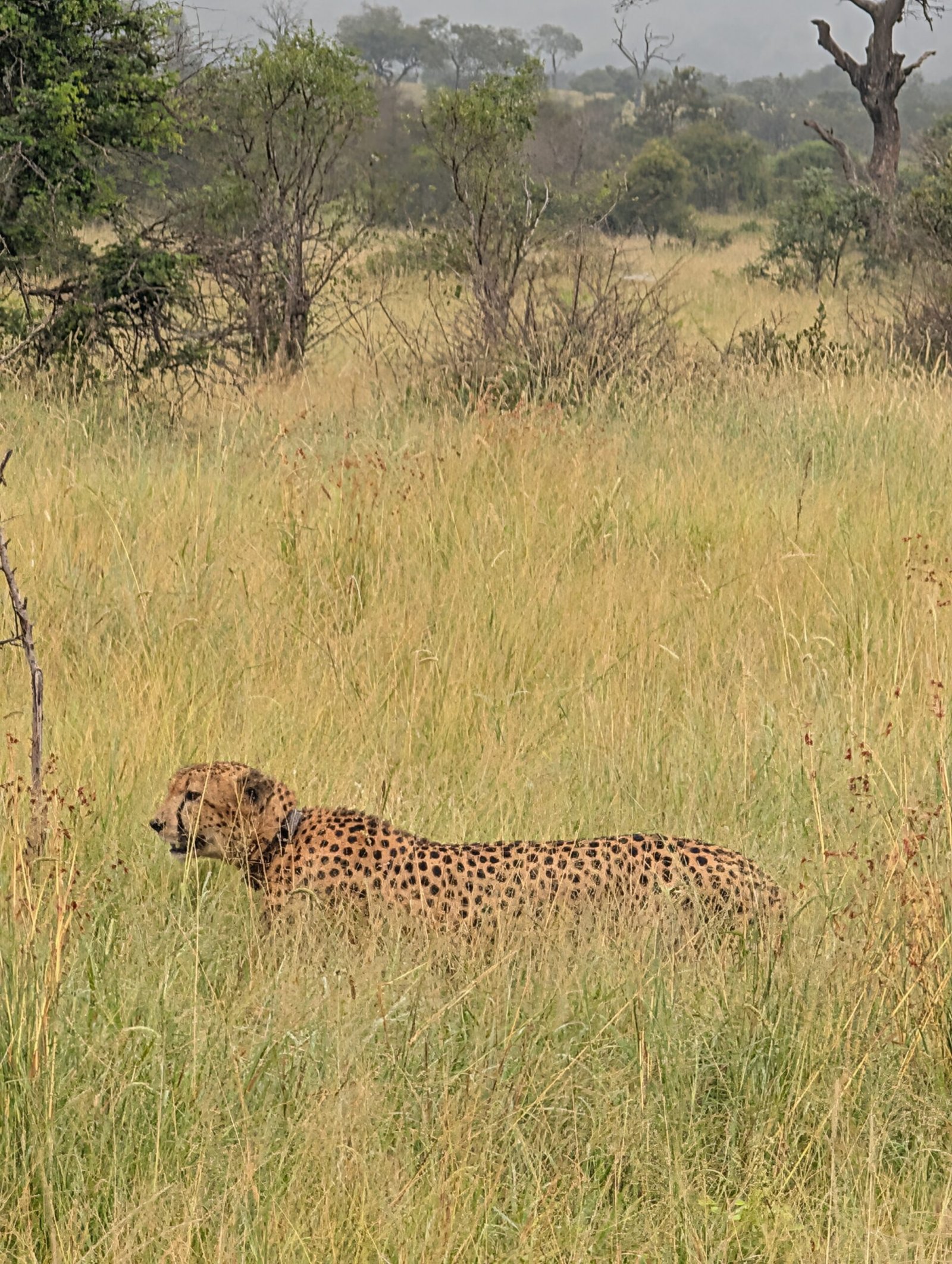
The area was getting crowded now — more cars pulling in, more lenses pointing — so we decided to leave the cheetah to its adoring public and take the S36 south towards Skukuza.
View this post on Instagram
The Long Road South
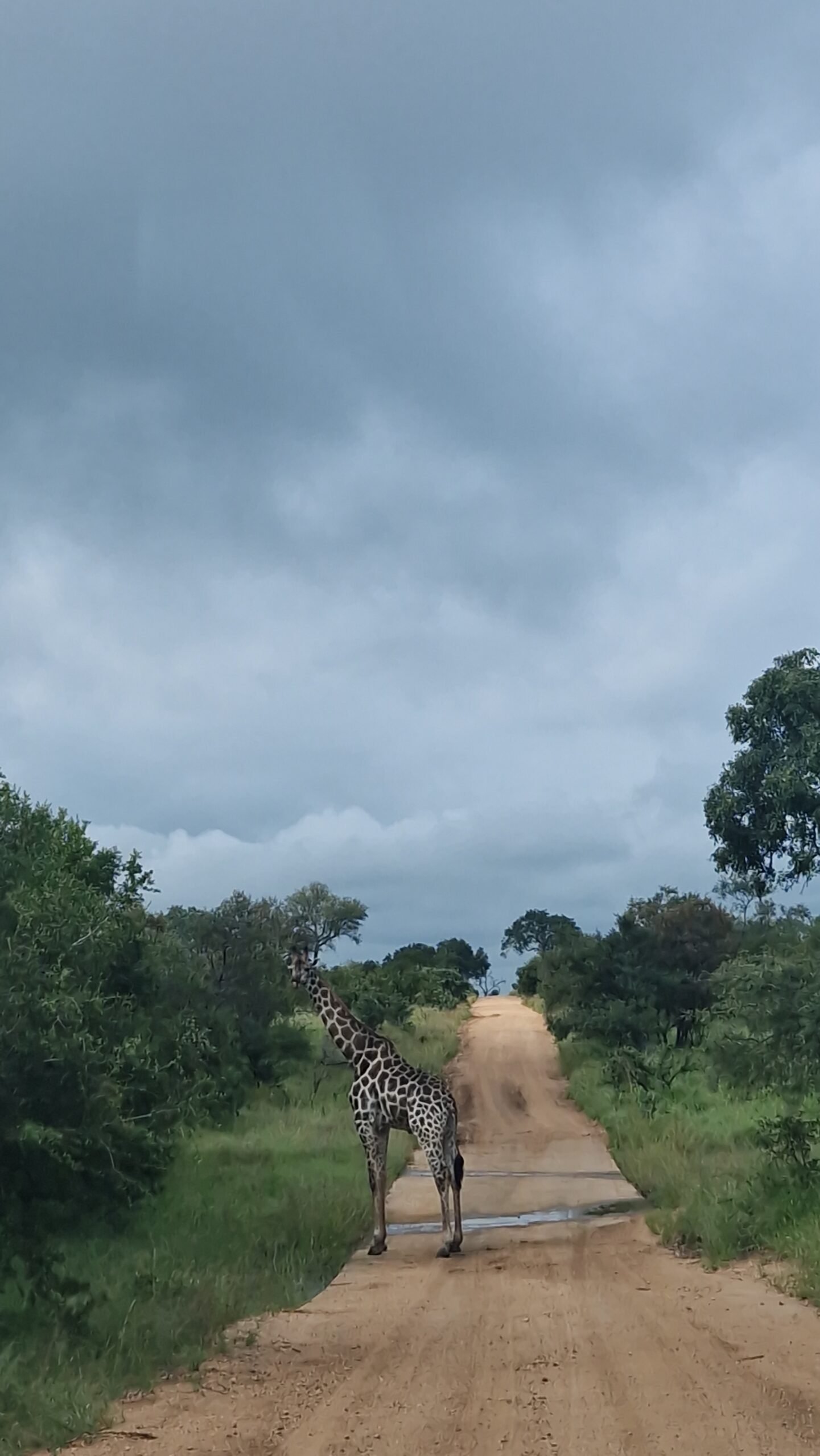
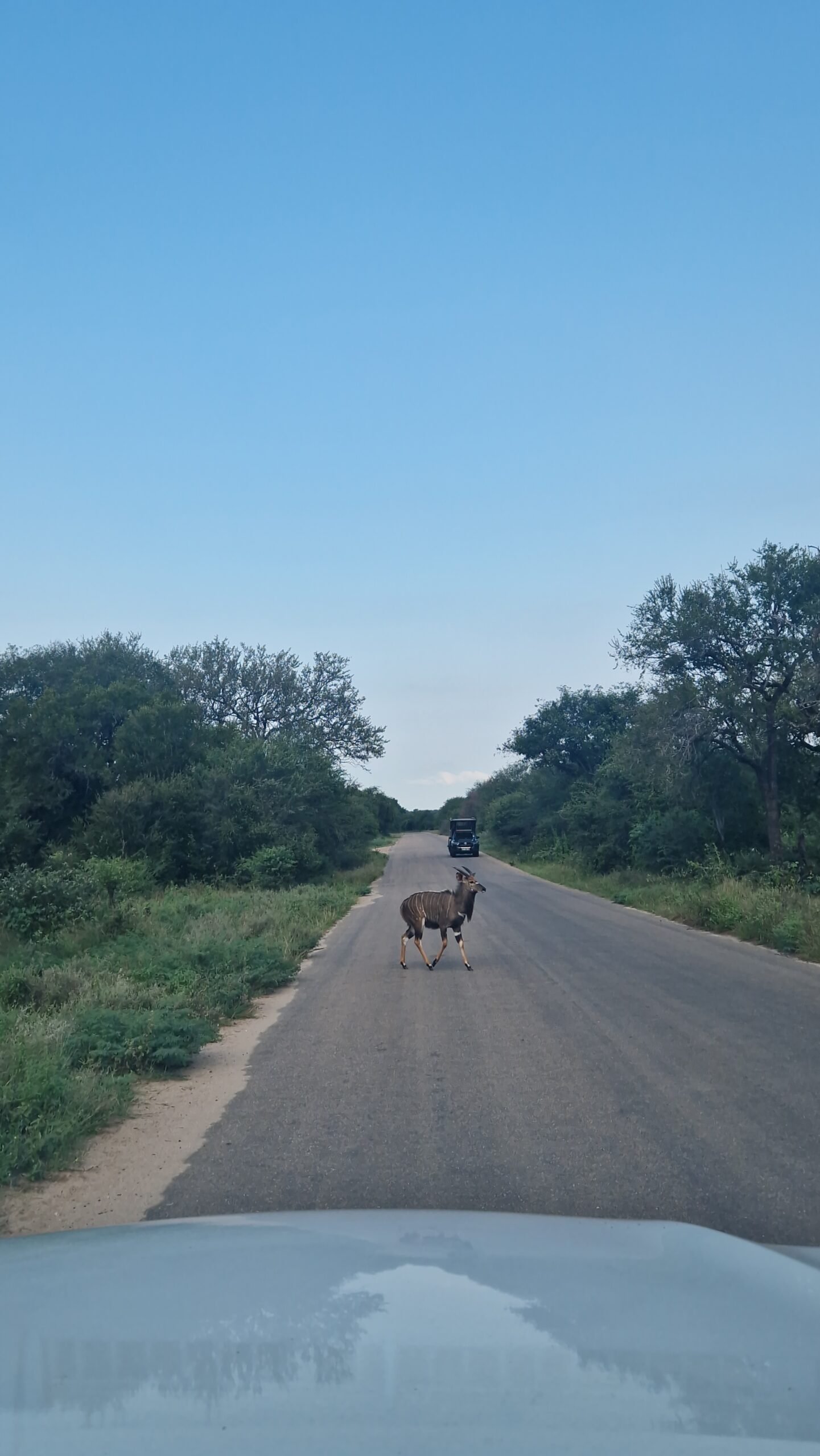
The S36 was as bumpy as we remembered — bone-rattling gravel that tested the Fortuner’s suspension and our patience in equal measure. The overcast conditions persisted, and the bush along this stretch remained quiet. A few impala here, a kudu there, but nothing that made us reach for the camera.
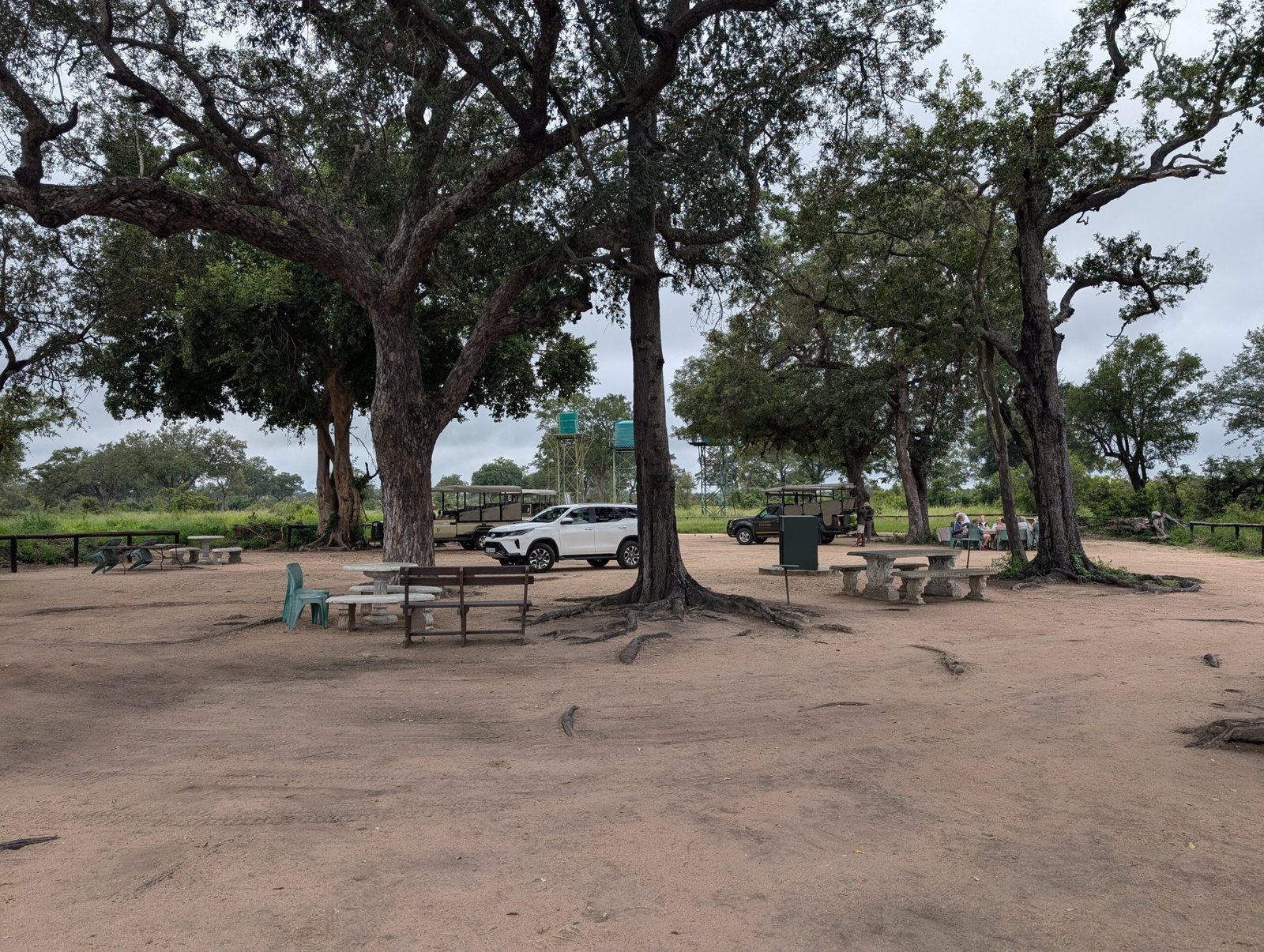
We stopped at a rest camp along the way — a welcome break for Addie, whose energy was flagging again, the blisters and the early start and the residual effects of her illness all conspiring to pull her towards sleep.A quick lunch. A stretch.
The midday sun finally broke through the clouds as we continued towards Skukuza, but by then the heat was high and the animals had retreated. We arrived at Skukuza Rest Camp in the early afternoon, checked in, and settled into our new base.
The H4-1 — Following the River, Following Instinct
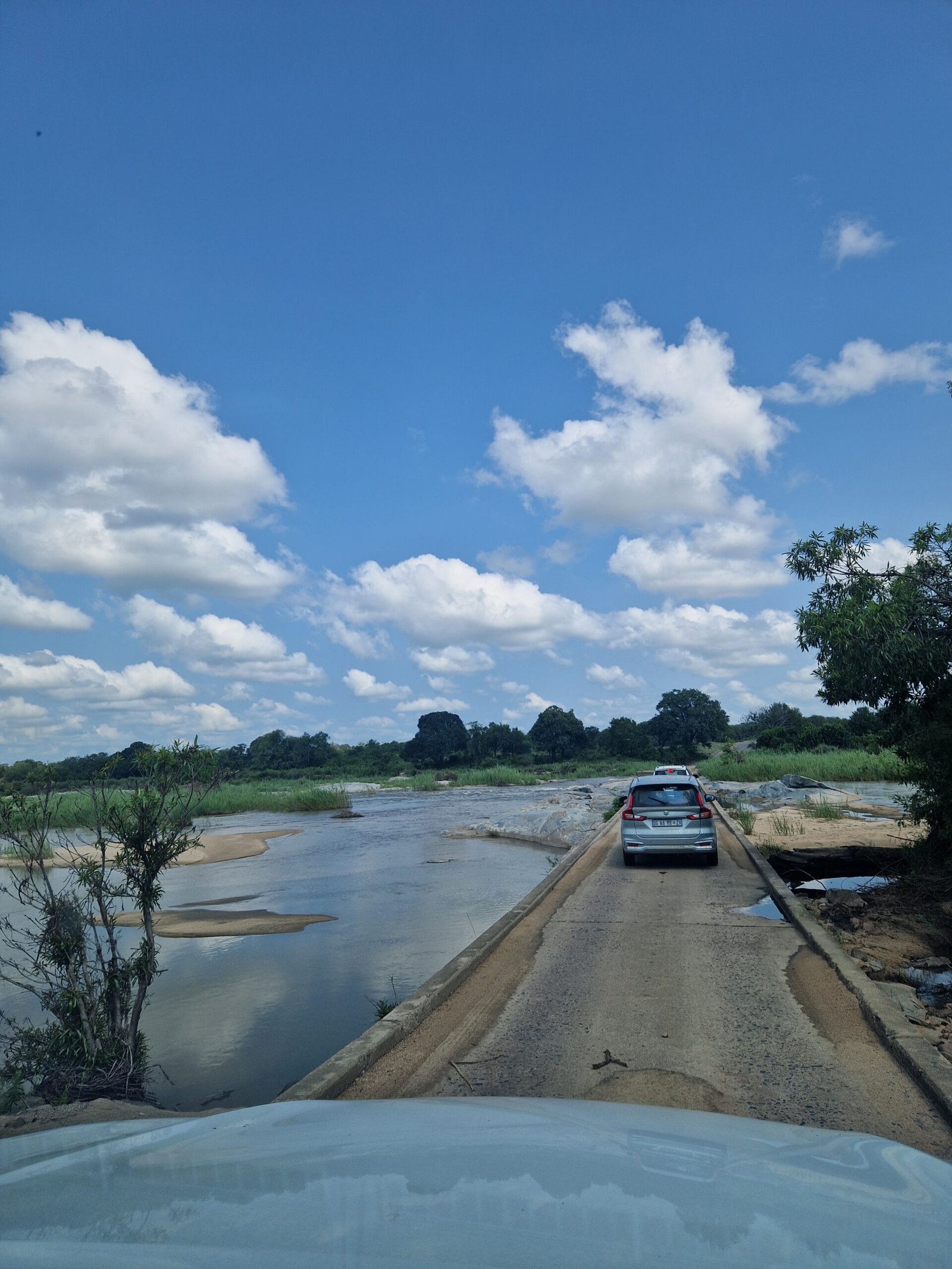
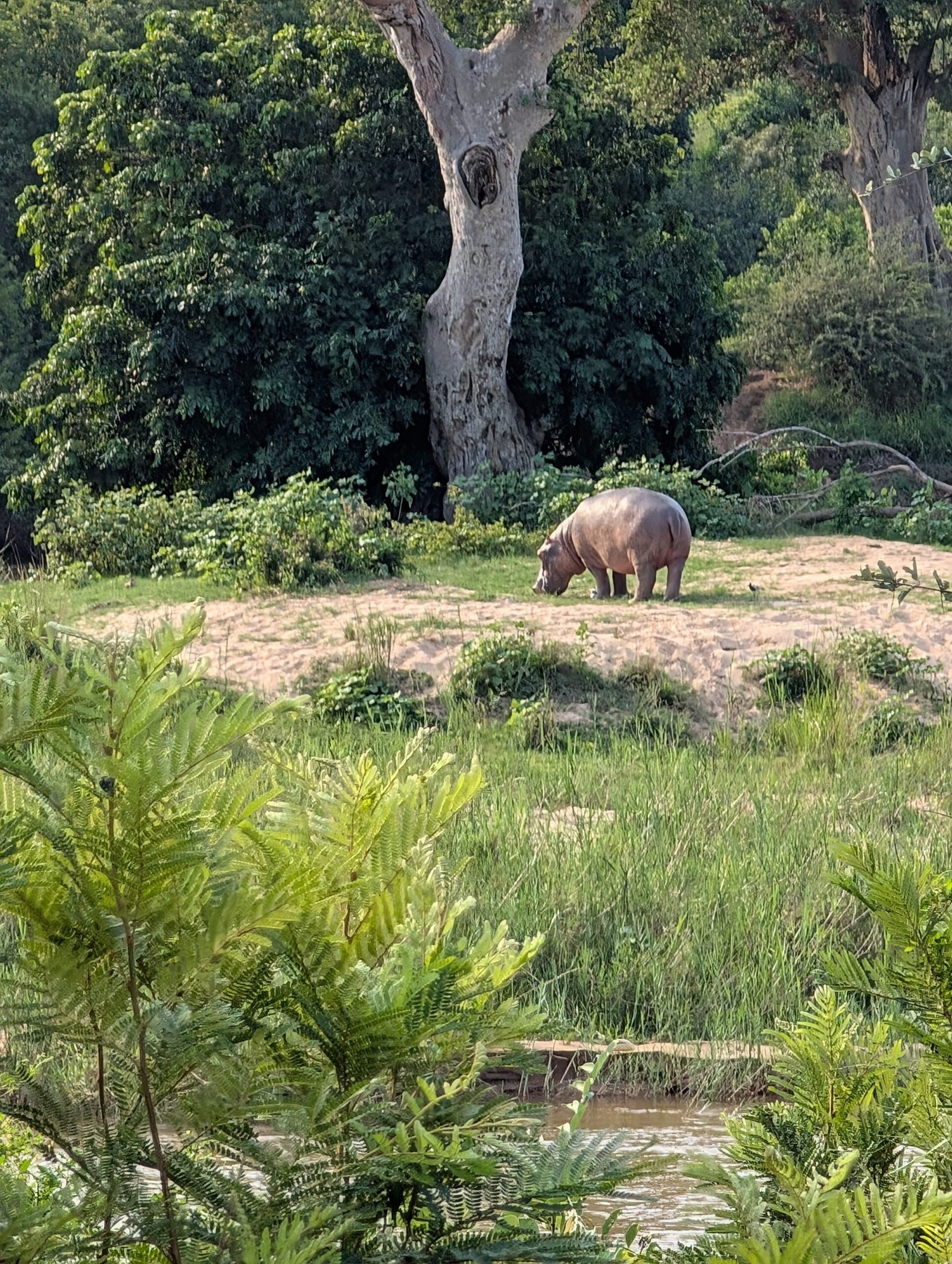
The afternoon called us back out. We took the H4-1, the tar road that follows the river towards Lower Sabie — one of Kruger’s most celebrated game-driving routes, where the Sabie River draws animals to its banks like a magnet.
The road was busy. Two safari jeeps were working the same stretch, their guides communicating via walkie-talkies — a network of information that private self-drivers like us can only envy. They know where the sightings are. They know which bend to watch. They have eyes everywhere.
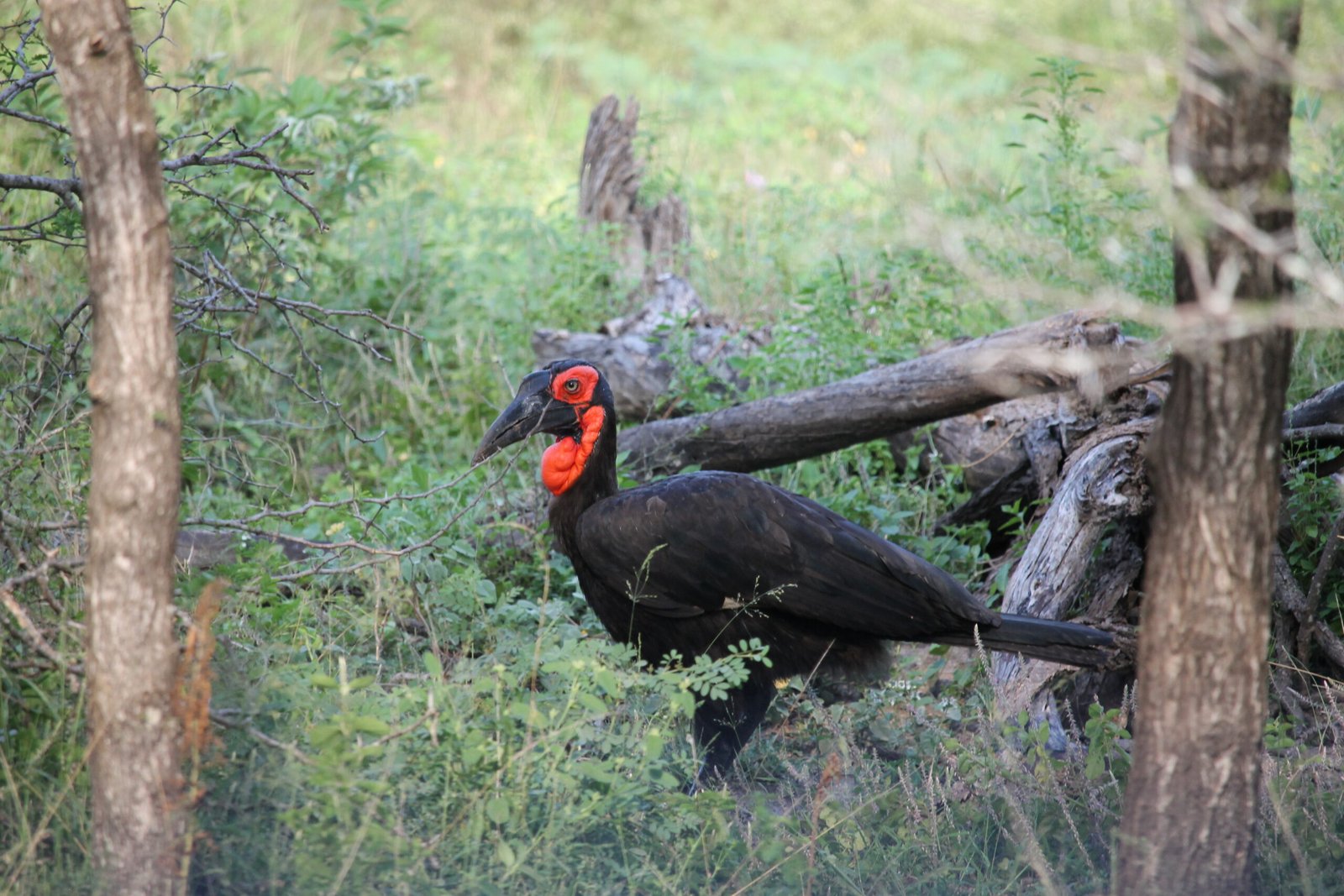
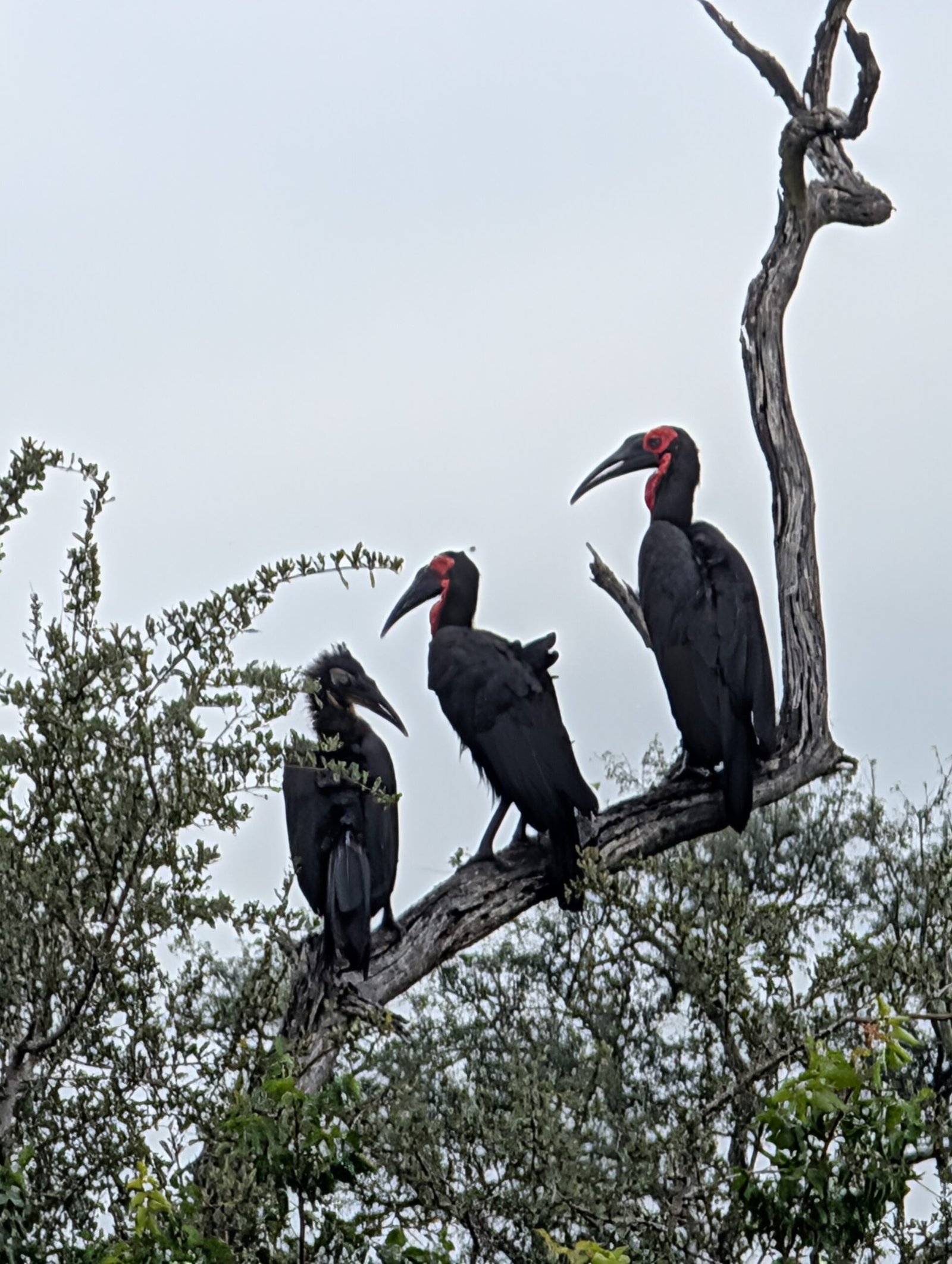
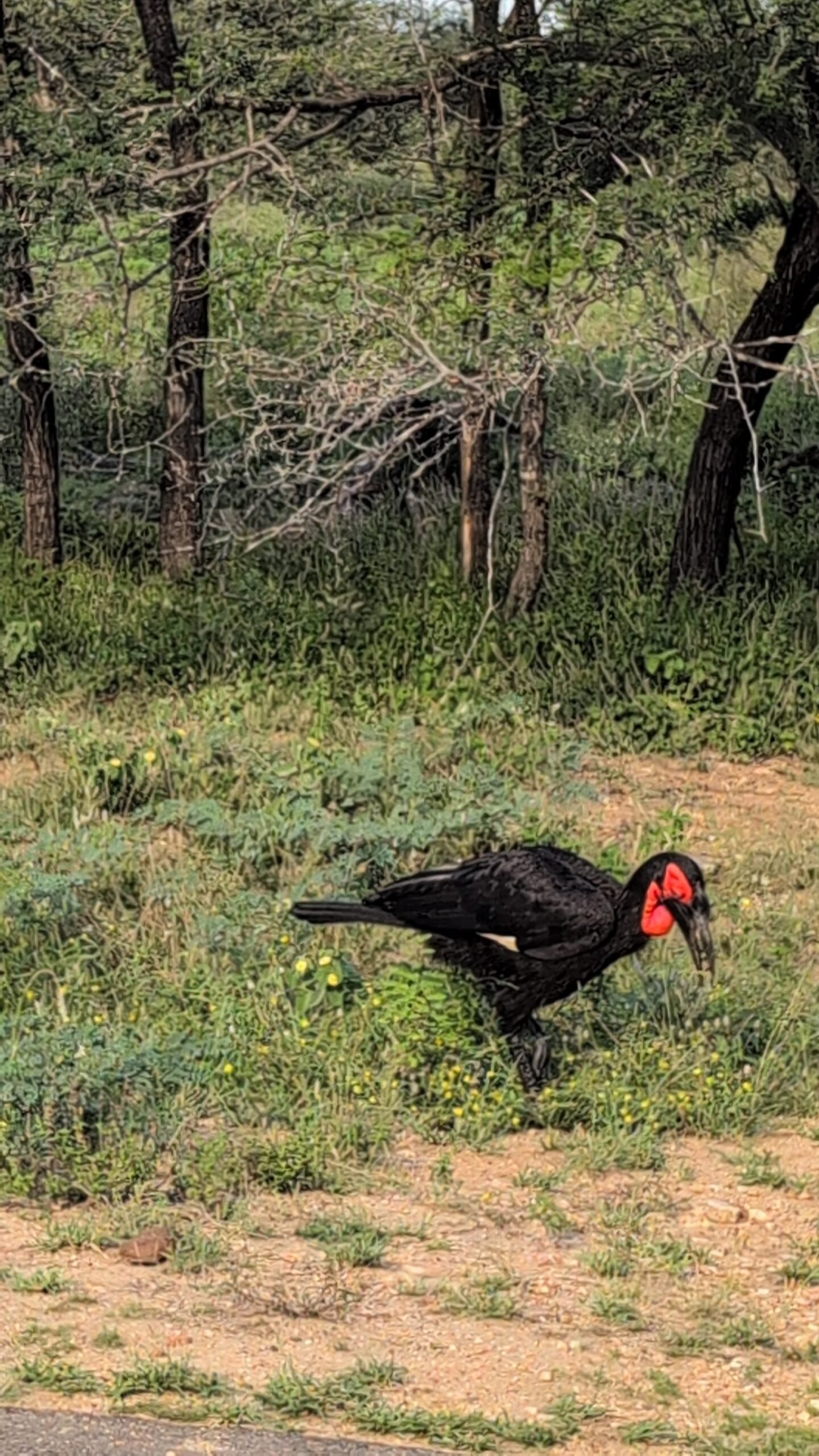
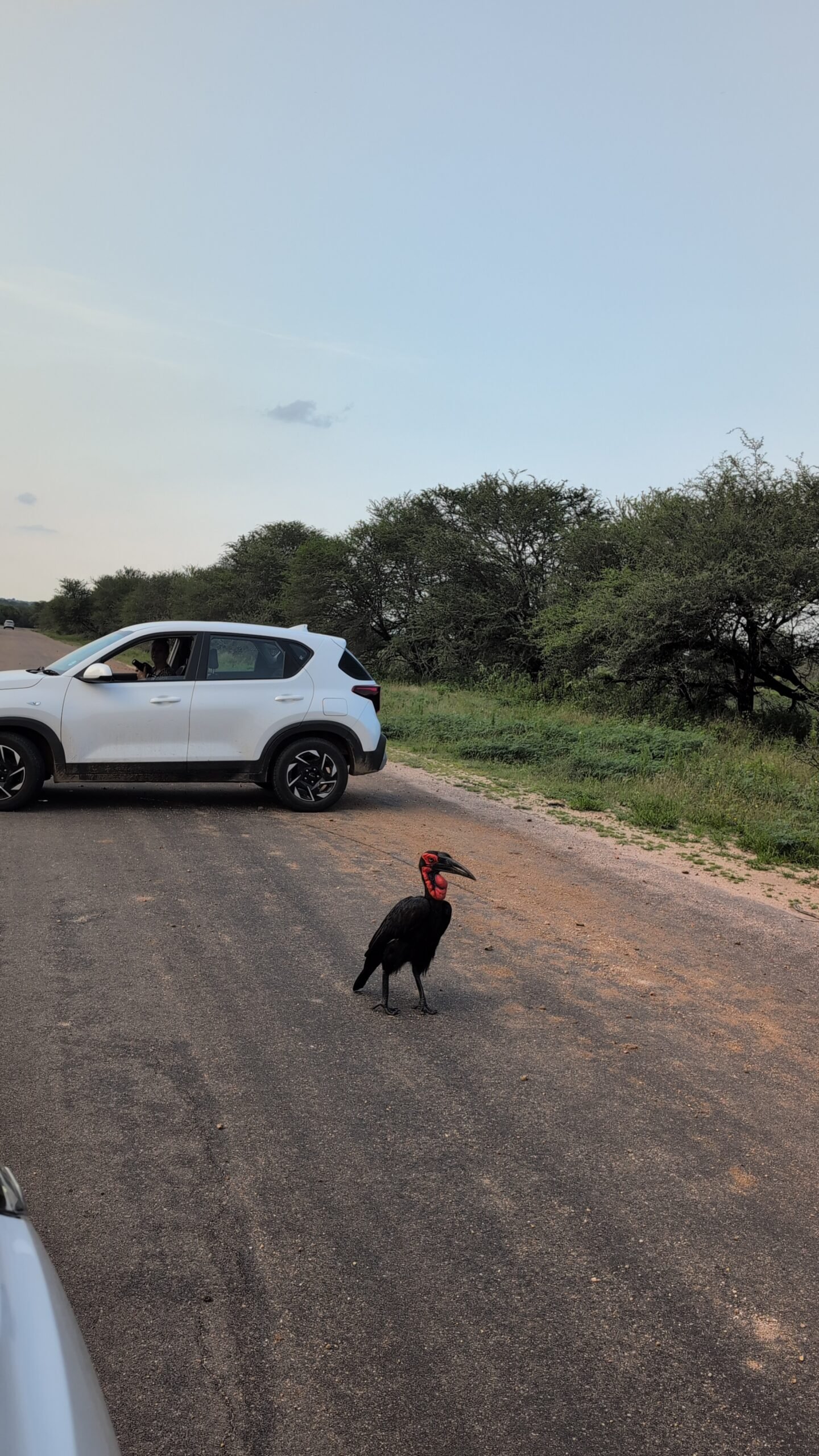
We followed at our own pace, enjoying the riverine scenery, stopping to watch a group of striking ground hornbills — massive black birds with vivid red faces, stalking through the grass with the serious, purposeful air of detectives investigating a crime scene. Addy was owning her checklist of all Kruger animals and was the one identifying these birds.
One of the safari vehicles were near us watching the hornbills alongside us and the was no where to be seen.And then — the one beside us suddenly turned around. Mid-road. Sharp U-turn. And accelerated back the way we’d come.My instincts fired.He’s got a message on the radio. Something’s been spotted. Behind us. Something we drove past.I didn’t hesitate. I swung the Fortuner around and followed.
The Leopard of Skukuza — A Sighting I Will Never Forget
Two or three cars had gathered by the roadside. Binoculars up. Cameras out. The familiar cluster.And there — emerging from the thick bush on one side of the road — was a leopard.Not a distant shape in a tree. Not a fleeting glimpse through binoculars. A leopard, in motion, crossing towards the road.
It walked with that unmistakable leopard gait — low, powerful, every muscle rolling beneath the rosette-patterned coat — and it crossed the road right behind our car. I spun in my seat and got the shot — the leopard mid-stride, captured from behind as it stepped off the tar and into the dense bush on the other side.
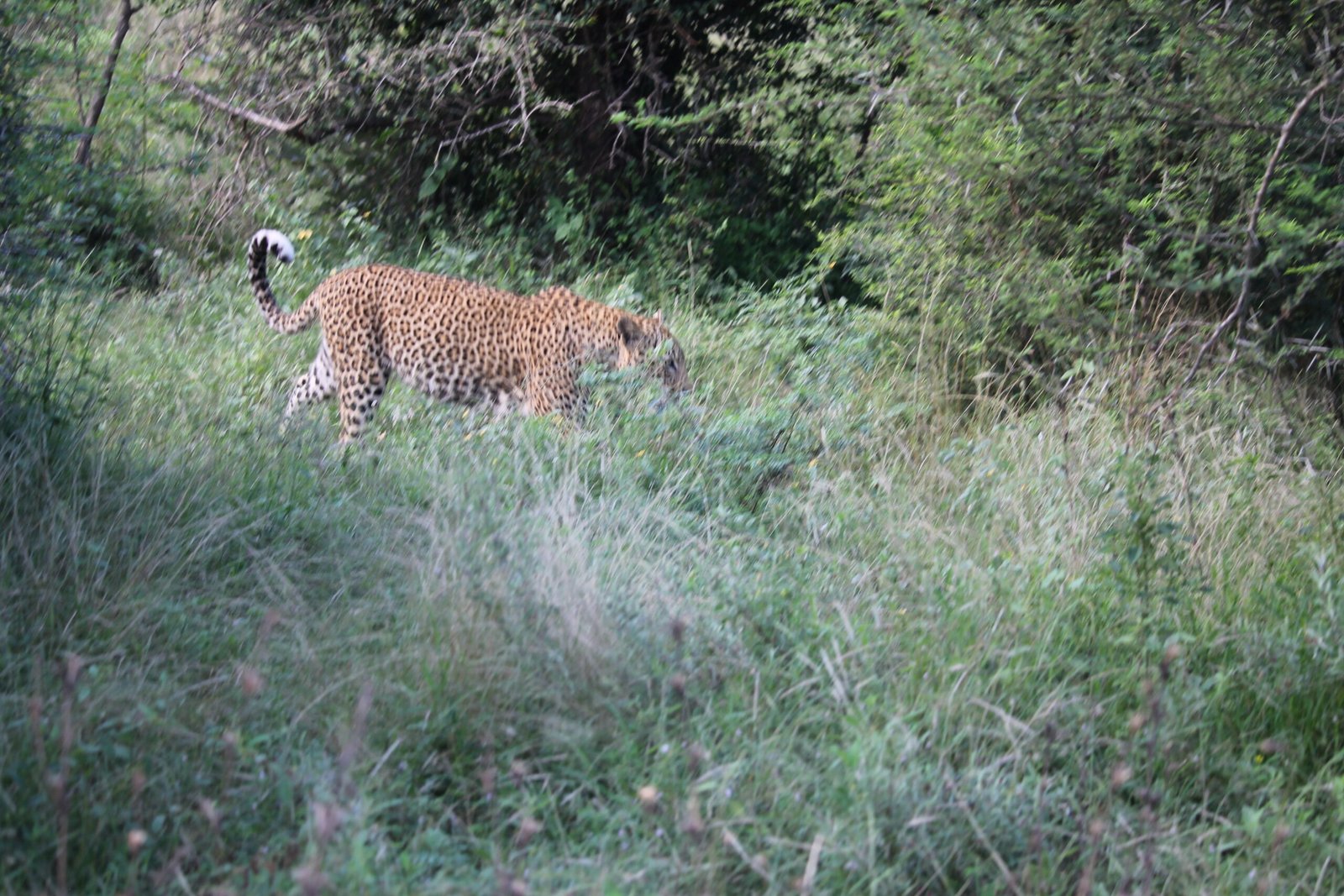
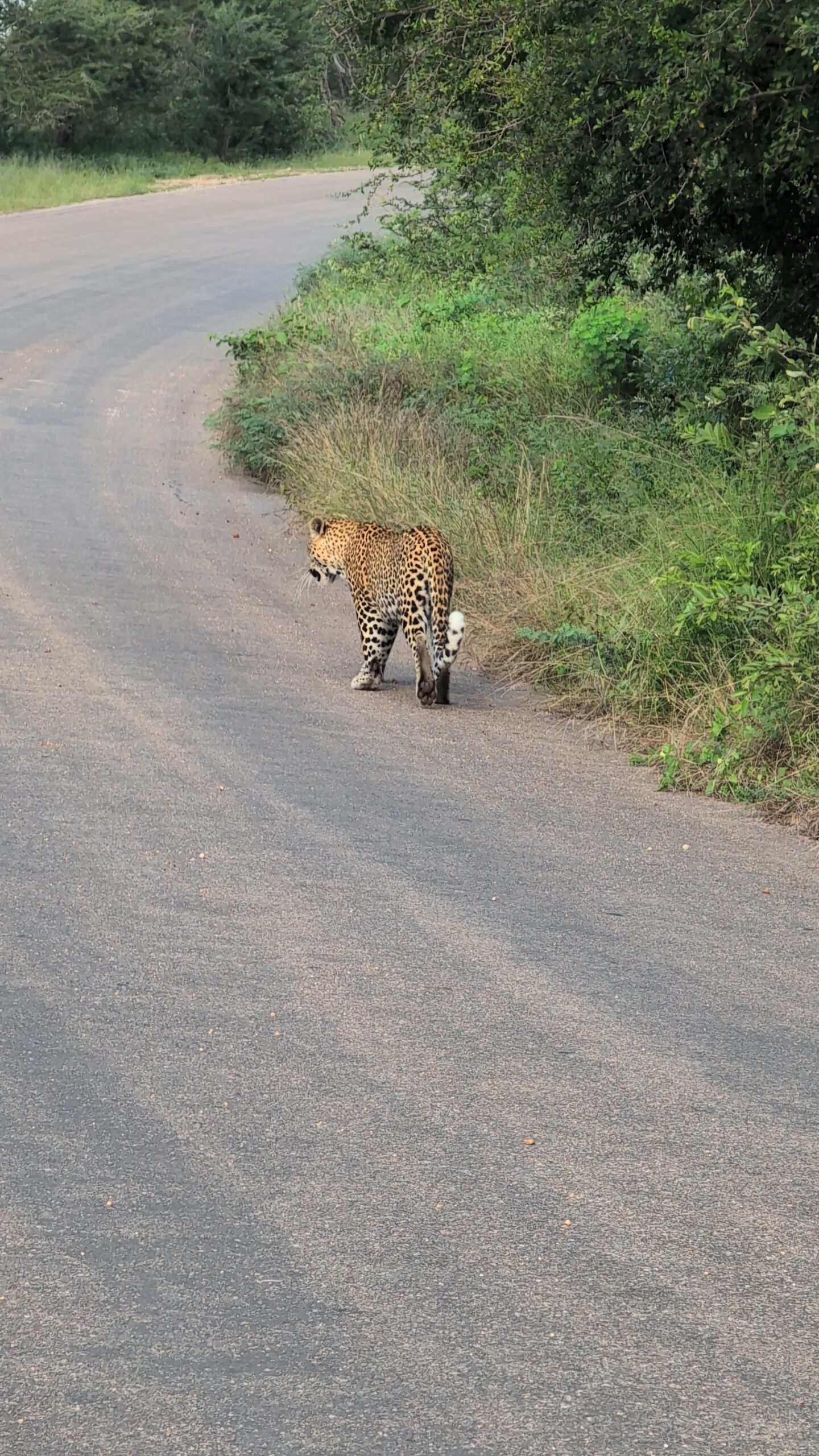
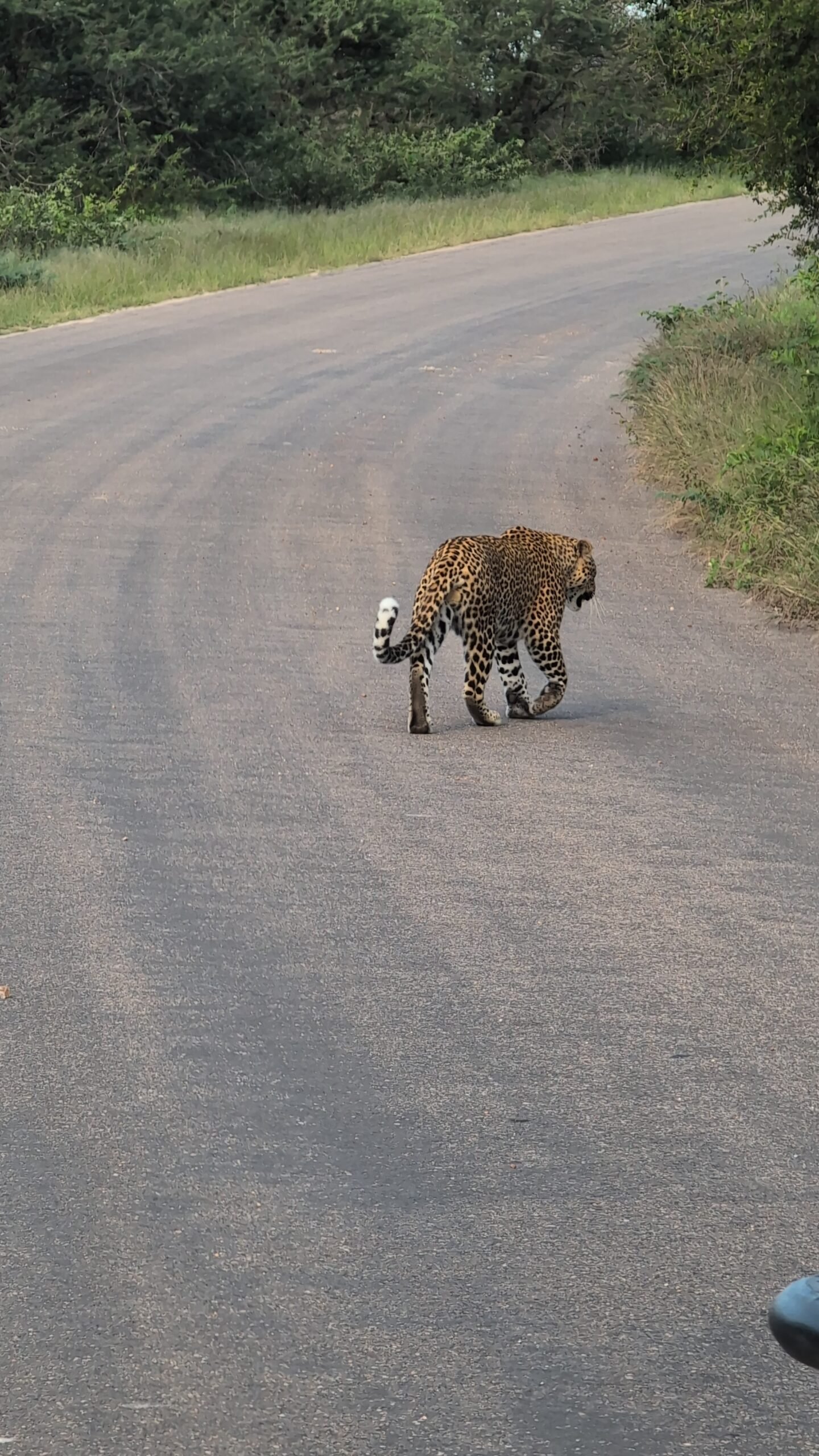
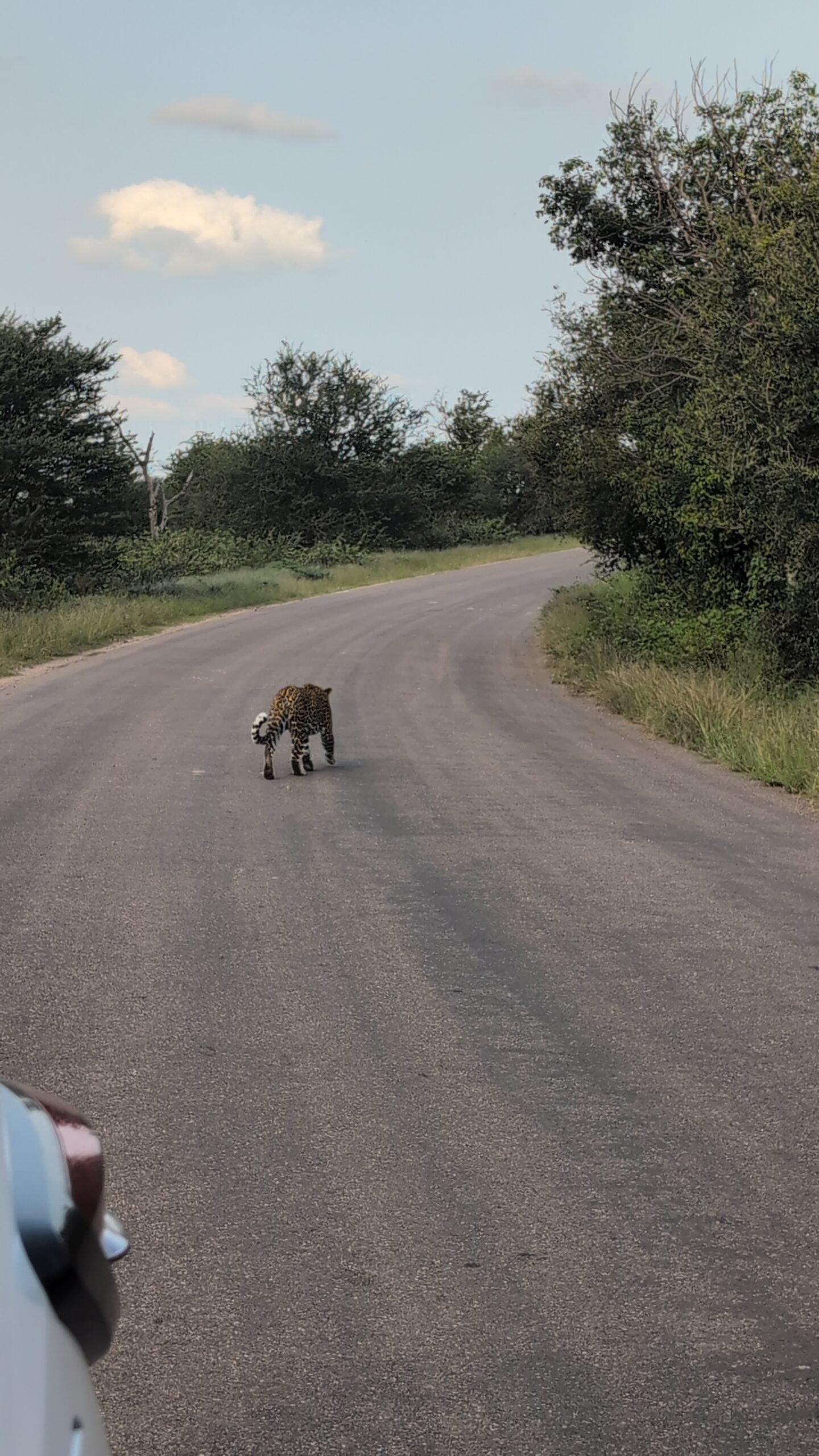
The Skukuza bush is thick. Far denser than Satara’s open woodland. The leopard slipped into the undergrowth and was swallowed whole. Ten, fifteen cars gathered now — everyone craning, scanning, pointing towards the narrow animal path where it had disappeared.Nothing. The bush was impenetrable. The leopard was gone.
One by one, the cars gave up. Five minutes. Ten. “It’s gone deep,” someone said. Engines started. Cars pulled away. Within minutes, every single vehicle had left.Every single one.
Except ours.
I turned the Fortunner around and parked it right next to the narrow path where the leopard had vanished. The exact spot. Inches from where it had entered the bush.My wife looked at me. She knew the look in my eyes by now — four days of safari had turned my stubbornness into something she’d learned to trust.
“You think it’s still there?”
“I know it’s still there.”
I lowered the window. Slowly. Quietly. We leaned out, scanning the undergrowth — the tangled grass, the low scrub, the shadows beneath the bushes. Looking for the faintest flicker of spotted fur.
And then my wife gasped.Not a small gasp. The kind that comes from somewhere primal — the kind that grabs your entire body and squeezes.
“Aldrin. It’s RIGHT HERE. It’s right here. IT’S RIGHT HERE.”
I followed her eyes downward. Down past the car door. Down past the wheel arch. Down to the narrow, grassy drainage channel that ran alongside the road, directly beneath our window.
The leopard was sitting right there.
Right there. Less than two metres below us. Hidden in the grass and shadow of the drainage path, completely invisible from any normal vantage point, completely missed by every car that had searched and given up.It was looking up at us.
Those eyes. My God, those eyes. Amber and green and ancient and utterly, paralysingly wild. Not aggressive. Not afraid. Just… aware. Watching us the way a leopard watches everything — with a calm, predatory intelligence that makes you understand, in the very marrow of your bones, that you are in the presence of something extraordinary.
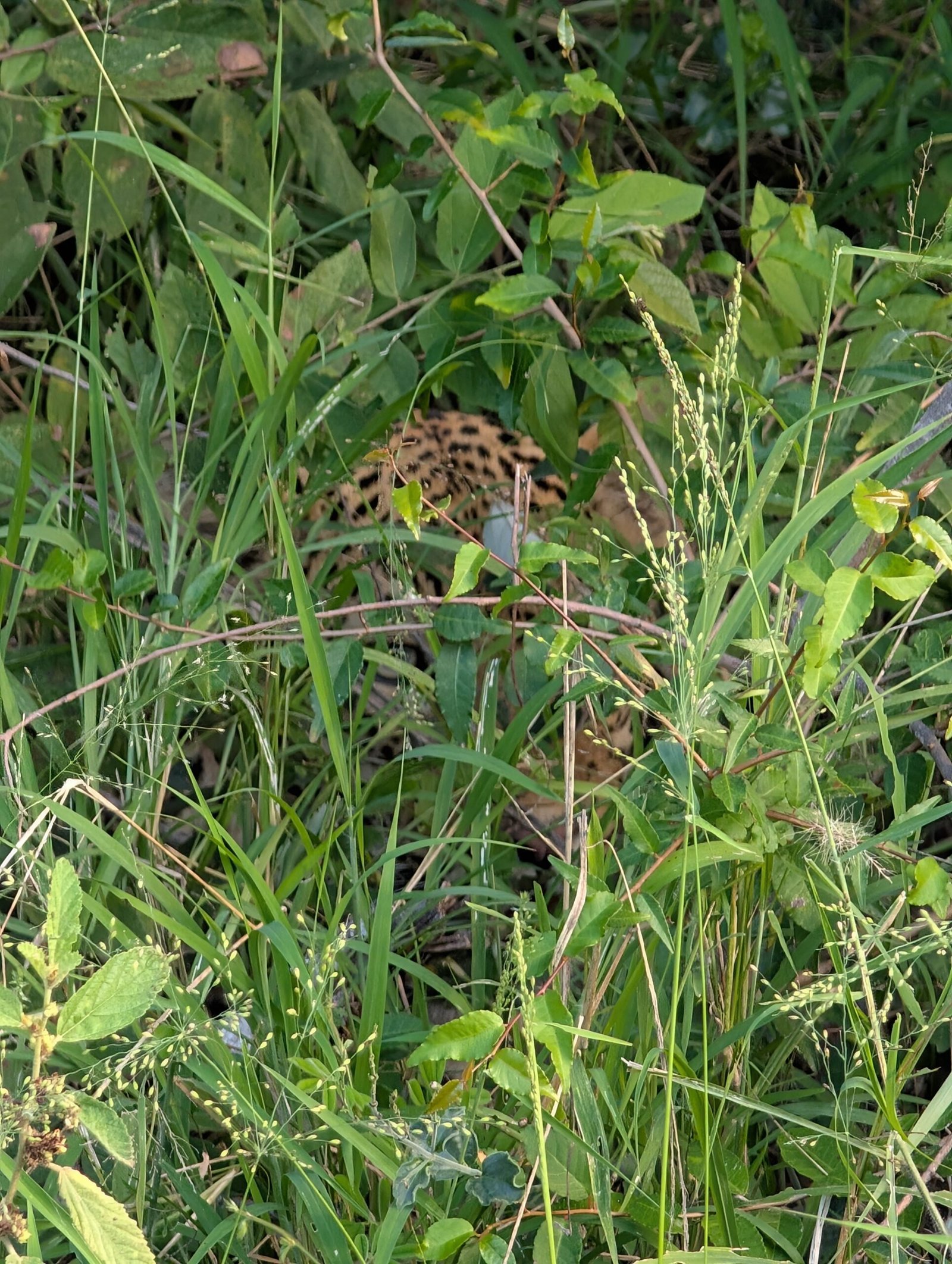
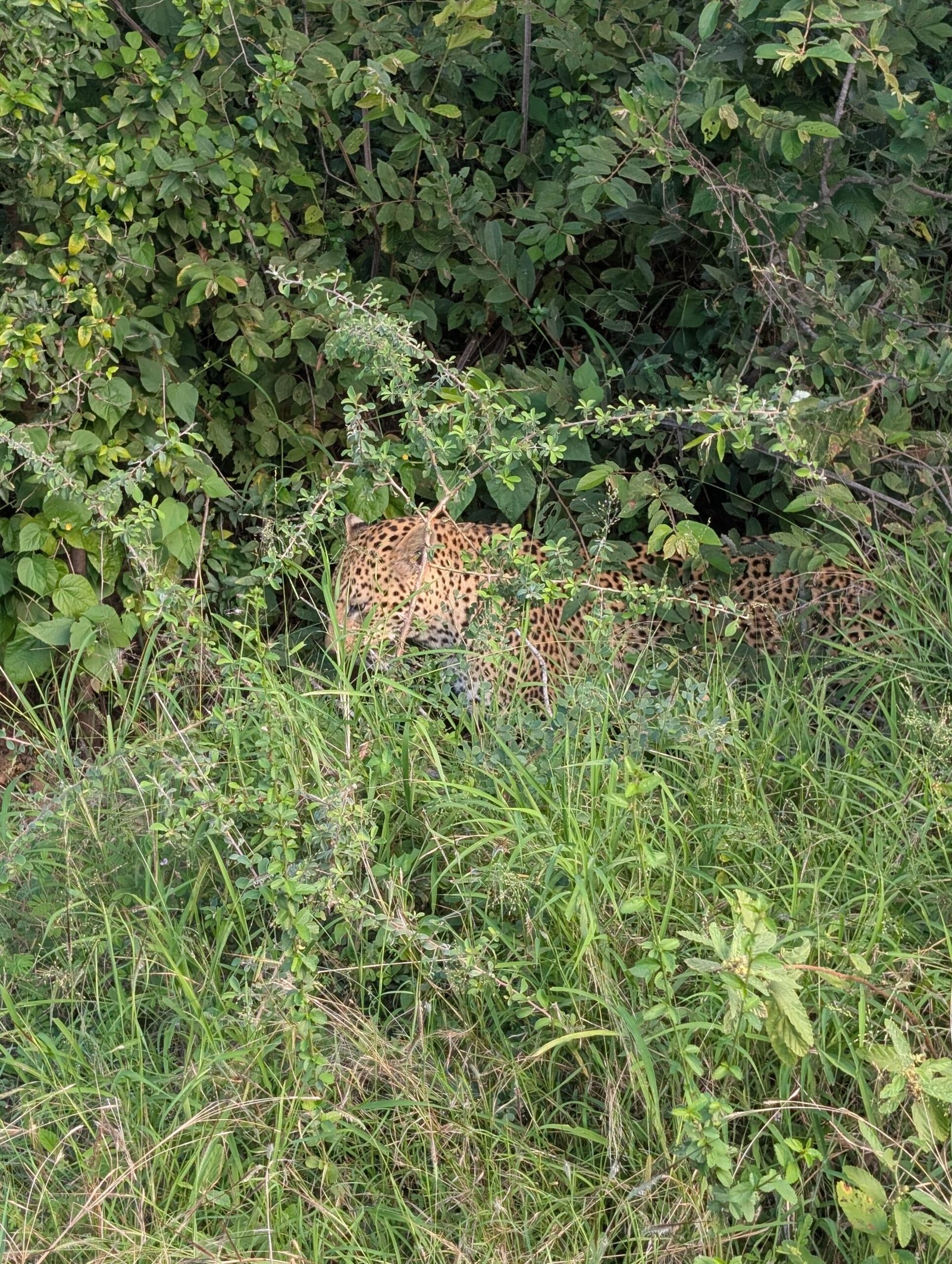
My heart stopped. Genuinely, physically, stopped for a beat.“Don’t move quickly,” I whispered. “Slow. Everything slow.”
Hear our hearts beat and feel the tension in the air –
The closest encounter with any wild cat we have ever had. Closer than the jaguars of the Pantanal. Closer than anything Tanzania’s Serengeti ever offered us.This was inches. This was breath-to-breath. This was a leopard choosing to sit beneath our window because we were the ones who stayed.
I’ve replayed this moment a hundred times since. And every time, I come back to the same truth:Two decisions made this happen.
First: when the safari jeep turned around, I followed. I trusted the instinct that said something is back there. I didn’t overthink it. I didn’t hesitate. I turned the car and followed the signal.
Second: when every other car left, we stayed. The same lesson the bush had been teaching us since Day 1. Patience. Patience. Patience. The leopard hadn’t gone deep. It hadn’t fled. It had simply done what leopards do — it had found the nearest shadow and become invisible. And when the noise of fifteen cars faded and the road fell silent, it settled in to wait.
We were the only ones who waited with it.The bush doesn’t give its greatest gifts to the fastest, or the loudest, or the ones with the longest lenses. It gives them to the ones who stay.
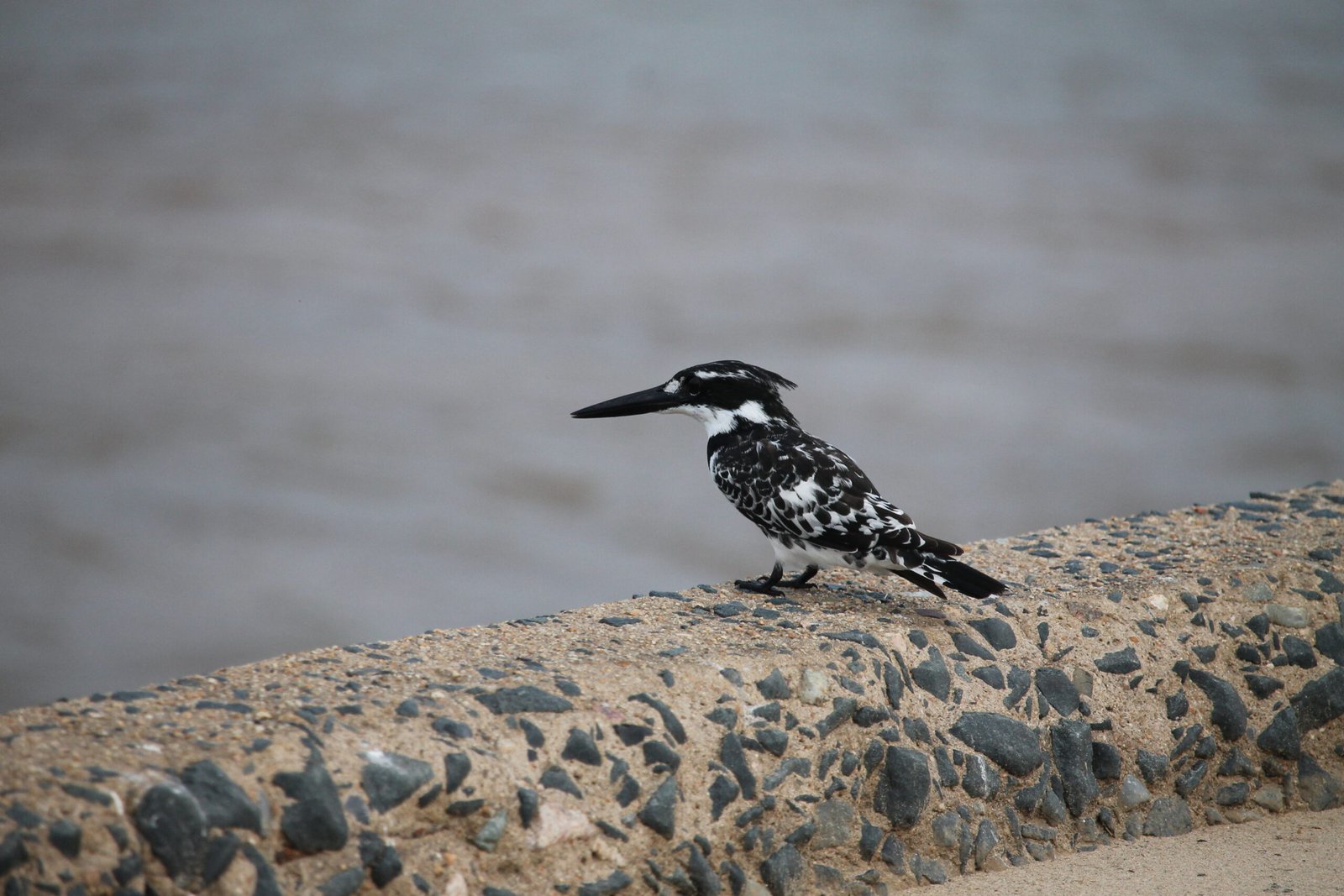
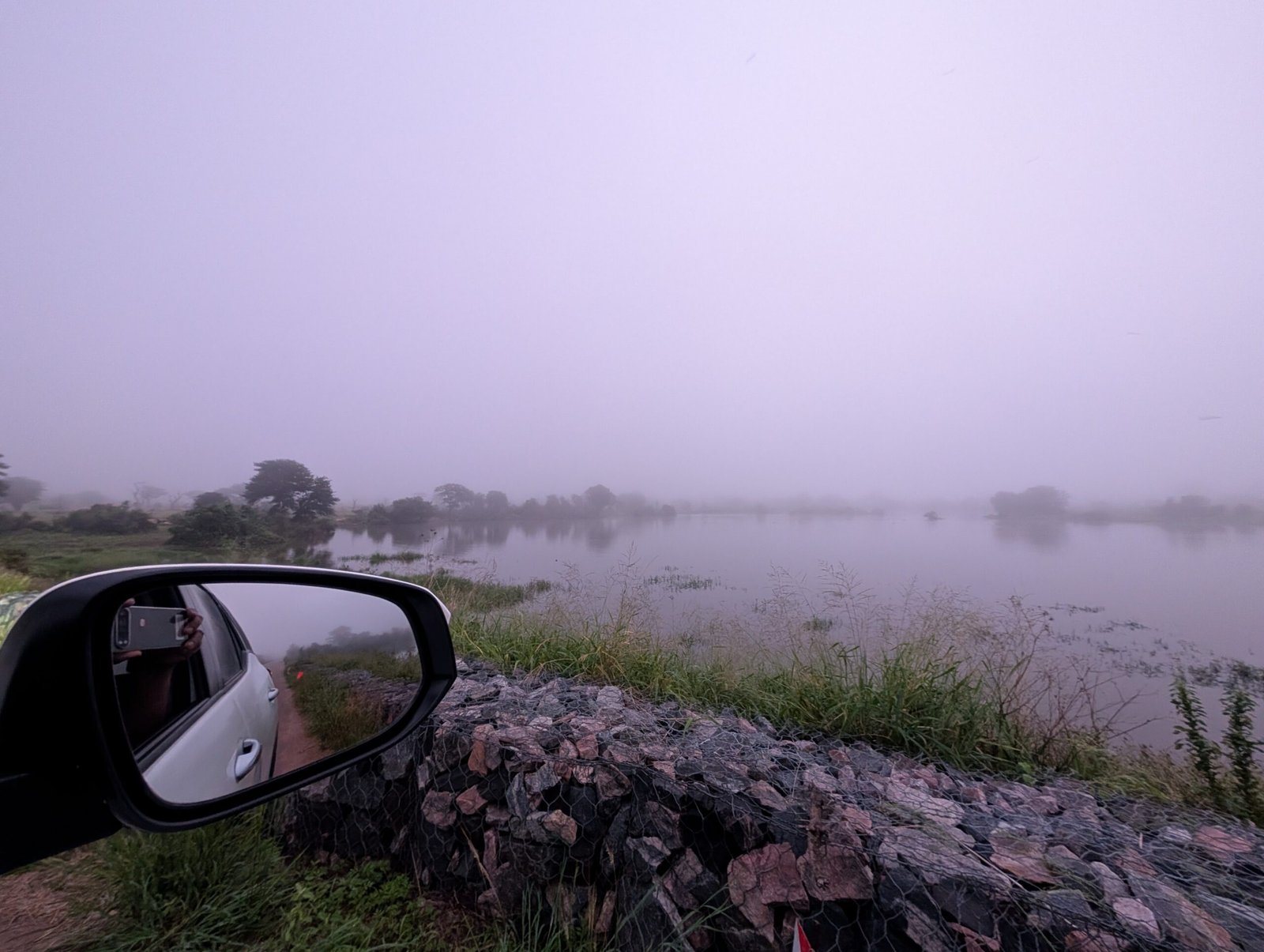
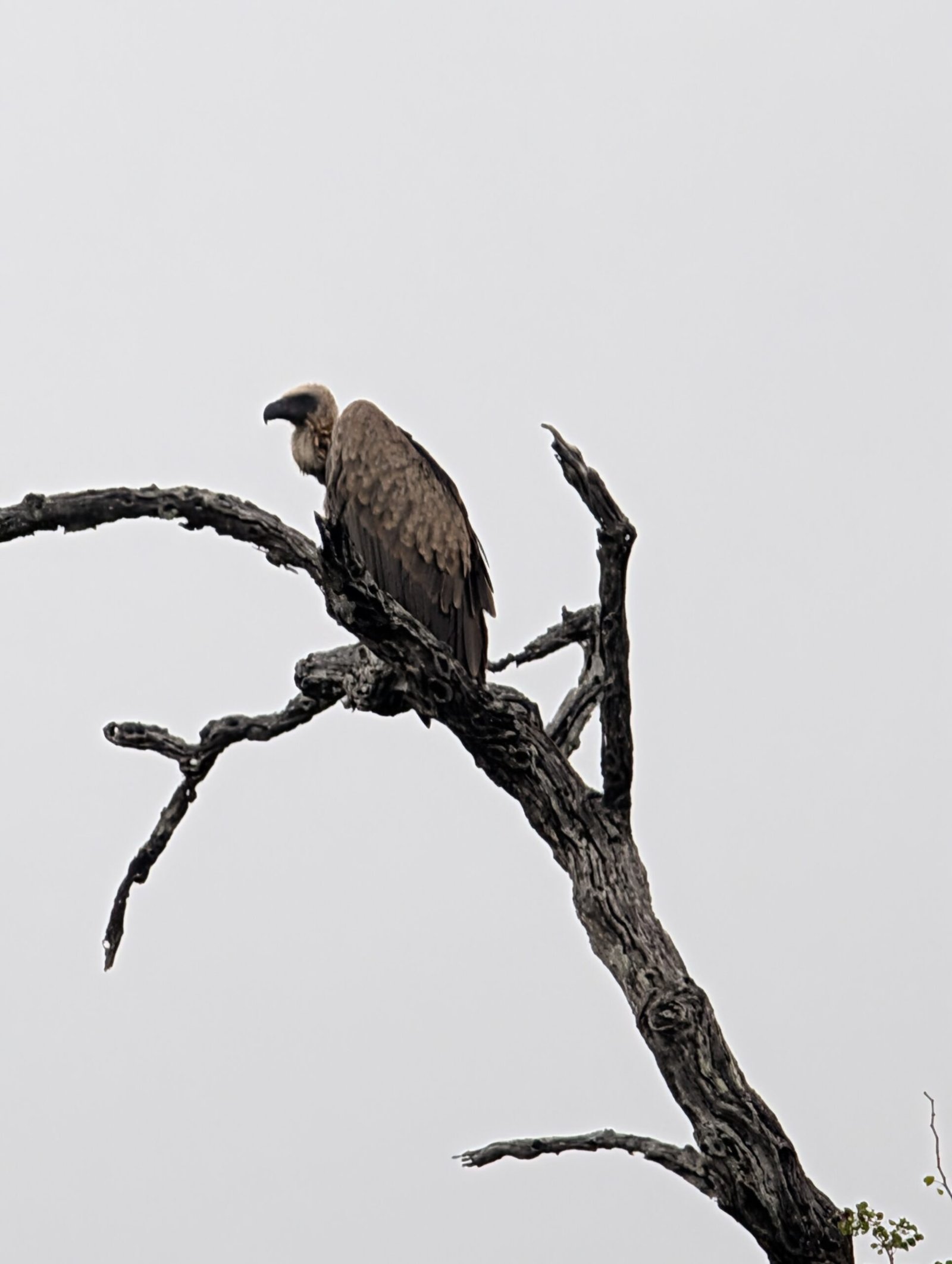
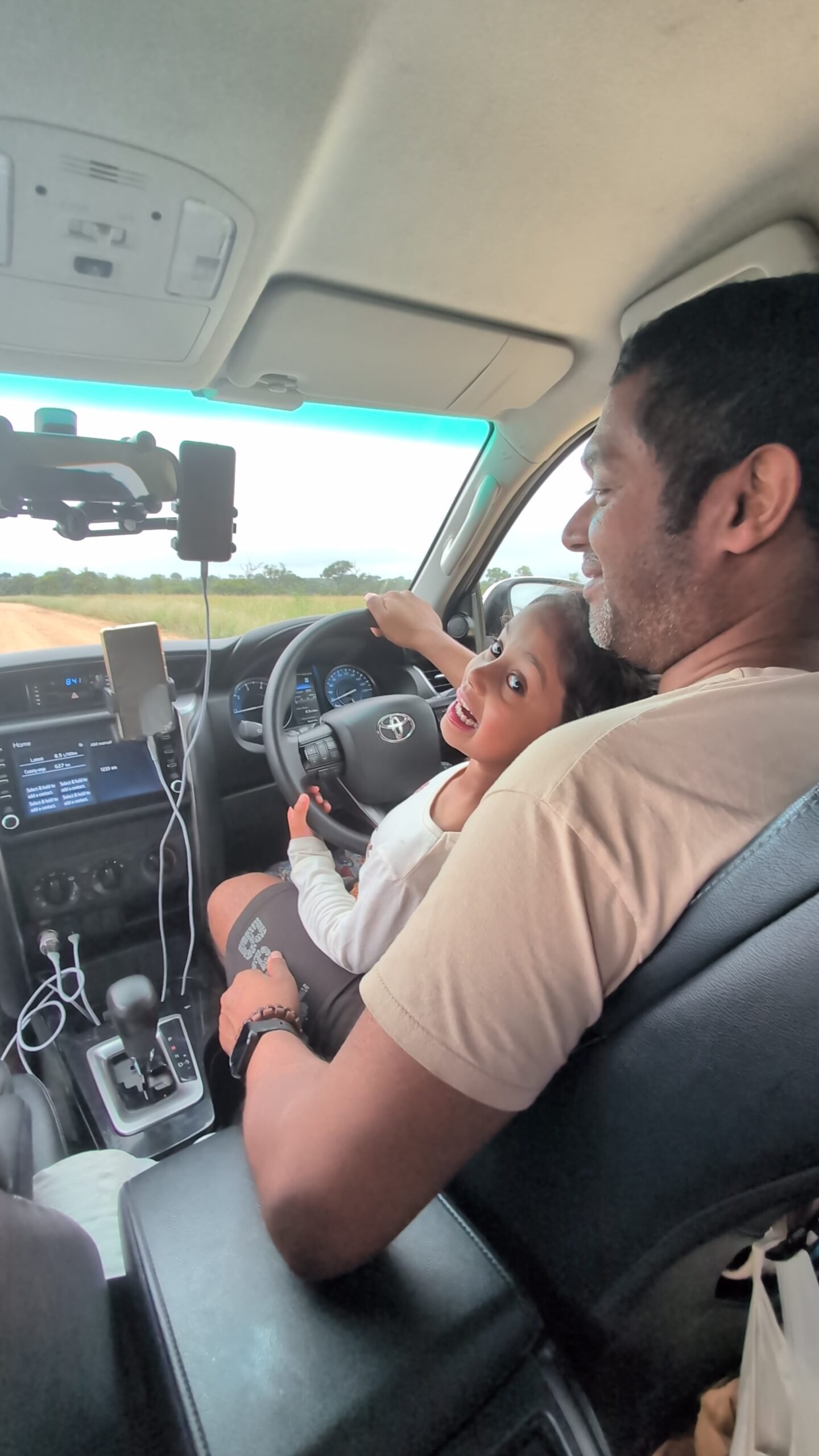
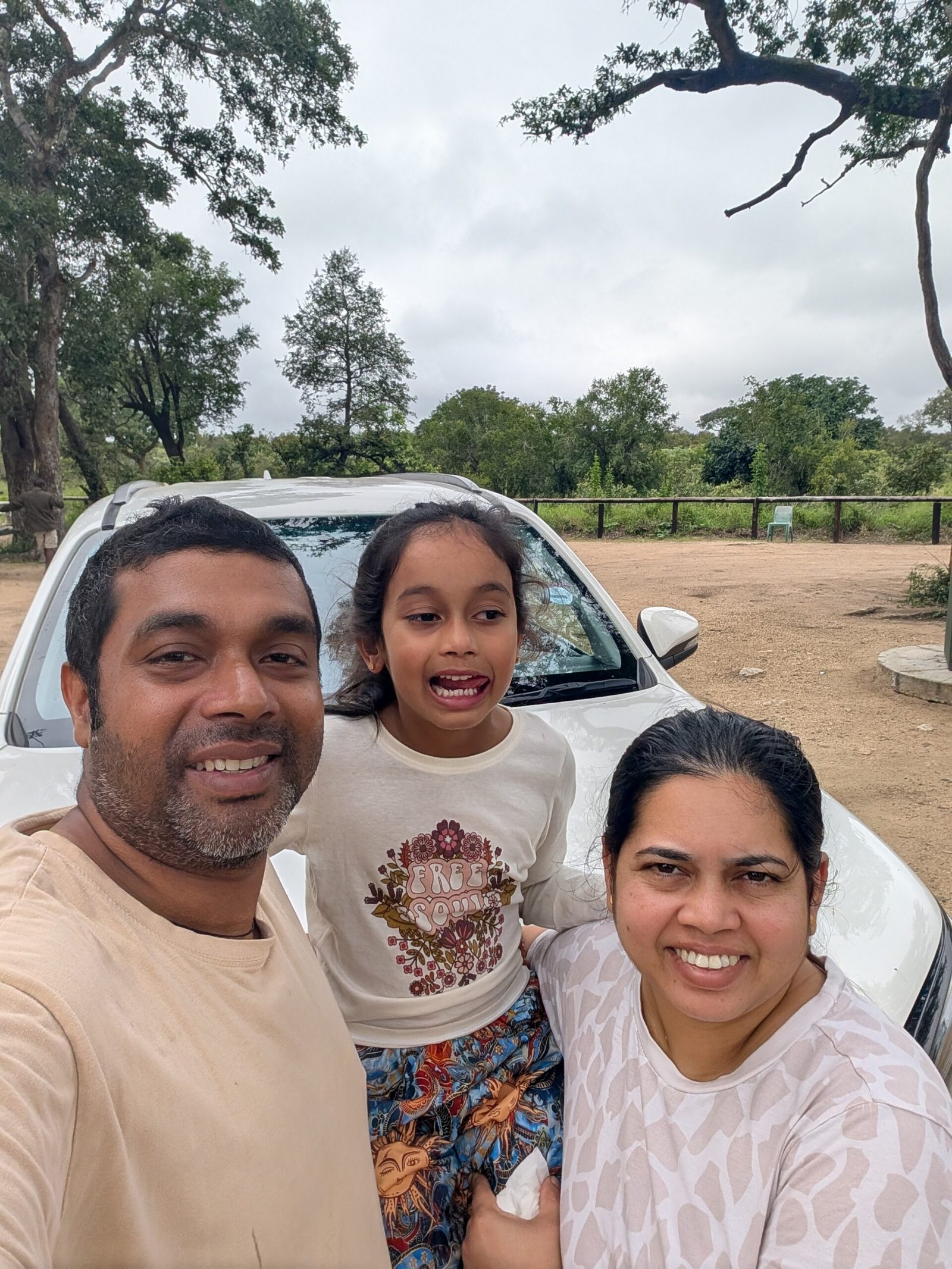
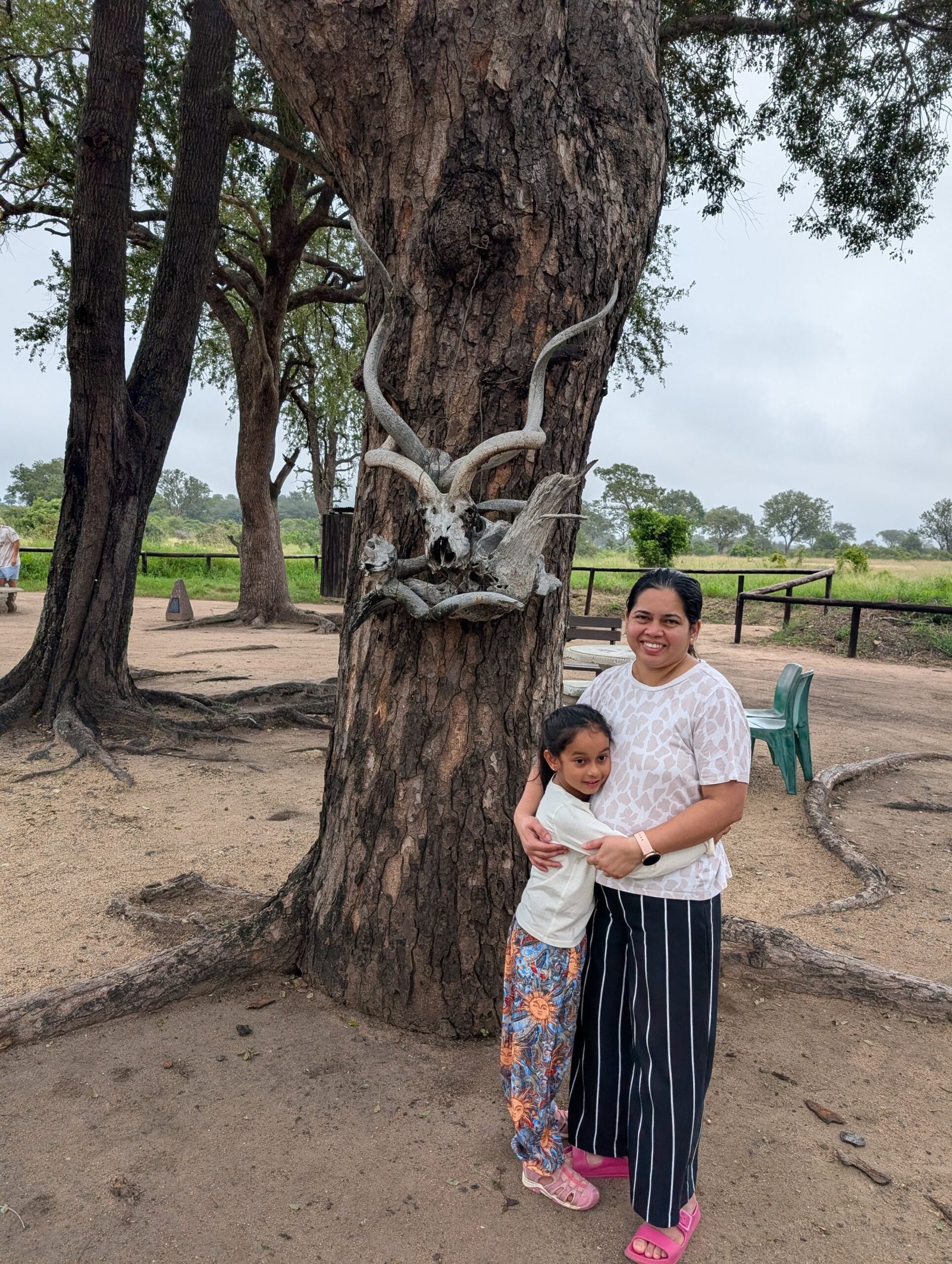
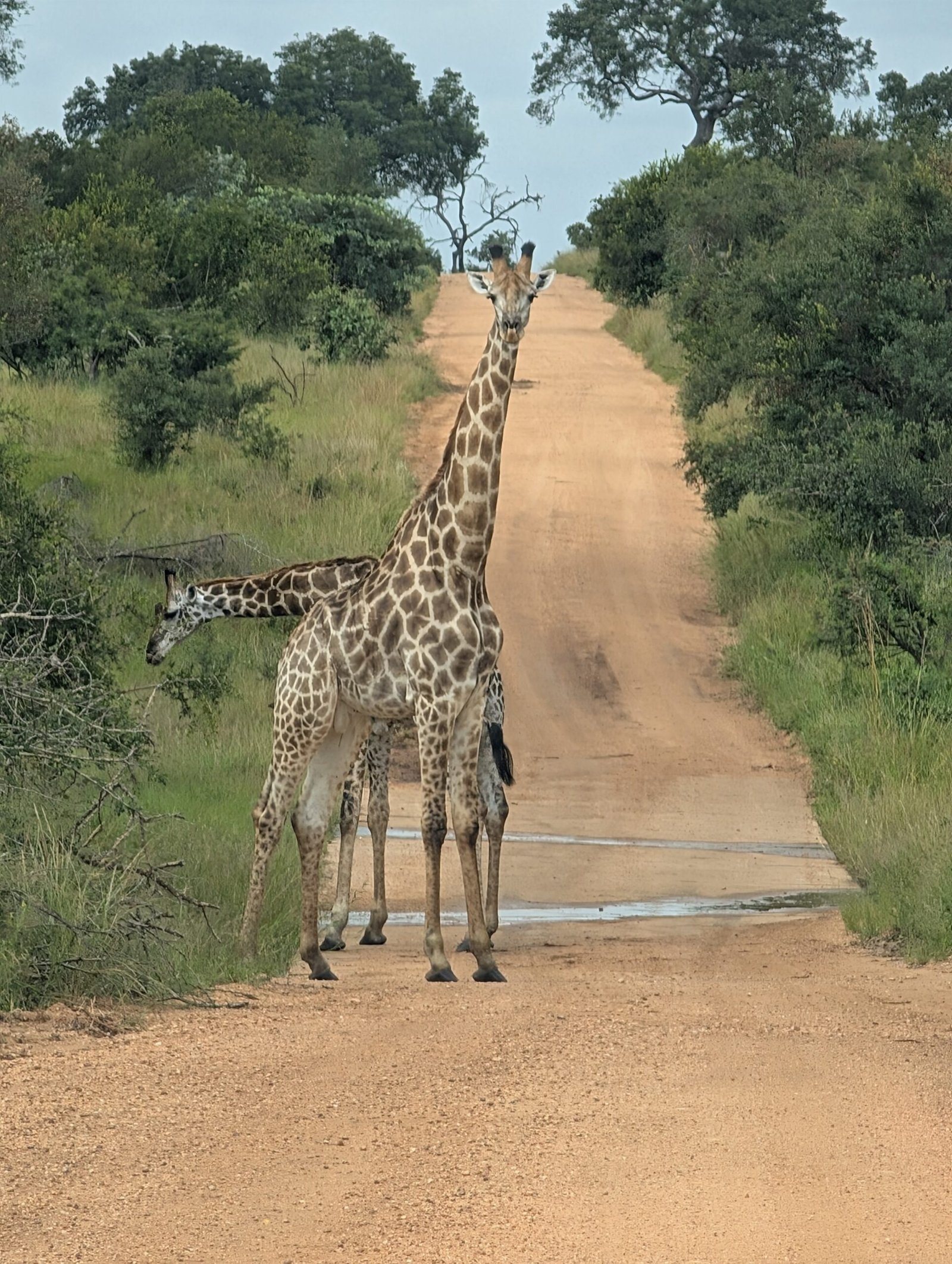
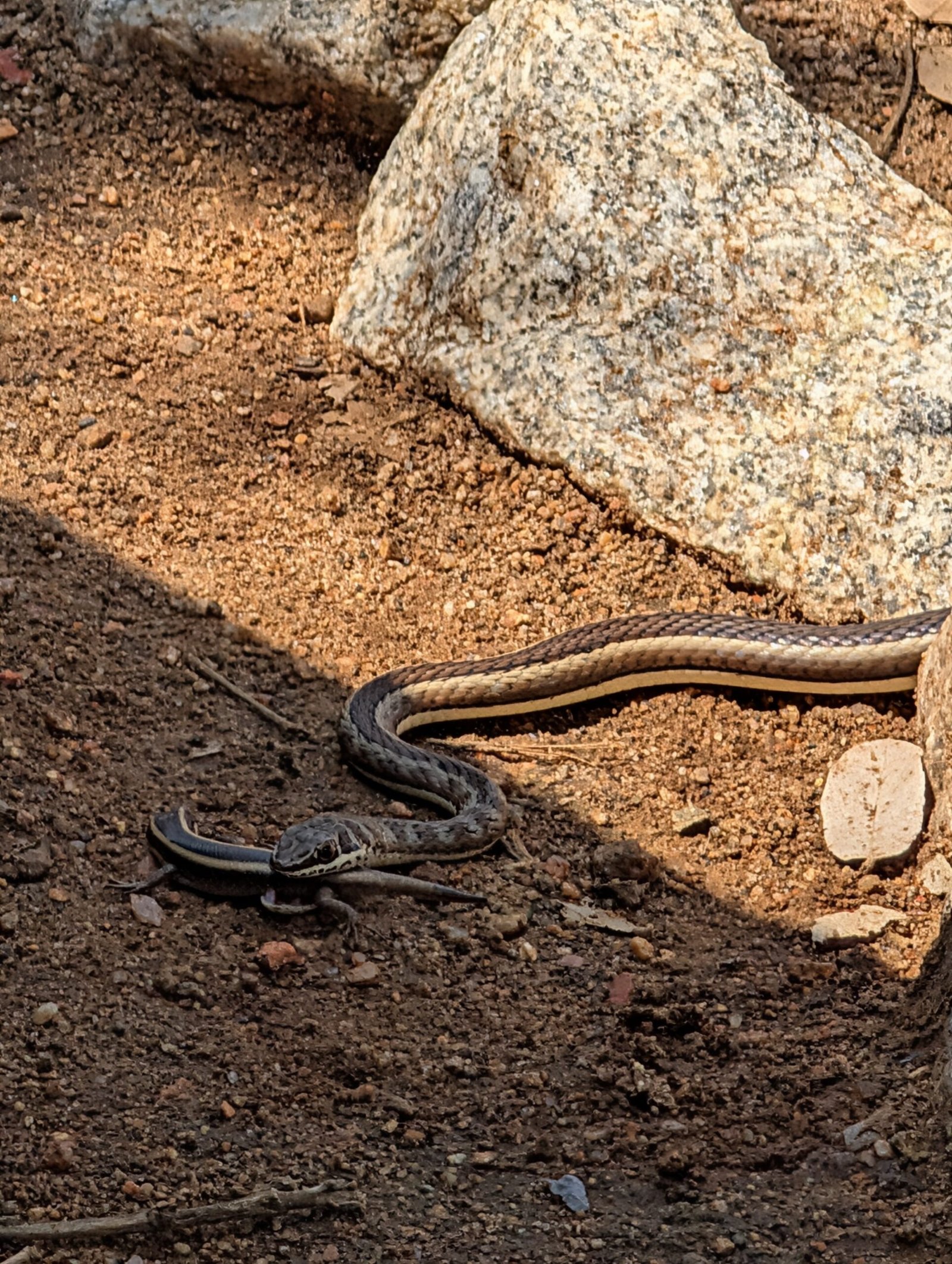
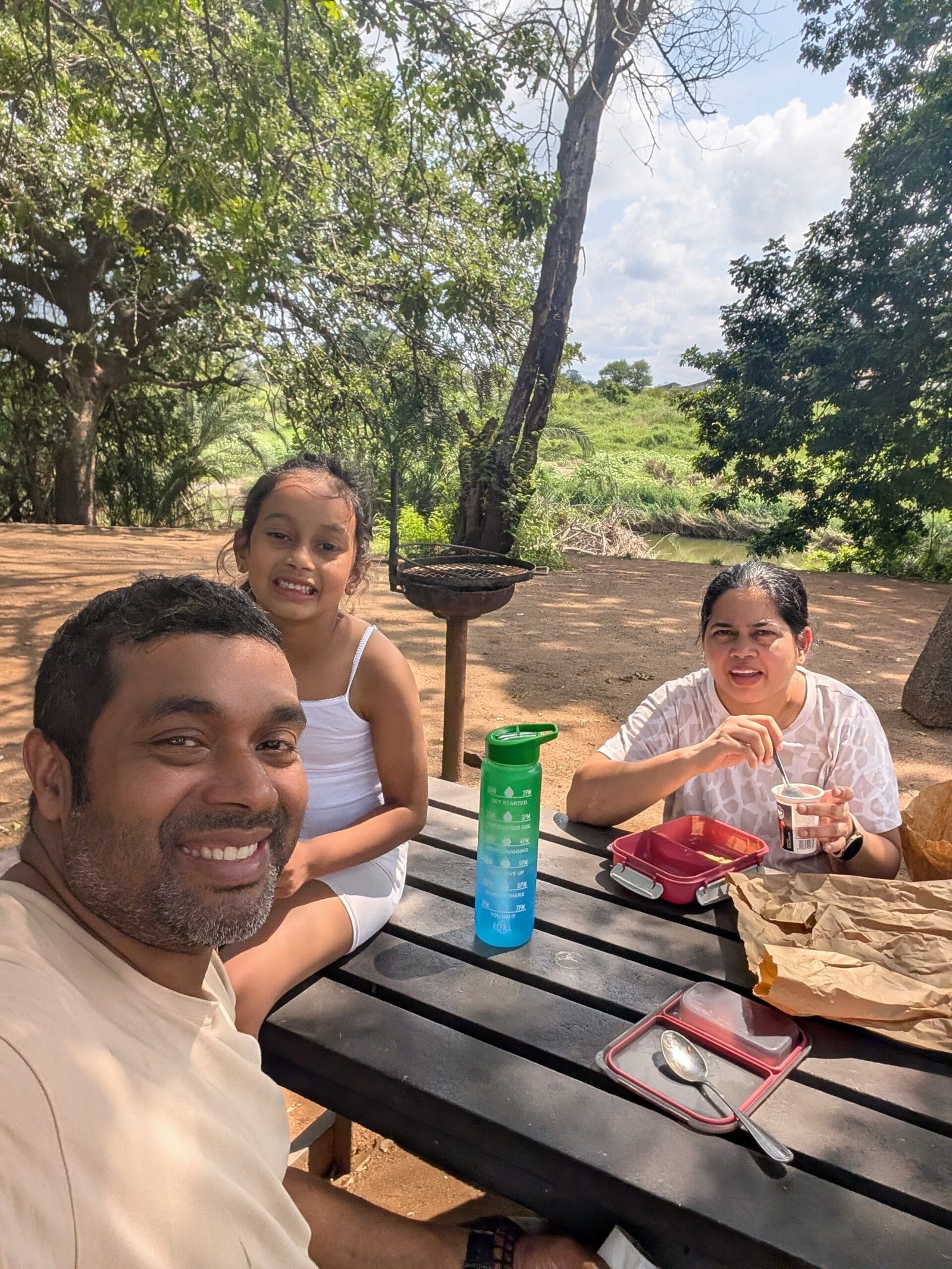
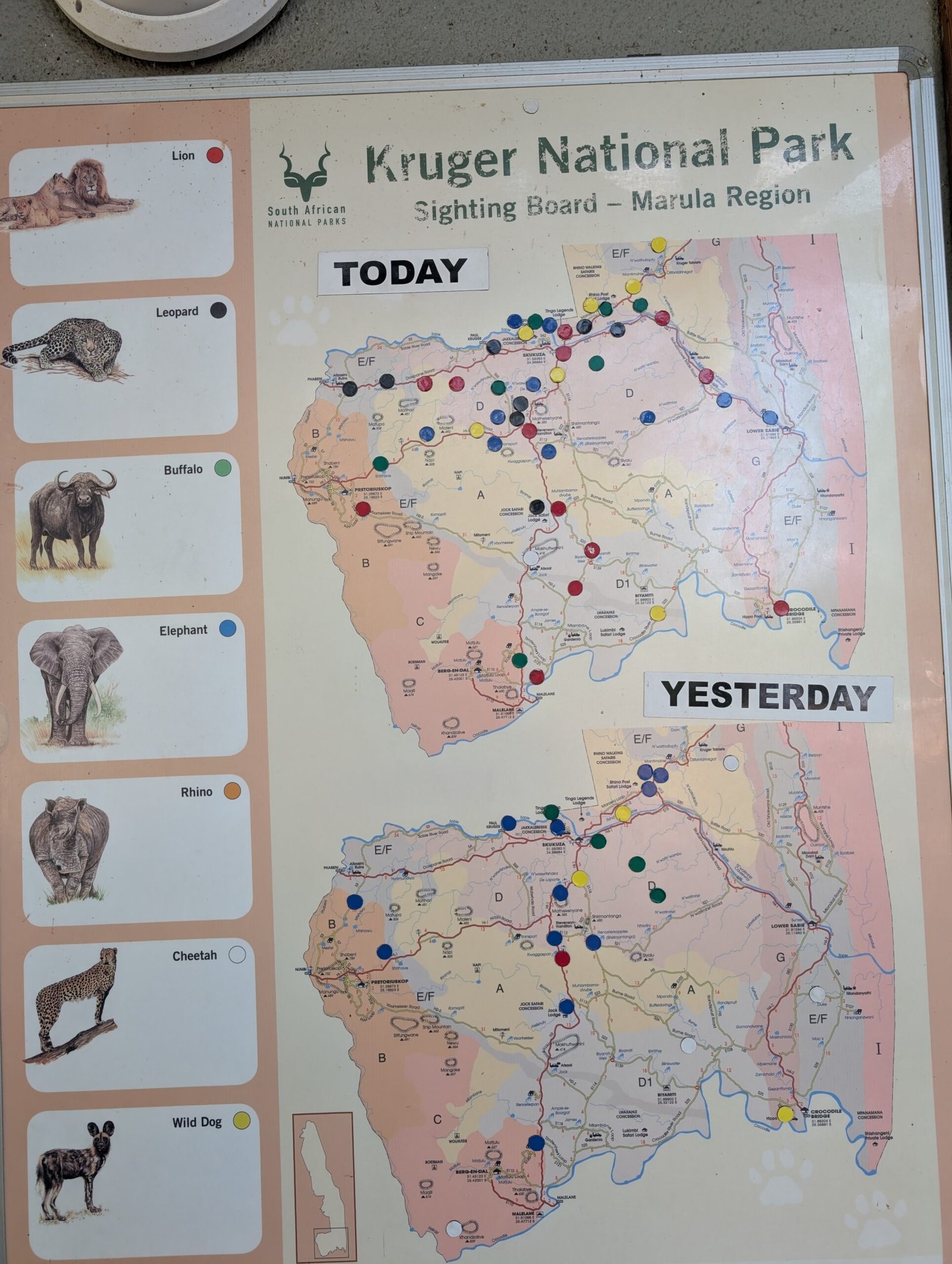
From a worried morning of blisters and grey skies to the single most unforgettable wildlife encounter of our lives.Kruger had saved its very best for last.
View this post on Instagram


This is Aldrin and my partner Amoli. We bring you "Earths Pilgrim" - a unique insight into our travel escapades while leaving life in a cubicle. If you are looking for some inspiration to break the shackles of a regular life, then you are the right place. Read more about us- Click here.