- The Long Road to the Wild: Arriving at Kruger National Park
- Kruger – Into the Wild: Skukuza to Satara
- Kruger – Cheetahs at Dawn, Grasslands at Dusk
- Kruger – The Ghost of the S100 and The Afternoon That Changed Everything
- Kruger: The Leopard Beneath Our Window
- Kruger : The Day We Almost Didn’t Go
- Kruger: The Last Hunt & the Long Goodbye
They say Kruger doesn’t give you what you want — it gives you what you need. On our very first drive, it gave us everything.
They say Kruger doesn’t give you what you want — it gives you what you need. On our very first drive, it gave us everything.
Day 1 — Leopards, Elephants, and a Six-Year-Old Who Knows the Difference
The Road Begins at Skukuza
We left Skukuza Airport with the windows down and the African sun pouring in — which, by the way, was nothing short of a miracle. This was supposed to be the tail end of the rainy season. Many of the gravel roads across the park had been closed, waterlogged and impassable. We’d braced ourselves for grey skies and muddy detours.But Kruger, it seemed, had other plans for us.The sky was a blazing, cloudless blue. The sun sat high and generous, painting the bushveld in golds and greens, as though the park had dressed up for our arrival. Call it luck. Call it a blessing. Either way, we weren’t complaining.
We took the tar road towards Satara Camp — our home for the next few days — and the Fortunner hummed steadily beneath us. The road stretched long and straight, flanked by mopane woodland and acacia scrub, the kind of landscape that whispers something lives here even when you can’t see it yet.And then — the first clue.
Heaps of dung. Massive, unmistakable mounds of it, scattered across the roadside like nature’s calling cards.My heart quickened. Elephants. They’d been here. Recently.But it was midday — the sun at its fiercest, the bush at its sleepiest. Every seasoned safari-goer knows: the animals retreat into the shade when the heat climbs. We tempered our expectations. Don’t hope for too much, not in the noon glare.
Kruger, of course, had already decided to ignore that rule.
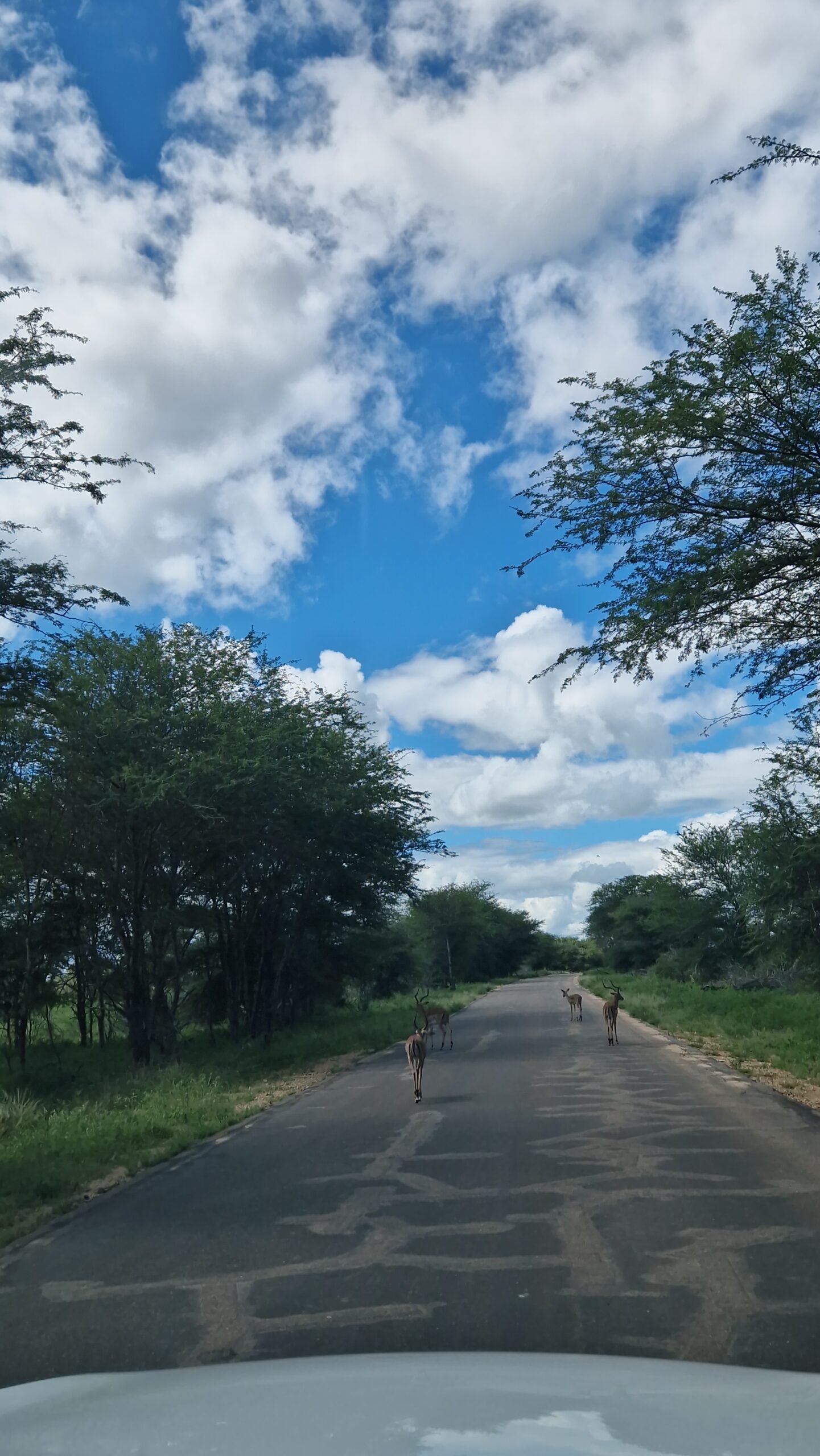
The first animals to greet us were the impalas — dozens of them, grazing elegantly on either side of the road, their rust-brown coats gleaming in the sunlight. Now, if you’ve ever been on an Safari, you’ll know that impalas are lovingly nicknamed “Vitamin I” — because you see them everywhere. They’re the park’s most abundant antelope, the ones that seasoned visitors barely glance at by day three.But on Day 1? When your six-year-old has never seen a wild antelope in her life?They were magnificent.
Addie pressed her face against the window, her little finger pointing furiously. “Dad, look! So many deer!”“They’re impalas, sweetheart.”“Im-PA-las,” she repeated carefully, as though filing the word into a mental cabinet she was building for this trip. And honestly? Watching her discover them for the first time made me see them differently too. Through her eyes, even the “common” became extraordinary.
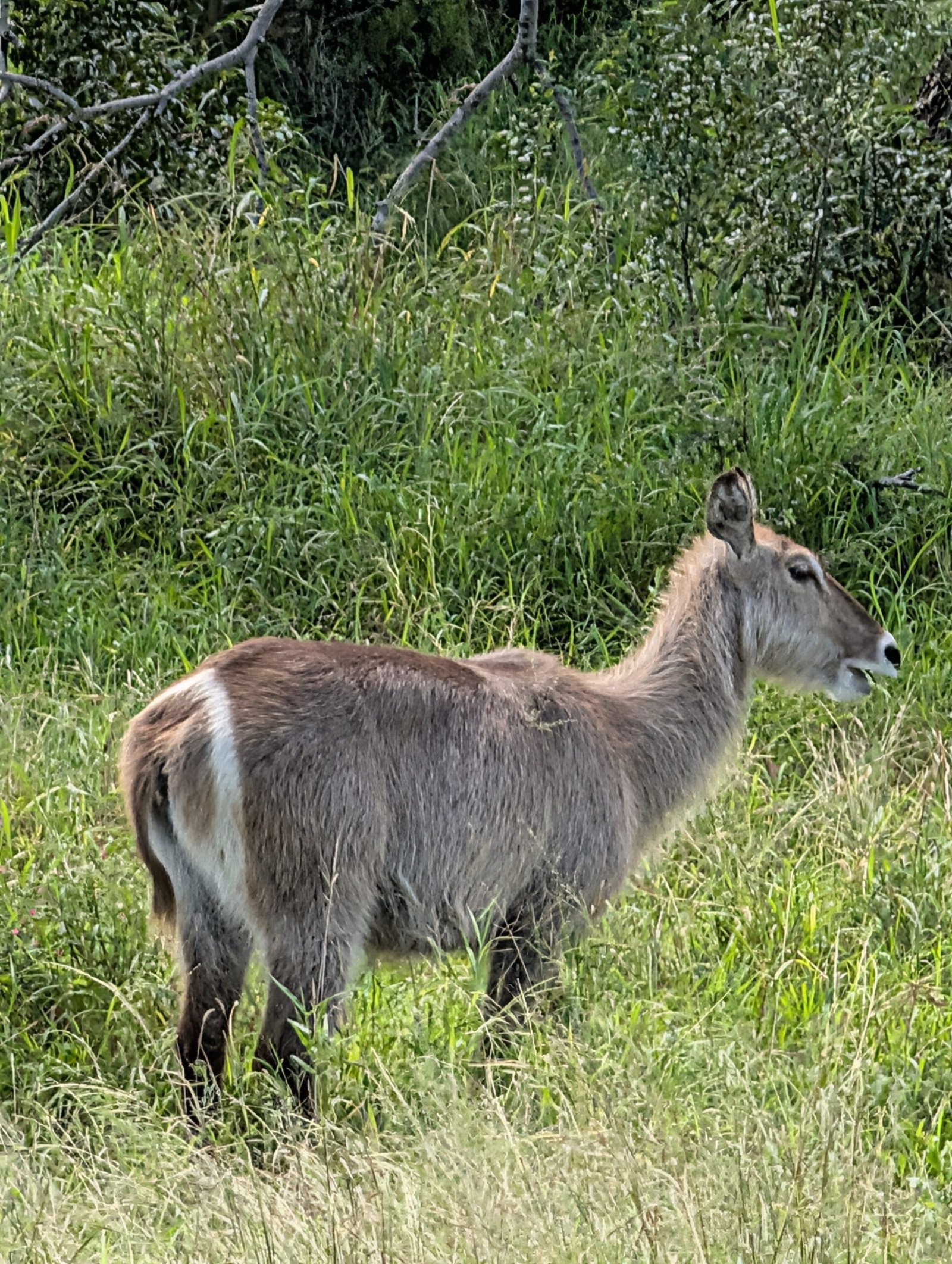
A little further down the road, the bush offered us something rarer — a pair of Greater Kudus, standing tall and statuesque among the trees, their magnificent spiral horns catching the light. They watched us with calm, regal eyes, completely unbothered, as if posing for a portrait they knew they deserved.
Things were happening. The wild was waking up for us.
The Cluster of Cars — And a Gift from the Trees
Every safari driver knows the code. When you see a cluster of cars gathered in one spot, binoculars raised, cameras clicking — you slow down. Something is there.We were driving close to the river now, the water glinting through gaps in the riverine bush. Ahead, perhaps six or seven vehicles had pulled over, all angled towards a thicket of trees along the bank.I found a spot, manoeuvred the Fortuner into position, and reached for my binoculars.
And there it was.
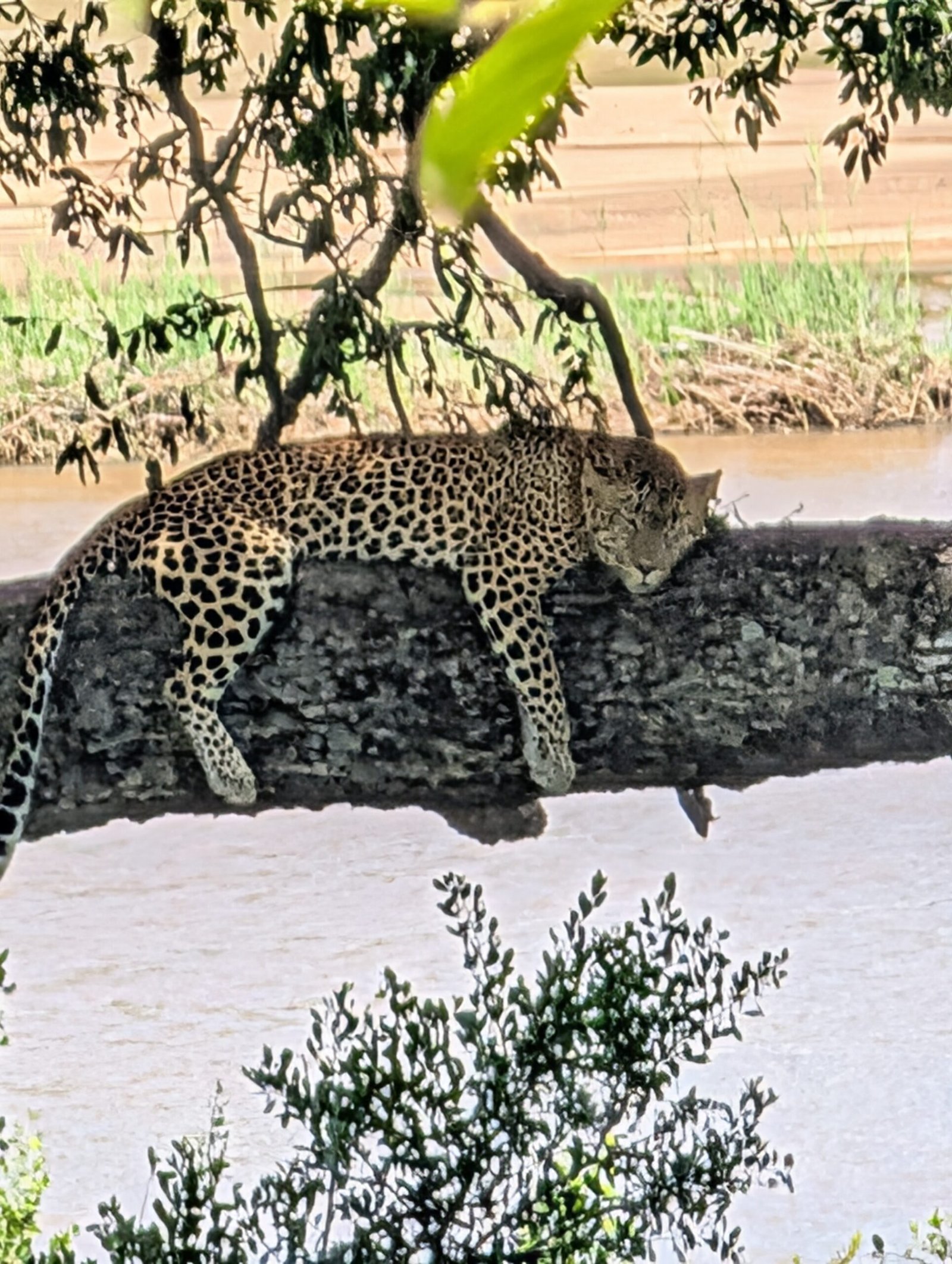
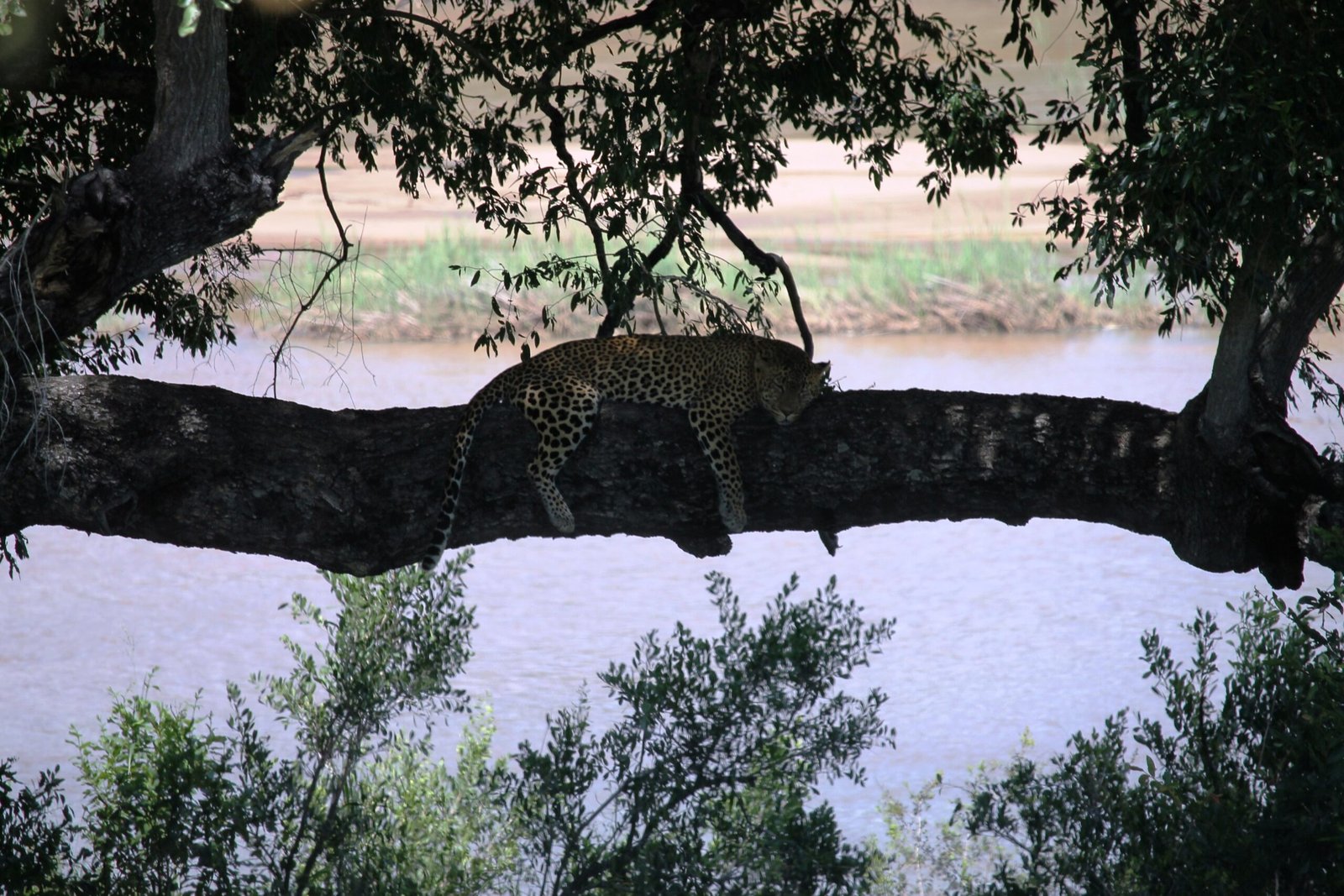
Draped across a branch, impossibly elegant, utterly unbothered by the audience below — a leopard.
A. Leopard. On. Day. One – Let me tell you what that means. The leopard is one of the most elusive of the Big Five. It is the ghost of the African bush — solitary, secretive, nocturnal by nature, and maddeningly good at disappearing into dappled shadow. There are visitors who spend a week in Kruger and never see one. There are guides with decades of experience who still feel a thrill every single time.
And here was ours. Sleeping on a tree. By the river. On our very first drive.
We positioned ourselves carefully and started clicking. The distance was there, yes — this wasn’t a zoo enclosure — but through the lens, we could see it beautifully. The rosette-patterned coat. The heavy, relaxed limbs draped over the branch like a painter’s brushstroke. Every now and then, it would lazily turn its head from one side to the other — a slow, regal survey of its kingdom — and then settle back into sleep.It had clearly had a good meal. The belly was full, the eyes were heavy, and the world below was simply… irrelevant.
We watched for a while, soaking it in, letting the magnitude of the moment settle over us. Thirty-six hours of travel. A sick child. Airport floors and pharmacy runs and sleepless flights. And now this.
Kruger was telling us something: You made the right call. Welcome home.
View this post on Instagram
A Mamba, a Madman’s Fear, and a Daughter Who Loves Snakes
We reluctantly pulled away from the leopard — knowing that Addie, despite her brave face, was still carrying a fever inside that little body. Satara was waiting. Rest was calling.But the bush wasn’t done with us yet.A short distance ahead, something dark and long lay stretched across the tar road. We slowed to a crawl.A Black Mamba. Dead, unfortunately — likely a casualty of a passing vehicle — but unmistakable in its sleek, dark form. One of the most venomous snakes on the African continent.
Now, let me be honest with you. I despise snakes. The sight of one — alive or dead — sends an involuntary shiver through me that no amount of rational thought can suppress. I am, in this one department, an unashamed coward.My daughter, however? She was practically climbing over the centre console. Eyes wide. Grinning. Thrilled.
For reasons I will never fully understand, this child — this sweet, fever-fighting, impala-naming, leopard-whispering six-year-old — is absolutely, passionately, inexplicably obsessed with snakes.
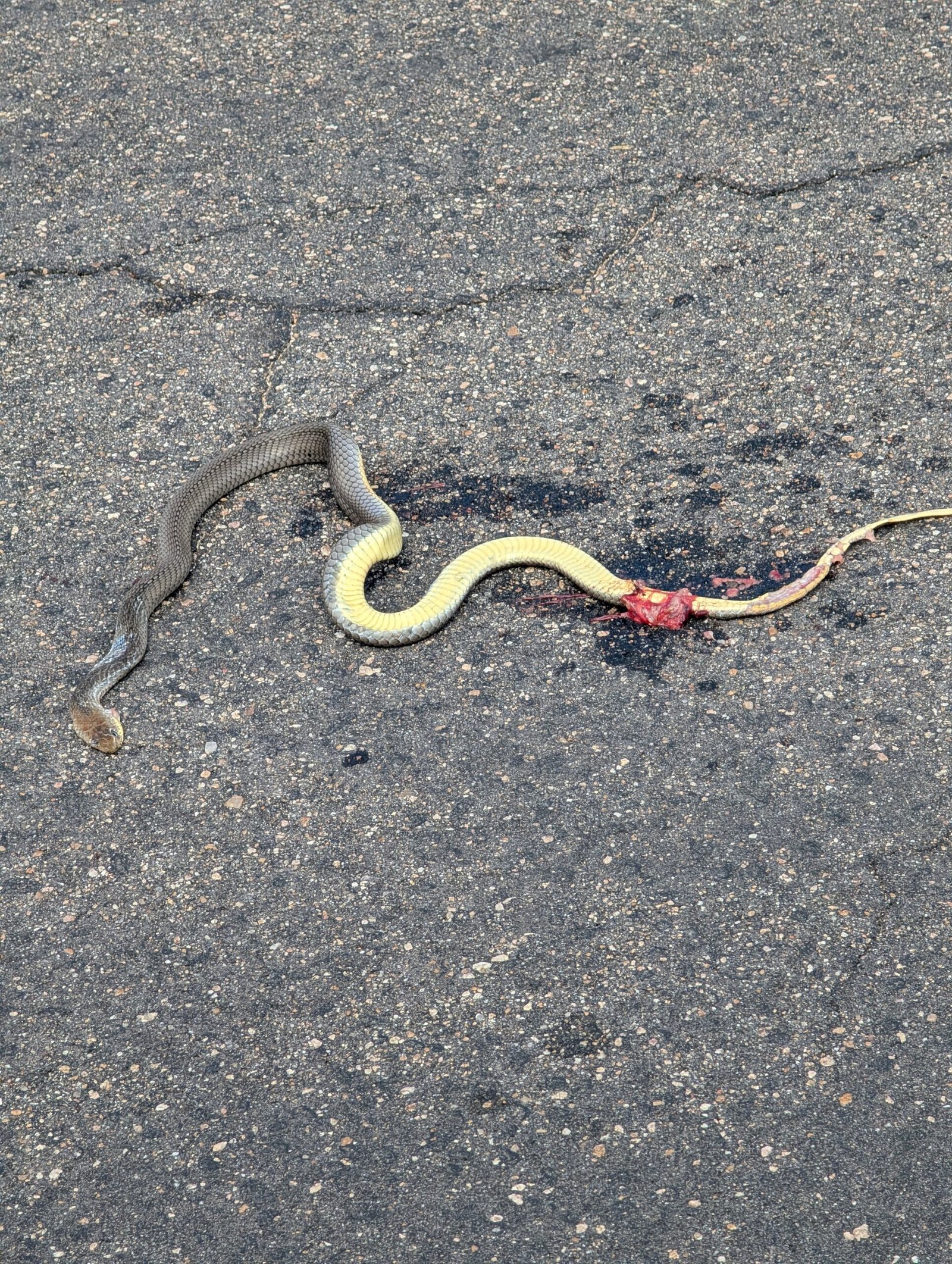
We admired (her word) the mamba from the safety of the Fortuner, and I drove on with the quiet dignity of a man who has just been out-braved by a first-grader.
The Bull Who Owned the Road
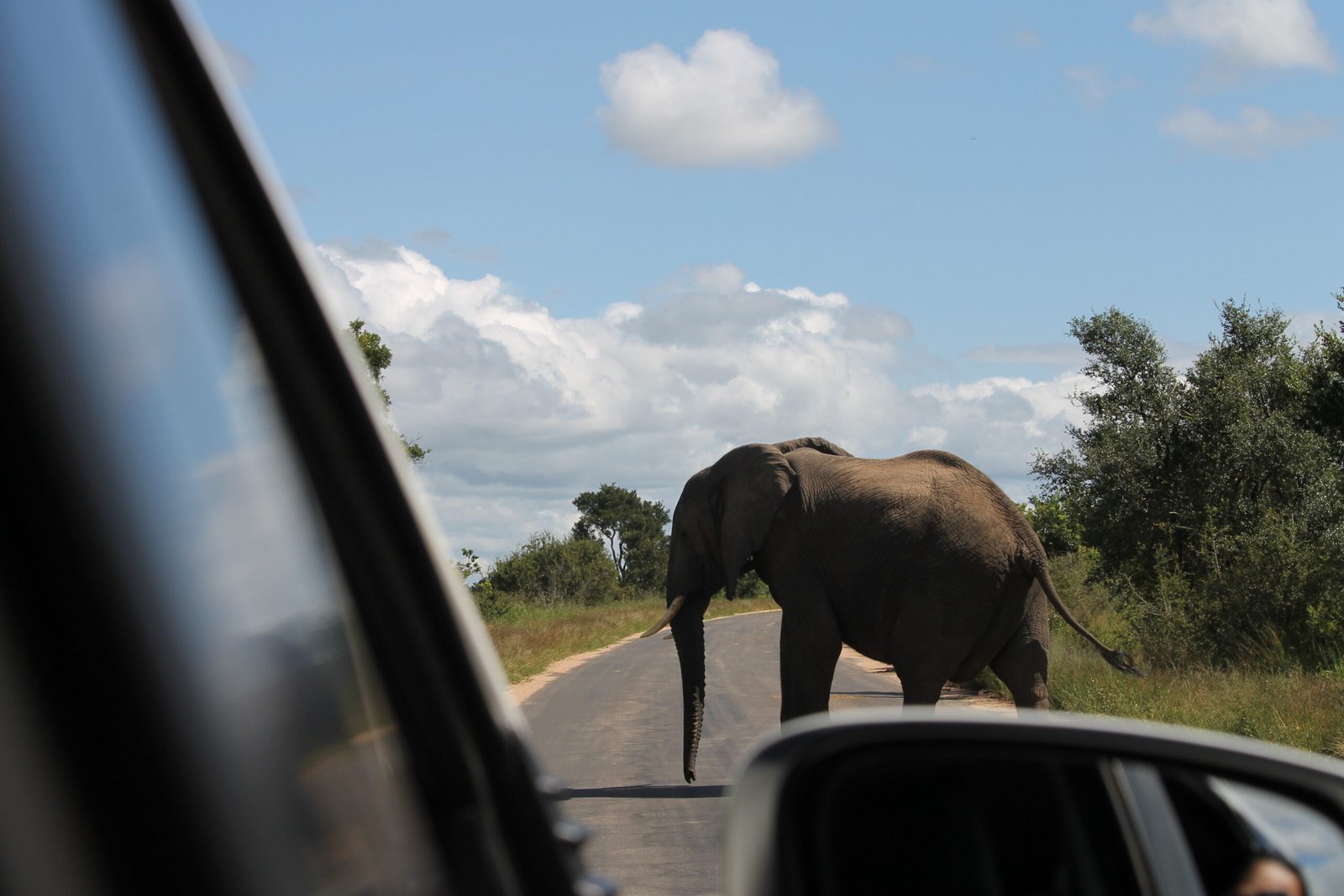
If the leopard was a gift and the mamba was a surprise, what came next was a lesson in respect.A lone bull elephant stood squarely in the middle of the tar road ahead. Not crossing. Not moving. Just… standing. Owning it.
I stopped the Fortuner at a safe distance and killed the engine.There’s something you learn very quickly in Kruger: elephants have right of way. Always. A bull elephant, especially a lone one, is a creature of extraordinary intelligence, immense power, and — if you’re not careful — unpredictable temperament. You don’t honk. You don’t inch forward. You sit, you wait, and you show the kind of patience that the bush demands.
Addie was mesmerised. She’d been to zoos, of course — she’d seen elephants behind fences, across moats, through glass. But sitting twenty metres away from a wild bull elephant, with nothing between you but open air and the thin trust of distance?
That’s something else entirely.“Dad,” she whispered — and it was a whisper, instinctive and reverent — “he’s SO big.”He was. He was enormous. His ears fanned slowly in the heat, his trunk curling and uncurling with casual grace. He surveyed us with one ancient, knowing eye, decided we were beneath his concern, and lumbered across the road with the unhurried confidence of a creature that has never, not once, had to rush for anything.
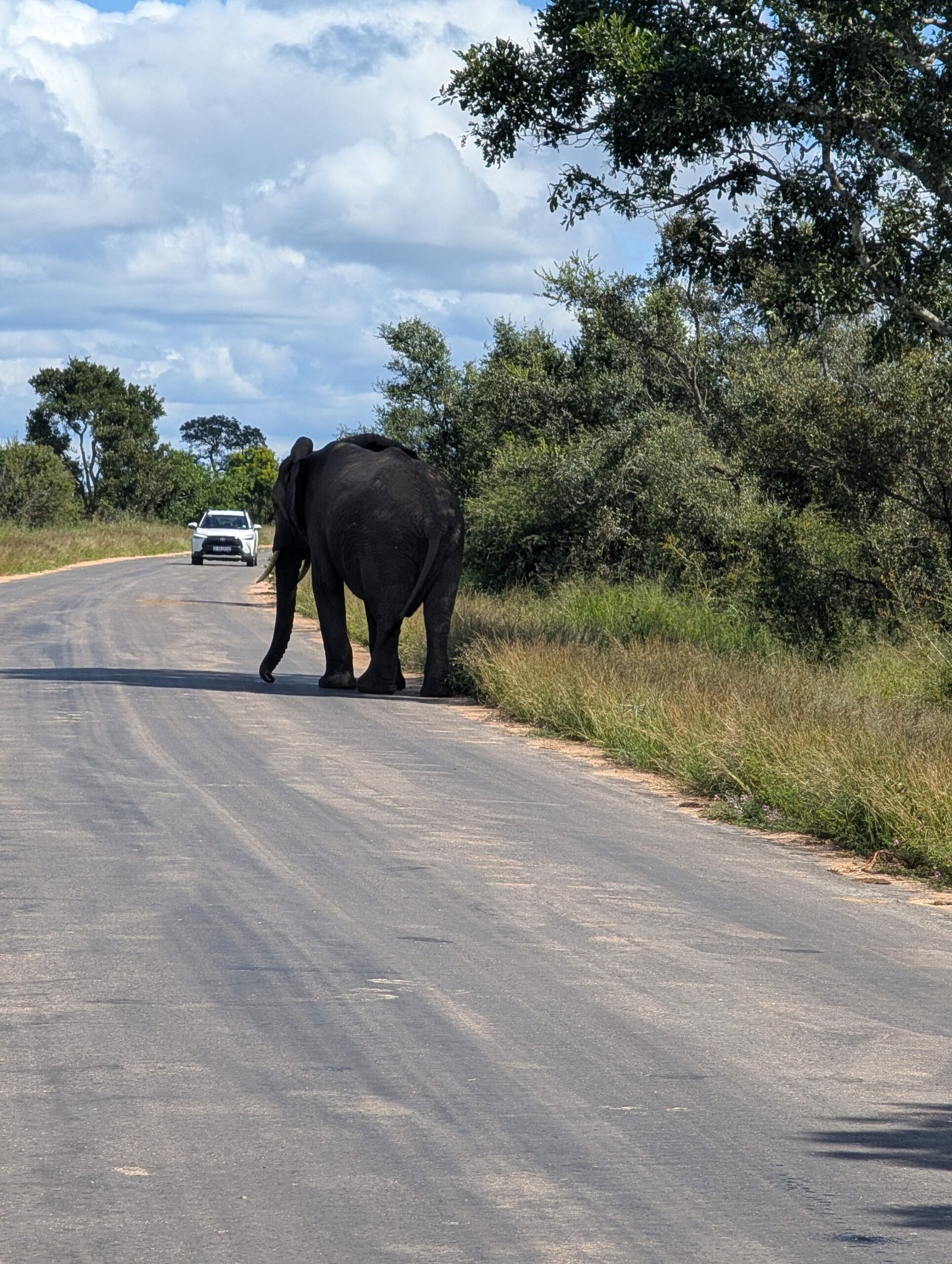
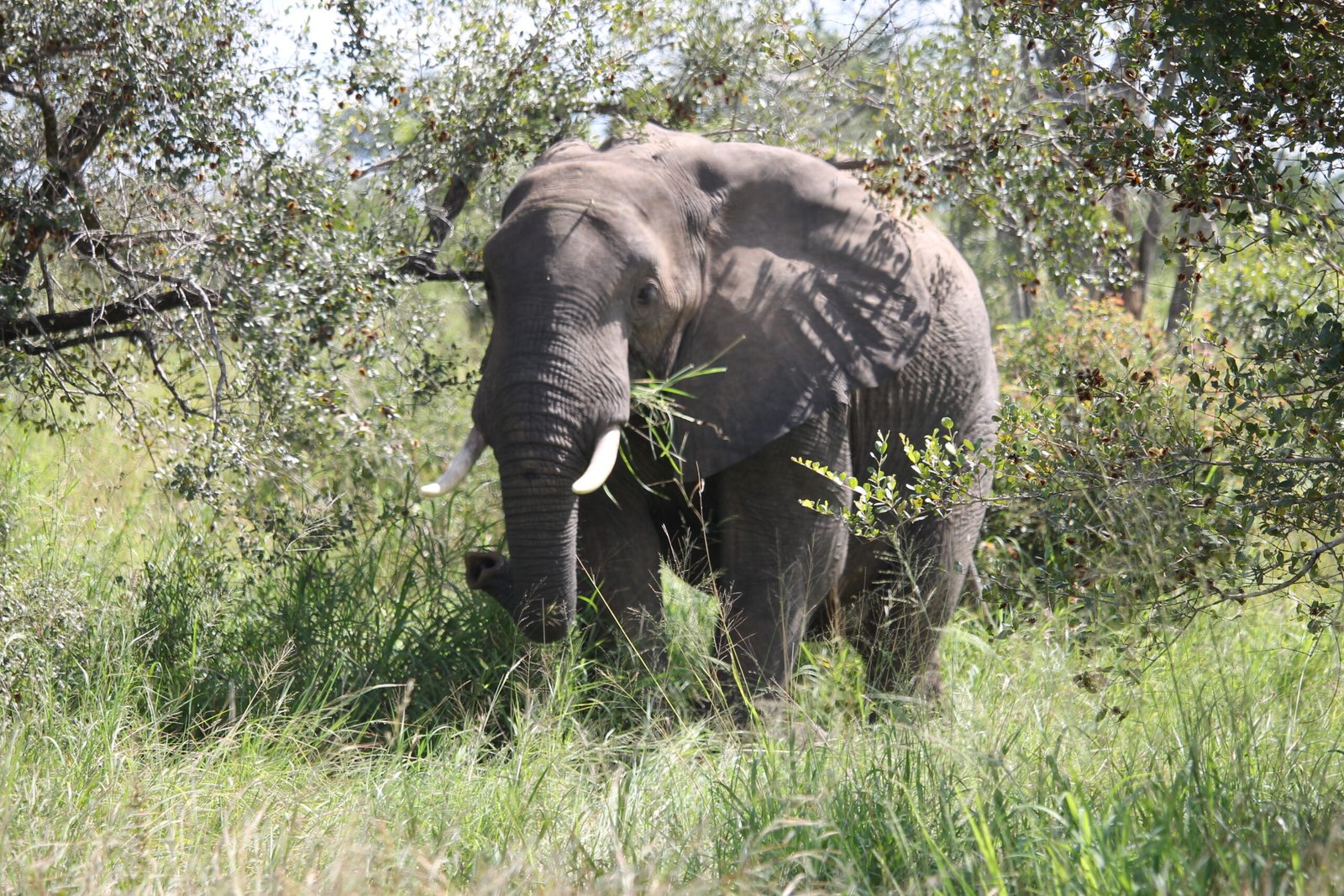
I could see it in Addie’s face — that quiet, dawning understanding. This wasn’t a zoo. This was their home. We were the visitors.
Stamps, Rest Stops, and a Fading Fever
We pulled into one of the rest areas along the Skukuza-Satara route — a shaded picnic spot where you can stretch your legs, use the facilities, and breathe without scanning the horizon for a moment.
Addie had her Little Kruger Passport — a charming booklet that SANParks sells for children, with spaces for stamps at each rest camp and gate. She clutched it like a treasure map, marching up to the counter to get her first stamp with the solemnity of a diplomat presenting credentials. Stamp. Received. Mission accomplished.
She was still warm — but she was improving. The fever was loosening its grip, day by day, hour by hour. You could see the tiredness pulling at her, though. The excitement of the drive had carried her this far, but the crash was coming.
The Herd That Crossed Our Path
We were close to Satara now.
And then — movement by the river.A big herd of elephants. Not one, not two — an entire family group, perhaps fifteen or twenty strong, gathered at the water’s edge. Calves tucked between massive legs. Matriarchs surveying the crossing. The gentle rumble of communication you can feel more than hear.
We stopped. We knew what was about to happen.
They began to cross. Right in front of us. One by one, pair by pair, the herd waded through the shallow water and climbed the bank onto the road — close enough that we could hear the squelch of wet earth beneath their feet, close enough to see the water droplets catching the golden light on their grey, wrinkled skin.
A mother nudged her calf forward with her trunk. The little ones — oh, the little ones — were an absolute riot. Curious, clumsy, swinging their tiny trunks like they hadn’t quite figured out what they were for yet. One of them paused mid-crossing and turned its head towards our Fortuner, ears flapping, as if deciding whether we were worth investigating. Its mother gently steered it back on course.
Nobody in the car spoke. Not even Addie, sleep-creased and wide-eyed, watching through the window in breathless silence. My wife gripped my arm. She was torn between wonder and a flicker of nervousness — these were wild elephants, after all, and they were very close. I won’t pretend my own pulse wasn’t racing. But having grown up visiting wildlife sanctuaries in India, I knew the rules of the bush. Engine off. Stay in the vehicle. Keep your distance. Respect their space. As long as you do that, you’re a guest — not a threat.
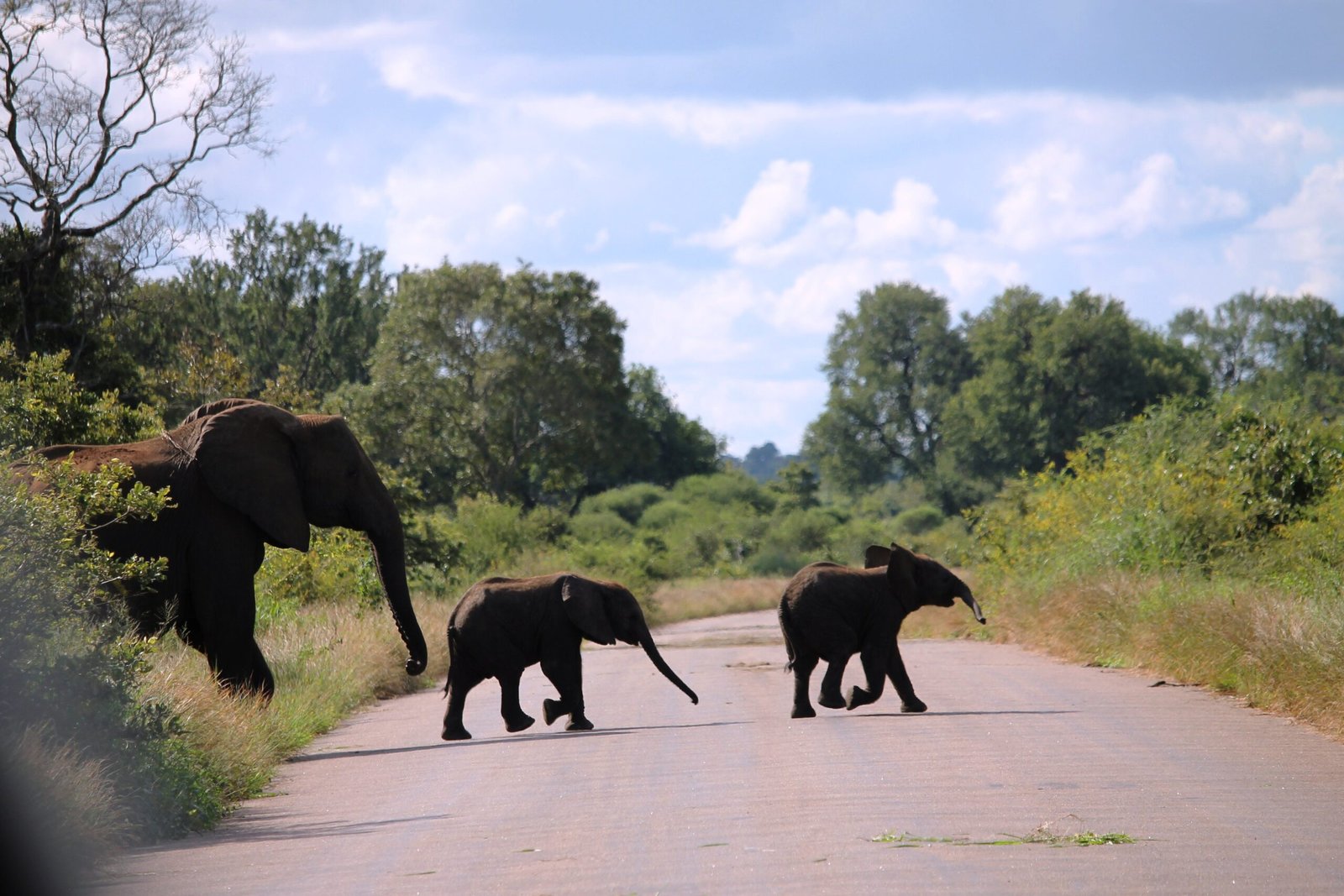
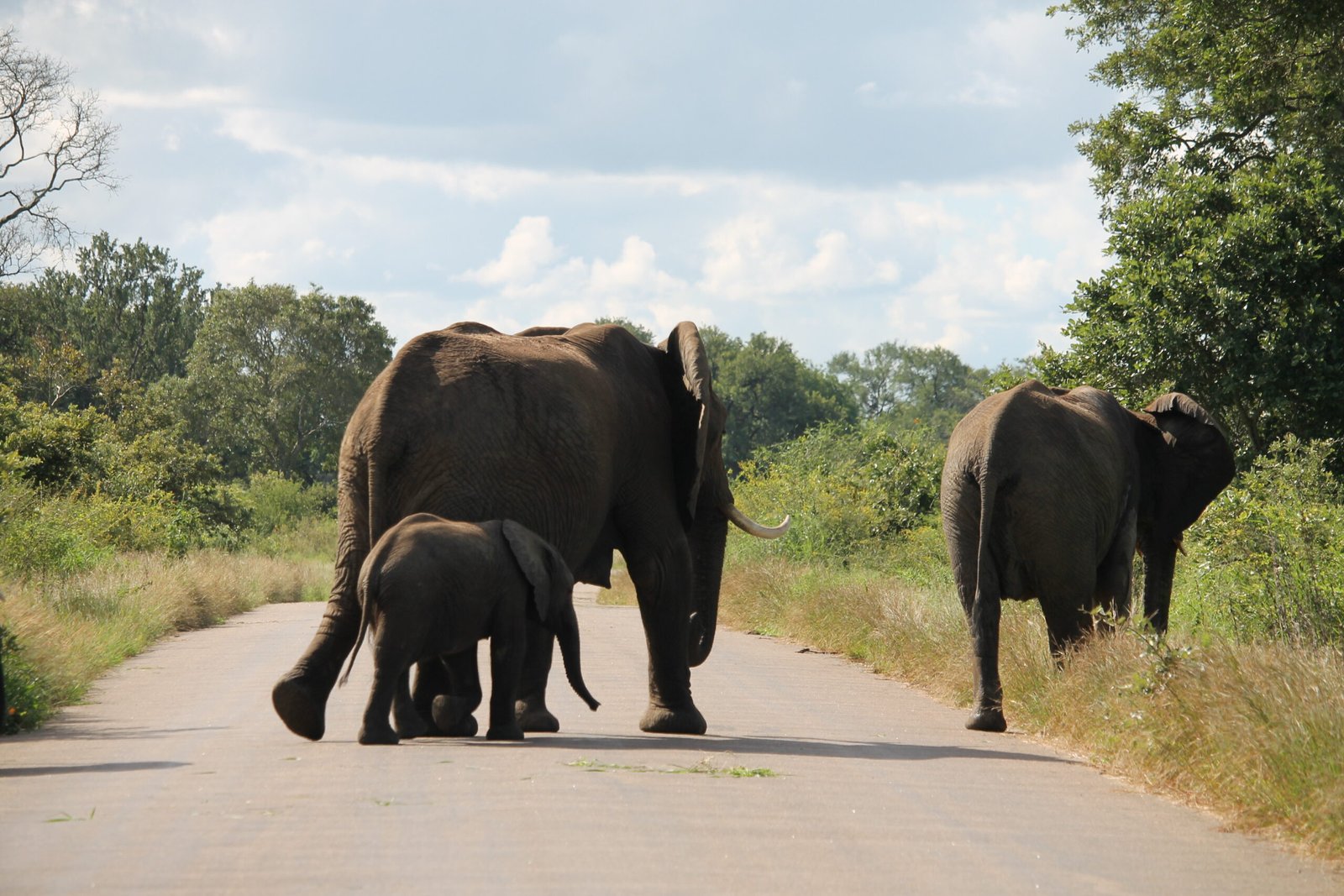
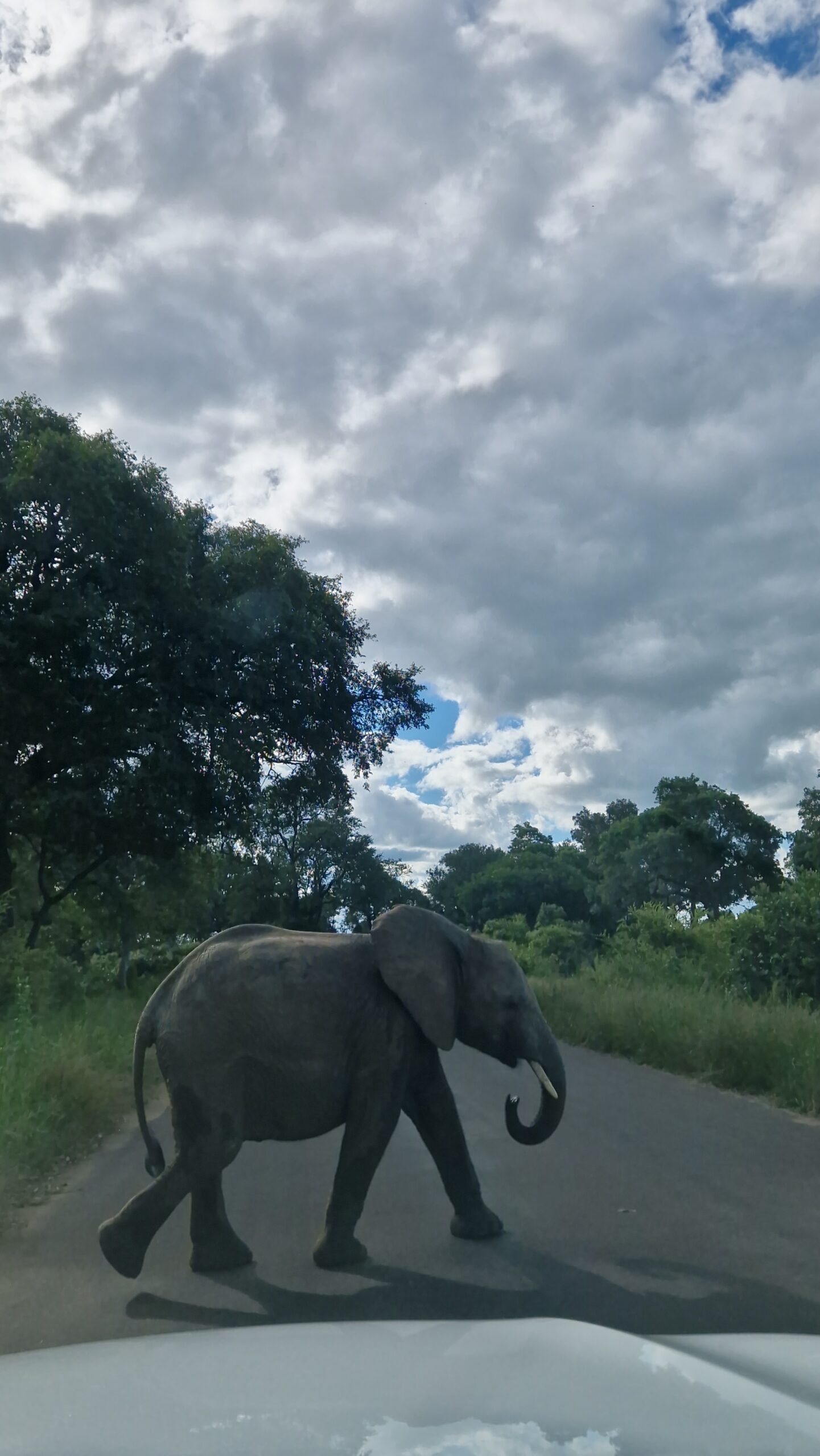
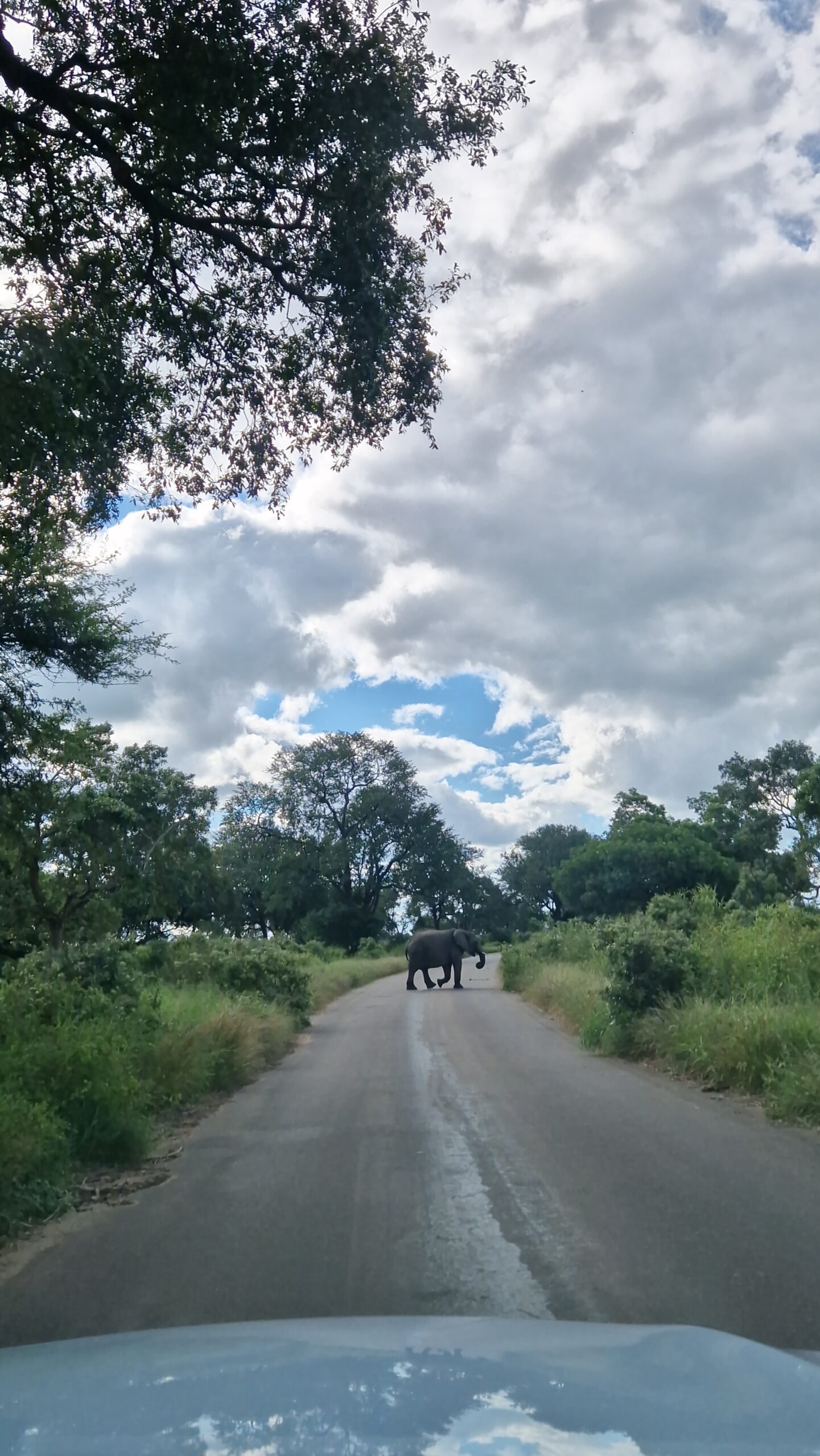
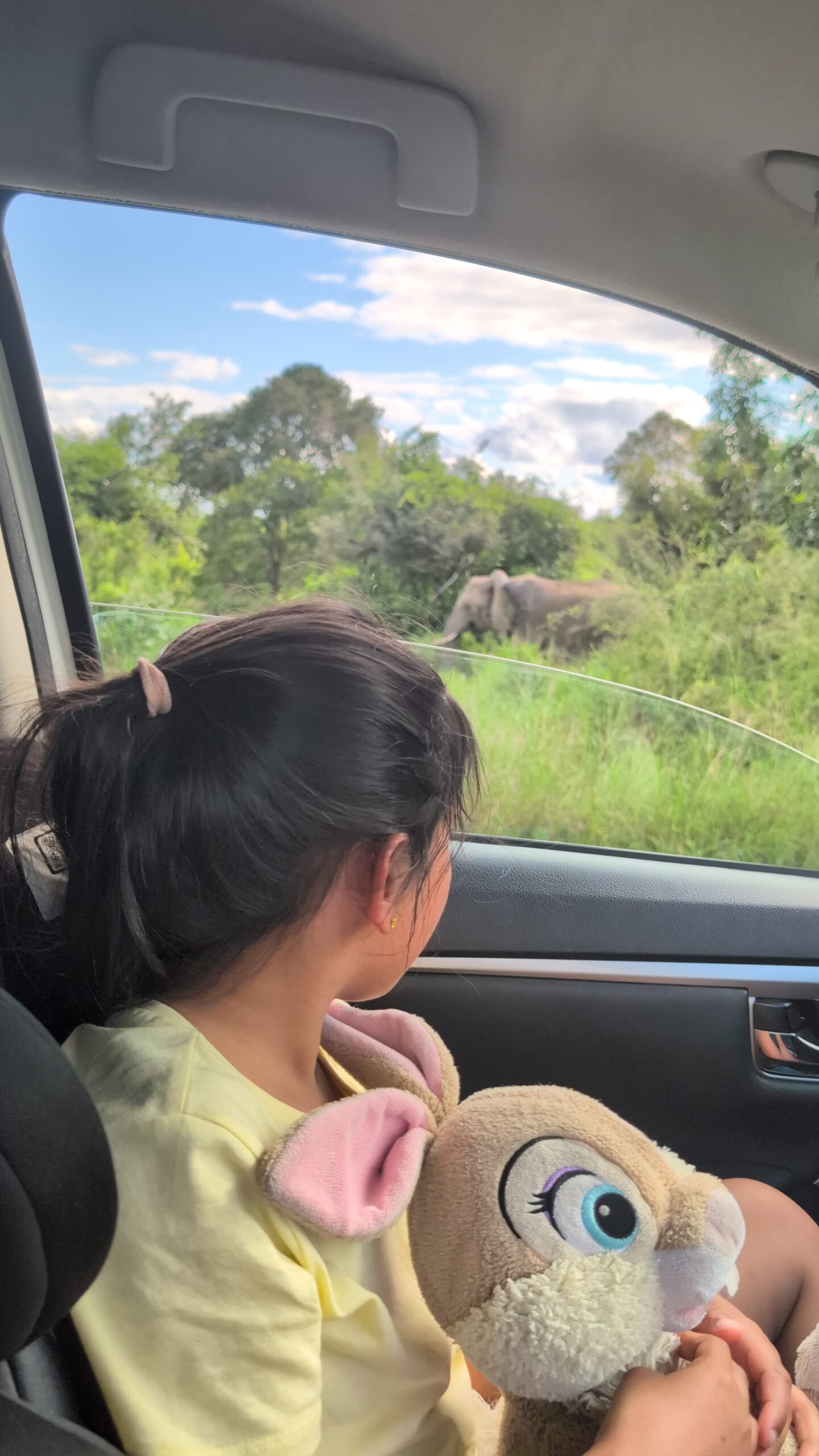
Still, there’s a difference between knowing you’re safe and feeling safe when a three-tonne matriarch is close enough that you can see the texture of her skin, the deep, intelligent calm in her eyes. It’s a humbling kind of proximity — the kind that reminds you, very gently, that you are small.
Some moments don’t need words. They just need witnesses.
Zebras, Kudus, and Hippos — The Road Keeps Giving
We pulled away from the crossing on a high that no amount of jet lag could dampen. But Kruger wasn’t finished yet.The road to Satara unfolded like a slow, generous gift. Around every bend, the bush offered something new.
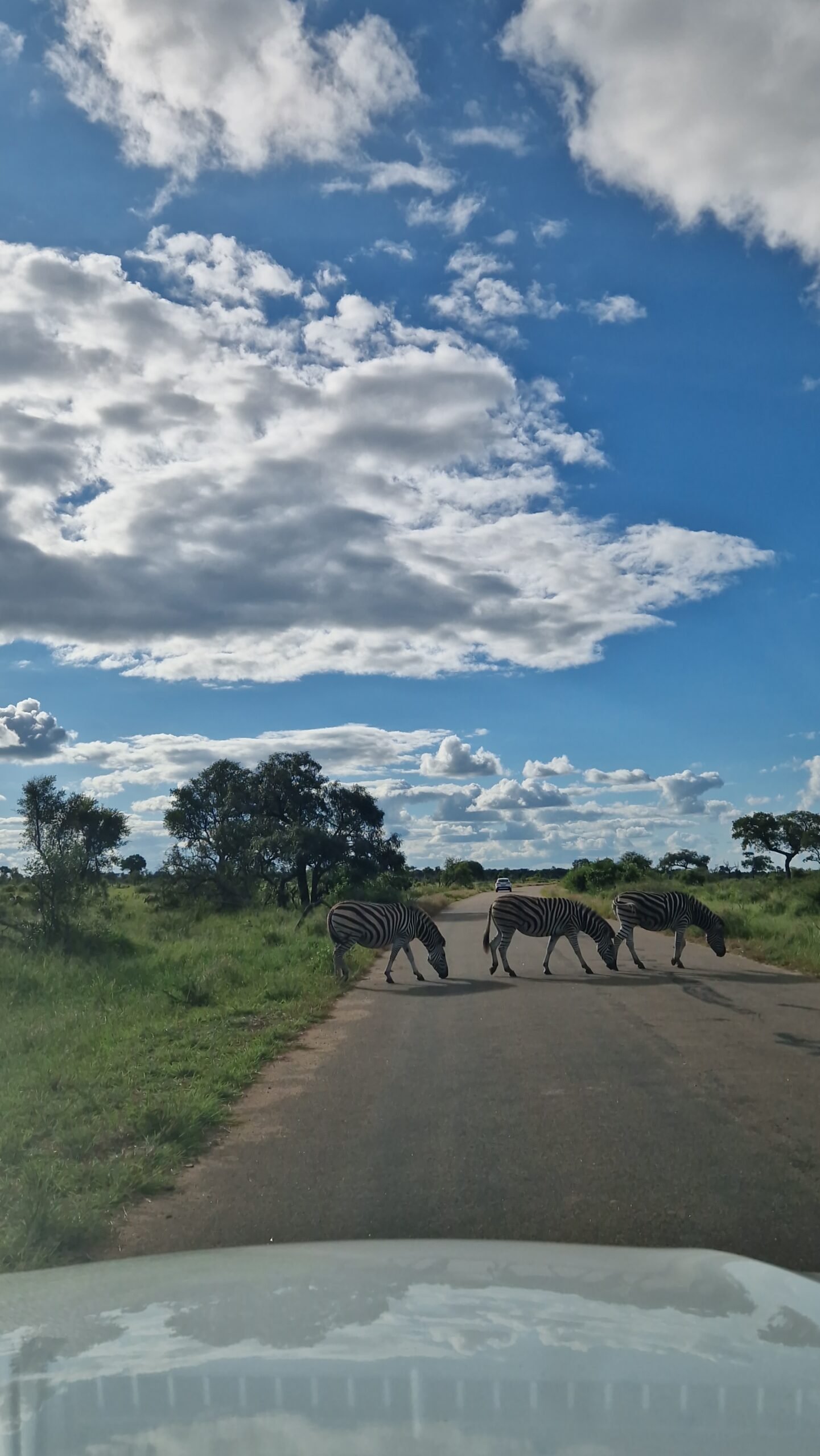
First, a dazzle of zebras — and yes, the collective noun really is a dazzle, because that’s exactly what they do. Their stark black-and-white stripes shimmered against the golden grass, almost optical, almost impossible. They grazed in loose formation, utterly unbothered by our crawling Fortuner.
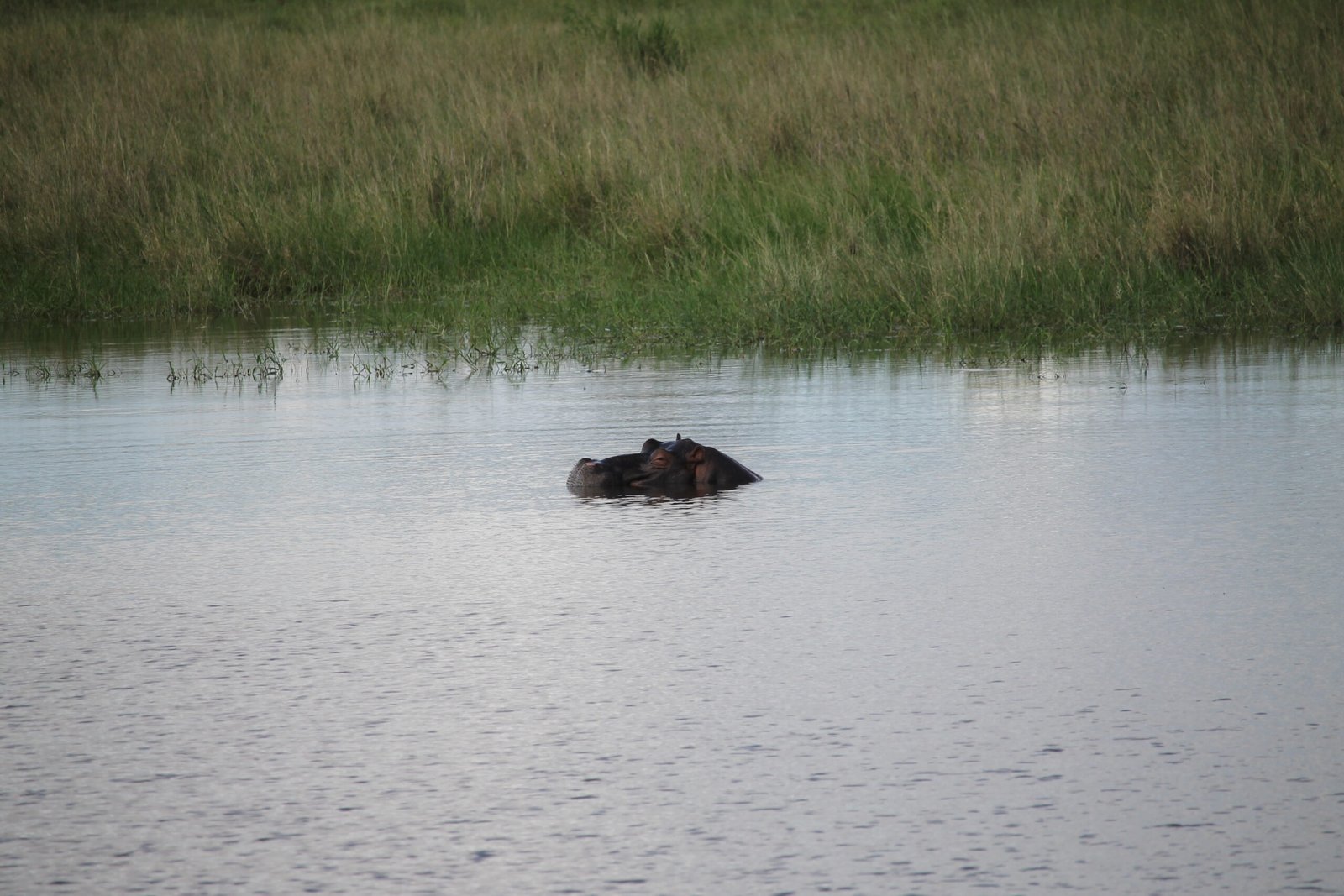
And then — a glint of water, and the unmistakable bulk of hippos wallowing in a lake nearby. Just their ears, eyes, and nostrils breaking the surface, like living periscopes monitoring the world above. Every few minutes, one would surface with a great, satisfied exhale — a sound that carries across the still water like a low, rumbling sigh of contentment.
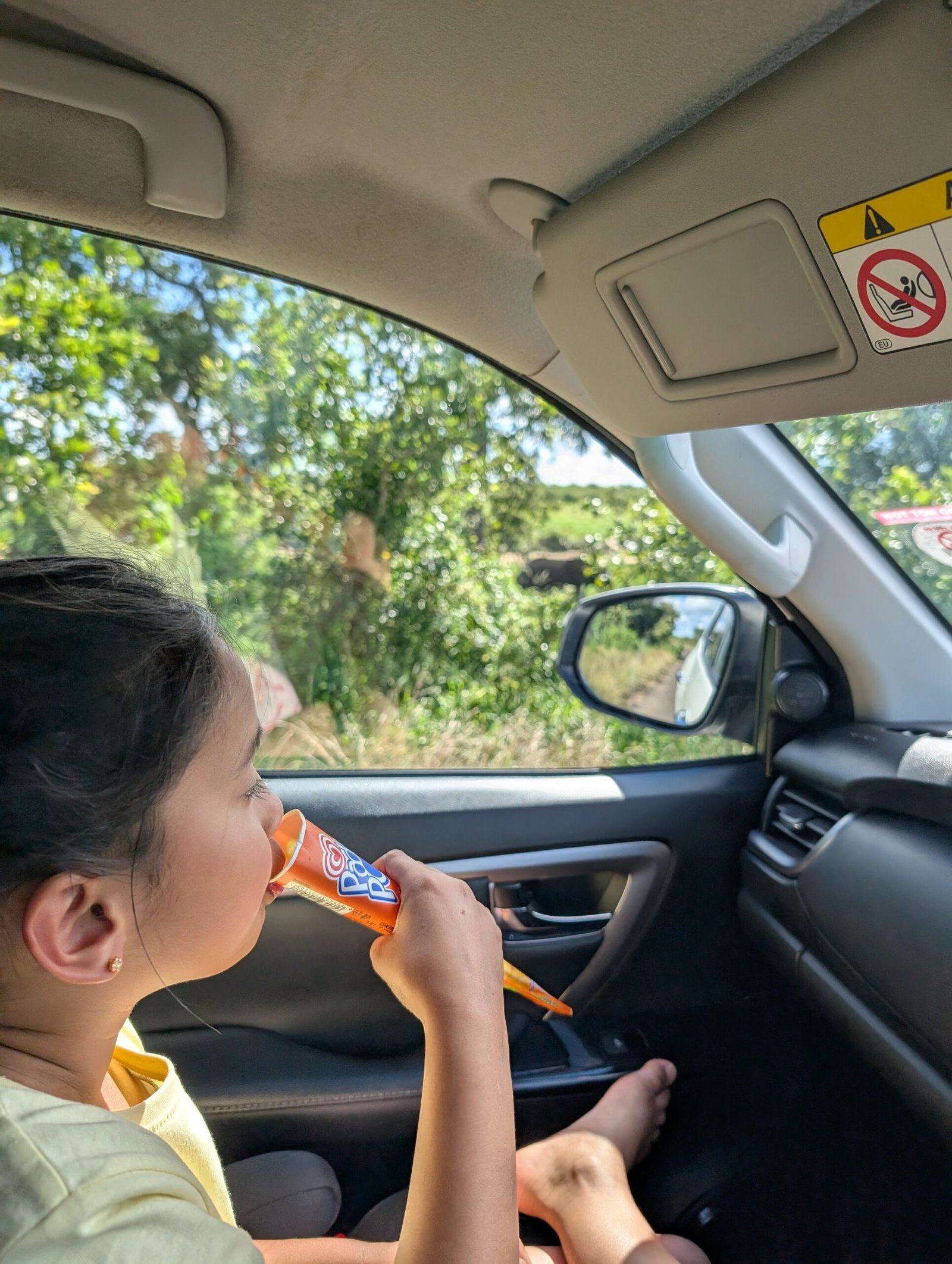
Addie, by this point, was narrating everything with the breathless authority of a tiny nature documentary presenter. So many questions though – I answered what I could. Made up what I couldn’t. Promised we’d look it up later.
The bush was making naturalists of all of us.
Satara — Our Home in the Heart of the Wild
By the time we rolled through the gates of Satara Rest Camp, the exhaustion hit us like a wall. The kind that’s been waiting politely behind the adrenaline, and now that the engine was off and the seatbelts were unclicked, it came rushing in.
Satara is managed by SANParks — the South African National Parks authority — and let me tell you, booking accommodation here is no casual affair. These camps fill up months in advance — we’re talking six months or more for peak season. If Kruger is on your bucket list, the first thing you should do — before you book flights, before you buy binoculars — is secure your camp. Trust me on this.
Now, let me set expectations. Satara is basic. You won’t find marble lobbies or turndown service here. The rooms are functional — clean, simple, with a bed, a small kitchen, and the essentials. No frills.But here’s why Satara is, in my opinion, the best possible base for a Kruger safari:
You are IN the bush.
View this post on Instagram
Not on the outskirts. Not a forty-minute drive from the nearest gate. You are inside the park, surrounded by the wild on all sides. The gates open at 5:30 in the morning and close at 6 in the evening, and because you’re already here — already deep in the heart of it — you get the action right away. No wasted hours on approach roads. No sunrise missed to a long commute. You step out, you drive, and the bush is there.
That, for a family with a young child and limited energy windows, is worth more than any five-star resort could offer.We checked into our room, dropped our bags, and felt the beautiful weight of a proper bed beneath us for the first time in nearly two days. The simple pleasure of a flat mattress — oh, how you take it for granted until you’ve slept on the floor of O.R. Tambo International.
Satara has a small camp shop — surprisingly well-stocked for a place in the middle of the African bushveld. We picked up groceries: bread, milk, some basics for the days ahead. The kind of quick, functional shopping you do when your body is running on fumes and your child is reaching the end of her extraordinary reserves.
We made Addy a quick dinner — nothing elaborate, just enough to fill a small, tired belly — and guided her to bed. She was asleep before her head fully settled on the pillow, her little body finally surrendering to the flat, still, safe comfort of a real bed after thirty-six hours of airports, aeroplanes, and adventure.
We crawled into bed with the sounds of the African night drifting through the thin walls — the chirp of crickets, the distant whoop of a hyena, the vast, breathing silence of the Lowveld settling in around us.
Tomorrow, we’d wake early. Tomorrow, the gates would open at 5:30 and we’d chase the dawn. Tomorrow, our little explorer would hopefully feel a little stronger, a little cooler, a little more herself.
But tonight? Tonight was for healing. For recovering. For letting the wild hold us gently while we slept.


This is Aldrin and my partner Amoli. We bring you "Earths Pilgrim" - a unique insight into our travel escapades while leaving life in a cubicle. If you are looking for some inspiration to break the shackles of a regular life, then you are the right place. Read more about us- Click here.