- The Long Road to the Wild: Arriving at Kruger National Park
- Kruger – Into the Wild: Skukuza to Satara
- Kruger – Cheetahs at Dawn, Grasslands at Dusk
- Kruger – The Ghost of the S100 and The Afternoon That Changed Everything
- Kruger: The Leopard Beneath Our Window
- Kruger : The Day We Almost Didn’t Go
- Kruger: The Last Hunt & the Long Goodbye
We took the morning off. We almost didn’t drive at all. And then Kruger, as if offended by our hesitation, threw everything it had at us in a single day.
Day 5 — Leopard Kills, Painted Wolves, and Four Lions in the Dark
The Morning We Chose Rest
For four straight days, we’d been up at 4:30. Four dawns chased. Four exhausting, exhilarating, soul-filling days of driving the bush from gate-open to gate-close. And it had taken its toll — on all of us, but especially on Addie.The blisters had spread overnight. Angry, itchy welts across her skin — insect bites, we were fairly certain, but the kind that make a parent’s stomach clench with worry nonetheless. The fever had finally broken — her temperature was down, and that battle was won — but these new marks brought fresh anxiety. Her eyes were still puffy from the dust allergy. She was brave, but she was tired.
We looked at each other across the dim room of our Skukuza accommodation, and for the first time on this trip, we made a decision that went against every instinct in our safari-obsessed hearts:We’re not going out this morning.No 4:30 alarm. No lining up at the gate. No dawn drive. Today, Addie rests.But Addie is the priority. Addie is always the priority. The bush would still be there tomorrow. She slept until nine o’clock.Nine. In the morning. In Kruger National Park. While the rest of the safari world had been up since before dawn, our little explorer was buried under blankets in a Skukuza rest camp room, sleeping the deep, healing, restorative sleep that only a child’s body knows how to conjure.
When she woke, she was transformed. Brighter. Bouncier. More herself than she’d been in days. The dark circles under her eyes had softened. The lethargy had lifted. She bounced out of bed, looked at us with those big, sparkling eyes, and said the words we’d been waiting to hear: “Can we go see animals now?”We laughed. Of course we could. But we tempered expectations — it was already mid-morning, the sun was climbing, and the bush would be winding down. Don’t expect much, sweetheart. The animals rest when it’s hot.
Kruger, as it turns out, had not received that memo.
Two Kilometres and a Leopard Kill
We left the Skukuza camp gates at around ten — practically lunchtime by safari standards. The tar road stretched south, quiet and sun-drenched. I drove lazily, expecting nothing more than a few impala.
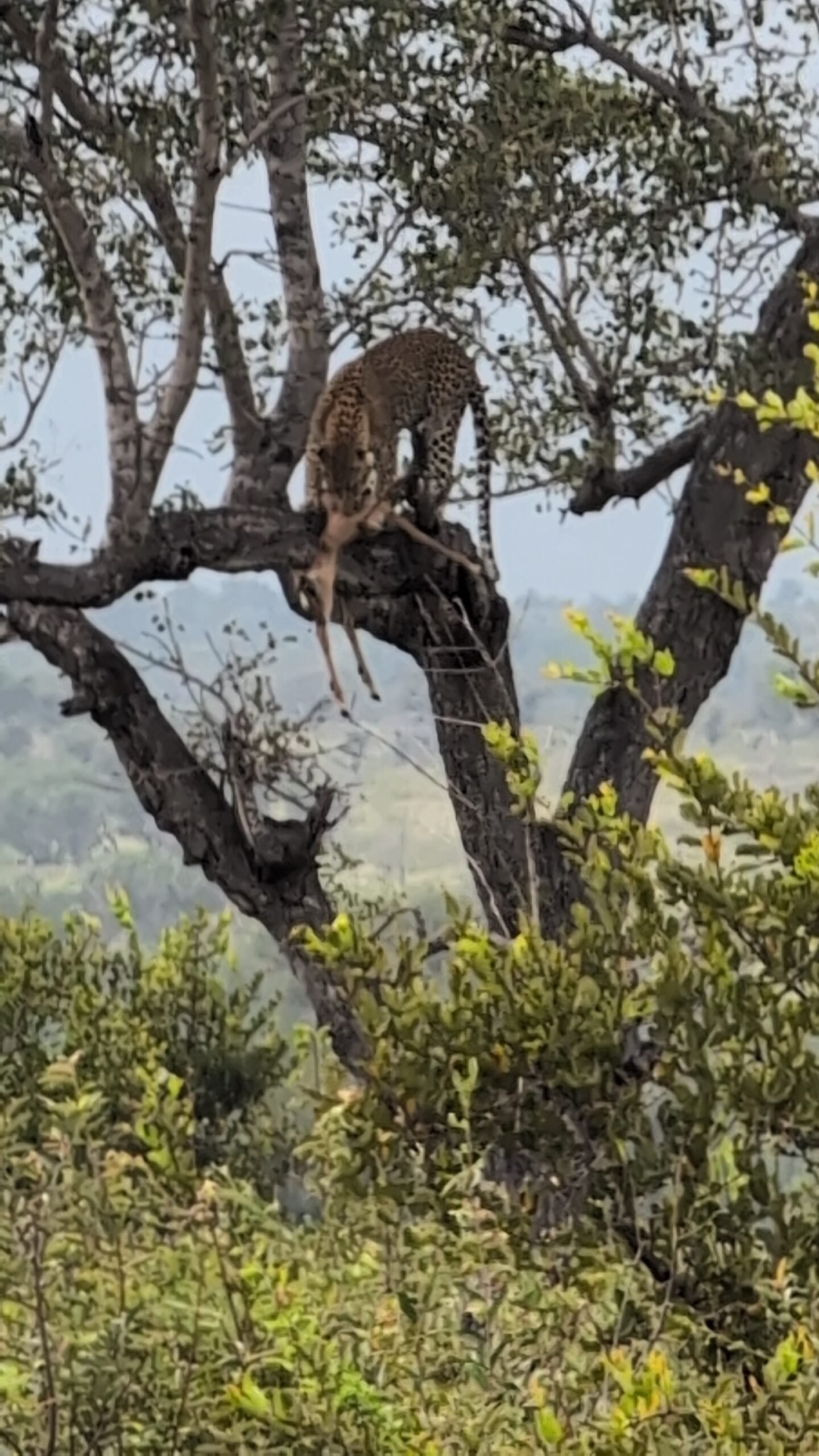
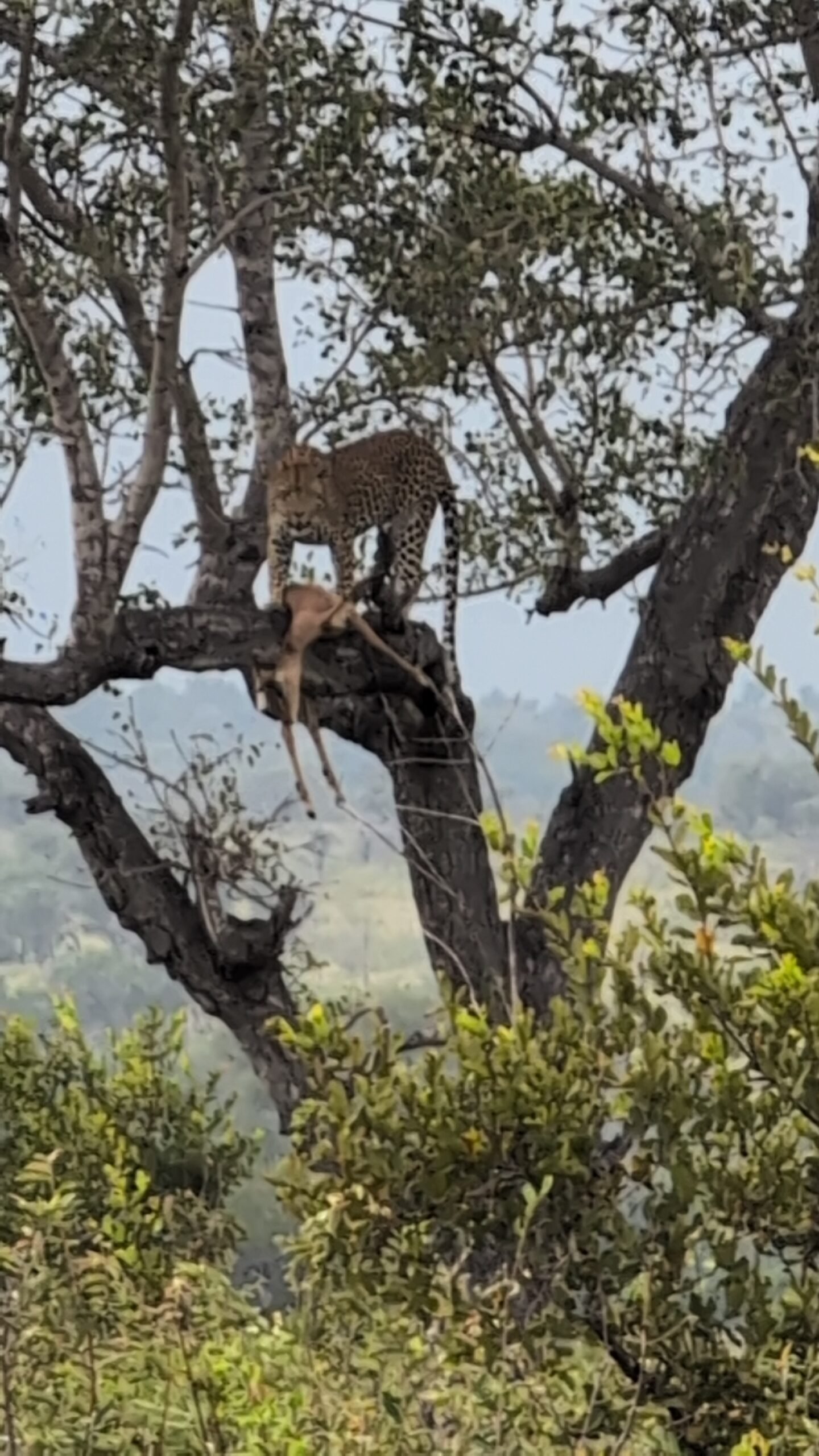
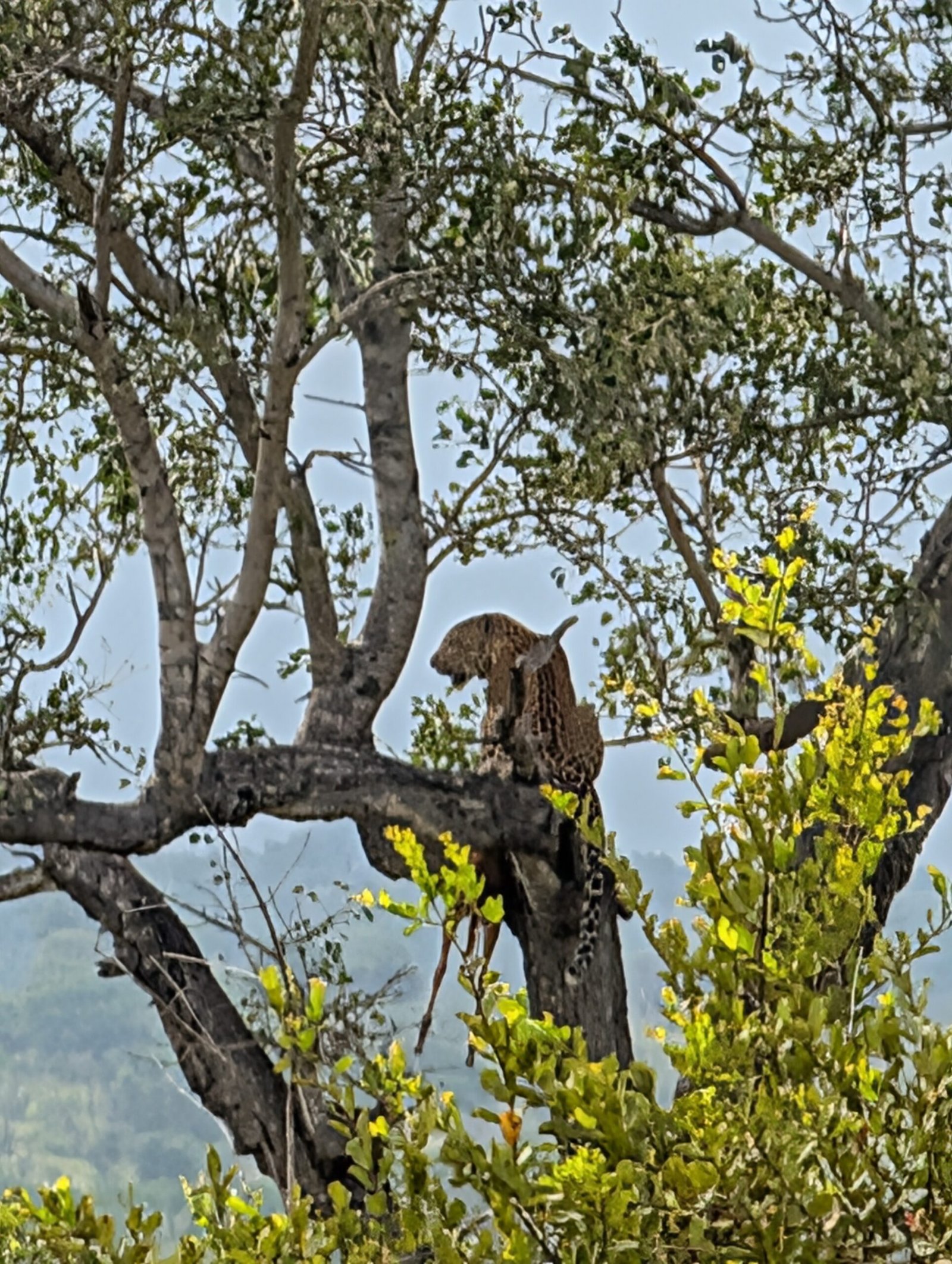
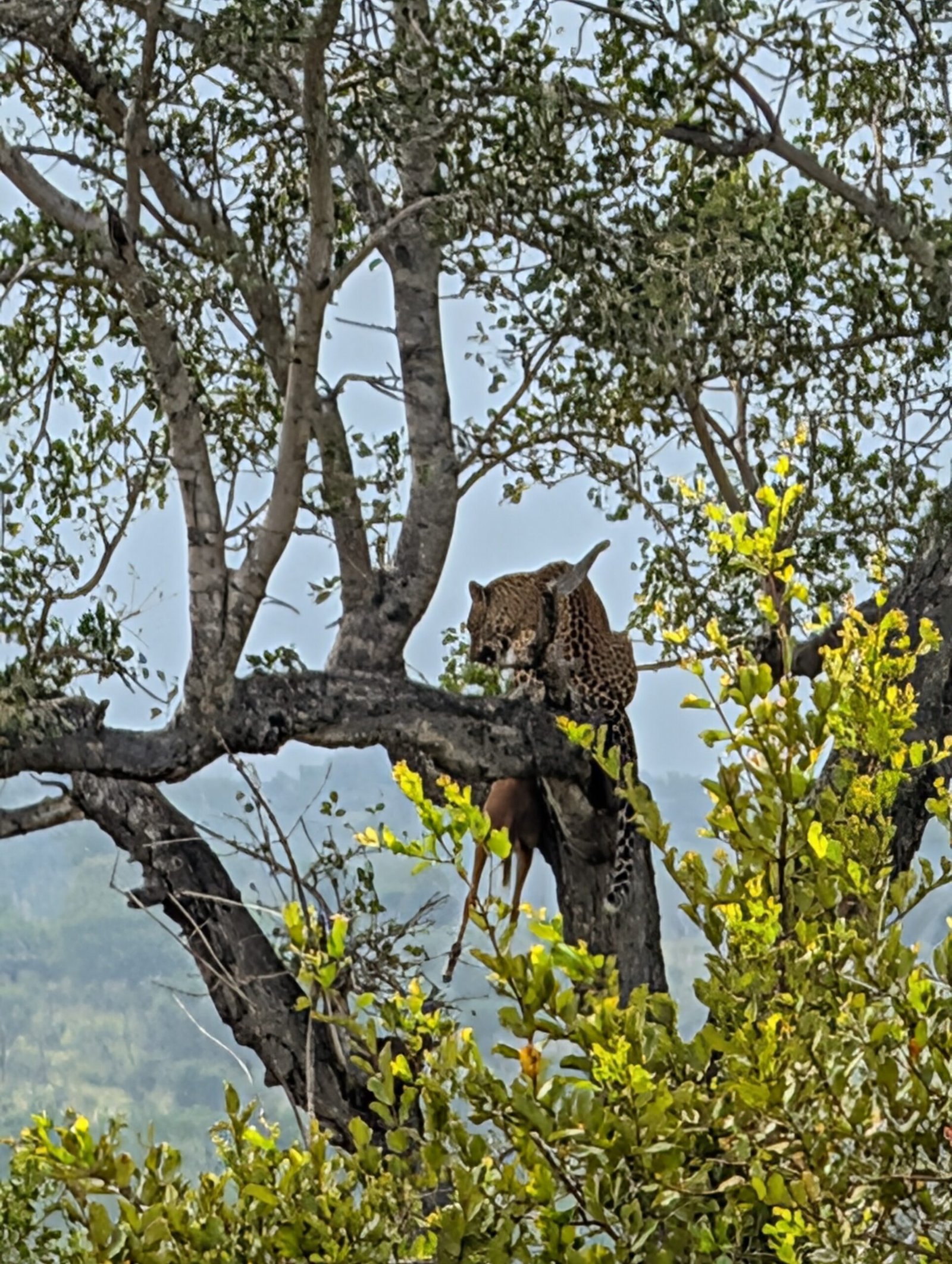
We made it two kilometres.A cluster of cars. Binoculars. Telephoto lenses the size of small telescopes. The unmistakable energy of a significant sighting.i pulled over. Scanned the trees. And there — high in the branches of a tall tree near the road — was a leopard. With a kill.
The leopard had hunted, killed, and hauled its prey(Impala) up into the tree — an extraordinary feat of strength that never ceases to amaze. Leopards cache their kills in trees to keep them safe from lions and hyenas, and this one had positioned its meal perfectly: draped across a branch, the impala’s legs dangling, while the leopard moved around it with the proprietary confidence of a chef guarding a prized dish.We watched in awe. Even at a distance, the scene was primal and magnificent — the spotted predator, the lifeless prey, the ancient drama of survival playing out in the African canopy.We kicked ourselves for not having the SLR camera — in our relaxed, “we’re just going for a little drive” mindset, we’d left it in the room. Mobile phones would have to do. The photos were grainy, distant, but the memory was crystal sharp.
As we watched, the leopard adjusted its grip on the impala, and then — in a moment that made the crowd collectively gasp — it dropped the kill. The impala tumbled from the branch and hit the ground with a heavy thud. The leopard followed immediately, leaping down from the tree with fluid grace, grabbing its meal, and vanishing into the undergrowth.
Gone. Just like that. The show was over.We stayed for a while — you know us by now — but the bush was thick and the leopard was deep. This time, patience yielded nothing. It had taken its prize and retreated where no lens could follow.
But a leopard with a kill. On our “day off.” Two kilometres from camp. At ten in the morning.Kruger simply refuses to let us have a quiet day.
Painted Wolves — The Holy Grail, at a Distance
We drove on, meandering through the roads south of Skukuza, soaking in the late morning sun. And then — a lone car, stopped, its occupant pointing excitedly into the distance.We pulled over. I asked what he’d seen.
“Wild dogs. Out there, under the bushes.”
My heart nearly burst out of my chest.African Wild Dogs. Painted Wolves. Lycaon pictus. One of the most endangered and most sought-after animals in all of Africa. Kruger is one of their last strongholds, and even here, sightings are rare, unpredictable, and spoken about in hushed, reverent tones.
I’d dreamed of seeing them. Not in the casual way you dream about a nice meal or a good sunset — in the deep, obsessive way that wildlife lovers dream about the creatures that haunt their imagination. These are animals that hunt in coordinated packs with a success rate that shames lions. Their mottled coats — patches of black, brown, white, and gold — are as unique as fingerprints. No two are alike. They are chaos and beauty and teamwork and wildness distilled into one extraordinary species.
And there they were. At a distance, yes — tucked under bushes, going about their business in lazy circles, clearly resting after a morning of activity. We could see them through binoculars: flashes of mottled fur, the occasional head lift, the distinctive rounded ears.
We watched for as long as we could. They weren’t coming closer — settled deep in the shade, waiting for the cooler hours. Other cars came and went. We got a glimpse. A taste. An appetiser.It wasn’t enough. Not nearly enough.But I filed away the location. Burned it into my memory. Because something told me we hadn’t seen the last of these dogs.
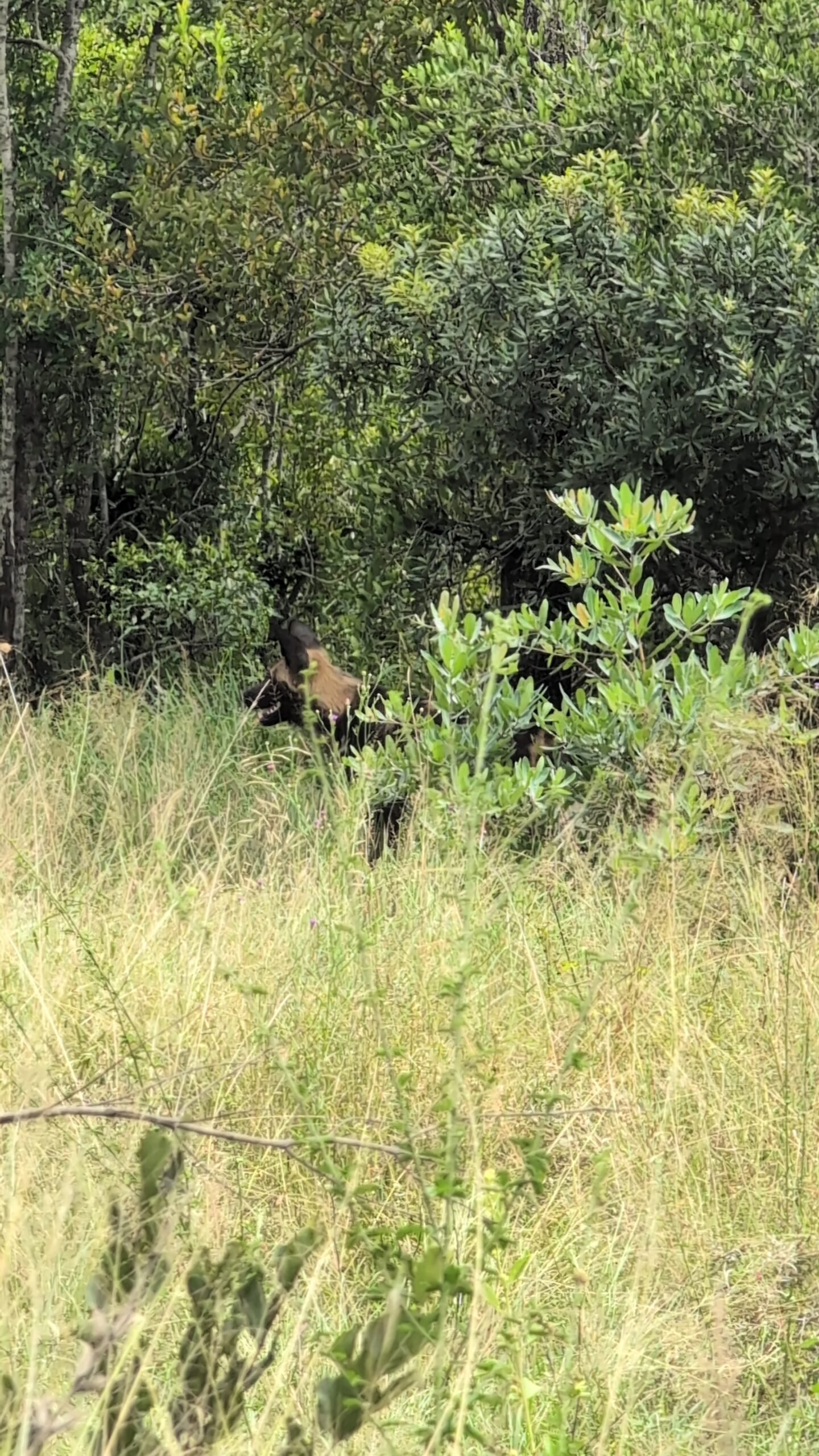
Tired and slightly frustrated — so close, yet so far — we drove back to camp for lunch and rest.
The Instinct Returns — Back to the Dogs
The afternoon drive started conventionally enough. We took the H4-1 towards Lower Sabie — the same road that had given us the incredible leopard-beneath-the-window encounter the day before. Lightning doesn’t strike twice, I told myself.
And it didn’t. The H4-1 was quiet. A troop of baboons entertained us briefly — grooming each other with the intensity of gossips exchanging secrets — but otherwise, the road offered little.
The sun was descending. The clock was ticking. Another quiet afternoon looming.And then the instinct spoke.That same irrational, gut-deep pull that had made me turn the car around to find the leopard the day before. The same voice that said go back, go back, go back.The wild dogs. They’re still there. And they’ll be waking up.
It was a gamble. The H4-1 was productive territory, and turning around meant losing time we didn’t have — gates close at six, and the dog sighting was in the opposite direction of our camp.I turned the car around.My wife didn’t question it. Four days in, she’d learned to trust the instinct. Or maybe she’d just given up arguing with a madman.
I drove back to the exact spot where we’d seen the wild dogs that morning. Parked. Scanned.For a moment — nothing. The bushes where they’d been resting looked empty. Had they moved on? Had I wasted our last golden hour on a hunch?
And then — movement. From under the bush. One dog. Two. Three. Four. Emerging onto the road with the stretching, yawning energy of a pack waking from an afternoon nap.Then from the other side of the road — the side we hadn’t even been watching that morning — more of them. Five. Eight. Ten. Fifteen. Pouring out of the undergrowth like a dam breaking, mottled coats flashing in the amber afternoon light.Twenty-plus wild dogs. On the road. All around us.
I gripped the steering wheel so hard my knuckles went white.They were everywhere. Playing, tumbling, nipping at each other with the infectious, bouncing energy that makes wild dogs unlike any other predator in Africa. They don’t have the gravitas of lions or the stealth of leopards. They have something better — pure, unbridled joy. They play like puppies. They greet each other like long-lost friends. They vibrate with a collective excitement that is utterly, irresistibly contagious.
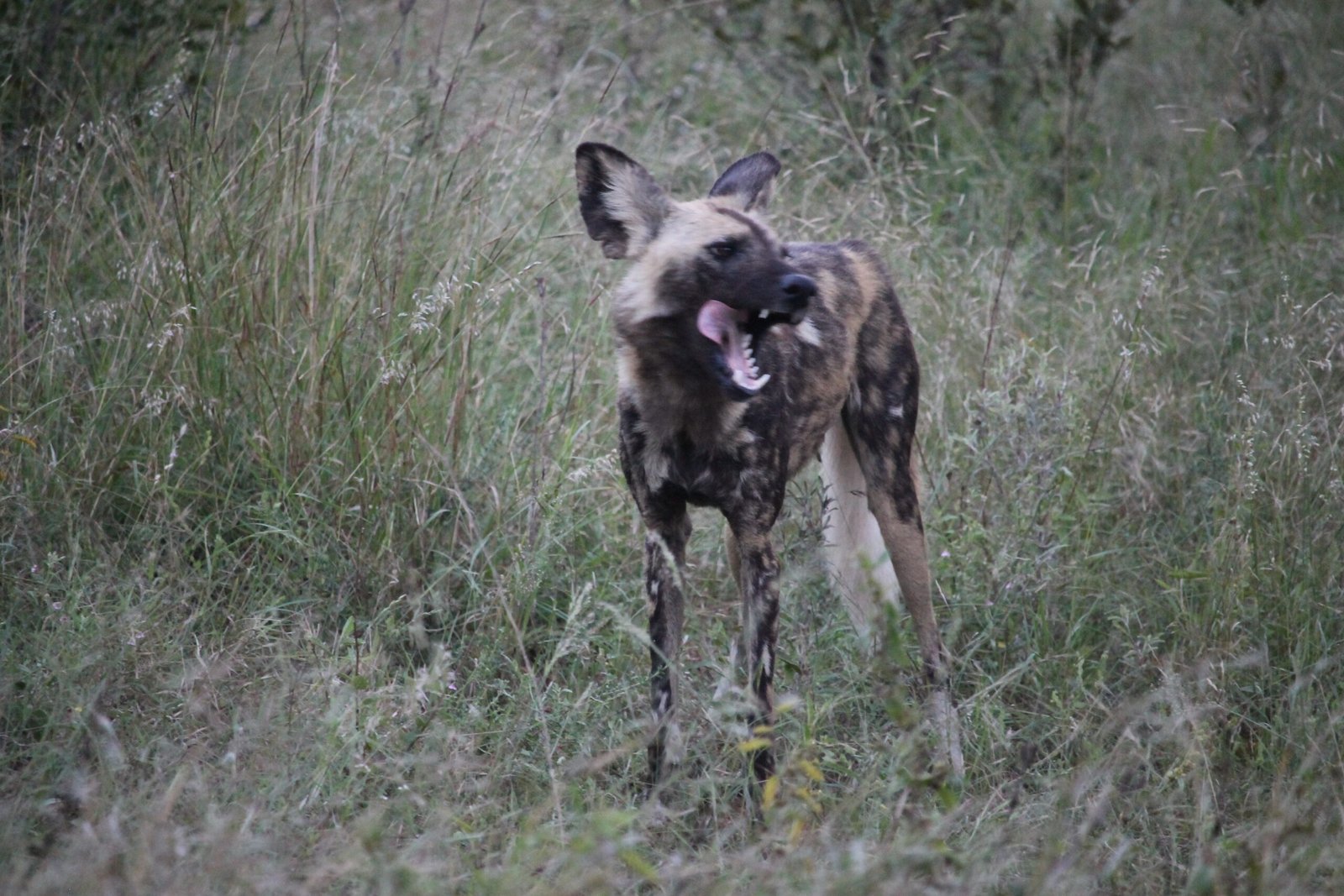
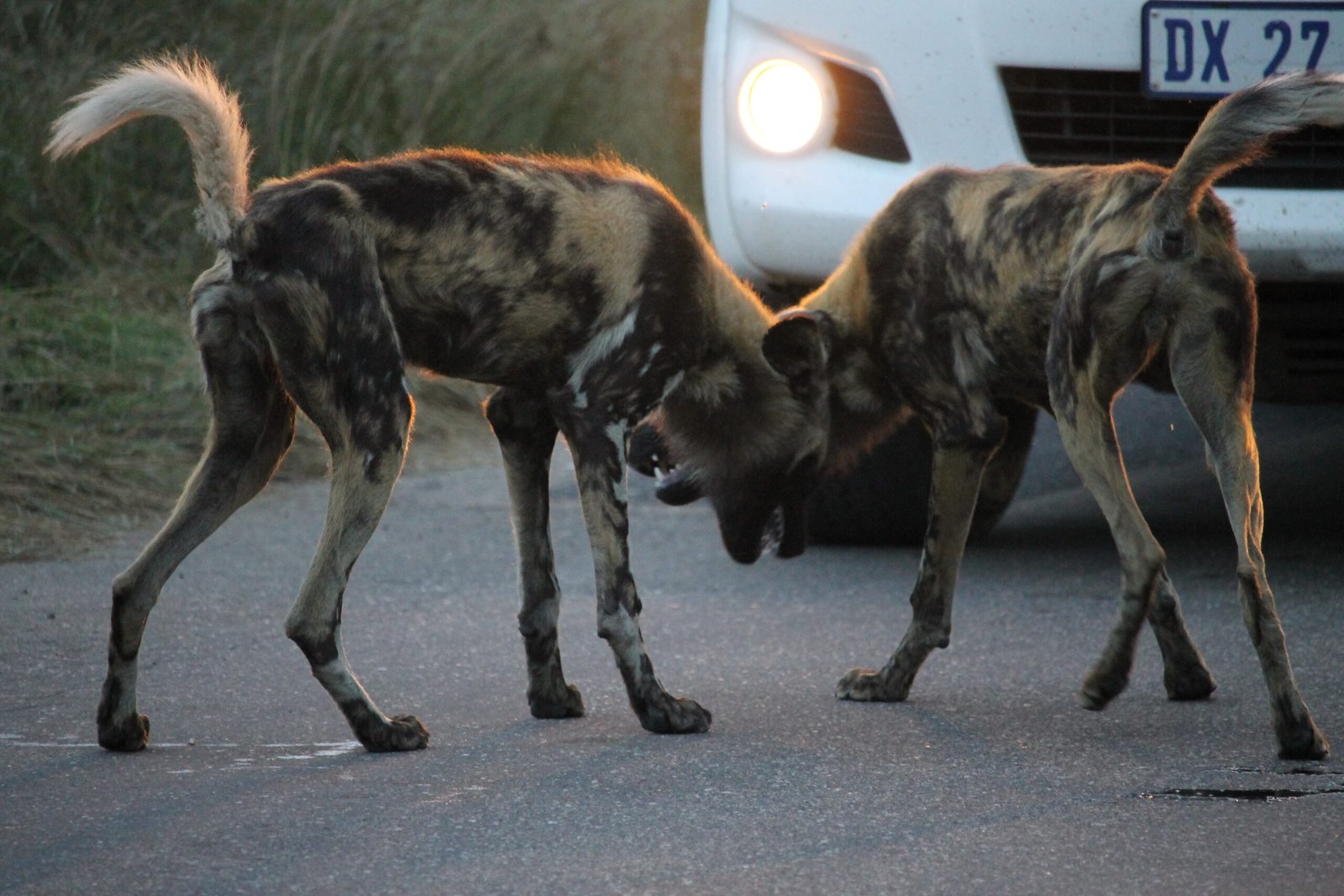
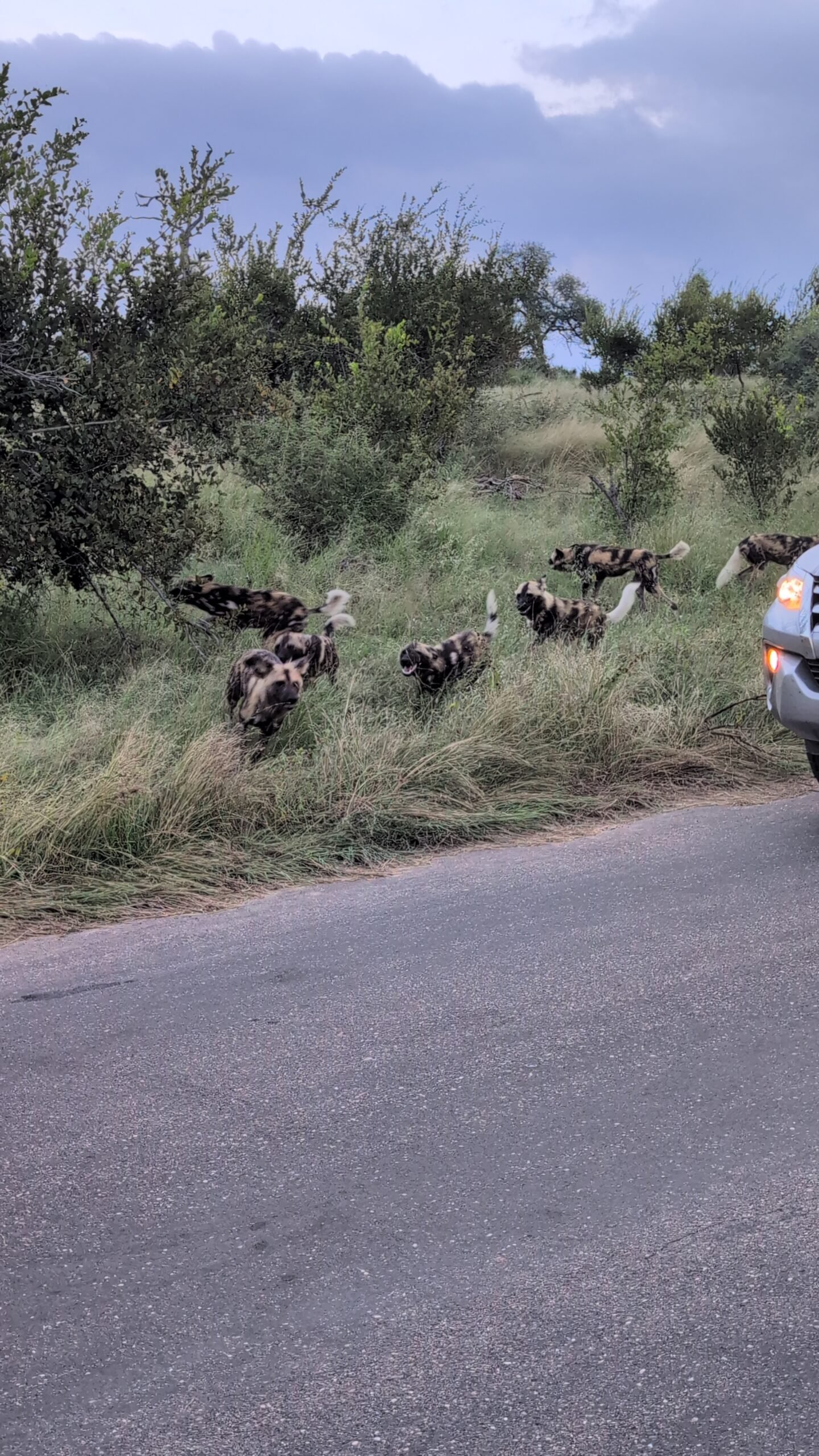
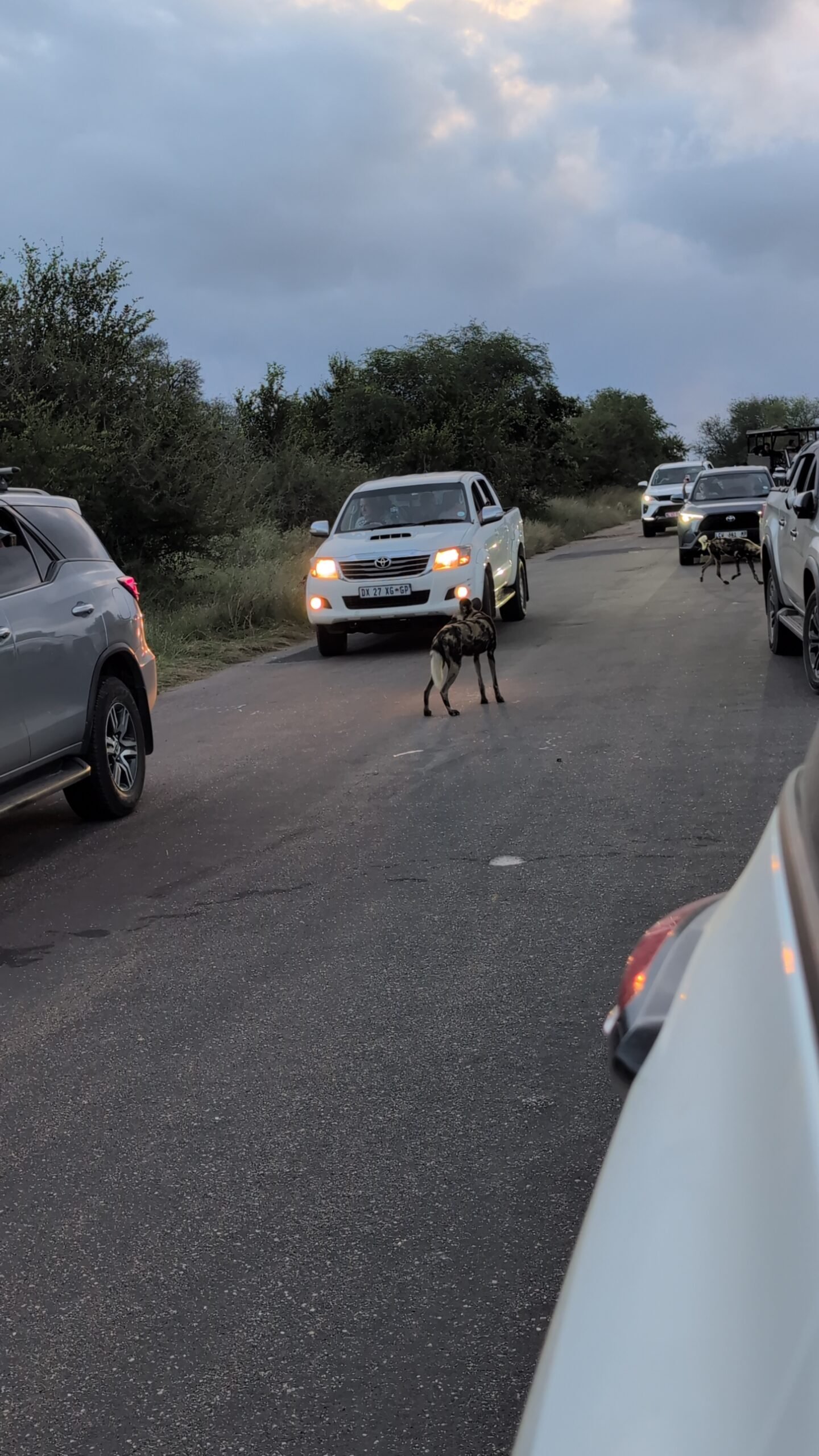
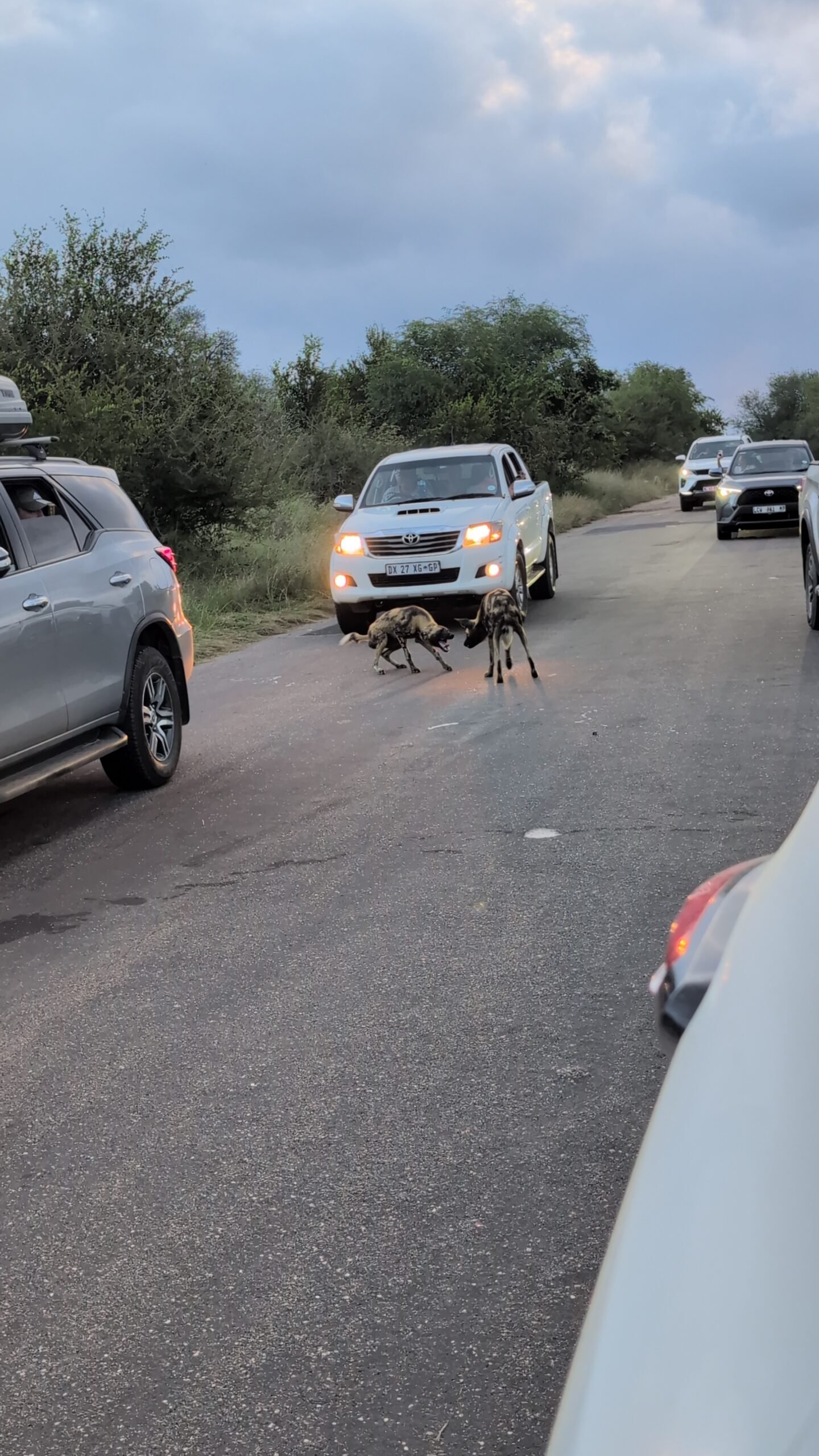
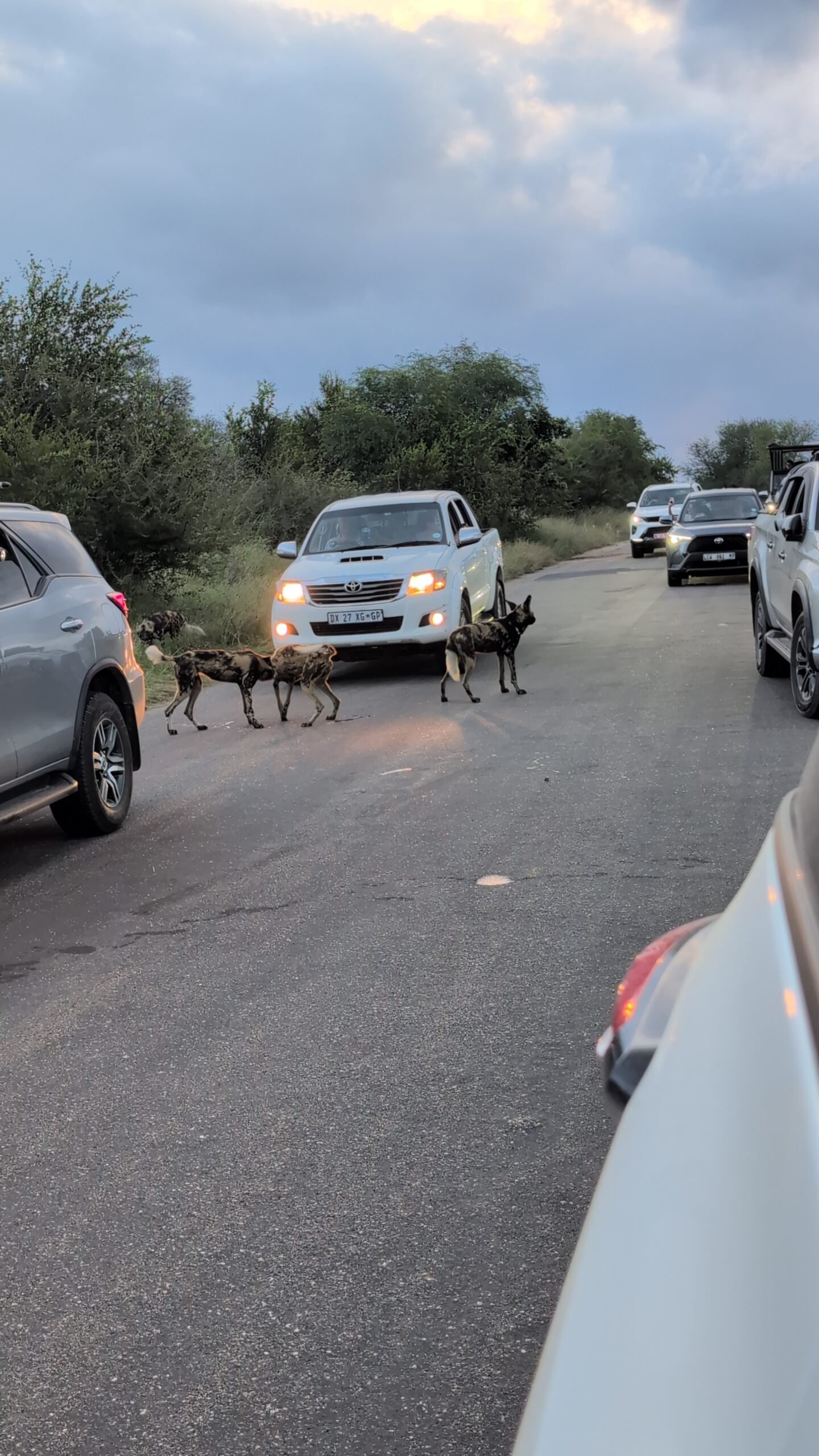
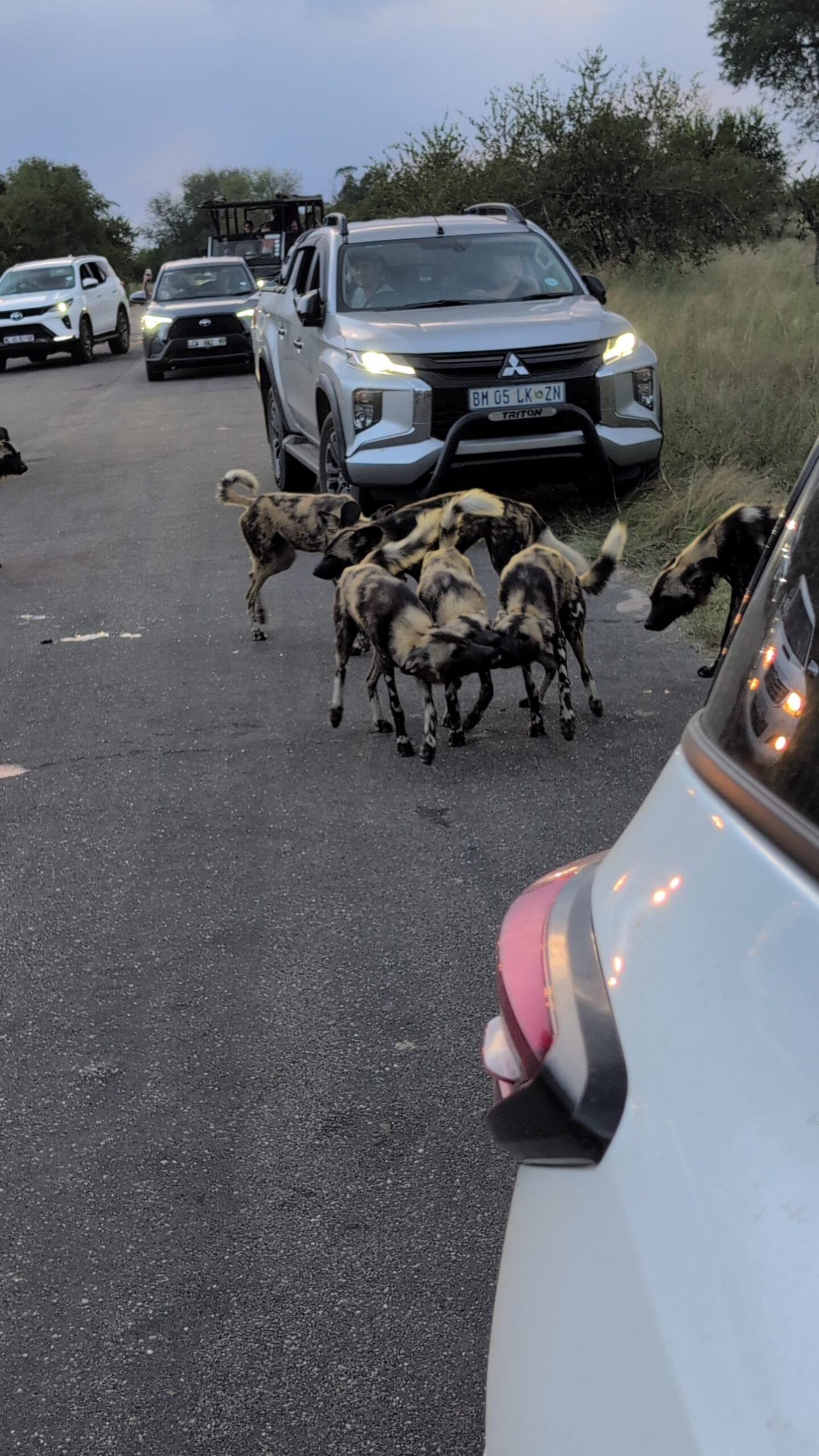
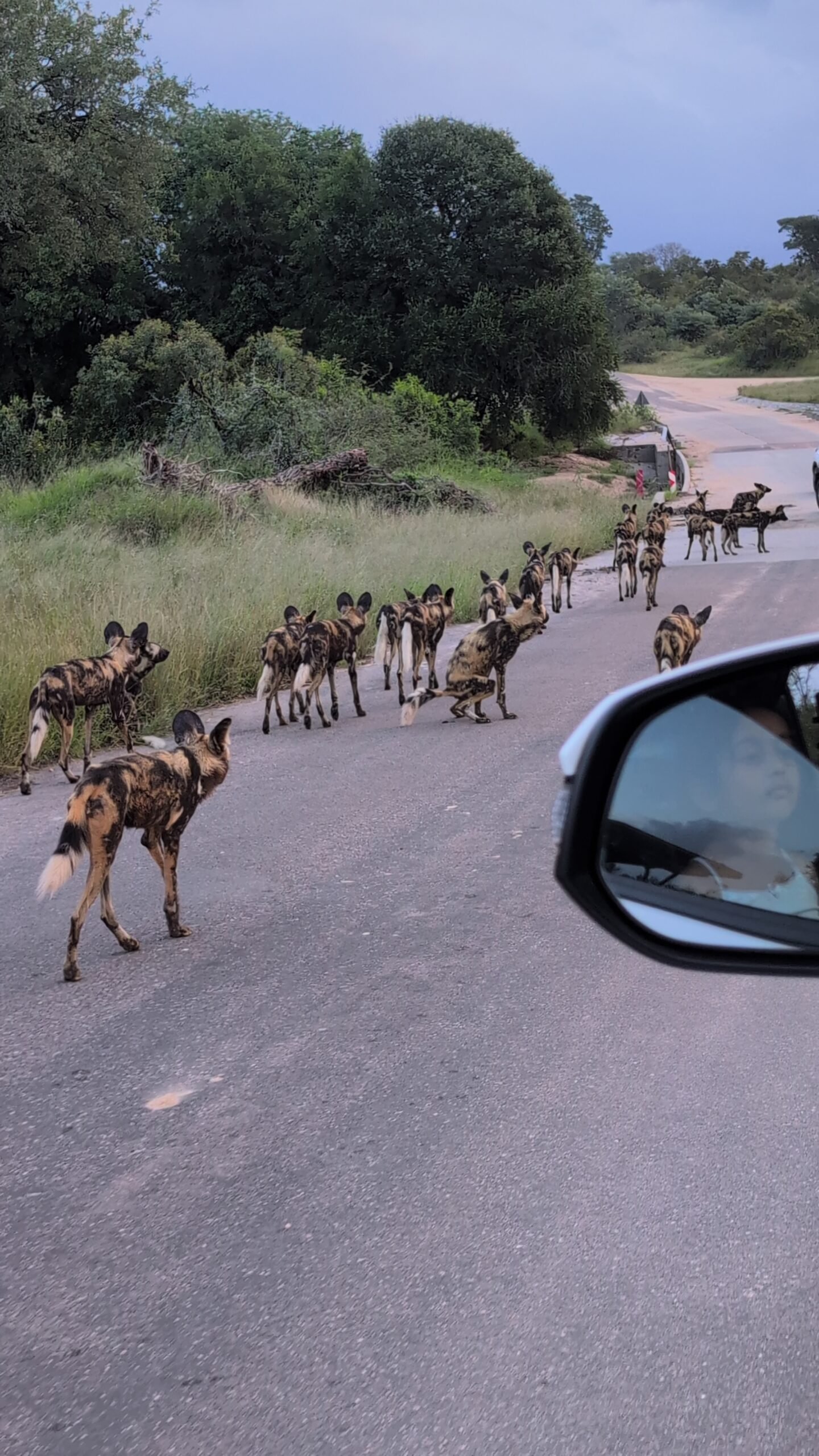
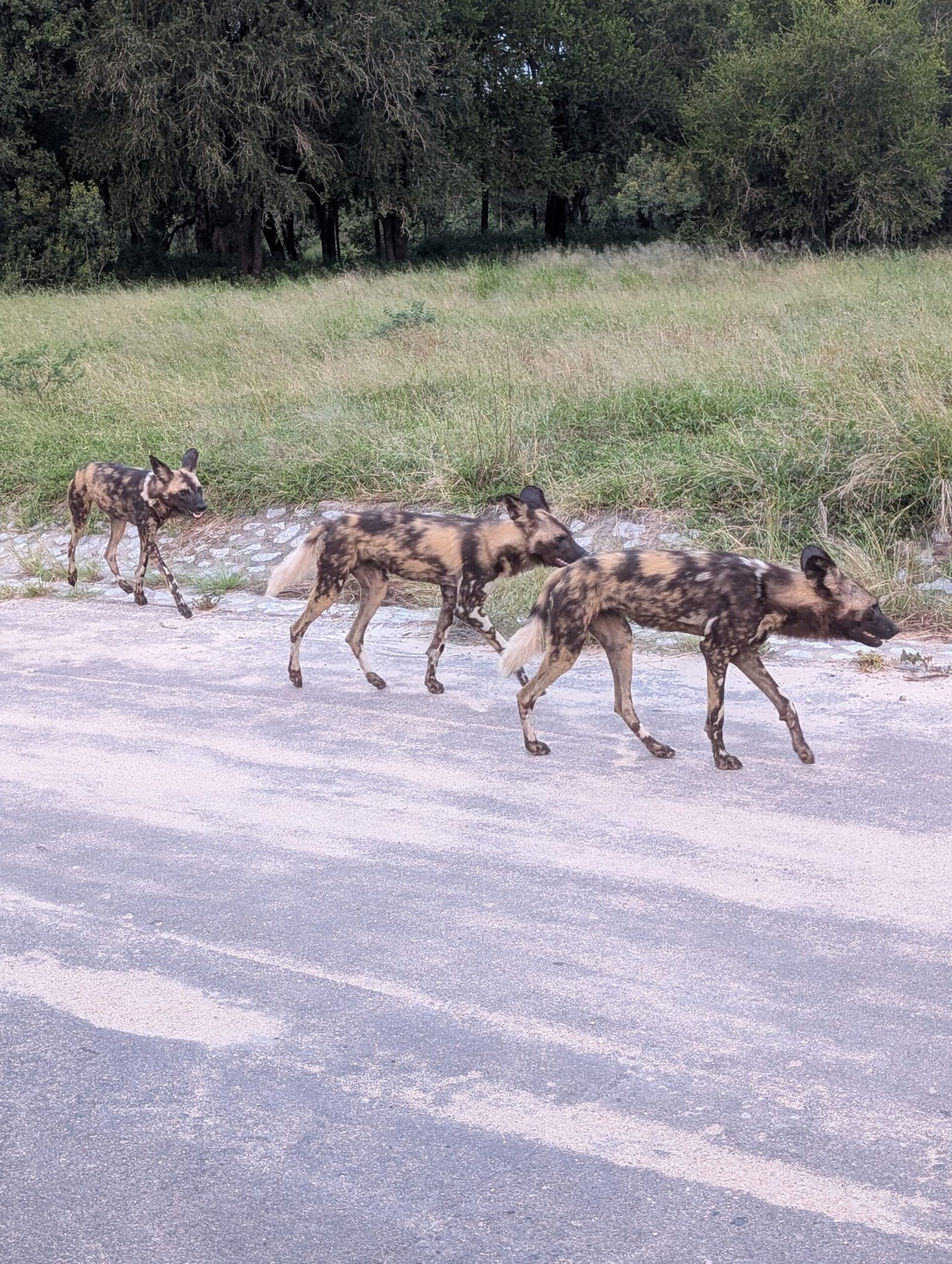
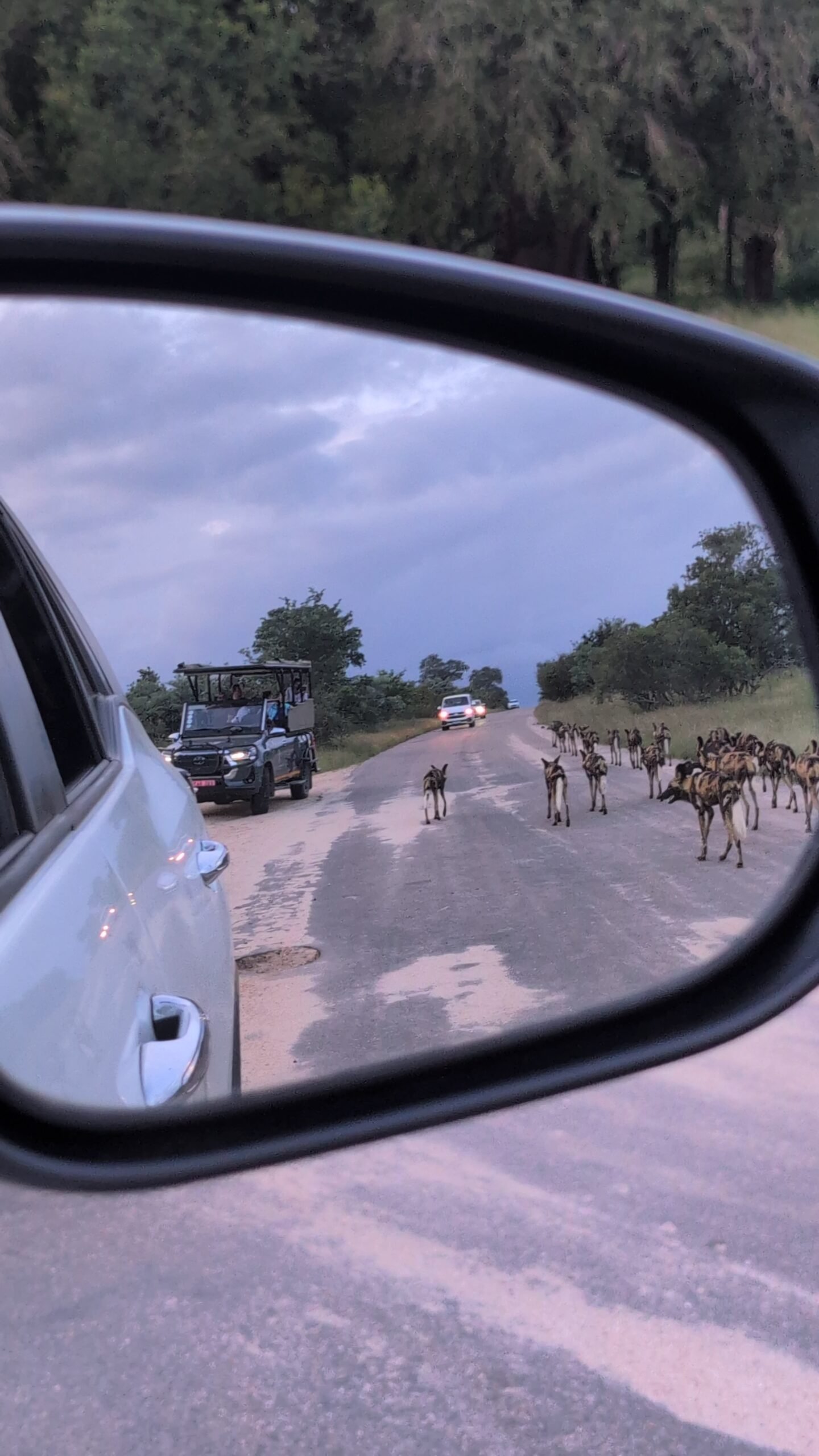
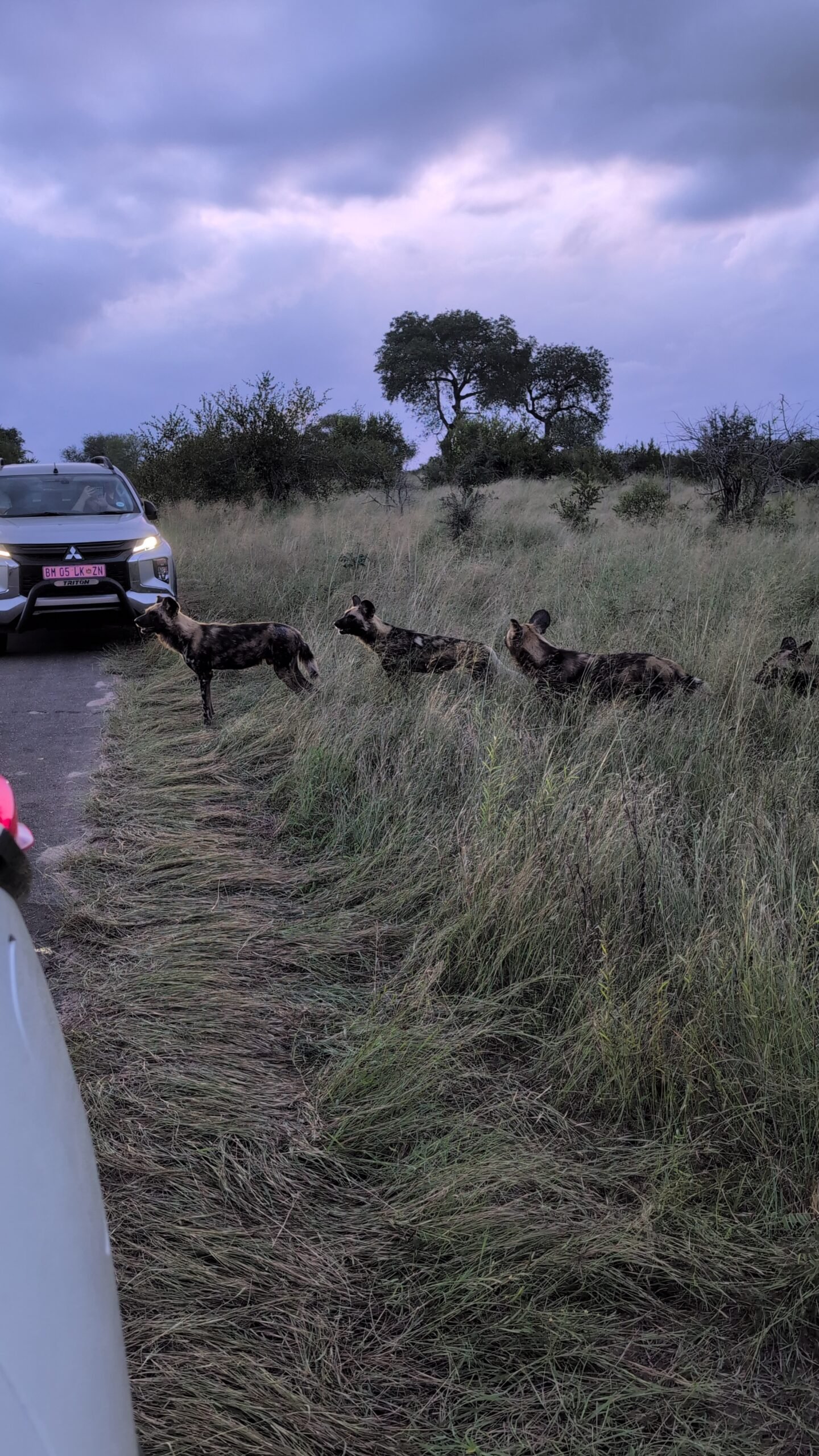
They walked between the cars. Past our windows. Around our wheels. Close enough to see every individual spot on their coats, every nick on their enormous round ears, the intelligence and mischief dancing in their dark eyes.
And then — as if responding to some silent signal that only the pack could hear — they formed up. The playing stopped. The energy shifted from playful to purposeful. And they began to march.Twenty-plus painted wolves, moving in formation down the road with the disciplined, synchronised intent of a hunting party heading to war. It was mesmerising. The most beautiful, most thrilling animal behaviour I have ever witnessed.
We followed them for as long as we could — driving slowly alongside the marching pack, cameras clicking, hearts pounding, until the clock forced our hand.They were heading in the opposite direction of our camp. We had to turn back.I stopped the car. Watched them march into the golden distance — twenty wild souls disappearing into the African evening, heading for a hunt we’d never see but would always imagine.
Goodbye, painted wolves. Thank you for the greatest wildlife sighting of our lives.
View this post on Instagram
The Night Safari — Four Kings in the Dark
Back at camp, buzzing with adrenaline, we faced a decision. We’d booked a night safari at Skukuza — somewhat on impulse, somewhat because of an unfinished piece of business.
Our Big Five scorecard read: Leopard ✅ Elephant ✅ Buffalo ✅ Cheetah (bonus!) ✅ Wild Dogs (bonus!) ✅
But lions — proper lions, not a fleeting five-second glimpse on a road at dusk — had eluded us. Skukuza is known as lion country. The dense bush along the Sabie River is prime territory for prides. If we were going to find them, this was our best shot.
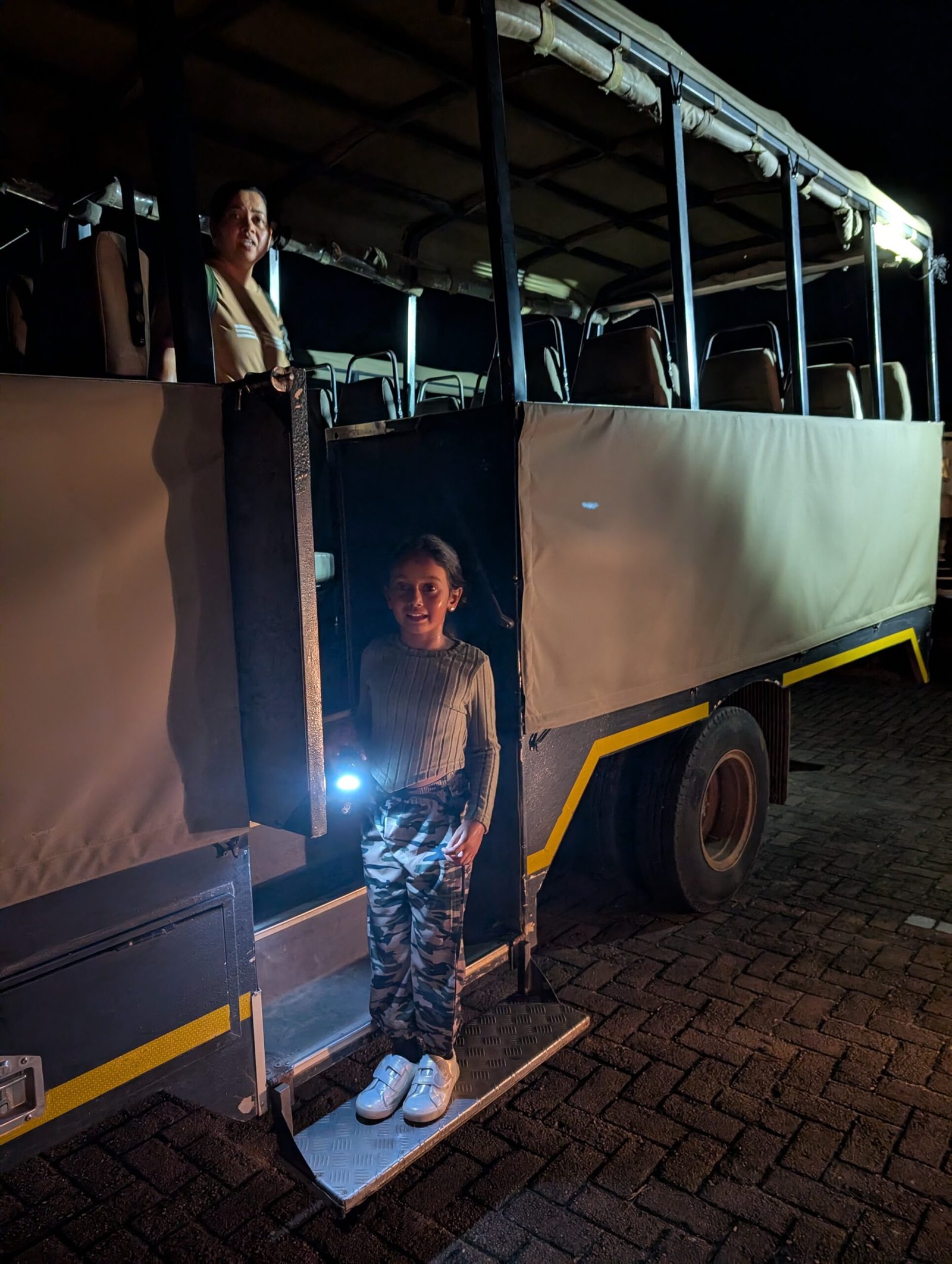
Addie was exhausted. Five days of safari had depleted every reserve she had. She climbed into the open-air night safari vehicle, was asleep before we left the car park. Out cold. Gone. Dreaming of wild dogs, probably.We drove into the darkness.
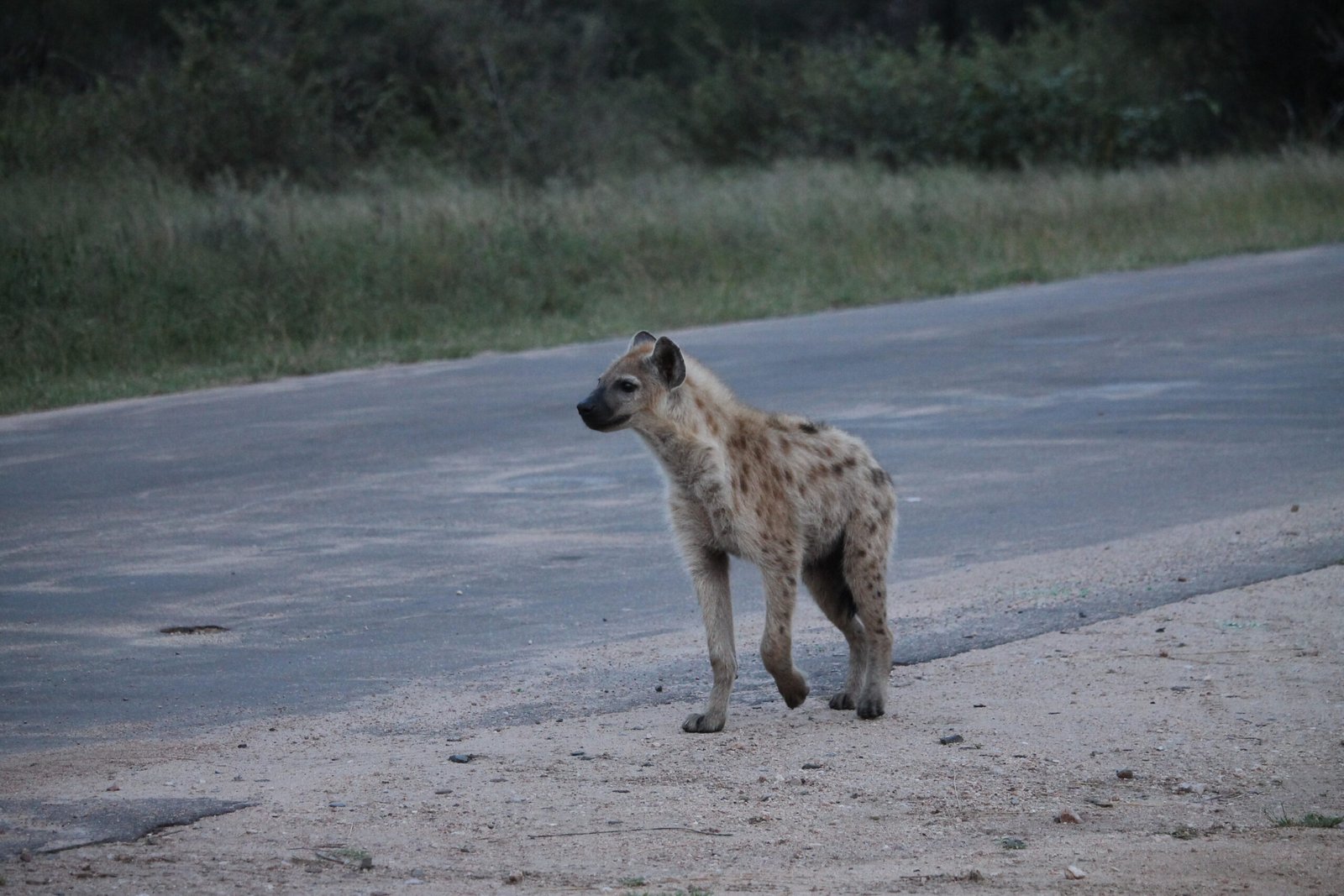
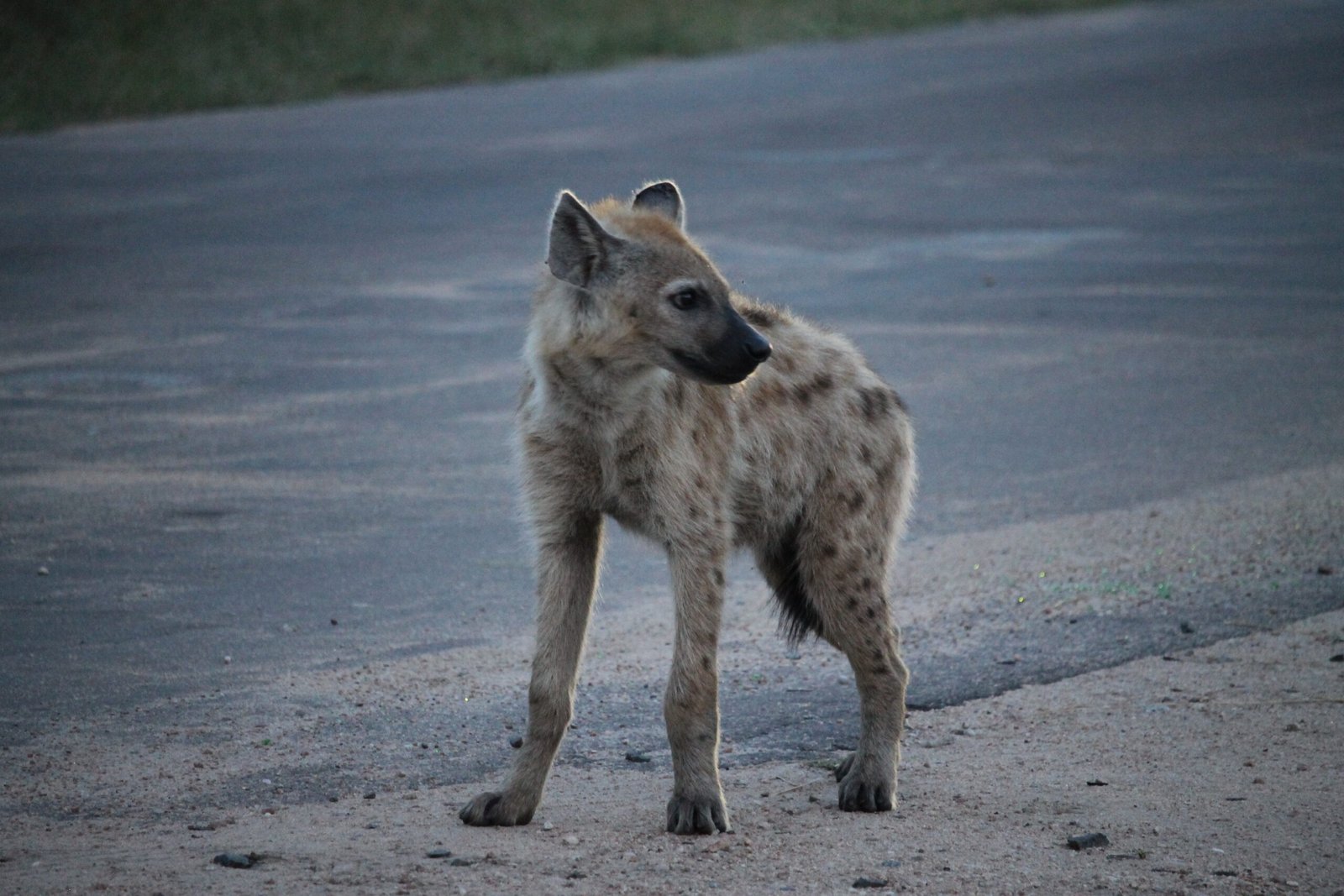
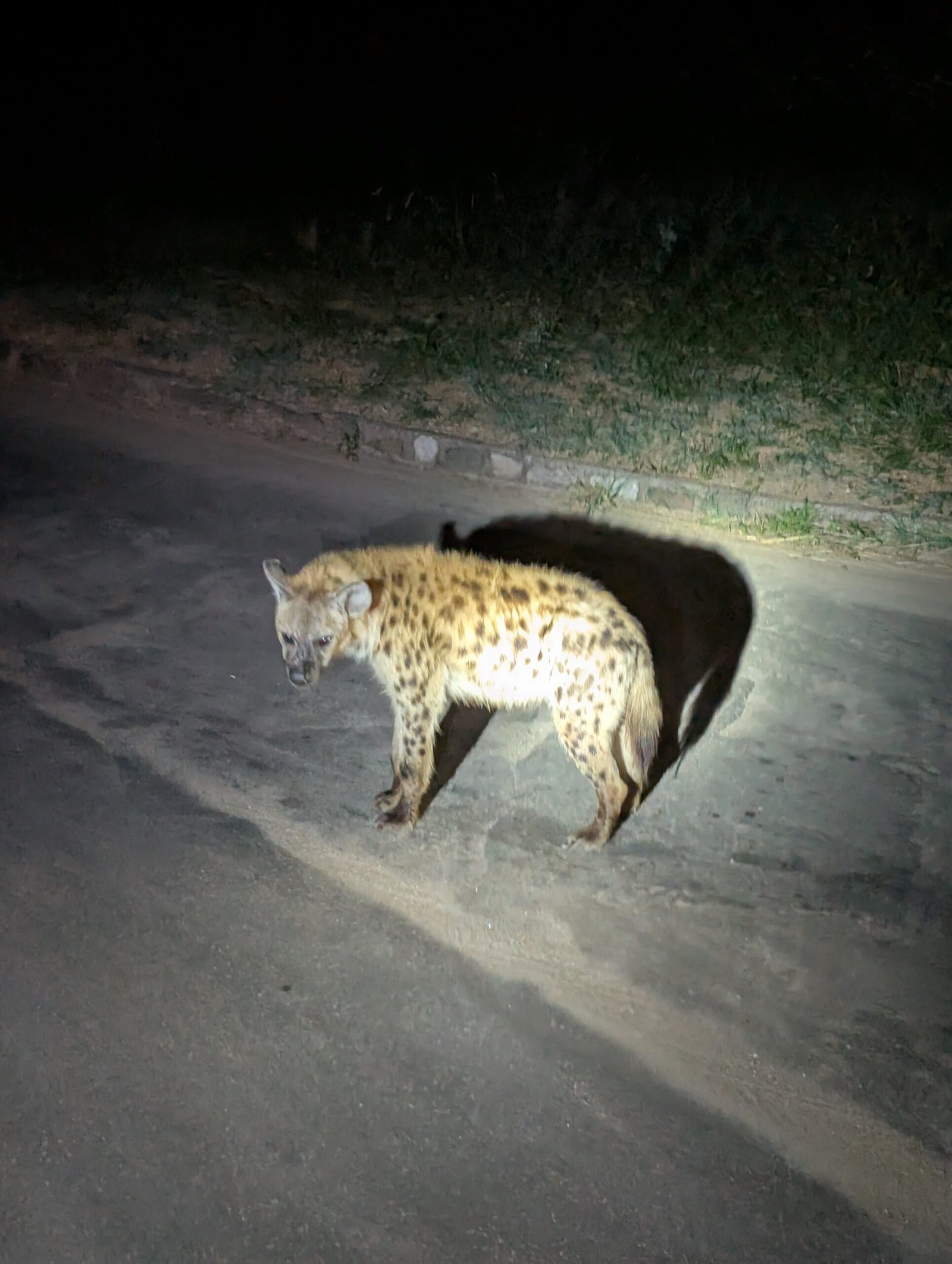
The spotlight swept the bush. The familiar nocturnal chorus began — crickets, frogs, the distant whoop of a hyena (spotted near camp, eyes gleaming in the light, slinking along the perimeter with the guilty energy of a creature that knows it’s up to no good).We took the H4-1 — our faithful road — and crossed the high bridge over the Sabie River. The water glinted below in the moonlight, dark and ancient and alive.
And then, just past the bridge, the spotlight caught something on the road.The vehicle stopped.Four lions.Four young males. Lying on the warm tar road, sprawled with the boneless, heavy relaxation of apex predators who have never, not once, known fear. They were magnificent — thick manes beginning to darken, powerful shoulders, massive paws.
They looked… annoyed. Mildly irritated that our spotlight had interrupted their evening nap. One of them raised his head, squinted at us with an expression of pure, regal disdain — really? — and then laid his head back down with a huff.A second rose slowly, stretched — a stretch that rippled through every muscle in his enormous body — and padded off the road into the bush, where he collapsed back into sleep.
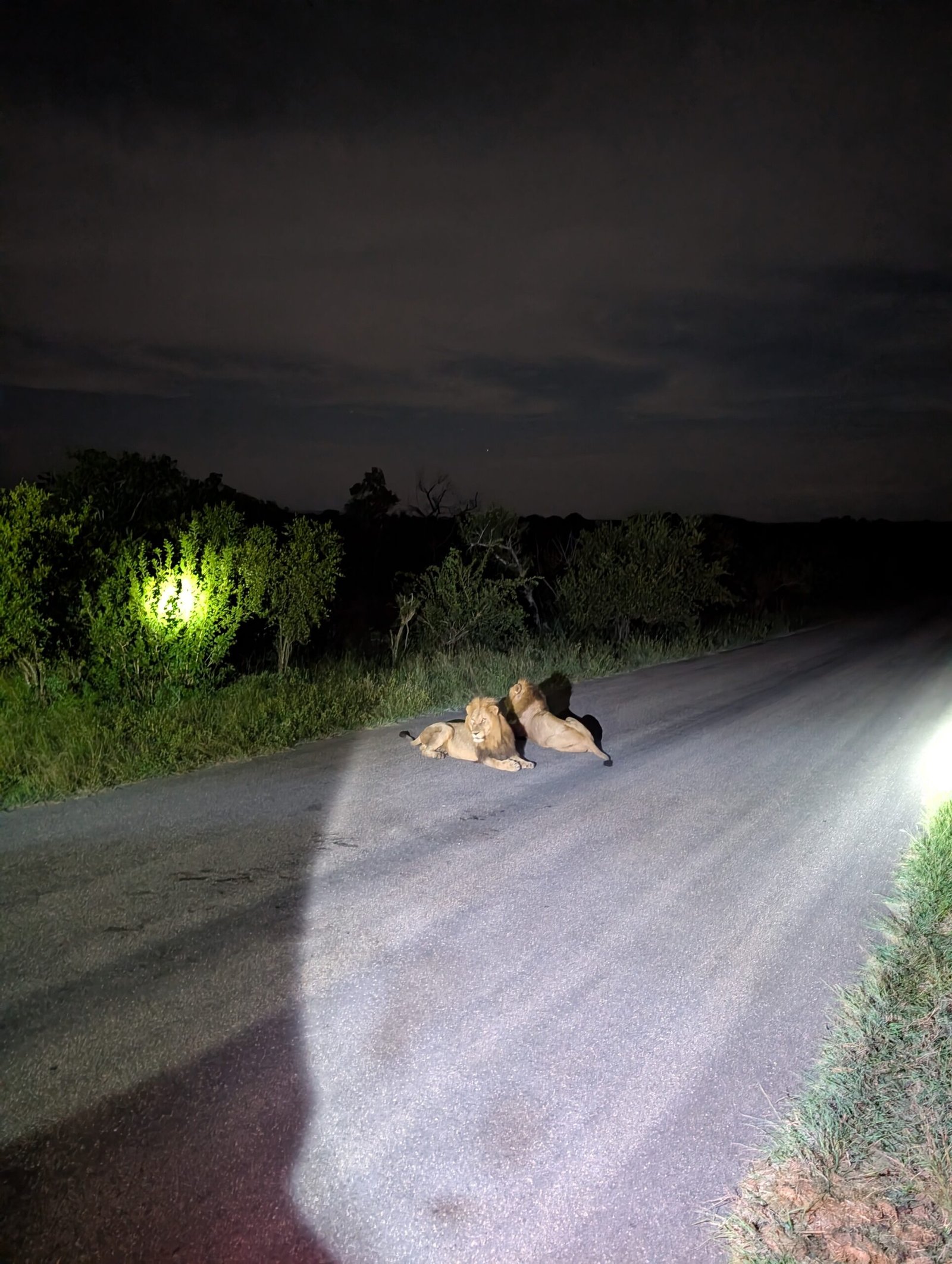
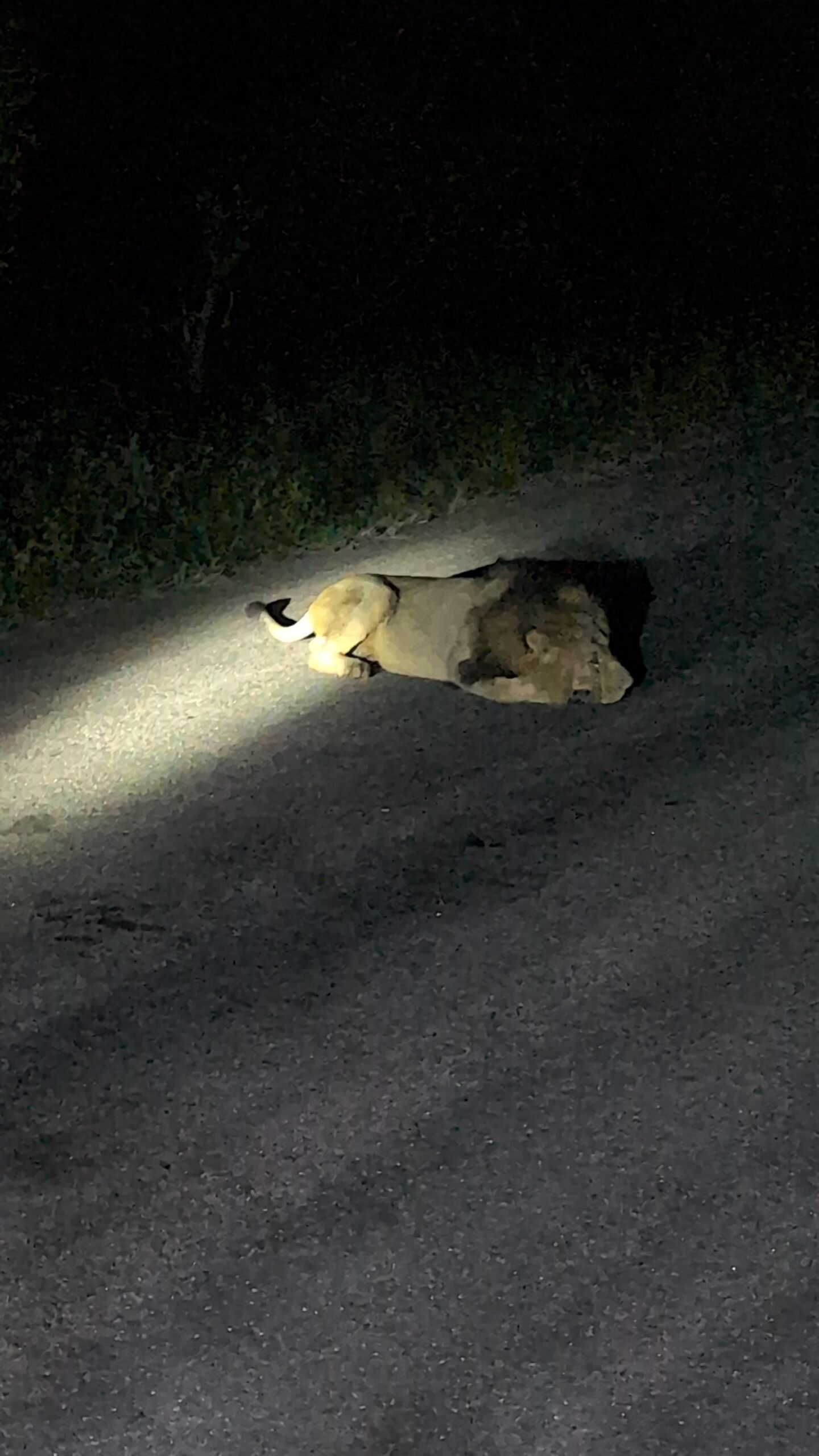
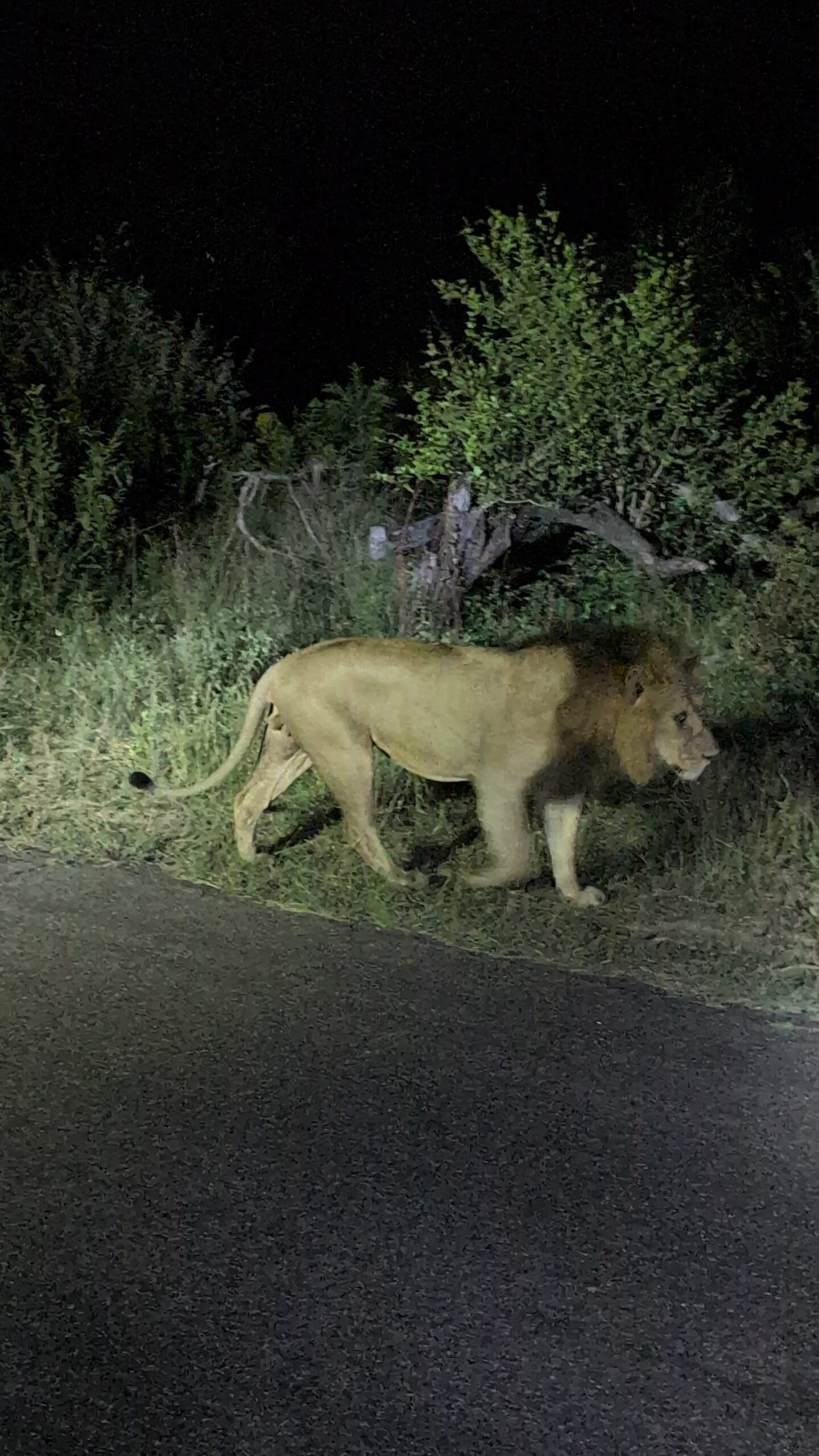
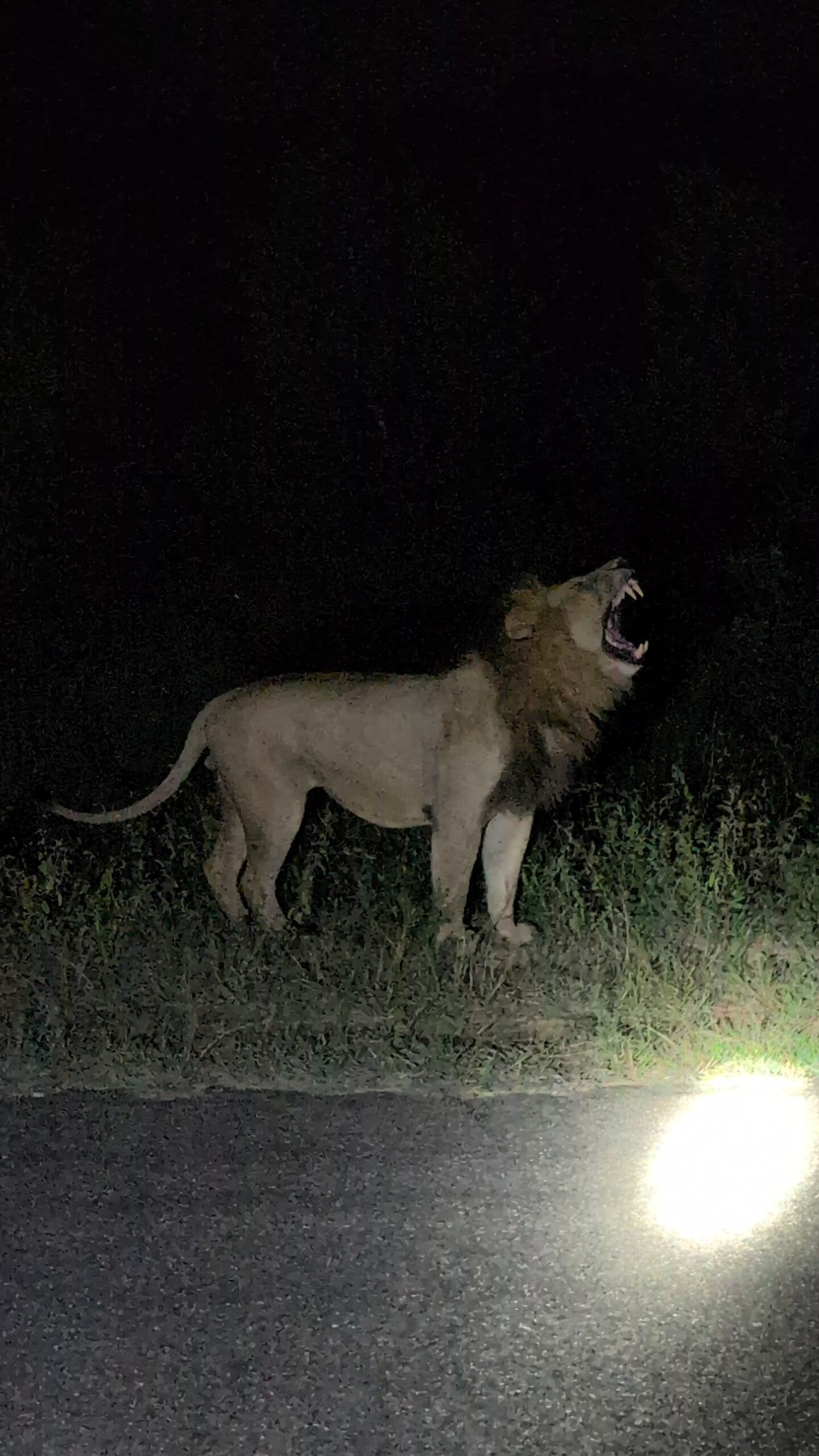
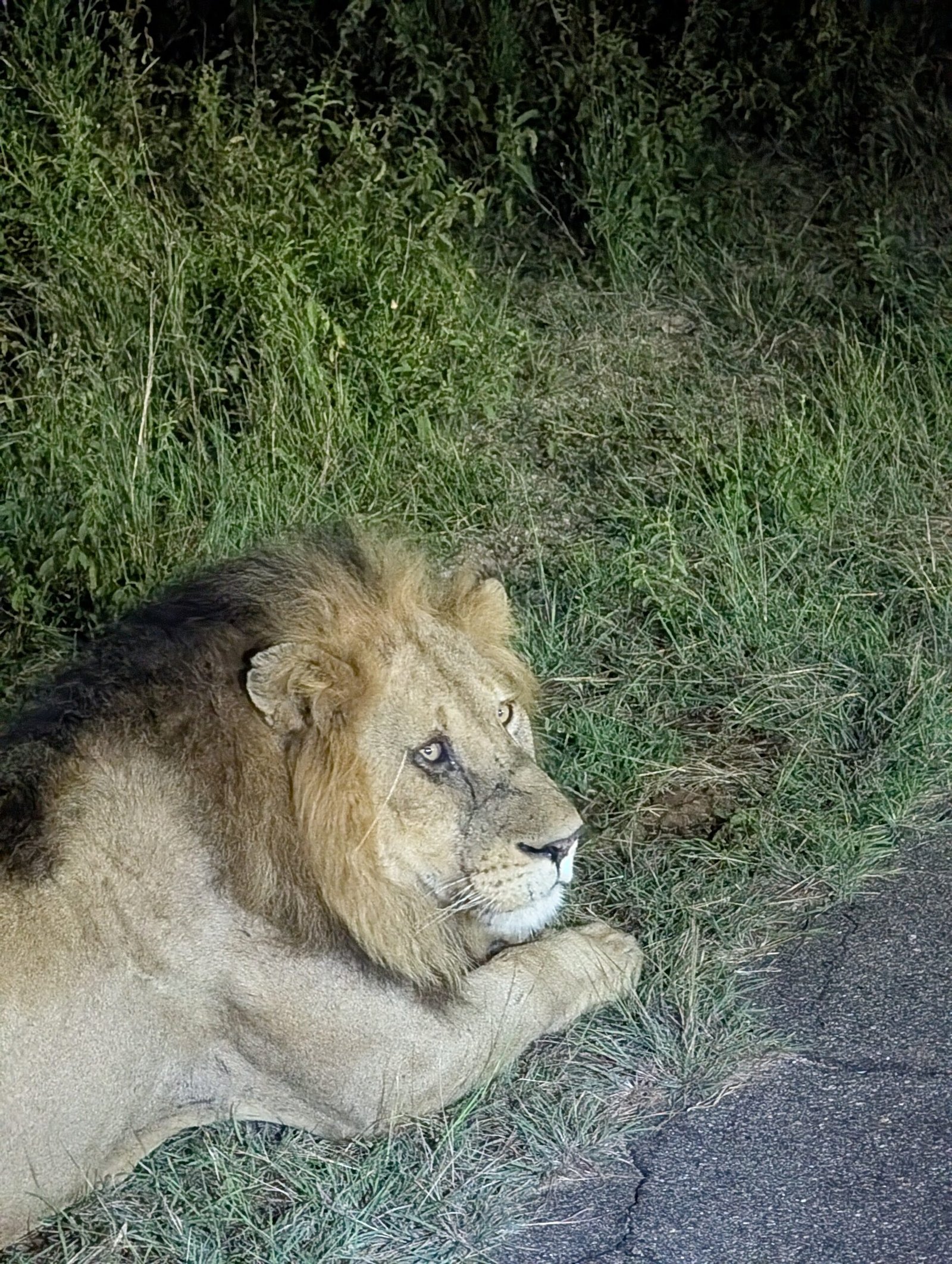
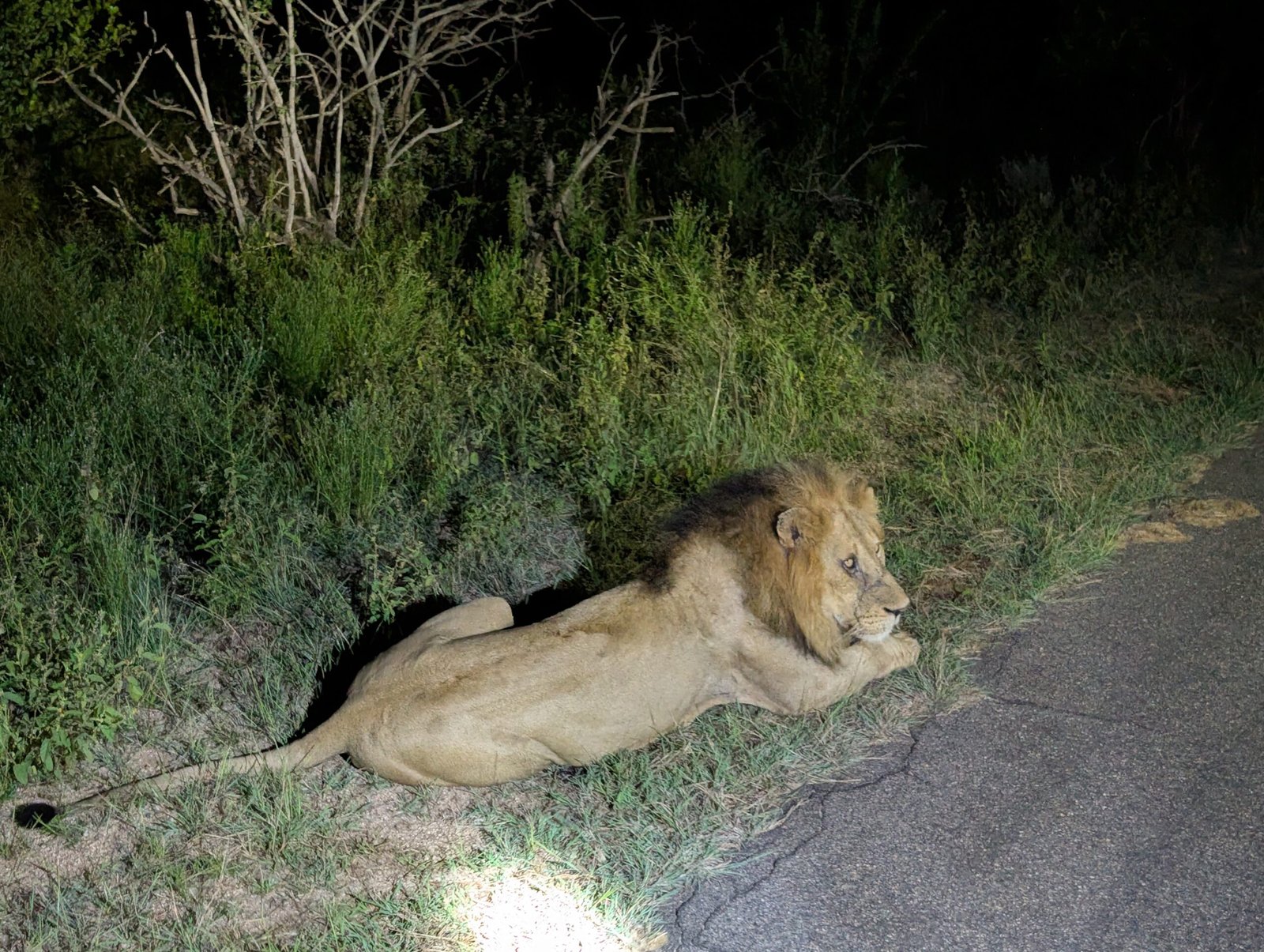
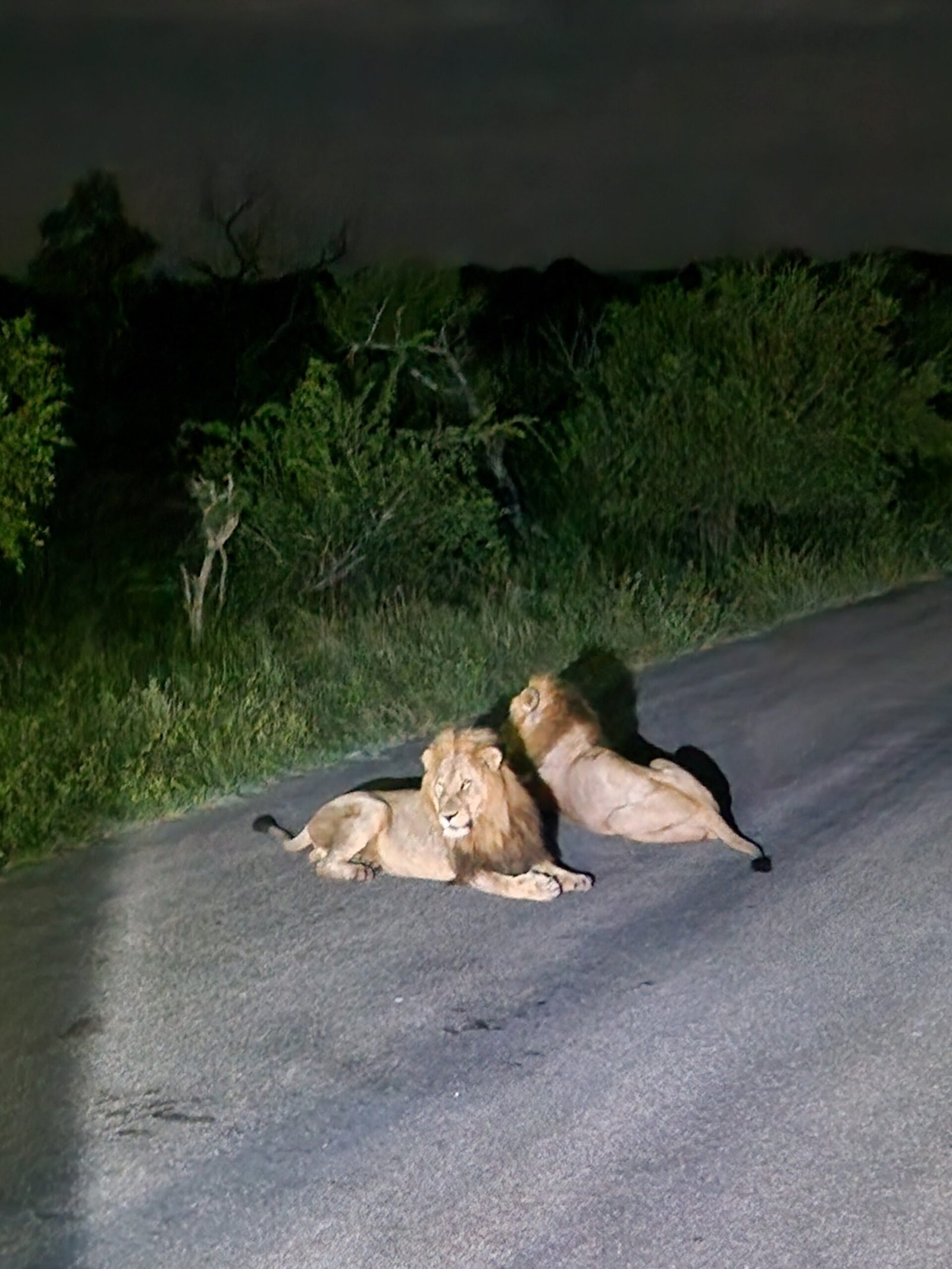
The other three didn’t even bother moving. They lay there, kings of the road, masters of the night, utterly unbothered by the vehicle full of gasping humans ten metres away.We sat with them for a long time. Taking it all in. The size. The power. The sheer, overwhelming presence of a lion at close range in the African night.
Addie slept through the entire thing. She’d be furious in the morning. But her parents — her tired, overwhelmed, impossibly grateful parents — soaked in every second.
Lions. At last. Up close. Personal. Ours.
View this post on Instagram
Every single major sighting happened because of instinct. The instinct to go out even when we’d planned to rest. The instinct to go back to where the wild dogs had been. The instinct to book a night safari on a whim.
This trip has taught me something I’ll carry forever: the bush rewards those who listen to it. Not just with your eyes or your ears — but with that quiet, irrational voice inside that says turn around, go back, stay longer, try again.
Listen to it. Always listen to it.


This is Aldrin and my partner Amoli. We bring you "Earths Pilgrim" - a unique insight into our travel escapades while leaving life in a cubicle. If you are looking for some inspiration to break the shackles of a regular life, then you are the right place. Read more about us- Click here.