- The Long Road to the Wild: Arriving at Kruger National Park
- Kruger – Into the Wild: Skukuza to Satara
- Kruger – Cheetahs at Dawn, Grasslands at Dusk
- Kruger – The Ghost of the S100 and The Afternoon That Changed Everything
- Kruger: The Leopard Beneath Our Window
- Kruger : The Day We Almost Didn’t Go
- Kruger: The Last Hunt & the Long Goodbye
Everyone left. The cars pulled away one by one. But I stayed. Because the bush doesn’t reward the restless — it rewards the ones who wait.
Day 3, Part 1 — Leopards in the Thicket, Cheetahs at Sunset, Lions on the Road, and the Night Safari
Before Dawn — The Ritual Continues
By Day 3, we had a rhythm.The alarm at 4:30. The quiet shuffle of packing the car in the dark — binoculars, camera, water, snacks. Addie, wrapped in a blanket with her bunny+Bluee, carried to the back seat still half-asleep, her eyes flickering open just long enough to confirm that yes, we were doing this again, before closing with a contented sigh.
She was better. Not fully recovered — the fever had downgraded from an adversary to an annoyance — but better. Brighter. More her. The bush, it seemed, was healing her in ways that medicine alone could not. We drove to the gate. Lined up. Waited for 5:30.
And this morning, I had a plan.
The S100 — Kruger’s Leopard Alley
I’d heard about the S100. Every Kruger regular speaks of it with a certain reverence. It’s a gravel road that runs along the river — dense riverine bush on one side, open savannah on the other — and it is famous for one thing above all else: leopard sightings.
The road had been partially opened after the rains — only a section of it, an out-and-back route, twelve kilometres in before you had to turn around and retrace your path. Limited access. Limited distance. But that didn’t matter. If the leopards were there, twelve kilometres was more than enough.
The thing about Satara is that when the gates open, everyone scatters. Some go north, some go south, some take the tar roads, some take the gravel. You never know if you’ll be the first car on your chosen route or the fifth.We were first.
As I turned onto the S100, there was nothing ahead of us but empty gravel and the golden blush of early morning light filtering through the trees. Behind us, I could see a small convoy forming — other cars that had made the same bet — but for now, the road was ours.I drove slowly. Deliberately. Leading the pack, scanning every shadow, every branch, every patch of dappled light where a cat might hide.
The bush was thick. The vegetation along the river grew high and dense, pressing in from both sides. Visibility was limited, and I felt the first flutter of anxiety — that nagging whisper that says the chances are slim, the bushes are too high, you won’t see anything.I pushed the thought down and drove on.
The Corner That Changed Everything
And then I turned a corner.Something on the road. Something low, something spotted, something that made every nerve in my body fire at once.
I braked. Gently. My hands were trembling.“What is that? What IS that?!” My wife was leaning forward, Addie was craning from the back seat.
It was a leopard. A young one. Sitting right there, in the middle of the gravel road, as casually as a house cat on a warm pavement.And the next moment it left — Not in Panic but with that fluid, purposeful urgency that says I’ve been seen, and I choose to leave. It turned, sprang off the road, and melted into the riverine bush like smoke.
We pulled forward, positioned the car where the leopard had entered the thicket, and began to scan.
More cars arrived. The convoy that had been trailing us pulled in one by one, binoculars and telephoto lenses swinging towards the bush. Word travels fast on safari — a stopped car is a signal, and a cluster of stopped cars is a declaration: something is here.
We had the prime position — first car, best angle. Through the tangle of branches and leaves, we could see it: the young leopard, crouched behind a bush, its head just visible, watching us watching it. A game of patience between species.
And then — a flash of movement.Just behind the car in front of us, something crossed the road. Fast. Low. Silent.A second leopard. Bigger. An adult — perhaps the mother, perhaps the father of the young one we’d been watching. It crossed from the river side into the bush in a single, liquid stride, and vanished.
Nobody saw it.Nobody except us. And only because of the sheerest, most ridiculous luck — we happened to glance in exactly the right direction at exactly the right moment. My wife gasped. I turned to confirm I hadn’t imagined it.
“Did you see that?!”
“A bigger one. It just CROSSED.”
We couldn’t photograph it. It was too fast, too brief, too perfectly timed to be captured by anything except memory. But we saw it. And in wildlife, sometimes the moments you can’t photograph are the ones that burn brightest.
Everyone Left. We Didn’t.
We repositioned the car towards where the adult had crossed. Scanned the thicket. Nothing. Both leopards had dissolved into the bush as if they’d never existed.One by one, the other cars gave up. Five minutes. Ten. Fifteen. The patience ran dry, the engines started, and they drove on to find the next sighting.The road emptied. We were alone again.
My wife looked at me. “Should we go?”I shook my head.Not yet.
Here’s what safaris in India taught me — the animal hasn’t gone far. It’s in there, behind that thicket, waiting for the noise to die down, waiting for the patience of humans to expire. And when the last car leaves, when the bush falls quiet again — that’s when it moves.So we waited.
More than an hour. Just us, the ticking of the cooling engine, and the sounds of the riverine bush. Addie, remarkably, was patient too , occasionally looking up to scan the bushes with the casual expertise of a child who’s been doing this for three whole days and considers herself a veteran.
And then — movement.The young leopard. It emerged from the thicket, stepping into a small clearing just metres from where it had disappeared. Closer now than before. Visible. Beautiful.
I raised the camera. Click. Click. Click.It paused, looked directly at us — one long, measuring gaze — and then slipped back into the bush.
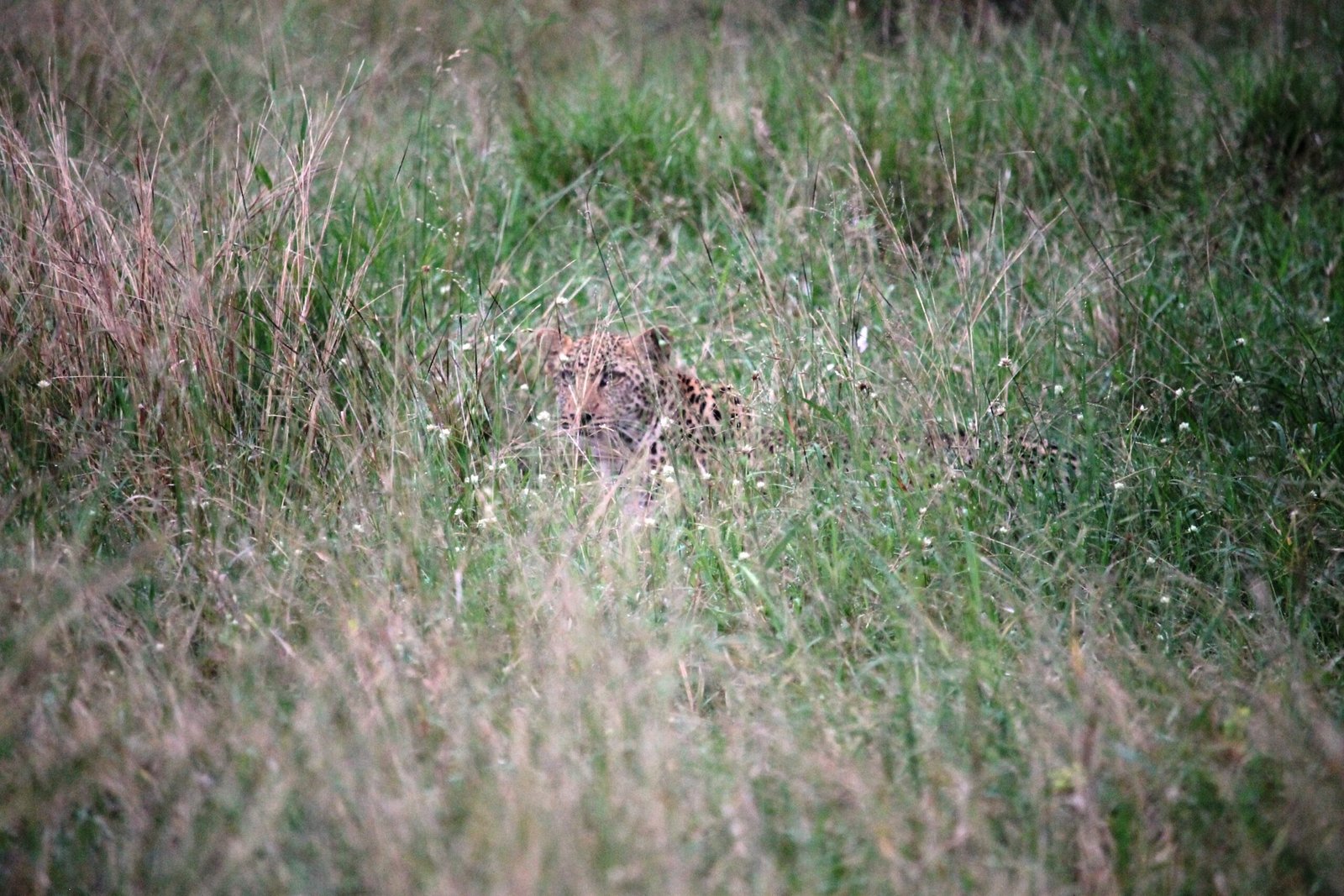
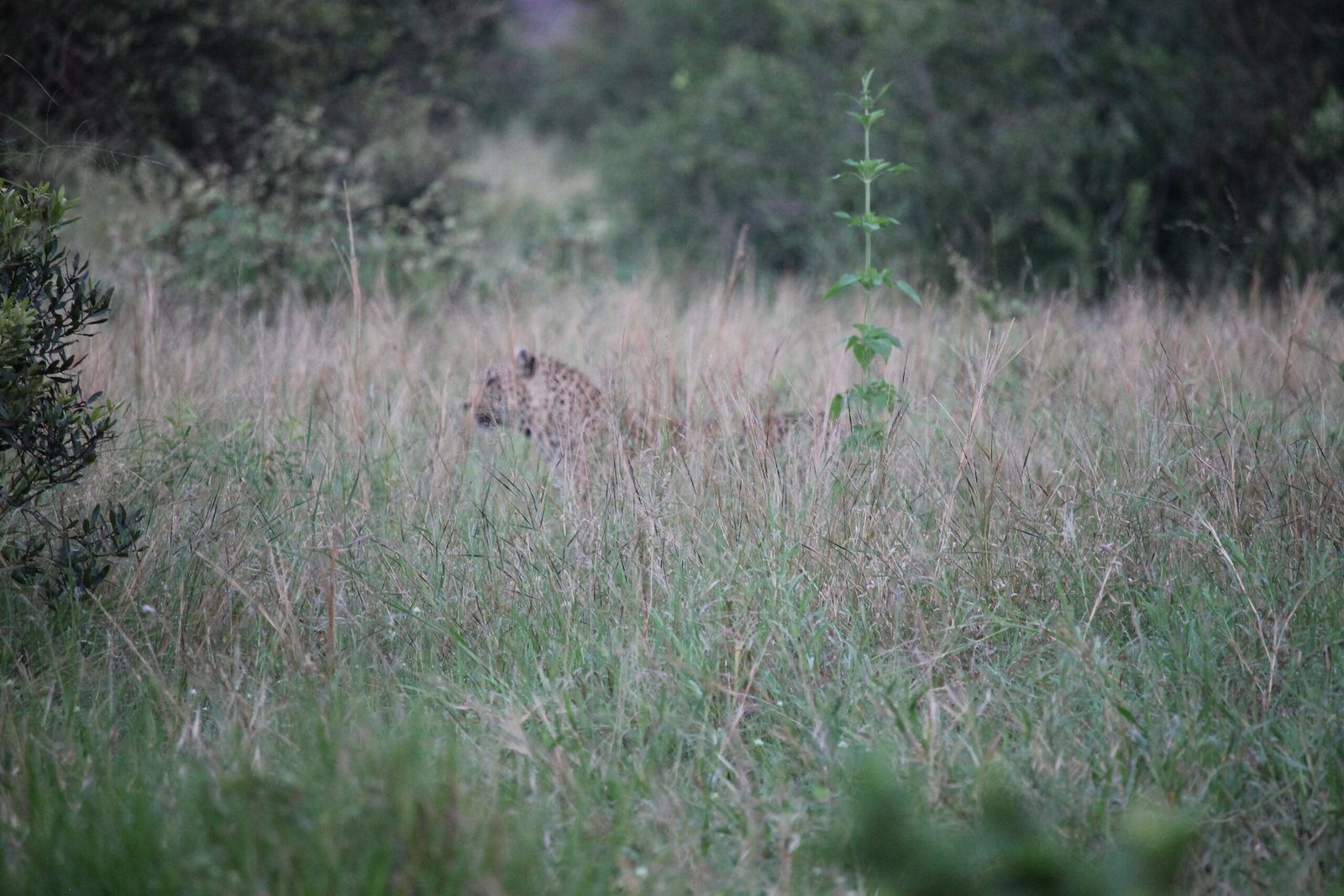
Gone again. But this time, we had it. Captured. Earned.
View this post on Instagram
Patience. Always patience.
The Long Morning After
The spell broke slowly. The sun climbed. The morning cool burned off and the midday heat began to press down. The leopards were done with us, retreating deep into the shade where no lens could follow.
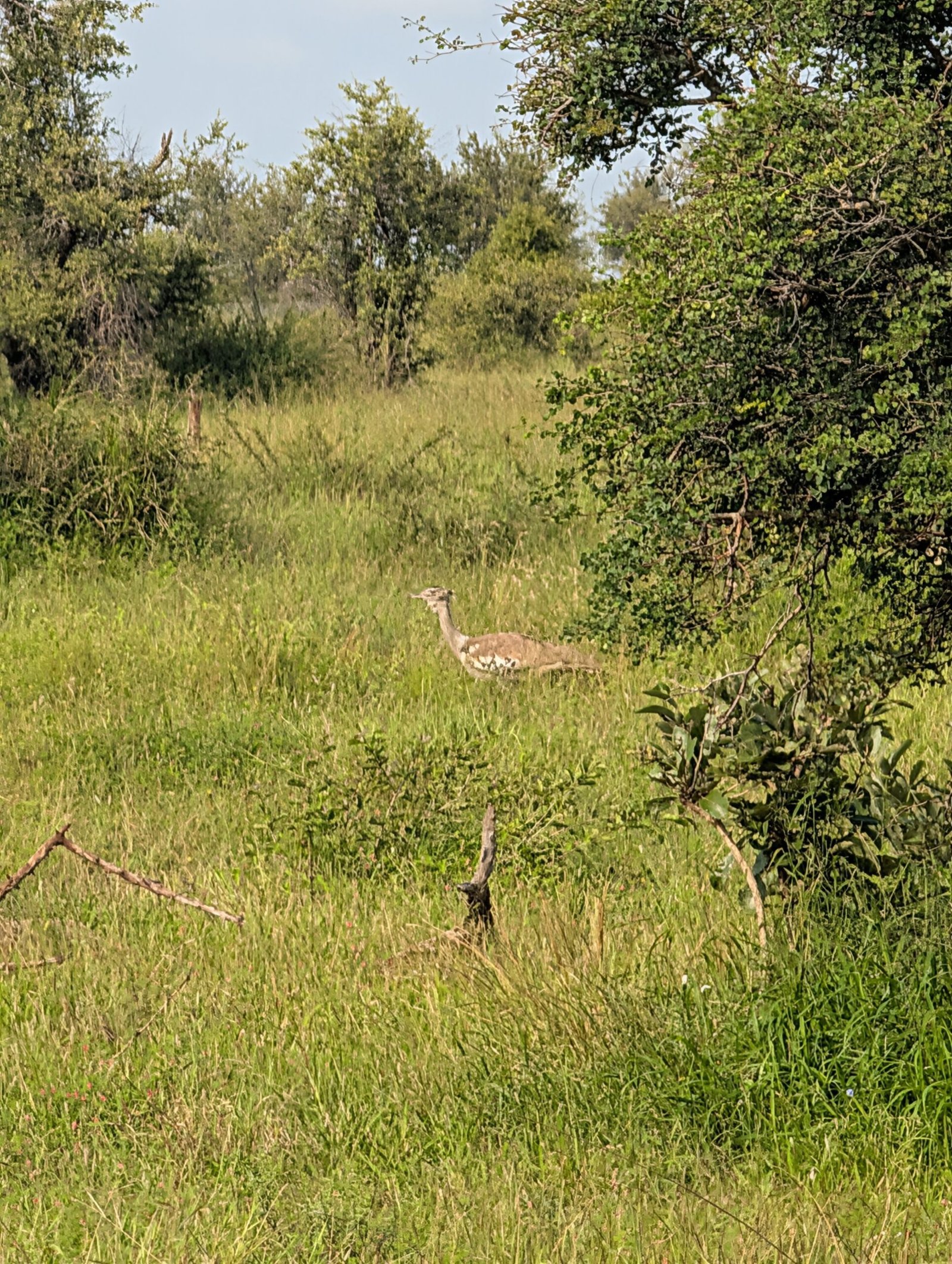
We drove out of the S100 and began a long, meandering loop through the park.The H6 offered us wide-open spaces but little in the way of drama — until a Secretary Bird stalked across the road ahead, all legs and attitude, looking like a Victorian schoolteacher late for an appointment. Addie was delighted. I was… less so. After leopards, a Secretary Bird feels a bit like ordering champagne and being served sparkling water.
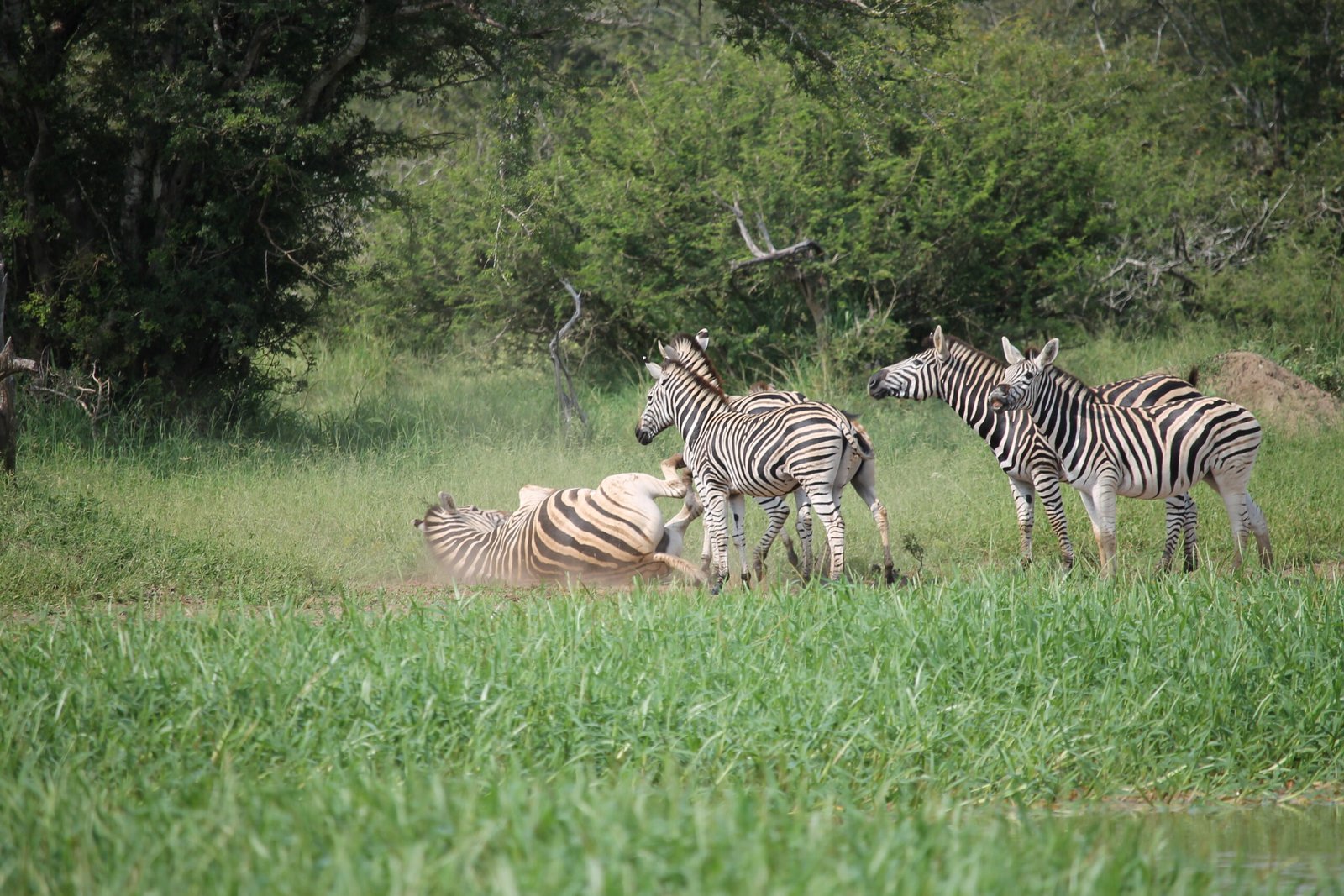
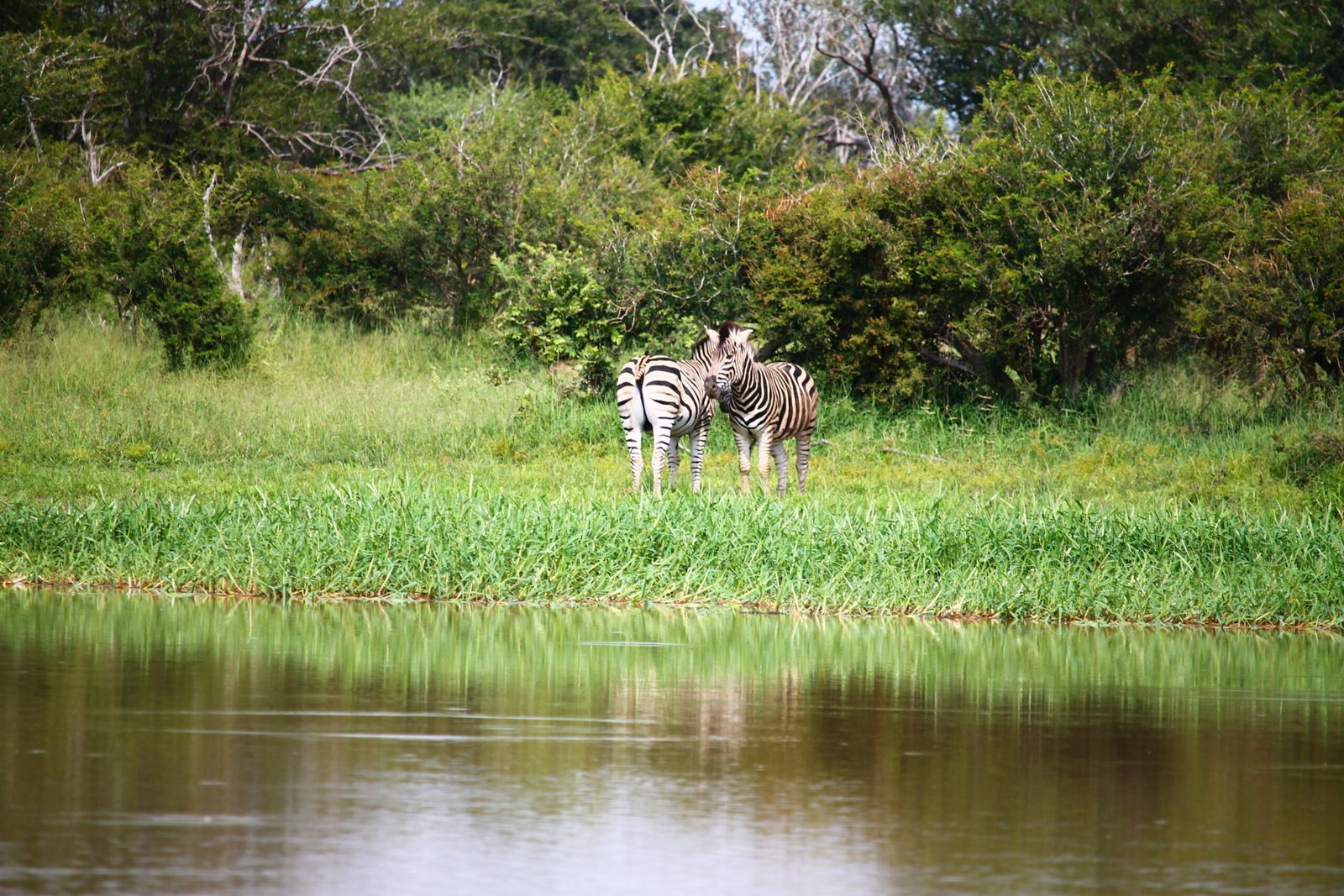
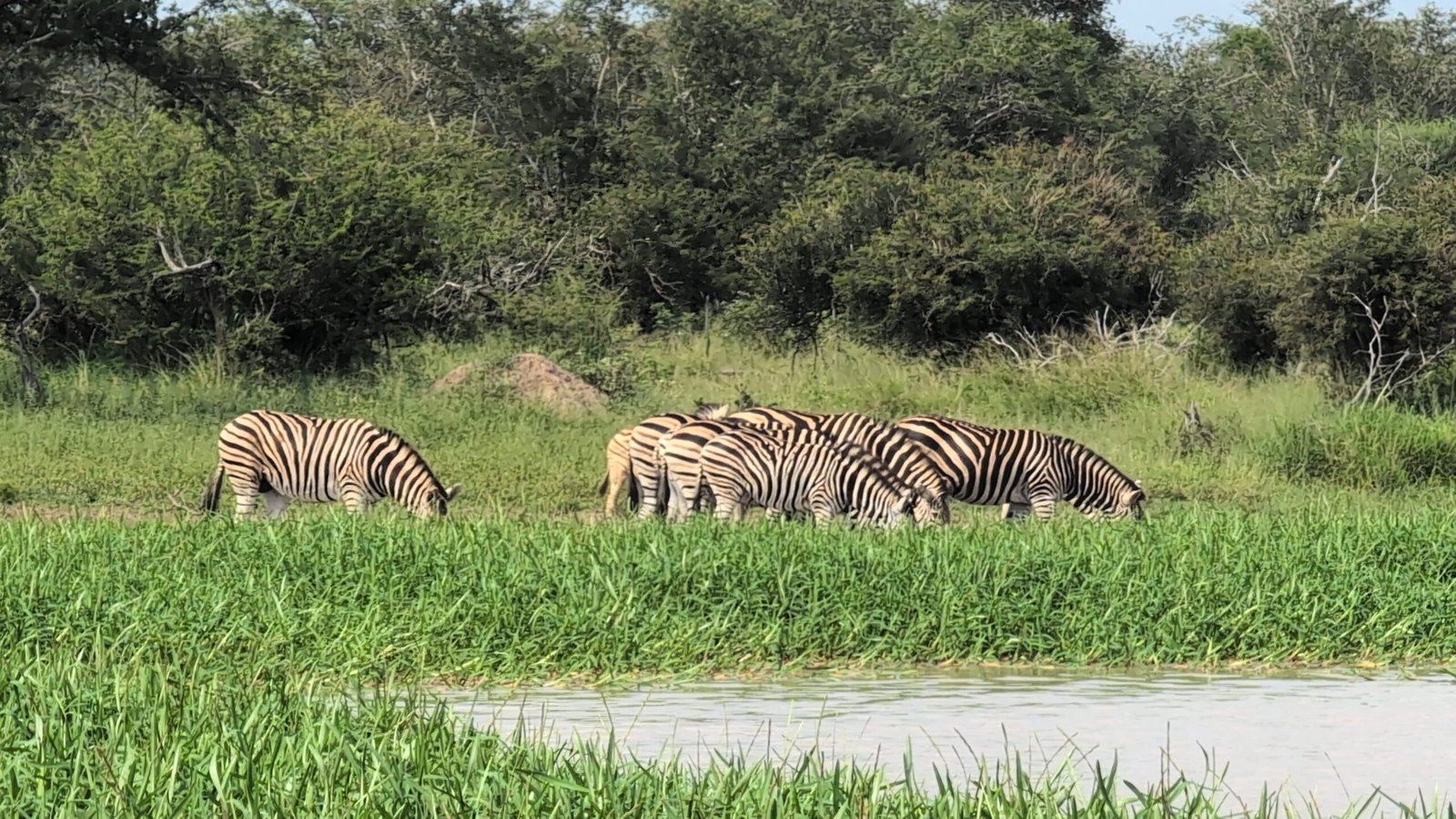
We pushed towards the H1-3, dipping south towards Skukuza, stopping at a watering hole where a group of zebras were rolling in the mud with the enthusiastic abandon of children in a ball pit. Coated in red earth, legs in the air, grunting with pleasure — they were ridiculous and wonderful.
But the morning was winding down. The sightings had thinned. The bush had given us its gift early and was now resting, and so should we. We drove back to Satara — tired, slightly disappointed that the leopard photos hadn’t been quite what we wanted, that the morning had been consumed by one long, obsessive stakeout. That’s the trade-off of patience: you gain depth, but you sacrifice breadth. We’d spent our entire morning on a single sighting while others were ticking off species across the park.
But I wouldn’t change it. Not for a second.
The Itch That Wouldn’t Leave
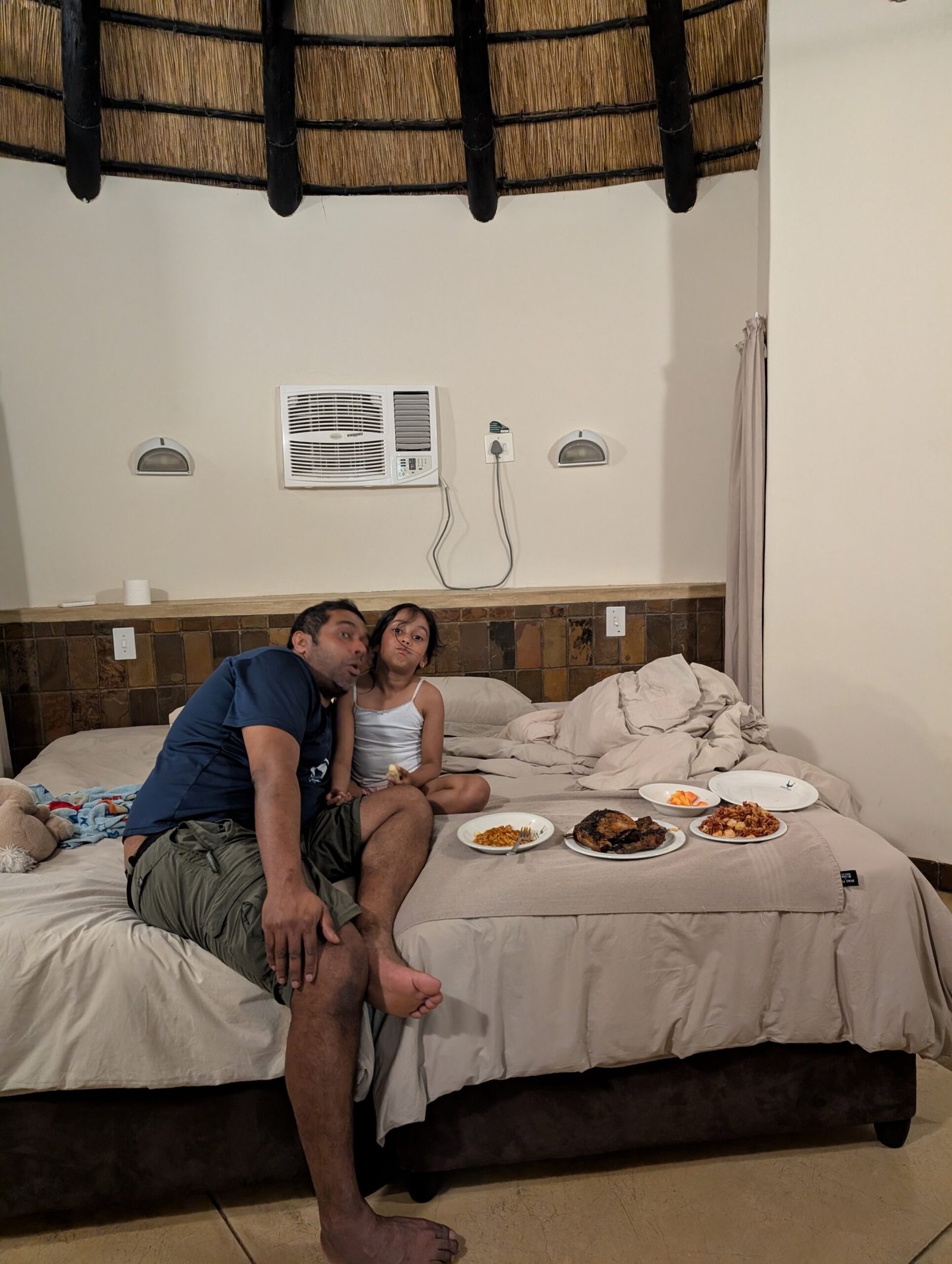
I dropped my wife and Addie at the camp. They needed rest — Addie was fading again, the brave face slipping, the medicine keeping the fever at bay but not the fatigue. They went inside. They slept.
The itch was unbearable.The leopard is still there. I could feel it. That irrational, gut-deep certainty that every wildlife watcher knows — the conviction that if you go back one more time, you’ll find it. That it’s waiting for you. That the bush is holding something back, and all you have to do is return.
I drove back to the S100. Alone this time. Just me and the bush and the stubborn, beautiful madness of a man who can’t let go of a leopard. Not having Addy and Li, and being all alone on a quiet gravel round surrounded by the bush was rather intimidating – I did feel the nerves!
I drove up and down the same stretch of road. Slowly. Scanning every branch, every shadow, every flicker of movement. The sun was high now — harsh, flat, unforgiving — and I knew, I knew, that the cats would be deep in shade, invisible, unreachable.
Nothing.
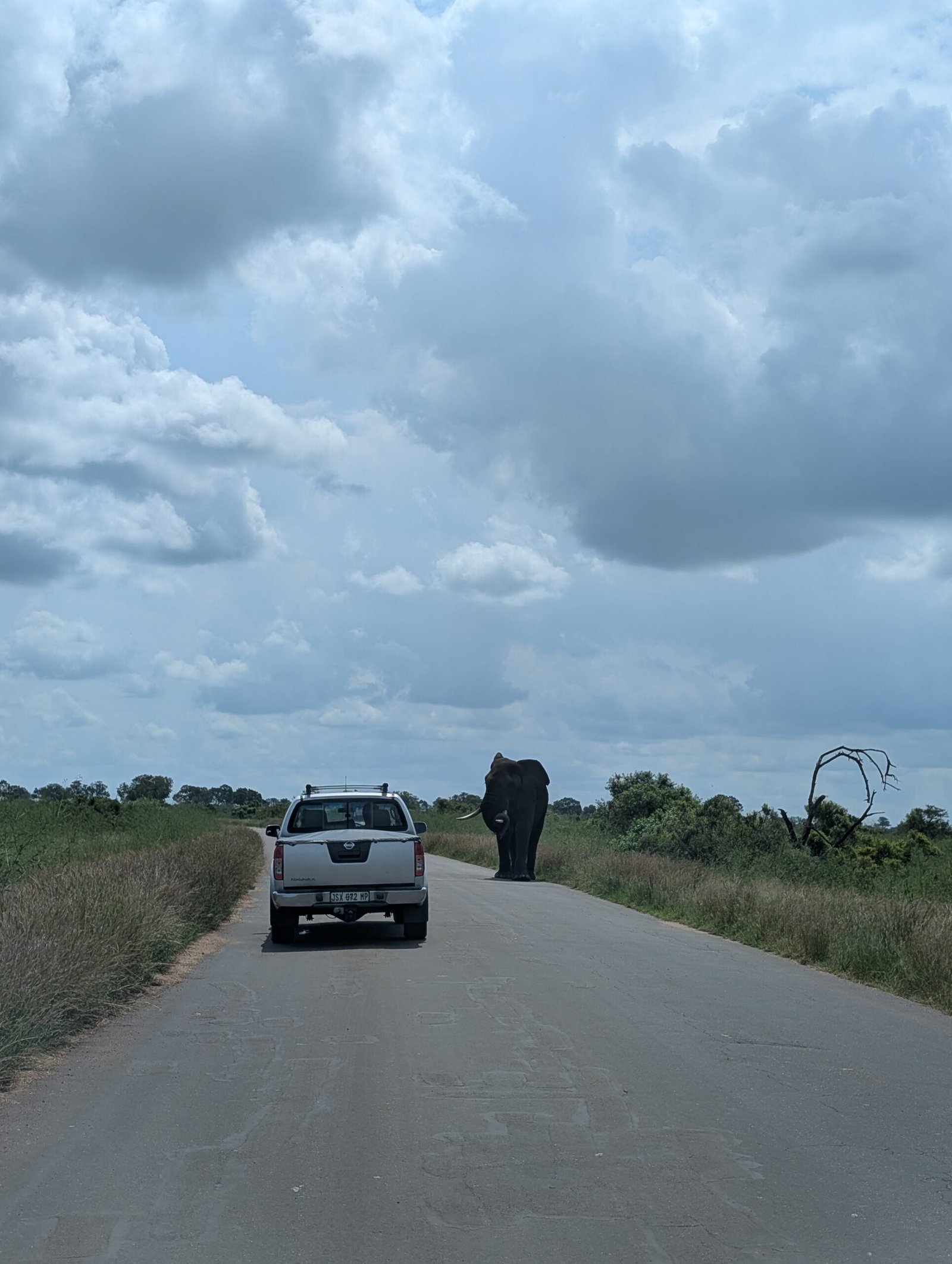
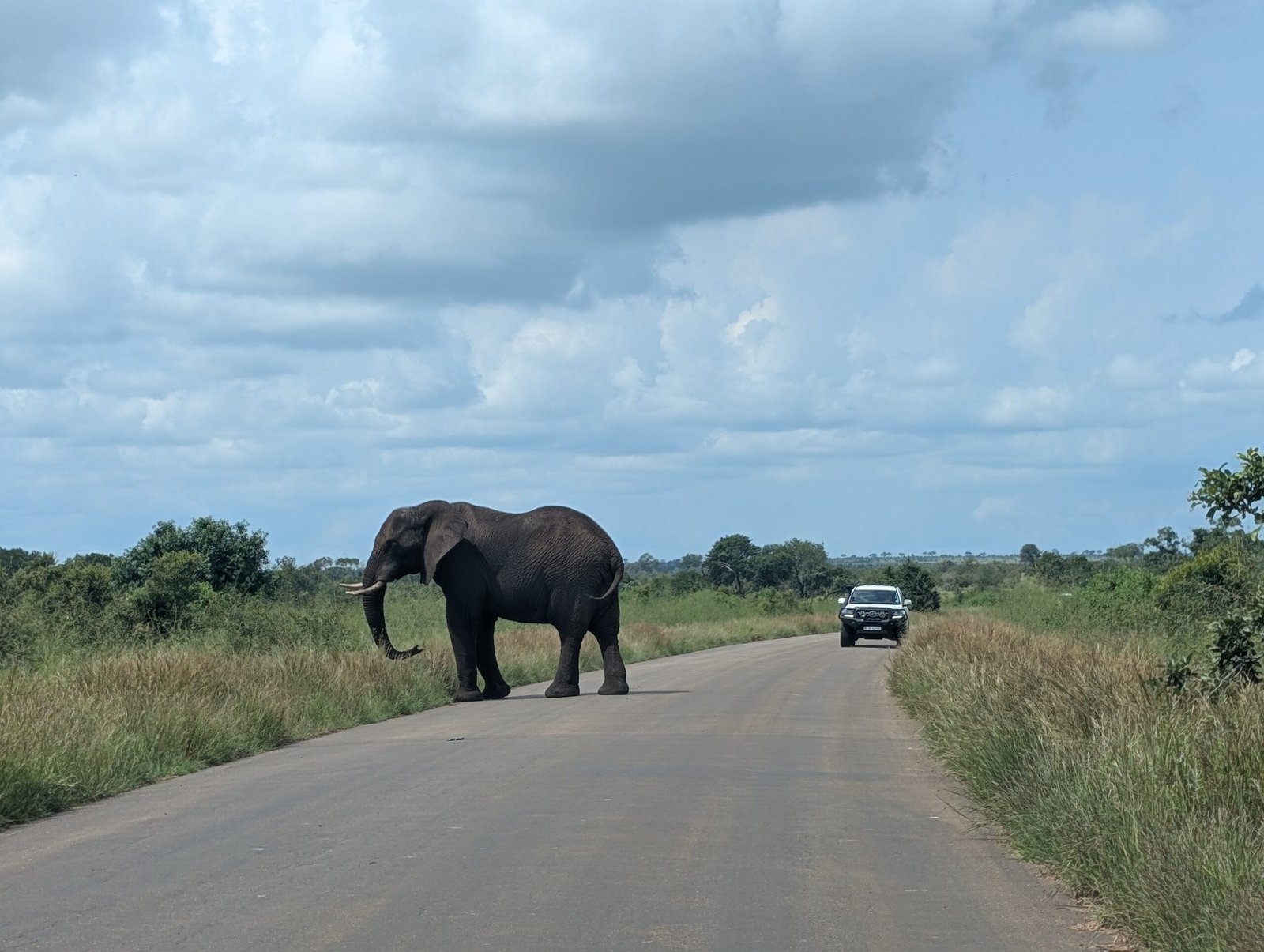
The road was empty. The thicket was silent. The leopard had won this round.As I turned the car back towards Satara, accepting defeat with the particular grace of a man who has just spent his afternoon arguing with a bush, a bull elephant appeared beside the road. Close. Very close. Walking parallel to my car with the slow, swaying confidence of a creature that has never once questioned its place in the world.We shared the road — just the two of us, man and elephant, in companionable silence. It felt like a consolation prize from the bush. You didn’t find your leopard, but here — have this instead.I’ll take it.
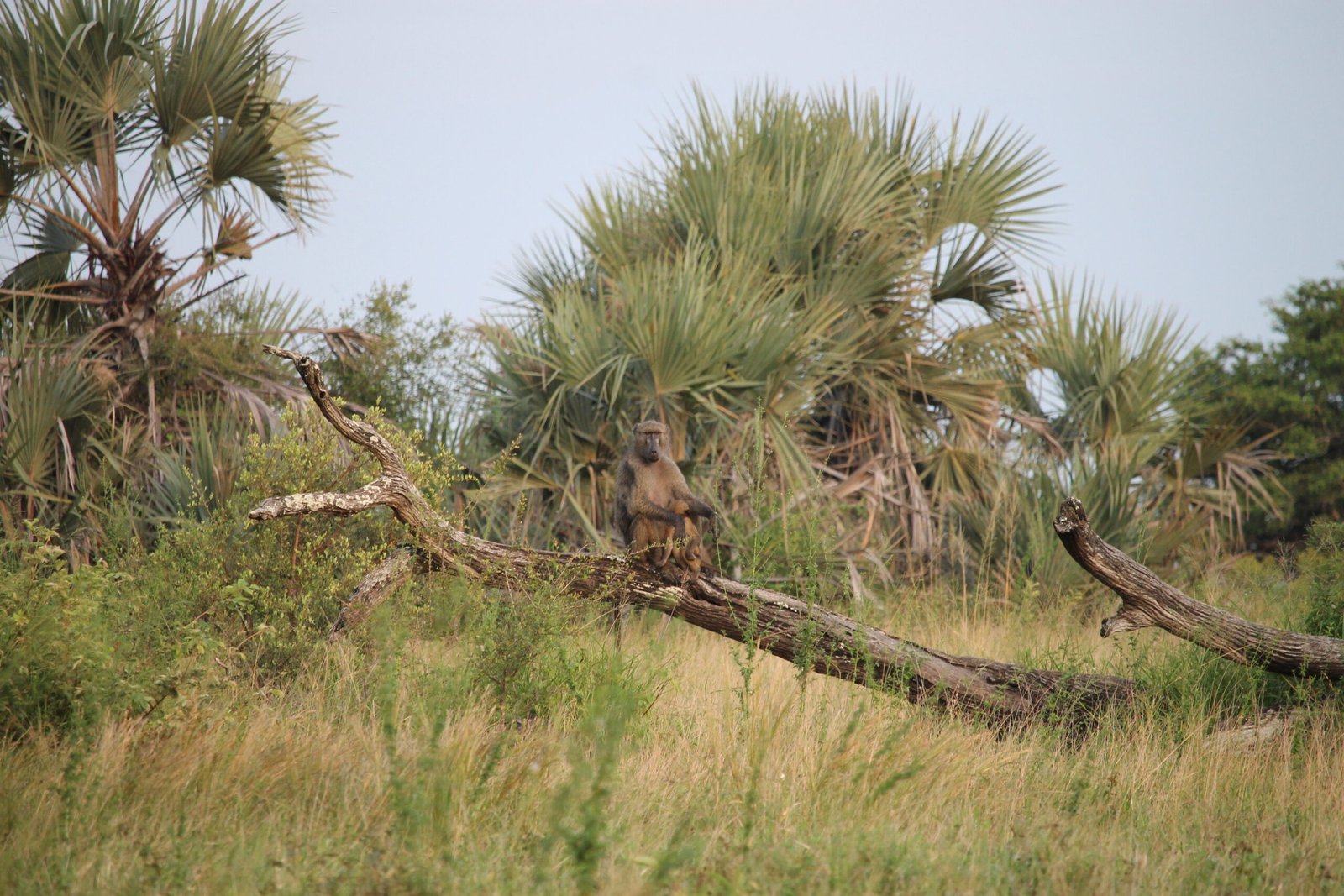
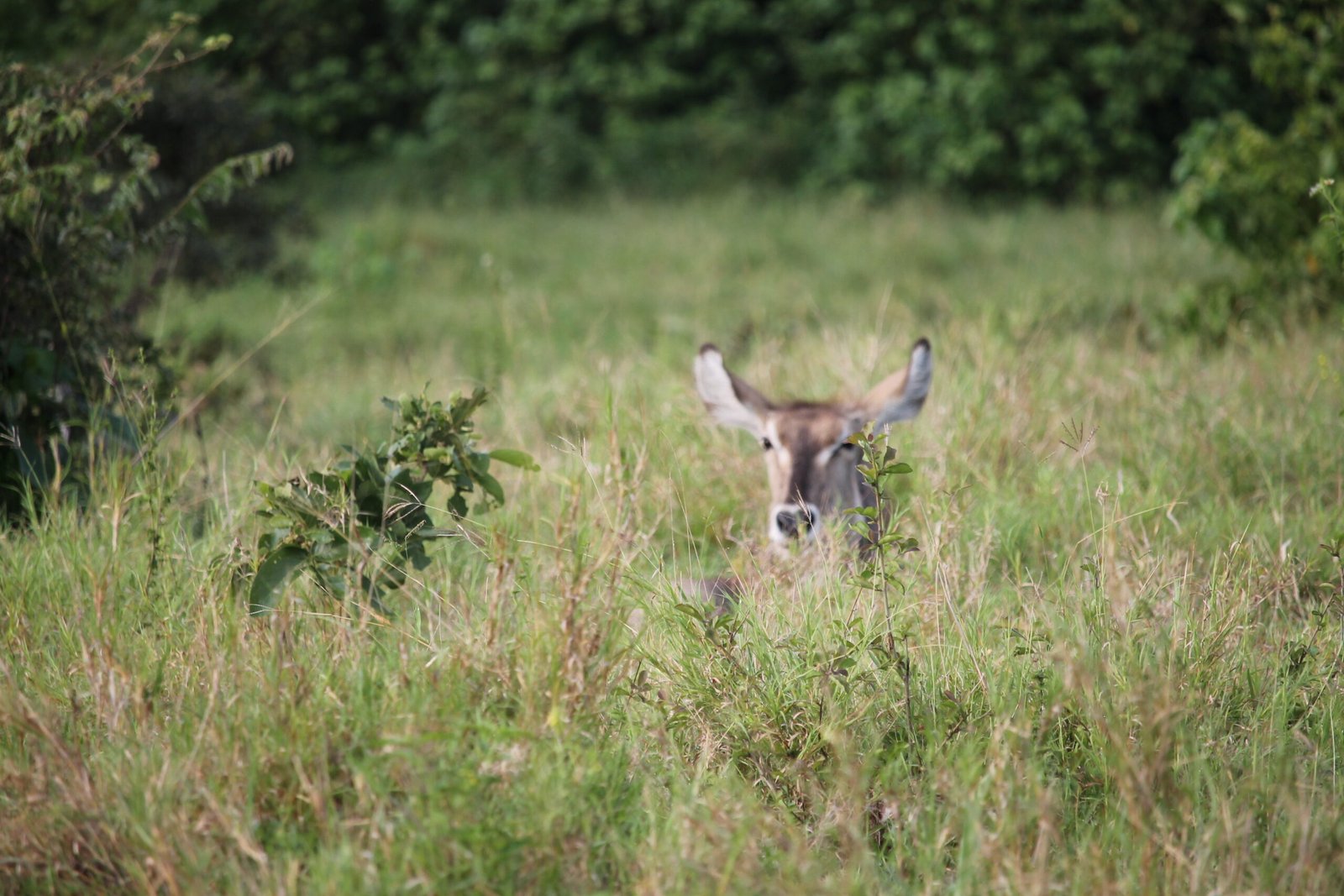
The morning had been all leopard — the thrill of the sighting, the agony of the disappearance, the reward of patience, the itch of obsession. It had consumed us, defined us, and left us wanting more.
But the day wasn’t over. Not even close.Because what happened that afternoon would transform Day 3 from a good day into one of the most extraordinary days of our entire safari.
The Quiet Afternoon — When Nothing Happens
We woke from our midday rest and headed out again, taking the H7 towards the western reaches of Satara’s territory. The afternoon felt subdued — the bush still drowsy from the midday heat, the animals tucked into shade, the road quiet.
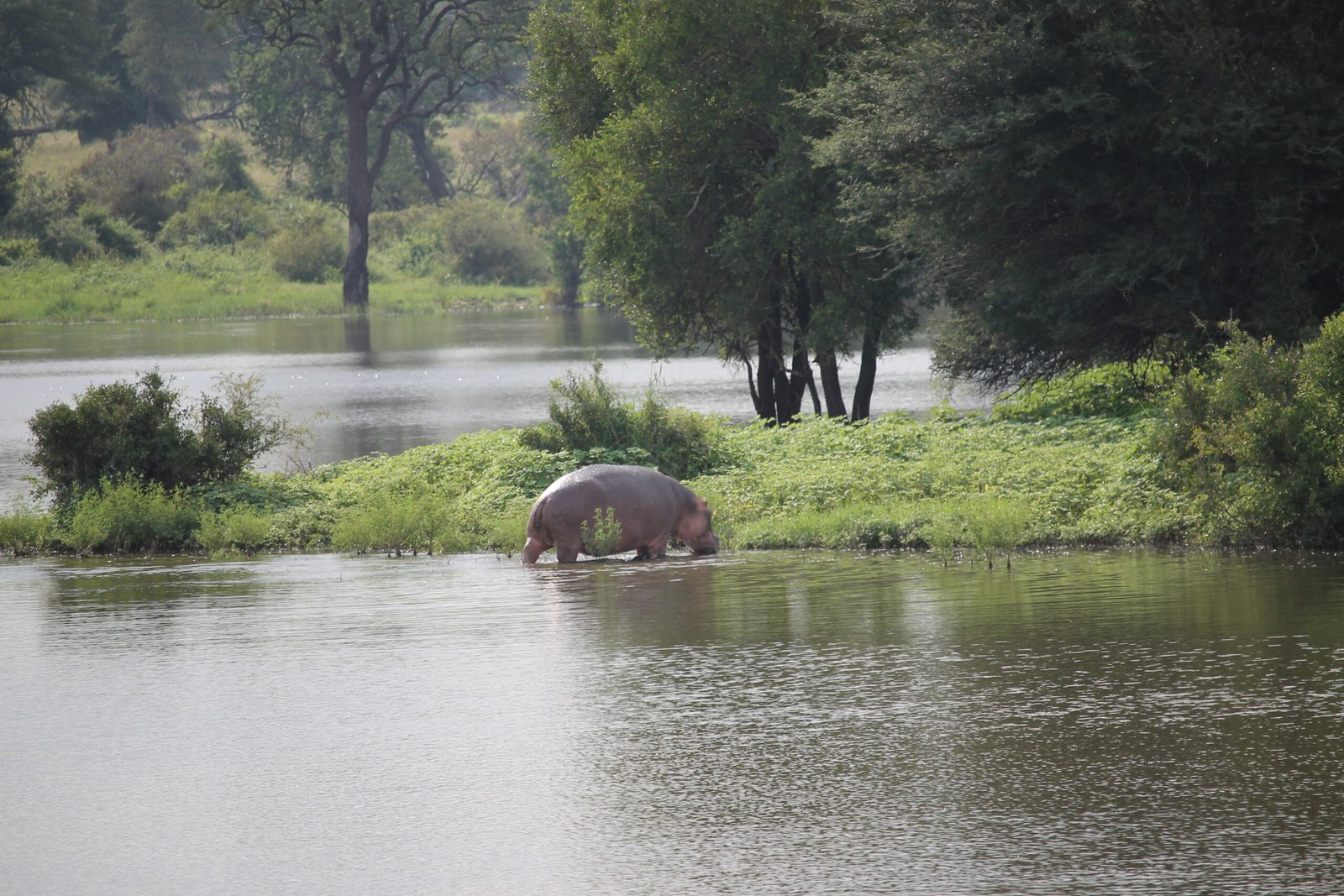
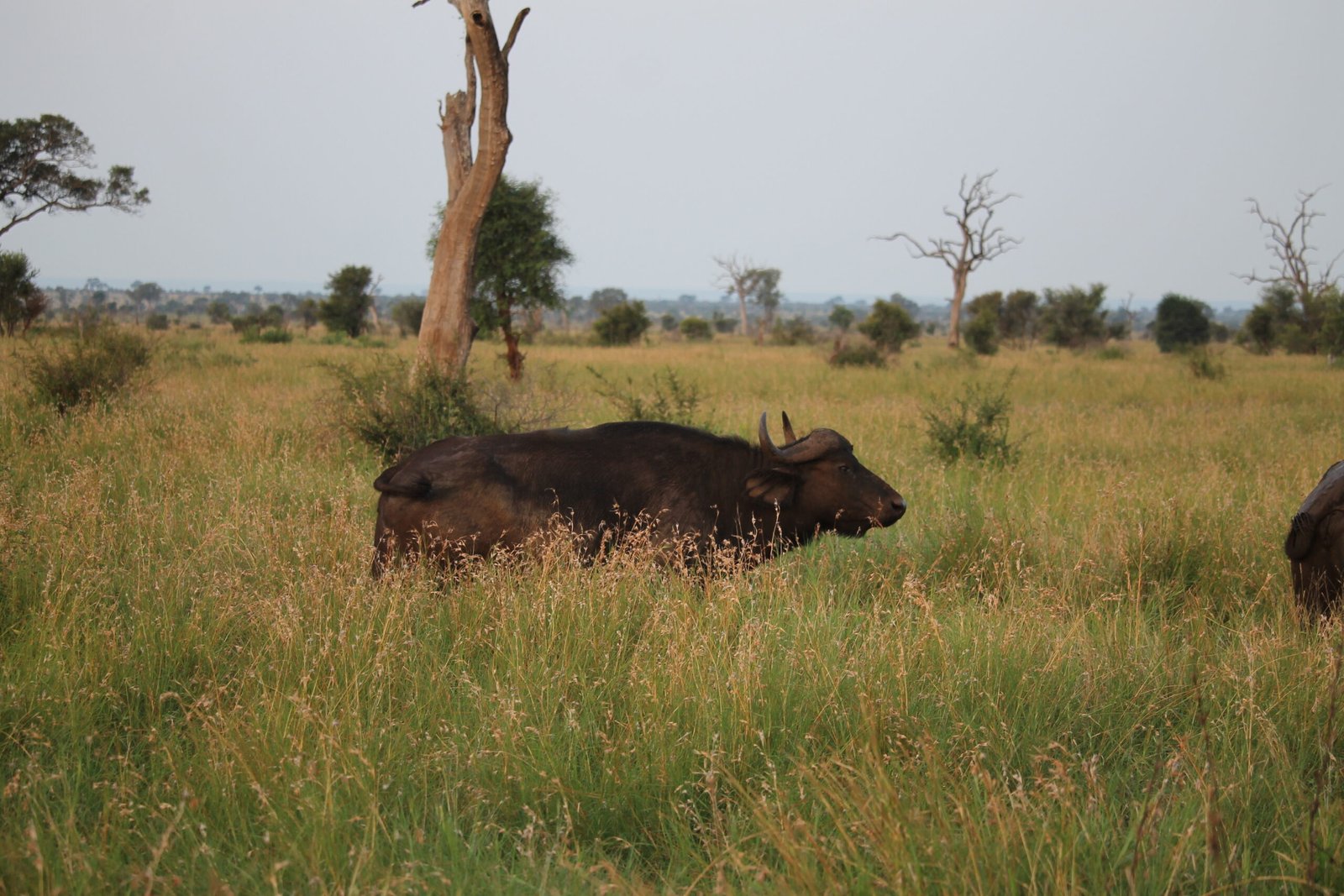
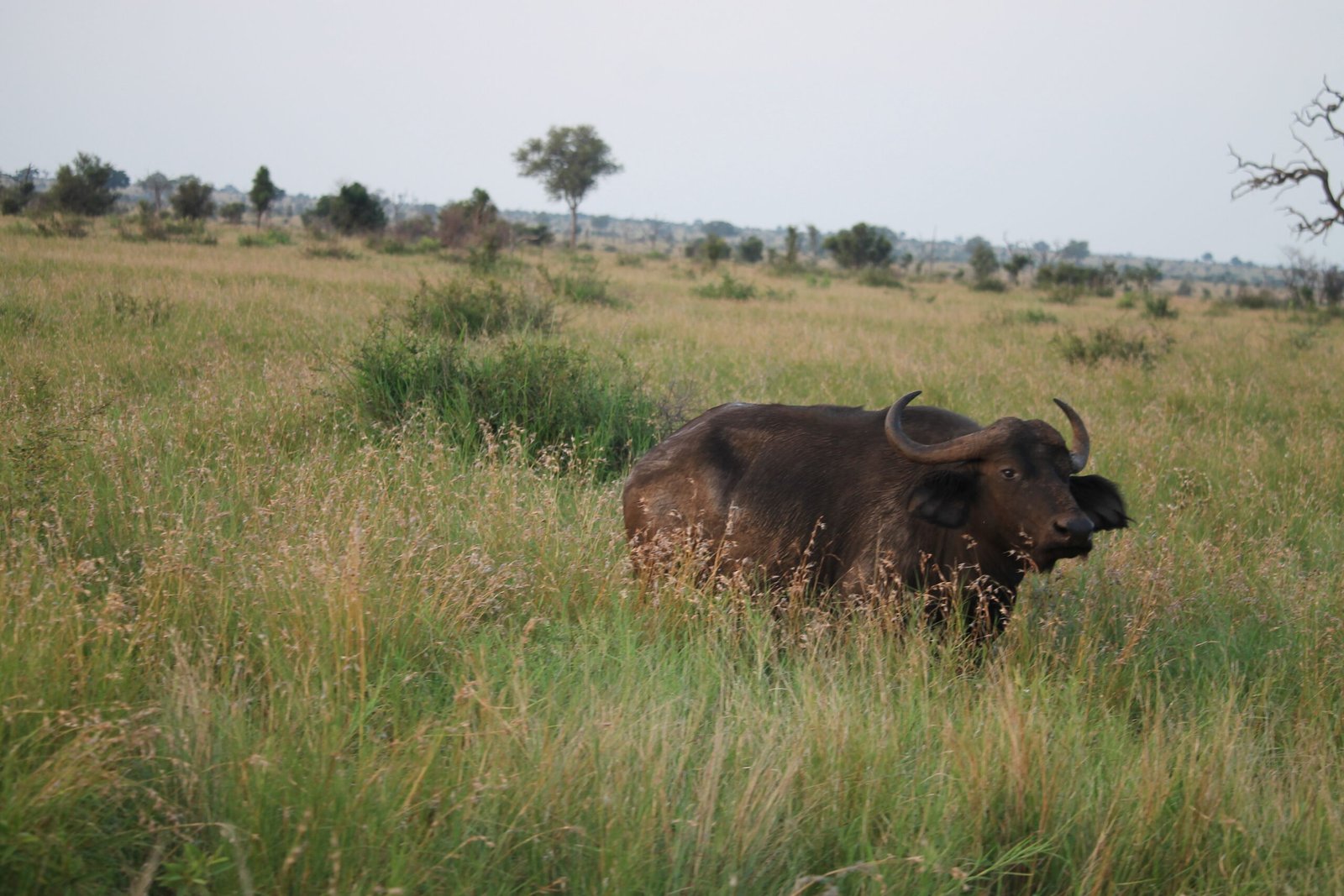
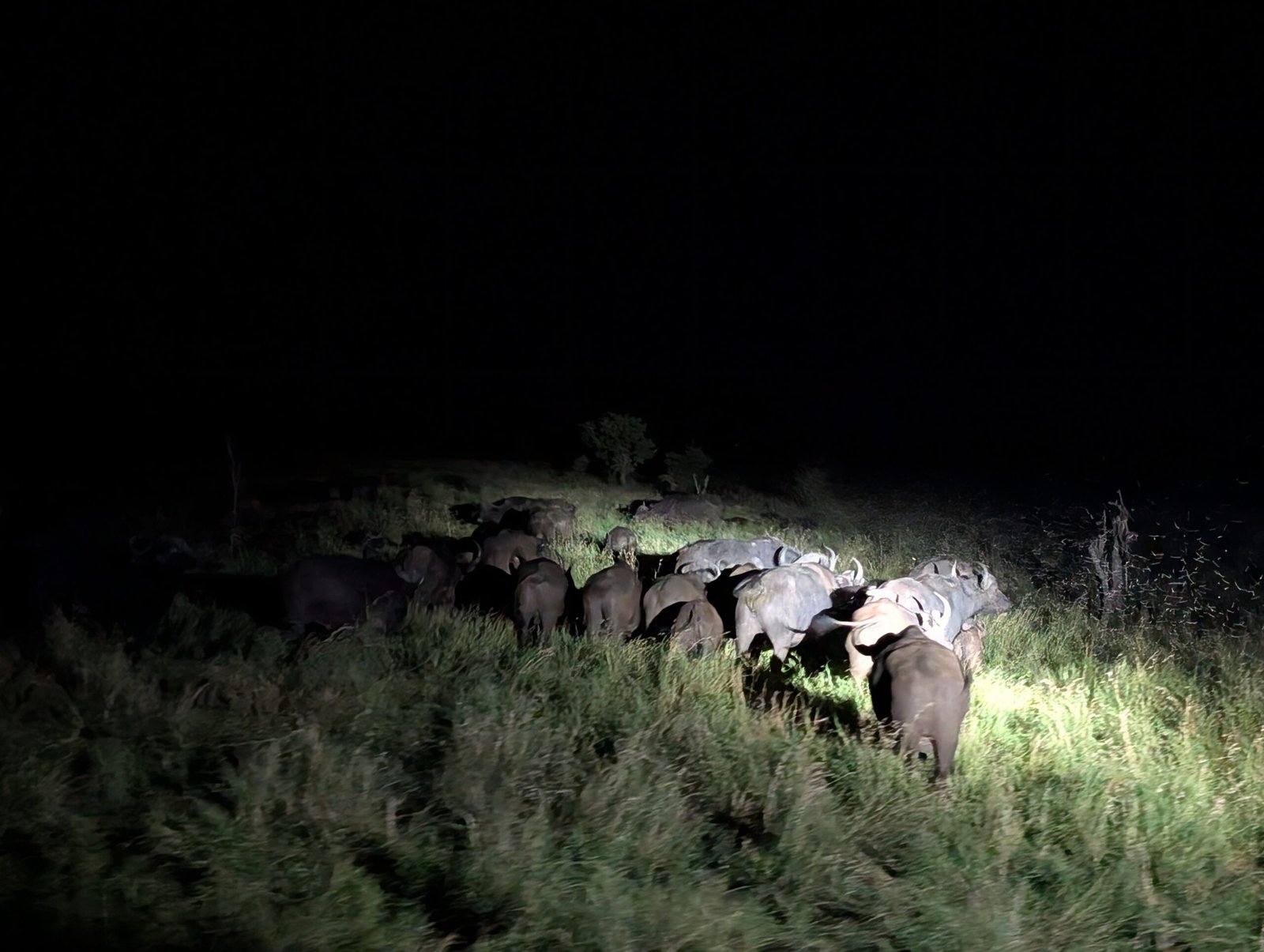
In the distance, a herd of Cape buffalo — dark, hulking shapes dotted across the grassland like boulders that had learned to breathe. One of the Big Five, and an impressive sight even from afar — their curved, armoured horns and watchful eyes giving them the look of creatures that have survived everything the bush has ever thrown at them. Because they have.We noted them. Appreciated them. Moved on.
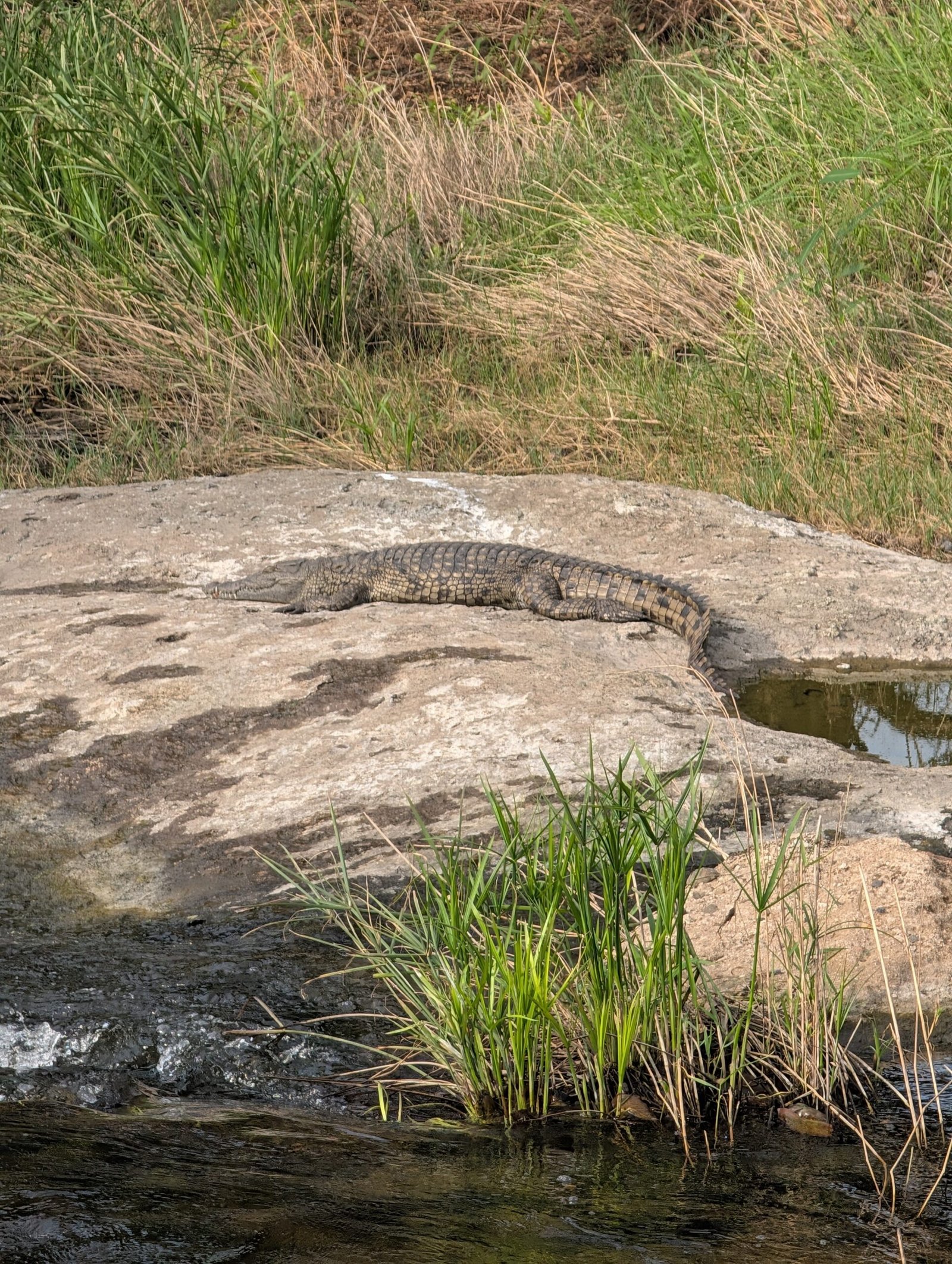
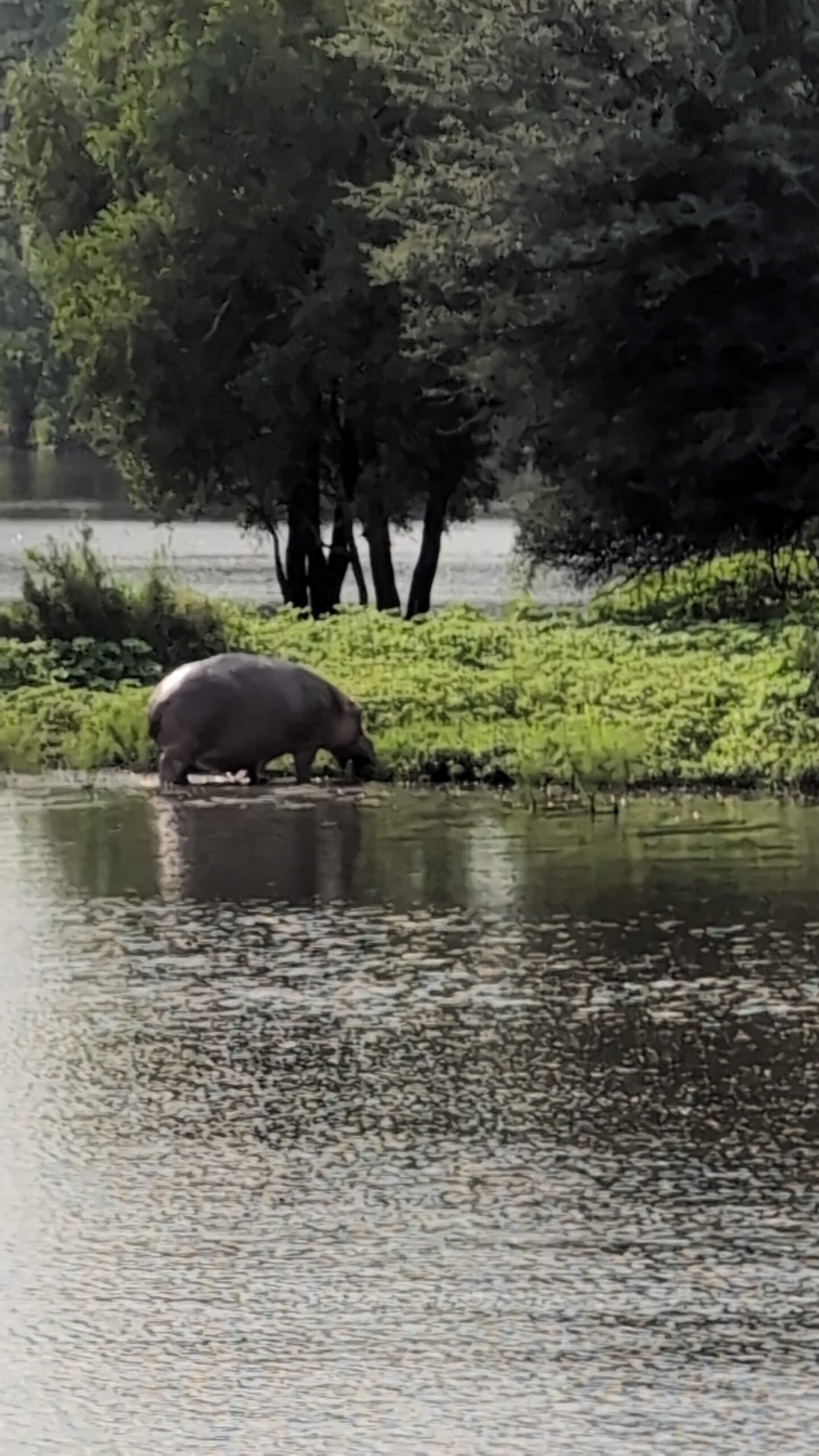
We turned onto the S36 — a gravel road that promised seclusion but delivered mostly bumps. The Fortunner rattled and juddered along the uneven surface, and the bush on either side remained stubbornly still. No movement. No sightings. Nothing.The feeling crept in — that familiar, deflating whisper that every safari-goer knows too well: This is going to be one of those days. A bit of leopard in the morning, but otherwise? A quiet day. A forgettable day.
We turned back onto the H7, heading for Satara. The clock was ticking — gates close at six, and the sun was already beginning its slow, golden descent. Time to go home.
Or so we thought.
And Then, Cheetahs
A single car. Stopped on the roadside. One occupant, binoculars raised, staring into the grassland.In safari language, this is a sentence. And the sentence reads: something is out there. I pulled over. Cut the engine. Raised my own binoculars.
And there — far out in the golden grass, barely more than a shimmer of spotted fur against the tawny savannah — was a cheetah.My breath caught. Not again. Not two days in a row. Surely not.
But there it was. Moving through the grass with that distinctive, high-shouldered walk — part grace, part restless energy — circling, pacing, as if deciding something. Would it come towards the road? Would it drift away? Would it vanish into the grass the way cheetahs so often do?We sat. We watched. We waited — one eye on the cheetah, one eye on the clock. Six o’clock was approaching. The camp gate waits for no one.
And then — movement. A second shape in the grass.Two cheetahs. Again. As if Kruger had decided that cheetahs, for us, would always come in pairs.
They were far apart at first, two separate figures drifting through the golden sea of grass like ships finding their way to the same harbour. And slowly — agonisingly, beautifully slowly — they began to inch towards the road.Towards us.
What happened next is one of those safari moments that rewires your understanding of what “close encounter” means.The first cheetah walked out of the grass and onto the road. Not twenty metres away. Not ten. Right next to our car. Close enough to see the individual spots on its coat. Close enough to hear the soft pad of its paws on the warm tar. Close enough that if I’d been foolish enough to extend my hand from the window — which I absolutely was not.
It walked alongside the Fortunner with the casual indifference of a supermodel on a catwalk. Addie was frozen in the back seat, her mouth open, her eyes wider than I’ve ever seen them. My wife had stopped breathing. I was clicking the shutter so fast the camera sounded like a sewing machine.
The cheetah reached the centre of the road, and then it did something extraordinary.It sat down.Right there. In the middle of the tar road. And it turned its head towards the horizon — towards the setting sun — and simply… looked. The golden light caught its face in perfect profile: the black tear-lines, the amber eyes, the lean, noble jaw. Behind it, the African sun was sinking into a blaze of orange and crimson, painting the sky like a canvas that no artist would dare attempt because no one would believe it was real.
It sat there for what felt like an eternity — regal, still, silhouetted against the sunset — and then rose, crossed the road, and disappeared into the grassland on the other side.Before I could exhale, the second cheetah appeared.Same road. Same spot. Same impossibly cinematic behaviour. It walked to the centre, sat down, surveyed the horizon as if checking that its companion had crossed safely, and then followed — a mirror image, a perfect echo — into the grass beyond.
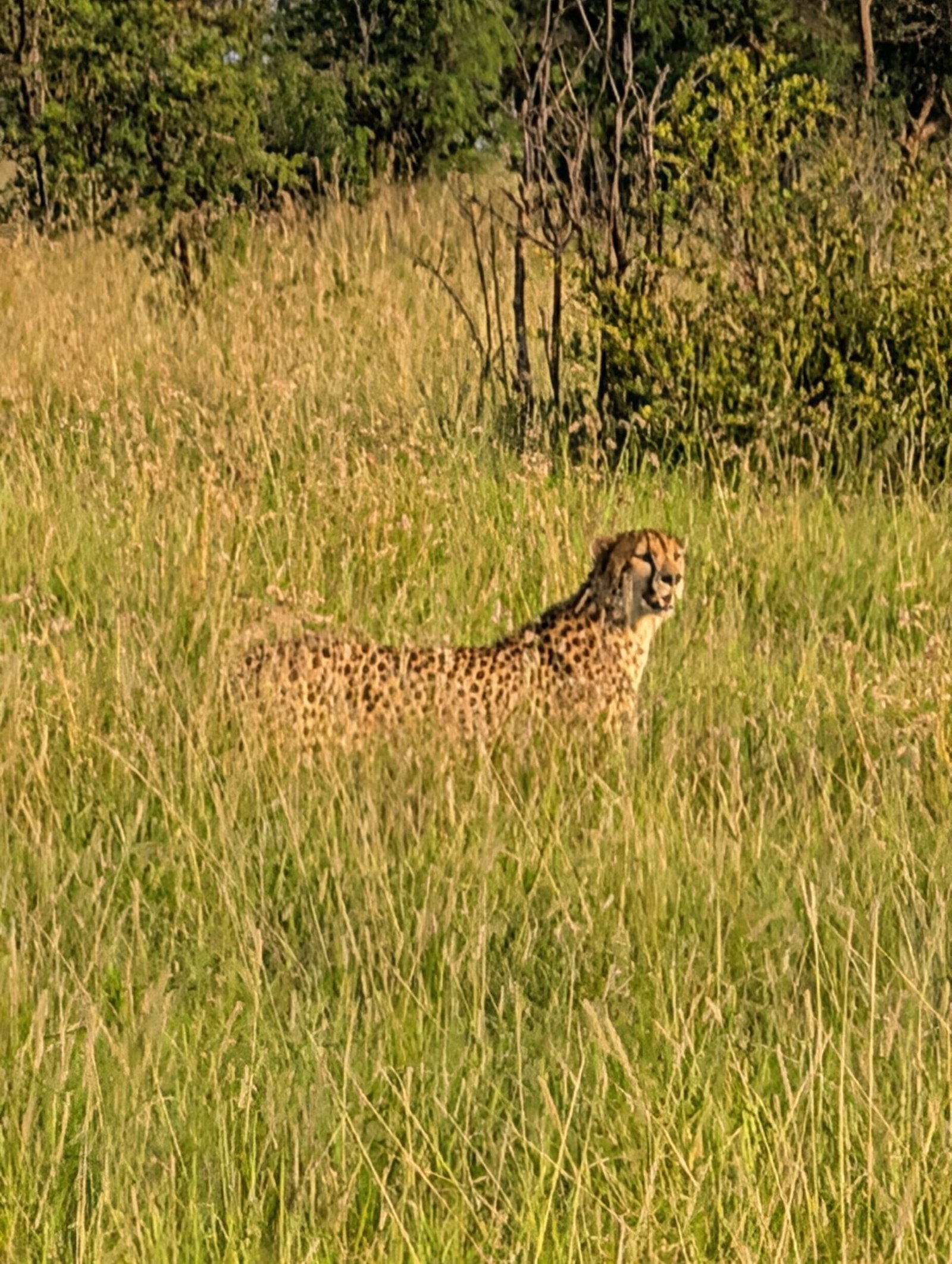
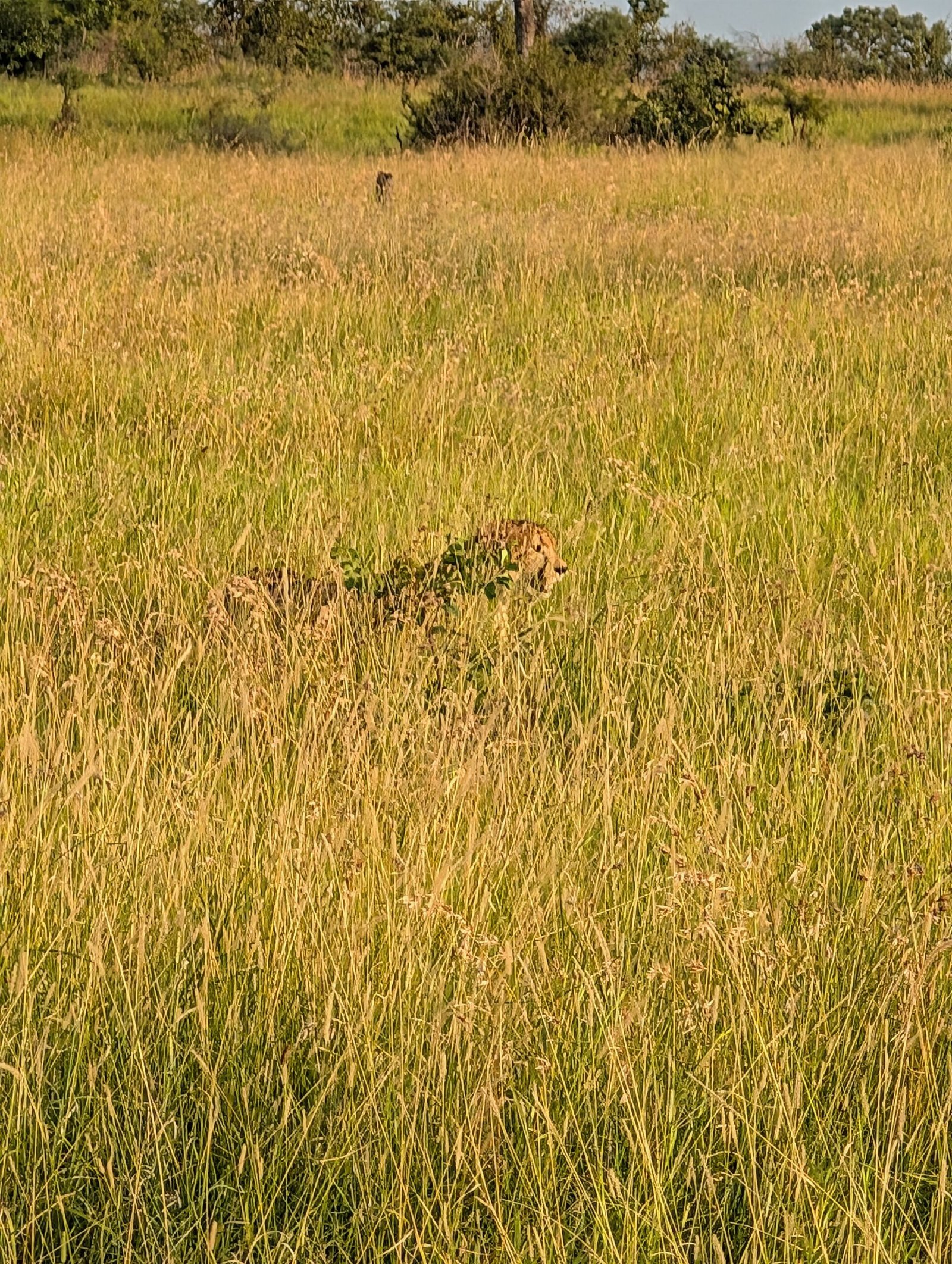
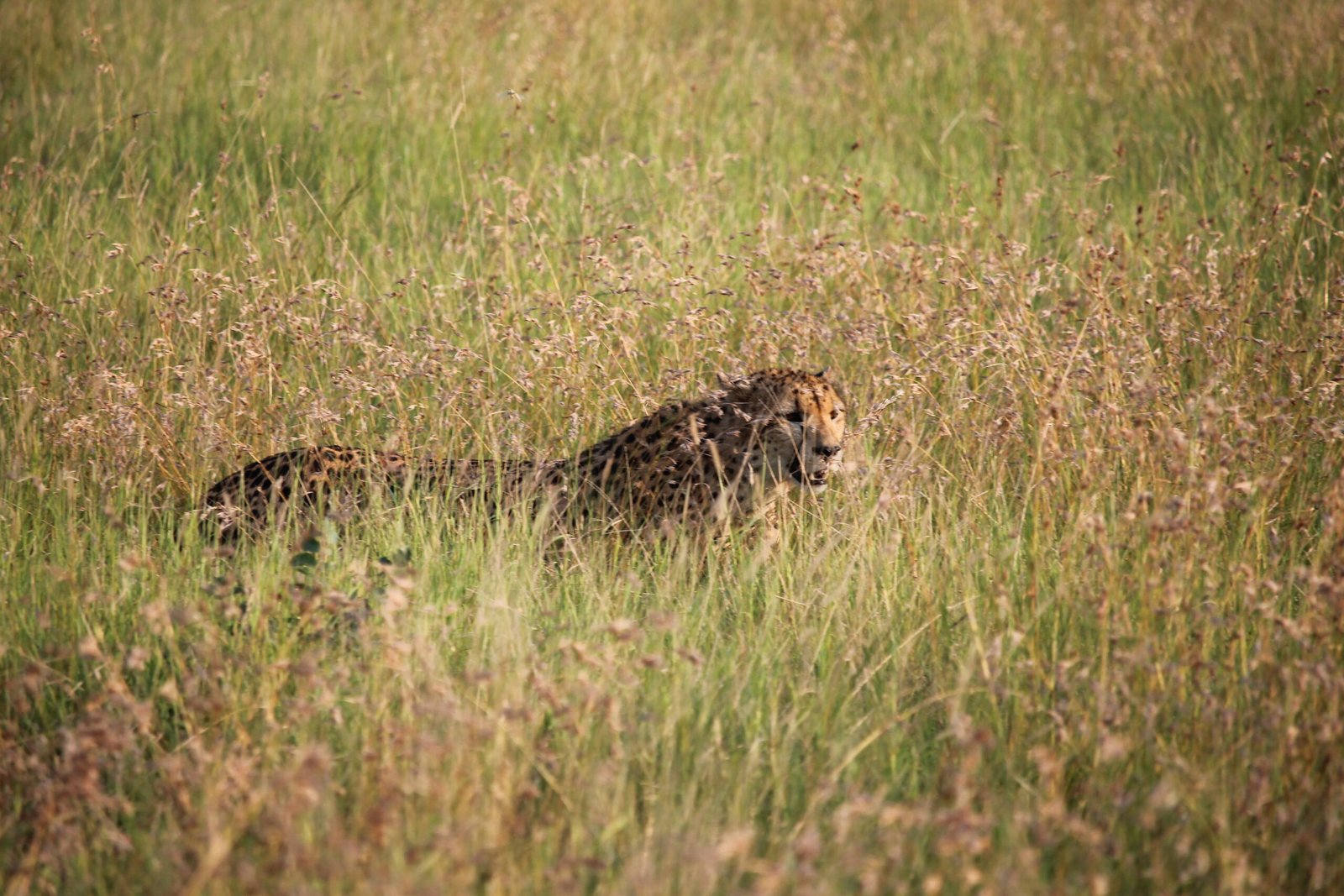
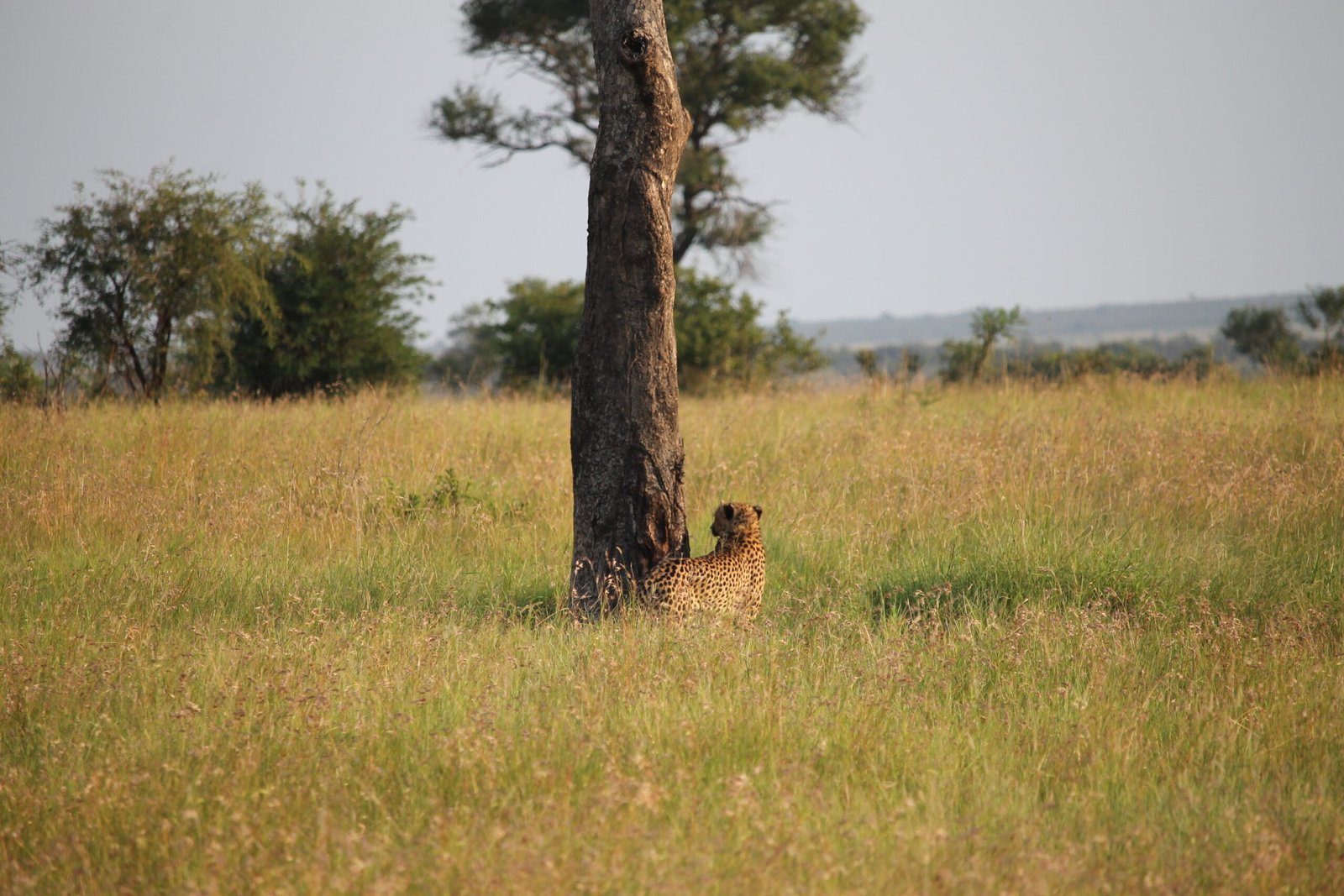
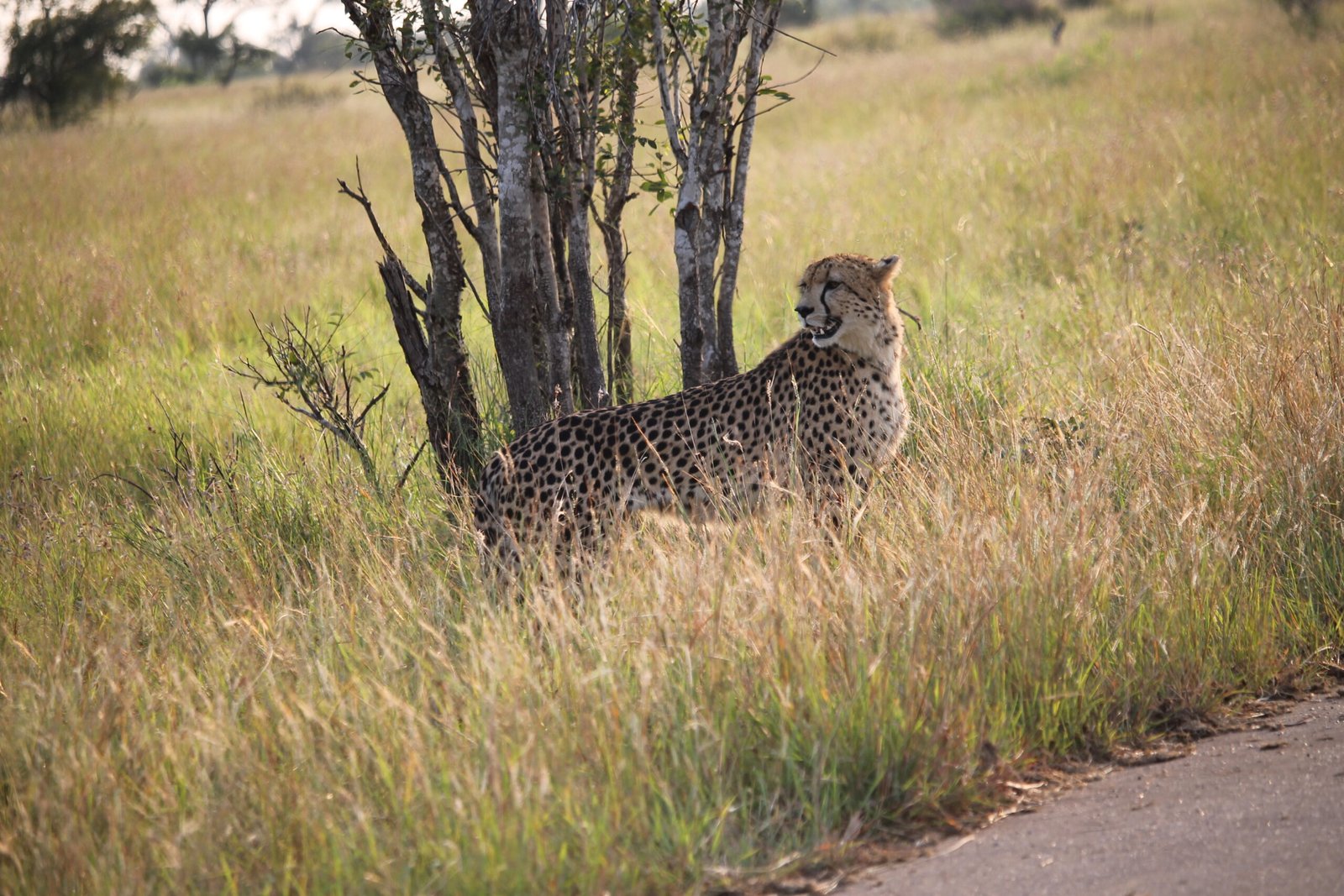
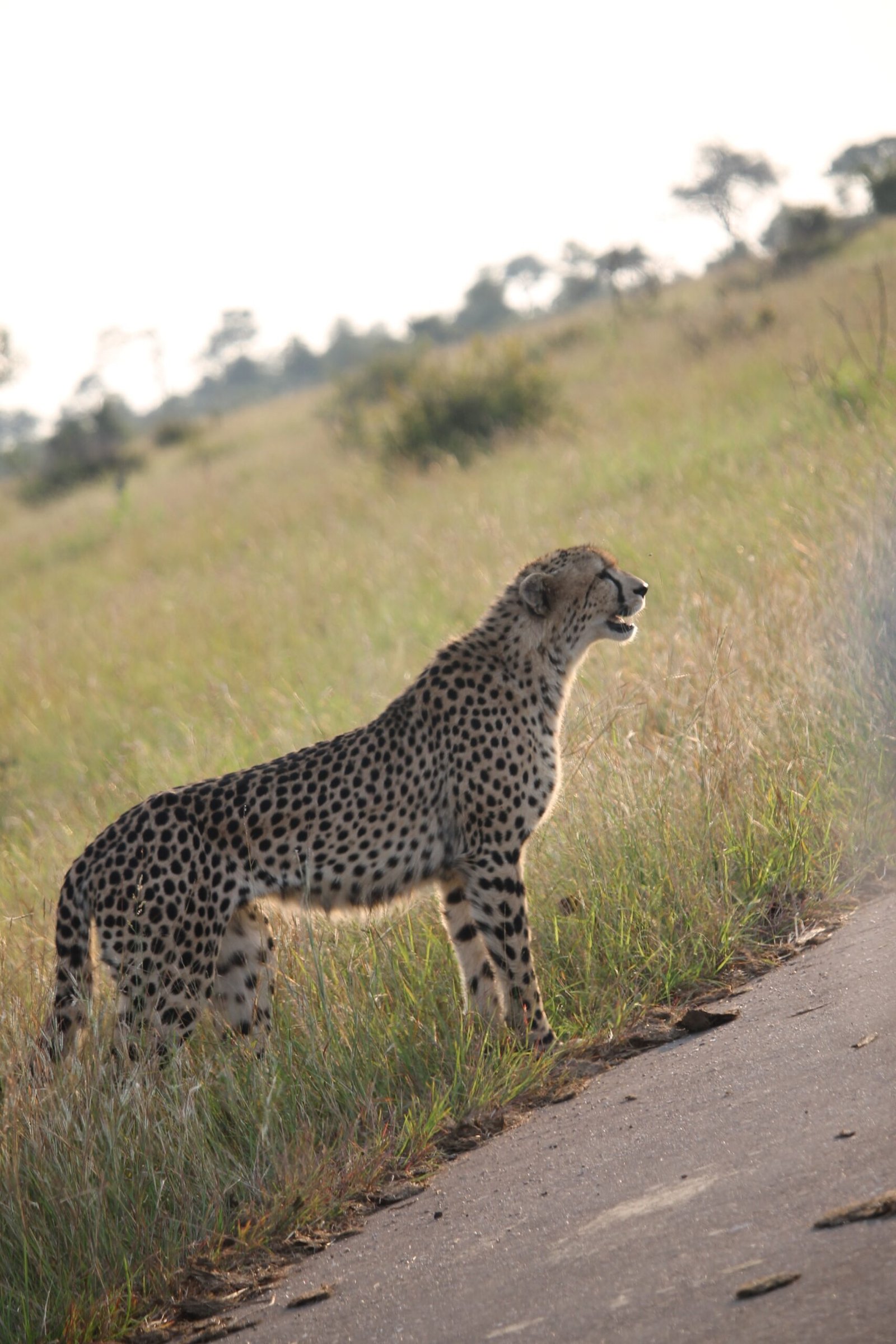
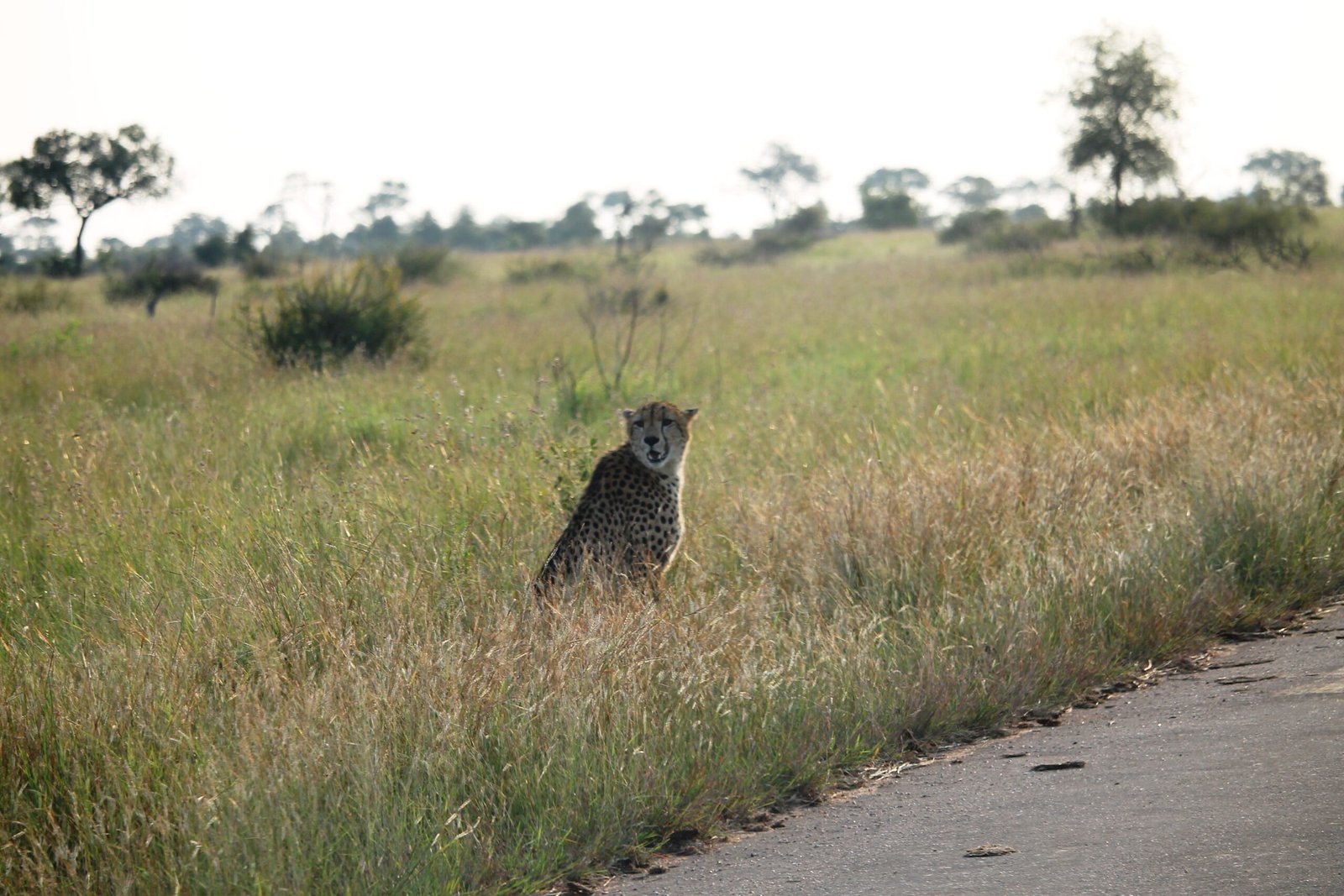
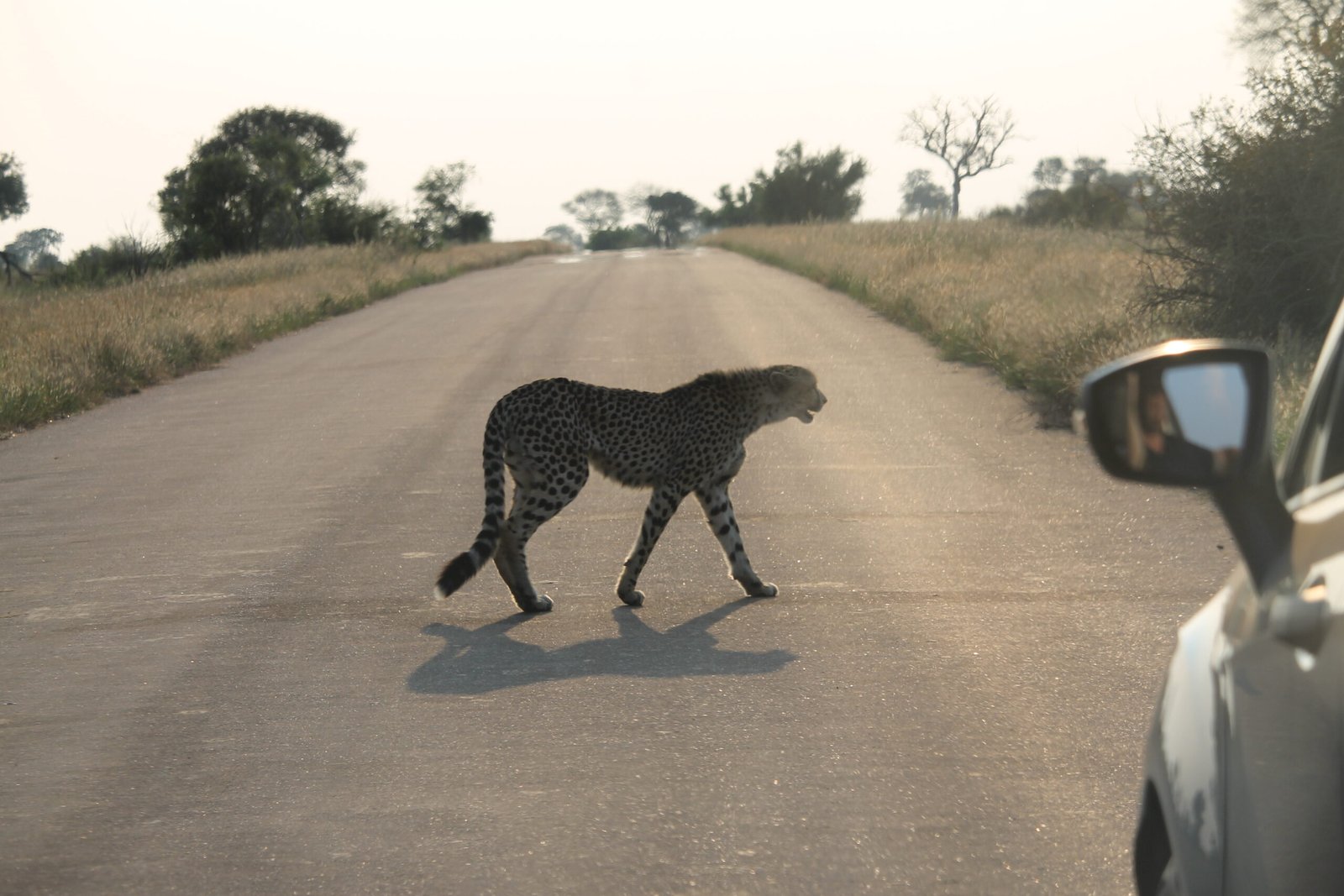
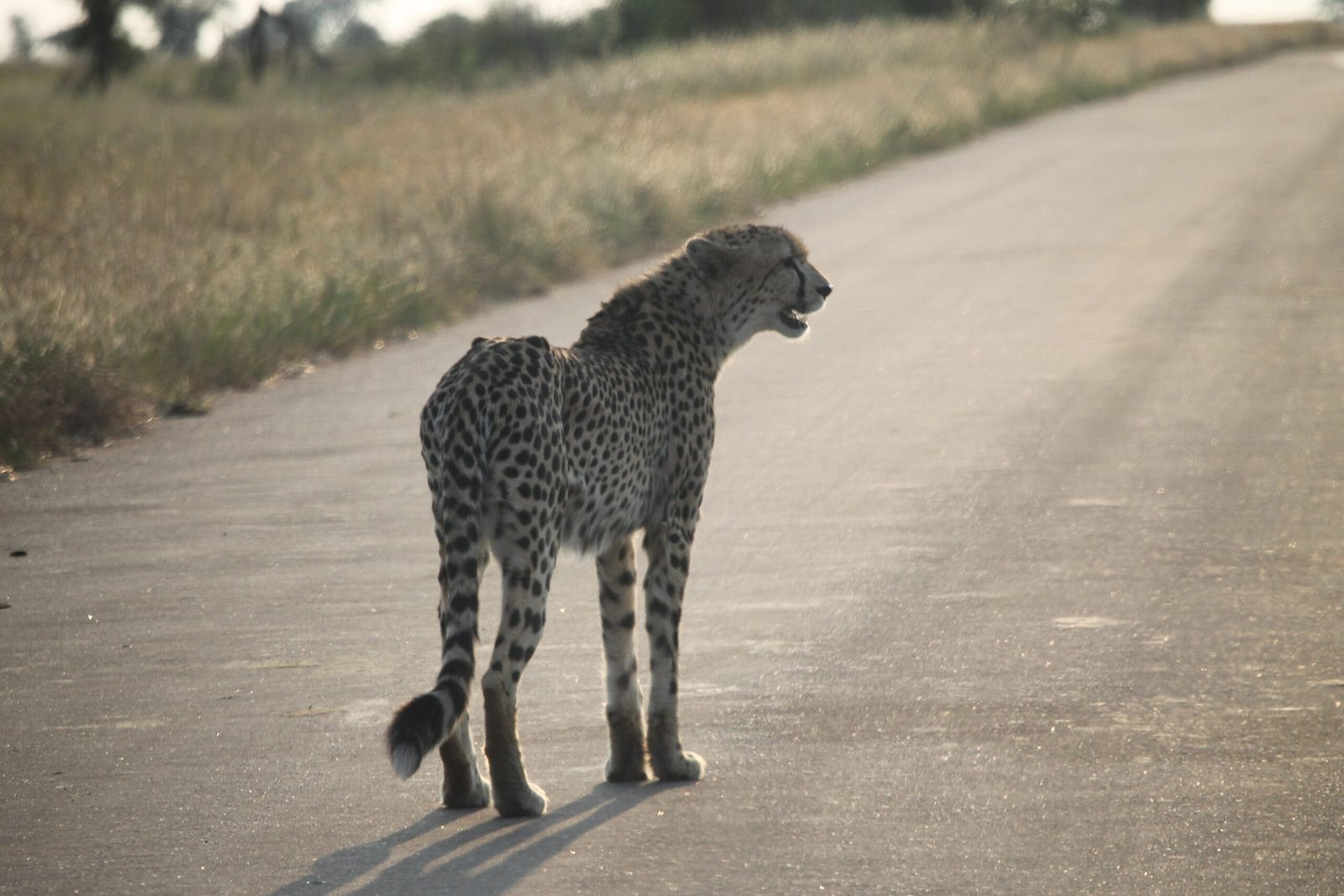
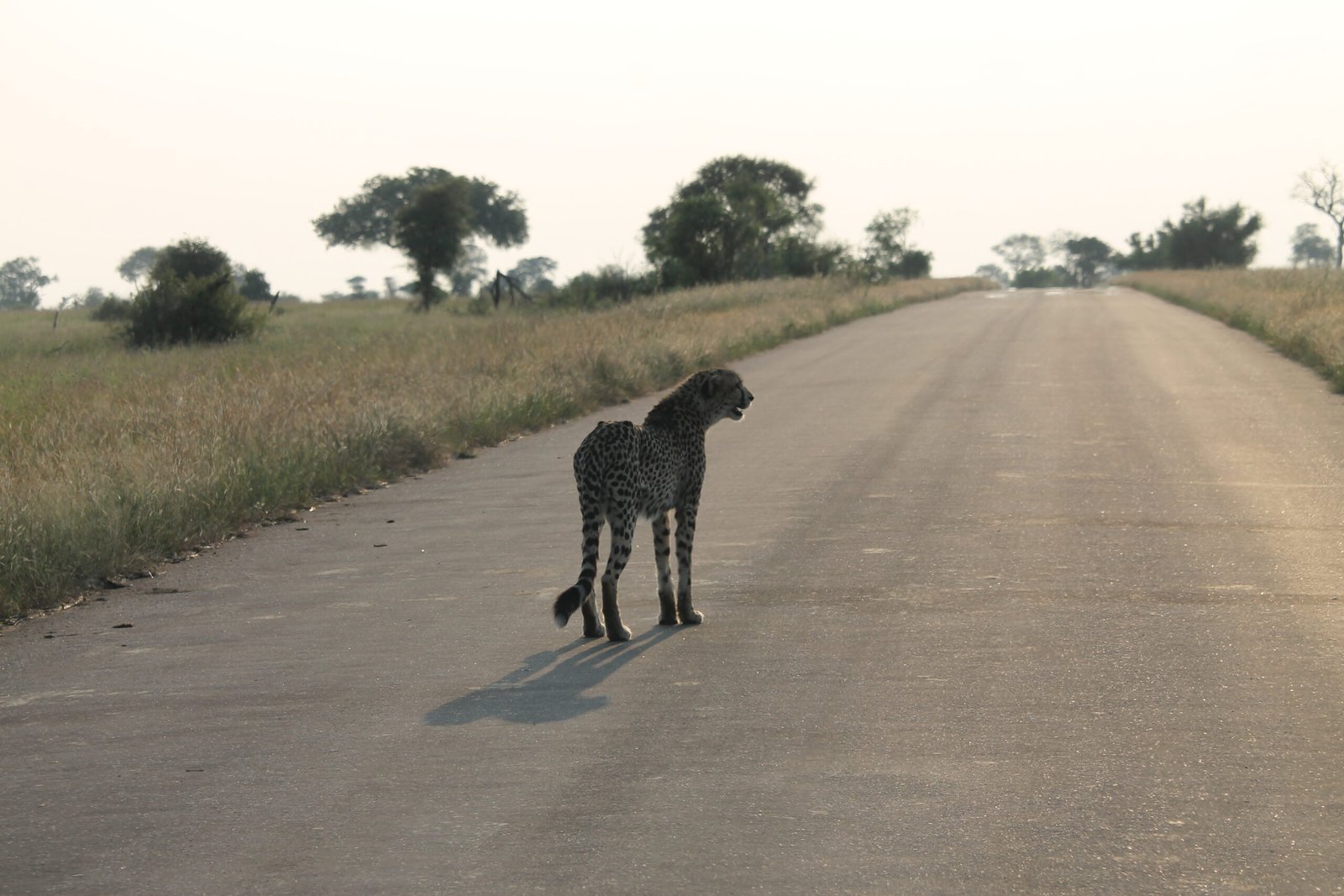
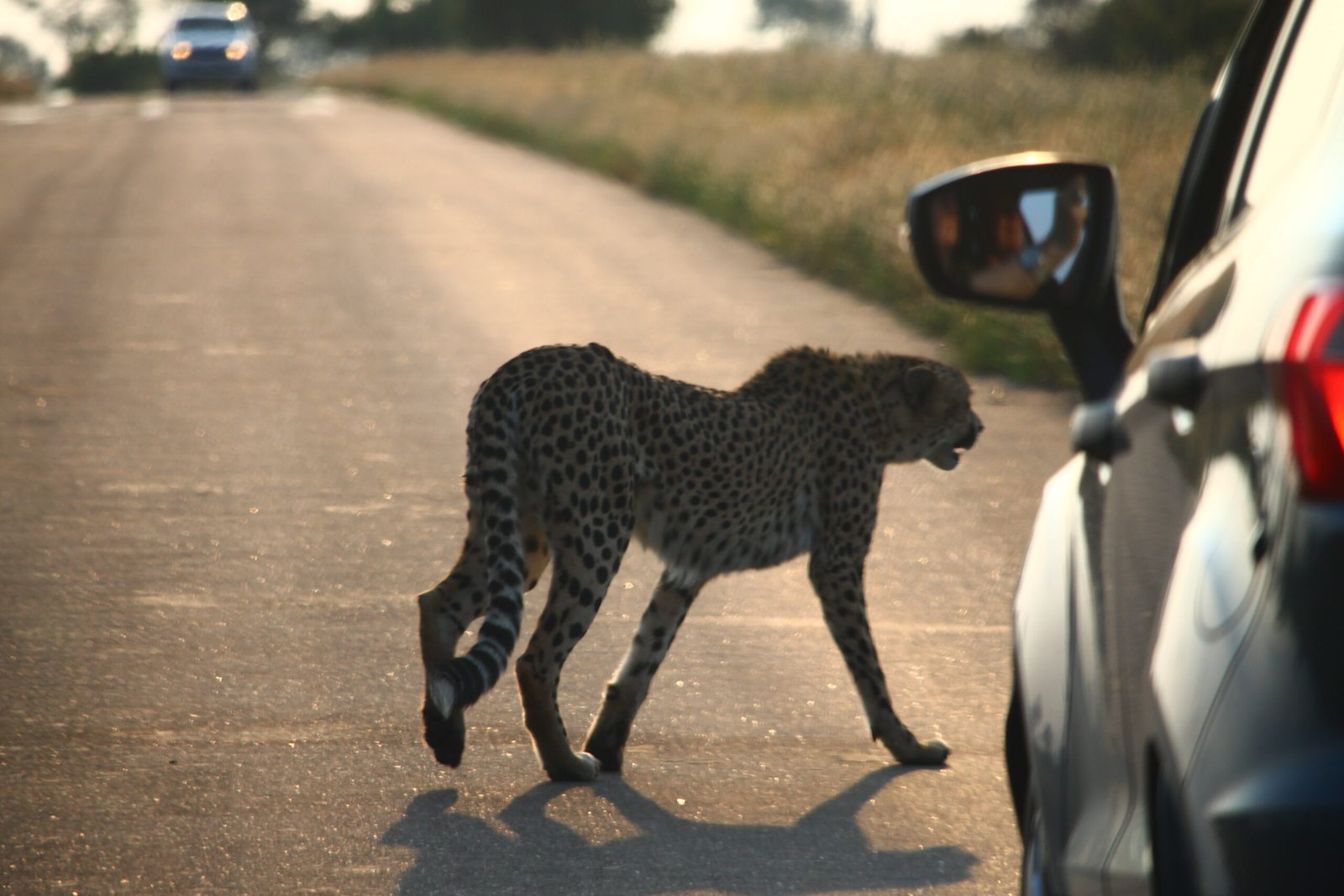
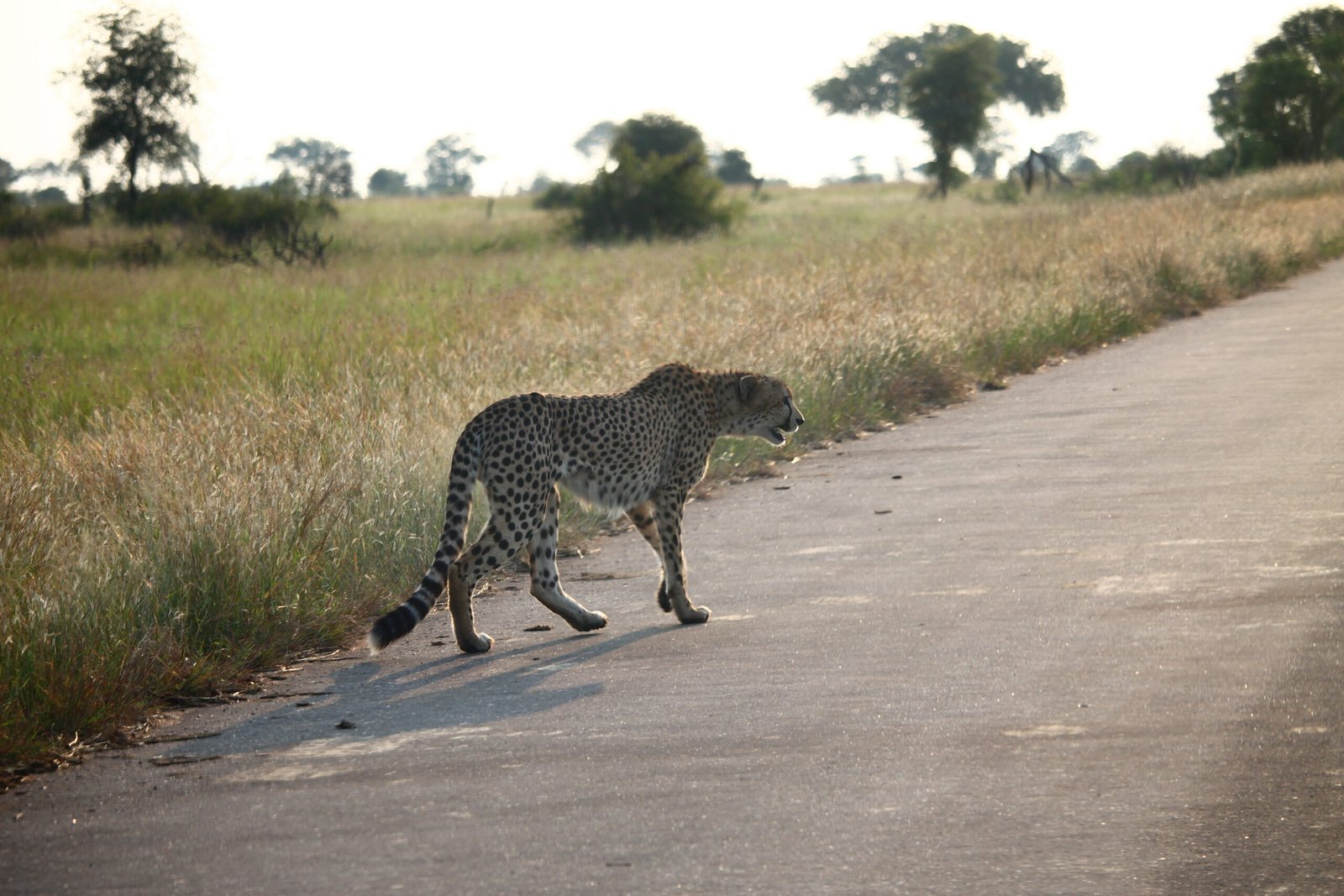
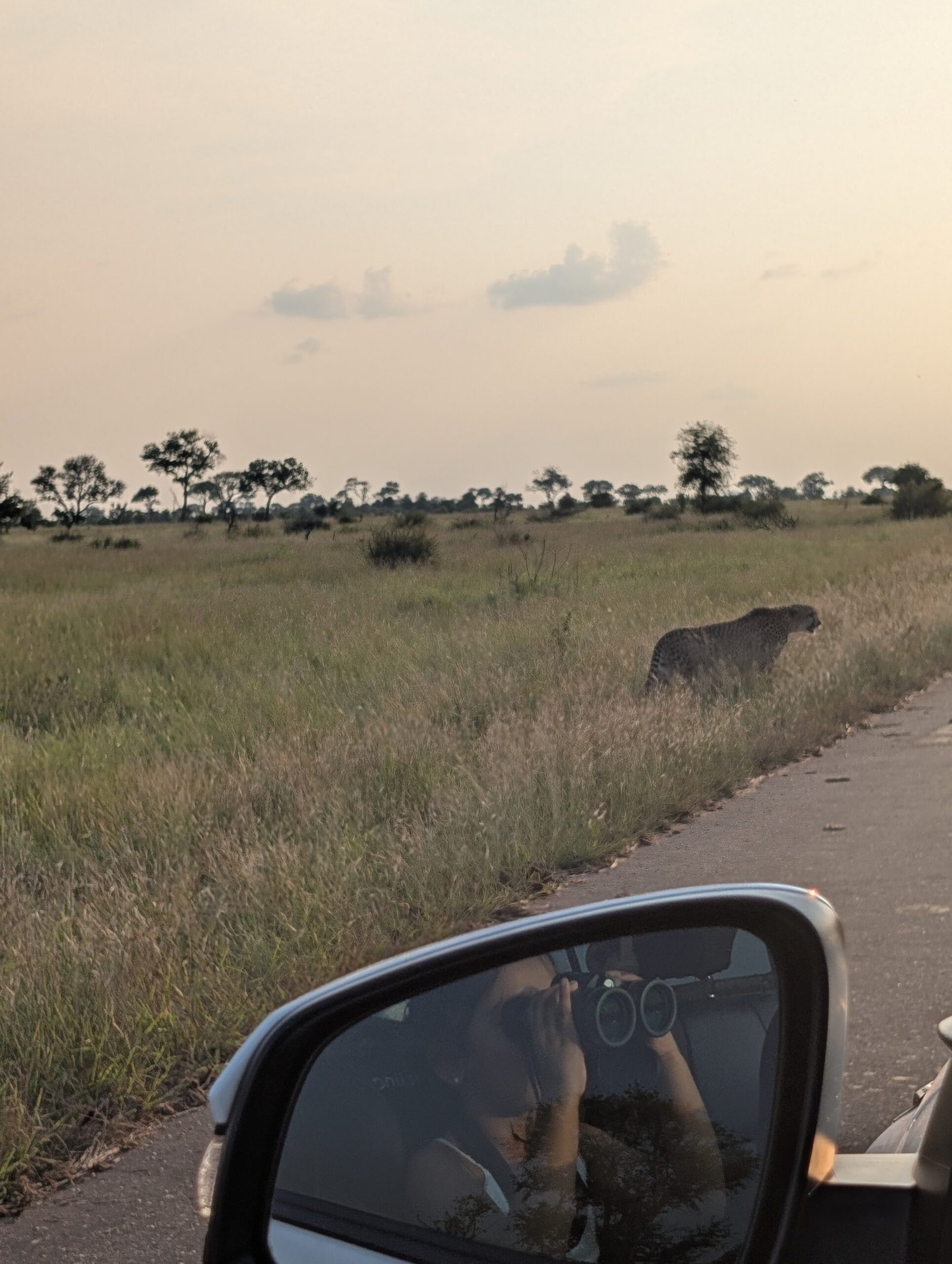
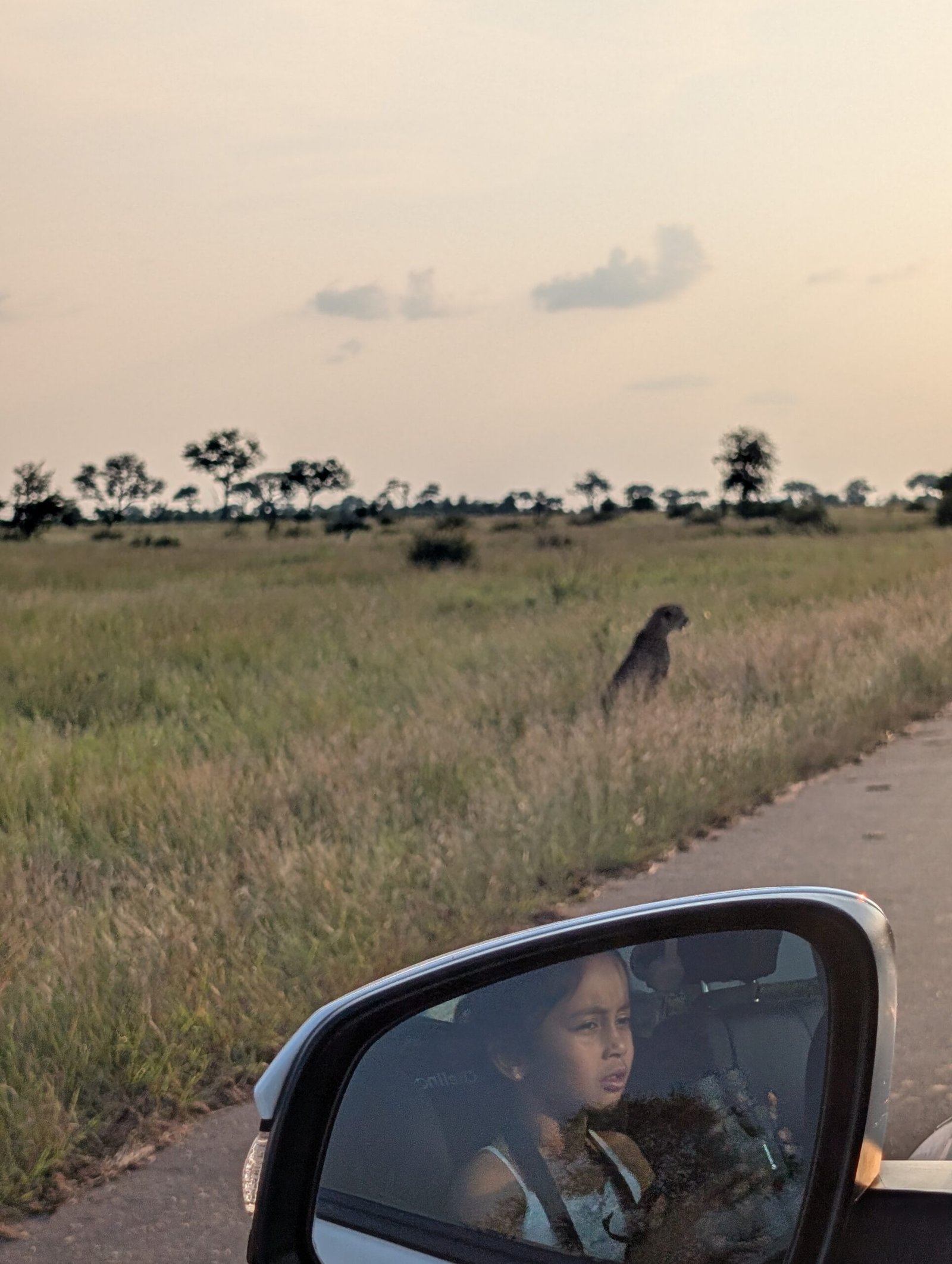
Two cheetahs. Sunset. Sitting on the road in front of our car. One by one.I put the camera down. My hands were shaking.Some moments are bigger than photographs. This was one of them.
View this post on Instagram
And Then — Lions
We were euphoric. Buzzing. The kind of high that makes you talk too fast and laugh too loud and replay every second out loud to each other as if you hadn’t all just witnessed the same thing.But we were also late. The sun was dropping fast, and Satara’s gate would close at six. We needed to move.
I accelerated — carefully, because speeding in Kruger is both illegal and foolish — and we drove towards camp, the sky deepening from gold to amber to the first hints of violet.And then a car ahead of us slowed down. A pickup truck — probably a regular, someone who knew these roads — and he wasn’t just slowing. He was looking.
I steered around him, and —Lions.Two of them. Right there. On the road. A lioness and a young male, walking together with the heavy, muscular nonchalance that only lions possess. Our first lion sighting in Kruger.
The pickup driver, in a hurry to beat the gate, pulled away and disappeared. And suddenly it was just us — alone with two lions on an empty road in the fading African light.
They were not pleased with our presence. The lioness glanced back at us with an expression that can only be described as unimpressed — the look of a creature that tolerates your existence but wants you to know it’s a choice, not an obligation. The young male didn’t even bother looking. They walked on for a few paces, then veered off the road and into the bush, swallowed by the gathering dusk.It was brief. It was breathtaking. And it was ours.
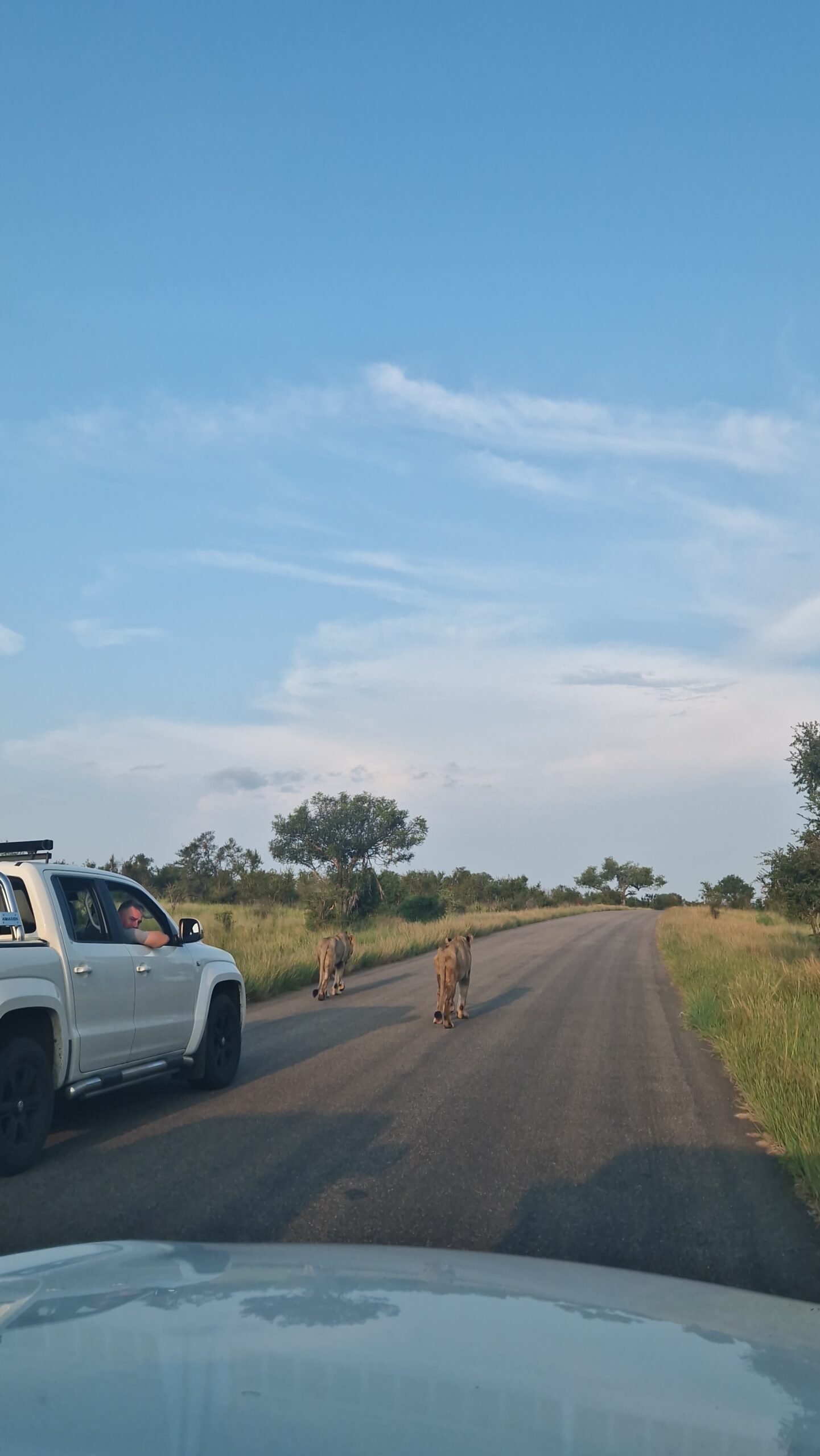
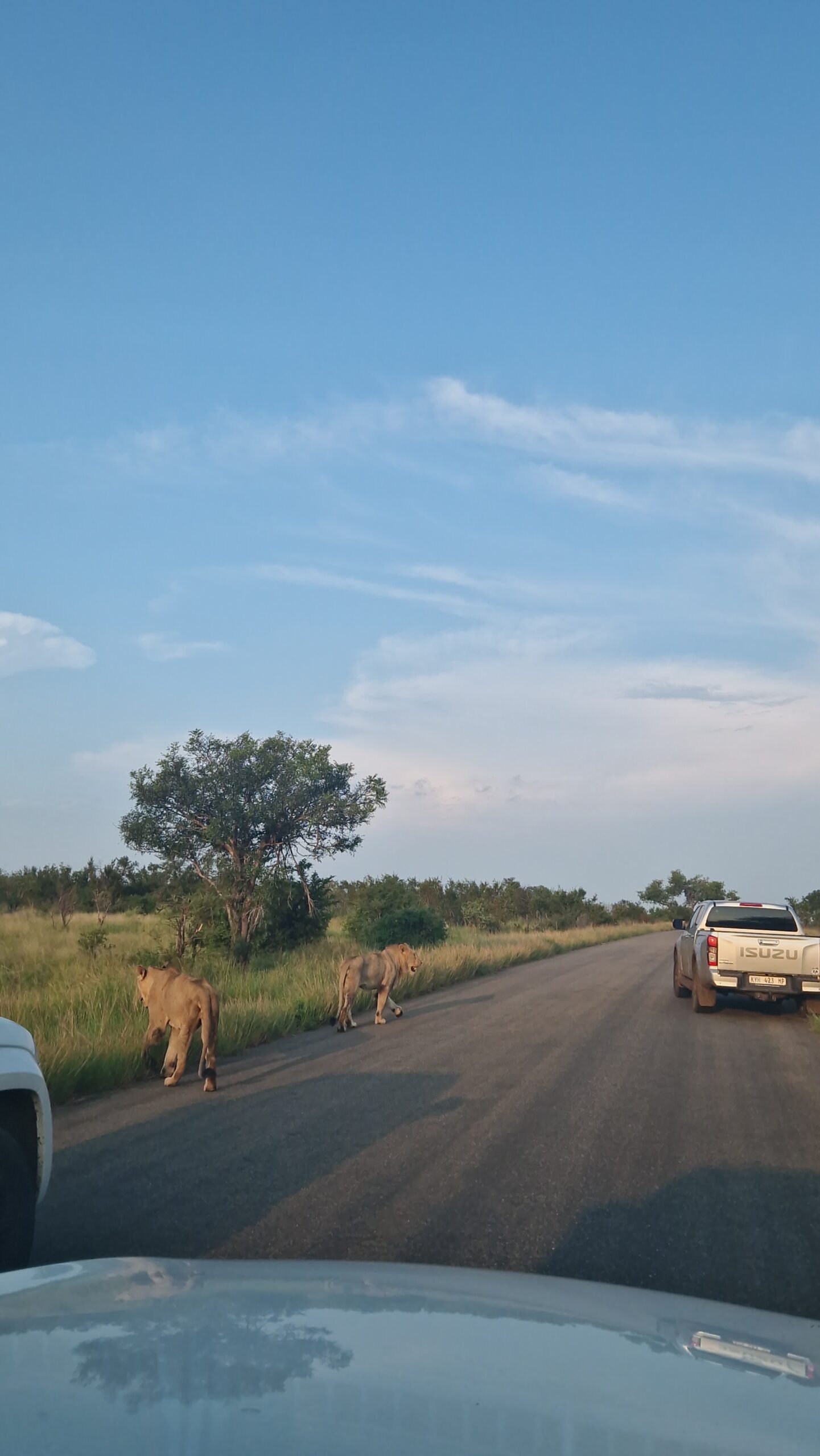
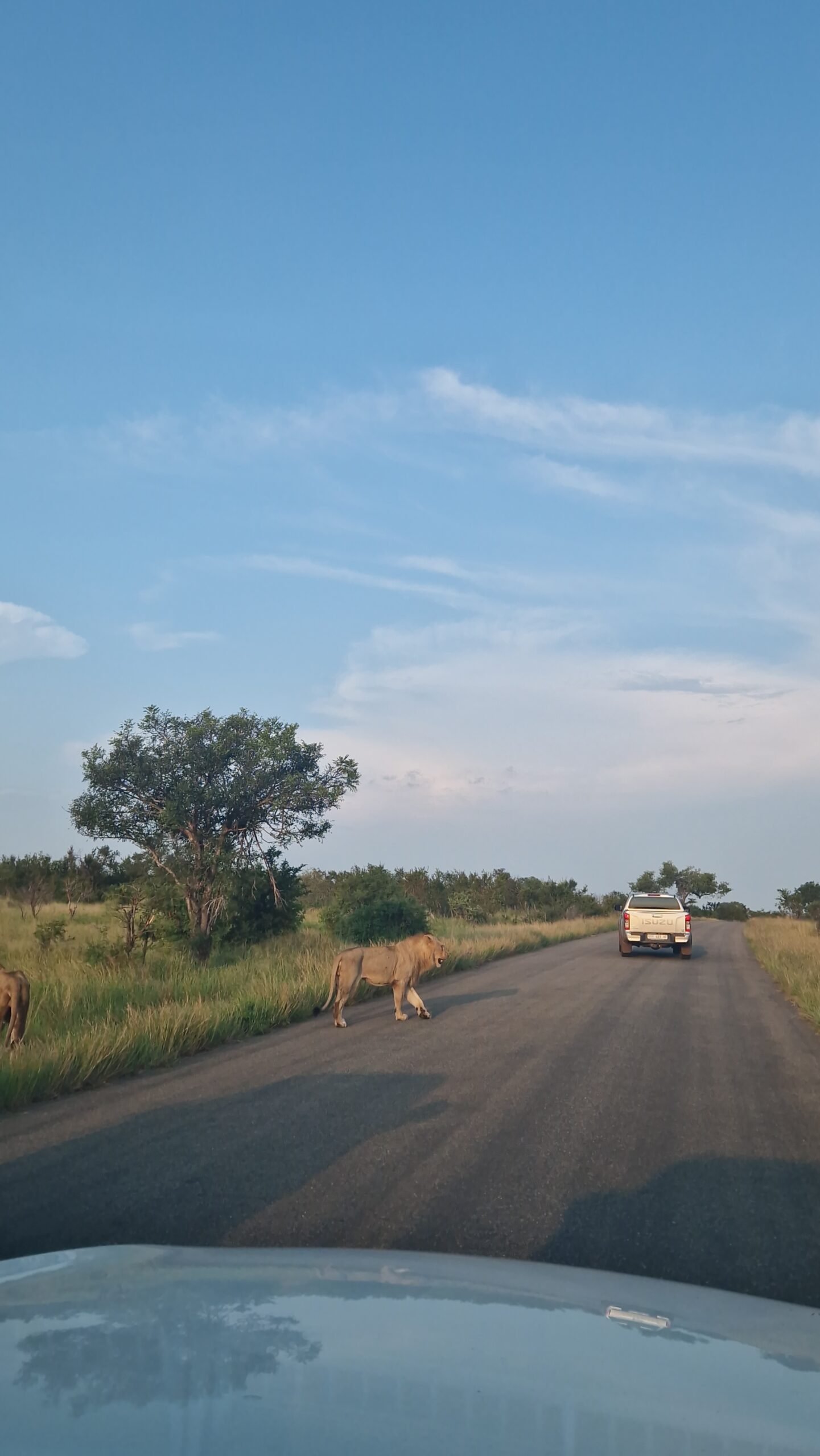
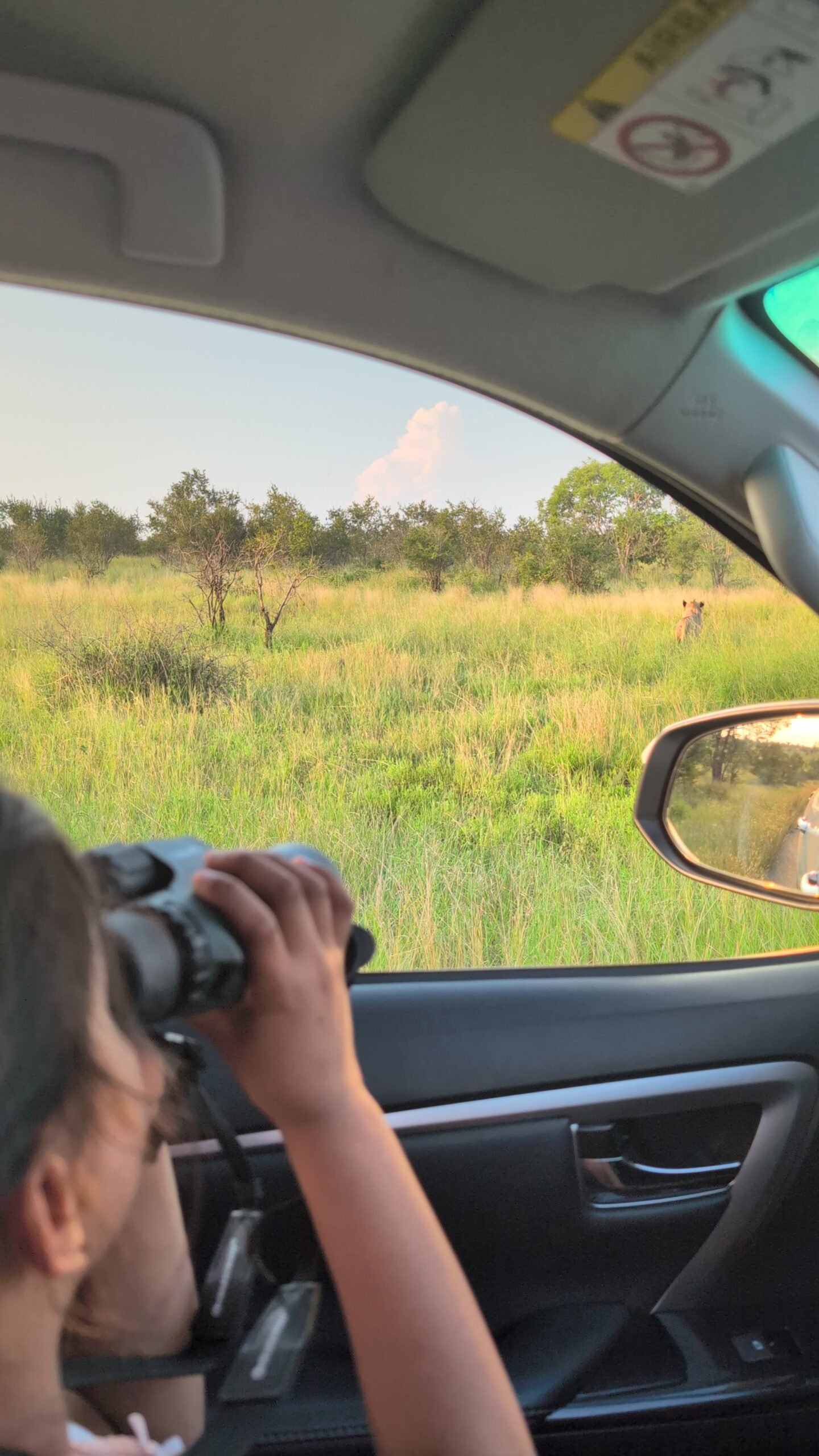
Addie, from the back seat, in a whisper that held the weight of the entire day:“Dad… we saw LIONS.” and quietly updated her checklist
Yes, baby. We saw lions.
The Road Home — When the Bush Won’t Stop Giving
The sane thing to do was drive straight to camp. The clock demanded it. The rules required it.But Kruger wasn’t finished.
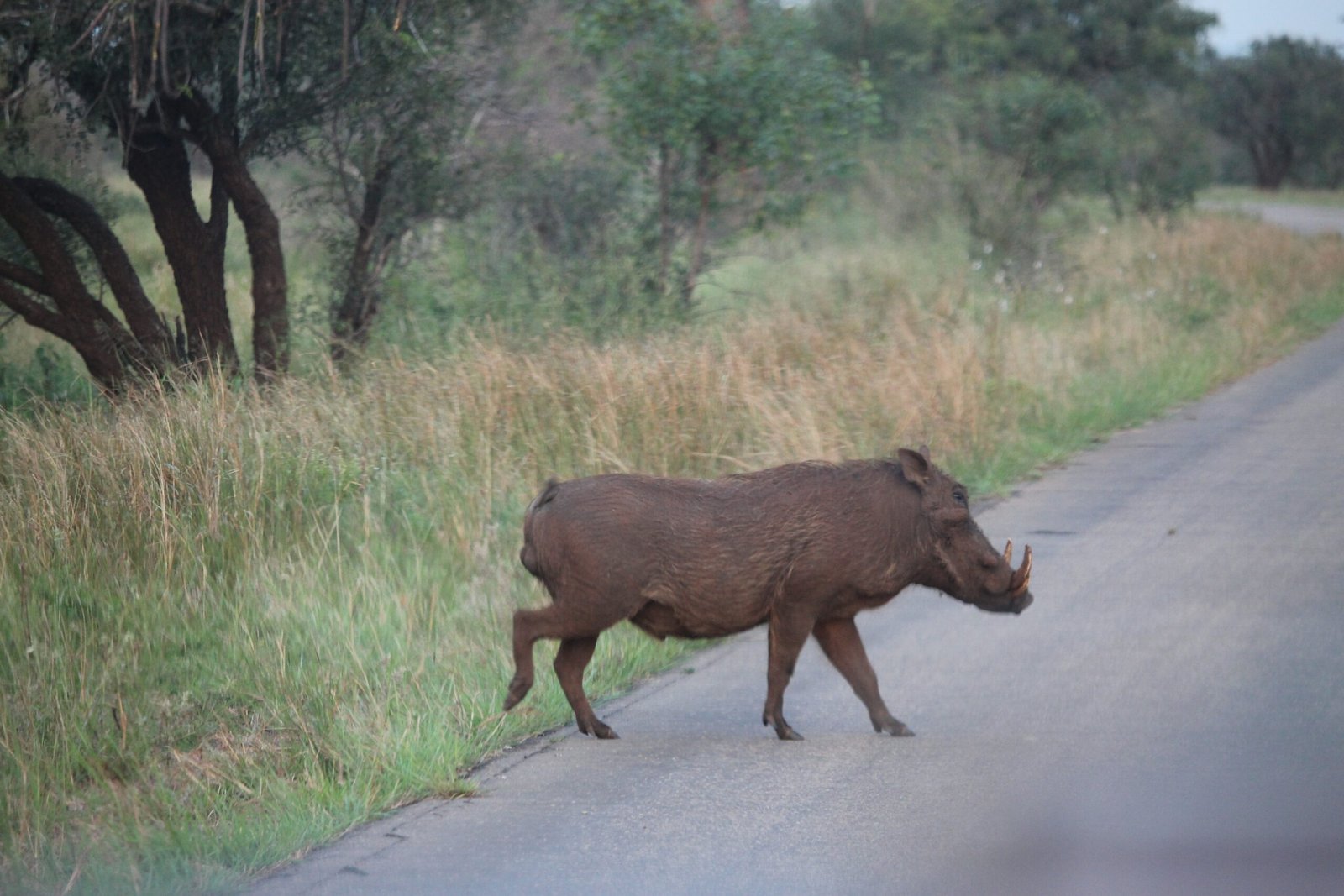
A warthog — a big one, tusks and all — bolted across the road in front of us, tail straight up like an antenna, running with that magnificent, ungainly trot that makes warthogs the comedians of the savannah.
And then — as if the bush had decided to throw in a final encore — the Cape buffalo herd we’d seen distantly that afternoon was now crossing the road right in front of us. Dozens of them, close enough to see the mud caked on their flanks, the oxpeckers riding their backs, the raw, ancient power in every heavy step.One of the Big Five, at arm’s length, in the dying light.
We reached the camp gate with minutes to spare, hearts full, cameras fuller, and a day that had transformed — completely, miraculously — from quiet disappointment into one of the most extraordinary safari days of our lives.
The Ghost Leopard at Dawn.Cheetahs at sunset. Lions on the road. Buffalo up close. And all of it in the final golden hour, when we’d already written the day off.
The bush teaches you this: never stop believing. Never leave early. The last hour can change everything.
The Night Safari — A Different Kruger
But the day wasn’t over yet.
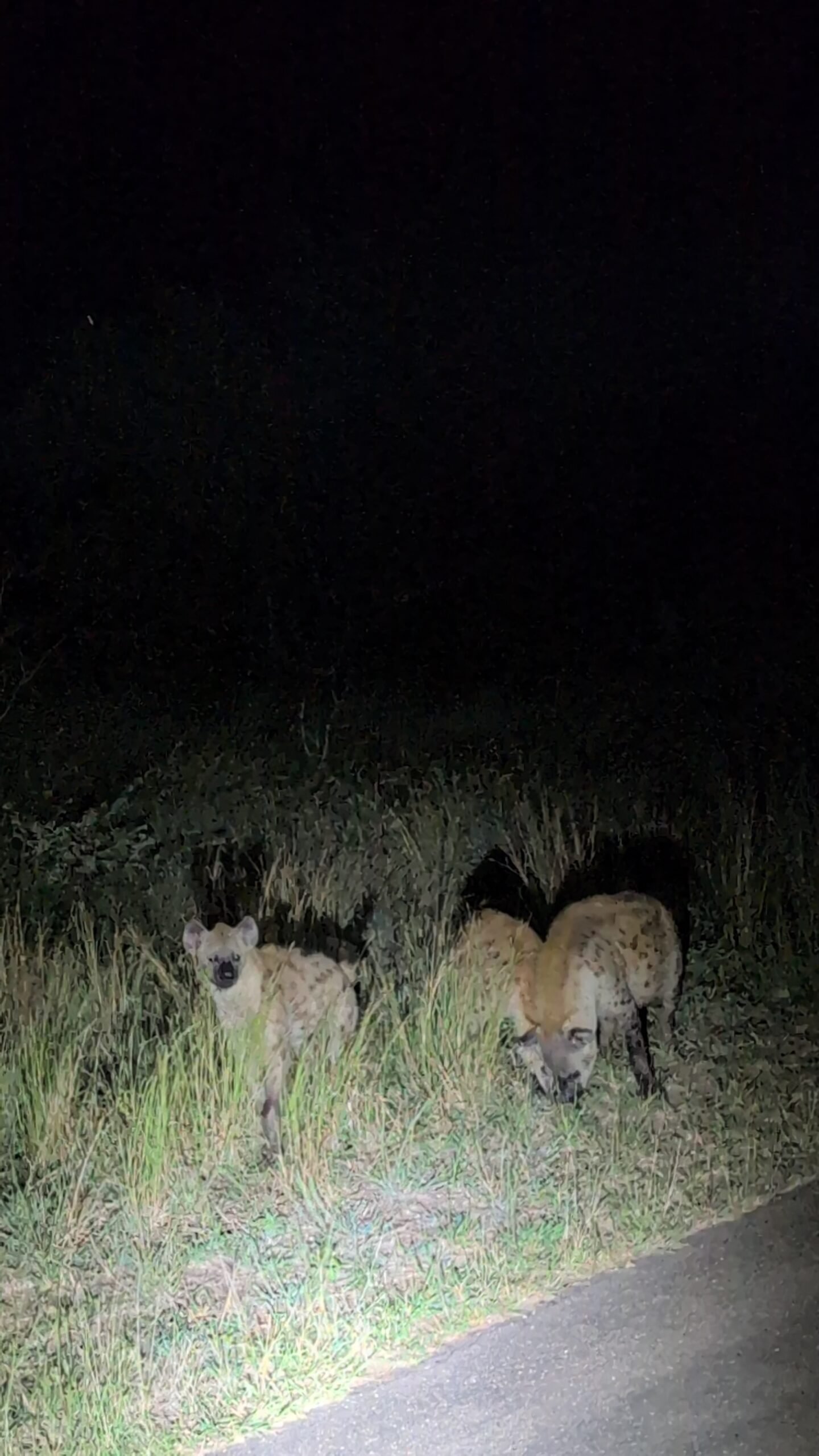
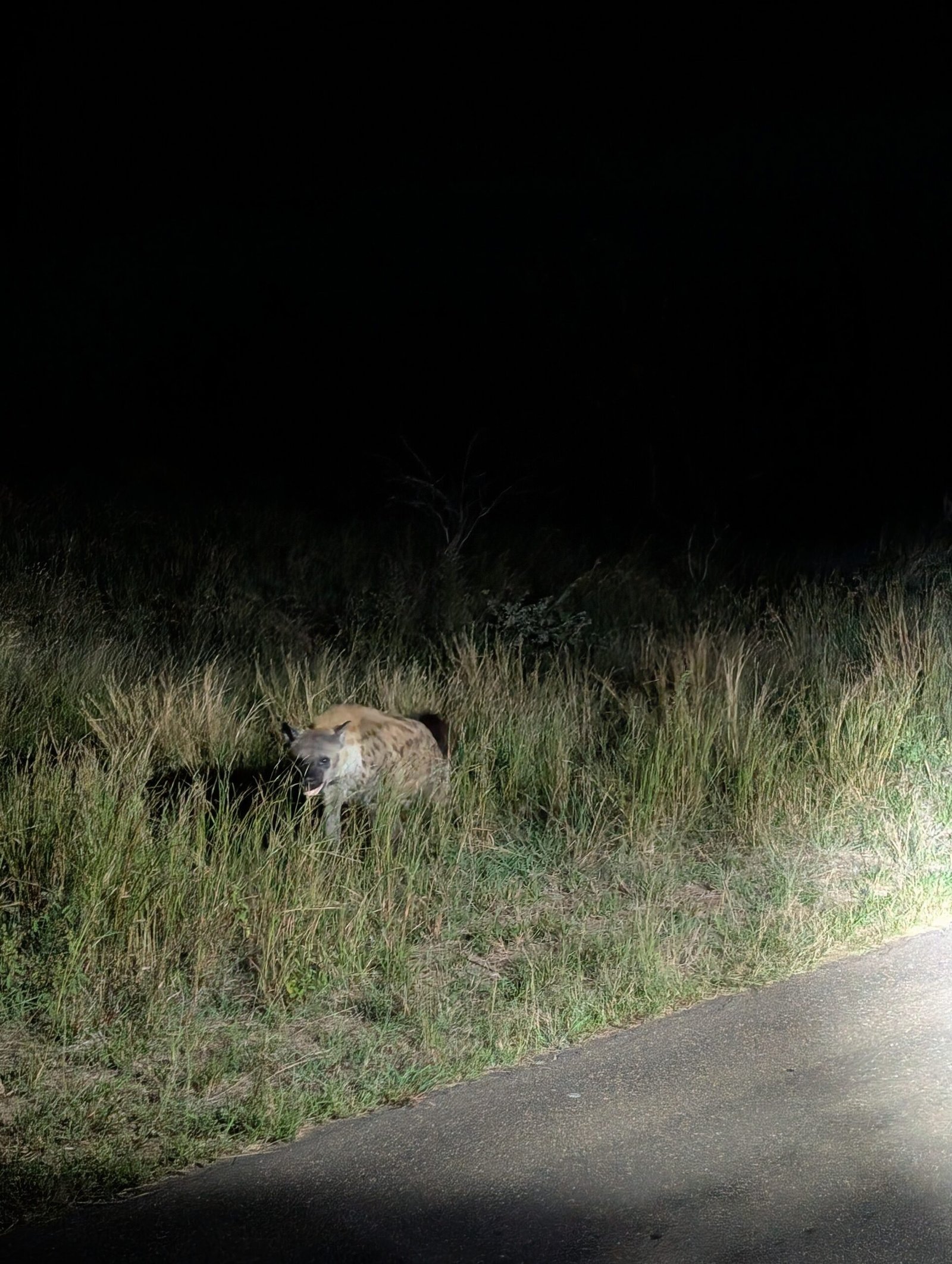
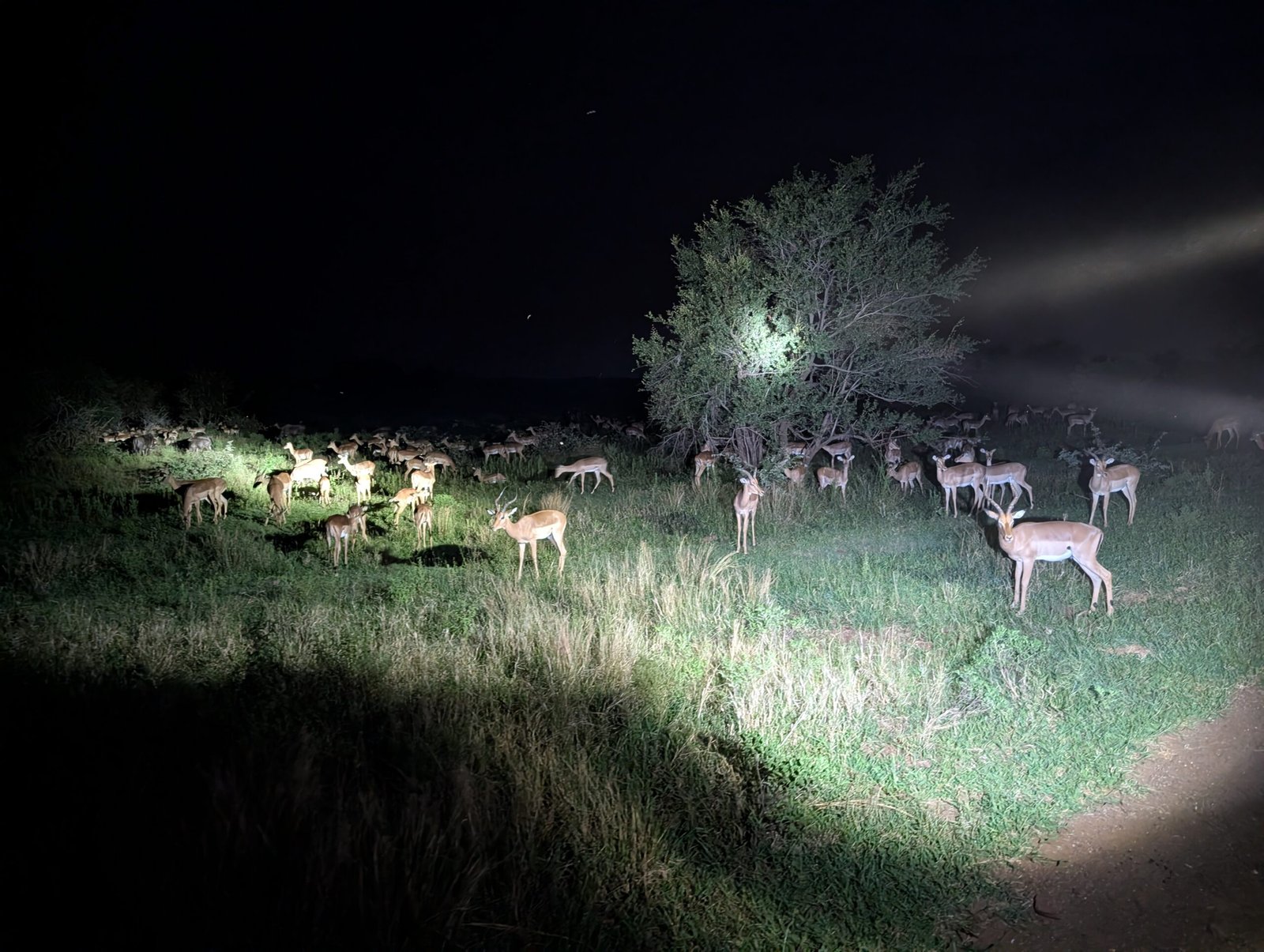
We had booked a night safari — a guided drive that ventures out after dark, when Kruger transforms into an entirely different world. The nocturnal kingdom. The one most visitors never see.
We climbed into the open-air safari vehicle. A powerful spotlight swept the bush from side to side, cutting through the black like a lighthouse beam, searching for the telltale shine of eyes.And the bush delivered.
First — perched on a branch, illuminated in the spotlight like a creature from a fairy tale — a Large-spotted Genet. A stunning, cat-like animal with a long, ringed tail and a coat covered in beautiful dark spots. It sat perfectly still on its branch, its enormous eyes catching the light, watching us with the wary curiosity of a creature that owns the night and is merely tolerating our visit.
And then, on the drive back, the spotlight found something that stopped the entire vehicle.Elephants. Napping. On the road.The guide spoke softly: “When elephants sleep deeply, they touvh their trunks on the ground like that. It’s like a trance — a deep, meditative rest. They’re completely at peace.” We drove back to camp in stunned, grateful silence.
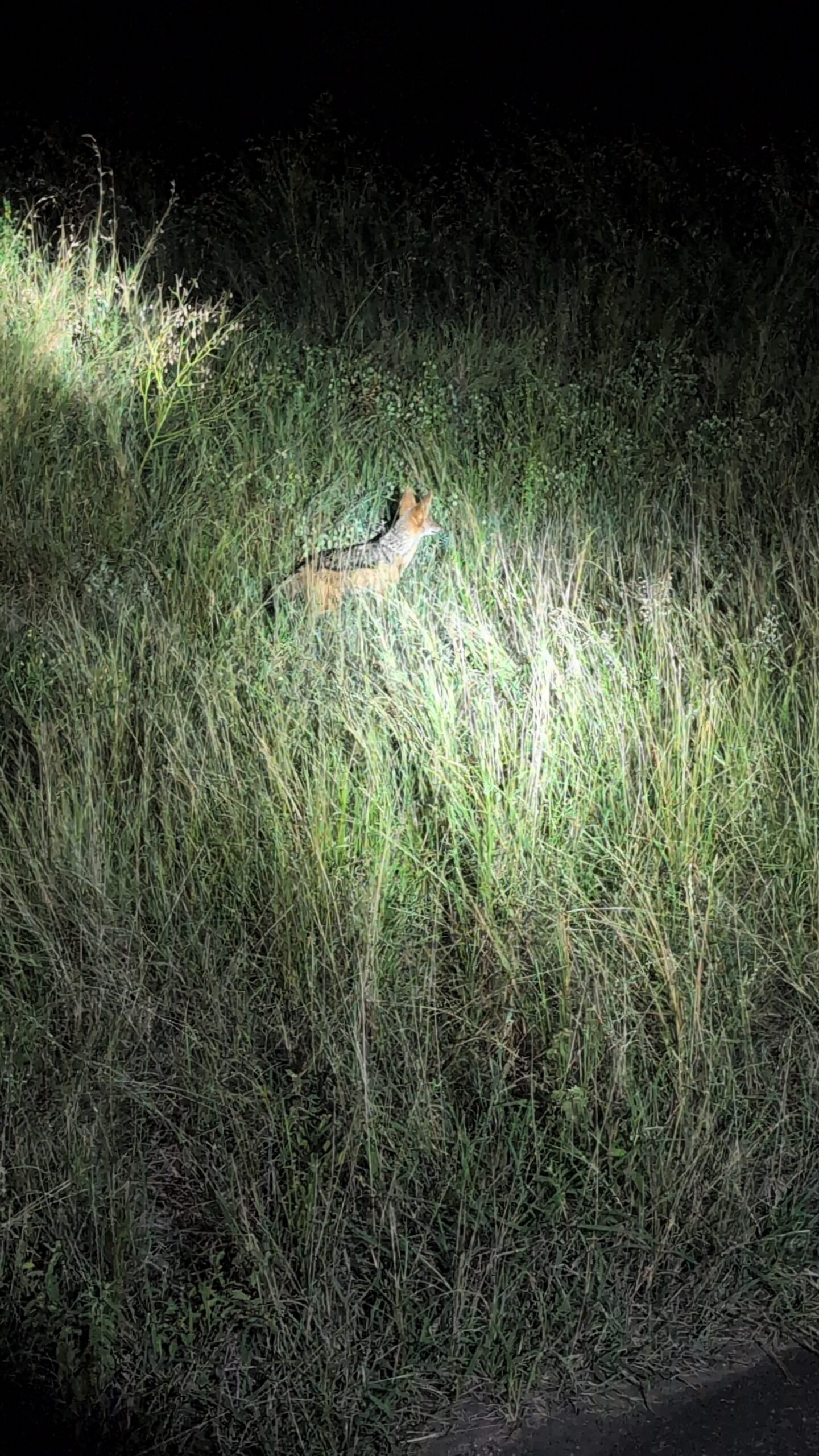
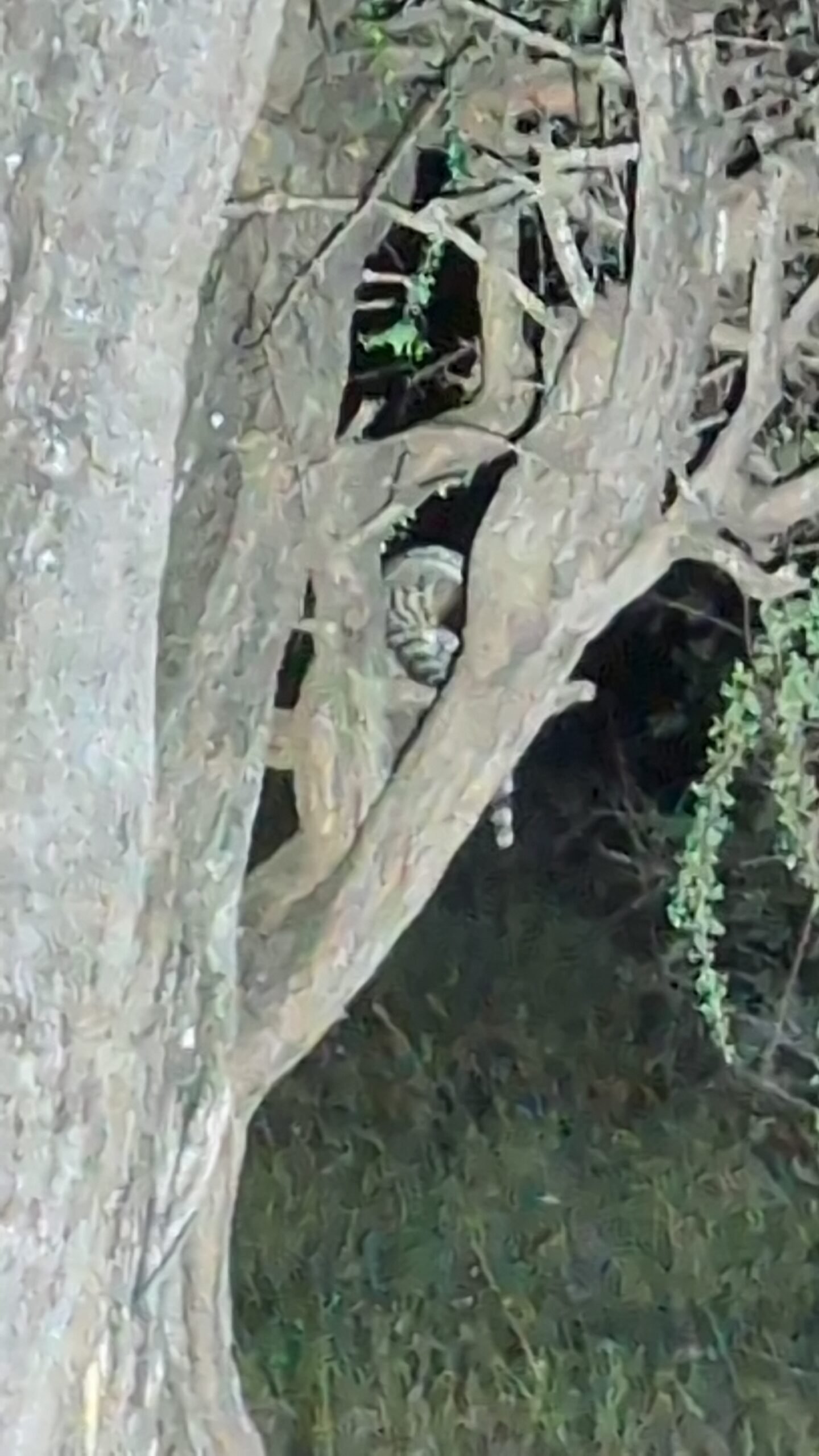
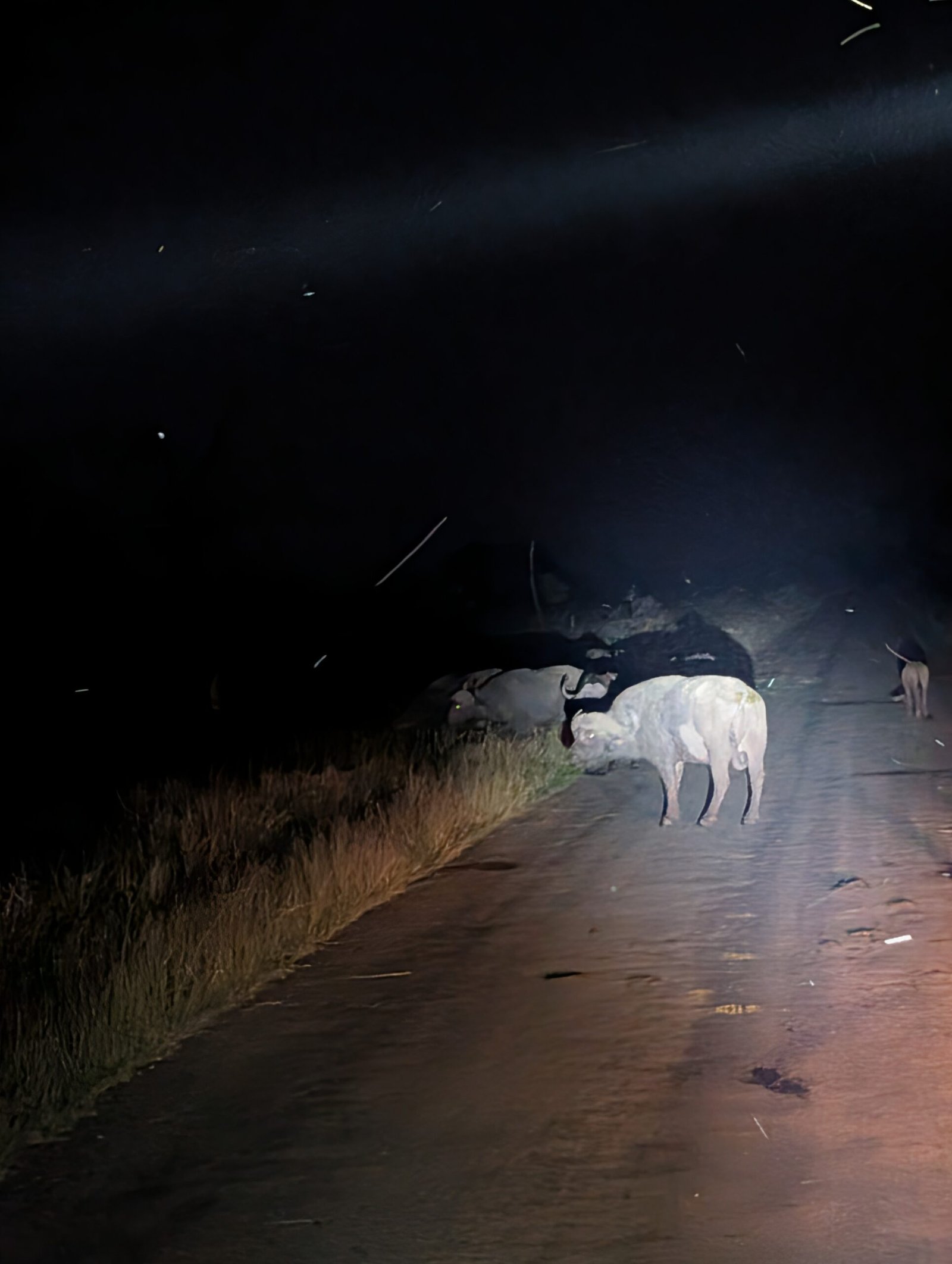
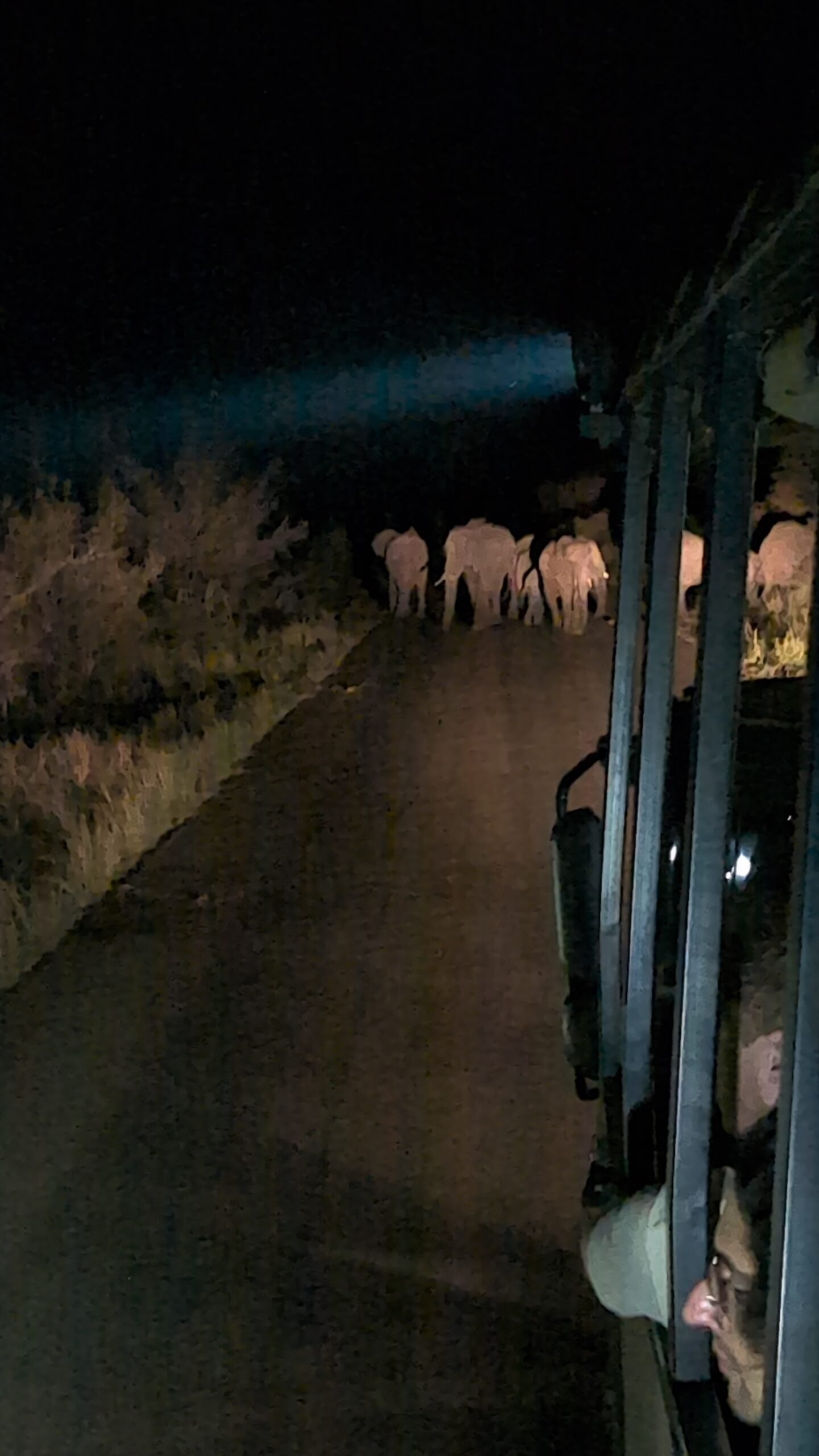
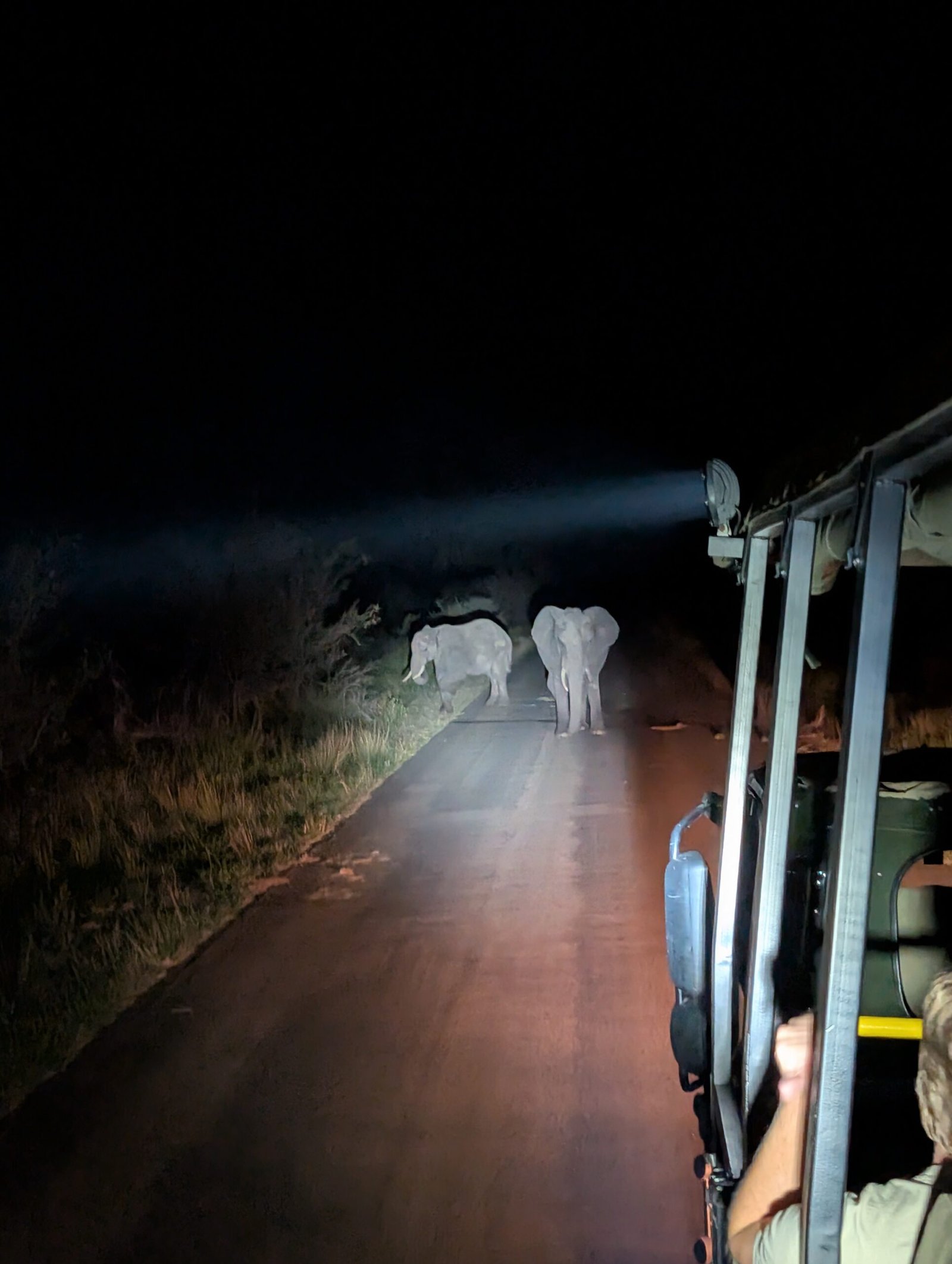
From a morning of near-disappointment to an evening of absolute wonder. From “this isn’t going to be a great day” to “this might be the greatest day of the entire trip.”
The bush doesn’t care about your schedule. It doesn’t care about your expectations. It runs on its own clock, tells its own stories, and reveals its treasures to those who stay long enough to receive them.
We stayed. And the bush rewarded us beyond anything we could have imagined.
View this post on Instagram


This is Aldrin and my partner Amoli. We bring you "Earths Pilgrim" - a unique insight into our travel escapades while leaving life in a cubicle. If you are looking for some inspiration to break the shackles of a regular life, then you are the right place. Read more about us- Click here.